Best Decoy Spread Gear for Texas Waterfowl
There's nothing quite as frustrating as waking up before dawn, hauling a boatload of gear out to a cold, muddy blind, and watching ducks skirt your spread from a safe distance, never committing. We've all been there, and it's enough to make you question every decision you made in the dark. This guide is all about equipping you with the best decoy spread gear for Texas waterfowl, ensuring your hard work pays off with ducks and geese cupping their wings right into your kill hole.
Understanding Texas Waterfowl Behavior and Environment
Hunting waterfowl in Texas means adapting to an incredibly diverse landscape, from the coastal marshes to the Panhandle playas, and the central flyway that brings a huge variety of birds through our state. The gear you choose and how you deploy it needs to reflect these unique conditions and the specific birds you're targeting.
Reading the Texas Skies and Water
Texas weather can be famously unpredictable, and water levels can change drastically, especially after a good rain or a long drought. A decoy spread that works perfectly on a calm, sunny morning might be completely useless when a strong norther blows through, or if the water is shallower or deeper than you expected. You need gear that's versatile enough to handle everything from shallow sheet water in a flooded field to deep, open bays. Think about how wind affects your spread, how current might drag your decoys, and how glare can make your plastic look unnatural. Paying attention to these environmental factors, often noted through platforms like GoHunt for broader scouting, is crucial for setting up a truly enticing spread.
Adapting to Different Waterfowl Species
Texas is a melting pot for waterfowl. You might be chasing green-winged teal and pintails on the coast one week, then shifting to mallards and gadwall in a rice field, or even pursuing greater white-fronted geese (specklebellies) and snow geese further north. Each species has its own habits and preferences when it comes to decoy spreads. A handful of mallard decoys might be enough for a small farm pond, but you'll need a much larger, more diverse spread, potentially including goose floaters or full-body field decoys, to attract large flocks of migrating geese. Understanding the specific birds in your area and adjusting your gear accordingly is paramount. If you're wondering about specific zones and dates for these species, it's always a good idea to check the current Texas Duck & Waterfowl Season 2026: Zones information.
Essential Decoy Types for Texas Waterfowl
Building an effective decoy spread starts with having the right "birds" in your lineup. Texas waterfowl hunting often requires a mix, both in species and decoy styles, to create a convincing illusion.
Mallards, Pintails, and Divers
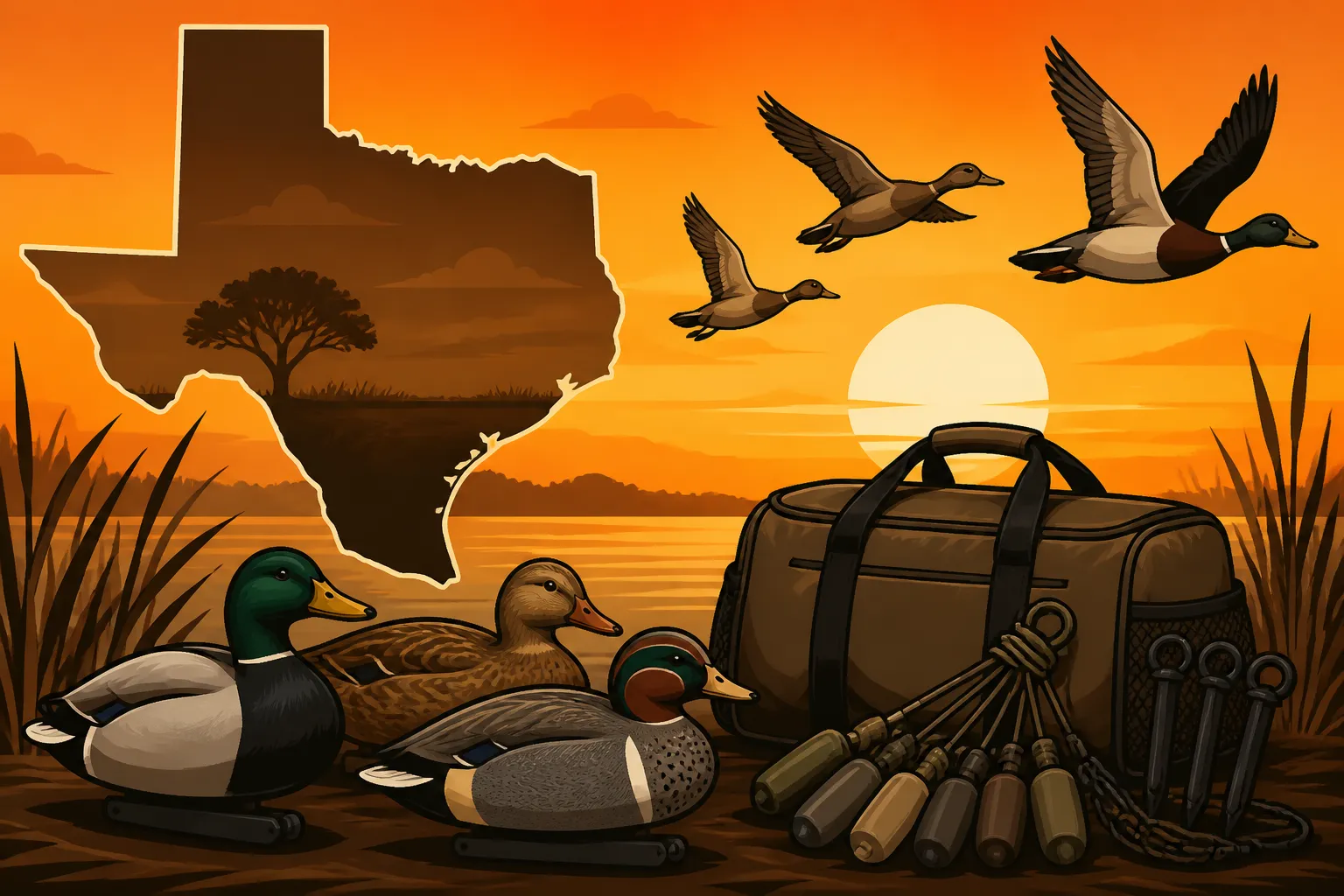
When most people think of duck decoys, mallards usually come to mind first. And for good reason – they're a staple for many hunters, mimicking a common, easily identifiable species. Having a good number of mallard decoys, a mix of drakes and hens, is a solid foundation for almost any spread. However, don't stop there. Pintails are incredibly popular birds, especially in Texas, known for their elegance and often being wary. Adding pintail decoys, particularly drakes with their long tailfeathers, can be a huge draw, especially in coastal or prairie environments.
For divers like redheads, bluebills, and canvasbacks, which are abundant in coastal Texas, you'll need a different approach. Diver decoys typically have a more streamlined profile and are designed to ride higher in the water, often with a contrasting white body that stands out. These birds prefer open water and often raft up in large groups, so a substantial spread of diver decoys, deployed in loose "pods" or long lines, can be very effective. Mixing in some coot decoys, which we'll touch on later, can also add to the realism for wary divers. If you're specifically interested in hunting ducks along the coast, you might find valuable insights in this article on Best Duck Decoy Spread for Texas Coast.
Goose Decoys: Specklebellies and Snows
Hunting geese in Texas, especially specklebellies and snow geese, is an entirely different ballgame from duck hunting. These birds are often hunted in large, open fields, requiring hundreds, sometimes thousands, of decoys to truly replicate a feeding flock. Full-body field decoys, shells, and even silhouettes are common.
Specklebellies are incredibly smart birds. A dozen well-placed full-body speck decoys from brands like Avian-X or Dakota Decoy, often with flocked heads for realism, can be far more effective than a hundred cheap silhouettes. These decoys need to look natural, with varied poses – feeders, sentries, and resters – to give the impression of a relaxed, contented flock. When using full-bodies, consider different stake heights to simulate birds on uneven ground.
Snow geese, on the other hand, often require sheer volume. Huge spreads of white rags, Sillosocks, or Big Foot shells are standard. The goal is to create a massive visual spectacle that signals safety and a plentiful food source. Motion is also key for snows, often achieved with flying decoys or rotary machines. Remember, ethical and effective hunting relies on proper identification and adherence to regulations, so always be mindful of bag limits and species-specific rules outlined in the Texas Duck Zones Explained (High Plains, North, South) guide.
Confidence Decoys and Fillers
Sometimes, the secret to a convincing spread isn't just more of the target species, but adding "confidence" decoys. These are decoys of other, less wary species that, when present, signal to incoming birds that the area is safe and productive.
- Coot Decoys: Coots are fantastic confidence decoys for ducks, particularly divers. They're almost always found mingling with duck species, and their presence suggests a safe feeding or resting area. A dozen or so coot decoys scattered around the edges or in the middle of your duck spread can make a huge difference, especially on pressured birds.
- Gull Decoys: In coastal or large open water scenarios, adding a few gull decoys can also enhance realism. Gulls are opportunistic feeders and are often found where ducks are feeding, scavenging for scraps. Their presence adds another layer of natural activity to your spread.
- Goose Sillhouettes & Shells: While full-body goose decoys are ideal for targeted goose hunts, even a few well-placed goose silhouettes or shells can add a sense of scale and safety to a large duck spread, particularly in open water or field edges.
Table: Common Texas Waterfowl Decoy Types and Their Best Use
| Decoy Type | Species Targeted | Best Environment | Key Feature | Notes |
|---|---|---|---|---|
| Floating Mallards | Mallards, Gadwall | Ponds, Rivers, Marshes | Versatile, common | Essential for most duck spreads. Mix drakes/hens. |
| Floating Pintails | Pintails, Widgeon | Coastal, Prairies | Realistic, elegant | Great for adding realism and drawing wary birds. |
| Floating Divers | Redheads, Canvasbacks | Open Bays, Large Lakes | High visibility | Use in large groups for open water hunting. |
| Full-Body Specklebelly | Specklebellies | Crop Fields | Ultra-realistic | Higher cost, but highly effective for wary geese. |
| Sillosocks/Rags | Snow Geese | Crop Fields | Volume, affordability | Creates massive visual draw, good for large numbers. |
| Floating Coots | Ducks (confidence) | Ponds, Rivers, Marshes | Confidence booster | Signals safety, often ignored by hunters but not by ducks. |
| Floating Gulls | Ducks (confidence) | Coastal, Open Water | Natural element | Adds realism, especially in brackish or saltwater environments. |
Rigging Your Decoys for Success
Having the right decoys is only half the battle; how you rig and deploy them is just as crucial. A tangled mess of lines or decoys constantly drifting out of position will quickly ruin your hunt.
Anchoring Your Spread: Weights and Lines
The type of line and weight you use depends heavily on the water depth, current, and bottom consistency.
- Line: For most shallow to medium depth duck hunting, heavy monofilament or tarred decoy cord is the way to go. Monofilament, especially 200-300 lb test, is virtually invisible in the water, reducing the chance of ducks flaring from seeing your lines. Tarred cord is durable, easy to handle with cold, wet hands, and less prone to tangling. Make sure your lines are long enough for the deepest water you anticipate hunting, plus a little extra for slack, especially if there's any current. Many hunters will pre-cut lines to various lengths (e.g., 3ft, 6ft, 10ft) to match different water depths.
- Weights: The weight of your anchors needs to be sufficient to hold your decoys in place, even in strong winds or currents. Lead mushroom weights are a classic choice, durable and effective. For heavier currents or larger decoys, you might opt for heavier strap weights or even small homemade anchors from rebar or concrete. For shallow water, Texas rigs have become incredibly popular. They use a loop of heavy mono or coated cable, a slip weight, and a crimped loop for the decoy. This allows decoys to be quickly deployed and retrieved without tangling, as the weight slides down the line to the decoy when bunched up. This system is a game-changer for speed and efficiency, especially during those rushed morning setups. If you're a beginner, mastering your rigging technique is just as important as choosing your decoys, and this is covered in more detail in any good guide to Duck Hunting in Texas: Decoys & Blinds.
Transport and Storage Solutions
You've got great decoys and solid rigging, but how do you get them to the blind without losing your mind (or your fingers)? Decoy bags are your best friend here.
- Mesh Decoy Bags: These are ideal for floating decoys. Mesh allows water to drain, preventing mildew and keeping your decoys lighter for transport. Large mesh bags can hold a dozen or more standard duck decoys, making them easy to carry, whether by hand, boat, or ATV. Brands like Avery Outdoors and Rig'Em Right offer excellent, durable mesh bags designed for waterfowl hunting.
- Slotted Decoy Bags: For more expensive, flocked, or painted decoys, slotted bags are a must. These bags keep each decoy in its own compartment, preventing scuffs, chips, and friction that can damage the finish. They're heavier and bulkier but offer superior protection, extending the life and realism of your investment.
- Decoy Sleds and Carts: If you're hunting in areas with a long walk or across rough terrain, a decoy sled or game cart can be invaluable. These can carry large numbers of decoys, blind materials, and other gear, saving your back for when it really counts. Many hunters even use old deer carts or utility carts for this purpose. For those long hauls, considering a robust solution like those discussed in Best Game Cart for Hauling Deer & Hogs can make a world of difference.
Motion Decoys and Add-ons
Static decoys are good, but movement brings a spread to life, tricking even the wariest birds into thinking your spread is a lively, safe haven.
The Power of Spinning-Wing Decoys
Spinning-wing decoys (SWDs) revolutionized duck hunting, and despite some controversy and regulations in certain areas (always check local rules!), they remain incredibly effective. The flashing wings of a Mojo Outdoors Mallard or Lucky Duck spinner mimic a duck landing or taking off, creating a highly visible beacon that draws ducks from a distance.
- Placement is Key: Don't just plop a spinner anywhere. Place them on the upwind side of your spread, often at the edge of your kill hole, so incoming birds focus on the motion and land into the wind, presenting a clean shot. Some hunters prefer two spinners for added visibility, while others find one is plenty.
- Varying Height: Using poles of different heights for your spinners can simulate birds at various stages of flight, adding depth and realism.
- Battery Life: Invest in good quality, long-lasting batteries or even a solar charger, especially for all-day hunts. Nothing is worse than a spinner dying mid-morning when the ducks are still flying.
Jerk Rigs and Swimmers
While spinning-wing decoys get a lot of attention, simpler, more subtle forms of motion can also be incredibly effective, especially on pressured birds that have become wary of spinners.
- Jerk Rigs: A jerk rig is a simple, hunter-operated system that creates ripples and movement across several decoys. It typically consists of a main line with several droppers attached to decoys, anchored at one end, and run back to the blind. A slight tug on the line creates a splash and bobbing motion, simulating feeding ducks. This subtle, natural movement can be deadly, particularly on calm days when the water is still. Rig'Em Right and other brands offer complete jerk rig kits, or you can easily make your own.
- Decoy Swimmers: Battery-operated decoy swimmers, often weighted to stay upright, create continuous ripples and subtle movement without any input from the hunter. While they require batteries, they offer a hands-free way to keep your spread lively. Brands like Higdon Outdoors make excellent swimming decoys that are remarkably lifelike.
Flagging and Spreader Bars
For goose hunting, especially snow geese, flagging is a critical component for bringing birds in close.
- Goose Flags: A goose flag is essentially a fabric wing attached to a pole that you wave to imitate a landing goose or a goose stretching its wings. The motion, combined with calling, can grab the attention of high-flying birds and pull them into your spread. It takes practice to flag effectively, mimicking the natural movements of geese, but when done right, it's incredibly powerful.
- Spreader Bars: These are often used with full-body goose decoys, allowing a single stake to hold two or three decoys in close proximity. This creates a more realistic flocking effect, saving on stakes and setup time, especially when deploying hundreds of decoys. Some brands offer systems that allow multiple decoys to move slightly with the wind on a single stake, adding even more realism.
Supporting Gear for Your Spread
Beyond the decoys themselves, other pieces of gear work in tandem to complete the illusion and ensure your hunting success.
Effective Calling Strategies
A visually convincing decoy spread needs to be backed up by realistic calling. Even the best spread won't hold ducks if your calling sounds like a dying goose.
- Duck Calls: Invest in a good quality duck call and practice, practice, practice! Learn to make a realistic greeting call, a comeback call, and a feeding chuckle. Different calls work for different species; a mallard call won't cut it for pintails. Brands like Zink Calls, Echo Calls, and Rich-N-Tone are popular among serious Texas waterfowl hunters. For beginners, a double-reed call is often easier to learn.
- Goose Calls: Goose calling is a distinct art. Short-reed calls for specklebellies (often called "speck calls") and snow goose calls are essential for goose hunters. Mimicking the excited chatter and deep honks of a feeding flock can be incredibly effective. Again, consistent practice and listening to real birds are key. Combining effective calling with strategic decoy placement is foundational for successful How to Hunt Ducks in Texas (Step by Step).
Concealment for the Hunter
You can have the most perfect decoy spread in the world, but if the ducks see you, it's game over. Effective concealment is non-negotiable.
- Blinds: Whether you're in a permanent pit blind, a mobile layout blind in a field, or a natural bank blind, ensure you blend seamlessly with your surroundings. Use natural vegetation to brush in your blind, breaking up hard lines and making it disappear into the landscape. For mobile hunts, layout blinds from brands like Avery or Final Approach offer excellent concealment in open fields, allowing you to lie flat and pop up for the shot. Don't forget, setting up your blind properly is as crucial as your decoy setup, and you can learn more about this in articles discussing Box Blind vs Tripod vs Ground Blind in Texas.
- Camo: Wear appropriate camouflage for the environment you're hunting. Texas offers diverse terrain, from marsh grass and cattails to stubble fields and coastal brush. Matching your camo to your surroundings will further enhance your concealment. Early season hunting in Texas often means warm weather, so lightweight, breathable camo is a must. If you're getting started and need to outfit yourself, check out guides on Best Hunting Gear for Beginners in Texas (By Budget).
Waders and Waterproof Gear
Texas waterfowl hunting often means getting wet, muddy, and cold. Good waders and waterproof gear aren't just about comfort; they're about safety and endurance.
- Waders: Breathable chest waders are essential for mobility and staying dry. Look for durable, puncture-resistant materials and good quality boots. Neoprene waders are warmer but less breathable, suitable for colder hunts. Breathable waders, often made with Gore-Tex or similar materials, are versatile for the range of temperatures Texas can offer during waterfowl season. Brands like Sitka Gear and LaCrosse offer top-tier waders, though there are many reliable options across price points.
- Waterproof Outerwear: A good waterproof and windproof jacket and pants are crucial for staying comfortable in the blind, especially during cold, wet fronts. Layers are key to adapting to changing temperatures. Remember, keeping dry is about more than just comfort—it's vital for maintaining core body temperature during those long, cold waits.
The GoHunt Advantage in Waterfowl Scouting
While primarily known for big game, the principles of advanced scouting and mapping that platforms like GoHunt provide are incredibly valuable for waterfowl hunters as well. Before you even think about putting out a decoy, understanding the terrain, potential water sources, and access points is critical.
GoHunt's detailed satellite imagery and property boundary information can help you identify prime wetland areas, flooded fields, and water impoundments that might hold birds. You can mark potential blind locations, plan your access routes to avoid disturbing birds, and even identify potential public hunting areas. Knowing exactly where property lines are, for instance, can prevent accidental trespassing when setting up your spread on the edge of a field. This level of preparation, even for something as dynamic as waterfowl, can give you a significant advantage, especially when you're exploring new areas or public lands. Having a good understanding of areas and potential patterns, as you might get from an extensive platform, can help you make better decisions about where and when to deploy your gear.
Disclaimer
Hunting is an inherently dangerous activity. Always prioritize safety, follow all local, state, and federal regulations, and obtain proper licenses and permits. The information provided in this guide is for informational purposes only and should not be considered a substitute for professional instruction or official hunting regulations.