Gulf Coast Hunting in Texas: Waterfowl & Nilgai
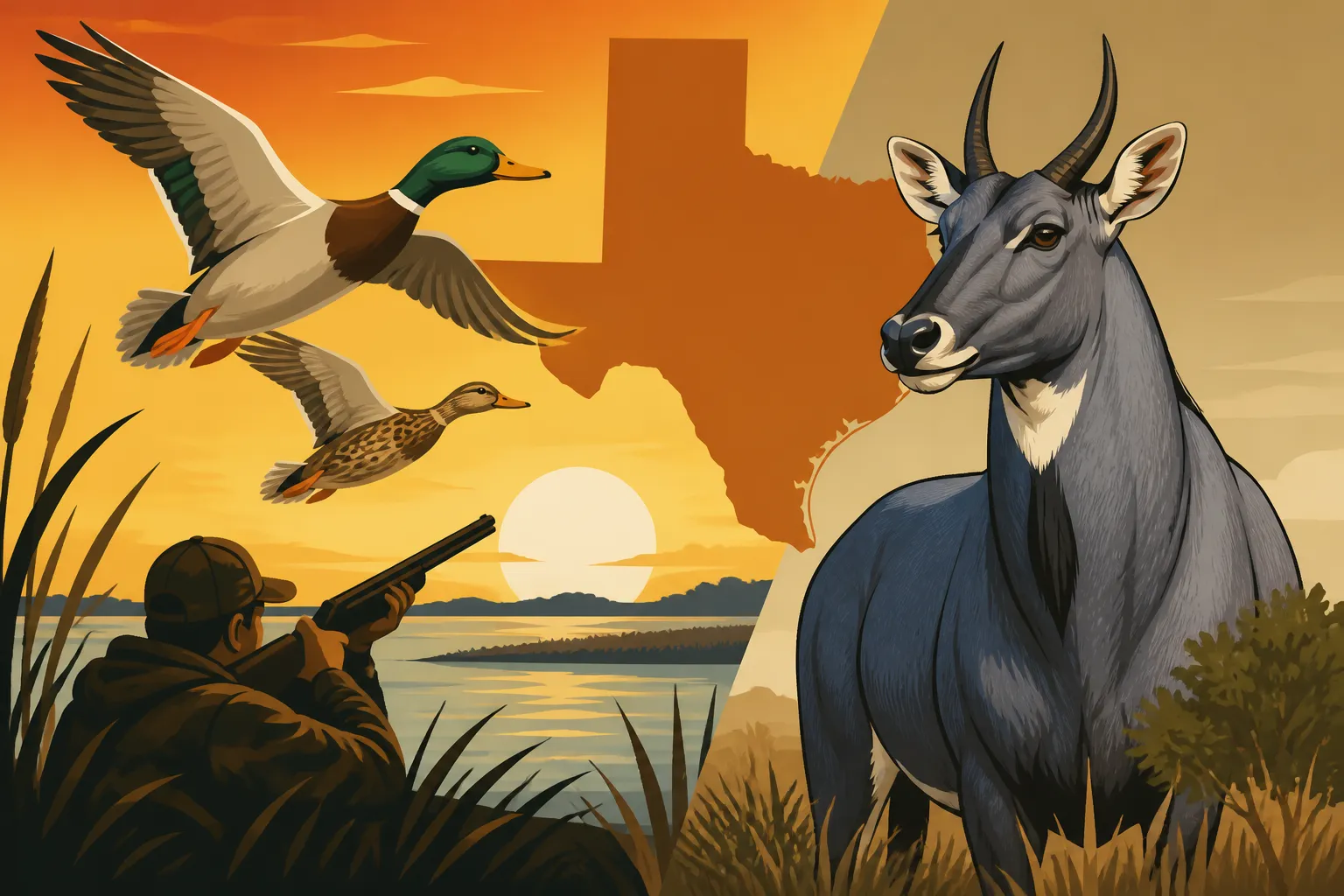
Texas's Gulf Coast offers a hunting experience unlike any other in the state, with its vast wetlands, coastal prairies, and barrier island systems presenting both incredible opportunities and unique challenges. If you've ever dreamt of calling in ducks over saltwater marshes or pursuing the elusive Nilgai antelope amidst thorny brush, this guide is your compass to navigating the distinct seasons, species, and strategies required to succeed in this truly wild region.
The Unique Landscape of the Texas Gulf Coast for Hunting
Hunting on the Texas Gulf Coast isn't just about the game; it's about immersing yourself in a landscape that feels worlds away from the Hill Country or the Panhandle. This unique ecosystem, constantly shaped by tides, winds, and freshwater inflows, dictates everything from animal behavior to access points and hunting strategies. Understanding these nuances is crucial for any hunter looking to make the most of their coastal adventure.
Coastal Prairies and Wetlands: Ecosystem Overview
Imagine vast expanses of cordgrass and salt marsh stretching to the horizon, intersected by meandering bayous and tidal flats. This is the heart of the Texas Gulf Coast's wetland ecosystem, a critical wintering ground for millions of migratory waterfowl. These wetlands are dynamic, with water levels fluctuating dramatically with rainfall and tide cycles. This constant change means that a prime hunting spot one week might be bone dry or too deep the next. The coastal prairies, often bordering these wetlands, are typically flat and interspersed with scattered brush and small stands of trees, providing cover and forage for various species, including hogs and deer, though the focus here is on waterfowl and Nilgai. The soil here is often heavy clay, which can become incredibly slick and muddy after even a moderate rain, making vehicle access a serious consideration. Hunters often find themselves navigating these areas on foot, by ATV, or, most commonly for waterfowl, by airboat or shallow-draft skiff. The constant interplay of freshwater from rivers like the Brazos and Colorado, mixing with the saltwater of the Gulf, creates a brackish environment rich in nutrients, supporting a diverse food chain that draws in an incredible array of wildlife.
Bay Systems and Barrier Islands: What to Expect
Beyond the immediate coastline, the Texas Gulf Coast is defined by its extensive bay systems—like Galveston Bay, Matagorda Bay, and Laguna Madre—sheltered by long, narrow barrier islands. These bays are vital arteries for waterfowl, providing sheltered feeding and resting areas. The shallow, productive waters are teeming with aquatic vegetation and invertebrates, creating a buffet for ducks and geese. Hunting these bay systems often means using boat blinds, layout boats, or finding strategically placed points and islands for shore blinds. Wind and tide are paramount here, influencing bird movement, water depths, and even the safety of your hunting trip. Strong northers can blow bays nearly dry in some areas, exposing mudflats for feeding, while southerly winds can stack water, making certain spots inaccessible. The barrier islands themselves, such as Padre Island National Seashore, offer unique opportunities, though much of this land is protected or restricted. However, adjacent private lands and specific public access points on the mainland side can provide excellent hunting, especially for ducks and geese flying between the Gulf and the bays. Understanding the local currents and depths, often requiring detailed navigational charts and local knowledge, is paramount for safe and successful hunting in these intricate waterways.
Waterfowl Hunting on the Texas Gulf Coast
The Texas Gulf Coast is a world-renowned destination for waterfowl hunting, attracting ducks and geese from the Central and Mississippi Flyways. The sheer volume of birds that winter here is staggering, offering some of the most exciting and challenging wingshooting experiences in North America.
Prime Species and Peak Seasons
When it comes to waterfowl on the Texas Gulf Coast, diversity is the name of the game. You'll encounter a fantastic mix of ducks, including abundant pintails, wigeon, green-winged teal, blue-winged teal, gadwall, and shovelers. Diving ducks like redheads, canvasbacks, and scaup are also common, particularly in the deeper bay systems. For geese, the region is a magnet for snow geese, light geese (blue phase), and Canada geese, especially in the rice fields and agricultural lands just inland from the coast. Sandhill cranes, often called the "ribeye of the sky," are also pursued here, requiring a special permit.
The peak waterfowl season generally runs from late October through January. The Texas Duck & Waterfowl Season 2026: Zones will give you specific dates, but you can usually expect strong numbers of birds arriving with the first major cold fronts in late fall. September Teal Season is a special early opener that draws many hunters to the coast, targeting migrating blue-winged and green-winged teal before the main season even begins. Later in the season, as hunting pressure increases and food sources change, birds can become warier, making scouting and adaptive strategies more critical. Understanding the nuances of these seasons can make a huge difference in your success.
Essential Gear and Decoy Strategies
Successful waterfowl hunting on the coast demands specialized gear. A reliable boat is often non-negotiable, whether it's an airboat for shallow marshes or a flat-bottomed skiff for bays. Waders are a must, and many hunters opt for chest waders with integrated boots due to the varying water depths and muddy bottoms. Camouflage patterned for marsh or open water is essential, and remember that layers are your friend – coastal weather can shift dramatically from chilly mornings to warm afternoons.
Decoy spreads are a critical component of coastal waterfowl hunting. For ducks in open marsh or bay areas, large spreads of 50 to 100 decoys, often including motion decoys like spinning wing models, are effective for attracting high-flying birds. Focusing on species-specific decoys that match the birds you're seeing can also pay dividends. For geese, especially snow geese in fields, massive spreads of several hundred "rags," shells, or full-body decoys are often deployed to mimic a large feeding flock. Spread layout is key; learn more about effective arrangements in our guide on the Best Duck Decoy Spread for Texas Coast. Remember to bring plenty of line and weights, as strong coastal winds can quickly turn an organized spread into a tangled mess. A good shotgun (12 gauge being most common) and non-toxic shot are mandatory, with shot sizes ranging from #2 to BB depending on the target species.
Public vs. Private Land Access for Ducks and Geese
Access to prime waterfowl hunting on the Texas Gulf Coast can be a significant hurdle. Much of the most productive marshland and bay access is privately owned, often leased by hunting clubs or outfitters. Booking a guided hunt through one of the many reputable outfitters in towns like Rockport, Port O'Connor, or Winnie is a popular option, especially for out-of-state hunters or those new to the area. These outfitters provide access, boats, blinds, and experienced guides, taking much of the logistical headache out of the equation.
However, public hunting opportunities do exist and can be excellent if you know where to look and put in the effort. The Texas Parks and Wildlife Department (TPWD) manages several Wildlife Management Areas (WMAs) along the coast that offer waterfowl hunting. Access to many WMA hunts is through the annual drawn hunt system, which can be competitive. Additionally, some WMAs and state parks offer general public hunting opportunities, often requiring an Annual Public Hunting Permit. It's crucial to consult the TPWD Outdoor Annual for specific regulations, drawn hunt deadlines, and WMA information. Our guide on Public Hunting in Texas: WMAs & Annual Public Hunting Permit provides more details on how to navigate these options. Scouting is paramount for public land success; tools like onX Hunt can be invaluable for identifying public boundaries, access points, and potential bird movement patterns.
Nilgai Antelope Hunting in the Gulf Coast Region
While waterfowl often steal the spotlight, the Texas Gulf Coast is also home to an extraordinary exotic species: the Nilgai antelope. These magnificent Asian imports, found in free-ranging herds primarily on large ranches in the southern coastal counties, offer a truly unique and challenging hunting experience.
Understanding Nilgai Behavior and Habitat
Nilgai, also known as blue bull, are the largest antelope species in Asia, and Texas is one of the only places in the world where you can hunt them free-range outside of their native habitat. They thrive in the vast, dense brush country of South Texas, particularly along the coast from areas around Corpus Christi down to the Lower Laguna Madre. These animals are incredibly hardy and adapted to hot, arid conditions, preferring thick thornscrub and coastal prairie edges where they can find both cover and forage.
Nilgai are highly skittish with excellent eyesight and a keen sense of smell, making them extremely challenging to approach. They are often found in herds, with cows and calves forming larger groups, while mature bulls may be solitary or in smaller bachelor groups. They are most active during the cooler parts of the day – early morning and late afternoon – but will move throughout the day, especially if pressured. Their diet consists of grasses, forbs, and browse. When spooked, they can quickly disappear into the dense cover, often running significant distances before stopping. Understanding their preferred bedding areas, travel corridors, and feeding patterns is critical, and often means spending a lot of time glassing open areas adjacent to thick brush.
Hunting Methods and Shot Placement
Hunting Nilgai is typically done by spot-and-stalk or safari-style (high-rack) hunting on large private ranches. Due to their elusive nature and tough hide, a powerful rifle chambered in calibers like .300 Win Mag, .338 Win Mag, or even .375 H&H is highly recommended. Good quality optics are also essential for spotting these animals in the dense vegetation. Shots can be long, often ranging from 150 to 300 yards, so proficiency with your rifle is a must.
Shot placement is paramount for Nilgai. They have an incredibly tough hide and a surprisingly low heart/lung placement compared to deer. A central shoulder shot, aiming for the "crease" behind the shoulder but slightly lower than you would for a whitetail, is generally recommended to anchor them quickly. Avoid shots too far back, as they can lead to lengthy and often unsuccessful tracking jobs in unforgiving terrain. Many experienced Nilgai hunters will tell you to err on the side of hitting the shoulder bone directly rather than risking a gut shot. Our guide on Best Shot Placement for Hogs can offer some transferable principles for large, tough animals, though Nilgai present their own specific challenges. Once down, immediate field dressing is critical, especially in the warm coastal climate. Refer to How to Cool a Deer Fast in Texas Heat for principles that apply well to any large game in hot weather.
Accessing Nilgai Hunts: Ranches and Permits
Free-ranging Nilgai are found almost exclusively on massive private ranches in South Texas, particularly in counties like Kenedy, Kleberg, and Willacy. The King Ranch is famously home to a significant population, among other large landholdings. This means that public land hunting for Nilgai is virtually nonexistent. Access is almost exclusively through booking a guided hunt with a reputable outfitter or by securing a spot on a private lease that has a Nilgai population.
Nilgai are classified as an exotic species in Texas. This is great news for hunters because it means there are no closed seasons or bag limits on private land. You don't even need a traditional Texas hunting license to hunt exotics on private property, though it's always a good idea to have one, especially if you plan to combine it with other hunting activities. However, you do need landowner permission. Outfitters will handle all the necessary permissions and provide a tag or permit equivalent. Costs for Nilgai hunts can vary widely depending on the ranch, the guide service, and whether it's a package deal. Researching different outfitters and understanding what's included in their packages is essential. Our article Nilgai Hunting in South Texas offers more insights into finding these unique opportunities. If you're looking for more general information on how to pursue this unique animal, check out our How to Hunt Nilgai in Texas (Step by Step) guide.
Navigating Regulations and Safety on the Coast
Hunting the Texas Gulf Coast requires more than just knowing where the animals are; it demands a thorough understanding of unique regulations, ever-changing weather patterns, and specific safety considerations inherent to coastal environments. Ignoring these aspects can quickly turn an exciting trip into a dangerous one.
Key Hunting Regulations and Licenses
Before you even pack your bags, make sure your paperwork is in order. For waterfowl, a valid Texas hunting license is mandatory for all residents and non-residents, with specific endorsements required. This includes the Migratory Game Bird Endorsement and Harvest Information Program (HIP) certification. You will also need a federal duck stamp if you are 16 years or older. All migratory game birds have specific bag limits and possession limits, which vary by species and zone. The Texas Gulf Coast falls within specific waterfowl zones, so it's critical to know which zone you're in and abide by those dates and limits. The Texas Hunting License: Cost, Types & How to Buy (2026) and Texas Migratory Bird Endorsement & HIP Certification guides are excellent resources to ensure you're fully compliant.
For Nilgai and other exotic species on private land, the regulations are much simpler, as they are not regulated by the state as game animals. However, if you combine your exotic hunt with any native game animal, such as feral hogs or deer, you will need the appropriate licenses and endorsements. Always consult the current Texas Parks and Wildlife Department Outdoor Annual for the most up-to-date information, as regulations can change annually. Ignorance of the law is never an excuse, and game wardens are active on the coast.
Overcoming Coastal Challenges: Weather, Tides, and Terrain
The Gulf Coast's environment is dynamic and can be unforgiving. Weather is perhaps the biggest factor. Sudden thunderstorms, strong winds, and rapid temperature drops are common. Always check the marine forecast before heading out, and be prepared for changing conditions. Hypothermia is a real risk, even in Texas, if you get wet in cold weather. Conversely, heat and humidity, especially during early seasons or Nilgai hunts, can lead to heat exhaustion or dehydration. Always carry plenty of water.
Tides play a crucial role, particularly for waterfowl hunting in marsh and bay systems. What might be an accessible flat at low tide could be too deep for wading or even a boat at high tide. Learning to read tide charts and understanding how local winds affect water levels is essential. A strong north wind, for instance, can push water out of bays, leaving them extremely shallow. Terrain, too, presents its own challenges. Coastal marshes are often soft, muddy, and riddled with hidden potholes. Best Snake Boots for Texas Hunting are highly recommended for protection against venomous snakes and thorns. Navigating dense coastal brush for Nilgai requires sturdy footwear and protective clothing to ward off thorns and insects. Always let someone know your float plan or hunting location and expected return time.
Planning Your Texas Gulf Coast Hunt
A successful hunt, especially in a challenging environment like the Texas Gulf Coast, hinges on meticulous planning and preparation. Don't leave anything to chance!
Scouting Strategies with Technology
In today's hunting world, technology is your best friend, especially for public land or new lease scouting. Satellite imagery and topographic maps provided by hunting apps like onX Hunt are invaluable for identifying marsh access points, potential blind locations, water depths, and property boundaries. You can mark waypoints for decoy spreads, identify optimal boat lanes, or pinpoint where a marsh drains. For Nilgai, these apps help you visualize the dense brush, identify clearings, and plan your stalk routes, all from the comfort of your home. Using these tools to scout before you even arrive on the ground can save you countless hours of unproductive searching.
Beyond mapping, general hunting intelligence platforms like GoHunt can provide valuable insights, though perhaps less specific to the Texas Gulf Coast than to Western states. They can help with understanding game trends or finding outfitters. For waterfowl, paying attention to local forums, social media groups, and reports from TPWD can give you an idea of bird concentrations and migration patterns. If you're planning a waterfowl hunt, checking out local guides' reports or fishing reports can give clues about current conditions, especially water levels, which greatly affect duck movement and accessibility.
Essential Preparations and What to Pack
Preparation goes beyond just securing your license. For waterfowl, ensure your boat is in top condition, including motor, fuel, lights, and safety equipment like life jackets. Decoys need to be rigged and ready. For Nilgai, practice shooting your rifle from various positions, as opportunities can be fleeting.
Given the coastal climate, packing smart is key. Even if it's warm, always have rain gear and extra layers for sudden cold fronts. Sun protection—hats, sunglasses, and sunscreen—is vital. Bug spray is practically a necessity, especially during warmer months or stagnant conditions. A well-stocked first-aid kit, including snake bite emergency supplies, should always be with you. Don't forget ample food and water. For game care, especially for a large animal like Nilgai or multiple ducks, robust coolers are critical. Our guide on Best Coolers for Texas Hunting (Yeti & Alternatives) offers some great options for keeping your harvest cool and safe, which is crucial in the often-warm coastal temperatures. Whether you're chasing high-flying ducks or stalking the elusive Nilgai, being prepared for anything the Texas Gulf Coast throws at you will dramatically increase your chances of a safe and successful hunt.
| Waterfowl Species | Typical Habitat | Peak Season (Approximate) | Bag Limit (Daily) | Key Identification |
|---|---|---|---|---|
| Green-winged Teal | Shallow marshes, ponds | Nov-Jan | Varies by species, part of 6 duck limit | Small, fast-flying, green speculum |
| Blue-winged Teal | Shallow marshes, ponds | Sept (early season), Oct-Dec | Varies by species, part of 6 duck limit | Small, fast-flying, blue patch on wing |
| Pintail | Marshes, bays, rice fields | Nov-Jan | Varies by species, part of 6 duck limit | Long neck, long tail (males), graceful flight |
| Wigeon | Marshes, bays, ponds | Nov-Jan | Varies by species, part of 6 duck limit | White patch on wing, whistling call |
| Redhead | Bays, open water | Nov-Jan | Varies by species, part of 6 duck limit | Red head, grey body, broad bill |
| Snow Goose | Coastal prairies, rice fields | Nov-Jan | 20 (Light Geese) | All white with black wing tips |
| Canada Goose | Fields, large lakes/bays | Nov-Jan | 3 (Dark Geese) | Black neck, white chin strap |
| Sandhill Crane | Coastal prairies, fields | Dec-Jan | 3 (Requires special permit) | Tall, grey, long legs/neck, loud call |
Note: Always consult the current Texas Parks and Wildlife Department Outdoor Annual for exact and updated regulations, bag limits, and season dates.
Disclaimer
Hunting regulations and conditions can change. Always consult the latest Texas Parks and Wildlife Department Outdoor Annual and federal regulations before planning any hunting trip. This guide is for informational purposes only and does not supersede official government publications. Safety should always be your top priority in the field.