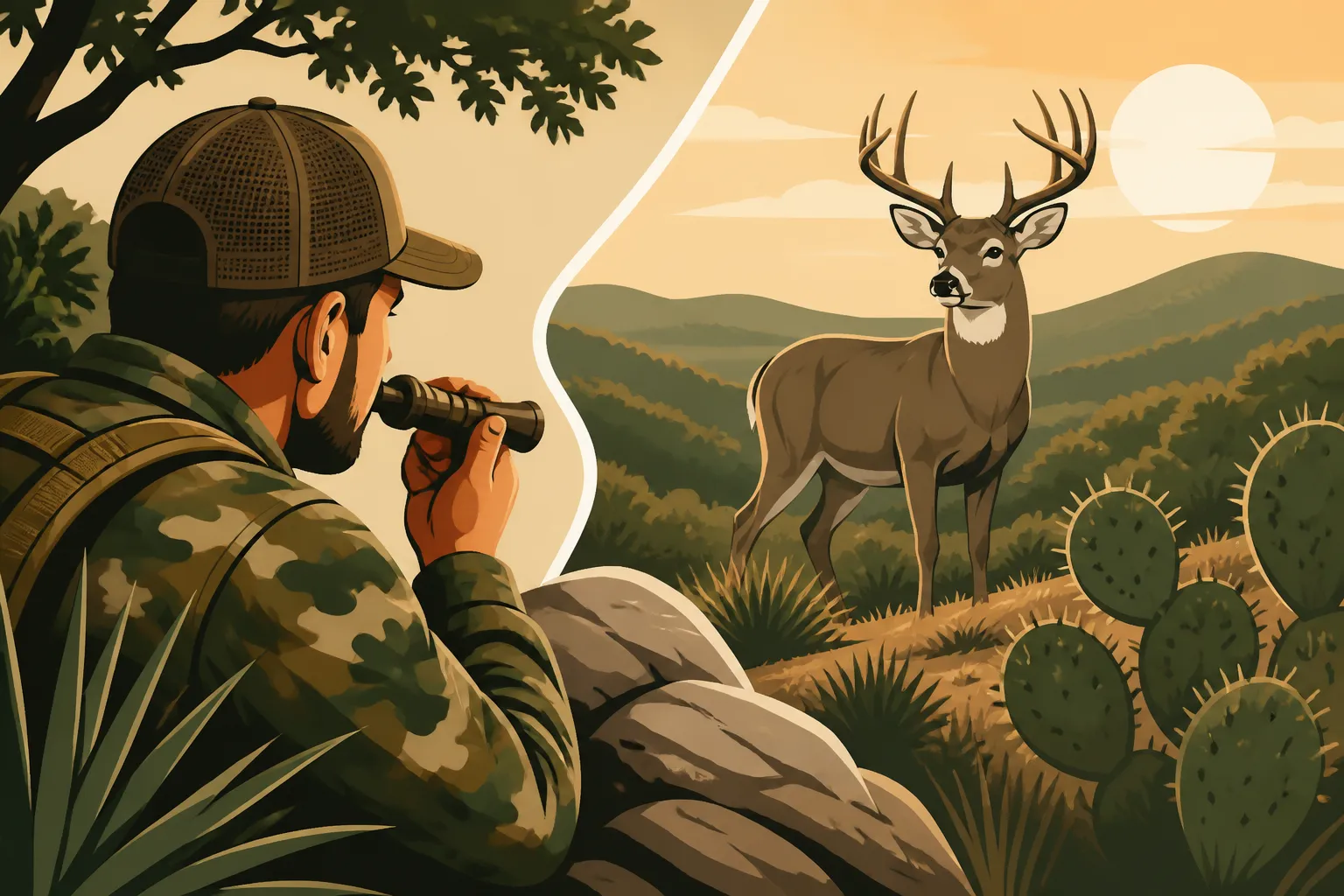
How to Grunt and Rattle Whitetail in the Hill Country
Hunting whitetail in the rugged, beautiful Texas Hill Country can be incredibly rewarding, but those elusive bucks often seem to vanish into the dense cedar breaks and oak mottes just when you think you've got them patterned. The frustration of sitting in a blind, watching nothing move, is a feeling every hunter knows. This guide is here to transform your hunts by teaching you the nuanced art of grunting and rattling, turning those quiet moments into thrilling encounters with mature Hill Country whitetails.
Understanding Whitetail Communication in the Hill Country
Before you even think about picking up a call or a set of antlers, you’ve got to understand the language you’re trying to speak. Whitetail deer, especially in the diverse terrain of the Hill Country, rely on a surprisingly complex system of vocalizations and non-verbal cues to communicate with each other. Learning these signals is like getting a secret decoder ring for the deer woods, giving you a serious edge. It’s not just about making noise; it’s about making the right noise at the right time.
The Language of Grunts: What They Mean
Grunts are perhaps the most versatile and commonly heard vocalizations from whitetail deer. They are short, guttural sounds that convey a range of messages depending on their intensity, duration, and context. From a simple "here I am" to an aggressive "stay away from my doe," understanding these variations is crucial for effective calling. You wouldn't yell "hello" at a stranger the same way you'd warn a child, and deer don't just "grunt" generically either.
A soft, contact grunt, for example, is often used by deer to locate each other, especially during feeding or when a doe is looking for her fawn. This isn't usually the grunt you're trying to replicate to pull in a buck, but it's important to recognize. The most common grunt hunters try to mimic is the "buck grunt," which is deeper and more assertive. It’s essentially a buck signaling his presence and dominance. Then there's the "tending grunt," a rapid series of grunts made by a buck intensely pursuing a doe that is close to estrus. This one is often accompanied by a lowered head and flared nostrils, a clear sign of his focus. A "snort-wheeze," while not strictly a grunt, is often associated with buck vocalizations and is a highly aggressive sound, signaling a challenge to another buck. It’s the whitetail equivalent of a schoolyard bully puffing out his chest. Knowing when and how to deploy these different sounds is paramount to success in the varied landscapes of the Hill Country, from the dense scrub to the more open ranch lands.
Rattling Repertoires: Simulating a Buck Fight
Rattling is all about replicating the sound of two bucks fighting, a primal scene that triggers curiosity and territorial instincts in other deer. This isn't just noise; it's a narrative. A full-blown buck fight can be a loud, intense affair, involving clashing antlers, grunts, and the sounds of hooves scuffing the ground. It's a high-stakes drama playing out in the woods, and nearby bucks, whether dominant or subordinate, are often drawn in to investigate. They might want to assert their own dominance, size up the competition, or even slip in to breed a doe while the big boys are busy.
The key to effective rattling is not just to make the sound of antlers hitting, but to paint a vivid auditory picture. This means incorporating pauses, scrapes, and grunts to make the "fight" sound as realistic as possible. Imagine two heavy-antlered bucks, locked in a brutal contest for breeding rights, crashing through the brush in the cedar breaks. That’s the image you want to conjure in the mind of a nearby buck. The sounds can range from light sparring, like two young bucks testing each other, to a full-on brawl, where mature deer are truly laying it all on the line. The specific sounds you create and how you choreograph them will depend heavily on the time of year and the deer activity you're observing or anticipating.
Essential Gear for Grunting and Rattling
You wouldn't try to build a house without the right tools, and the same goes for effective deer calling. Having the right grunt calls and rattling devices can make a world of difference in your ability to mimic realistic deer sounds. The market is flooded with options, so knowing what to look for and what works best in the Texas Hill Country environment is key to not wasting your hard-earned money on gear that just collects dust.
Choosing the Right Grunt Call
The sheer variety of grunt calls out there can be overwhelming. You've got everything from simple, fixed-reed calls to adjustable models that let you change pitch and tone. For the Hill Country, where deer populations can be dense and highly pressured, versatility is your friend. A call that allows you to easily switch between a deep, mature buck grunt and a softer, tending grunt can be incredibly effective. Look for calls that offer good resonance and volume control, allowing you to project sound through thick brush or dial it back for close encounters.
Many experienced Texas hunters lean towards calls that have an adjustable O-ring or tube, giving them the flexibility to mimic a wider range of vocalizations. Some popular brands like Flextone or Primos offer calls known for their realistic sounds and durability. Practice with your chosen call well before season, learning to manipulate it to produce convincing sounds. Don't just make a noise; practice the rhythm and inflection of actual deer grunts. This will help you get comfortable enough to use it naturally when that moment of truth arrives.
Selecting Antlers or Rattle Bags
When it comes to rattling, your primary choices are natural antlers, synthetic antlers, or rattle bags. Each has its pros and cons, and your decision might come down to personal preference, budget, and how much noise you're willing to make in the truck on the way to the lease.
| Device Type | Pros | Cons | Best Use Case |
|---|---|---|---|
| Natural Antlers | Most authentic sound, satisfying impact. | Bulky, noisy to carry, can pinch hands. | Aggressive, realistic fights in open areas. |
| Synthetic Antlers | Durable, less noisy to carry, ergonomic grips. | Can sound slightly less "natural" than real antlers. | Versatile, good for varying fight intensities, less wear and tear. |
| Rattle Bags | Compact, quiet to carry, easy to use with one hand. | Less realistic sound, lacks the "clash" of real antlers. | Soft sparring, discreet calling, beginners. |
Natural antlers, often shed or harvested, undeniably produce the most authentic, bone-on-bone sound. The distinct crack and grind of real bone hitting bone is hard to perfectly replicate. However, they are bulky, can be noisy to carry through the brush, and can even hurt your hands during an intense rattling sequence. Synthetic antlers, like those from Rattling Forks, offer a great compromise. They're often designed to mimic the sound of real antlers while being more durable, quieter to carry, and easier on your hands. Rattle bags, on the other hand, are the most compact and discreet option. They're excellent for very soft sparring or when you need to make minimal movement, but they often lack the convincing "clash" of true antlers, making them less ideal for trying to simulate a full-blown buck fight. Your choice often comes down to the style of hunting you prefer and the conditions of your specific hunting spot in the Texas Hill Country.
Mastering the Art of Grunting in the Texas Hill Country
Grunting isn't just random noise; it's a carefully timed and executed tactic that can pull in wary bucks. The Hill Country's dense cover means deer often move through thick brush, and a well-placed grunt can sometimes be the only way to get their attention and make them commit to coming into view.
Different Grunt Types and When to Use Them
Knowing when to deploy a specific grunt is just as important as knowing how to make it. During the early season or pre-rut, a soft "contact" or "social" grunt might be effective to pique curiosity, especially from younger bucks or does. These are non-threatening and simply announce a deer's presence. As the pre-rut heats up and bucks become more active, you'll want to shift to more assertive "buck grunts." These are deeper, slightly louder, and convey a sense of a buck actively cruising for does.
The most exciting time for grunting is during the peak of the rut, typically in late October through early December in many parts of the Hill Country. This is when the "tending grunt" becomes your ace in the hole. When you hear about hunters having success calling in bucks, often it's because they've effectively mimicked a tending grunt sequence. Imagine a hot doe being pursued by a buck; his insistent, rapid grunts are a powerful draw for other bucks looking for a breeding opportunity. Be mindful of the context; a lone, aggressive grunt can work for a dominant buck, but a series of tending grunts can imply a hot doe is nearby, potentially bringing in satellite bucks or even challenging the "grunting" buck.
Calling Sequences and Volume Control
A single grunt might get a buck's attention, but a well-structured sequence tells a more compelling story. For instance, a common and effective sequence starts with a couple of soft buck grunts, followed by a pause, and then a few more slightly louder grunts. This mimics a buck moving through the brush, looking for company. If you're really trying to push the envelope during the rut, you can incorporate tending grunts – short, sharp, rapid grunts, sometimes ending with a snort-wheeze, to sound like a buck actively working a hot doe.
Volume control is absolutely critical, especially in the relatively open and sometimes windy conditions of the Hill Country. Start softly, particularly if you suspect deer are close. You don't want to blow out a call and spook a deer that's already within hearing range. If there's no response, gradually increase your volume. In heavy cedar or thick brush, you might need to project your calls more forcefully to cut through the cover. Remember, the goal is to sound natural, not like a human blowing on a plastic tube. Practice making your grunts fade in and out as if a deer is moving, and vary the cadence to keep it believable.
Effective Rattling Techniques for Hill Country Bucks
Rattling is an exhilarating tactic, especially when a buck comes crashing in to investigate. But just like grunting, there's a real art to making it sound convincing enough to fool a mature whitetail in the Hill Country.
Mimicking Different Fight Intensities
Not all buck fights are created equal. Sometimes it's a quick sparring match, other times it's a knockdown, drag-out brawl. Your rattling technique should reflect this variety. Early in the pre-rut, a light sparring session, characterized by softer, shorter antler clashes with more pauses, can be very effective. This mimics younger bucks or even older bucks just testing each other, a non-threatening invitation. As the rut approaches and testosterone levels surge, you'll want to escalate the intensity.
A full-blown fight sequence involves much more aggressive clashing of antlers, often sustained for 30 seconds to a minute, with brief pauses, then another flurry of crashes. Incorporate the sound of brush breaking, hooves scuffing, and perhaps a few aggressive buck grunts or even a snort-wheeze. This imitates two mature bucks going at it hard, a sound that can trigger a strong response from other dominant bucks in the area. Remember, Hill Country bucks are often very territorial. Observing how deer react to real fights (if you're lucky enough to witness one) or even video footage can give you invaluable insights into how to make your sequences more realistic.
Combining Rattling with Grunts and Scrapes
The most effective rattling isn't just antlers clashing; it's a symphony of sounds that tells a complete story. Once you've created a rattling sequence, integrate grunts into it. As the "fight" intensifies, add aggressive buck grunts. When the rattling stops for a brief pause, maybe one or two grunts, as if one of the fighters is catching his breath or warning off an interloper. This combination makes the scenario much more believable.
Consider adding sounds of a mock scrape. You can use your boot to scuff the ground, breaking up dirt and leaves, simulating a buck pawing at the earth during a territorial display. You might even break a small branch or two to mimic a buck rubbing his antlers on a sapling. The goal is to create a multi-sensory illusion of a full-blown buck encounter. When you're trying to pull in a buck from a distance in the dense Hill Country brush, these layered sounds are much more likely to grab his attention and convince him to investigate. Think about the sensory experience: a buck hearing the fight, maybe smelling a mock scrape you've made, and hearing the grunts. That's a powerful combination that plays on his instincts.
Timing and Situational Awareness
Even the most perfect grunt or rattling sequence will fall flat if the timing isn't right or you're not paying attention to what the deer are telling you. The Hill Country's unique environment, with its varying topography and vegetation, means that paying close attention to the season, weather, and current deer activity is absolutely paramount.
Best Times of Day and Season for Calling
While you can technically grunt at any time, certain periods offer significantly higher chances of success. The prime time for both grunting and rattling in the Texas Hill Country is during the rut, which typically peaks from late October through early December. During this period, bucks are actively searching for does, their testosterone levels are high, and they are much more susceptible to calls that mimic other bucks or hot does. Before the rut, during the pre-rut, aggressive grunting and rattling can sometimes work to draw out curious or dominant bucks establishing their territories. After the rut, calling effectiveness generally decreases as bucks are exhausted and less focused on breeding.
The best times of day are typically early mornings and late evenings, mirroring the deer's natural movement patterns. Just after sunrise and before sunset, bucks are often on their feet, moving between bedding and feeding areas, making them more likely to hear and respond to your calls. Midday can also be productive during the peak of the rut, as bucks will continue to search for does throughout the day, driven by their intense biological imperative. Don't be afraid to try a rattling sequence mid-morning, especially if you know there's a lot of rut activity. Just be patient and give the calls time to work; a buck might be a little ways off when he first hears you.
Reading the Deer and Adapting Your Strategy
One of the biggest mistakes a hunter can make is to stick rigidly to a calling plan without observing what the deer are actually doing. Every hunting situation is dynamic. When you make a call, watch for subtle cues: a flick of an ear, a head turn, or a deer stopping its movement. If a buck hears you and looks your way but doesn't commit, he might be curious but wary. This is when you might try a softer, more inquisitive grunt, or a very light tickle of the antlers to show you're not a threat, but you're still there.
If a buck comes in cautiously, circling downwind, it means he's trying to scent-check the source of the sound. This is where your scent control becomes absolutely critical. If he winds you, the game is over. Conversely, if a buck comes charging in aggressively, don't be afraid to escalate your calling with a snort-wheeze or a more intense rattling sequence to challenge him further and draw him closer. Adaptability is key. Don't be afraid to change your strategy based on the deer's response. Sometimes, less is more, and other times, you need to go all out to seal the deal. For more on observing deer movement, check out our guide on how to pattern bucks with trail cameras.
Common Mistakes to Avoid
Even seasoned hunters can make mistakes when grunting and rattling, especially in a challenging environment like the Texas Hill Country. Avoiding these common pitfalls can significantly increase your chances of success.
Overcalling and Under-calling
There's a delicate balance to strike between calling enough to attract attention and calling so much that you spook deer. Overcalling is a very common mistake, particularly with enthusiastic beginners. If you're constantly blowing on your grunt call or clashing antlers every few minutes, you're not sounding natural. In the natural world, bucks don't engage in fights or grunt continuously for long periods. Overcalling can make a deer suspicious, causing them to circle wide, hang up out of range, or simply disappear.
Conversely, under-calling can also be a problem. If you make one soft grunt and then wait an hour, a buck might have heard you but lost interest, or simply passed through the area before you called again. The trick is to establish a rhythm. Start with a sequence, wait 10-15 minutes, and if there's no response, try another, perhaps slightly different, sequence. Always give the deer enough time to respond; they don't always come running right in. Sometimes it takes them a while to decide if they want to investigate.
Spooking Deer: Scent, Movement, and Noise
The number one rule in deer hunting is to avoid spooking deer, and calling can be a double-edged sword if not handled carefully. Scent control is paramount. A buck responding to your calls will almost always try to circle downwind to get a whiff of whatever made the sound. If he catches your human scent, he's gone, and he's likely to alert every other deer in the area. Shower with scent-free soap, use scent-eliminating sprays on your clothes, and play the wind to your advantage. This is especially true when hunting deer in Texas: deer are constantly on alert.
Movement and extraneous noise are also critical. When you're rattling or grunting, minimize all other movement. If a buck is coming in, even a slight shift of your body in a blind or stand can be enough to send him bolting. Be still, patient, and ready. Also, avoid any metallic clanking of gear or loud footsteps when approaching your setup. The Hill Country brush is noisy enough on its own; you don't need to add to the ruckus. Keep your movements fluid and slow, almost like a deer would. For more insights into ethical hunting practices, you might want to read our guide on how to field dress a deer in hot weather, as clean processing also plays a role in overall hunt success.
Disclaimer
Hunting is an activity with inherent risks. Always prioritize safety, understand and follow all local, state, and federal hunting regulations, and obtain proper licenses and permits before heading into the field. The information provided here is for educational purposes only and should not replace professional guidance or personal judgment.