How to Hunt Red Stag on a Texas Lease
The sting of a rejected elk tag application or the sheer expense of a mountain hunt can leave many hunters feeling like a true "big game" experience is out of reach. However, Texas offers a world-class alternative right in our backyard: the red stag. This guide solves the mystery of targeting these massive exotics on a private lease, providing the tactical blueprint you need for success.
Understanding Red Stag Behavior and Habitat on Texas Leases
If you are coming from a background of hunting native species, the first thing you need to realize is that a red stag is not just a "big deer." They are social, vocal, and incredibly intelligent animals that behave much more like Rocky Mountain elk than our local whitetails. On a Texas lease, they tend to congregate in small herds, often led by a dominant hind (female). Understanding this social hierarchy is the first step in learning Best Hunting Method for Red Stag in Texas because if you spook the lead hind, the trophy bull you’ve been tracking for three days will disappear into the cedar breaks before you even see him.
In the Texas Hill Country or the South Texas brush, red stags gravitate toward heavy cover during the day but require open park-like settings or clearings for grazing in the late afternoon. Unlike whitetails, which might browse on a wide variety of forbs and twigs, stags are primary grazers. They want grass. If your lease has a mix of dense live oak motts and open coastal Bermuda fields or even just wide senderos, you have a recipe for stag activity. I’ve spent many mornings in places like Kerrville or Mason just listening to the brush break; stags are heavy, and they move with a level of confidence—or perhaps arrogance—that native deer simply don't possess.
One often overlooked aspect of their behavior is their love for water. Red stags are notorious for wallowing. If you find a muddy depression near a stock tank that looks like a grenade went off in a puddle, you’ve found a stag wallow. They will roll in this mud to cool down and coat themselves in scent during the rut. Scouting these water sources is just as important as finding their bedding areas. When I’m prepping for a season, I’ll head to Amazon to grab some affordable trail camera mounts and extra batteries to monitor these wallows 24/7. It’s the most reliable way to see which bulls are active in your specific corner of the lease.
The European Elk Personality
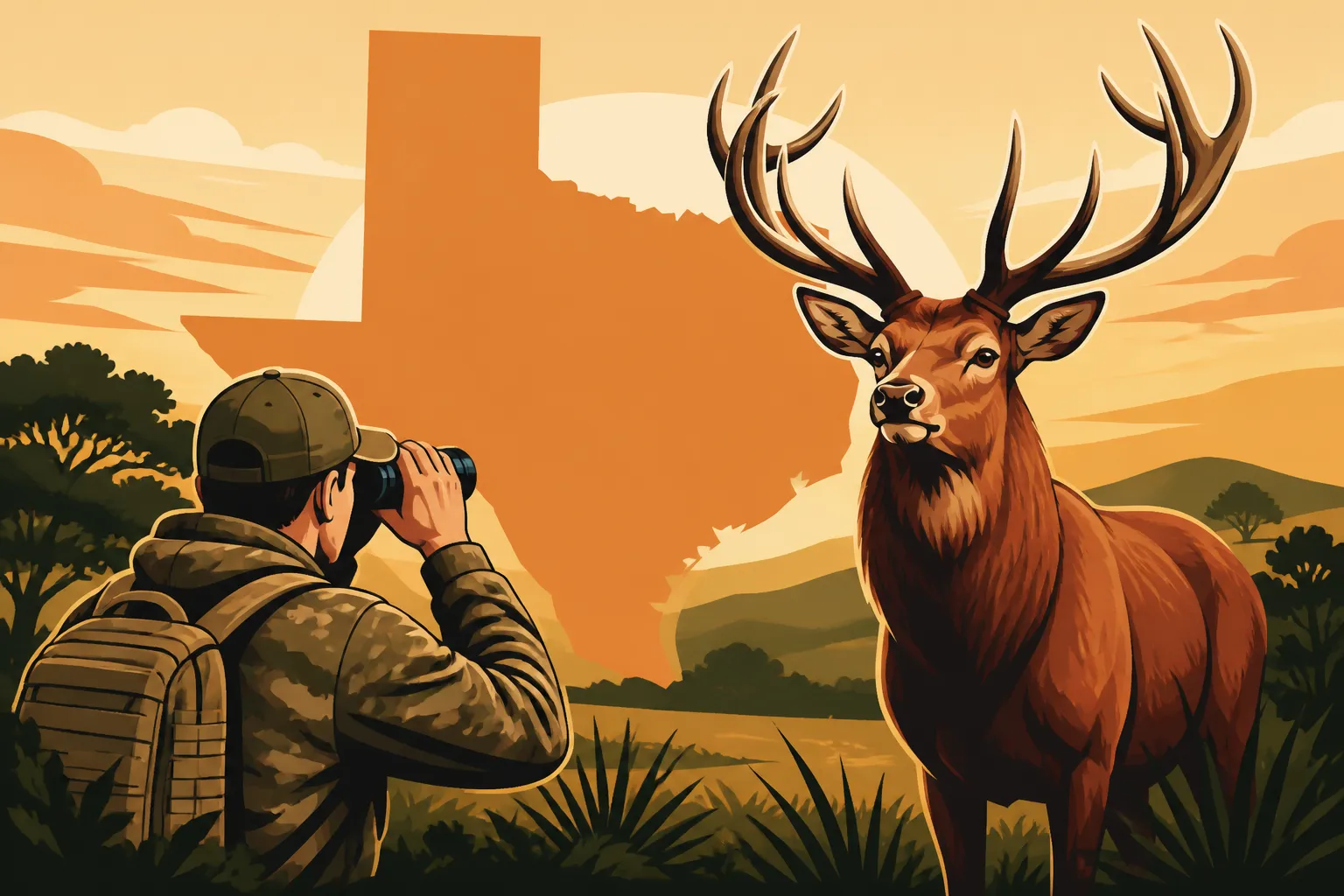
In the hunting world, we often call red stags "European Elk" for a reason. They have a regal, almost haunting presence. When a mature bull enters a clearing, he doesn't sneak in like a whitetail buck. He claims the space. This personality means that they are often easier to spot from a distance but much harder to close the gap on. Their eyesight is phenomenal, and they are constantly testing the wind. If you are used to How to Hunt White-Tailed Deer on a Texas Lease, you’ll need to double down on your scent control and patience.
Because they are an exotic species, many hunters wonder Is There a Season for Red Stag in Texas?. Technically, you can hunt them year-round, but their "personality" changes drastically depending on the month. From late September through October, they enter the "roar." This is when the bulls become aggressive, vocal, and significantly less cautious. If you want the true stag experience, this is the window you want to target. Outside of the roar, they become "ghosts of the brush," reverting to a highly cautious, nocturnal existence that requires a completely different tactical approach.
Finding the Right Lease Terrain
Not all Texas leases are created equal when it comes to stags. These animals need room to roam. While they can be found on smaller high-fence properties, the real challenge is hunting them on large-acreage low-fence or managed-land leases where they can truly utilize the terrain. They prefer rolling hills with significant elevation changes, which allows them to use the rising thermals to catch the scent of any approaching predators.
If you are scouting a new lease, look for "rub trees" that are significantly higher than what a whitetail would produce. A red stag bull will shredded the bark off a cedar or mesquite tree up to five or six feet high. These signposts are literal markers of their territory. When you see these, you know you’re in the bedroom of a mature bull. It’s also worth noting that stags can be quite nomadic. Just because he was there yesterday doesn’t mean he will be there tomorrow, which is why Spot-and-Stalk Hunting in Texas (Exotics & Mule Deer) is often more effective than sitting in a static box blind.
Tactical Approaches: How to Hunt Red Stag on a Texas Lease
When it comes to actually putting a tag on a stag—or in the case of Texas exotics, simply securing your harvest—you have two primary routes: hunting the roar or playing the long game over food sources. Hunting the roar is the pinnacle of Texas exotic hunting. The "roar" is the red stag’s version of the elk bugle, but it sounds more like a deep, guttural lion’s roar mixed with a foghorn. It is bone-chilling when you hear it at 5:00 AM in the Texas fog.
During the roar, you can actually call to these animals. Using a dedicated stag call or even a modified elk bugle tube can provoke a dominant bull into charging your position. The key is to challenge his authority. If you hear a bull roaring in a canyon, you want to get downwind and move aggressively. Unlike whitetail hunting, where silence is golden, you can afford to make some noise during the roar—snapping branches and raking trees can convince a bull that a rival is moving in on his hinds. It’s an adrenaline-pumping experience that rivals any mountain hunt.
If you aren't hunting during the peak of the roar, you have to transition to more traditional Texas methods. This usually involves Hunting Over Feeders & Corn in Texas (Legal Guide). While stags love corn, they are often more attracted to high-protein pellets or alfalfa hay. If your lease allows it, putting out a bale of high-quality alfalfa near a known travel corridor is like putting out a neon "Free Buffet" sign for stags. They will travel miles for good greens, especially during the dry summer months or the post-rut recovery period.
Blind and Feeder Tactics
If you choose to hunt from a blind, height is your friend. Stags spend a lot of time looking for danger at eye level. A tripod blind or a tower stand tucked into a cedar motte provides a significant advantage. You also need to be prepared for the fact that a stag might not come directly to the feeder. Often, a mature bull will hang back in the shadows, letting the hinds and younger stags enter the "kill zone" first.
Patience is the name of the game here. I’ve seen many hunters get itchy fingers and shoot a younger bull, only to have a massive 6×6 trophy step out ten minutes later. Use your optics to scan the tree line, not the feeder itself. If you're looking for quality binoculars, Amazon has several mid-range options that perform exceptionally well in the low-light conditions when stags are most active. Always keep the wind in your face; if it shifts even slightly, a stag will be gone before you can even reach for your rifle.
The Art of the Spot and Stalk
For those who find sitting in a box blind a bit too slow, the spot-and-stalk method is incredibly rewarding but difficult. This is where you put your boots on the ground and try to outmaneuver one of the wariest animals in the state. The best time for this is early morning when the dew is still on the ground, making your footsteps silent. You'll want to glass the hillsides, looking for the tell-tale reddish-brown hide that stands out against the grey-green Texas brush.
Once you spot a bull, you have to plan a route that uses the terrain to stay out of sight. This often involves crawling through prickly pear and mesquite—standard Texas hunting fare. If you're successful, the shot will likely be at a closer range, but the angle might be tricky. This is a great time to compare how this differs from How to Hunt Axis Deer Year-Round, as axis deer tend to stay in much larger, more flighty groups, whereas a lone stag bull is more likely to stand his ground for a few precious seconds if he thinks he hasn't been fully busted.
| Feature | Red Stag | Whitetail Deer | Rocky Mountain Elk |
|---|---|---|---|
| Average Weight | 400 – 600 lbs | 120 – 200 lbs | 700 – 1,000 lbs |
| Vocalization | Deep Guttural Roar | Grunts / Bleats | High-Pitched Bugle |
| Social Structure | Harem-based | Small Family Groups | Large Herds |
| Best Hunt Time | Sept – Oct (The Roar) | Nov – Dec (The Rut) | Sept – Oct (The Bugle) |
| Primary Diet | Grass / Alfalfa | Forbs / Browse | Grass / Forbs |
Essential Gear and Preparation for a Texas Stag Hunt
Preparation for a red stag hunt is more intense than your average deer lease weekend. You are dealing with an animal that has a much heavier bone structure and thicker hide than a whitetail. If you go into the woods under-gunned, you’re in for a long evening of tracking—or worse, losing the animal entirely. When thinking about Best Gear for Red Stag on a Texas Lease, think "elk lite."
Your rifle caliber should reflect the size of the animal. While a .243 or a 6.5 Creedmoor is fine for whitetails, I personally recommend stepping up to at least a .270 Win, .308, or .30-06. If you’re hunting in thick brush where shots are close, a .300 Win Mag is not overkill. You want a heavy, controlled-expansion bullet that can punch through a shoulder blade if necessary. Before the hunt, spend some time at the range practicing shots from various positions—not just from a bench.
Don't forget the logistical gear. A 500-pound animal on the ground in the 80-degree Texas heat creates an immediate emergency. You need to know How to Cool a Deer Fast in Texas Heat, and that goes double for an animal three times the size of a deer. I always have a large cooler filled with ice in the bed of the truck and several high-quality game bags ready. Amazon offers several durable game bags that are breathable and keep the flies off while you're transporting the quarters to the processor.
Caliber and Shot Placement
Shot placement is the difference between a quick harvest and a heartbreak. A stag’s vitals are slightly further forward than a whitetail’s. Many hunters make the mistake of aiming too far back, hitting the liver or stomach. You want to tuck that bullet right behind the crease of the shoulder. If the bull is slightly quartering toward you, aim for the "on-side" shoulder to ensure you get through the lungs and heart.
It's helpful to study Best Shot Placement for Whitetail Deer and then adjust your mental map for the larger skeletal structure of the stag. Remember, these animals are incredibly tough. Even a well-placed heart shot might result in a 100-yard dash. Because of the thick brush on most Texas leases, tracking can be a nightmare. I always recommend waiting at least 30 minutes before starting the track to let the animal expire peacefully without being pushed.
Scouting and Post-Harvest Success
Scouting shouldn't stop once the season starts. Use cellular trail cameras to track the movement of hinds. Where the hinds are, the bulls will follow. If you see a group of hinds consistently hitting a specific water hole at 6:30 PM, set up there. Also, make sure your optics are up to the task. A rangefinder is essential. Judging distance in the rolling Hill Country can be deceptive, and being off by 50 yards can mean a missed shot on a once-in-a-lifetime trophy. Amazon is a great place to pick up budget-friendly rangefinders if you don't want to drop a thousand dollars on high-end European glass.
Once the stag is down, the real work begins. You are essentially Field Dressing & Processing Game in Texas Heat on a much larger scale. I highly recommend having a gambrel and a winch system on your truck or at the camp. Trying to skin a red stag on the ground is a recipe for dirty meat. Quarter the animal as quickly as possible to get the body heat out of the large muscle groups like the hindquarters. Red stag venison is some of the best meat in the world—lean, tender, and without the "gamey" flavor some people associate with wild deer—so take the time to handle it with care.
If you find yourself overwhelmed by the size, don't be afraid to treat it like a hog. Many of the same techniques found in How to Hunt Feral Hogs in Texas (Step by Step) regarding quartering and skinning apply here because of the thick hide and heavy weight. Once you have the meat on ice, you can breathe a sigh of relief and start thinking about where that massive rack is going to hang on your wall.
Red Stag Hunting Disclaimer
Red stags are considered exotic livestock in the state of Texas. While this means they can be hunted year-round and do not require a specific state-issued tag (though a valid Texas hunting license is still mandatory), regulations can vary significantly on public lands or within specific CWD (Chronic Wasting Disease) zones. Always check the current Texas Parks and Wildlife Outdoor Annual and consult with your lease manager or landowner regarding specific ranch rules, harvest reporting, and property boundaries before beginning your hunt. This guide is for informational purposes and does not supersede local, state, or federal laws.