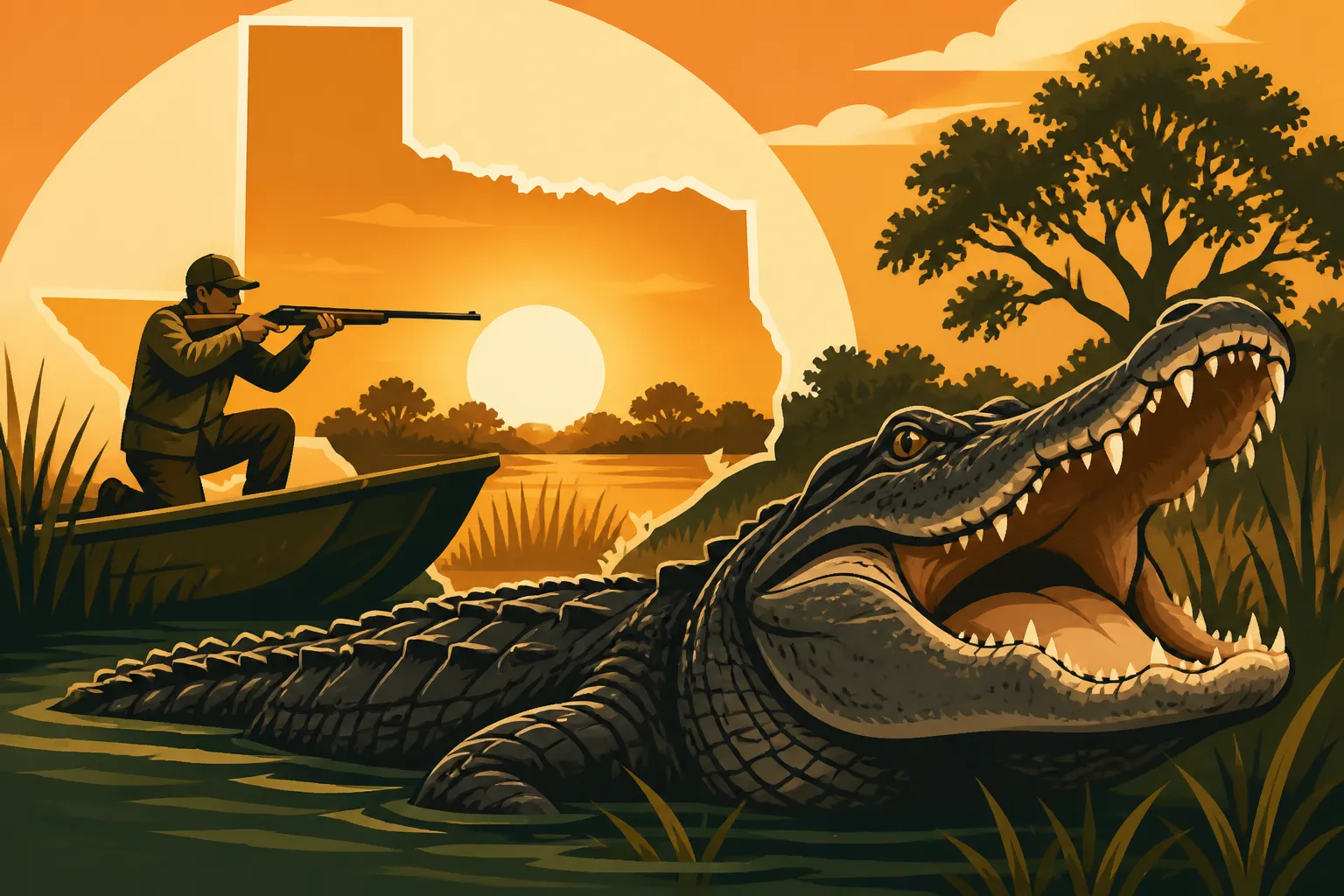
How to Hunt Alligator on a Texas Lease
Many hunters find themselves staring at a pond or a canal on their Southeast Texas lease, watching a pair of prehistoric eyes drift across the water, and wondering if it is even possible to harvest one legally. Navigating the tangled web of "Core" versus "Non-Core" counties, CITES tags, and specialized gear can feel overwhelming compared to a standard deer hunt. This guide provides a realistic, step-by-step roadmap to successfully and legally hunting alligators on your private Texas lease.
Understanding the Legal Maze of Alligator Tags
The biggest hurdle for most lease hunters isn't the alligator itself; it is the paperwork. Texas manages alligators differently than any other game species because they are protected under international trade treaties. Before you even think about buying a hook, you have to know which type of county your lease is located in. Texas is split into Core Counties and Non-Core Counties. If your lease is in a Core County (primarily the coastal and southeastern part of the state), the land itself is assigned a specific number of tags based on the acreage and habitat quality.
In these Core Counties, the landowner must apply for tags through the Texas Parks and Wildlife Department (TPWD). If you are a lessee, you need to coordinate closely with the landowner well before the September season opens. If the landowner hasn't applied for tags, you cannot hunt, period. For those on properties without land-specific tags, you might look into Drawn Alligator Hunts in Texas (WMAs) as an alternative, but for lease-based hunting, the land-specific tag is king. You will also need to ensure your Texas Hunting License: Cost, Types & How to Buy (2026) is up to date and includes the appropriate endorsements.
If your lease is in a Non-Core County, the process is slightly different. You can use a tag from your general hunting license, but you must still report the harvest immediately and potentially obtain a CITES tag for the hide if you plan to sell it or move it across state lines. Always double-check the Texas Alligator Hunting Regulations 2026 to confirm your specific county's status, as these can occasionally shift based on population surveys. The frustration of missing a deadline for tag applications is a common pain point, so start these conversations with your landowner in the spring.
Essential Gear for a Successful Harvest
Hunting alligators is a gear-intensive sport that requires specialized equipment you likely don't have in your deer camp locker. Because the most common and effective way to hunt them on a lease is the hook-and-line method, you need tackle that can handle several hundred pounds of thrashing muscle. You aren't "fishing" in the traditional sense; you are setting a snare that needs to hold a dinosaur.
For the primary setup, you need at least 300-pound test line. Many veteran hunters prefer braided nylon or heavy cord. You will also need a large, stout alligator hook—typically a 10/0 to 12/0 size. You can find high-quality rope and specialized stainless steel hooks on Amazon that are rated for this kind of extreme tension. It is also wise to pick up a few heavy-duty stakes or anchors if you aren't able to tie off to a sturdy cypress knee or tallow tree.
Beyond the capture gear, you need a way to dispatch the animal safely. A "bangstick" is the traditional tool, but many lease hunters prefer a small-caliber rifle, like a .22 Magnum, for a precise brain shot once the alligator is boat-side or bank-side. You will also need a reliable skinning knife and a way to cool the meat quickly. Browsing for a sturdy gambrel or a heavy-duty hoist on Amazon can make the processing phase much easier on your back. For a full breakdown of what to carry, check out the Best Gear for Alligator on a Texas Lease to ensure you aren't under-equipped when the line goes tight.
| Item | Specification | Purpose |
|---|---|---|
| Main Line | 300lb+ Test Nylon | Securing the alligator to the anchor point |
| Hook | 10/0 – 12/0 Stainless | Securing the bait and the animal's jaw |
| Bait | Rotting Chicken or Pork | Attracting the alligator to the set |
| Dispatch Weapon | .22 Mag or Bangstick | Ethical and safe kill at close range |
| CITES Tag | TPWD Issued | Legal transport and possession of the hide |
| Electrical Tape | Heavy Duty | Securing the mouth closed after dispatch |
The Hook and Line Method on a Lease
On most private leases, the "set line" or "hook and line" is the Best Hunting Method for Alligator on a Texas Lease because it allows you to hunt 24 hours a day without needing to be physically present the entire time. The goal is to suspend a baited hook about 12 inches above the water's surface. This prevents smaller fish or turtles from stealing your bait while making it easily accessible to a cruising alligator.
When selecting a spot on your lease, look for "slides"—worn paths on the bank where gators enter and exit the water. Once you find a high-traffic area, find a sturdy tree to tie your line to. The line should have plenty of slack on the ground so that when the alligator takes the bait, it can swallow it and move a short distance before the line pulls tight. If the line is too short, the gator might feel the resistance and spit the hook before it is properly seated.
The choice of bait is a topic of much debate at lease camps. Some hunters swear by "seasoned" chicken—poultry that has sat in the Texas sun for a day or two to develop a pungent aroma. Others prefer beef lung or pork. Whatever you choose, ensure it is securely fastened to the hook with twine or light wire. When you check your lines in the morning, be extremely cautious. A "tripped" line doesn't always mean the gator is tired. They are masters of camouflage and can be waiting just under the surface, ready to lung.
Dispatch and Safety Protocols
Approaching a hooked alligator is the most dangerous part of the hunt. Even a six-footer has enough power to break a leg or take off a hand. The goal is to bring the alligator to the bank or the side of the boat slowly. Never wrap the line around your hand; if the gator lunges, it can pull you into the water before you can react. Use a secondary pole or a catch-pole if possible to control the head.
The "kill shot" must be precise. Alligators have a very small brain located just behind the eyes, near the top of the skull. This area is often referred to as the "bony plate." Aiming just behind the cranial table is essential. If you are unsure of the anatomy, studying Best Shot Placement for Hogs can actually help, as the concept of a small, protected brain cavity is similar, though the gator's skull is much flatter. Once the shot is fired and the animal appears expired, use a long-handled tool to poke the eye. If there is no reflex, the animal is likely dead, but you must still immediately tape the jaws shut with heavy-duty electrical tape as a secondary safety measure.
After the animal is secured, the real work begins. Texas heat is unforgiving, and alligator meat spoils quickly. You need to get the animal out of the sun and onto ice as fast as possible. Many hunters use a large chest freezer or a custom-built cooling box on their lease. If you are miles from the ranch house, knowing How to Cool a Deer Fast in Texas Heat provides excellent principles that apply here: get the hide off (or the internal temperature down) immediately to preserve the quality of the tail meat.
Processing and Trophy Care
Once you have successfully followed the Texas Alligator Tags: How to Get One protocol and have your gator on the ground, you have to decide what to do with the hide and meat. Alligator tail meat is a delicacy, but the jowls and the "nuggets" along the back are also excellent if processed correctly. The meat must be trimmed of all fat and connective tissue, which can have a swampy or fishy taste.
If you intend to keep the hide for tanning, you must be careful not to "knife" the skin. Use a slow, methodical approach to separate the skin from the meat, especially around the scutes (the bony plates on the back). Once the hide is removed, it must be scraped clean of all flesh and heavily salted. You will need roughly 50 pounds of fine-grain salt for an average alligator. You can order bulk salt on Amazon and have it shipped directly to your lease to avoid hauling heavy bags from town.
Remember that the CITES tag must remain attached to the hide until it is processed by a licensed taxidermist or tannery. If you are hunting on a lease with friends, make sure everyone is aware of the Best Hunting Method for Alligator on a Texas Lease rules to avoid any legal mishaps that could jeopardize the landowner's future tag allotments. Alligator hunting is a unique Texas tradition that, when done correctly, provides an incredible trophy and some of the best table fare the state has to offer.
Alligator Hunting Disclaimer
Texas alligator hunting is strictly regulated by the Texas Parks and Wildlife Department and federal law. Regulations regarding Core versus Non-Core counties, tag requirements, and legal means and methods can change annually. It is your responsibility to consult the current Texas Outdoor Annual and local authorities before engaging in any hunt. Failure to follow these rules can lead to heavy fines, loss of hunting privileges, and federal prosecution.