Best Hunting Knife for Field Dressing
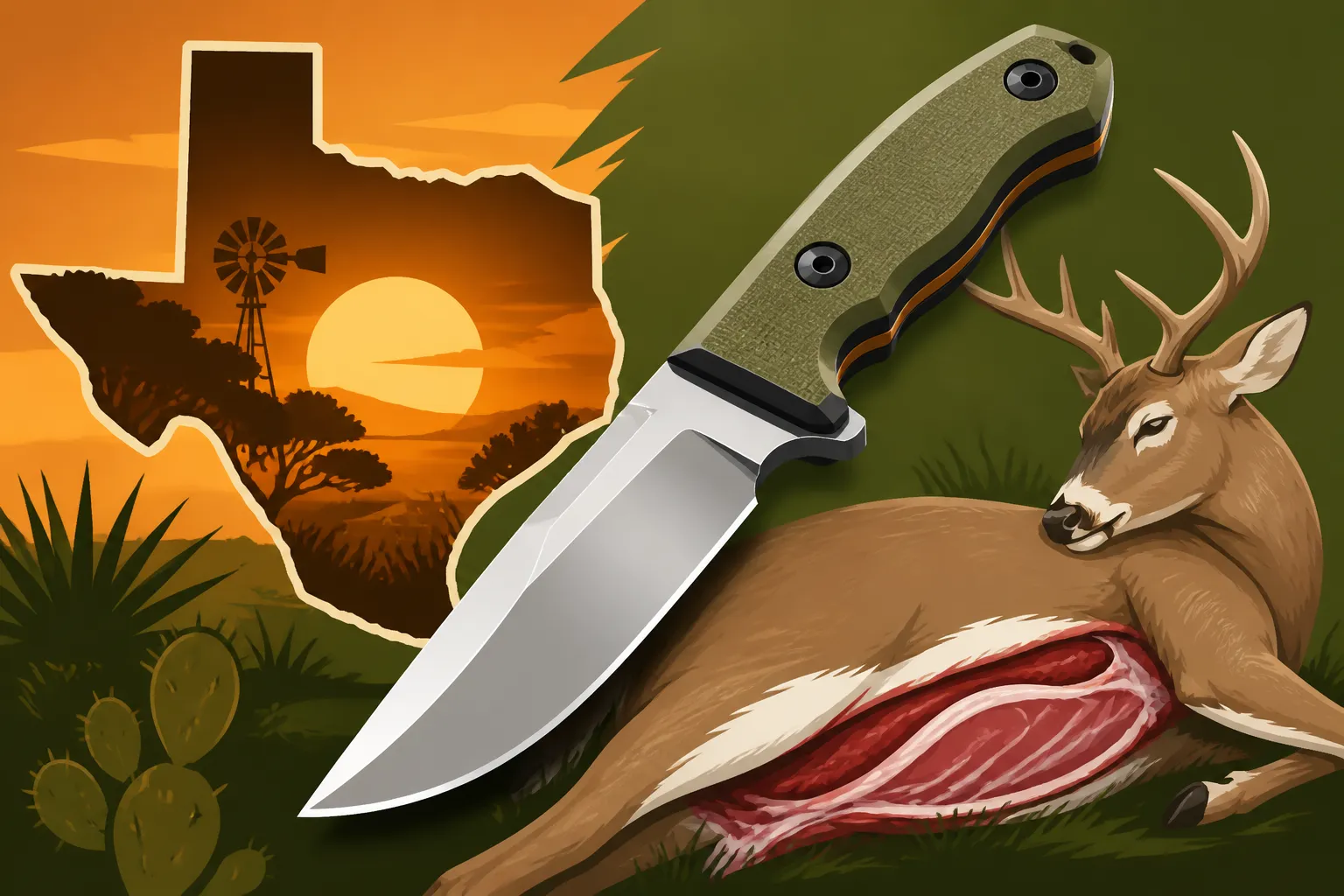
There's nothing quite like the satisfaction of a successful hunt, but the job isn't truly done until your game is properly field dressed. Many hunters, especially here in Texas where the heat can be relentless, face the frustrating challenge of quickly and efficiently processing an animal in the field with a knife that just isn't up to snuff. This comprehensive guide is here to cut through the confusion and help you select the absolute best hunting knife for field dressing, ensuring a smoother, cleaner, and safer experience every time.
The Critical Role of a Field Dressing Knife in Texas
Let's be honest, we've all been there: reaching for that trusty pocket knife or multi-tool only to find it's either not sharp enough, too clumsy, or just plain doesn't feel right for the delicate yet demanding work of field dressing. In Texas, where temperatures can soar and time is often of the essence to preserve meat quality, having the right tool isn't just a convenience—it's a necessity.
Beyond Just "Any Sharp Blade"
Field dressing is a specific task that requires precision, control, and hygiene. It's not just about making a cut; it's about making the right cut without puncturing organs, contaminating meat, or struggling with a blade that's too thick, too short, or too dull. A dedicated field dressing knife is designed with these nuances in mind. Think about the difference between a butter knife and a surgeon's scalpel – both are knives, but one is clearly superior for a specific, intricate job.
For instance, when you're working on a whitetail in the dense South Texas brush, you need a knife that can easily make a shallow cut through the hide without penetrating deep into the abdominal cavity. A bulky blade might lead to mistakes, which can result in a messier job and potential contamination. The right knife makes this process almost intuitive, allowing you to focus on the task at hand rather than wrestling with your gear. This specialized tool becomes an extension of your hand, allowing for quicker, more efficient work, which is paramount when you consider all the factors involved in properly Field Dressing & Processing Game in Texas Heat.
Addressing the Texas Heat Challenge
The Texas climate adds an extra layer of urgency to field dressing. What might be a leisurely process in cooler climates becomes a race against time here. High temperatures mean bacterial growth accelerates rapidly, potentially spoiling your hard-earned meat. A knife that allows for quick, clean, and efficient field dressing directly contributes to better meat preservation. You want to get the hide off and the internal organs out as fast as possible to allow the carcass to cool down.
Imagine you've just taken down a trophy buck in October, and it's still 90 degrees out. Every minute counts. Struggling with a poor knife means precious time wasted, and that means your meat starts to degrade sooner. This is where a sharp, ergonomically designed knife truly shines. It allows you to dispatch the animal, open it up, and remove the viscera with minimal fuss, getting that vital cooling process started without delay. This proactive approach helps ensure you're not just bringing home a memory, but also delicious, high-quality venison. For more specific guidance on cooling, check out How to Cool a Deer Fast in Texas Heat.
Essential Characteristics of an Ideal Field Dressing Knife
When you're sifting through all the options out there, it can feel overwhelming. What really makes a great field dressing knife stand out? It boils down to a few critical elements: the blade's geometry and edge, how well the handle fits your hand, and the properties of the steel itself.
Blade Geometry and Edge Performance
The shape and grind of a knife's blade are fundamental to its effectiveness for field dressing. You're typically looking for a blade that's relatively thin, with a fine, sharp edge that can hold that sharpness through an entire animal.
- Blade Shape: A drop point or clip point blade is often preferred for general field dressing. Drop points offer a strong tip and a belly that's good for skinning, while clip points provide a finer tip for more precise work. Blades typically range from 3 to 5 inches in length, offering a good balance of control and reach without being overly cumbersome. A blade that's too long can be difficult to maneuver in tight spaces, increasing the risk of puncturing organs.
- Edge Grind: A full flat grind or a hollow grind can provide an extremely sharp edge that slices through hide and tissue with minimal resistance. You want something that glides, not tears. Some knives feature a slight recurve or a pronounced belly to assist with skinning, but for pure field dressing, a relatively straight edge or gentle curve is usually sufficient for making precise cuts. A sharp, durable edge is a must, allowing you to work through tough hide and connective tissue efficiently, reducing fatigue and the chance of slippage.
Ergonomics and Grip Security
A knife is only as good as how safely and effectively you can wield it. The handle is just as crucial as the blade, especially when your hands are wet, bloody, or cold.
- Handle Material: Materials like G10, Micarta, Kraton, or even textured synthetic polymers offer excellent grip, even when slick. Natural materials like wood or bone can be beautiful, but they can become slippery and are harder to clean thoroughly, which is a major concern for hygiene during field dressing. Choose a material that you can confidently grip without fear of slippage, which could lead to injury or a compromised cut.
- Handle Design: The handle should fill your hand comfortably, allowing for a secure grip without hot spots. Finger grooves can be helpful, but they need to fit your hand. A slight guard or choil is also beneficial to prevent your hand from sliding forward onto the blade, especially during powerful cuts or when pushing against tough tissue. Remember, you might be using this knife for extended periods, so comfort and safety are paramount. Brands like Benchmade and ESEE are renowned for their ergonomic handle designs, often utilizing materials that provide superior grip under adverse conditions.
Understanding Blade Steel Properties
The type of steel used in your knife blade dictates its edge retention, toughness, and corrosion resistance—all critical factors for a field dressing knife.
- Stainless Steel: Most modern hunting knives are made from stainless steel (e.g., 440C, AUS-8, S30V, S35VN). The chromium content makes them highly resistant to rust and corrosion, which is a huge advantage when working with blood and moisture, especially in a humid state like Texas. They are generally easier to clean and require less immediate maintenance after use. While some stainless steels can be more challenging to sharpen to a razor edge initially, they often hold that edge well enough for one or two animals before needing a touch-up.
- Carbon Steel: Steels like 1095 or D2 are known for their exceptional toughness and ability to hold a very fine, sharp edge. However, they are more prone to rust and require diligent cleaning and oiling immediately after use. While often favored by bushcrafters for their resilience, the higher maintenance might not be ideal for everyone, especially if you're not meticulous about cleaning your gear right away after a long day in the field.
- Powdered Steels: Higher-end knives often use powdered metallurgy steels (like S30V, S35VN, CPM-M4). These steels offer a fantastic balance of edge retention, toughness, and corrosion resistance, but they typically come at a higher price point and can be more difficult to sharpen without specialized equipment. If you're looking for peak performance and are willing to invest in maintenance, these are excellent choices.
Here’s a quick overview of common blade steel types and their characteristics for field dressing:
| Steel Type | Edge Retention | Corrosion Resistance | Toughness | Ease of Sharpening | Best For |
|---|---|---|---|---|---|
| 420HC / AUS-8 | Good | Excellent | Good | Easy | Beginners, occasional hunters, budget-friendly |
| 154CM / S30V | Excellent | Very Good | Good | Moderate | Serious hunters, great all-around performance |
| S35VN / S45VN | Superior | Very Good | Very Good | Moderate | Premium performance, holds edge longer |
| 1095 Carbon | Very Good | Low | Excellent | Easy | Heavy-duty tasks, requires diligent care |
| D2 Tool Steel | Excellent | Moderate | Very Good | Difficult | High edge retention, minimal rust if cared for |
Choosing Your Field Dressing Knife: Fixed, Folding, or Replaceable?
Beyond the material science, the actual design and construction of your knife play a huge role in its suitability for field dressing. Each type—fixed blade, folding, and replaceable blade systems—comes with its own set of advantages and disadvantages.
Fixed Blade Knives: The Traditional Workhorse
Fixed blade knives are often considered the gold standard for field dressing, and for good reason. They are inherently stronger, more stable, and generally easier to clean than their folding counterparts.
- Strength and Durability: With a full tang construction (where the blade steel extends through the entire handle), fixed blades are incredibly robust. There are no moving parts to break or clog with blood and debris, which means they can withstand more abuse and are less likely to fail at a critical moment. This strength provides confidence when you're working quickly and sometimes forcefully.
- Hygiene and Cleaning: The lack of crevices or moving parts makes fixed blades much simpler to clean thoroughly. After a field dress, you can simply rinse them off, wipe them down, and sterilize them if desired without worrying about blood or tissue getting trapped in hard-to-reach areas. This is a huge advantage, especially when you're trying to maintain a high level of hygiene to prevent meat contamination. Many experienced hunters prefer a fixed blade for its straightforward nature and ease of care.
- Ready for Action: A fixed blade is always ready. No fumbling to open it with cold or gloved hands. Just pull it from its sheath and go. This immediate readiness is invaluable when you've got an animal down and you need to start working quickly. A well-designed fixed blade like the Buck 113 Ranger Skinner or a Fällkniven F1 can serve as an excellent all-around camp and field dressing knife.
Folding Knives and Replaceable Blade Systems
While fixed blades are king, folding knives and modern replaceable blade systems have certainly carved out their own niche, offering convenience and razor-sharp performance.
- Folding Knives: For many hunters, a folding knife offers the ultimate in portability and discretion. They're compact, easy to carry in a pocket, and can be a fantastic secondary knife or even a primary for smaller game. However, they do have drawbacks for field dressing. The pivot point and handle mechanism can become gunked up with blood and fat, making thorough cleaning difficult. This can lead to hygiene issues and potentially degrade the knife over time if not meticulously cared for. Look for folders with robust locking mechanisms and designs that minimize crevices for easier cleaning if you go this route.
- Replaceable Blade Systems: This category has really gained popularity, and for good reason. Knives like those from Outdoor Edge or Havalon offer surgical sharpness with disposable blades. You get a fresh, razor-sharp edge every time, eliminating the need to sharpen in the field or worry about a dull blade. This is fantastic for precision work, especially caping. The downside is that the blades are very thin and can be fragile; they're not designed for prying or heavy work. You'll also need to carry spare blades and properly dispose of used ones. Despite the fragility, their cutting performance is unmatched, making them an excellent choice for hunters who prioritize a consistently keen edge and are careful with their tools.
- Combination Approach: Many seasoned Texas hunters adopt a two-knife approach: a sturdy fixed blade for the initial breaking down and heavier cuts, and a replaceable blade system for the finer work of caping or delicate cuts around joints. This gives you the best of both worlds—durability and surgical precision.
Specialized Blades: Gut Hooks and Caping Knives
While an all-around hunting knife can handle most field dressing tasks, some specialized tools can make certain jobs even easier.
- Gut Hook Blades: A gut hook is a small, curved hook located on the spine of the knife blade, designed to slice open the hide without piercing internal organs. It's incredibly effective for making that initial opening cut along the belly. For novice hunters or those who want to minimize the risk of a messy cut, a gut hook can be a valuable feature. However, not all hunters prefer them, as they can sometimes snag on thicker hide or hair, and they add another element to keep clean. Many quality hunting knives, especially those designed for deer, come with a gut hook option.
- Caping Knives: These are small, extremely sharp knives with fine points and short blades (often 2-3 inches). They are specifically designed for the intricate work of caping an animal for a taxidermist, allowing for precise cuts around the eyes, ears, and nose. While not strictly necessary for basic field dressing, if you plan to cape your animal in the field, a dedicated caping knife makes the job infinitely easier and cleaner. They are often used in conjunction with a larger field dressing knife.
Field Dressing Considerations for Texas Hunters
Hunting in Texas comes with its own set of challenges, from diverse game animals to environmental factors that demand specific approaches to field dressing. Your knife choice should reflect these realities.
Species-Specific Needs: From Deer to Hogs
Texas is home to a wide array of game, and while the general principles of field dressing apply, there are nuances for different species that influence your knife choice.
- White-Tailed Deer: The quintessential Texas game animal. For white-tailed deer, you'll want a knife that offers precise control for opening the body cavity and enough belly to assist with skinning. A 3.5 to 4.5-inch fixed blade with a drop point is often ideal. For more on taking down these animals, see How to Hunt White-Tailed Deer in Texas (Step by Step).
- Feral Hogs: Hogs can be incredibly tough, with thick hides and often a layer of fat and mud. You'll need a robust blade with excellent edge retention. Carbon steel or a tougher stainless steel is a good choice. Since hogs are often taken year-round and sometimes in large numbers, a knife that's easy to clean quickly is a must. Some hunters prefer a longer blade (5-6 inches) for hogs due to their size and tough hide, though a 4-inch blade is often sufficient. If you’re often dealing with hogs, perhaps alongside other game you've scouted with your GoHunt app, a tougher blade is essential. Getting the field dressing done quickly is also crucial for Best Time to Hunt Feral Hog in Texas.
- Axis Deer and Other Exotics: Many exotics like Axis deer have thinner, more delicate hides than whitetail. This calls for a very sharp knife for clean cuts, similar to what you'd use for a whitetail, but perhaps even more emphasis on a fine, keen edge to avoid tearing. The beauty of their hides makes a caping knife particularly useful if you're preserving the hide. For more on these incredible animals, you can check out Best Gear for Axis Deer Hunting in Texas.
- Smaller Game: For smaller animals like rabbits or squirrels, a much smaller, thinner blade is often preferred. A dedicated small game knife or even a robust pocket knife might suffice, as precision is often more important than brute strength.
Dealing with Texas's Unique Environment
The operating conditions for field dressing in Texas are rarely ideal. From scorching summer days to muddy winter fronts, your gear needs to be up to the task.
- Heat and Humidity: As mentioned, speed is crucial. Your knife needs to be efficient. Furthermore, corrosion resistance is paramount. Even if you wipe down a carbon steel blade, the ambient humidity can still cause issues if you're not diligent. Stainless steel, especially higher-grade versions, will be more forgiving.
- Mud and Grime: Texas hunting can get messy. Whether it's the blackland prairie mud or the sandy loam of South Texas, your knife will encounter dirt. This reinforces the need for easy-to-clean materials and designs. A knife with a simple, open design is less likely to trap grit.
- Brush Country: Working in thick brush often means less space and more obstacles. A compact, controllable knife is better than a long, unwieldy one. You might be kneeling, squatting, or working in an awkward position, so a secure grip is non-negotiable.
Practical Tips for On-the-Go Field Dressing
Having the best knife is one thing; using it effectively and preparing for the unexpected is another.
- Always Carry a Sharpener: Even the best steel will dull. A small, portable sharpening stone or a ceramic rod should always be in your pack. A few strokes can bring an edge back to life in minutes, especially if you need to field dress more than one animal.
- Gloves are Your Friend: Latex or nitrile gloves are invaluable for hygiene. They protect your hands from blood and pathogens and make cleanup much easier. Keep a few pairs in your hunting pack.
- Practice Makes Perfect: If you're new to field dressing, practice on less desirable game (like feral hogs if you have access) or even a deer that you're not as concerned about preserving every detail. The more comfortable you become with the process, the more efficient you'll be when it counts. Familiarity with the anatomy of the animal, often aided by scouting with tools like those from GoHunt, can also improve your field dressing speed and precision. Knowing Best Shot Placement for Whitetail Deer will lead to a cleaner harvest and easier field dressing.
- Carry a Backup: A small, sharp folding knife or a multi-tool can be a lifesaver if your primary knife is lost or damaged. It's always better to be over-prepared than under-prepared. Consider how Best Hunting Gear for Beginners in Texas (By Budget) often includes a reliable utility blade.
Maintaining Your Edge: Care and Sharpening
A great hunting knife is an investment, and like any good tool, it requires proper care and maintenance to perform at its peak. This is particularly true for field dressing knives, where hygiene and a consistently sharp edge are paramount.
Cleaning and Storage in Humid Conditions
After the hunt, the real work for your knife begins: cleaning. Neglecting this step, especially in Texas's often humid environment, can quickly lead to rust, corrosion, and the degradation of your blade.
- Immediate Cleaning: As soon as possible after field dressing, clean your knife. Rinse off all blood and tissue with water. Warm, soapy water is excellent for breaking down fats and proteins. Use a brush or sponge to scrub the blade and handle thoroughly, paying close attention to any crevices. For fixed blades, this is usually a quick and easy process. For folding knives, you might need to use a toothpick or a small brush to get into the pivot area and locking mechanism.
- Drying and Oiling: Once clean, dry the knife completely. Use a towel and then let it air dry. Moisture is the enemy! For stainless steel, a thorough drying is often sufficient. For carbon steel, however, you must apply a thin layer of protective oil (food-grade mineral oil is a good choice) to prevent rust. Even stainless steel benefits from a light oiling, especially if stored for long periods.
- Proper Storage: Store your knife in a dry place. If it comes with a leather sheath, be aware that leather can absorb moisture and even acids, potentially corroding your blade over time if the knife is stored wet. A Kydex or nylon sheath is often a better choice for long-term storage, or at least ensure the leather sheath is completely dry and the knife oiled. Also, keep your knife separate from other gear that might scratch or damage the blade. Don't forget to clean any Best Coolers for Texas Hunting (Yeti & Alternatives) thoroughly after processing.
Sharpening Techniques for Optimal Performance
A dull knife is not only inefficient but also dangerous. It requires more force to cut, increasing the risk of slipping and injury. Regular sharpening is a non-negotiable part of knife ownership.
- Maintain the Angle: The key to sharpening is maintaining a consistent angle. Most hunting knives have a blade angle between 20-25 degrees per side. If you're unsure, check the manufacturer's recommendations. Investing in a guided sharpening system (like those from Work Sharp or Spyderco) can make this much easier for beginners, ensuring you get a consistent, sharp edge every time.
- Sharpening Stones and Rods: Traditional sharpening stones (whetstones) require some practice but offer excellent results. Start with a coarser grit to establish the edge, then move to finer grits for refining. Ceramic rods or diamond steels are great for touch-ups in the field or between full sharpening sessions, helping to realign the edge.
- Stropping: After sharpening, a leather strop loaded with polishing compound can bring your edge to a terrifyingly sharp, mirror-like finish. Stropping removes any micro-burrs left from sharpening and polishes the edge, making it incredibly keen and long-lasting. This final step can make a huge difference in the knife's cutting performance, allowing it to slice effortlessly through tissue.
Taking the time to properly care for and sharpen your field dressing knife ensures it will be a reliable companion for many successful Texas hunts to come, helping you turn every harvest into high-quality meat.
Disclaimer
Please remember that hunting regulations and best practices can change. Always consult the latest Texas Parks and Wildlife Department (TPWD) Outdoor Annual for the most current rules and regulations before heading into the field. This guide provides general information and should not replace official sources or professional instruction.