Best Hunting Backpack for Texas
Hunting in Texas is a unique beast, presenting challenges that can truly test your gear, especially your hunting backpack. From the scorching South Texas brush to the rugged mountains of the Trans-Pecos, a subpar pack can quickly turn a dream hunt into a miserable trek. This comprehensive guide will help you understand what makes a hunting backpack truly excel in the diverse Texas landscape, ensuring comfort, durability, and practicality for every type of hunt.
Understanding the Unique Demands of Texas Hunting
Texas is a vast and varied state, meaning "one size fits all" rarely applies to hunting gear. What works beautifully for a quick morning dove hunt near a cultivated field simply won't cut it for a multi-day scouting trip in the Hill Country or a rigorous mule deer hunt in the Panhandle. Your backpack needs to be as adaptable as you are.
Diverse Terrain and Climate Challenges
Let's be real, the Texas weather and terrain are often the biggest adversaries. We're talking about everything from the dense, thorny mesquite and prickly pear of the Brush Country that tears at fabric and straps, to the rocky, unforgiving ascents and descents in the Trans-Pecos mountains. Then there's the heat – early season hunts, especially for dove or archery deer, can see temperatures well into the 90s or even 100s, demanding excellent ventilation and hydration capacity. Suddenly, a downpour can hit, turning dusty trails into slick mud. Your pack isn't just carrying gear; it's protecting it from the elements and surviving a relentless environment. This means considering materials that can withstand abrasion and repel water without adding unnecessary weight when you're already sweating buckets.
Species-Specific Gear Requirements
The type of game you're pursuing in Texas also heavily dictates your pack needs. A day pack for a swift dove hunt might only need space for shells, water, and snacks. But if you're out chasing aoudad sheep on public land or embarking on a serious bow hunt for whitetail, you’ll need significantly more capacity. Think about the bulk of additional layers for cold fronts, rattling antlers, game calls for turkeys, or even a specialized compartment for a spotting scope and tripod when you're Spot-and-Stalk Hunting in Texas (Exotics & Mule Deer). Then there's the game itself. If you're successful, especially with larger animals like deer or hogs, a pack that can efficiently carry out meat or even an entire quartered animal becomes absolutely essential. Without a proper meat-hauling frame, you're looking at multiple grueling trips or a much more difficult pack out.
Key Features to Look For in a Texas Hunting Backpack
When you're trying to pick out the perfect hunting backpack for Texas, it's not just about how big it is. It’s about the nitty-gritty details that make all the difference when you're miles from your truck, under the scorching sun or in a surprise downpour.
Material and Construction for Durability
This is arguably the most crucial aspect for Texas hunting. Our environment is rough. Period. The dense brush of South Texas, with its endless mesquite and catclaw, will snag, tear, and abrade weak materials faster than you can say "cactus." Look for packs made from high-denier Cordura nylon or similar heavy-duty, ripstop fabrics. A 500D or 1000D Cordura pack offers excellent abrasion resistance without being excessively heavy. Reinforcement stitching at stress points like shoulder straps, hip belts, and where the pack connects to the frame is non-negotiable. Zippers should be robust, preferably YKK brand, and have large pulls that are easy to operate even with gloves on or when your hands are grimy. Waterproof or highly water-resistant finishes (like DWR – Durable Water Repellent) are a huge bonus, protecting your electronics and other essentials from those sudden, intense Texas thunderstorms.
Capacity and Load Management
Choosing the right capacity for your Texas hunting backpack means honestly assessing your typical hunt length and gear list. Are you planning a quick day hunt for Mourning Dove Hunting Tactics for Texas? A 20-30 liter day pack might be perfect. These smaller packs are ideal for carrying water, snacks, calls, and a light jacket. However, if you're heading out for an all-day sit in a blind, or even an overnight trip, you'll need something larger, in the 40-70 liter range. These "overnight" or "extended day" packs offer enough space for more layers, cooking essentials, extra water filters, and perhaps a bivvy or lightweight tent.
For multi-day excursions or if you anticipate packing out game, a true "expedition" or "meat hauling" pack (70-100+ liters) is indispensable. These often feature an external frame or a robust internal frame designed to separate and compress heavy loads like game quarters. Effective load management isn't just about how much fits in, but how it carries. Look for multiple compression straps, both vertical and horizontal, that allow you to cinch down the load and prevent shifting, which can throw off your balance and cause fatigue. A pack that carries weight high and close to your body, distributing it effectively between your shoulders and hips, will feel significantly lighter over long distances.
Hydration and Ventilation Systems
Given the notorious Texas heat, a reliable hydration system is paramount. Many quality hunting packs now integrate a dedicated sleeve for a hydration bladder, often with a port for the drinking tube to exit, making it easy to stay hydrated on the move. A 2-3 liter bladder is usually sufficient for a full day hunt, but consider the option for additional water bottle pockets on the exterior if you're in particularly arid areas or on longer treks.
Ventilation is another unsung hero. A pack that sits flush against your back will quickly create a swampy mess, leading to discomfort and chafing. Look for packs with a suspended mesh back panel or channels that allow air to circulate between your back and the pack itself. Padded, breathable shoulder straps and hip belts made from mesh or perforated foam can also dramatically improve airflow and overall comfort, especially during strenuous activity or when hiking in warm conditions. Brands like Mystery Ranch and Kuiu often excel in designing packs with superior ventilation and robust hydration options, understanding the demands of tough, warm environments.
Types of Hunting Backpacks Suited for Texas
Just like you wouldn't use a deer rifle for a squirrel hunt, you shouldn't use a giant expedition pack for a quick morning dove shoot. Matching your pack to your hunt is key to both comfort and efficiency in Texas.
Day Packs for Short Hunts
For most common Texas day hunts – think dove season opener, a quick morning hog hunt, or an afternoon sit for whitetail deer – a well-designed day pack is all you need. These packs typically range from 1,500 to 2,500 cubic inches (about 25-40 liters). They're lightweight, agile, and designed to carry your essentials without weighing you down. Inside, you'll want space for water (or a hydration bladder, crucial in the Texas heat!), snacks, your binoculars, rangefinder, a small first-aid kit, game calls, and perhaps a light rain jacket. External pockets for quick access to often-used items like GPS or a Best Hunting App for Texas (onX, HuntStand & More) like GoHunt are a big plus. Look for models with good compression straps to keep the load tight and stable, especially if you're moving through thick brush. Examples might include a simple backpack for a few boxes of shells and water when you're How to Hunt Dove in Texas (Step by Step), or a slightly larger one to hold a thermacell and a rattling bag for an early season deer hunt.
Multi-Day Packs for Extended Stays
When your hunt extends beyond a single sunrise-to-sunset, whether it's an overnight scouting trip on a public WMA or a multi-day backcountry excursion for mule deer in West Texas, you'll need a pack with significantly more capacity. These multi-day packs usually offer 3,000 to 5,000 cubic inches (50-80 liters) of storage. They're built to accommodate more substantial gear like a sleeping bag, tent or bivy, cooking system, extra food, additional clothing layers for fluctuating Texas temperatures, and more robust first-aid supplies.
The key here is not just volume but also the suspension system. A good multi-day pack will feature a sturdy internal or external frame that transfers weight efficiently to your hips, taking the strain off your shoulders. This is vital when you're carrying 40+ pounds for several miles over rugged terrain. Adjustable torso lengths and well-padded, customizable hip belts are features that make these longer hauls bearable. When planning a public land hunt, an app like GoHunt can be invaluable for scouting potential camp locations and water sources, informing what extra gear you might need to carry in your multi-day pack.
Specialized Packs (Meat Haulers, Bow/Rifle Carry)
Sometimes, a standard hunting pack just isn't enough. For successful hunters, especially those targeting larger game like deer, nilgai, or even feral hogs, a specialized meat-hauling pack becomes a game-changer. These packs typically feature a sturdy external frame or an expandable internal frame system where you can separate the main pack bag from the frame. This creates a dedicated "shelf" or compression zone directly against the frame to carry heavy, deboned meat quarters. This design keeps the blood and mess away from your other gear and allows for a much more stable and comfortable carry of heavy, awkward loads. Think about the need for this feature after a successful White-Tailed Deer Hunting in Texas: Complete Guide in warm weather, where getting the meat cooled quickly is critical, as detailed in Field Dressing & Processing Game in Texas Heat.
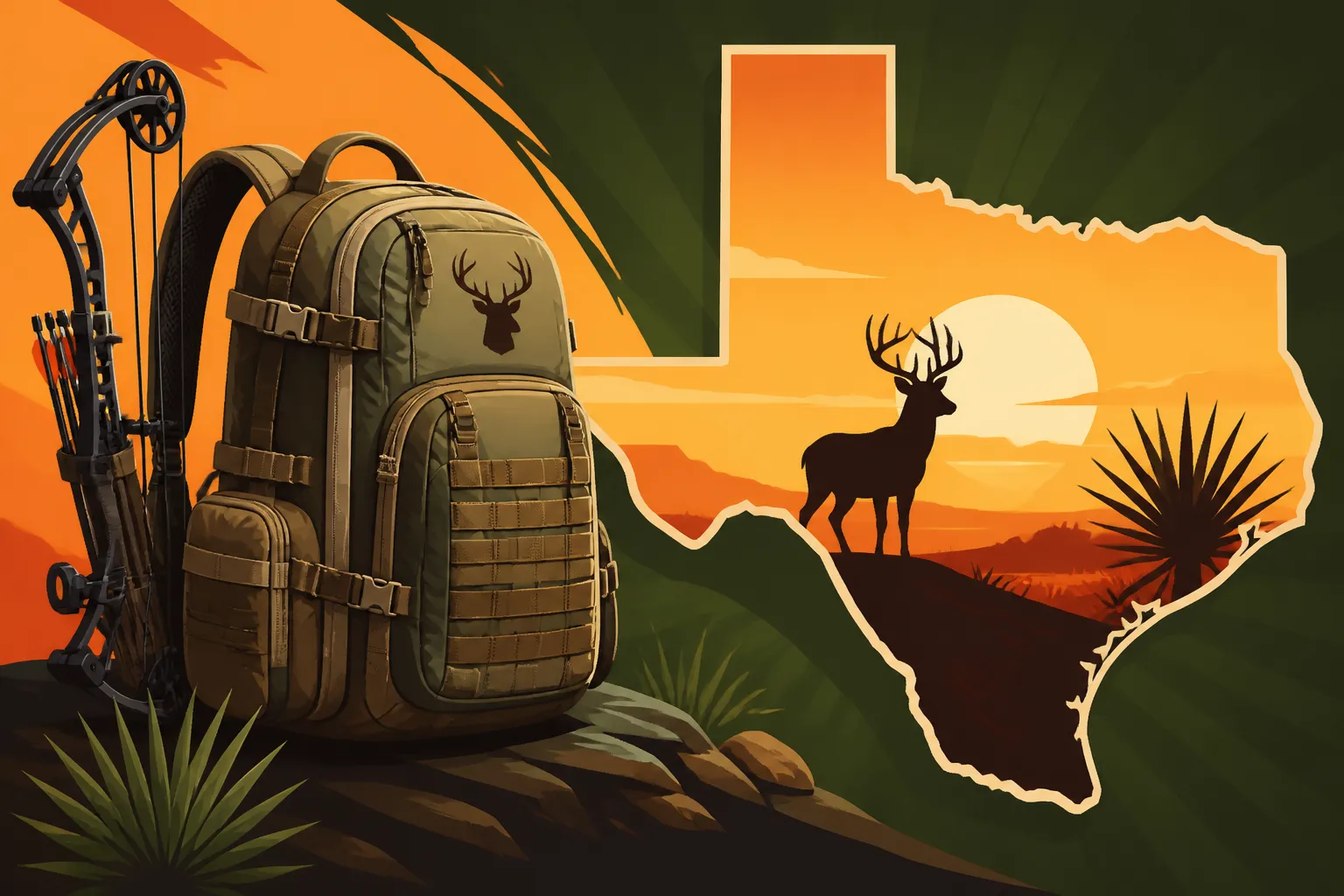
Beyond meat hauling, many specialized packs integrate features for carrying your weapon. Some have dedicated padded sleeves or compression straps designed to securely hold a rifle or shotgun, keeping your hands free for climbing or navigating difficult terrain. Bow hunters often look for packs with external lashing points or dedicated pockets to carry their bow, protecting it from brush and allowing for easier movement. These specialized carrying systems ensure your weapon is protected and accessible, but not cumbersome.
| Backpack Type | Capacity (Liters) | Ideal Texas Use Cases | Key Features |
|---|---|---|---|
| Day Pack | 20-40 | Dove hunts, short hog hunts, blind sits, scouting | Lightweight, hydration compatible, quick access pockets, compression straps |
| Multi-Day | 40-80 | Overnight trips, public land scouting, extended hunts | Sturdy frame, adjustable suspension, ample storage, organized compartments |
| Meat Hauler | 70-100+ | Packing out game, expedition hunts, heavy gear loads | External/expandable frame, dedicated meat shelf, robust compression, extreme durability |
Top Considerations for Comfort and Durability
There's nothing worse than a hunting trip ruined by an uncomfortable pack, or one that falls apart halfway through. In Texas, where the conditions can be unforgiving, paying attention to comfort and durability isn't a luxury – it's a necessity.
Suspension System and Fit
A backpack is only as good as its suspension system. This is the heart of the pack, responsible for distributing weight effectively and keeping you comfortable. Look for a pack with an adjustable torso length, which allows you to fine-tune the fit to your specific body size. This ensures the hip belt sits properly on your iliac crest (the top of your hip bones), where it should bear 70-80% of the pack's weight. A well-padded, anatomically contoured hip belt is critical, especially when carrying heavy loads or hiking for extended periods.
Shoulder straps should also be adjustable, well-padded, and wide enough to distribute weight without digging into your shoulders. A sternum strap helps stabilize the load and prevents the shoulder straps from slipping. Crucially, the entire system should allow for airflow. Breathable mesh or perforated foam on the back panel, hip belt, and shoulder straps will dramatically reduce sweating and discomfort, which is a big deal when hunting in Texas heat. A proper fit not only increases comfort but also prevents injury and conserves energy, allowing you to focus on the hunt. Many hunters swear by brands like Kifaru or EXO Mtn Gear for their superior suspension systems designed for extreme loads and comfort.
Weather Resistance and Protection
Texas weather is notoriously fickle. One minute it's clear and sunny, the next a sudden squall blows through. Your backpack needs to be ready for anything. While a fully waterproof pack can be heavy and less breathable, a highly water-resistant pack with a Durable Water Repellent (DWR) coating is a good start. The DWR causes water to bead up and roll off the fabric, preventing it from soaking in.
However, for truly important items like electronics, maps, or extra clothing, you'll want additional protection. Many packs come with an integrated rain cover, often stored in a small pocket, which can be quickly deployed when the skies open up. If your pack doesn't have one, it's a wise investment. Alternatively, using dry bags or waterproof stuff sacks inside your pack for critical gear ensures everything stays bone-dry, even if the pack itself gets soaked. This dual-layer approach provides peace of mind, knowing your essentials are safe from unexpected downpours or even a tumble into a creek during a tricky crossing.
Access Points and User-Friendliness
Imagine you're stalking a buck and suddenly need your rangefinder, or you're shivering in a blind and need your insulated jacket. Fumbling through a pack with limited access points can be frustrating and even ruin a shot opportunity. Look for packs that offer multiple ways to get to your gear. Top-loading packs are common, but models with full-length or U-shaped zipper access to the main compartment can be incredibly useful, allowing you to open the pack like a duffel bag and easily reach items at the bottom without unpacking everything.
External pockets are also key for user-friendliness. Stretch side pockets are perfect for water bottles, tripod legs, or even a compact spotting scope. Hip belt pockets are invaluable for small items you need constant access to, like a GPS, knife, wind checker, or even your phone to check the GoHunt app for property lines or wind direction. A well-designed pack anticipates your needs, making sure the right gear is always just a quick reach away, minimizing movement and maximizing efficiency in the field.
Pack Management and Essential Gear Organization
Having the "best" backpack means nothing if you can't manage your gear effectively. Organization is paramount for efficiency, comfort, and ultimately, success in the field.
Internal vs. External Frame Advantages
Choosing between an internal and external frame pack can significantly impact how you carry gear in Texas.
Internal Frame Packs: Most modern hunting backpacks feature an internal frame, typically made from aluminum stays or composite materials integrated within the pack fabric. These frames are designed to conform more closely to your back, offering better balance and a more streamlined profile, which can be a huge advantage when you're bushwhacking through dense South Texas brush or squeezing through tight spots. They generally offer a more comfortable carry for moderate to heavy loads that are packed efficiently within the bag. The flexibility of an internal frame also allows for a greater range of motion, which is ideal for active hunting styles like spot-and-stalk. Their main drawback can be that heavy, awkward loads (like game quarters) might not feel as stable or comfortable as on a dedicated external frame, and they often offer less ventilation directly against your back compared to a fully suspended external frame.
External Frame Packs: While less common for everyday hunting, external frame packs still have a strong following, especially for serious meat hauling or carrying very bulky, irregularly shaped loads. These frames are rigid and exposed, allowing the main pack bag to be attached to them, often with a gap for excellent ventilation. The primary advantage of an external frame is its superior ability to carry extremely heavy and unwieldy loads, like a deer quarter or even an entire deboned hog, by strapping them directly to the frame between the pack bag and your back. This keeps the load stable and shifts the weight very efficiently to your hips. The downside is they can be bulkier, sometimes louder, and may snag on brush more easily. However, for a hunter who consistently plans to pack out large game over long distances, an external frame pack or a hybrid meat-hauler system (like those from Mystery Ranch or Stone Glacier, where the bag can be detached and a load placed between it and the frame) is often the preferred choice. These are especially valuable in areas like the Trans-Pecos or Black Gap WMA where game retrieval might be miles from the nearest road.
Pocketing and Accessibility
Smart pocket design is the unsung hero of a great hunting pack. It’s not just about having pockets, but having the right pockets in the right places.
External Pockets: Look for large, stretchy side pockets that can securely hold water bottles, a tripod, or a spotting scope for quick deployment. Hip belt pockets are invaluable for items you need constantly on hand: your rangefinder, wind checker, GPS, headlamp, or even a small game call. A front stash pocket or beaver tail is great for quickly shedding a jacket or securing a pair of gloves without opening the main compartment. Top lid pockets, if the pack has a removable lid, are perfect for frequently accessed items like snacks, maps, or a compact first-aid kit.
Internal Pockets: While you want a large main compartment, internal organization can prevent a chaotic "black hole" effect. A dedicated hydration sleeve is a must-have for the Texas climate. Smaller zippered mesh pockets inside the main compartment are excellent for organizing licenses, keys, wallet, or small essentials like batteries, ensuring they don't get lost in the shuffle. Some packs also feature internal compression straps to secure loads and prevent shifting, which is especially helpful if you're only partially filling the pack. Good pocketing and accessibility mean less fumbling, less noise, and more focus on the hunt itself.
Packing Strategy for Different Hunt Types
Your packing strategy should be as dynamic as the Texas hunting seasons. What works for Best Time to Hunt Mourning Dove in Texas will definitely not work for a multi-day How to Hunt Mule Deer in Texas (Step by Step) trip.
For day hunts, focus on hydration first. Always carry more water than you think you’ll need, especially during early seasons. Essential items like binoculars, a rangefinder, a knife, and a small emergency kit should always be accessible in hip belt or external pockets. Your calls, scent control, and perhaps a light layer or rain jacket can go in the main compartment, easily retrieved. Remember, less is often more for quick, agile movements.
For multi-day or expedition hunts, the strategy shifts to layered packing and weight distribution. Place your heaviest items (like water reservoirs, food rations, or a portable stove) high and close to your back, over your lumbar region. Lighter, bulkier items like sleeping bags or extra clothing can go at the bottom. Mid-weight gear like camp tools or additional food can fill the middle. Items you’ll need frequently should be in accessible external pockets or the top lid. Crucially, if you’re planning to pack out game, ensure your meat-hauling system is easily deployable. Having a clear plan for Field Dressing & Processing Game in Texas Heat and packing out your animal is as important as the hunt itself. Apps like GoHunt can help you scout the topography and plan your route back to the truck, influencing your packing choices, such as whether to bring a game cart like a Best Game Cart for Hauling Deer & Hogs. Always consider the "what ifs": a sudden cold front requiring more layers, or needing extra food if a hunt extends unexpectedly.
Disclaimer
Hunting is an inherently dangerous activity. Always prioritize safety, follow all local and state regulations, and ensure you have the necessary training and permits. The information provided in this guide is for informational purposes only and should not replace professional advice or personal judgment. Be aware of your surroundings, understand your gear, and hunt responsibly.