Pulsar vs ATN Thermal Scope for Hogs
There's nothing quite as frustrating as stepping out onto your lease or property in the morning only to find your carefully cultivated food plots or well-maintained feeders absolutely torn to shreds. Feral hogs are a relentless problem across Texas, and their nocturnal habits make them incredibly difficult to manage with traditional hunting methods. This guide is here to cut through the confusion and help you decide between two powerhouse thermal scope brands, Pulsar and ATN, so you can reclaim your nights and your land from these destructive critters.
Why Thermal Imaging is a Game-Changer for Hog Hunting in Texas
Let's be honest, trying to hunt hogs at night with only a spotlight is often an exercise in futility, and even traditional night vision has its limitations. Hogs are smart, they're wary, and they've adapted to human pressure by becoming largely nocturnal. When the sun dips below the horizon in Texas, that's when they really get to work.
Overcoming the Darkness: The Thermal Advantage
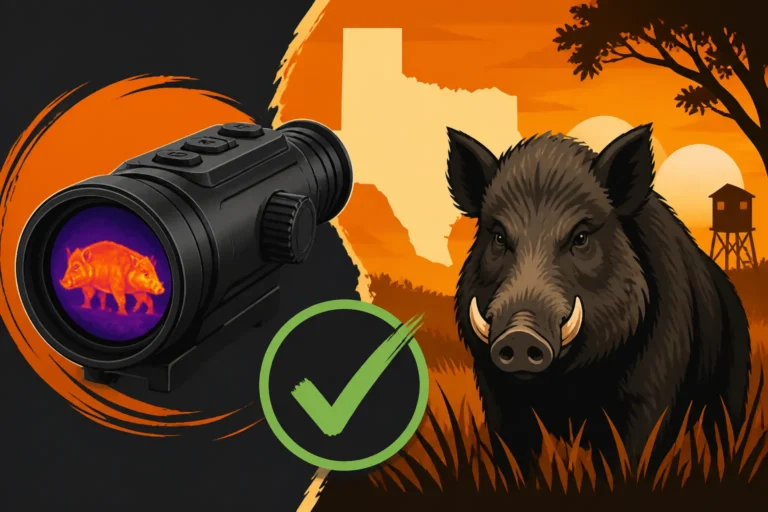
Thermal imaging doesn't rely on ambient light like night vision. Instead, it detects the heat signatures emitted by everything in the environment, including those elusive hogs. This means that whether it's pitch black, foggy, dusty, or even if hogs are partially obscured by brush, their heat signature often gives them away. Imagine scanning a dense tree line where you know hogs are hiding; with thermal, you'll see those tell-tale warm blobs moving around, even if your naked eye or even night vision can't penetrate the darkness. This ability to "see heat" is precisely why thermal is considered the ultimate tool for hunting at night, especially when you're trying to thin out a sounder that seems to vanish the moment you turn on a light. If you're looking for a deep dive into specific strategies, check out our guide on Thermal Hog Hunting in Texas.
Essential Features to Consider in a Thermal Scope
Before we even get into specific brands, it's crucial to understand what makes a good thermal scope for hog hunting. You're not just buying a fancy gadget; you're investing in a tool that needs to perform under challenging conditions.
- Resolution and Sensor Size: This is arguably the most critical factor. Higher resolution (e.g., 640×480 or 384×288) and a better sensor will give you a clearer, more detailed image, making it easier to identify a hog from a deer or another animal, and more importantly, confirm shot placement. Think of it like a TV screen – more pixels mean a sharper picture.
- Refresh Rate: Measured in Hertz (Hz), this indicates how quickly the image updates. A higher refresh rate (50Hz or 60Hz) provides a smoother, more fluid picture, which is vital when tracking fast-moving hogs. A lower refresh rate can lead to a choppy, laggy image that makes aiming difficult.
- Detection, Recognition, and Identification (DRI) Range: This isn't just about how far you can see a heat source, but how far you can recognize it as an animal, and then identify it specifically as a hog, and finally, determine if it's a killable target. The vast open spaces and dense brush of Texas demand good DRI performance.
- Battery Life: You don't want your scope dying in the middle of a stalk. Good battery life, or the ability to easily swap batteries or use external power packs, is non-negotiable for extended night hunts.
- Durability and Weather Resistance: Texas weather can be unpredictable, from humid nights to sudden downpours. Your scope needs to be able to withstand the elements and the inevitable bumps and scrapes that come with hunting.
- User Interface (UI) and Ergonomics: Can you easily navigate the menus and adjust settings in the dark? Are the buttons intuitive? A clunky UI can be a real pain when you're trying to make a quick shot.
When considering all these points, remember that every hunter has different priorities and budgets. Platforms like GoHunt are excellent resources for comparing specs and reading user reviews specific to the kind of hunting we do here in Texas.
Pulsar Thermal Scopes: The European Precision
Pulsar, a brand under Yukon Advanced Optics Worldwide, has carved out a reputation for producing high-quality, robust thermal imaging devices. They are often praised for their crisp image quality, reliable performance, and user-centric design, making them a favorite among serious hunters and even professional hog eradicators in Texas.
Signature Features of Pulsar Optics
Pulsar scopes are designed with performance and reliability at their core. Their devices, like the popular Thermion series, are built to mimic traditional daytime rifle scopes, offering familiar ergonomics while packing advanced thermal tech.
- Exceptional Image Quality: Pulsar often boasts higher NETD (Noise Equivalent Temperature Difference) values, which translates to superior thermal sensitivity. This means their scopes can detect even subtle temperature differences, providing a more detailed and nuanced image, especially in challenging conditions where hogs might be partially hidden. You'll find that with a Pulsar, distinguishing between a hog and a coyote, or even an old boar from a younger one, is often easier due to this clarity.
- High Refresh Rates & Robust Sensors: Most Pulsar thermal scopes feature a 50Hz refresh rate, ensuring that fluid, real-time image necessary for tracking moving targets. They integrate advanced uncooled microbolometer sensors that deliver consistent performance.
- Durable and Familiar Design: The Thermion models, for instance, are designed in a 30mm standard scope tube, allowing for easy mounting with conventional rings. They're typically built with rugged aluminum alloy, making them highly durable and weather-resistant, which is a must when you're pushing through dense South Texas brush.
- User-Friendly Interface (Once Learned): While packed with features, Pulsar's menu systems are often lauded for being logical and relatively easy to navigate once you get the hang of them. They focus on quick access to critical adjustments like brightness, contrast, and color palettes.
- Dual Battery Systems: Many Pulsar units feature an innovative dual-battery system (internal and external) that provides extended operation time, a huge advantage during long nights of hunting or even for a full weekend on the lease without constant recharging.
- Advanced Image Processing: Pulsar continually refines its image processing algorithms to deliver the best possible thermal picture. This includes features like Image Detail Boost, which sharpens outlines and enhances details of observed objects, making targets clearer.
Pros and Cons for the Texas Hunter
For a hunter looking to effectively eradicate hogs, a Pulsar scope offers significant advantages, but it also comes with certain considerations.
Pros:
- Superior Image Clarity: Often provides a sharper, more detailed thermal image, making target identification more precise, especially at longer ranges or in tricky conditions. This is critical for ethical shot placement on hogs.
- Reliable Performance: Known for consistent performance and fewer software glitches compared to some competitors. When you’re out in the field, reliability is paramount.
- Rugged Construction: Built like a tank, these scopes can handle the rigors of Texas hunting, from dusty roads to wet conditions.
- Traditional Scope Feel: For those who prefer the ergonomics and mounting of a conventional riflescope, models like the Thermion are a perfect fit.
- Excellent Warranty and Support: Pulsar generally has a strong reputation for customer service and support, which can be a huge relief if you ever run into an issue with your investment.
Cons:
- Higher Price Point: Generally, Pulsar scopes tend to be on the higher end of the price spectrum, which can be a significant barrier for some hunters.
- Fewer "Smart" Features: While they excel at core thermal imaging, Pulsar scopes typically offer fewer integrated digital features (like ballistic calculators, extensive video editing, or robust app ecosystems) compared to ATN.
- Learning Curve: While the UI is logical, the sheer number of settings and options can take some time to master, especially for those new to thermal.
ATN Thermal Scopes: Innovation and Integration
ATN (American Technologies Network) approaches thermal imaging with a strong emphasis on digital integration and a feature-rich "Smart HD" experience. They aim to provide a more comprehensive, computer-like hunting experience, often at a more accessible price point than some of their competitors.
ATN's Smart HD Ecosystem
ATN's thermal scopes, particularly their ThOR series, are less about mimicking a traditional scope and more about integrating a powerful mini-computer into your hunting setup. They've pioneered many features that have become standard expectations for modern optics.
- Feature-Rich "Smart HD" Capabilities: This is where ATN truly shines. Their scopes are packed with integrated features:
- Video Recording and Streaming: Easily record your hunts in HD and even stream live to a compatible smartphone or tablet. This is fantastic for reviewing shots, sharing experiences, or even guiding a hunting partner.
- Ballistic Calculator: This built-in feature takes into account range, wind, humidity, temperature, angle to target, and even bore-sight zero to provide precise aiming solutions, adjusting your reticle automatically. It's a game-changer for long-range hog shots.
- Smart Rangefinder: Most ATN ThOR models come with a built-in smart rangefinder that can quickly and accurately measure distances to targets.
- One-Shot Zero: This feature allows you to zero your scope with just a single shot, saving time and ammunition.
- Dual Stream Video: Record video internally while simultaneously streaming to your phone.
- Wi-Fi and Bluetooth Connectivity: Seamlessly connect to ATN's Obsidian app for firmware updates, gallery access, and scope control.
- Ergonomic and Modern Design: ATN scopes often have a more modern, slightly bulkier design to accommodate their extensive electronics. They focus on intuitive button layouts for quick access to core functions.
- Competitive Pricing: ATN often offers a great feature-to-price ratio, making advanced thermal technology more accessible to a wider range of hunters.
- Wide Range of Models: From entry-level options to high-resolution devices, ATN offers a broad selection, allowing hunters to find a scope that fits their budget and specific needs.
Pros and Cons for the Texas Hunter
ATN scopes bring a lot to the table, especially for hunters who appreciate technology and integrated solutions, but there are tradeoffs.
Pros:
- Abundant Smart Features: The integrated ballistic calculator, video recording, and smart rangefinder streamline the hunting process significantly, especially for those who like to document their hunts or need precise ballistic solutions.
- Competitive Pricing: Generally more affordable than comparable Pulsar models, offering a lot of bang for your buck in terms of features.
- User-Friendly App Integration: The Obsidian app provides excellent connectivity and control, enhancing the overall user experience.
- Good for Beginners: The "one-shot zero" and automated ballistic calculations can make the learning curve for shooting at varying distances much less steep.
- Excellent for Documentation: If you love sharing your hunting adventures, the easy recording and streaming capabilities are a huge plus. Many hunters leverage this to document their successful Hog Hunting Methods in Texas: Thermal, Night & Trapping.
Cons:
- Image Quality Can Vary: While improving with each generation, some users report that the raw thermal image quality, particularly the detail and clarity, might not always match the very best Pulsar models, especially at the same resolution.
- "Computer" Experience: The reliance on digital features means that, like any computer, there's a higher potential for software glitches or slower boot-up times. Firmware updates are regular and often necessary.
- Battery Life: While ATN has improved battery life significantly in newer generations (like the ThOR 4 and 5 series), the numerous digital features can still be power-hungry, potentially requiring external battery packs for very long outings.
- Bulkier Design: The added electronics can sometimes lead to a slightly larger or heavier scope compared to more streamlined thermal optics.
Head-to-Head: Pulsar vs ATN for Texas Hogs
When it comes down to making a choice, it's not about one being definitively "better" than the other, but rather which one aligns more closely with your hunting style, priorities, and budget. Both brands offer excellent tools for Feral Hog Hunting Tactics for Texas, but they do so through different philosophies.
Image Quality and Detection Capability
This is often the core differentiator for many thermal enthusiasts.
- Pulsar: If raw, crisp thermal image quality is your absolute top priority, Pulsar often takes the lead. Their sensors and image processing tend to yield a more detailed and clearer picture, which can be crucial for positive identification of hogs in varied terrain, especially at those critical recognition and identification ranges. This clarity can mean the difference between confidently taking a shot and holding back because you're unsure of what you're seeing. For hunters who often find themselves scanning vast areas or trying to pick out hogs in dense cover, the enhanced thermal sensitivity and detail boost offered by Pulsar can be a significant advantage.
- ATN: ATN's image quality is certainly respectable and continues to improve. For most common hog hunting scenarios, especially within typical ranges of 50-200 yards, ATN's scopes provide a perfectly usable and effective image. However, when pushed to the limits of detection or in very complex environments with minimal temperature differences, some hunters might find Pulsar offers a slight edge in discerning fine details. Where ATN excels, though, is in its ability to overlay helpful digital information directly onto that image, enhancing the overall targeting solution, even if the base thermal picture is slightly less refined.
User Experience and Smart Features
This is where the philosophical differences between the brands really come into play.
- Pulsar: Pulsar is generally more streamlined. Its interface focuses on getting you to the core thermal viewing and basic adjustments quickly. While they do have recording capabilities, Wi-Fi, and some smart features, they are not as deeply integrated or as central to the user experience as they are with ATN. If you prefer a "point and shoot" experience with minimal digital distractions and rely more on your own ranging and ballistic knowledge, Pulsar's approach will likely appeal more. You get a robust, reliable thermal view without a lot of extra "bells and whistles" potentially complicating things.
- ATN: ATN's ecosystem is designed for the modern, tech-savvy hunter. The integrated ballistic calculator, smart rangefinder, and extensive recording/streaming capabilities make it a true "all-in-one" device. For hunters who appreciate having all these tools at their fingertips, or who want to leverage technology to improve their shot accuracy and document their hunts, ATN is a compelling choice. The ability to stream your hunt to a buddy's phone or automatically record every shot can be incredibly fun and useful, especially for group hunts or reviewing performance. The one-shot zero feature is a lifesaver for getting on target quickly.
Value and Investment
Let's talk brass tacks.
- Pulsar: Investing in a Pulsar usually means a higher upfront cost. You're paying for cutting-edge thermal sensor technology, superior image processing, and rugged, traditional build quality. For many, this investment is justified by the enhanced performance and reliability, viewing it as a long-term tool for serious hog management.
- ATN: ATN offers excellent value, providing a vast array of digital features and capable thermal performance at a more budget-friendly price point. If you want maximum features for your dollar, ATN is often the winner. Their willingness to pack in so much tech for a competitive price makes advanced thermal hunting accessible to more people.
Here's a quick comparison table to help visualize the key differences:
| Feature/Category | Pulsar Thermal Scopes (e.g., Thermion) | ATN Thermal Scopes (e.g., ThOR) |
|---|---|---|
| Primary Focus | Pure thermal image quality, reliability, traditional scope feel | Integrated smart features, digital ecosystem, versatile capabilities |
| Image Quality | Often higher detail, clarity, and thermal sensitivity (NETD) | Good, continuously improving, but sometimes slightly less refined than top-tier Pulsar |
| Smart Features | Basic recording, Wi-Fi; generally fewer integrated digital tools | Extensive: Ballistic Calculator, Smart Rangefinder, GPS, Video/Photo, Wi-Fi, Bluetooth |
| User Interface | Intuitive once learned, often more streamlined for core thermal functions | Feature-rich, menu-driven, can be more complex due to numerous options |
| Design/Ergonomics | Traditional 30mm scope tube, rugged aluminum, familiar mounting | More modern, often bulkier due to electronics, specific mounts needed |
| Battery Life | Excellent, often dual-battery system for extended runtime | Good, but extensive digital features can consume power; external packs useful |
| Price Point | Generally higher | More competitive, offering significant features for the price |
| Best For | Hunters prioritizing raw thermal performance, image clarity, and reliability | Tech-savvy hunters wanting an all-in-one digital hunting solution |
Ultimately, the best choice depends on what you value most. If you're a purist who wants the absolute clearest thermal image and a rock-solid, traditional scope experience, and your budget allows, a Pulsar might be your ideal companion for a night of Hog Hunting With Dogs in Texas or stalking solo. However, if you're looking for an integrated, feature-packed solution that helps with everything from ranging to ballistic calculations and recording your hunts, and you appreciate a more accessible price point, then an ATN scope will serve you incredibly well.
No matter which brand you choose, adding a quality thermal scope to your gear will profoundly change your effectiveness in battling Texas hogs at night. Remember, a tool like this, combined with smart scouting (perhaps with a cellular trail camera like those discussed in How to Pattern Hogs on Your Lease), can turn those frustrating nocturnal nuisances into manageable targets. Don't forget that resources like GoHunt can provide additional insights from fellow Texas hunters who are using these exact systems in the field.
Disclaimer
Please remember that hunting regulations, license requirements, and legal methods can change. Always consult the most current Texas Parks and Wildlife Department (TPWD) Outdoor Annual before any hunting activity to ensure compliance with all state and local laws. This article is for informational purposes only and does not constitute legal advice. Safe hunting practices are paramount.