Hog Hunting Methods in Texas: Thermal, Night & Trapping
Feral hogs are a relentless force across the Texas landscape, causing untold damage to crops, fences, and native ecosystems, leaving many landowners and hunters feeling utterly exasperated. If you've ever driven through a field only to find it rototilled by a sounder of hogs overnight, you know the profound frustration these animals inflict. This guide is dedicated to providing you with comprehensive, real-world strategies for managing and hunting these intelligent and prolific creatures, diving deep into everything from cutting-edge thermal tactics to time-tested trapping methods.
Understanding the Feral Hog Problem in Texas
It's not an exaggeration to say that feral hogs are a monumental headache for Texans. They're not just an occasional nuisance; they're an invasive species that has taken root and spread like wildfire, presenting a year-round challenge for anyone with a stake in the land. Trying to get a handle on them can feel like trying to herd cats – just when you think you've made progress, a new sounder pops up.
The Ecological and Agricultural Impact
Let's be real, the damage these hogs do isn't just cosmetic. Ecologically, they're absolute bulldozers, rooting up fragile habitats, competing with native wildlife for food resources like acorns and pecans, and even preying on fawns and ground-nesting birds. Imagine a prime deer habitat, meticulously managed for years, only to have it ripped apart by a sounder of pigs in a single night. It’s soul-crushing. This widespread destruction significantly impacts native plant communities and can even alter soil composition.
From an agricultural perspective, the numbers are staggering. Feral hogs cost Texas agriculture hundreds of millions of dollars annually, obliterating row crops like corn, soybeans, and wheat. They'll decimate hay fields, contaminate water sources, and destroy expensive irrigation systems. Ranchers face the constant threat of hogs tearing down fences, which leads to livestock escaping or mixing, and can even compromise the integrity of their pastures. The sheer volume of their destruction can make farming and ranching in certain areas incredibly difficult, if not unsustainable.
Why Feral Hogs are So Prevalent
So, why are these critters such a pervasive problem? It boils down to a few key factors that make Texas the perfect breeding ground for them. Firstly, their reproductive rate is astounding. A sow can begin breeding as early as six months old and can have two litters a year, with an average of 4-6 piglets per litter. Do the math, and you'll quickly see how populations explode. It's truly mind-boggling how quickly a small group can become a massive problem.
Secondly, Texas offers an ideal environment with abundant food and water sources, from the thick brush of South Texas to the farmlands of the Panhandle. They're incredibly adaptable and opportunistic eaters, consuming everything from roots and tubers to insects, carrion, and, of course, valuable agricultural crops. Couple that with a general lack of natural predators large enough to control their numbers, and you have a recipe for exponential growth. Plus, the extensive private lands across Texas, while great for hunters, also provide vast undisturbed areas where hogs can thrive and evade consistent pressure.
Legalities and Regulations for Hog Hunting in Texas
One of the few silver linings, if you can call it that, when dealing with feral hogs, is that the state of Texas views them as an exotic, invasive species. This classification means hunting them comes with far fewer restrictions than hunting game animals. This flexibility is a huge advantage for hunters and landowners trying to combat the problem.
Licenses and Permits
This is where it gets really straightforward, and frankly, quite refreshing. For resident landowners or their agents, no hunting license is required to hunt feral hogs on their own property. That's right, you can step out your back door and deal with the problem. For everyone else, if you're hunting hogs on private land in Texas, you generally do need a valid Texas hunting license. However, even with a license, there is no closed season and no bag limit for feral hogs. They can be hunted year-round, day or night, and with almost any legal means or method. This leniency acknowledges the severe threat they pose and empowers individuals to take action. If you're looking into specific license requirements, you might want to check out our guide on Texas Hunting License: Cost, Types & How to Buy (2026).
It's crucial to understand that while hogs themselves have minimal regulations, you still need to adhere to all general hunting safety rules, firearm laws, and trespass laws. Always have landowner permission before stepping foot on private property, even if you're just after hogs. Ignoring these fundamental rules can lead to serious legal consequences, regardless of what you're hunting. Common sense and courtesy go a long way in ensuring your hog hunting adventures stay legal and enjoyable.
Rules for Night Hunting and Thermal
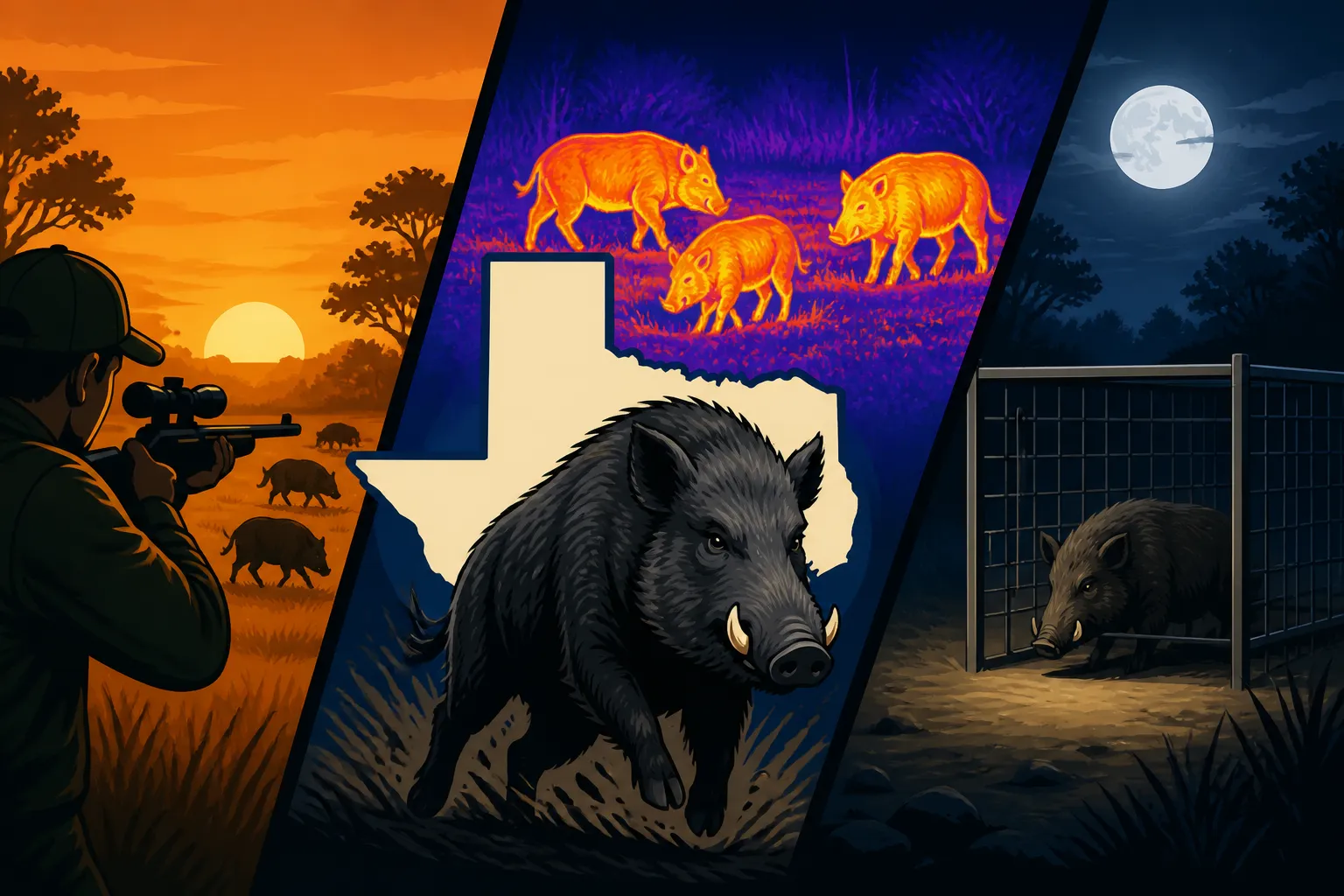
Hunting hogs at night, especially with advanced optics, is one of the most effective strategies out there, and thankfully, it's completely legal in Texas. This wasn't always the case for all species, but for feral hogs, the rules are clear: you can hunt them at night. This is a game-changer because hogs are largely nocturnal, especially in areas with hunting pressure or during the brutal Texas summer heat. Trying to find them during daylight hours can often feel like a futile exercise.
When it comes to equipment, Texas law allows the use of night vision and thermal imaging devices for hunting feral hogs. This freedom to use such powerful tools has revolutionized hog control. You can use these devices mounted on firearms or as handheld scanning units. There are no restrictions on weapon type either, so you can use anything from a .22LR to an AR-15, shotgun, or even a bow. This flexibility ensures you can tailor your approach to the specific hunting scenario and your personal preferences. Many hunters find that utilizing these tools greatly increases their success rate, turning frustrating days into productive nights. If you're curious about the specifics, we've got a detailed breakdown on Is Thermal Hunting Legal in Texas?.
Night Hunting Feral Hogs: A Tactical Advantage
Once the sun dips below the horizon in Texas, a whole new world awakens, and for feral hogs, it's prime time. They feel safer, cooler, and less exposed under the cloak of darkness. This behavioral shift is precisely why night hunting has become such an indispensable tool in the fight against these destructive animals. It’s not just about the thrill; it’s about aligning your efforts with their natural patterns.
The Allure of Darkness: Why Hunt at Night?
Let's face it, hunting in the Texas heat during the day can be absolutely brutal, not just for us, but for the animals too. Hogs are smart; they'll often bed down in the thickest cover during daylight hours, only emerging once temperatures drop and human activity diminishes. This nocturnal habit makes daytime hunting incredibly challenging and often unproductive, especially during the long, hot summers. By embracing the night, you're stepping into their active window.
The cover of darkness also provides a significant psychological advantage for the hunter. Hogs, while having a keen sense of smell, don't possess exceptional eyesight, particularly in low light. This means you can often approach them much closer and with less risk of detection than during the day. This proximity allows for more precise shots and often results in taking multiple animals from a sounder before they fully disperse. It's a method that truly puts the odds back in the hunter's favor, turning what might be a frustrating daytime stalk into a successful nocturnal ambush.
Essential Gear for Night Hunts (Non-Thermal)
Even if you're not diving into the world of thermal optics just yet, you can still be effective at night. The key is to enhance your natural senses and create just enough light for target identification without spooking the hogs. This usually means relying on good quality spotlights or weapon-mounted lights with colored filters, typically red or green. Many hunters swear by red lights because hogs often seem less bothered by them, allowing for a quieter approach.
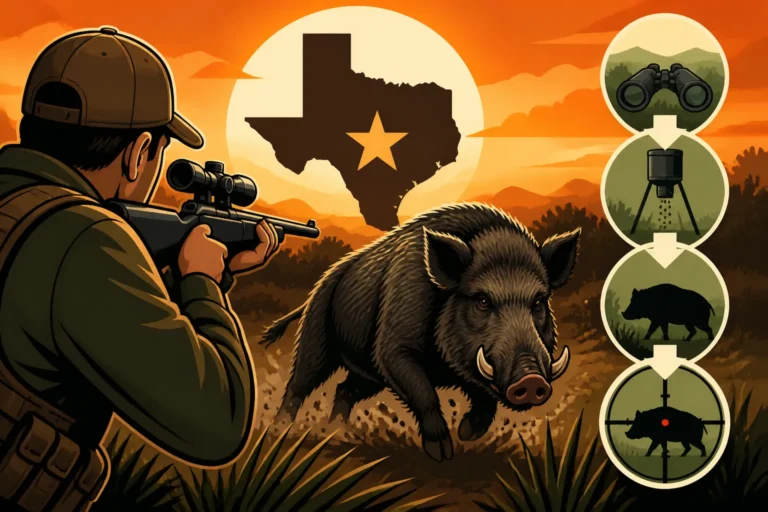
Beyond lights, a few other items are crucial. A high-quality set of binoculars or a monocular can help you scan large areas, even if you’re using natural ambient light from the moon or stars. A rangefinder is always a good idea to confirm distances in the dark, where perception can be skewed. And, of course, your choice of firearm or bow, equipped with sights that are visible in low light, like fiber optics or tritium, is paramount. Comfort is also key; expect to spend hours waiting patiently, so a comfortable chair or blind setup is a wise investment. Remember, being prepared means bringing extra batteries for all your electronics – nothing is worse than a dead light when a sounder rolls in.
Safety Considerations for Hunting After Dark
Hunting at night, while effective, introduces unique safety challenges that demand extra vigilance. Visibility is inherently limited, increasing the risk of misidentifying targets or hazards. Always identify your target unequivocally and confirm your backstop before taking a shot. This means knowing precisely what's beyond your target, a task that requires even more caution in the dark. Never shoot at a sound or movement you haven't positively identified.
Communication is also vital if you're hunting with a group. Establish clear signals and stay in constant contact. Wear some form of reflective gear or use a headlamp with a red light setting when moving to avoid startling other hunters or being mistaken for game. Familiarize yourself thoroughly with your hunting area in daylight, noting potential obstacles, property lines, and safe shooting lanes. The darkness amplifies every mistake, so a disciplined approach to safety is not just recommended, it's absolutely essential.
Thermal and Night Vision: Game Changers for Hog Hunting
If you're serious about hog control in Texas, embracing thermal and night vision technology is almost a necessity. These tools don't just improve your chances; they fundamentally change the dynamics of the hunt, often turning elusive, nocturnal animals into visible targets. They are, without a doubt, the most impactful advancements in hog hunting in recent memory.
Thermal vs. Night Vision: What's the Difference?
This is a common question, and understanding the distinction is crucial for choosing the right tool. Night vision, like the old-school green-tinted scopes you might see in movies, amplifies existing ambient light – moonlight, starlight, or even faint artificial light. If there's no light, night vision struggles. It shows you what's there, just brighter. It's great for identifying specific features, reading details on the landscape, and navigating in low light conditions.
Thermal imaging, on the other hand, detects heat signatures. It doesn't need any ambient light at all. It "sees" the heat radiated by objects and converts it into a visible image, often displayed in various color palettes (white-hot, black-hot, rainbow). This means it can see through light fog, smoke, and even some brush, making hogs stand out vividly against a cooler background. The distinct advantage of thermal is its ability to find animals that would be otherwise invisible, especially in thick cover or complete darkness. For target acquisition and spotting hogs quickly, thermal is generally superior. You can dive deeper into this comparison with our guide on Thermal Scope vs Night Vision for Hog Hunting.
Choosing the Right Thermal Scope or Monocular
Deciding on the right thermal unit can feel overwhelming with all the options out there. It really boils down to your budget, your primary use, and what features are most important to you. For simply spotting and scanning, a thermal monocular is often an excellent starting point. They're lightweight, easy to use, and perfect for surveying fields or dense brush to locate sounders. Brands like Pulsar and AGM offer popular monoculars that provide great performance for their price point.
If you're looking to shoot with thermal, then a dedicated thermal scope is what you'll need. These units mount directly onto your rifle. Key features to consider include resolution (the higher, the clearer the image), refresh rate (how smooth the image is), detection range, and battery life. Higher-end models will offer superior image quality and advanced features like built-in rangefinders and video recording. For a detailed breakdown of options, check out our piece on Best Thermal Scopes for Hog Hunting in Texas. Don't cheap out too much here; a good thermal unit is an investment that pays dividends in effectiveness.
Mastering Thermal Tactics in the Field
Having a thermal unit is one thing; using it effectively is another. The first step to mastering thermal tactics is constant scanning. Hogs rarely stay in one place for long, especially when feeding. Use your thermal monocular to sweep fields, tree lines, and brush, looking for those distinct heat signatures. Once you spot a sounder, observe their behavior. Are they feeding calmly? Moving quickly? This helps you plan your approach.
Approaching hogs with thermal requires stealth, just like any other hunting method. While they can't see your heat, they can certainly smell you or hear you. Pay attention to wind direction and step carefully. When you get into shooting range, use your thermal scope to pick out individual hogs, aiming for ethical shots. Remember, a headshot or a shot through the vitals is paramount. Often, you can take multiple hogs from a sounder before the rest scatter, especially if you get the first shot off quietly. Practice with your thermal unit in various environments and ranges to truly understand its capabilities, and soon you'll be a thermal hog hunting pro. For more specific advice, our article on How to Hunt Hogs at Night With Thermal is a great resource.
Trapping Feral Hogs: A Long-Term Solution
While hunting individual hogs is satisfying, it often feels like you're just putting a Band-Aid on a gushing wound. For truly impactful, sustained hog control, especially on properties with recurring issues, trapping becomes an essential part of the strategy. It’s a labor-intensive but incredibly effective method for removing entire sounders.
Types of Hog Traps and Their Effectiveness
When it comes to trapping, you've got a few main players. The most common and effective are large, circular or square corral traps, often constructed with heavy-duty hog panels and T-posts. These are designed to hold an entire sounder once triggered. The advantage here is the sheer volume of hogs you can catch at once. Many of these modern traps incorporate "rooter" or "saloon" style doors, which allow hogs to push their way in but prevent them from escaping, often resetting for more captures.
Another option includes box traps, which are smaller, more portable, and designed to catch one or two hogs at a time. While easier to deploy in some areas, their limited capacity makes them less efficient for serious population control. There are also snare traps, but these are often discouraged due to the potential for non-target catches and ethical concerns. For comprehensive control, particularly on larger properties, investing in well-built, multi-catch corral traps is generally the most effective strategy. Our guide on Hog Trapping in Texas: Methods That Work dives into these options in much greater detail.
Baiting Strategies for Successful Trapping
Trapping success hinges almost entirely on your baiting strategy. Hogs are creatures of habit and opportunity, and you need to exploit that. The absolute king of hog bait is soured corn. The fermentation process creates an irresistible aroma that draws them in from a distance. You'll want to pre-bait for several days, or even a week or two, before setting the trap. This means placing a generous amount of soured corn directly inside and around the trap, allowing the hogs to become comfortable feeding there without consequence.
Beyond soured corn, some trappers swear by adding jello mix, Kool-Aid, or even diesel fuel to the corn, claiming it enhances the attraction. While these can certainly add to the aroma, soured corn alone is usually sufficient. Consistency is key during the pre-baiting phase; ensure there's always fresh bait available. Once hogs are consistently entering the trap and consuming all the bait, that's your cue to set the trigger mechanism. Patience in baiting truly pays off, leading to much larger catches.
Trap Placement and Monitoring for Maximum Results
Where you place your trap is just as important as how you bait it. Look for high-traffic areas where you see significant hog activity – rooted up fields, trails leading to water sources, or near known bedding areas. Placing traps under large trees or in shaded areas can also be beneficial, as it provides some cover and comfort for the hogs, especially in the heat. Consider the lay of the land; you want a relatively flat, stable area for the trap to sit properly.
Modern trapping often involves remote monitoring using cellular cameras. These cameras, like those mentioned in Best Cellular Trail Cameras for Texas (2027), can send you real-time notifications and images of activity at your trap site. This allows you to monitor hog behavior, confirm consistent feeding, and know exactly when the trap has been triggered, saving you countless trips and ensuring you capture an entire sounder. Regular checks, whether in person or via camera, are vital for ensuring the trap is functioning correctly and for humane management of captured animals.
Traditional Hunting Methods for Hogs
While high-tech gear and sophisticated traps get a lot of attention, sometimes the old-school methods are still incredibly effective, especially for specific scenarios or if you prefer a more classic hunting experience. These methods rely more on scouting, patience, and a deep understanding of hog behavior.
Stalking and Ambush Tactics
Stalking feral hogs is a demanding but rewarding endeavor. It requires exceptional woodsmanship, keen senses, and a good understanding of wind direction. Hogs have an incredible sense of smell and hearing, making close approaches challenging. Your best bet is to move slowly, often against the wind, using available cover to break up your silhouette. Focus on areas where hogs are likely to feed or water, such as crop fields, river bottoms, or oak motts during acorn season.
Ambush tactics often involve setting up near known travel corridors or food sources and waiting patiently. This can be done from a ground blind, a tripod, or even a well-camouflaged position in the brush. The key is to get into your position well before the hogs are expected to move and remain absolutely still. This method often works best in the early morning or late evening hours when hogs are more active, but also when they're transitioning between bedding and feeding areas. Understanding Best Time of Day to Hunt Whitetail in Texas can also apply to hog movement patterns as they often share the same resources and travel routes.
Hunting Hogs Over Feeders
Hunting hogs over feeders is a highly popular and effective method, especially on managed properties where feeders are already in place for deer. Hogs are opportunistic and will quickly key into a reliable food source like corn. The trick is consistency. Once they learn a feeder is a regular meal ticket, they’ll frequent it, often on a predictable schedule.
To optimize for hogs, you might consider adjusting your feeder timer settings. Hogs are often more active at night or during the cooler parts of the day. Setting your feeder to go off slightly before sunset and again in the early morning can increase your chances. Using a sturdy feeder that can withstand hog abuse is also critical. If you’re serious about drawing them in, scattering some soured corn around the feeder can greatly enhance its attraction. For detailed insights into setting up your feeder specifically for hogs, take a look at Best Setup for Hunting Hogs Over a Feeder.
Other Effective Hog Control Methods
Beyond individual hunting and large-scale trapping, there are other methods that contribute significantly to feral hog control, ranging from specialized hunting techniques to coordinated efforts that require specific permits or resources.
Hunting Hogs with Dogs
Hunting hogs with dogs is a tradition deeply rooted in Texas, offering an exciting and effective way to locate and hold hogs. This method typically involves a combination of "bay dogs" and "catch dogs." Bay dogs are used to locate hogs and bay them up, holding them at bay while barking loudly, preventing them from running. Once the bay dogs have a sounder contained, catch dogs, often equipped with protective vests, are sent in to physically hold the hog by the ear or shoulder, allowing the hunter to move in for the dispatch.
This method is highly effective in dense brush where hogs might otherwise evade detection. It's a physically demanding style of hunting that requires well-trained dogs, responsible dog handlers, and a clear understanding of safety protocols. It's also often a very social hunt, bringing together groups of hunters and their canine companions. If this sounds like an adventure you'd like to pursue, our guide on Hog Hunting With Dogs in Texas offers a deeper dive into the specifics.
Aerial and Helicopter Hunting
For landowners facing massive infestations and significant financial losses, aerial hunting from helicopters can be one of the most efficient, albeit costly, methods for rapid population reduction. Texas law permits helicopter hunting for feral hogs (and coyotes) with specific permits, allowing hunters to target large sounders from above. This method is incredibly effective because it can cover vast tracts of land quickly and access areas that are otherwise impenetrable on foot or with vehicles.
Outfitters offering helicopter hog hunting often provide firearms and ammunition, guiding hunters to target hogs from a low altitude. The speed and vantage point allow for the elimination of numerous hogs in a short amount of time, making a substantial dent in local populations. While not a casual hunting trip for most, it’s a powerful tool in the arsenal against feral hogs and can provide a crucial reset for heavily impacted areas. You can learn more about this specialized method in our article on Aerial & Helicopter Hog Hunting in Texas.
Here's a quick comparison of popular hog hunting methods:
| Method | Best For | Key Gear Needed | Pros | Cons |
|---|---|---|---|---|
| Thermal Hunting | Night, dense brush, rapid removal | Thermal scope/monocular, firearm | Highly effective at night, finds hidden hogs | High initial cost for gear, requires practice |
| Trapping | Large sounders, long-term control | Large corral trap, soured corn, cellular camera | Removes entire sounders, sustained impact | Labor-intensive, requires monitoring, non-target catches possible |
| Night Hunting (non-thermal) | Cost-effective night hunting | Red/green spotlight, firearm, good low-light optics | Cheaper than thermal, effective in open areas | Limited visibility, less effective in dense cover |
| Stalking/Ambush | Spot-and-stalk, traditional hunt | Firearm/bow, camo, scent control | Rewarding, no specialized gear beyond basics | Requires high skill, patience, difficult in dense cover |
| Hunting with Dogs | Dense brush, holding sounders | Trained dogs, protective vests, dispatch weapon | Excellent for thick cover, exciting | Requires trained dogs, physically demanding |
| Aerial Hunting | Large-scale population reduction | Helicopter, specialized firearms | Extremely efficient, covers vast areas quickly | Very expensive, requires specialized permits |
Post-Harvest: Handling Your Feral Hogs
So, you've successfully taken down a hog (or several!). Now comes the less glamorous, but equally important, part: processing your harvest. This can be a bit more involved than with other game, especially given the Texas heat, but it's a worthwhile effort.
Field Dressing and Processing Hogs
Field dressing a feral hog is similar to deer, but with a few key differences. First, be aware that hogs often carry various parasites, so proper hygiene is paramount. Wear gloves, and be meticulous about not contaminating the meat with internal contents. The goal, as with any game, is to cool the carcass down as quickly as possible, especially in the relentless Texas heat. This means getting the guts out, skinning it if you plan to, and getting it on ice or to a processor without delay. For a detailed walkthrough, our guide on How to Field Dress a Deer in Hot Weather offers many applicable principles for quick cooling.
Processing hogs can be a bit more challenging due to their thick hide and often larger fat content compared to deer. Many hunters opt to take their hogs to a professional processor, especially larger boars. If you're doing it yourself, be prepared for some work. Hogs have tough hair and can be greasy. Remove as much fat as possible, as this is where a lot of the "gamey" flavor can reside. The quality of the meat can vary wildly depending on the hog's diet, age, and sex, so keep that in mind during processing.
Is Feral Hog Meat Edible?
Absolutely! Despite their wild nature and reputation, feral hog meat can be incredibly delicious, often described as a richer, leaner version of domestic pork. However, there are a few important considerations. As mentioned, hogs can carry diseases like brucellosis and trichinosis. Therefore, always handle the meat with gloves, cook it thoroughly (to at least 160°F internal temperature), and practice good sanitation. Avoid eating any meat from hogs that appear sick or lethargic.
The flavor of feral hog meat can vary. Younger sows and barrows (castrated males) tend to have the mildest, most tender meat. Older boars, especially during breeding season, can have a strong, musky flavor that some find unpalatable. Many hunters prefer to grind the meat from larger boars into sausage or chili, where strong flavors can be masked by seasonings. Don't let the "feral" aspect scare you off; with proper handling and cooking, you can enjoy some truly fantastic meals from your hog harvest. For an honest discussion on this topic, check out Are Feral Hogs Good to Eat?.
Disclaimer
Please note that hunting regulations and seasons can change. Always consult the most current Texas Parks and Wildlife Department Outdoor Annual or website before engaging in any hunting activities. This guide is for informational purposes only and does not supersede official state regulations.