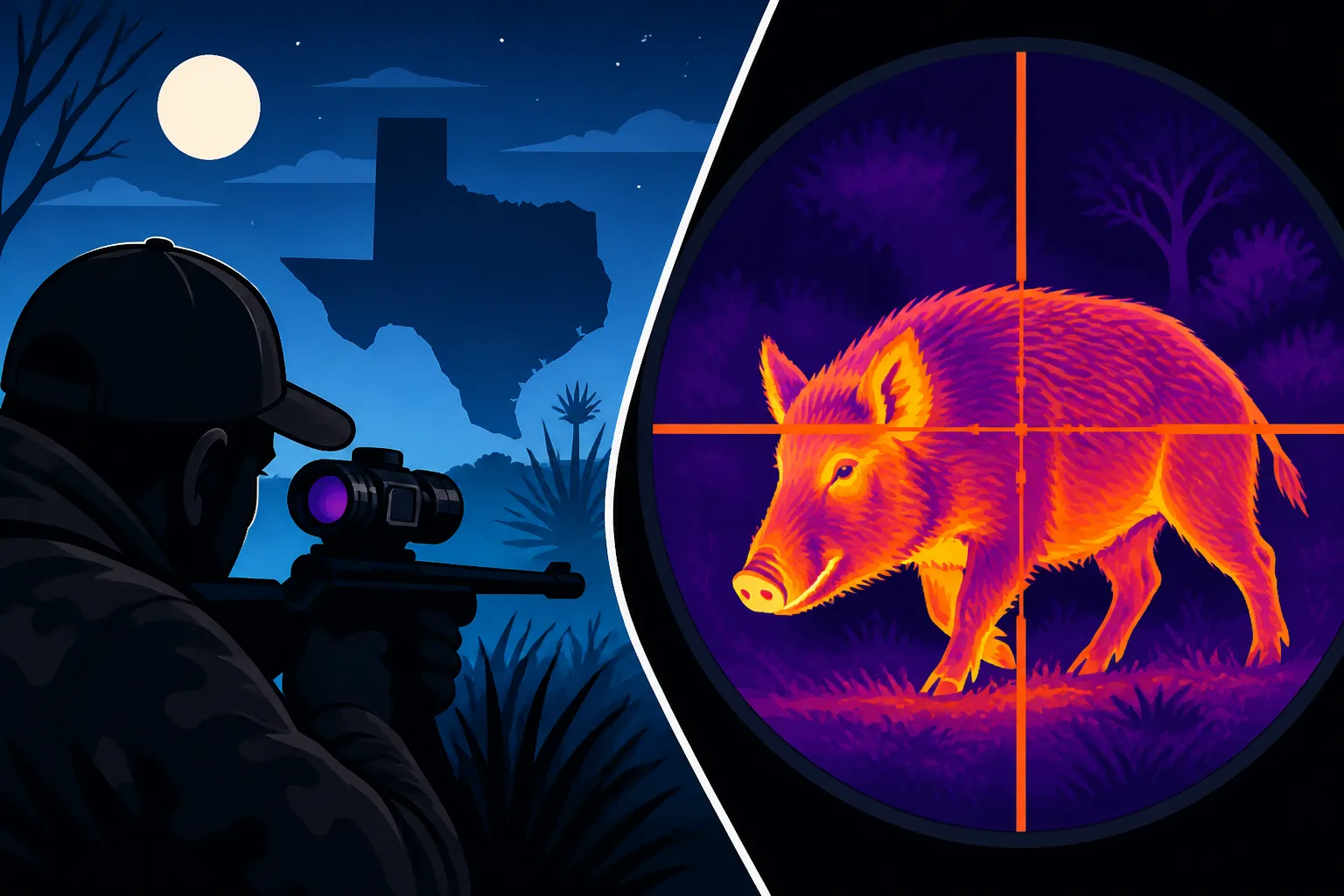
Thermal Hog Hunting in Texas
The relentless spread and destructive nature of feral hogs across Texas is a constant headache for landowners and conservationists alike. These cunning animals are primarily nocturnal, making traditional daytime hunting incredibly challenging and often ineffective for population control. This comprehensive guide will walk you through everything you need to know about thermal hog hunting in Texas, from understanding the technology to mastering tactics and ensuring you stay legal and ethical.
The Nocturnal Challenge of Feral Hogs in Texas
It's no secret that feral hogs are a massive problem in the Lone Star State, causing billions of dollars in agricultural damage annually and outcompeting native wildlife for resources. Ask any rancher or farmer, and they'll tell you the struggle is real. What makes them so difficult to control? Their incredible adaptability, rapid reproduction rates, and perhaps most importantly, their tendency to go almost entirely nocturnal in response to hunting pressure and human activity.
The Nocturnal Nature of Hogs
Feral hogs are incredibly smart animals, and they learn quickly. If they sense danger during the day, they will simply switch their feeding and movement patterns to the cover of darkness. This means that while you might spot a few hogs rooting around a feeder at dawn or dusk, the vast majority of their destructive work, from tearing up pastures to raiding cornfields, happens under the cloak of night. They feel safer, cooler, and less exposed when the sun goes down, especially during the sweltering Texas summers. This behavioral shift is a direct response to hunting pressure, and it’s why traditional hunting methods often fall short when it comes to truly impacting their numbers.
Trying to hunt these intelligent creatures during the day can feel like a losing battle. You might put in countless hours scouting, set up perfect blinds, and still only catch glimpses of them as they dart into the thick brush. For many hunters, the frustration mounts when they know the hogs are there, but they just can't get a bead on them. This is where modern technology steps in, offering a way to level the playing field against these elusive, destructive pests. If you're looking for a general guide, our article on Feral Hog Hunting in Texas: Year-Round Guide offers a great overview, but for night hunting, thermal is truly a game-changer.
The Challenge of Traditional Night Hunting
Before thermal technology became widely accessible, hunting hogs at night was a much more rudimentary, and frankly, less effective affair. We relied on things like red or green lights mounted on scopes, or maybe even rudimentary gen 1 or 2 night vision devices. The problem with these older methods was significant. Lights, while illuminating, often spooked wary hogs, turning a potential shot into a sprint through the shadows. The limited range and grainy image quality of early night vision also made target identification tricky and accurate shot placement difficult, especially at any real distance.
Furthermore, traditional night hunting without advanced optics forced hunters into much closer quarters, increasing the risk of detection. Hogs have an excellent sense of smell and hearing, and even the slightest rustle or scent carried on the breeze could give away your position. The sheer difficulty and low success rate often led hunters to give up on night operations, inadvertently allowing hog populations to continue their unchecked growth. The goal isn't just to hunt; it's to effectively manage these populations, and that requires tools that can overcome their nocturnal defenses.
Understanding Thermal Technology
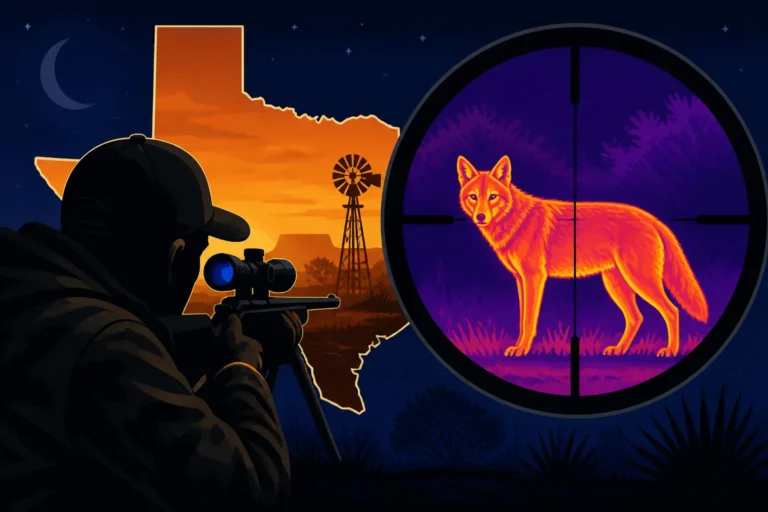
So, what exactly is thermal imaging and how does it help us hunt hogs in the dark? It's a fascinating technology that literally allows you to see the world in a whole new light – or rather, a whole new spectrum. Unlike traditional night vision, which amplifies ambient light, thermal imaging detects heat signatures, making it incredibly effective for locating warm-blooded animals against a cooler background, regardless of how dark it is.
How Thermal Imaging Works
At its core, thermal imaging works by detecting infrared radiation, which is emitted by all objects that have a temperature above absolute zero. The hotter an object is, the more infrared radiation it emits. A thermal device, like a thermal scope or monocular, contains a special lens and an infrared sensor array (often called a microbolometer). This sensor measures the tiny differences in infrared radiation emitted by objects in its field of view.
Once detected, these differences in heat are processed and converted into an electrical signal. A sophisticated algorithm then translates these signals into a visual image that is displayed on a screen within the device, typically an OLED or LCD display. The warmer parts of the image (like a hog's body) are displayed in different colors or shades compared to cooler parts (like the surrounding vegetation or ground). This creates a clear, high-contrast image of heat sources, allowing you to "see" a hog even if it's completely obscured by darkness or light cover that visible-light cameras wouldn't penetrate.
Key Specifications to Look For
When you're diving into the world of thermal optics, a few key specifications really matter and can make a huge difference in performance and price. Understanding these will help you choose the right gear for your needs, especially when the stakes are high, like accurately identifying a hog at distance in the South Texas brush.
- Resolution: This refers to the number of pixels in the thermal sensor, typically expressed as something like 384×288 or 640×480. Higher resolution means a clearer, more detailed image, which is crucial for identifying animals, judging their size, and ensuring precise shot placement. While a 384×288 resolution might be sufficient for closer ranges, a 640×480 sensor offers significantly more detail and range, especially important for those longer shots or for distinguishing a hog from a javelina in thick cover.
- Refresh Rate: Measured in Hertz (Hz), this indicates how many times the image is updated per second. A higher refresh rate (e.g., 50Hz or 60Hz) provides a smoother, more fluid image, which is vital when tracking moving targets like a sounder of running hogs. Lower refresh rates (like 9Hz) can result in choppy, laggy images, making target acquisition difficult and potentially causing motion sickness for the user. A 30Hz minimum is usually recommended for hunting applications, but 50Hz or 60Hz is ideal.
- Magnification: Thermal devices come with a base optical magnification, often around 1x to 3x, and then digital zoom capabilities. While digital zoom can extend your view, remember that it often degrades image quality. Look for a device with a comfortable base magnification for your typical hunting ranges and rely on quality optics over excessive digital zoom. For example, a 2.5x base magnification might be perfect for identifying hogs at 100-200 yards, providing enough detail without being too shaky when handheld.
Thermal vs. Night Vision: A Comparison
It's easy to confuse thermal imaging with traditional night vision, but they are fundamentally different technologies with distinct applications. Knowing the difference is key to understanding why thermal is often preferred for hog hunting.
Night vision (often called Image Intensification or I2) works by collecting and amplifying the tiny amounts of ambient light – starlight, moonlight, infrared light – that are present even in the darkest environments. This amplified light is then converted into an image that typically appears in shades of green. The advantage of night vision is its ability to provide a more recognizable, "natural" image of the environment, allowing you to see details like tree branches, fences, and terrain contours relatively clearly, especially with good ambient light. However, night vision struggles in truly pitch-black conditions or dense fog, and it can be easily washed out by bright lights, like vehicle headlights or a strong flashlight. It also needs a clear line of sight, just like our eyes, meaning it can't "see through" brush or smoke.
Thermal imaging, on the other hand, detects heat. This means it works perfectly in absolute darkness, dense fog, or smoke, as it's not relying on light at all. A hog hiding in thick brush, invisible to the naked eye or even traditional night vision, will glow brightly on a thermal imager because of its body heat. This capability makes thermal superior for detection and tracking of animals, especially when they are concealed. However, the image produced by thermal is an interpretation of heat, not a true visual representation. Details like antler points on a deer or specific markings on a bird are harder to discern, as is reading a map or distinguishing between types of vegetation. For identifying a specific target, especially something like a Javelina vs Feral Hog: What's the Difference?, thermal can sometimes present a challenge without careful observation.
When it comes to hog hunting, the primary goal is often detection and quick engagement of multiple targets. Hogs are warm, abundant, and often hidden. Thermal's ability to cut through darkness and cover to reveal heat signatures makes it the undisputed champion for this specific application. While night vision might give you a prettier picture of the landscape, thermal gives you the immediate advantage of seeing the hogs themselves. For a more detailed look, check out our guide on Thermal Scope vs Night Vision for Hog Hunting.
Legal Considerations for Thermal Hunting in Texas
Before you even think about mounting that new thermal scope, it's absolutely critical to understand the legal landscape for hunting at night and with thermal devices in Texas. The rules have changed over the years, and staying compliant means you can enjoy your hunt without worry. It's a common misconception that all night hunting or use of thermal is illegal, but for feral hogs, Texas has a very clear stance.
State Regulations on Night Hunting and Thermal
Texas has some of the most permissive laws regarding feral hog hunting, precisely because they are considered an invasive nuisance species. The good news for thermal hunters is that it is entirely legal to hunt feral hogs at night with thermal and night vision devices on private land in Texas. In fact, this is often encouraged as a method of population control. Texas Parks and Wildlife Department (TPWD) regulations make it clear: there is no closed season for feral hogs, and no bag limit. This means you can hunt them year-round, day or night, using almost any legal means, including thermal optics.
However, it's important to understand the distinctions. While thermal is legal for hogs, it's generally not legal for hunting game animals like deer or turkey at night, or with the aid of artificial light. The use of artificial light (including thermal, which can be seen as "aid") for hunting migratory game birds is also prohibited. So, while you can take your thermal rig out for hogs, don't mistakenly think you can use it for your deer hunt during the special late deer season or your Rio Grande Turkey Hunting Tactics for Texas expeditions. Always consult the most current Texas Outdoor Annual to ensure you're up-to-date on all regulations, as they can sometimes change.
Understanding Local Ordinances and Private Land Rules
While state law permits thermal hog hunting on private land, it's crucial to remember that local ordinances and private land rules can add layers of complexity. Always verify if there are any county or municipal regulations that might restrict the discharge of firearms at night, noise ordinances, or specific rules about hunting within certain distances of populated areas. For example, some counties might have stricter rules regarding shooting at night, even if state law allows it.
More importantly, if you are hunting on a private lease or property that isn't your own, you must have express permission from the landowner to hunt at night and use thermal equipment. This permission should ideally be in writing, clearly stating the dates, times, and methods allowed. A landowner might permit thermal hunting but only during specific hours, or within certain areas of the property, to avoid disturbing neighbors or other wildlife. Communication is key to a successful and stress-free hunt. Never assume. Always ask, and make sure everyone is on the same page. Remember, there's no official Texas Hog Hunting Season (There Isn't One), so landowners can set their own specific rules for their property.
Choosing Your Thermal Setup
Stepping into the world of thermal hunting requires some careful consideration of your gear. It's not just about buying the most expensive unit; it's about finding the right tools that fit your hunting style, budget, and the specific challenges of the Texas landscape. From the primary optic to mounting solutions, every piece plays a role in your success. If you're looking for detailed product comparisons, our guide on Best Thermal Scopes for Hog Hunting in Texas goes into much deeper specifics.
Thermal Scopes for Weapon Mounting
The thermal scope is the core of your night hunting rifle setup. This is what allows you to aim with precision in total darkness. When choosing a thermal scope, you'll want to think about several factors:
- Detection Range and Magnification: How far do you typically plan to shoot hogs? A scope with good detection range means you can spot hogs further out, giving you more time to plan your approach. Combine this with appropriate magnification for clear identification and precise aiming at your intended distances. For example, if you're hunting wide-open spaces in West Texas, you might prioritize a higher detection range and magnification than someone hunting dense brush in the Hill Country.
- Battery Life: Thermal optics are power-hungry. Look for scopes with extended battery life or the ability to run on easily replaceable external battery packs. Nothing is more frustrating than having your scope die mid-hunt when a sounder of hogs walks into your killing zone. Many modern scopes offer built-in rechargeable batteries or common CR123A battery compatibility.
- Durability and Weatherproofing: Texas weather can be unpredictable. Your scope needs to withstand dust, moisture, and the occasional bump. Look for scopes with an IP rating (e.g., IP67) indicating good water and dust resistance. Brands like Pulsar and AGM are well-known for producing robust thermal scopes that can handle the rigors of frequent field use.
- Mounting System: Ensure the scope comes with or is compatible with a reliable mounting system for your rifle. Quick-detach (QD) mounts are popular, allowing you to easily swap between your thermal scope and a daytime optic without losing zero, which is especially useful if you also use the rifle for How to Hunt Hogs During the Day in Texas.
A quality thermal scope from a reputable brand like Pulsar, AGM, or ATN can be a significant investment, but it's an investment that pays dividends in effective hog control.
Thermal Monoculars for Scouting and Tracking
While a thermal scope is essential for taking the shot, a thermal monocular is arguably just as critical for enhancing your overall night hunting experience. Think of it as your scout's eye, your initial detection tool, and your recovery aid.
- Scanning and Detection: A handheld thermal monocular is perfect for scanning fields, brush lines, and timber for heat signatures before you ever raise your rifle. Its wide field of view allows you to quickly sweep large areas and detect hogs at a distance without having to constantly point your weapon around. This is a huge safety advantage, as you're not flagging anything with your rifle until a target is positively identified. Models like the Pulsar Helion or AGM Asp-Micro offer excellent portability and detection capabilities, allowing you to spot hogs often before they even know you're there.
- Target Confirmation: Once you've spotted a heat signature with your monocular, you can then use your weapon-mounted scope for more detailed identification and to confirm the target. This two-step process reduces eye strain and conserves your scope's battery life.
- Tracking and Recovery: If a hog doesn't drop in its tracks after a shot, a thermal monocular becomes invaluable for tracking. Blood trails are often non-existent or hard to follow at night, but a hog's heat signature, even a cooling one, will stand out against the cooler ground. This dramatically increases your chances of a successful and ethical recovery, ensuring no game is wasted. You can even use it to confirm Best Shot Placement for Hogs on a downed animal if you're unsure.
- Portability: Monoculars are designed to be lightweight and easy to carry, often fitting into a coat pocket or small pouch. This makes them ideal for prolonged scanning sessions during your hunt.
Many seasoned thermal hunters carry both a dedicated thermal scope on their rifle and a powerful thermal monocular for scanning. This combination provides the best of both worlds: quick detection and positive identification for effective night hunting.
Accessories for an Optimized Setup
Beyond the primary thermal optics, several accessories can significantly enhance your thermal hog hunting experience, improving comfort, efficiency, and safety.
- External Battery Packs: As mentioned, thermal devices can drain batteries quickly. An external USB power bank or a dedicated battery pack designed for your optic can extend your run time dramatically. This is a must-have for longer hunts or multi-night trips, ensuring your gear is ready when the hogs are.
- Tripods and Rests: Holding a rifle steady for extended periods while waiting for a shot, especially with a heavier thermal scope, can be tiring. A stable shooting tripod or bipod can make a huge difference in accuracy, particularly for longer shots. Bipods like those from Harris or Atlas are popular for rifle mounting, while specialized shooting tripods can offer more versatility for different shooting positions.
- Weapon Lights (IR and Visible): Even with thermal, a reliable weapon light can be useful. An infrared (IR) illuminator can enhance the image quality of some thermal scopes (especially those with lower resolution), and it's essential if you're also running a digital night vision setup. A visible light, even a small one, is crucial for navigating, setting up gear, or basic tasks around the truck or blind, and of course, for confirming your target after a shot if you want to inspect it up close without putting your thermal up to your eye.
- Thermal Targets: Believe it or not, you can buy or make thermal targets for practice. These targets have specific heat-emitting points or patterns that show up clearly through your thermal scope, allowing you to zero your optic and practice shot placement without wasting live ammunition on actual hogs. This type of practice is vital for building confidence and ensuring accuracy under hunting conditions.
- Hard Cases: Protecting your valuable thermal equipment during transport and storage is paramount. A durable, waterproof hard case with custom foam inserts will safeguard your optics from impact, dust, and moisture, ensuring they last for many seasons to come.
Investing in these thoughtful accessories can turn a good thermal setup into a truly great one, making your night hunts more productive and enjoyable.
Tactics for Successful Thermal Hog Hunting
Having the best thermal gear is only half the battle. To truly be successful at thermal hog hunting in Texas, you need effective tactics that leverage the strengths of your equipment and exploit the behavior of these intelligent animals. It's a blend of scouting, stealth, and precise execution.
Scouting and Patterning Hogs with Thermal
Just like with deer hunting, effective hog hunting, especially at night, starts long before you pull the trigger. Scouting is paramount, and thermal gives you an incredible advantage here.
- Daytime Reconnaissance: Even though you'll be hunting at night, start your scouting during the day. Look for fresh hog sign: rooted-up areas, wallows, rubs on trees, tracks, and scat. Pay close attention to trails leading from dense cover (bedding areas) to feeding areas (cornfields, feeders, food plots). These travel corridors are prime locations for intercepts. If you’re on a lease, our article on How to Pattern Hogs on Your Lease offers more detailed scouting tips.
- Nighttime Observation with Monoculars: This is where thermal truly shines. Take your thermal monocular out at night, especially during the hours when hogs are most active (typically from dusk until dawn, with peak activity often around midnight to 3 AM). Systematically scan known hog hotspots, feeder locations, and travel routes. You'll quickly start to identify patterns: where they're coming from, where they're going, and when they're most consistently present. Remember, even if you can't see them with your eyes, your thermal can pick up their heat signatures as they move through the darkest brush.
- Feeder Surveillance: Many Texas hunters use feeders to attract hogs. A well-placed cellular trail camera can give you daytime insights, but combining this with thermal observation around your feeders at night will provide the full picture. You'll learn exactly when the hogs are hitting the corn and from what direction they approach. This intel is invaluable for setting up your ambush. For instance, you might notice hogs consistently approaching a specific feeder from a dense mesquite thicket to the west around 1 AM. That's your cue to set up downwind of that approach. Don't forget, Hunting Over Feeders & Corn in Texas (Legal Guide) is a key strategy many hunters employ.
- Wind Direction: Always be mindful of the wind. Hogs have an incredible sense of smell. Even with the advantage of darkness and thermal, if they catch your scent, your hunt is over. Always approach and set up downwind of where you expect the hogs to be.
By diligently scouting and patterning hogs with your thermal monocular, you'll gain an unparalleled understanding of their nocturnal movements, dramatically increasing your chances of a successful hunt.
Stalking and Approaching Under Darkness
Once you've located a sounder of hogs with your thermal monocular, the real hunt begins: the stalk. This is where stealth and a methodical approach are absolutely critical, even though you have the advantage of thermal vision.
- Plan Your Approach: Before you move, take a moment to assess the situation. What's the wind doing? Where's the densest cover you can use for concealment? What's your escape route if things go sideways (unlikely with hogs, but good practice)? Identify landmarks that will help you navigate in the dark.
- Utilize Cover: Even though hogs can't see you, they can hear you and smell you. Use terrain features, brush lines, and natural vegetation to break up your silhouette and muffle your movements. Crawl, crouch, and move slowly, minimizing noise and scent dispersal.
- Slow and Steady Wins the Race: Hogs have surprisingly good hearing, especially when they're relaxed and feeding. Take short steps, feel your way with your feet, and avoid snapping twigs or rustling dry leaves. If a hog suddenly looks up or freezes, stop immediately and remain motionless. Wait for them to resume feeding or move on before you continue your approach. Sometimes a long, slow crawl is the only way to get within shooting distance.
- Maintain Distance: Thermal allows you to see hogs from a long way off. Resist the urge to rush in too close. Often, shots can be taken effectively at 75-150 yards, which provides a good balance between accuracy and not spooking the animals. Getting too close increases your risk of detection, especially if the wind shifts or you make a sudden noise.
- Target Selection: When you've closed the distance, use your thermal scope to pick out your target. If you're looking to remove sows for population control, identify the largest females. If you're after meat, a younger, smaller hog is often preferred. Take your time to make a confident identification.
A successful thermal stalk is a testament to patience and discipline. It's about using the technology to your advantage without becoming over-reliant on it and neglecting fundamental hunting skills.
Shot Placement and Follow-Up
The moment of truth arrives when you've successfully stalked within range. With thermal, shot placement is paramount, and a methodical follow-up is essential for ethical hunting and successful recovery.
- Confirm Target Identity: Before placing your reticle, double-check that what you're seeing is indeed a feral hog and not another animal. While thermal is great at detection, precise identification can sometimes be tricky for beginners. Take an extra second to confirm, especially if there's any doubt. Our guide on Best Shot Placement for Hogs can help you prepare for this critical moment.
- Aim for the Vitals: Just like with any animal, ethical hog hunting demands a shot to the vitals for a quick, humane kill. The heart-lung area is a relatively large target behind the shoulder. A head shot can also be effective but is a much smaller target, especially at night, and carries a higher risk of wounding if not perfectly executed. A frontal chest shot can also be deadly if the hog is quartering towards you.
- Steady Your Shot: Use a stable shooting rest – whether it's a bipod, tripod, shooting sticks, or even resting on a truck hood – to ensure maximum accuracy. Thermal scopes are often heavier than traditional scopes, and stability is key to preventing scope wobble.
- Follow-Up Shots: Hogs are incredibly tough animals. Even with a good shot, they can often run a considerable distance. If possible, be prepared for a quick follow-up shot, especially if you're hunting a sounder. Don't assume one shot is enough; watch the hog's reaction. If it doesn't drop immediately, cycle another round and be ready.
- Tracking with Thermal: If the hog runs, immediately switch to your thermal monocular. Its wide field of view and heat-detecting capabilities will be invaluable for picking up the hog's escape route and hopefully its downed body. Even a dead hog will retain residual body heat for a significant amount of time, allowing for easier recovery than relying on a faint blood trail in the dark. This is where the initial investment in a good monocular truly pays off. Once you recover the animal, you might even be wondering, Are Feral Hogs Good to Eat?.
Mastering shot placement and follow-up with thermal takes practice, but the precision offered by the technology, combined with sound hunting principles, makes for highly effective and ethical hog control.
Safety and Ethical Considerations
While thermal hog hunting offers unparalleled advantages for population control, it's paramount to prioritize safety and ethical practices. The power of thermal vision comes with a responsibility to maintain discipline and respect for the environment and other wildlife.
Identifying Your Target and Backstop
One of the most critical safety aspects of thermal hunting is target identification. In the pitch black of night, every heat signature can look similar to an untrained eye. It's a skill that develops with experience.
- Positive Identification: Never, under any circumstances, take a shot unless you are 100% positive it's a feral hog. Texas is home to many other warm-blooded animals, including deer, javelina, coyotes, and even domestic livestock that might wander onto properties. While thermal can show you a heat signature, it doesn't give you the same level of visual detail as daylight or advanced night vision to distinguish subtle features. Take your time. Observe movement patterns, size, and shape. If there's any doubt, hold your shot.
- Backstop Awareness: Even in darkness, every bullet has to go somewhere. Always be acutely aware of your backstop. Know what's behind your target and ensure it's a safe, unobstructed area where your bullet will not pose a risk to people, livestock, or structures. This is especially challenging at night when visual reference points are absent. Use your daytime scouting to identify safe shooting lanes and potential backstops. Never shoot over a ridge without knowing what's on the other side.
- Know Your Shooting Lanes: Before darkness falls, familiarize yourself with your hunting area, especially your shooting lanes around feeders or known travel routes. Understand the distances and potential obstacles. This preparation is critical for making safe and ethical decisions in the dark.
- Beyond the Target: The ability of thermal to cut through light brush can be a double-edged sword. While it helps locate hogs, it can also lead to a false sense of security that you can "see through" anything. Always assume there might be obstacles between you and your target, or even other animals beyond your intended target that are obscured but still in your bullet's path.
These principles of positive identification and backstop awareness are non-negotiable in all hunting, but they become even more critical when hunting with thermal optics in the dark.
Minimizing Disturbance to Other Wildlife
While feral hogs are a nuisance species that can be hunted aggressively, minimizing disturbance to other wildlife is an important ethical consideration for responsible hunters. The Texas landscape supports a rich variety of game and non-game species, and our hunting activities should aim to impact them as little as possible.
- Avoid Unnecessary Noise and Light: Thermal hunting inherently reduces the need for visible light, which is excellent. However, sudden loud noises, vehicle movements, or excessive human presence can still spook deer, turkey, and other animals. Try to move quietly and efficiently. If you must use a visible light, keep it dim and pointed downwards as much as possible.
- Respect Bedding and Roosting Areas: During your daytime scouting, identify areas where other desirable game animals might bed or roost. Avoid hunting or even approaching these areas at night, as it can disrupt their natural patterns and stress them out. For example, during deer season, avoid heavily disturbing deer bedding areas, especially during the rut, as you might inadvertently push them off the property. Our guide on Best Time to Hunt Feral Hog in Texas might offer some insights on when to prioritize hog hunting to avoid conflict with other game.
- Target Specificity: As emphasized, ensure you're only targeting feral hogs. Misidentification and accidental takes of other animals, even those with open seasons, can lead to unnecessary waste and legal trouble. The goal of thermal hunting, in most cases, is focused hog removal, not general nocturnal hunting.
- Consider Public Hunting Areas: If you're hunting on Public Hog Hunting in Texas lands, be especially mindful of other users. While thermal might be legal for hogs, other hunters may be pursuing different game during daylight hours, and excessive night activity could interfere with their hunting experiences or wildlife patterns they've established. Always check specific WMA rules, as they can sometimes differ from general state regulations regarding night hunting.
By practicing thoughtful, disciplined thermal hunting, we can effectively manage hog populations while remaining good stewards of the land and respectful of all the wild inhabitants of Texas.
Disclaimer
Hunting is an inherently dangerous activity. This guide is for informational purposes only and does not substitute for proper hunter education, safety training, or adherence to all local, state, and federal hunting regulations. Always consult the latest Texas Parks and Wildlife Department Outdoor Annual before hunting. The author and publisher assume no liability for any accidents, injuries, or legal infractions resulting from the use of this information.