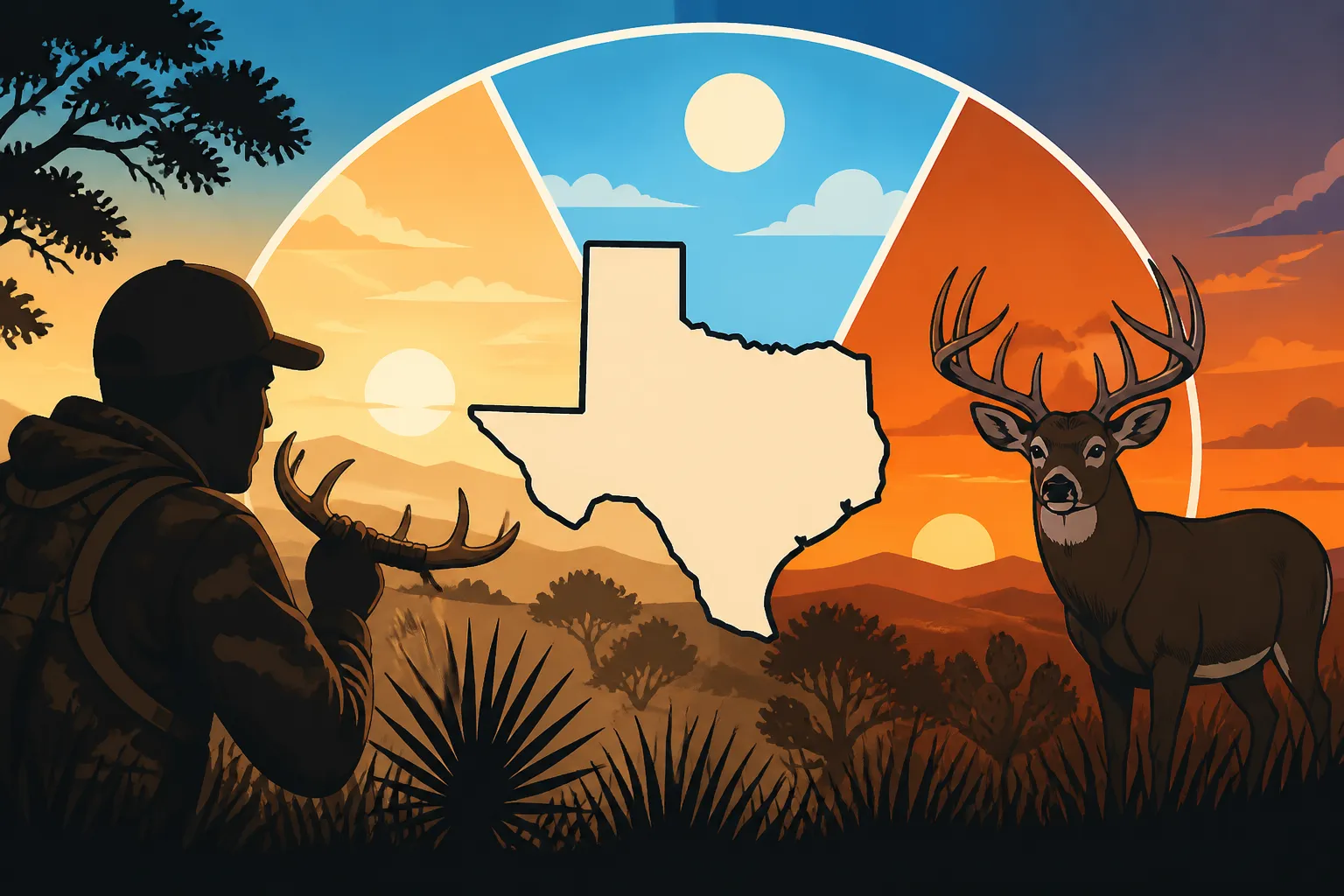
When Is the Best Time to Rattle in Texas?
It’s a tale as old as time for Texas deer hunters: you've got your rattling antlers or bag, you're nestled in your blind or against a sturdy oak, and you let out what you hope is an irresistible challenge call. But sometimes, all you get is silence, or worse, a spooked doe high-tailing it out of your general vicinity. The truth is, knowing when to rattle in Texas is just as crucial as knowing how to rattle, and it's a nuanced dance with Mother Nature and the whitetail rut. This guide is going to peel back the layers, breaking down the optimal times, conditions, and strategies to make your rattling efforts pay off in the Lone Star State.
Understanding the Whitetail Rut in Texas: The Foundation of Rattling Success
Rattling is essentially mimicking two bucks fighting over territory or does, and this aggressive behavior is most prevalent when bucks are feeling the urge to breed. That means understanding the whitetail rut in Texas is absolutely fundamental to your rattling success. Without the rut, rattling is largely a shot in the dark, as bucks simply aren't in the same mindset.
The Phases of the Rut and How They Impact Calling
The rut isn't a single event; it's a process with distinct phases, and a buck's behavior, and thus his susceptibility to rattling, changes dramatically through each one.
The pre-rut is often considered the prime time for rattling. During this phase, typically starting in late October in many parts of Texas, bucks are transitioning from bachelor groups and beginning to establish dominance. Their testosterone levels are rising, and they're looking for the first does to come into estrus. They're still somewhat vulnerable because they're actively seeking and testing boundaries, but the most intense breeding hasn't yet begun. This is when rattling can be incredibly effective because a buck hears a challenge and sees it as an opportunity to assert himself or potentially steal a receptive doe. He's not yet locked down with a specific doe, making him more mobile and curious. You can often pull in some impressive bucks during this phase, as they haven't been heavily pressured by hunters or become "doe-locked."
Next comes the peak rut, the chaotic period of intense breeding activity. Bucks are often running does ragged, with multiple bucks sometimes pursuing a single receptive doe. While rattling can still work, it becomes more hit-or-miss. A buck might be so focused on a doe right in front of him that your rattling goes unnoticed or unheard. He's less likely to abandon a hot doe to investigate a distant fight. However, if you hit it just right and catch a buck that has bred a doe and is momentarily looking for another, or if he's being challenged by a lesser buck and hears a more significant "fight" nearby, he might investigate. The challenge here is that they're often moving at a frantic pace, covering a lot of ground quickly, making it harder to predict their movements or hold their attention.
Finally, we have the post-rut, sometimes called the "secondary rut" or "late rut." After the main breeding has subsided, bucks are often exhausted and have lost a significant amount of body weight. Most does have been bred, but some younger does or those that weren't successfully bred during the peak might come into estrus later. Bucks will still be cruising, but with less intensity. Rattling can occasionally work during this phase, especially if you encounter a buck that's still searching for those last few receptive does. However, their response is usually much slower and more cautious. They've been hunted, they're tired, and their priorities shift more towards replenishing their fat reserves. Think of it as the desperate last call at a party – some might show up, but don't expect the same energy.
Regional Rut Variations Across Texas
One of the biggest challenges, and also one of the beauties, of hunting in Texas is its sheer size and diverse ecosystems. The whitetail rut doesn't happen uniformly across the state; it's a regional affair, and this is critical for knowing when to rattle. You can dive deeper into these specifics by checking out resources like The Texas Rut: When Do Bucks Rut by Region?.
In South Texas, particularly the renowned Brush Country of Webb, LaSalle, and Dimmit counties, the rut often peaks later than in other parts of the state. It typically runs from mid-December through January, with some areas even seeing significant activity into early February. This means your prime rattling window for a South Texas trophy whitetail will be much later in the season. Bucks here, known for their impressive antlers and cunning, will be actively fighting and chasing during this extended period, making it a fantastic time to implement aggressive rattling sequences.
The Texas Hill Country, encompassing counties like Kerr, Gillespie, and Mason, generally sees its rut kick off earlier. The peak rut for areas like the Edwards Plateau can often be observed from late October through mid-November. This earlier timing means your best rattling opportunities will align more with the traditional early to mid-deer season in Texas. Bucks in the Hill Country are abundant, and while they might not always reach the massive body sizes of their South Texas counterparts, they are still responsive to rattling during their breeding cycle. You can learn more about specific calling tactics in this region in guides like How to Grunt and Rattle Whitetail in the Hill Country.
In East Texas and the Pineywoods, the rut timing can be a bit earlier, often peaking in November. Areas like the Post Oak Savannah might also fall into this November timeframe. The dense timber and different deer densities here mean rattling strategies might need slight adjustments, but the underlying principle of timing it with the rut remains.
The Panhandle and Rolling Plains can also have their own nuances, with rut timings often falling between mid-November and early December. Knowing your specific county and region is paramount. Always consult the Texas Parks and Wildlife Department's (TPWD) "Outdoor Annual" or local wildlife biologists for the most precise rut dates in your hunting area. Using trail cameras can also be incredibly helpful for How to Pattern Bucks With Trail Cameras and confirm the start of significant buck activity on your specific lease.
Here’s a general overview of Texas rut timing by region for rattling purposes:
| Texas Region | General Peak Rut Timing | Optimal Rattling Period |
|---|---|---|
| South Texas (Brush Country) | Mid-December to January | Early December to Mid-January |
| Hill Country (Edwards Plateau) | Late October to Mid-November | Late October to Late November |
| East Texas (Pineywoods) | Early to Mid-November | Late October to Mid-November |
| Rolling Plains | Mid-November to Early December | Early November to Late November |
| Trans-Pecos | Early December to Late December | Late November to Mid-December |
Note: These are general guidelines; specific local conditions and deer populations can cause variations.
Optimal Time of Day for Rattling: When Bucks Are Most Responsive
Just as the calendar date matters, so does the clock. Bucks aren't active uniformly throughout the day, and understanding their daily patterns can significantly boost your rattling success.
Early Morning: The Golden Hour
Without a doubt, early morning, right as legal shooting light breaks and for the next two to three hours, is arguably the most productive time to rattle. Why? Because bucks are often still on their feet, actively cruising for does or returning to bedding areas after a night of activity. The air is typically calm and cool, allowing sound to travel effectively.
Imagine a crisp Texas morning, the fog still hanging low in the draws. Bucks have been moving all night, maybe breeding, maybe chasing. As the sun begins to lighten the sky, they're still in that "hunting" mode for does. A sudden clash of antlers can instantly grab their attention. They'll perceive it as a fresh conflict, perhaps over a doe they were just scent-checking, or a new challenger in their territory. It's often during this golden hour that you'll see the most enthusiastic and aggressive responses, with bucks potentially covering significant ground to investigate. They're still full of energy from the cooler night, and the day's hunting pressure hasn't yet driven them into hiding.
Late Afternoon: Catching Them Before Bed
The late afternoon, roughly the last two hours of daylight, also presents a solid opportunity for rattling. As the sun begins to dip and temperatures cool, deer typically start to move again from their daytime bedding areas. Bucks will be on the prowl, hoping to intercept does heading out to feed.
While not always as consistently explosive as early morning, rattling in the late afternoon can still be very effective. A buck might be cruising a known travel corridor or food source, and hearing a fight could divert him directly into your setup. He might be trying to locate a doe before nightfall or simply be responsive to a challenge as he transitions into his nocturnal routine. The calmer winds often experienced in the evening can also aid in sound propagation, making your rattling sequence more widely heard. It's a great strategy to employ if you've been sitting quietly all day and want to try to pull a buck out of thick cover before the light fades.
Midday Lulls: Worth a Try?
Many hunters view the midday hours (from late morning until mid-afternoon) as a bust for rattling, and often for good reason. Deer activity, especially during the rut, tends to slow down as bucks push does into bedding cover or simply rest after their strenuous morning activities. However, dismissing midday rattling entirely might mean missing an opportunity.
During the peak rut, when bucks are highly agitated and constantly searching, a midday rattle can sometimes surprise an unsuspecting buck who's been bedded nearby or is slowly cruising through cover. I've had personal experiences where an unexpected midday rattle sequence during the last week of November in Central Texas pulled in a curious young buck who was just moving from one bedding area to another. It's not a high-percentage play, but if you're patient and the conditions feel right (e.g., a cloudy, cool day), it's certainly worth a try. Sometimes, a buck that has already bred a doe and is now looking for the next opportunity might just be meandering through the woods, and a sudden clash of antlers could pique his interest. It's a lower probability window, but sometimes those long shots pay off.
Weather Conditions: Nature's Influence on Rattling Activity
Beyond the calendar and the clock, Mother Nature plays a huge role in how deer behave and, consequently, how effective your rattling efforts will be. Paying attention to the weather forecast is crucial for timing your rattling sequences.
Cold Fronts and Temperature Drops
If there's one weather phenomenon that consistently gets Texas deer on their feet and increases their responsiveness to rattling, it's a cold front. When a strong cold front pushes through, especially during the pre-rut or peak rut, it's like flipping a switch. The sudden drop in temperature, often accompanied by increased wind ahead of the front, seems to invigorate bucks.
After a cold front, bucks tend to move more, becoming more aggressive and more apt to investigate perceived challenges. The cooler temperatures are simply more comfortable for them to expend energy chasing does or fighting rivals. The days immediately following a cold front, particularly if the skies clear and there's a good temperature swing from warm to cold, are prime rattling days. The deer are simply more active, more prone to cruising, and therefore more likely to encounter your rattling sequence and respond to it. It’s during these times you might see bucks acting more boldly, stepping out into open areas they might otherwise avoid.
Wind Speed and Direction: A Double-Edged Sword
Wind is a critical factor that can either help or hinder your rattling success. On one hand, a light, consistent breeze is your friend. It helps carry the sound of your rattling through the woods, extending your reach to potentially curious bucks. It also provides scent control, allowing you to conceal your presence from downwind deer. The ideal wind speed for rattling is generally between 5-15 mph. This allows for good sound travel without being so strong that it becomes disruptive.
However, high winds (anything consistently over 15-20 mph) can be a significant detriment. Strong winds make it incredibly difficult for deer to hear your rattling. The ambient noise from rustling leaves and swaying branches can drown out even the loudest antler clashes. Furthermore, deer themselves tend to move less in extremely windy conditions, often bedding down to conserve energy and avoid being vulnerable to predators who might also be harder to hear approaching. Trying to rattle on a truly blustery day is often an exercise in futility.
Wind direction is equally important. Always consider the wind when setting up your rattling location. You want the wind to carry your scent away from where you expect a buck to approach. Deer almost invariably circle downwind to scent-check the source of the sound before committing to fully coming in. Positioning yourself to have the wind at your back, or angling it so it blows perpendicular to your expected approach path, allows you to detect a circling buck before he busts you. If you're hunting thick South Texas brush, for instance, a buck might get quite close before you see him, making wind direction even more critical.
Rattling Strategies and Common Mistakes
Knowing when to rattle is a huge step, but how you rattle and what mistakes you avoid are equally vital. It's not just about slamming antlers together; it's about creating a believable scenario.
Aggressive vs. Subtle Approaches
The intensity of your rattling sequence should often be dictated by the phase of the rut and the type of cover you're hunting.
During the pre-rut and peak rut, especially in areas with good buck-to-doe ratios or where you know mature bucks are present, an aggressive rattling sequence can be highly effective. This involves crashing the antlers together loudly, mimicking a violent fight. Think about loud cracks, extended grinding, and really making a racket. This aggressive approach is designed to sound like two mature bucks are going at it hard, a challenge that can draw in dominant bucks eager to assert their territory or investigate a potential rival. Follow up these aggressive clashes with some light grunting and maybe a snort-wheeze, mimicking the sounds of a real fight.
For instance, in the thick brush of South Texas, where bucks are often hidden but always listening, a series of crashing antlers, perhaps accompanied by some foot stomps in the dirt to simulate movement, can be very enticing. You can find more specific tactics for Rut Hunting Tactics: Rattling & Grunting in Texas.
Conversely, a subtle approach might be more appropriate in areas with lower deer density, during the post-rut, or in open terrain where deer are more cautious. This involves lighter antler ticks, gentle grinding, and shorter sequences. You're trying to pique a buck's curiosity without startling him. This approach is more about suggesting a minor skirmish or sparring session rather than an all-out brawl. It can be useful for coaxing in a shy buck or one that's a bit more hesitant to commit to a full-blown fight. Sometimes, just light antler contact, mimicking a buck working a scrape, can be enough to draw attention without raising alarm.
Reading Deer Behavior and Adjusting Your Call
One of the biggest mistakes hunters make is rattling blindly without observing their surroundings or adjusting their strategy based on deer behavior. Always scan the area carefully before, during, and after your rattling sequence. Bucks don't always come charging in; many will circle downwind, approach cautiously, or simply stand and listen for a while before making a move.
If you rattle aggressively and immediately see a buck staring in your direction but not committing, it might be time to switch to softer grunts or even a doe bleat to try and seal the deal. If he starts to move away, sometimes a very soft, short rattling sequence can stop him or even draw him back. Pay attention to his body language: is he posturing, ears up, tail flicking? Or is he nervous and ready to bolt?
Another common error is rattling too frequently or for too long. In many scenarios, a sequence lasting 30-60 seconds, followed by 10-15 minutes of quiet observation, is ideal. Repeated rattling without breaks can sound unnatural and overstimulate the woods, making deer wary. Think about how real bucks fight – it's usually in short, intense bursts, not a continuous racket.
Finally, always be ready! A buck can come in fast and silently. Have your weapon up and be prepared for a shot as soon as you start rattling, especially if you're bowhunting in Texas. Sometimes, they'll pop out of the brush within mere yards, leaving you with little time to react. Your setup, including your blind choice – whether it's a Box Blind vs Tripod vs Ground Blind in Texas – needs to consider how you'll draw or raise your gun quickly and quietly.
Remember, rattling is an art as much as a science. It takes practice, patience, and a deep understanding of deer behavior in the specific Texas environment you're hunting. Good luck out there, and may your antlers always attract the biggest buck!
Disclaimer
Please note that hunting regulations, seasons, and legal methods can change. Always consult the most current Texas Parks and Wildlife Department (TPWD) Outdoor Annual or their official website for the latest and most accurate information before planning any hunting trip. This guide is for informational purposes only and does not supersede official regulations.