White-Tailed Deer Hunting in Texas: Complete Guide
The thrill of chasing white-tailed deer in Texas is a deeply ingrained tradition for so many of us, but let's be honest, it can also feel incredibly overwhelming. From deciphering ever-changing regulations to understanding local deer behavior and picking the right gear for our often-unpredictable weather, it's easy to feel lost. This comprehensive guide aims to cut through the confusion, providing you with everything you need to know to pursue white-tailed deer successfully and ethically across the diverse landscapes of the Lone Star State.
Understanding Texas Whitetail: Biology and Behavior
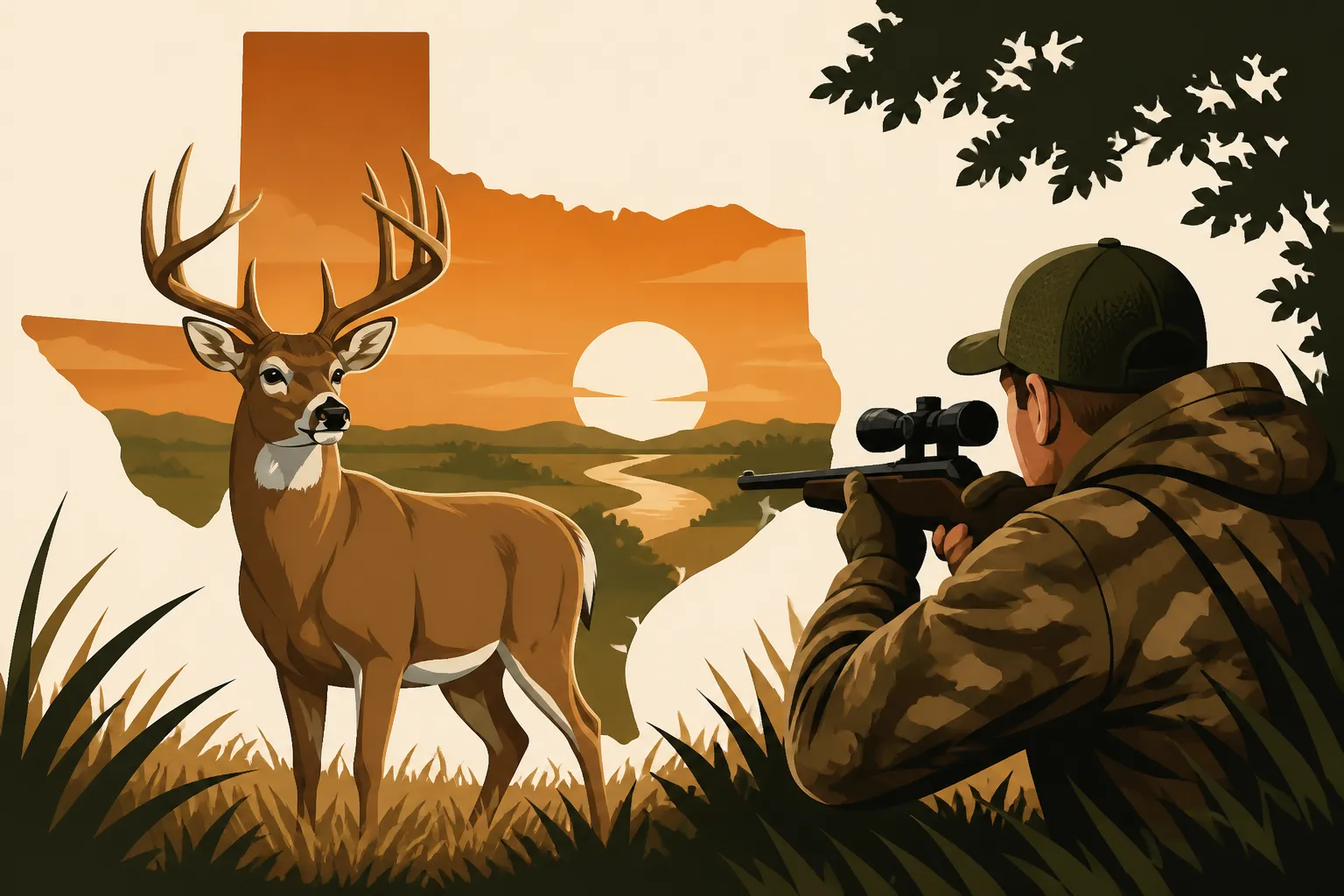
Texas is practically synonymous with white-tailed deer. They're found in all 254 counties, from the thick Pineywoods of East Texas to the vast brush country of the south and the rugged Hill Country. But even though they're everywhere, whitetails aren't a monolith; their biology and behavior adapt dramatically to their local environment, which means what works for one region might not fly in another. Getting a handle on these regional differences, the timing of the rut, and their daily routines is absolutely crucial for any serious hunter.
Regional Differences in Texas Whitetail
When you talk about Texas whitetails, you're really talking about several distinct populations that have evolved to thrive in vastly different ecosystems. For instance, the deer in South Texas, specifically the Brush Country, are legendary for their massive antlers, dense body weight, and sometimes elusive nature. This is largely due to the nutrient-rich forbs and browse available year-round, along with excellent genetics and often, extensive private land management. Hunting here might involve sitting for long hours in a tower blind overlooking a senderos or a protein feeder, waiting for a mature buck to emerge from the dense prickly pear and mesquite.
Contrast that with the Hill Country, where deer density is often incredibly high, but mature bucks tend to be smaller in body and antler size due to more limited nutrition and rocky terrain. Here, a "trophy" buck might be measured more by character and challenge than by sheer antler mass. Hunting in the Hill Country often means dealing with steep canyons, cedar thickets, and smaller land parcels. In East Texas, whitetails inhabit dense forests, and success often hinges on understanding how they move through timber and along creek bottoms. Out west, in the Trans-Pecos, deer are sparser, often resembling mule deer in their coloring and behavior, requiring vast amounts of glassing and careful spot-and-stalk tactics. It’s a completely different ballgame, and recognizing these nuances helps you adjust your expectations and strategies long before you even step foot in the field.
The Whitetail Rut in Texas: Timing and Impact
The rut is that magical, chaotic time of year when bucks throw caution to the wind in pursuit of does, and it can be the absolute best time to catch a mature buck on the move during daylight hours. However, unlike some northern states where the rut is a fairly consistent two-week window, the timing of the rut in Texas is remarkably variable across the state. In some areas, particularly the Panhandle and parts of North Texas, the rut can kick off in late October, peaking in early to mid-November, much like in the Midwest. This is when rattling and grunting can be highly effective, as bucks are actively seeking out receptive does and challenging rivals.
But head south, to places like Webb County or Maverick County, and the rut might not really get going until mid-December or even early January. This later rut means your hunting strategies for the first half of deer season need to be different. You might be focusing more on consistent food sources and water early on, and then transitioning to rut-specific tactics as the season progresses. Understanding when to rattle for bucks in South Texas or what phase of the rut you're in is critical. Factors like local deer density, nutrition, and even moon phase can influence the intensity and specific timing within these broader windows. Keeping an eye on local game camera photos and talking to landowners and other hunters in your specific area is always a good idea to fine-tune your approach.
Dietary Habits and Habitat Preferences
Knowing what whitetails eat and where they prefer to bed down or travel is like having a secret roadmap to their daily lives. White-tailed deer are primarily browsers, meaning they prefer to eat leaves, shoots, and woody stems from various plants rather than just grasses. In Texas, this can mean a diverse diet of hackberry, granjeno, mesquite beans, agarita, and a vast array of forbs, depending on the region. They’re also keen on acorns when available, especially from live oaks and post oaks, which become a major draw in the fall. During droughts, when natural forage is scarce, deer might rely more heavily on supplemental feed, such as protein pellets or corn, if it's available.
Their habitat preferences are equally varied but generally revolve around cover, food, and water. In the Hill Country, you'll find them in thick cedar brakes for bedding, emerging to feed in oak mottes or agricultural fields. In the Brush Country, the impenetrable thorny brush provides both cover and sustenance. Understanding these patterns allows you to strategically place blinds, set up feeders, or scout travel corridors. For example, deer often use natural funnels like creek beds, fence lines, or changes in vegetation to move between bedding areas and feeding grounds. Learning to identify these patterns on your specific hunting property, whether it's a private lease or public land, is fundamental to consistent success.
Texas Deer Season & Regulations: What You Need to Know
Navigating the rules and regulations for white-tailed deer hunting in Texas can feel like a full-time job. Texas Parks and Wildlife Department (TPWD) manages hunting seasons with incredible detail, often varying by ecological zone and even individual county. Missing a crucial detail can turn a great hunt into a costly headache, so it’s absolutely paramount to stay informed.
Key Dates and Zones for White-Tailed Deer Season
Texas is divided into distinct deer hunting zones: North, Central, and South. Each zone has its own general open season dates, as well as specific archery, muzzleloader, and special late-season dates. The general season for most of the state typically kicks off in early November and runs through the first or second weekend of January. Archery season, however, usually precedes the general season by a full month, starting in early October, offering bowhunters a unique opportunity to hunt before rifle pressure sets in.
For example, in the North Zone, the general season for white-tailed deer might run from the first Saturday in November to the first Sunday in January. The South Zone, known for its later rut, often has a general season that extends into mid-January, giving hunters a few extra weeks to pursue those post-rut bucks. Then there are also specific youth-only weekends, which are fantastic opportunities to get younger hunters involved without the usual pressure from adult hunters. Always, and I mean always, consult the official Texas Deer Season 2026-2027: Dates by Zone information provided by TPWD for your specific county before you even pack your bags. These dates can shift slightly year to year, and knowing them precisely is non-negotiable for a legal and enjoyable hunt.
Antler Restrictions and Bag Limits by County
This is where things can get particularly specific and, for some, a bit frustrating, but it's all designed to improve deer herds. Texas employs a comprehensive system of antler restrictions and bag limits that vary significantly by county. Many counties, especially in the Hill Country and South Texas, implement the "13-inch rule" or similar antler restrictions. This rule generally states that a legal buck must have at least one unbranched antler, or a main beam spread of 13 inches or greater, or be 4.5 years old or older. The goal is to protect younger bucks, allowing them to mature and contribute to a healthier age structure in the herd.
Failing to correctly identify a legal buck under these rules can result in significant fines. It truly requires patience and a good eye, especially in the field when adrenaline is pumping. In other counties, especially those with Managed Lands Deer Program (MLDP) permits, the restrictions might be more flexible or determined by the landowner/manager under a specific management plan. Beyond antler restrictions, the overall bag limit for white-tailed deer is typically 5 deer per license year, with no more than 3 bucks. However, this can be further refined by county, dictating how many bucks and does you can take, and whether antlerless deer permits (doe tags) are required. Always check the specifics for the county you plan to hunt in, including which counties have the 13-inch rule in Texas, as this is one of the most common mistakes new hunters make.
Licensing, Tags, and Harvest Reporting
Before you even step foot into a deer stand, you need the right paperwork. Every hunter in Texas, unless exempt, is required to possess a valid Texas Hunting License: Cost, Types & How to Buy (2026). This typically means a Resident Hunting License or a Non-Resident Hunting License, along with any necessary endorsements like the Archery Stamp or a Federal Duck Stamp if you plan on migratory bird hunting. For white-tailed deer, your license will come with specific tags that you must immediately attach to a harvested deer and then validate.
Harvest reporting is another critical aspect, especially in certain counties. TPWD uses harvest data to monitor deer populations and make informed management decisions. Many counties require you to report your harvest through the My Texas Hunt Harvest app or website within 24 hours of tagging the animal. This quick, digital reporting makes it easy to comply, but it's easy to forget in the excitement of a successful hunt. Make sure you understand how Texas hunting tags and harvest reporting work for your specific location. Failing to properly tag and report a deer is a serious offense, so always double-check your understanding of these rules before your hunt begins.
Essential Gear for Texas Whitetail Hunting
Hunting Texas whitetails isn't just about showing up with a rifle and a dream. The right gear, thoughtfully chosen for our unique conditions, can make the difference between a miserable trip and a memorable success. From the tools you use to pursue game to what you wear, every piece plays a role.
Firearms, Ammo, and Bowhunting Essentials
For rifle hunters, Texas whitetails are taken with a wide variety of calibers, but some stand out for their effectiveness and popularity. The venerable .30-06 Springfield, .270 Winchester, and .308 Winchester are perennial favorites, offering a good balance of power, trajectory, and readily available ammunition. For those looking for something a bit newer or with less recoil, calibers like the 6.5 Creedmoor have become incredibly popular, known for their flat trajectory and accuracy. Whichever caliber you choose, practice is paramount. Knowing your rifle's capabilities and your own limitations at various ranges is far more important than the specific cartridge. Always use a quality hunting bullet designed for deer-sized game; standard target rounds are not appropriate.
Bowhunting in Texas: Archery Season Guide is a rapidly growing segment, and for good reason—it offers an extended season and an incredible challenge. For bowhunters, a compound bow set at a comfortable draw weight, typically 40-70 pounds, is standard. Modern crossbows are also legal during archery season and can be a great option for hunters seeking a more accessible or less physically demanding archery experience. Broadheads, whether fixed blade or mechanical, need to be razor sharp and matched to your arrow setup for optimal flight and penetration. Don't forget a good rangefinder and a sturdy release aid for consistent accuracy. Remember, shot placement is king with a bow, so consistent practice and ethical shot selection are non-negotiable.
Optics: Scopes, Binoculars, and Rangefinders
Clear, reliable optics are the eyes of a Texas deer hunter. A quality rifle scope is fundamental, allowing you to clearly see your target and make a precise shot, even in low light conditions at dawn or dusk. Variable power scopes (e.g., 3-9×40 or 4-12×40) are versatile for the varying terrain and shot distances you might encounter, from dense brush to open sendero. Brands like Leupold, Vortex, and Zeiss offer excellent options across different price points, known for their durability and clarity.
Binoculars are perhaps even more crucial for scouting and identifying deer. In the vastness of South Texas brush country or the rugged canyons of the Hill Country, you'll spend far more time looking through binoculars than your rifle scope. A good pair of 10×42 binoculars provides an excellent balance of magnification and field of view, allowing you to pick apart distant cover for antlers or movement. Look for waterproof, fog-proof models with good light-gathering capabilities. Finally, a rangefinder is indispensable for ethical shooting. It takes the guesswork out of estimating distances, allowing you to know precisely how far away that buck is and make the necessary holdover adjustments for your specific cartridge. This is especially vital when hunting over open terrain or in areas with varying topography.
Blinds, Feeders, and Trail Cameras
Most deer hunting in Texas, especially on private land, involves some form of stand hunting. Box Blinds vs Tripod vs Ground Blind in Texas offers different advantages. Box blinds, like those from Ranch King or Atascosa, provide comfort and concealment from the elements, making long sits much more bearable. They're excellent for hunting with kids or in cold, windy weather. Tripod blinds get you up off the ground, offering a wider view over brush, while ground blinds, such as those by Primos or Ameristep, are highly portable and effective for bowhunting or hunting new areas on the fly.
Feeders are another cornerstone of Texas deer hunting, used to attract and hold deer in specific areas. Best Deer Feeder Setup for Texas can involve spin feeders that dispense corn at programmed times, gravity feeders for protein pellets, or a combination of both. When considering Hunting Over Feeders & Corn in Texas (Legal Guide), ensure you're aware of any county-specific regulations, especially in CWD zones. Proper feeder placement and maintenance, including reliable deer feeder timer settings, are key to their effectiveness. And finally, cellular trail cameras for Texas, like the popular Tactacam Reveal or Moultrie Edge, have revolutionized scouting. They allow you to monitor deer activity, track patterns, and even inventory bucks remotely, saving countless hours in the field and minimizing human pressure on your hunting grounds. These invaluable tools provide real-time intelligence, letting you know when to be in the stand.
Apparel and Other Must-Haves for Texas Weather
Texas weather is notoriously fickle. One day it's 80 degrees and sunny, the next it's a cold front blowing in, dropping temperatures by 40 degrees with a biting north wind. This means layering is absolutely critical. Early season hunts (October/November) often call for lightweight, breathable camo like that offered by Sitka or Kuiu in earth tones or specialized patterns. As winter sets in, you'll need heavier, insulated outer layers, often in blaze orange or pink for safety during general season. Don't forget a good rain suit; a pop-up shower can ruin a hunt and make you miserable.
Beyond clothing, a few other items are essential. A sturdy pair of snake boots for Texas hunting, like those from LaCrosse or Rocky, is non-negotiable, especially in the early season and in brushy areas where rattlesnakes and copperheads are common. A reliable headlamp or flashlight is vital for getting to and from your stand in the dark. A good hunting backpack will carry your essentials – water, snacks, first-aid kit, game calls, and extra layers. And finally, a quality cooler, such as a Yeti or Orca, to hold ice in Texas heat, is crucial for preserving your harvest once you've field dressed it, especially if you have a long drive home to the processor.
Effective Hunting Tactics for Texas White-Tailed Deer
Once you have your gear and understand the regulations, it's time to talk strategy. Texas offers a diverse range of environments, and successful whitetail hunters adapt their tactics to fit the landscape and the deer's behavior. What works in a dense South Texas thorny brush will be very different from hunting creek bottoms in East Texas or the open plains of the Panhandle.
Stand Hunting Over Feeders and Food Plots
Stand hunting, typically from a box blind or a tripod, is perhaps the most common and effective method for white-tailed deer in Texas, especially on private lands where supplemental feeding is allowed. The strategy revolves around attracting deer to a consistent food source—often corn dispensed by a spin feeder, or protein pellets from a gravity feeder. This creates predictable patterns, making it easier to intercept deer moving to and from these sites. Many hunters also strategically plant food plots in Texas, using crops like winter wheat, oats, or clover, to provide high-quality forage and further concentrate deer activity. The best deer feeder timer settings can really enhance this strategy, ensuring corn drops when deer are most likely to be active during legal shooting hours.
When setting up your stand and feeder, consider prevailing wind direction, sun position, and potential approach and exit routes that minimize disturbance. A well-placed blind offers concealment and a clear shot lane to the feeder or food plot. It's not just about the food; deer also use these areas as social hubs. Observing deer at feeders can give you valuable insights into herd dynamics, identify new bucks moving into the area, and help you pattern their movements. However, remember that deer can become patterned to feeders too, often visiting primarily at night, so understanding how to pattern bucks with trail cameras is a crucial complement to this tactic, helping you decide the best time of day to hunt whitetail in Texas.
Spot-and-Stalk and Still Hunting Approaches
While stand hunting dominates in many areas, the vast open spaces of West Texas, the broken country of the Hill Country, and even some portions of the Post Oak Savannah lend themselves well to spot-and-stalk or still hunting. Spot-and-stalk hunting involves using binoculars or a spotting scope to locate deer from a distance, then carefully planning an approach to get within shooting range. This requires excellent glassing skills, patience, and the ability to move silently through varied terrain, using natural cover to your advantage. It’s an incredibly rewarding method that truly tests a hunter’s woodsmanship.
Still hunting, on the other hand, is a slow, deliberate movement through deer habitat, stopping frequently to observe, listen, and glass for deer. You might move 100 yards in an hour, pausing for several minutes at a time to scan the landscape. This method works well in areas with dense cover, like cedar breaks in the Hill Country or thick brush in South Texas, where spotting deer from a distance is challenging. Both spot-and-stalk and still hunting demand a deep understanding of deer behavior, wind currents, and terrain. They are often more physically demanding than stand hunting but can provide incredibly exciting and challenging hunting experiences, especially when chasing an elusive mature buck that rarely visits feeders.
Calling and Decoying Strategies
Deer calling and decoying are often underutilized tactics in Texas but can be incredibly effective, especially during the rut. As the rut heats up, bucks become more aggressive and less cautious, making them susceptible to various calls. Grunts, whether short tending grunts or longer social grunts, can pique a buck's curiosity or challenge its dominance, drawing it into range. Rattling, using real or synthetic antlers, simulates a buck fight and can be deadly during the peak rut. When to rattle for bucks in South Texas depends heavily on the specific timing of the rut in that region, but when done right, it can bring a big buck crashing through the brush.
Decoying can add another layer of realism, especially when combined with calling. A realistic buck decoy, positioned strategically downwind, can draw in an aggressive buck looking to challenge a rival. A doe decoy can attract a cruising buck looking for a mate. When using decoys, always ensure safety, especially on public land or heavily hunted private land, by wearing blaze orange when moving to and from your setup. While not a guaranteed success, incorporating various deer calls and decoys into your repertoire can dramatically increase your chances of encountering a mature buck during the most exciting time of the deer season.
Finding Your Hunting Ground: Leases, Public Land, and Outfitters
One of the biggest hurdles for any Texas deer hunter, especially those new to the state, is simply finding a place to hunt. Texas is predominantly private land, which means access can be a challenge. However, there are still plenty of options, from long-term leases to public hunting opportunities and guided trips.
Navigating Texas Hunting Leases
For many Texans, a hunting lease is the quintessential way to gain consistent access to quality deer hunting. Hunting leases in Texas: Complete Guide (Cost & How to Find) come in all shapes and sizes, from seasonal day leases to multi-year, all-inclusive arrangements. They offer the significant advantage of private access, allowing you to manage the land and deer population, install feeders and blinds, and often hunt a specific property exclusively. The cost of a deer lease in Texas can vary wildly depending on location, acreage, amenities, and deer quality, ranging from a few hundred dollars for a basic pasture to several thousand per gun for a prime South Texas trophy lease.
Finding a good lease often involves networking, checking online forums, or using specialized lease listing services. When considering a lease, always inspect the property thoroughly, understand the terms of the lease agreement, clarify rules regarding guests, harvest limits, and maintenance responsibilities. Ensure you have a clear understanding of what’s included and what’s expected of you. Many hunters find that joining a group lease is a more affordable and social option, allowing them to share costs and responsibilities.
Public Hunting Opportunities and Drawn Hunts
Don't have a lease or access to private land? Don't despair! Texas offers a surprising amount of public hunting in Texas: WMAs & Annual Public Hunting Permit. While less common for prime whitetail than private land, state parks, National Forests, and Wildlife Management Areas (WMAs) across the state provide access, often requiring an Annual Public Hunting (APH) Permit. The APH Permit costs around $48 and grants access to over a million acres of public land. These lands can offer challenging but rewarding hunts, though they often see more hunting pressure.
Additionally, the Texas Drawn Hunts & Public Hunt Draw 2026 program is an incredible opportunity to hunt some of the best-managed lands in the state, including prime WMAs and state parks. These hunts are highly coveted, offering limited entry for various species, including trophy white-tailed deer. While the odds can be low for popular hunts, applying is relatively inexpensive, and drawing a tag can lead to an unforgettable experience. Categories include "Youth Only," "Regular," and "Standby" options, each with unique application windows. It's a fantastic way to access areas you might not otherwise get to hunt, often in spectacular settings with good deer populations.
Choosing a Reputable Whitetail Outfitter
If your time is limited, or you're looking for a higher-percentage shot at a specific class of buck, a guided hunt with a reputable outfitter might be your best bet. Texas has numerous hunting outfitters, particularly in areas renowned for trophy whitetails like South Texas and parts of the Hill Country. These outfitters provide everything from lodging and meals to experienced guides who know the land and the deer, ensuring a focused and comfortable hunting experience.
When selecting an outfitter, do your homework. Check references, read reviews, and clarify what's included in the package (e.g., lodging, food, guides, transportation, processing, taxidermy preparation, specific number of animals, etc.). Be clear about your expectations regarding trophy size, hunting methods, and budget. While often more expensive than a lease or public hunt, a good outfitter can dramatically increase your chances of success and provide a fantastic overall experience, especially for those new to Texas hunting or seeking a specific trophy animal.
Field Dressing and Game Care in the Texas Heat
You've successfully harvested your Texas whitetail—congratulations! Now, the real work begins. Texas heat can be a formidable enemy to freshly harvested game, and improper field dressing and care can quickly ruin valuable venison. Rapid action and good technique are crucial to ensure your deer provides delicious meals.
Rapid Cooling Techniques
The golden rule in Texas, especially for early season or warmer late-season hunts, is to cool the animal down as quickly as possible. The moment a deer is down, its body temperature starts to rise, creating an ideal environment for bacterial growth. Begin by immediately field dressing the animal. This involves removing all internal organs (viscera) to allow air to circulate within the body cavity. Be meticulous about removing everything, including the trachea and esophagus, and try to avoid puncturing the stomach or intestines.
Once field dressed, prop the cavity open to facilitate airflow. If you're near your vehicle or camp, immediately get the deer to a shaded area. If you have ice, pack the cavity with ice, especially if you anticipate a long recovery or transport time. Even placing frozen water bottles in the cavity can make a difference. Some hunters even use specialized game bags that allow for airflow while protecting the carcass from flies and dirt. The quicker you can drop that core body temperature, the better the meat quality will be. For more detailed instructions on How to Field Dress a Deer in Hot Weather, check out our comprehensive guide.
Transporting Your Harvest and Processing Options
Transporting a deer legally and safely requires a bit of planning. Once tagged and field dressed, ensure the carcass is secured in your vehicle or on a game cart. If you're driving a long distance in warm weather, consider placing the deer in a cooler or covering it with a tarp filled with ice to keep it cool. It's also important to be aware of Chronic Wasting Disease (CWD) in Texas: Zones, Rules & Carcass Transport. If you harvested a deer in a CWD-positive county, there might be specific rules regarding carcass movement out of that zone, often requiring the head to be left or submitted for testing. Always check the current regulations for your specific hunting area.
Once you arrive at your destination, you have a few options for processing. Many hunters choose to process their deer themselves, which can be a rewarding and cost-effective way to ensure the meat is handled to your exact specifications. For those who prefer to leave it to the professionals, Texas has numerous reputable wild game processors. Where to Take a Deer for Processing in Texas often involves local butchers who specialize in venison, offering a range of cuts, sausage making, and even jerky. Call ahead to confirm their operating hours, pricing, and any specific requirements they have for drop-offs. A good processor can turn your harvest into a freezer full of delicious, high-quality meat.
Conservation and Ethical Hunting Practices
Hunting in Texas is more than just harvesting an animal; it's a vital part of wildlife management and conservation. Every hunter plays a role in maintaining healthy deer populations and ensuring the future of our outdoor heritage. Ethical practices aren't just about following the law; they're about respecting the animal, the land, and the tradition.
Managing Deer Populations and Habitat
In Texas, hunters are essentially volunteer wildlife managers. Through our license fees and excise taxes on hunting equipment, we directly fund conservation efforts, habitat restoration, and wildlife research. Our harvests also help manage deer populations to healthy levels, preventing overbrowsing and habitat degradation that can occur when deer numbers exceed the carrying capacity of the land. This is particularly relevant in areas like the Hill Country, which historically has very high deer densities.
Many landowners and hunters also actively engage in habitat management on their properties. This can include planting food plots, implementing brush control to enhance forage, improving water sources, and carefully managing harvest to achieve specific population goals, such as increasing the number of mature bucks or reducing overall deer numbers. Programs like the Managed Lands Deer Program (MLDP) offered by TPWD encourage landowners to manage their deer herds scientifically, providing them with extended seasons and flexible tag issuance in exchange for detailed harvest data and habitat management. This holistic approach ensures that Texas's white-tailed deer herds remain robust and healthy for generations to come.
Respecting Landowners and Fellow Hunters
For the vast majority of Texas hunters, our access depends on the generosity or goodwill of landowners. Whether you're on a long-term lease, a day hunt, or simply have permission to hunt a small tract, respecting the landowner and their property is paramount. This means leaving gates as you found them, picking up all your trash, avoiding driving off-road unless explicitly permitted, and being mindful of noise and property boundaries. A clean, respectful hunter is far more likely to be invited back. A simple "thank you" and perhaps an offer of some venison can go a long way in building positive relationships.
Beyond landowners, mutual respect among fellow hunters is equally important. Public lands, in particular, can be crowded, making it vital to practice good etiquette. This includes being aware of other hunters' locations, avoiding disturbing their hunts, and respecting personal space. On a hunting lease, clear communication and adherence to agreed-upon rules are essential for maintaining harmony among group members. Ultimately, we are all part of a larger community, and upholding a code of ethics that prioritizes safety, respect, and conservation ensures that the tradition of white-tailed deer hunting in Texas continues to thrive for everyone.
Disclaimer
Please note that hunting regulations, seasons, and licensing requirements in Texas are subject to change. Always consult the most current official Texas Parks and Wildlife Department (TPWD) Outdoor Annual or website before engaging in any hunting activities. This guide is for informational purposes only and should not be considered a substitute for official regulations or professional advice.