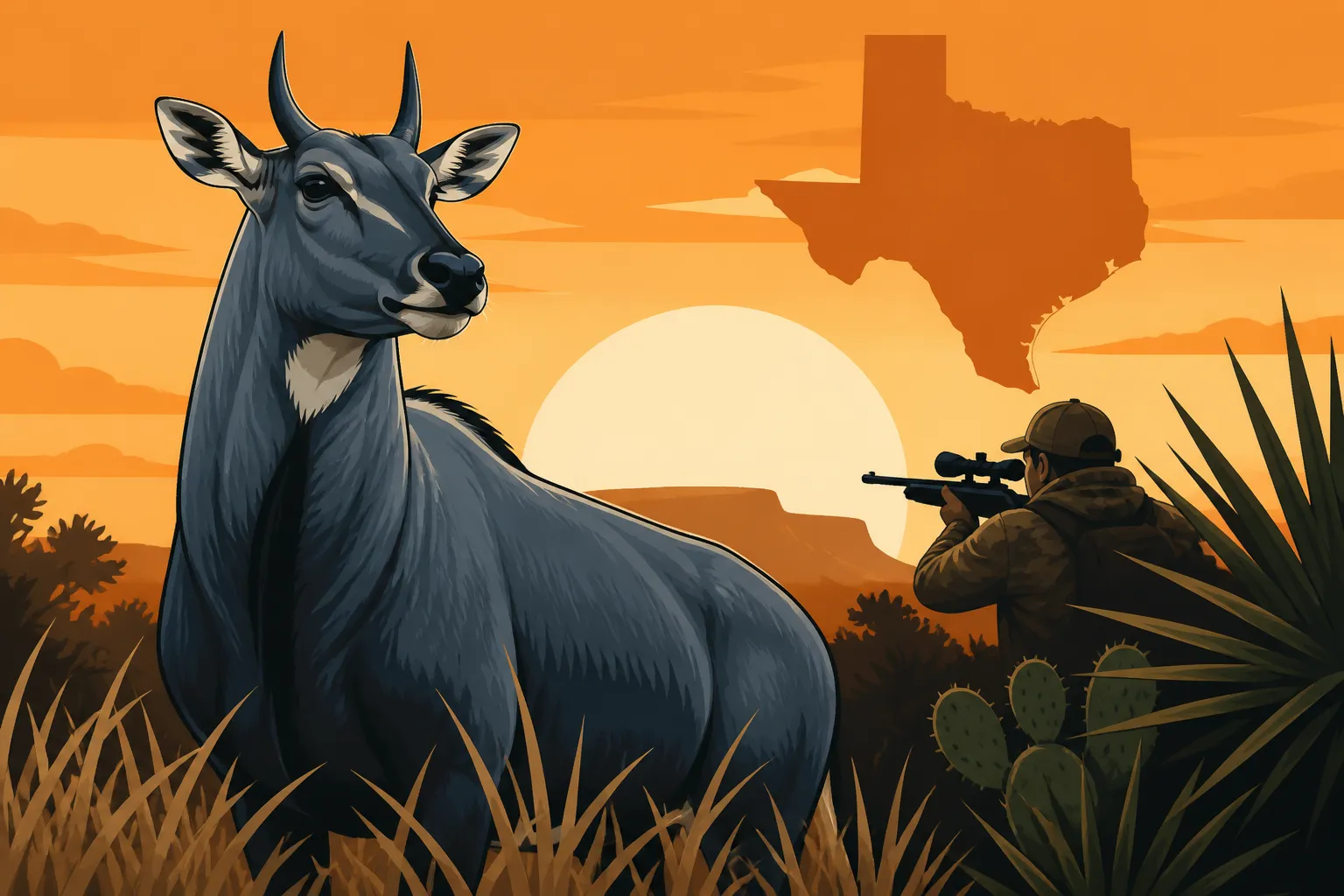
Nilgai Hunting in South Texas
For many Texas hunters, the sheer size and elusive nature of the Nilgai antelope present a unique challenge, often leaving folks scratching their heads about where to even begin with such a formidable exotic. This comprehensive guide is designed to demystify Nilgai hunting in the vast landscapes of South Texas, helping you understand these incredible animals and equip you with the knowledge needed for a successful hunt.
Unraveling the Enigma of Nilgai in South Texas
Nilgai, often referred to as the "blue bull" due to the mature males' slate-grey coat, are not native to Texas but have established a thriving free-ranging population, primarily along the South Texas coast and the vast ranches of the King Ranch. These impressive animals, originally from India, offer an exotic hunting experience unlike any other, blending the challenge of African plains game with the rugged beauty of the Lone Star State. Their incredible toughness, keen senses, and speed make them a truly formidable quarry.
Nilgai Characteristics and Behavior
When you're out there looking for Nilgai, understanding their unique traits is absolutely crucial. Mature bulls can weigh anywhere from 400 to over 700 pounds, standing tall with a distinctive hump on their shoulders and short, conical horns. The cows are considerably smaller, typically a reddish-brown, and lack horns. They're incredibly wary animals, possessing exceptional eyesight, hearing, and an uncanny ability to vanish into the dense South Texas brush. You might spot a group of cows and calves grazing in an open pasture, but the mature bulls often prefer to be solitary or in small bachelor groups, making them harder to pinpoint.
Their diet consists mainly of grasses and browse, and they're often found near water sources, especially during the dry seasons. Observing their patterns around these resources can be a key part of your scouting. They are most active during the cooler parts of the day, early morning and late evening, often bedding down in thick cover during the intense midday heat. This means your best hunting opportunities will typically be during those transitional hours when they are on the move to and from feeding areas.
Their Unique Habitat in South Texas
The Nilgai's primary stronghold in Texas is the brush country of the southern part of the state, particularly the expansive ranches near the Gulf Coast in counties like Kenedy, Kleberg, and Willacy. This region's dense thorny brush, mesquite, and coastal prairie mimic their native habitat surprisingly well. It's a landscape of vast, often unbroken, stretches of private land, where visibility can be limited to mere yards in places. This thick cover provides ample hiding spots for these large animals, making close-range encounters more common than long-distance shots.
You'll find them roaming across huge pastures, sometimes bordering agricultural fields, but they quickly disappear into the heavy cover when disturbed. The sheer scale of these ranches means that finding and pursuing Nilgai often involves covering a lot of ground, either by vehicle or on foot, and often requires patience and local knowledge. Understanding the topography – where the dense brush gives way to more open senderos (clearings) or coastal grasslands – is key to predicting their movements and setting up successful ambushes or stalks.
Where to Find Your Nilgai Hunt
Finding the right spot for Nilgai hunting in Texas is probably one of the biggest hurdles for many aspiring hunters. Unlike deer, which are widespread, Nilgai populations are concentrated, and access is primarily through private lands. This means you're generally looking at either guided hunts with outfitters or securing a lease on a ranch known to have a strong Nilgai presence.
Prime Nilgai Hunting Counties
The absolute epicenter for free-ranging Nilgai in Texas is undoubtedly the Lower Rio Grande Valley, particularly the coastal counties of Kenedy, Kleberg, and Willacy. The famed King Ranch, one of the largest ranches in the world, holds a significant portion of this population, and they are recognized for their sustainable hunting programs. You'll find other large, private ranches throughout this region that also offer hunting opportunities.
- Kenedy County: Often considered the heart of Texas Nilgai country, with vast stretches of undisturbed habitat.
- Kleberg County: Home to a large part of the King Ranch and other historic ranches with healthy populations.
- Willacy County: Features similar coastal prairie and brush habitats, providing excellent Nilgai territory.
- Brooks County, Hidalgo County, and Starr County: While less dense than the coastal counties, these areas further inland can also hold populations, especially on larger, well-managed properties.
It's important to recognize that while some Nilgai might appear outside these core areas, their numbers are typically much lower and finding consistent hunting opportunities becomes exponentially harder. The quality of the habitat in these prime counties directly correlates to the robust Nilgai populations you'll encounter.
Navigating Guided Hunts and Private Leases
For most hunters, especially those new to Nilgai, a guided hunt through an established outfitter is often the most practical and successful route. These outfitters have intimate knowledge of the land, the Nilgai's behavior, and the necessary infrastructure (vehicles, guides, lodging) to facilitate a hunt in challenging terrain. They'll also handle the logistics of game recovery and initial processing, which can be a significant undertaking given the size of these animals. You can find reputable outfitters specializing in Nilgai by searching online or asking for recommendations within the hunting community.
Securing a private lease specifically for Nilgai is tougher, as these leases are highly sought after and often come with a substantial price tag, given the rarity and trophy potential of the animal. Many landowners prefer to manage their Nilgai through guided hunts to maintain population control and maximize income. If you do find a lease, ensure it has a proven history of Nilgai sightings and harvests, and that the landowner provides clear rules and expectations regarding the hunt. Remember that even on a lease, the vastness of the territory means you'll still be doing a lot of scouting and legwork yourself.
Essential Gear for a South Texas Nilgai Hunt
Hunting Nilgai isn't your average deer hunt, and your gear selection needs to reflect the animal's size, toughness, and the demanding South Texas environment. Showing up unprepared can quickly turn an exciting adventure into a frustrating ordeal. Think heavy-hitting calibers, reliable optics, and clothing designed for thorny brush and scorching heat.
Rifles, Ammunition, and Optics
When it comes to putting down a Nilgai, you need serious stopping power. These animals are incredibly tough, and a poorly placed shot from an underpowered caliber can lead to a long, arduous, and potentially unsuccessful track. Most experienced Nilgai hunters recommend a minimum of .30 caliber, with popular choices including the .300 Win Mag, .338 Win Mag, .375 H&H, and even larger calibers like the .416 Rigby or .458 Lott if you're feeling adventurous. The key is heavy, controlled-expansion bullets, like Barnes TSX, Nosler AccuBond, or Hornady ELD-X, designed to penetrate thick hide and bone.
Your rifle should be one you're comfortable shooting accurately, as shot placement is paramount. A high-quality rifle scope with good light-gathering capabilities and reliable turrets is crucial. Given the potential for shots in low light or within dense brush, a scope with a wide field of view and a lower power setting (e.g., 2-10x or 3-15x) is often preferred over ultra-high magnification. Don't forget a reliable rangefinder; judging distance in the open coastal prairies or dense brush can be tricky. You'll find many hunters comparing options for their needs, looking for the best rifle scope for Texas deer hunting or exotic game, which often translates well to Nilgai.
Clothing and Footwear for the Brush
South Texas brush country is a land of thorns, rattlesnakes, and intense heat. Your clothing and footwear need to stand up to these challenges. Forget your soft denim or thin camouflage; you need tough, rip-resistant materials. Carhartt or similar heavy-duty canvas pants are a good start, or specialized hunting pants designed for briars. Long-sleeved shirts, even in the heat, are a must to protect against scratches and sun exposure. Light-colored clothing can also help reflect the sun.
Snake boots are non-negotiable. Stepping into a rattlesnake den or brushing against a prickly pear cactus hidden by tall grass is a common hazard. Brands like Lacrosse or Irish Setter offer excellent snake boots that provide protection up to your knees. Alternatively, sturdy leather boots combined with snake gaiters can offer similar protection. Make sure your boots are comfortable for long walks, as you'll be covering a lot of ground. Remember to consider the climate – even in winter, midday temperatures can be mild, so layering is key. Don't forget a wide-brimmed hat for sun protection and a good pair of polarized sunglasses to cut through the glare.
Proven Nilgai Hunting Methods and Tactics
Hunting Nilgai is a test of patience, stealth, and marksmanship. These aren't animals you simply stumble upon and bag. You'll need to employ tactics that account for their keen senses, their preferred habitat, and their sheer size.
Spot-and-Stalk Techniques
The most common and often most effective method for hunting free-ranging Nilgai in South Texas is spot-and-stalk. This involves using vehicles to cover large tracts of land, driving slowly along senderos, pasture roads, or the edges of brush lines, constantly scanning with binoculars. Once Nilgai are spotted, the real work begins. You'll have to dismount the vehicle, assess the wind, and begin a careful, deliberate stalk. This can often mean long walks through thick, thorny brush, requiring extreme stealth to get within shooting range.
A critical aspect of a successful stalk is understanding wind direction. Nilgai have an excellent sense of smell, and a shifting wind can quickly give away your position. Always try to approach from downwind. Utilizing the terrain and cover (mesquite thickets, elevated areas) to your advantage is also paramount. This often means moving slowly, pausing frequently to glass, and being prepared for a quick shot if an animal suddenly bolts or offers a fleeting opportunity. The ability to spot-and-stalk Aoudad in West Texas or other wary exotics will serve you well here.
| Hunting Method | Description | Pros | Cons |
|---|---|---|---|
| Spot-and-Stalk | Driving slowly, glassing large areas for Nilgai, then dismounting and stealthily approaching on foot. | Highly effective for wary animals; offers a true hunting challenge; covers vast ground; allows for shot selection. | Physically demanding; requires excellent wind management and stealth; can be slow if animals are deep in brush; shot opportunities can be fleeting. |
| Still Hunting | Moving slowly and deliberately through promising habitat, pausing frequently to observe and listen, covering limited ground but with extreme caution. | Excellent for dense cover; increases chances of close-range encounters; less conspicuous than vehicle-based spotting. | Very slow process; covers less ground; requires immense patience and skill in reading sign; physically tiring. |
| Blind Hunting | Setting up in a fixed ground blind or elevated box blind near water sources, feeding areas, or travel corridors, and waiting for Nilgai to appear. | Less physically demanding; good for specific high-traffic areas; allows for more controlled shot setup; comfortable. | Requires extensive scouting to find active spots; animals may not show up during shooting hours; limited to specific locations; less active hunting. |
| Tracking | Following fresh Nilgai tracks and sign through the brush. Often used after an initial shot or when fresh sign is found without a visual. | Can be highly effective in dense areas where spotting is difficult; a traditional and immersive hunting experience. | Extremely challenging; requires expert tracking skills; can be very slow; animals may cover vast distances; high chance of losing the trail. |
Still Hunting and Blind Setups
While less common for Nilgai than spot-and-stalk, still hunting can be effective in areas of extremely dense cover where glassing is nearly impossible. This involves moving very slowly through the habitat, taking a few steps, then pausing for several minutes to scan, listen, and look for movement or signs of animals. The goal is to move quietly enough that you might surprise a bedded Nilgai before it has a chance to react. This is a tactic that rewards extreme patience and a deep understanding of the animal's habits.
Blind hunting for Nilgai is also an option, particularly if you have access to specific areas with reliable Nilgai traffic, such as around a perennial water source, a protein feeder, or a food plot. Building a sturdy ground blind or using an elevated box blind can provide comfort and concealment. However, Nilgai are often wary of new structures, so blinds should be set up well in advance to allow animals to become accustomed to them. This method relies heavily on extensive scouting to identify high-traffic areas where Nilgai consistently travel or feed. It's often used in conjunction with supplemental feeding programs on ranches to encourage consistent patterns.
Post-Hunt Considerations: From Field to Freezer
Successfully taking down a Nilgai is a significant achievement, but the work isn't over. These are massive animals, and proper handling after the shot is critical for preserving the meat and trophy quality. The South Texas heat adds another layer of urgency to the process.
Field Dressing and Game Recovery
The moment you've successfully harvested a Nilgai, the clock starts ticking, especially if it's warm outside, which it often is in South Texas. Nilgai are incredibly tough, and their hide is thick. You'll need a sharp, sturdy hunting knife and potentially a small hatchet or saw for breaking the sternum. The sheer size of the animal means field dressing will be a significant undertaking. The goal is to get the entrails out as quickly as possible to begin the cooling process. You might even consider quartering the animal in the field if you're a long way from a cooler or processing facility, as outlined in articles like How to Field Dress a Deer in Hot Weather.
Recovery can be challenging. A 500-pound animal isn't something you're going to drag out alone. Most outfitters will have ATVs or UTVs equipped with winches or trailers specifically designed for game recovery. If you're on a private lease, coordinate with your hunting partners or ranch staff for assistance. Having a strong game cart on hand can also be invaluable, but ensure it's capable of handling the weight and the rough terrain.
Processing and Trophy Care
Once field dressed, the Nilgai needs to be transported to a cooler or processing facility promptly. Many large ranches and outfitters in South Texas have walk-in coolers to hang the animal whole or quartered. If you plan to process it yourself, make sure you have adequate space and equipment. Nilgai meat is lean and delicious, often compared to venison but with a milder flavor. It's highly sought after, so don't let it go to waste.
For trophy care, if you're taking the horns and cape for a shoulder mount, ensure you know how to properly cape the animal or have a taxidermist lined up who can handle large exotic game. The thick hide requires careful handling to prevent slipping. Many hunters opt for a European mount of the skull, which is a great way to commemorate the hunt without the complexity of a full shoulder mount. Communicate your trophy intentions clearly with your guide or processor from the start so they can take the necessary steps.
Nilgai Hunting Regulations and Ethical Considerations
Hunting Nilgai, like any other game, comes with a set of regulations and ethical responsibilities. Understanding these rules is not just about staying legal; it's about respecting the animal and the hunting tradition.
Texas Hunting License and Exotic Game Rules
Good news for Nilgai hunters: since Nilgai are considered an exotic species in Texas and are not native, there are no closed seasons or bag limits on private land. This means you can hunt Nilgai year-round, provided you have landowner permission. However, you do still need a valid Texas hunting license to hunt exotics. A basic resident or non-resident hunting license (like the Texas Hunting License: Cost, Types & How to Buy (2026)) will cover you for Nilgai.
It's crucial to distinguish between free-ranging Nilgai, which are the focus of this guide, and those within high-fenced operations. While regulations are generally more relaxed for exotics on private land, always double-check the current Texas Parks and Wildlife Department (TPWD) Outdoor Annual for any updates or specific county regulations, although Nilgai typically fall under the general exotic game rules.
Ethical Hunting Practices
Beyond the legal requirements, ethical hunting plays a massive role in Nilgai hunting. Given their size and toughness, making a clean, humane kill is paramount. This emphasizes the importance of using an adequate caliber rifle, premium ammunition, and practicing your shot placement diligently before your hunt. Aim for the vitals (heart/lungs) to ensure a quick harvest.
Respect for the animal extends to game recovery. If you make a shot, spare no effort in attempting to recover the animal. This might mean hours of tracking, even into the night, if necessary. Never take a shot you're not confident in, especially if the animal is moving erratically or obscured by brush. Patience is a virtue in Nilgai hunting, and sometimes the most ethical choice is to wait for a better opportunity. Always hunt within the rules of fair chase, and ensure that your actions reflect positively on the hunting community.
Disclaimer
Please remember that hunting regulations and conditions can change. Always consult the most current Texas Parks and Wildlife Department Outdoor Annual and confirm any specific rules with your outfitter or landowner before your hunt. Safety should always be your top priority.