How to Hunt Eastern Turkey in Texas
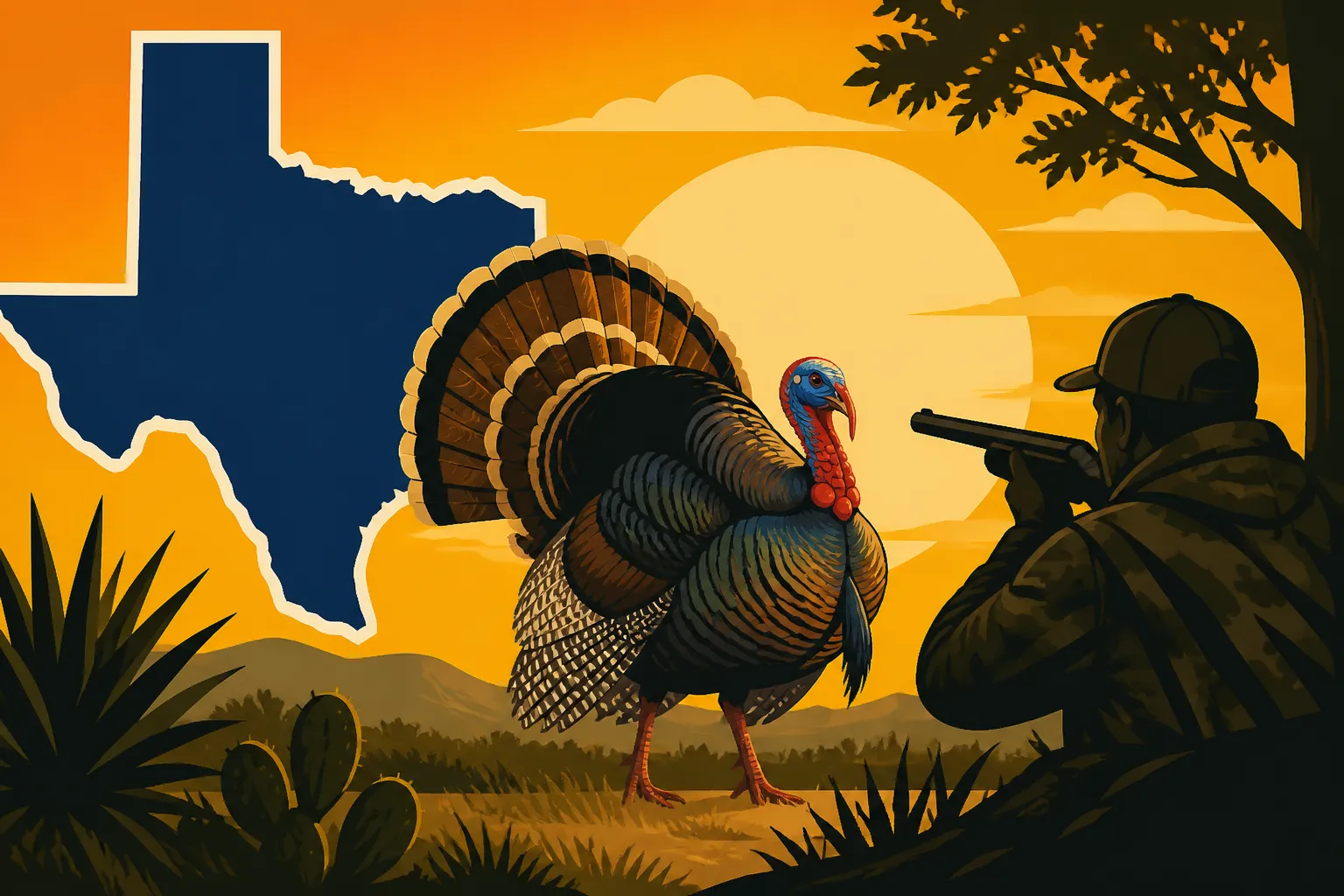
Hunting Eastern turkeys in Texas can feel like you're chasing a phantom. Unlike the abundant Rio Grande turkeys found across much of the state, the Eastern population is concentrated, elusive, and demands a completely different approach from hunters. If you've been scratching your head trying to figure out how to tag one of these incredibly wary birds, this guide is going to walk you through everything you need to know, from understanding their unique habits to the specific tactics and gear that will give you the best chance of success in their challenging Pineywoods habitat.
Understanding Eastern Turkeys in Texas
Eastern wild turkeys are a different breed, both literally and figuratively, from their more numerous Rio Grande cousins. They thrive in specific, dense woodland environments, making them particularly challenging to hunt. If you've tried hunting Rios and think you can apply the same playbook, you're in for a rude awakening. These birds demand patience, stealth, and a deep understanding of their localized behaviors.
Habitat and Range in East Texas
The Eastern wild turkey in Texas primarily inhabits the heavily forested Pineywoods region of East Texas. We're talking about dense, mature pine and hardwood forests, often with thick understories of yaupon, greenbrier, and other brush that can make walking — let alone seeing — a real challenge. Their range extends into counties like Jasper, Newton, Sabine, and Tyler, among others, typically sticking to areas with large tracts of timber. They rely on these expansive forests for roosting, feeding, and protection from predators, which are plentiful in East Texas. You won't find them in open ranchland or mesquite flats; they are true forest dwellers, perfectly camouflaged in their leafy domain. This specific habitat dictates much of their behavior and, consequently, your hunting strategy.
Behavioral Patterns and Elusiveness
Eastern turkeys are notorious for their wariness. They are highly sensitive to pressure and can become exceptionally shy if they feel threatened or frequently encounter hunters. Their daily patterns often involve roosting in tall pines or hardwoods near water sources or along creek bottoms. At first light, they'll pitch down and begin their foraging, usually sticking close to dense cover. They'll scratch for acorns, seeds, insects, and other food items, often moving through thick stands of timber. Unlike Rios, which might strut in open fields for extended periods, Easterns tend to be much more reserved, often gobbling less and moving more silently. This makes them incredibly frustrating for hunters used to more vocal and visible birds. Locating them can be a major hurdle, and getting them to commit to a call requires supreme patience and flawless execution.
Key Differences from Rio Grande Turkeys
It's crucial to understand that an Eastern turkey hunt is a different beast entirely from a Rio Grande turkey hunt. For starters, the habitat is vastly different. Rio Grandes are more adaptable, found in diverse habitats from arid brush country to agricultural fields, and often display in open areas. Easterns are confined to the deep woods, making long-distance glassing an impossibility. Furthermore, the gobbling frequency and responsiveness to calls differ significantly. While Rios can often be coaxed across open spaces with aggressive calling, Easterns are far more cautious. They might gobble once or twice on the roost, then go silent, forcing you to move in quietly and try to pinpoint their location without busting them.
Table: Key Differences: Eastern vs. Rio Grande Turkeys in Texas
| Feature | Eastern Wild Turkey | Rio Grande Wild Turkey |
|---|---|---|
| Primary Habitat | Dense Pineywoods, mature hardwood forests | Open range, brush country, agricultural fields |
| Gobbling Tendency | Less frequent, often quieter, especially on the ground | More frequent, louder, especially in open areas |
| Waryness | Extremely wary, highly sensitive to pressure | Wary, but can be more tolerant of human presence |
| Visibility | Low; prefers thick cover, rarely in open fields | High; often struts and feeds in open fields |
| Population | Limited, localized pockets in East Texas | Widespread and abundant across much of Texas |
| Hunting Style | Patience, stealth, subtle calling, close quarters | Aggressive calling, long-range glassing, field setups |
Another major distinction is the regulatory framework. Texas Parks and Wildlife Department (TPWD) manages Eastern turkey hunting with much stricter limits due to their smaller population. For instance, the bag limit for Easterns is usually one gobbler during the spring season, a stark contrast to the four-gobbler limit often seen for Rios in specific zones. Knowing these nuances is paramount, not just for success, but for respecting the species and ensuring its future. You can find more details about these regulations in resources like "Texas Spring Turkey Season Zones & Dates" and the broader "Texas Turkey Season 2026: Spring & Fall Zones".
Essential Tactics for Eastern Turkey Hunting
Hunting Eastern turkeys demands a combination of meticulous planning, stealth, and a nuanced understanding of calling. You can't just walk into the woods and expect to call one up like you might a less wary bird. Success hinges on being in the right place at the right time, making minimal disturbance, and speaking their language just right.
Scouting and Roosting
Before you even think about putting on your camo, extensive scouting is non-negotiable for Eastern turkeys. This isn't just about finding tracks or droppings; it's about identifying specific roost trees, travel corridors, and feeding areas within the dense East Texas forests. Spend time in the woods before the season opens, listening for gobblers at dawn and dusk. Drive slowly along backroads near public lands or your private lease, stopping frequently to listen. Use an owl hooter or a crow call to try and provoke a shock gobble, which can help you pinpoint a roosting location.
Once you identify a potential roost, observe from a distance. Watch where they fly down in the morning and where they might go to feed. Pay attention to terrain features like creek bottoms, ridges, and natural clearings, as these often serve as travel routes or congregating points. Knowing a bird's exact roost location gives you a massive advantage for a pre-dawn setup, allowing you to position yourself undetected before they ever hit the ground. Remember, this is about being a detective and understanding the specific local patterns of your target birds.
Calling Strategies and Techniques
Calling Eastern turkeys is an art form that requires subtlety and patience. Unlike Rio Grandes, which can sometimes be lured in with loud, aggressive calling, Easterns often respond better to softer, more realistic sequences. Start with soft tree yelps and clucks while the birds are still on the roost, mimicking a hen waking up. Once they pitch down, switch to more seductive yelps, clucks, and purrs, but be prepared for long periods of silence.
The key is to sound natural and be patient. Don't overcall. If a gobbler responds, resist the urge to immediately hit him with another loud series of calls. Instead, listen. Try to determine his direction and whether he's moving toward you. Often, a few soft calls every 10-15 minutes are more effective than constant, aggressive yelping. Consider using a variety of calls, like slate calls, box calls, and diaphragms, to create different hen voices. The ability to switch between calls and adapt to the bird's response is critical. Remember, you're trying to convince a wary bird that a receptive hen is waiting, not challenging him to a fight. Mastering the art of calling is a skill that takes time, but it's essential for "Rio Grande Turkey Hunting in Texas" and especially for Easterns.
Blind Setup and Decoy Placement
Given the dense habitat and wariness of Eastern turkeys, a well-placed ground blind can be incredibly beneficial. It breaks up your outline, allows for subtle movements, and provides crucial concealment. Look for natural cover, like large oak trees, fallen logs, or thick brush, to position your blind. The goal is to set up in a location where you have a clear shooting lane but remain completely hidden from approaching birds. Ideally, you want to be within 20-30 yards of where you expect the bird to appear. For more on optimizing your setup, check out articles like "Box Blind vs Tripod vs Ground Blind in Texas".
Decoy placement also plays a vital role. For Easterns, less is often more. A single hen decoy, or a hen and jake combination, can be effective. Position the decoy(s) within your preferred shooting range (20-30 yards) and facing away from your blind. This often encourages an approaching gobbler to circle, presenting a broadside shot as he comes in to investigate. Avoid placing decoys too close to your blind, as a sharp-eyed gobbler might spot your hide before he gets to the decoy. Consider using realistic, full-body decoys that offer good visibility and natural postures, as Easterns are less forgiving of poor-quality setups.
Shot Placement and Recovery
When that moment of truth finally arrives, precise shot placement is paramount for a quick, humane kill. For turkeys, the target zone is the head and neck. A clean shot to this area will drop a bird instantly. Aim for the base of the neck where it meets the body, or at the wattle. Avoid body shots, as the turkey's thick feathers and strong bones can often prevent pellets from reaching vital organs, leading to a wounded bird that gets away.
Pattern your shotgun with your chosen turkey load before the season. Different choke and load combinations can perform very differently. Practice shooting at turkey head targets at various ranges to understand your shotgun's effective lethal range. Most turkey hunters prefer dense patterns at 30-40 yards. After the shot, remain still and observe. If the bird drops, be ready for a follow-up shot if it starts to recover. Always approach a downed bird cautiously, as even a seemingly dead turkey can deliver a powerful kick or flap that can injure you or damage your trophy. In dense East Texas cover, a quickly dispatched bird is essential to avoid a difficult and potentially lost recovery.
Gear and Preparation for Success
Successfully hunting Eastern turkeys in the demanding environment of East Texas requires specialized gear and meticulous preparation. The right equipment can make all the difference between a frustrating bust and a rewarding harvest.
Firearms and Ammunition
When it comes to firearms, a 12-gauge or 20-gauge shotgun is the standard choice for turkey hunting. The key is to have a shotgun that patterns well with a tight choke, typically a full or extra-full choke. This ensures a dense concentration of pellets in the head and neck area, which is critical for putting down a wary Eastern turkey. Many hunters opt for specialized turkey chokes designed for even tighter patterns.
Ammunition choice is equally important. High-density loads like tungsten super shot (TSS) have become incredibly popular due to their superior knockdown power and extended range. While more expensive, TSS allows for smaller shot sizes (like #9) to carry more energy than larger lead shot, creating denser patterns and higher pellet counts. This can be a game-changer when dealing with wary birds that might hang up at slightly longer distances. Always pattern your shotgun with your chosen ammunition at various ranges (20, 30, 40 yards) to understand its effective limits and ensure you're ready when a gobbler finally steps into view. For any type of turkey, having the right gear is key, so consider what is "Best Gear for Rio Grande Turkey Hunting in Texas" and adapt it for Easterns.
Camouflage and Blinds
In the dense, green environment of East Texas, proper camouflage is non-negotiable. Opt for patterns that blend specifically with deep woodland environments, featuring darker greens, browns, and blacks that mimic shadows and tree bark. Many modern camo patterns are designed for this very purpose. Head-to-toe concealment is essential, including a face mask and gloves, as any exposed skin can easily spook a sharp-eyed gobbler. The dense canopy often creates darker conditions, so don't be afraid of darker camo variations.
As mentioned earlier, a ground blind offers significant advantages. Portable pop-up blinds are excellent for quick, flexible setups. They allow you to shift your position subtly without being detected and provide protection from the elements. If you prefer a more minimalist approach, a ghillie suit or natural blind built from local vegetation can also be effective, but remember that static concealment is your primary goal. The more you can disappear into the natural surroundings, the better your chances of fooling these wary birds.
Calls and Other Essentials
A variety of turkey calls is a must-have in your vest. While mouth diaphragms are great for hands-free calling, having a slate call and a box call offers versatility in tone and volume. Each call type produces a slightly different sound, and sometimes a gobbler will respond better to one over another. Practice extensively with all your calls to produce realistic yelps, clucks, purrs, and cuts. Being able to vary your calling is crucial for mimicking different hen moods and attracting stubborn birds.
Beyond calls, several other items are essential for a successful Eastern turkey hunt:
- Thermometer/Weather Kit: East Texas can be humid, and temperatures can swing. Dress in layers to adapt to changing conditions.
- Optics: While not as critical for long-range glassing as with Rio Grandes, a good pair of binoculars (8x or 10x magnification) can help you spot subtle movement in dense cover or verify a bird's identity. For more, explore "Best Hunting Optics for Texas: Scopes, Binos & Rangefinders".
- Comfortable Seat/Cushion: You'll be sitting still for long periods. A small, portable seat or cushion will make the wait much more bearable.
- Tick Repellent: East Texas is tick country. Permethrin-treated clothing and DEET-based repellents are highly recommended.
- First-Aid Kit: Always be prepared for minor cuts, scrapes, or insect bites.
- Navigation Tools: A GPS device or a reliable hunting app like onX Hunt is crucial for navigating dense forests and marking roost locations or where you've heard birds. This is especially true for "Pineywoods & East Texas Hunting" where it's easy to get turned around.
- Game Bag/Vest: A sturdy game bag integrated into your vest or a separate one will be invaluable for carrying out your prize.
- Water and Snacks: Hydration is key, especially during long waits in humid conditions.
Regulations and Ethical Considerations
Hunting Eastern turkeys in Texas isn't just about strategy and gear; it's also about understanding and adhering to the specific regulations set forth by the Texas Parks and Wildlife Department (TPWD) and upholding ethical hunting practices. These regulations are designed to conserve the species and ensure sustainable hunting opportunities.
Season Dates and Bag Limits
Eastern turkeys have a distinct spring hunting season in designated East Texas counties. This season is typically shorter and has more restrictive bag limits than the Rio Grande turkey seasons. For example, the bag limit is usually limited to one gobbler (male turkey) per season. This strict limit reflects the smaller, more localized population of Easterns compared to Rios. It's imperative to consult the current year's "Texas Hunting Seasons: Complete Calendar by Species" or the TPWD Outdoor Annual for the exact season dates and specific county regulations, as these can change annually. The counties that typically have an Eastern turkey season are carefully selected to protect the population. Remember, harvesting an Eastern turkey is a special opportunity, and adhering to these limits is vital for the species' conservation.
Licenses and Permits
To legally hunt Eastern turkeys in Texas, you'll need a valid Texas hunting license. For residents, the Super Combo License is a popular choice, covering most hunting and fishing activities. Non-residents will need a specific non-resident hunting license. Additionally, anyone hunting migratory game birds (which includes turkeys) will need to ensure they have the appropriate endorsements and certifications, such as the Migratory Game Bird endorsement and Hunter Education certification.
Before heading afield, make sure your license is up-to-date and that you understand all the associated requirements. "Texas Hunting License: Cost, Types & How to Buy (2026)" can provide detailed information on purchasing and validating your license. Always carry your license and any required permits with you while hunting, as TPWD game wardens regularly patrol these areas. Compliance with these administrative requirements is the foundation of legal and responsible hunting.
Conservation and Responsible Hunting
Ethical hunting goes hand-in-hand with obeying regulations. For Eastern turkeys, given their limited population and wary nature, responsible hunting is even more critical. This includes:
- Positive Identification: Always be 100% sure of your target before pulling the trigger. Ensure it's a legal gobbler and not a hen, especially if visibility is poor. Misidentification can have serious consequences for the population.
- Respecting Landowners: If hunting on private land, ensure you have explicit permission and understand any specific rules set by the landowner. If on public land, respect designated boundaries and other users. This is also important when considering options like "Hunting Leases in Texas: Complete Guide (Cost & How to Find)".
- Leave No Trace: Pack out everything you pack in. Do not leave trash, shell casings, or other debris in the woods.
- Reporting Your Harvest: Understand and follow any harvest reporting requirements. TPWD uses this data to monitor populations and adjust regulations for future seasons.
- Fair Chase: Uphold the principles of fair chase. Do not harass birds, use illegal methods, or take advantage of situations that compromise the integrity of the hunt. This means avoiding practices that are overly predatory or give you an unfair advantage over the wildlife.
- Advocacy: Consider supporting organizations dedicated to wild turkey conservation, such as the National Wild Turkey Federation (NWTF), which plays a significant role in habitat restoration and reintroduction efforts for Eastern turkeys in Texas.
By embracing these ethical considerations, you not only ensure a more rewarding hunting experience for yourself but also contribute positively to the future of Eastern turkey populations in the Lone Star State.
Disclaimer
Hunting is an inherently dangerous activity. This guide is for informational purposes only and does not substitute for proper hunter education, professional instruction, or adherence to all local, state, and federal hunting laws and regulations. Always prioritize safety, understand your equipment, and respect wildlife and the environment.