How to Hunt White-Tailed Deer in Texas
Hunting white-tailed deer in Texas can feel like a completely different ballgame than in many other states. The vast, diverse landscapes, from the thick South Texas brush to the rugged Hill Country, present unique challenges that can frustrate even seasoned hunters. If you've ever felt overwhelmed trying to adapt your strategies to the Lone Star State's whitetails, this guide is for you. We're diving deep into the specific tactics and knowledge you need to successfully pursue white-tailed deer here in Texas, helping you navigate the complexities and fill your tags.
Understanding Texas Whitetail Dynamics
Texas is a huge state, and what works for whitetails in the Pineywoods of East Texas might be completely ineffective in the arid Trans-Pecos or the dense South Texas scrub. Understanding these regional nuances and the deer's behavior within them is the first step to becoming a more effective hunter.
Regional Differences and Habitat Influences
One of the biggest eye-openers for hunters new to Texas is just how varied our deer habitat is. It's not a monoculture of cornfields or dense, uniform timber. Take the South Texas Trophy Whitetail: Brush Country Bucks region, for example. Here, you're dealing with vast stretches of mesquite, huisache, guajillo, and prickly pear cactus. Deer thrive on this thorny buffet, and the thick cover provides them incredible sanctuary. Hunting here often means sitting over a senderos (cleared lanes) or water sources, relying on feeders and strategic blind placement because still-hunting through that dense stuff is a noisy, painful endeavor. The deer here are often known for their larger body sizes and impressive antlers, thanks to prime genetics and mineral-rich soils, though drought years can definitely impact antler growth.
Then you have the Hill Country Deer Hunting in Texas, primarily the Edwards Plateau. This region is famous for its high deer densities, but the deer tend to be smaller-bodied with antlers that, while respectable, might not always reach the same mass as a South Texas giant. The landscape is rolling hills, rocky terrain, and a mix of Ashe juniper (often called cedar), live oak, and Spanish oak. Hunting pressure can be significant here, and deer are adept at using the terrain to their advantage. Water is less of a concern than in South Texas, as natural springs and creek beds are more common. You'll find a blend of hunting methods, from traditional blinds to more mobile approaches. The challenges here often revolve around finding mature bucks amidst a larger population and dealing with fragmented cover.
East Texas, or the Pineywoods, is a different beast entirely. Here, you'll encounter dense pine forests, hardwoods, and sometimes swampy bottomlands. Visibility can be extremely limited, making spot-and-stalk tough. Still hunting or hunting from stands along natural travel corridors or food plots are more common. The deer population is healthy, but the bucks might not reach the massive sizes seen further south due to soil types and different forage. Each region demands a tailored approach, so knowing your specific hunting area's ecological makeup is paramount.
Whitetail Behavior and Rut Phases in Texas
Understanding when bucks are most active and what drives those movements is crucial for success, especially during the breeding season. The rut in Texas isn't a single event; it's a staggered process that can vary wildly across the state. Typically, the peak rut occurs from late October to early December, but it can extend earlier in some northern counties and much later, even into January or February, in the extreme south. Knowing The Texas Rut: When Do Bucks Rut by Region? for your specific area is a game-changer. During the pre-rut, bucks become more active, rubbing trees, making scrapes, and scent-checking does. This is an excellent time to use calling tactics.
Once the rut kicks in, bucks are almost entirely focused on finding receptive does, often letting their guard down in pursuit. This leads to increased daytime movement, a stark contrast to their usual crepuscular (dawn and dusk) patterns. However, even outside the rut, whitetails are creatures of habit. They typically move from bedding areas to feeding areas twice a day, usually in the early morning and late evening. Mid-day movements are often influenced by hunting pressure, weather, or during the peak rut. Cold fronts can trigger increased activity, while unusually warm temperatures can make deer nocturnal. Pay attention to changes in the weather, as a sharp drop in temperature can dramatically increase deer movement, creating prime hunting opportunities.
Mastering Scouting and Pre-Season Preparation
You can't just show up on opening day and expect success, especially not with Texas whitetails. The work you put in before the season even begins—scouting, trail camera deployment, and meticulous planning—is often the biggest determinant of whether you'll tag a deer or go home empty-handed.
Reading the Landscape: Sign, Trails, and Water Sources
Effective scouting is about becoming a detective in the woods. You're looking for clues that reveal where deer are living, moving, and feeding. Start with a good aerial map, whether it's Google Earth or a dedicated hunting app like onX Hunt. Look for natural funnels, pinch points, dense cover that could serve as bedding areas, and potential food sources. Identify primary travel corridors—these will be well-worn trails, often connecting bedding to feeding areas, or traversing terrain features like creek bottoms or ridges. Don't just look for any trail; look for active trails with fresh tracks.
Once on the ground, confirm these observations. Look for fresh deer sign: rubs on trees (bucks marking territory), scrapes (where bucks deposit scent and check for does), and droppings. The size and freshness of these signs can tell you a lot about the deer in the area and how recently they've been active. In many parts of Texas, especially the drier regions, water sources are absolutely critical. Ponds, creeks, or even seeps can be magnets for deer, especially during dry spells. Learn How to Scout for Deer Before Season in Texas thoroughly to maximize your chances. Deer will often bed close to water if security cover is also present. Pay attention to prevailing wind patterns and plan your approach routes and blind placements to avoid alerting deer to your presence. Remember, deer rely heavily on their sense of smell.
Leveraging Trail Cameras and Technology
Trail cameras have revolutionized deer scouting, offering an invaluable window into deer behavior without human intrusion. They allow you to pattern deer, determine movement times, identify specific bucks, and even assess herd health. When placing cameras, think about what you want to learn. For general inventory, place them over feeders, mineral sites, or major travel corridors. If you're targeting a specific buck, try placing cameras on rubs or scrapes he's actively visiting. Don't forget about watering holes during dry periods; they can be excellent spots.
For monitoring large properties or if you can't check cameras frequently, cellular trail cameras like the Tactacam Reveal or Moultrie Edge are fantastic. They send pictures straight to your phone, allowing you to react quickly to changes in deer patterns or identify a new buck on the property. Ensure your data plan is robust enough for your usage. When setting up a camera, position it so the sun isn't directly in its lens during peak activity times to avoid washed-out photos. Also, clear away any branches or tall grass that might trigger false alarms, eating up battery life and data. Using a secure mount or security box is also a good idea, especially on public land or shared leases. Remember, these cameras are tools to aid your scouting; they don't replace boots-on-the-ground observation entirely. If you're going to dive into using these tools, understanding How to Pattern Bucks With Trail Cameras is a must for effective placement and data analysis.
Effective Texas Whitetail Hunting Methods
Once you've done your homework and understand the deer, it's time to put a plan into action. Texas offers a variety of successful hunting methods, each with its own advantages depending on the terrain, property, and your personal hunting style.
Stand Hunting: Blinds and Feeder Setups
This is arguably the most common and often most successful method for hunting white-tailed deer in Texas, especially on private land. Hunting from a blind over a feeder is deeply ingrained in Texas hunting culture, and for good reason—it works. Deer quickly learn where reliable food sources are. Whether it's a spinning corn feeder or a gravity feeder dispensing protein pellets, these setups concentrate deer and allow you to observe them from a concealed position.
You have several options for blinds. A sturdy box blind offers comfort, weather protection, and elevated visibility, making it great for long sits or hunting with kids. Tripod blinds also offer elevation and a good vantage point, often at a lower cost than a full box blind, but with less protection from the elements. Ground blinds, while offering less elevation, provide excellent concealment and are highly portable, ideal for bowhunting or setting up quickly where deer are moving. Each has its pros and cons, and your choice will depend on your specific location and needs. Learn more about your options in our guide on Box Blind vs Tripod vs Ground Blind in Texas. For detailed advice on placement, our guide to the Best Deer Feeder Setup for Texas is indispensable. When placing a feeder, consider wind direction, shooting lanes, and proximity to bedding areas. Remember that hunting over bait is legal in Texas, but there are nuances, so always double-check the latest regulations on Hunting Over Feeders & Corn in Texas (Legal Guide).
Spot-and-Stalk and Still Hunting
While stands and feeders dominate, spot-and-stalk and still hunting offer a more active and challenging pursuit, especially if you enjoy covering ground or hunting on larger, less developed properties. Spot-and-stalk is particularly effective in more open areas with good visibility, such as parts of the Texas Panhandle or even some areas of the Hill Country. It involves finding deer from a distance using binoculars or spotting scopes, then carefully planning an approach to get within shooting range. This requires exceptional stealth, knowledge of the terrain, and the ability to read wind currents. Good optics are critical here.
Still hunting, on the other hand, involves moving very slowly and deliberately through the woods, taking a few steps, then pausing for several minutes to scan for deer. This method is excellent in areas with varied cover or natural funnels, especially in East Texas or brushier areas where visibility is limited to short distances. It forces you to pay constant attention to your surroundings, using all your senses to detect deer before they detect you. Success in both methods hinges on quiet movement, wearing appropriate camouflage (ideally lightweight early-season camo for Texas heat), and patience. While often associated with exotics or mule deer, a skilled hunter can absolutely use Spot-and-Stalk Hunting in Texas (Exotics & Mule Deer) for whitetails too, especially during the rut when bucks are less cautious.
Rut Hunting Tactics: Calling and Decoying
During the peak of the rut, when bucks are actively seeking does, calling and decoying can be incredibly effective. Bucks become less wary and more aggressive, making them susceptible to sounds and sights that simulate other deer. Rattling, which mimics two bucks fighting, can draw curious or territorial bucks right into your lap. For best results, use actual shed antlers or a good rattling bag. The key is to make it sound realistic – a mix of aggressive clashing, light ticking, and pauses, just like a real fight. Knowing When to Rattle for Bucks in South Texas can increase your success significantly.
Grunting, using a grunt tube, imitates a buck's vocalizations, often used to communicate with does or other bucks. A series of short grunts can pique a buck's interest, while a more aggressive 'challenge grunt' might draw him in. A snort-wheeze is an aggressive vocalization used by dominant bucks to warn off rivals, and it can be a potent, albeit risky, call for drawing in a big, mature buck. Decoys, typically a standing buck or a doe, can add a visual element that completes the illusion. Place decoys where approaching bucks will see them from a distance and consider wind direction so they scent the decoy, not you, as they approach. Combine calling and decoying with proper concealment and an understanding of Rut Hunting Tactics: Rattling & Grunting in Texas for maximum impact.
Navigating Regulations and Post-Harvest
Bringing down a Texas whitetail is a fantastic accomplishment, but the job isn't done until you've properly handled the animal and adhered to all state regulations. Knowing the rules and how to care for your game is just as important as knowing how to hunt.
Understanding Seasons, Tags, and Antler Restrictions
Texas hunting regulations can be complex due to the state's vastness and diverse ecosystems. Always consult the current Texas Parks and Wildlife Department (TPWD) Outdoor Annual. Pay close attention to Texas Deer Season 2026-2027: Dates by Zone as season dates vary by specific counties and zones (North, Central, South). Your general hunting license will come with specific deer tags, usually one for an antlered buck and two for antlerless deer, but these can change based on the county and whether you're hunting on a Managed Lands Deer Permit (MLDP) property.
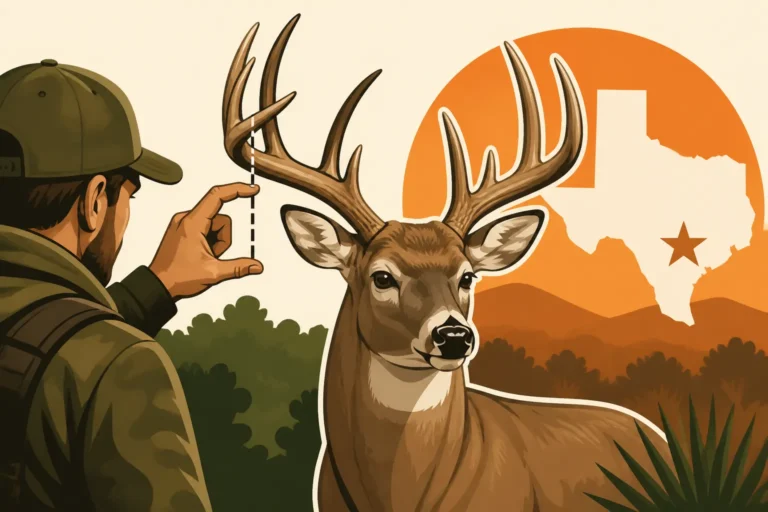
A significant regulation for many Texas hunters is the 13-inch antler restriction. This rule generally states that an antlered deer is legal only if it has at least one unbranched antler, or an inside spread of 13 inches or greater. This is primarily aimed at protecting younger bucks and promoting the growth of mature animals. It's crucial to understand Texas Antler Restrictions: 13-Inch Rule & Counties for your specific hunting location. Not all counties have this rule, so always verify. After harvesting, you are required to immediately tag your deer and report it to TPWD, typically through the My Texas Hunt Harvest app or website. For more details on this process, see Texas Hunting Tags & Harvest Reporting (My Texas Hunt Harvest). Failing to report a harvest or properly tag a deer can result in fines and legal trouble. Stay informed about Texas White-Tailed Deer Hunting Regulations 2026 to ensure a legal and ethical hunt.
Field Dressing and Game Care in Texas Heat
Texas heat can be a serious challenge for game care. Temperatures can still be quite warm during the early deer season, even into November. The absolute priority after harvesting a deer is to cool the carcass down as quickly as possible. This means field dressing the animal immediately to remove the entrails, which hold a lot of body heat and can cause meat to spoil rapidly. Don't drag a deer around for hours before you clean it; get to it as soon as it's safe to do so.
After field dressing, get the deer to a cooler environment. If you're near a processing facility, transport it there quickly. If not, skinning the deer in the field can further help with cooling. Quartering the animal and placing the meat in ice chests filled with ice is a common and highly effective method for preserving the meat, especially on a longer haul back to camp or home. Ensure the drain plug on your cooler is open so that the bloody water can escape, or drain it regularly to keep the meat in clean ice water. Our guide on How to Cool a Deer Fast in Texas Heat offers detailed steps. Proper Field Dressing & Processing Game in Texas Heat ensures your hard-earned venison is delicious and safe to eat. Don't let your efforts go to waste by neglecting proper game care.
| Texas Whitetail Hunting Region | Primary Habitat & Terrain | Antler Potential | Common Hunting Methods | Key Challenges & Considerations |
|---|---|---|---|---|
| South Texas Brush Country | Dense, thorny brush (mesquite, huisache), senderos, flat terrain | High (large-bodied) | Blinds over feeders, still-hunting | Heat, thick cover, rattlesnakes, long distances |
| Edwards Plateau (Hill Country) | Rocky hills, cedar, oak mottes, varied elevation | Medium-High (dense pop) | Blinds, spot-and-stalk, still-hunting | High deer density, CWD zones, fragmented cover |
| Pineywoods (East Texas) | Dense pine and hardwood forests, bottomlands, swamps | Medium | Stands, still-hunting, dog hunting | Limited visibility, thick undergrowth, humidity |
| Rolling Plains | Mesquite, croplands, grasslands, broken country | Medium | Blinds, spot-and-stalk | Variable cover, wind, access to private land |
Disclaimer
The information provided in this guide is for general informational purposes only and does not constitute legal advice. Hunting regulations in Texas can change, and it is the hunter's sole responsibility to consult the most current Texas Parks and Wildlife Department Outdoor Annual and local regulations before hunting. Always prioritize safety and ethical hunting practices.