Best Feeder for Protein Pellets in Texas
Trying to grow those big, healthy bucks in Texas can feel like an uphill battle, especially with our notoriously hot summers and the constant competition from other critters. It’s incredibly frustrating to invest your hard-earned money and time into quality protein pellets, only to have them spoil in the humidity, get completely devoured by feral hogs, or simply not be utilized efficiently by your deer herd. This guide is here to walk you through everything you need to know about choosing and using the best protein feeders in Texas, making sure your efforts translate into thriving deer.
Why Protein Feeding is Crucial for Texas Deer
Let's be real, Mother Nature in Texas doesn't always provide a buffet for our deer. While native browse can be fantastic when conditions are ideal, our state sees its fair share of droughts, late freezes, and intense summer heat that can decimate natural forage. That's where supplemental protein feeding comes in, acting as a critical tool in managing and improving your deer herd's health and antler growth. It’s not just about getting bigger racks; it's about robust health, better fawn survival, and overall herd vitality.
Filling Nutritional Gaps During Stress Periods
Think about a typical Texas summer. The sun bakes the landscape, native forbs and legumes shrivel, and the natural protein sources that deer rely on become scarce. During these harsh times, deer, especially lactating does and bucks trying to grow antlers, are under immense nutritional stress. They need a high-protein diet to support milk production for fawns and to develop those impressive antlers. Without adequate protein, antler growth can be stunted, and does might struggle to raise healthy fawns, impacting the future of your herd. By providing supplemental protein, you're essentially offering a lifeline, ensuring they get the essential nutrients they need to not just survive, but thrive, through the toughest parts of the year. This consistency makes a huge difference over time, leading to more resilient deer.
Maximizing Antler Growth Potential
Every hunter dreams of seeing a monster buck on their property. While genetics play a huge role, a deer can only reach its full genetic potential if it has access to abundant, high-quality nutrition throughout its life. Protein is the building block for muscle and, crucially, for antlers. Bucks start growing their antlers in spring, and this process continues rapidly through the summer. If they're hitting a wall nutritionally during this critical period, those antlers won't reach their maximum size or mass. Consistent protein feeding, especially from late winter through early fall, gives bucks the fuel they need to express their genetic potential. It’s not a magic bullet, but it’s a non-negotiable component for growing bigger antlers, year after year. For more on this, check out our guide on Protein Feeding Deer for Bigger Antlers.
Types of Protein Feeders for Texas Conditions
When you're looking at protein feeders, you'll quickly realize there's a variety of designs, each with its own advantages and disadvantages, especially when you consider the unique challenges of Texas hunting. We're not just worried about rain; we're talking about extreme heat, high humidity, and the ever-present threat of feral hogs and other non-target animals. Choosing the right feeder can save you a lot of headache and wasted feed.
Gravity Feeders: Simple and Reliable
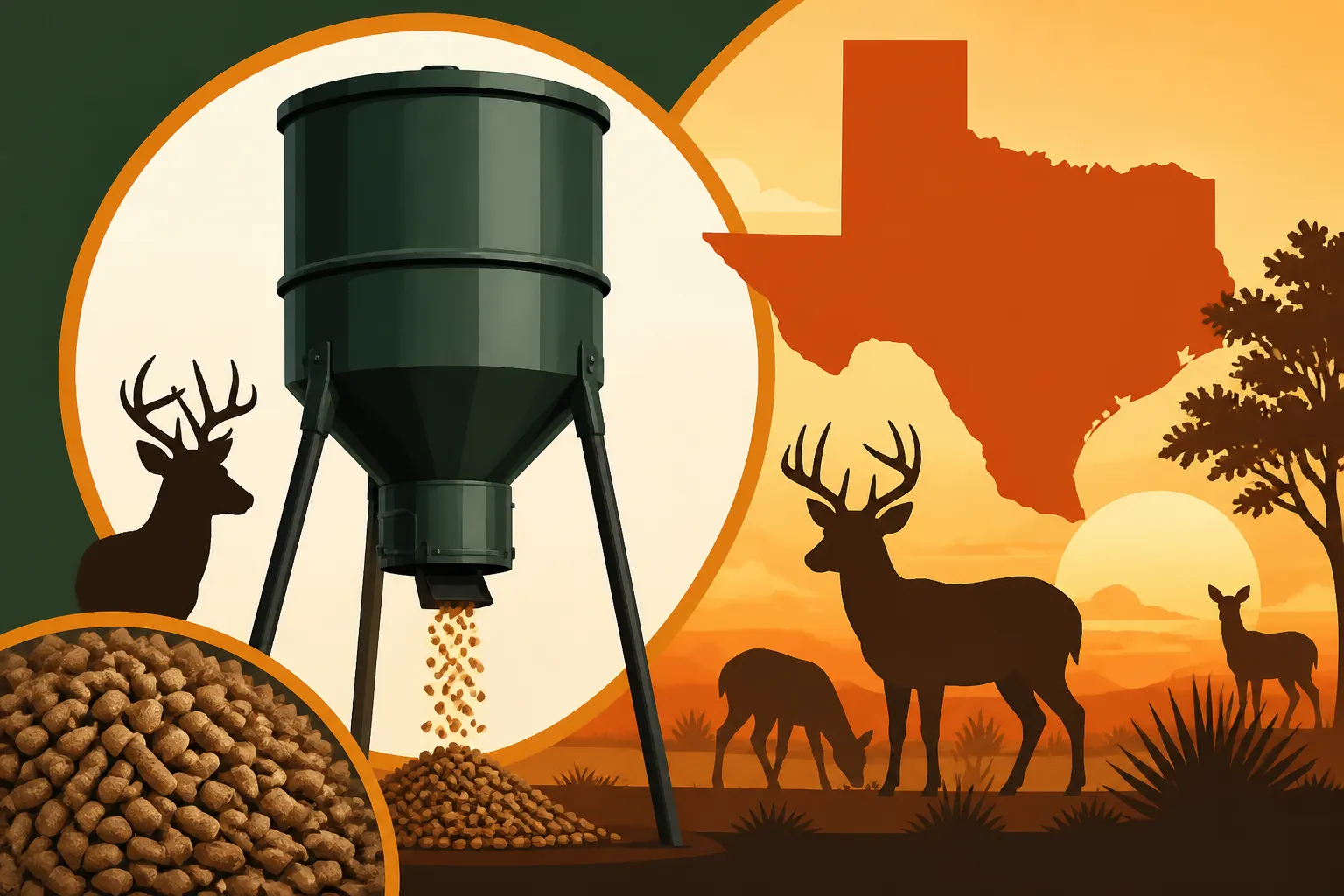
Gravity feeders are the old standby, and for good reason. They are generally simple in design, consisting of a large hopper that holds the protein pellets, and one or more downspouts or ports at the bottom where deer can access the feed. As deer eat, gravity pulls more pellets down, refilling the ports. The beauty of these feeders is their simplicity – no batteries, no timers, no moving parts to break. This makes them incredibly reliable and low-maintenance, a huge plus for those of us with busy schedules or leases that are a bit of a drive.
However, gravity feeders do have their drawbacks in Texas. The open nature of the feed ports can leave pellets exposed to humidity, increasing the risk of clumping and spoilage, especially during our humid summers. Rain can also get into the ports, turning your expensive protein into a soggy mess. And, perhaps the biggest challenge, these feeders are often a free-for-all for hogs and raccoons. If not properly designed or secured, you might find your entire hopper emptied by unwanted guests overnight. Brands like Boss Buck offer some robust gravity feeders designed to mitigate some of these issues with sturdy construction and thoughtful port designs, but you still need to be vigilant about feeder security.
Timed Feeders: Controlled Distribution
Timed feeders, often referred to as spin feeders when dispensing corn, can also be adapted for protein pellets, though it requires specific feed types or modifications. These feeders typically have a motor and a timer that dispenses feed at set intervals throughout the day. The main advantage here is control: you decide when and how much feed is put out. This can be great for establishing a pattern for deer, and it can limit the amount of feed exposed to the elements or non-target animals at any given time.
The challenge with protein pellets in timed feeders is that most spin plates are designed for corn. Protein pellets are often larger, softer, and more prone to crumbling, which can lead to clogging in the spinner mechanism. Some manufacturers offer specialized protein spinner plates or kits that are better suited for pellets. Another consideration is power. These feeders require batteries, and often solar panels to keep them charged, meaning more moving parts and potential points of failure compared to a gravity feeder. The initial cost and ongoing maintenance can also be higher. However, for those who want precise control over feed distribution, a properly configured timed protein feeder can be very effective.
Trough Feeders: Broad Access, High Maintenance
Trough feeders are essentially large, open containers that hold protein pellets. They offer a very natural feeding experience, allowing multiple deer to eat at once, which can be beneficial for herd dynamics. The wide-open access means that even younger deer or those lower in the pecking order can often get a chance to feed without as much competition.
The downsides, particularly in Texas, are significant. The exposed nature of trough feeders makes the protein highly vulnerable to weather. Rain will ruin the pellets quickly, and prolonged exposure to humidity will turn them into a solid block. Feral hogs, raccoons, and even cattle (if you're on a multi-use property) will make quick work of your expensive feed. This means they require constant monitoring and refilling, and in many cases, will lead to significant feed waste. While they provide broad access, their impracticality for consistent, long-term protein feeding in typical Texas conditions often makes them a less desirable option compared to gravity or timed feeders designed for pellets.
Essential Features to Look for in a Texas Protein Feeder
Choosing a protein feeder for Texas isn't just about picking one off the shelf; it's about finding one that can stand up to our unique environment. From scorching sun to torrential downpours and persistent varmints, a good feeder needs to be built tough and smart. Ignoring these features can lead to spoiled feed, wasted money, and frustrated hunters.
Weather Resistance and Durability
Texas weather can be brutal. You need a feeder that can withstand intense UV rays that degrade plastics, sudden downpours that turn protein into mush, and high humidity that promotes mold and clumping. Look for feeders made from heavy-gauge galvanized steel or UV-stabilized, thick-walled plastic.
- Sealed Lids and Hoppers: This is absolutely critical. A tight-fitting, weather-sealed lid is your first line of defense against rain and humidity. Any gaps or flimsy closures will compromise your feed. The hopper itself should be designed to shed water, preventing pooling and seepage.
- Robust Construction: Think about overall structural integrity. The legs should be strong and braced, able to withstand strong winds and the weight of a full hopper. Rust-resistant hardware is a must. A feeder that wobbles or has thin walls won't last long under Texas conditions.
Varmint and Hog Proofing
Feral hogs are perhaps the biggest challenge to protein feeding in Texas. These intelligent and destructive animals can quickly empty a feeder designed for deer. Raccoons, squirrels, and even deer mice can also contribute to feed loss.
- Elevated Design: Many protein feeders are designed to be elevated, making it harder for hogs and raccoons to reach the feed ports. However, "harder" doesn't mean impossible. Some determined hogs will still try to jump or root around the base.
- Hog Panels or Traps: For ground-level gravity feeders, you might need to install hog panels around the feeder to restrict access to deer only. Alternatively, managing your hog population with traps or night hunting (using something like the gear recommended in Best Gear for Feral Hog Hunting in Texas) is often necessary to protect your investment.
- Port Design: Look for feeder ports that are difficult for smaller animals to access or that have features like vertical bars that allow deer snouts through but deter raccoons. Some feeders offer adjustable baffles or cages that can be installed around the ports.
Capacity and Accessibility
The sheer volume of feed a protein feeder can hold dictates how often you need to refill it. This is a major factor for hunters with long commutes to their leases or those who can't visit frequently.
- Hopper Size: Feeders come in various capacities, from 250 lbs to over 1000 lbs. A larger capacity means less frequent refills, which saves time, gas, and disturbance to your hunting area. However, larger feeders also mean a bigger initial investment and can be more challenging to transport and set up. Consider your budget, the size of your deer herd, and how often you can realistically visit your property.
- Ease of Filling: Refilling a tall, large-capacity feeder can be a chore. Look for features like wide openings at the top, or even models designed to be filled from the ground or a truck bed. Some feeders offer accessories like winches or auger systems for easier loading. For example, a reliable game hauler can make refilling a large feeder much simpler. When planning your feeder locations, using a mapping application like GoHunt can help you plot out efficient routes for refilling, especially if you have multiple feeders spread across a large property. This can optimize your time in the field, making the task less cumbersome.
Setting Up Your Protein Feeder for Success
Putting up a protein feeder isn't just about finding a spot and dumping pellets. Strategic placement, proper anchoring, and consistent maintenance are crucial for maximizing its effectiveness and ensuring your deer get the most benefit. A poorly placed or neglected feeder can be a magnet for unwanted animals and a source of frustration.
Optimal Feeder Placement
The "where" is just as important as the "what" when it comes to protein feeding. You want to choose a location that deer frequent, is accessible for you, and offers some protection from the elements.
- Deer Travel Routes and Bedding Areas: Scout your property to identify natural deer travel corridors, especially those leading to and from bedding areas and water sources. Placing a feeder near these routes can increase utilization. However, avoid placing it directly in bedding areas, as this can cause undue disturbance.
- Shade and Airflow: In Texas, shade is your friend. Placing a feeder under a mature oak or mesquite tree can significantly reduce the internal temperature of the hopper, helping to prevent spoilage and clumping of protein pellets. Good airflow also helps keep the feed dry. Avoid low-lying, damp areas where humidity will be highest.
- Accessibility for Maintenance: While you want a secluded spot for deer, you also need to be able to access the feeder for refilling and maintenance. Consider vehicle access, especially if you're using a larger, heavier feeder that requires a truck or ATV to haul feed.
- Proximity to Water: Deer need water, especially when consuming dry protein pellets. Placing your feeder within a reasonable distance of a reliable water source can encourage consistent use.
- Wind Direction and Scent Control: Be mindful of prevailing winds, especially during hunting season if you plan to hunt near your feeder. Consider how your scent might carry when you're refilling. For more on general deer hunting tactics, our guide on Deer Hunting in Texas: Feeders, Blinds & Tactics can offer further insights into combining feeder use with hunting strategies.
Anchoring and Security
A full protein feeder can be heavy, but it's still susceptible to being tipped over by large hogs, strong winds, or even curious cattle. Proper anchoring is vital for protecting your investment and preventing feed spills.
- Ground Anchors: Using T-posts or screw-in anchors secured to the feeder's legs can prevent it from being knocked over. Drive them deep into the ground, especially in softer soils.
- Cable and Chains: For added security, particularly in areas with aggressive hogs, you might consider cabling or chaining the feeder legs to nearby trees or immovable objects. This also discourages theft of the feeder itself.
- Hog Panels or Fencing: If hog pressure is intense, consider constructing a small, sturdy fence or hog panel enclosure around the feeder. The fence should be tall enough to deter hogs (usually 34-36 inches), but still allow deer to jump over or crawl under if designed for that purpose. Ensure the openings are wide enough for deer to enter and exit comfortably. This method is often the most effective for keeping hogs out of your deer feeders without entirely eliminating them from the area, which can be useful for hunters also interested in Feral Hog Hunting in Texas: Year-Round Guide.
Feeder Timer Settings for Protein
For timed protein feeders, getting the settings right is crucial. Unlike corn, which deer might eat in quick bursts, protein feeding is often a more prolonged activity.
- Multiple Small Feedings: Instead of one large dump, consider setting your timer to dispense smaller amounts of protein multiple times a day. This ensures a fresh supply and can encourage more consistent, natural feeding patterns by deer. It also reduces the amount of protein exposed to moisture or varmints at any one time.
- Optimal Timing: Early morning and late afternoon are prime feeding times for deer. Setting your feeder to dispense during these periods will maximize deer utilization. You might also consider a midday feeding, especially during the peak antler growth months of summer, when deer often seek shade and might graze for longer periods.
- Monitoring and Adjustment: Use trail cameras (How to Pattern Bucks With Trail Cameras) to monitor deer activity at your feeder. Observe when deer are visiting, how quickly the feed is consumed, and if non-target animals are still an issue. Be prepared to adjust your timer settings based on these observations to optimize feed delivery and minimize waste. What works in one location or during one season might need tweaking for another.
Maintaining Your Protein Feeder
A protein feeder is an investment, and like any investment, it needs proper care to function optimally and last for years. Neglecting maintenance can lead to breakdowns, spoiled feed, and ultimately, wasted money. Our Texas climate, with its dust, humidity, and occasional extreme weather, demands a proactive approach to feeder upkeep.
Regular Cleaning and Inspection
Keeping your feeder clean is paramount, especially with protein pellets that can degrade and attract moisture.
- Hopper and Port Cleaning: Over time, protein dust and crumbs can build up in the hopper and feeding ports. This residue can absorb moisture, leading to clumping, mold growth, and potential blockages. Every few months, or more frequently during humid periods, completely empty your feeder, brush out all residue, and wipe down the interior and ports. A stiff brush and even a shop vac can be very useful here.
- Checking for Damage: Inspect the feeder for any signs of damage – cracks in plastic, rust on metal components, loose bolts, or bent legs. Small issues can quickly become big problems if left unaddressed. Look specifically at the lid seals and port covers to ensure they are still tight and preventing water intrusion.
- Pest Control: Check for ant nests or other insect infestations, especially around the feed ports. These can contaminate the feed and deter deer. Consider applying food-grade insect deterrents around the base of the feeder, well away from where deer will consume the pellets.
Battery and Solar Panel Care (for Timed Feeders)
If you're running a timed protein feeder, your power source is its lifeline.
- Battery Health: Regularly check the charge of your batteries, typically 6V or 12V deep cycle batteries. Even with a solar panel, batteries can wear out over time. If your feeder starts acting erratically or the motor seems weak, a dying battery is often the culprit. Replace batteries as needed, usually every 1-3 years depending on quality and usage.
- Solar Panel Performance: Keep your solar panel clean and free of dirt, dust, and bird droppings. A dirty panel can't efficiently charge your battery. Trim back any overhanging branches or vegetation that might shade the panel, reducing its effectiveness. Position the panel to receive maximum sunlight throughout the day, typically facing south. A little effort here goes a long way in ensuring consistent operation.
Storing Protein Pellets Properly
The pellets themselves need care before they even go into the feeder. Buying in bulk can save money, but improper storage can ruin your investment.
- Dry and Cool Storage: Store protein pellets in a cool, dry place, away from direct sunlight and moisture. An airtight container, such as a metal trash can with a locking lid or large plastic barrels, is ideal. This protects against humidity, rodents, and insects.
- First In, First Out: Rotate your stock. Always use the oldest pellets first to ensure freshness. While protein pellets have a decent shelf life, they can still go stale or lose some nutritional value over prolonged periods, especially if not stored perfectly.
- Avoid Ground Contact: Never store bags of pellets directly on concrete or dirt floors, as this can draw moisture into the bags. Use pallets or elevated platforms to keep them dry and free from ground-dwelling pests.
Protein Feeder Comparison Table
To help you visualize the differences and choose the best option for your Texas hunting grounds, here's a quick comparison of the common protein feeder types:
| Feature | Gravity Feeder | Timed Feeder (Adapted for Protein) | Trough Feeder |
|---|---|---|---|
| Dispensing Method | Gravity-fed, constant access | Electronic timer, scheduled releases | Open trough, constant access |
| Control Over Feed | Low (constant availability) | High (time, quantity, frequency) | Low (constant availability) |
| Varmint/Hog Proof | Moderate (depends on design, elevation) | High (feed only out during specific times) | Low (very susceptible) |
| Weather Susceptibility | Moderate (ports can expose feed to moisture) | Low (hopper sealed, feed only out briefly) | High (feed exposed to all elements) |
| Maintenance | Low (occasional cleaning) | Moderate (battery, solar panel, motor) | High (frequent cleaning, refilling due to waste) |
| Cost | Low to Moderate | Moderate to High (due to electronics) | Low |
| Typical Capacity | 250 lbs – 1000 lbs | 250 lbs – 1000 lbs | 50 lbs – 200 lbs |
| Best For | Remote areas, low maintenance, consistent deer use | Controlled feeding, reducing waste, patterned deer | Short-term, high traffic areas (with vigilant oversight) |
| Texas Considerations | Risk of spoilage in humidity, hog pressure | Can clog with pellets, battery reliability in heat | High waste from hogs & weather, constant monitoring |
Troubleshooting Common Protein Feeder Issues in Texas
Even with the best feeder and careful setup, you might run into some hiccups. Texas conditions can be tough, and understanding how to troubleshoot common problems can save you a lot of frustration and wasted time.
Feed Clumping and Spoiling
This is arguably the most common and disheartening issue for Texas protein feeders. You spend good money on pellets, only to find them solid as a rock or covered in mold.
- High Humidity is the Enemy: Texas summers are notoriously humid. Even a small breach in your feeder's seals can allow enough moisture in to ruin pellets. Ensure your lid gasket is intact and seating properly. Check for any small cracks in plastic hoppers or seams in metal ones.
- Poor Air Circulation: If your feeder is tucked away in a dense, still area, the lack of airflow can exacerbate humidity issues. Consider relocating it to a spot with better air movement, or ensure any cover doesn't completely block ventilation around the ports.
- Port Design: Some gravity feeder ports inherently allow more moisture in. Look for ports with wider overhangs or secondary covers that shed rain more effectively. If retrofitting, sometimes adding a small piece of flashing above the ports can help.
- Infrequent Use: If deer aren't consistently eating the pellets, they sit longer and are more prone to spoilage. Use trail cameras to monitor activity. If utilization is low, consider moving the feeder, adjusting the type of protein, or reducing the amount of feed available. A small amount of spoilage is sometimes unavoidable, but widespread clumping means something needs to change.
Feral Hog and Varmint Invasion
The fight against non-target animals is a constant one in Texas. They're smart, persistent, and can decimate your feed supply.
- Review Feeder Security: Are your hog panels high enough? Are they sturdy? Are there any gaps? Hogs will test every weakness. Reinforce any flimsy sections. For particularly aggressive hogs, consider adding an electric wire around the base of the enclosure.
- Elevate Higher: If your feeder is still getting hit, consider raising it even higher, if possible, for gravity feeders. The goal is to make access as difficult as possible without deterring deer.
- Active Management: Sometimes, the best feeder is no match for a large, determined sounder of hogs. Integrating hog trapping in Texas and night hunting strategies can significantly reduce pressure on your feeders. If you're going to put in the effort to feed deer, you might also need to put in the effort to control competing species. Knowing Best Setup for Hunting Hogs Over a Feeder can turn a problem into an opportunity.
- Raccoon Guards: For raccoons, you might need to add specific guards or wire mesh around gravity feeder ports that are too large, allowing deer to feed but blocking raccoons.
Low Deer Utilization
It's disheartening to put out expensive protein only to find the deer aren't eating it. There are several reasons this might happen.
- Novelty Effect: Deer can be wary of new objects in their environment. It might take them a week or two, or even longer, to become comfortable approaching a new feeder. Be patient.
- Poor Location: Is the feeder in an area deer don't frequent? Is it too exposed, making them feel vulnerable? Revisit your placement strategy. Using tools like onX Hunt or other mapping apps can help identify better locations based on historical deer movement and terrain features.
- Poor Quality Protein: Not all protein pellets are created equal. Some brands are more palatable than others. If you're using a new brand, deer might take time to adjust, or they might simply not prefer the taste. Consider trying a different brand, especially one known for palatability.
- Natural Forage Abundance: If there's an exceptional amount of natural browse available, especially during a wet spring or fall, deer might simply not need the supplemental protein as much. This isn't a bad problem to have, but it explains why your feeder might be less active.
- Predator Pressure: If there's high predator activity (coyotes, bobcats) around your feeder, deer will be hesitant to visit. Monitor for tracks and sign, and consider implementing predator control if necessary. Learning Predator Calling for Coyotes in Texas can be a useful skill here.
By understanding these common issues and how to address them, you can keep your protein feeding program running smoothly and effectively, ensuring your deer herd gets the vital nutrition it needs.
Disclaimer
Hunting regulations and best practices can change. Always consult the most current Texas Parks and Wildlife Department (TPWD) Outdoor Annual before engaging in any hunting activities or implementing wildlife management practices. This guide is for informational purposes only and not a substitute for official regulations or professional wildlife management advice.