Black Gap WMA: Trans-Pecos Mule Deer
Heading out into the vast, untamed wilderness of West Texas to chase mule deer is an experience unlike any other, but let's be real, it's also incredibly daunting. Public land hunting, especially for a majestic animal like the mule deer in Texas, often feels like finding a needle in a haystack, requiring immense preparation, physical stamina, and a deep understanding of the unique landscape. This guide is all about navigating the challenges and unlocking the potential of Black Gap Wildlife Management Area (WMA), a true gem for those seeking a rugged, rewarding Trans-Pecos mule deer hunt.
Welcome to Black Gap WMA: The Rugged Gem of the Trans-Pecos
When folks talk about hunting in Texas, their minds often drift to the South Texas brush country or the Hill Country whitetails. But out west, far removed from the hustle and bustle, lies a whole different world – the Trans-Pecos region. And right in the heart of that rugged, beautiful landscape, you'll find the Black Gap WMA, managed by the Texas Parks and Wildlife Department (TPWD). This isn't your typical easy-access hunting spot; it's a place that demands respect, preparation, and a healthy dose of grit.
Location and Landscape: Describing the Mountains, Arroyos, and Desert Plants
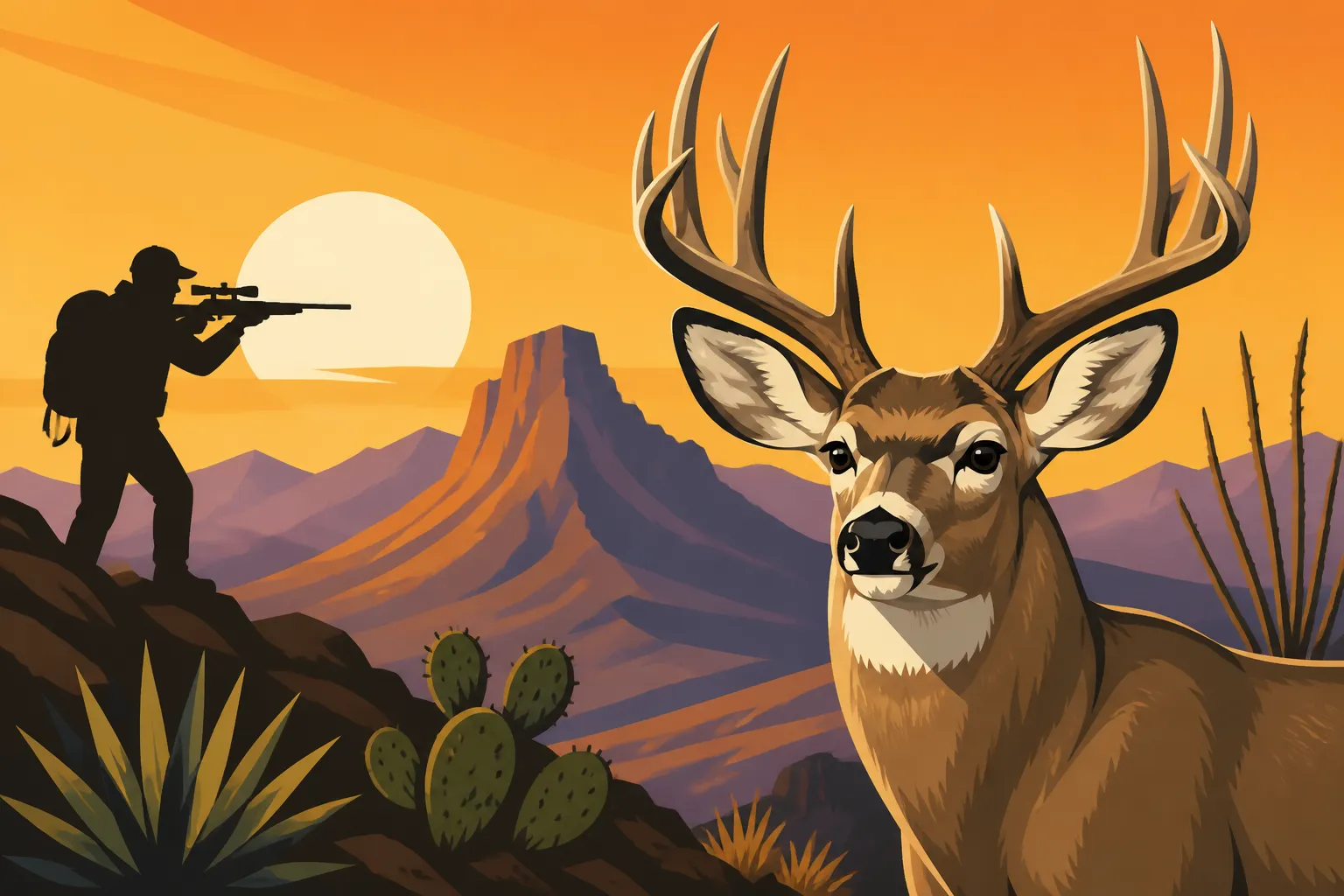
Black Gap WMA spans over 100,000 acres in Brewster County, making it one of the largest public hunting areas in the state. Just saying "100,000 acres" doesn't quite capture it, though. Imagine an expansive, incredibly diverse ecosystem characterized by dramatic mountain ranges like the Santiago Mountains, deep, winding arroyos (dry creek beds), and vast expanses of Chihuahuan Desert flora. We're talking about elevations ranging from around 2,000 feet to over 5,000 feet, which means significant temperature swings and varied microclimates. The vegetation is classic desert scrub: creosote bush, lechuguilla, ocotillo, and various cacti dominate the lower elevations, giving way to sparse junipers and oaks in higher, rockier areas.
This isn't a place where you'll find manicured trails or easily accessible water points around every bend. The roads are mostly unpaved, often rough, and can become impassable after rain. It’s a place that truly feels wild and untamed, offering breathtaking views but also presenting significant challenges. You'll spend a lot of time glassing vast areas, navigating by compass and GPS, and understanding that every mile traveled on foot will feel like three.
Unique Challenges and Rewards: Setting Expectations for a Tough But Memorable Hunt
Let's not sugarcoat it: a mule deer hunt at Black Gap WMA is tough. The deer density isn't as high as some private ranches, and the terrain works against you at every step. Hunters face extreme conditions, from scorching desert heat to sudden, chilling cold snaps, often within the same day. Water is scarce, cellphone service is virtually nonexistent in many areas, and the sheer scale of the WMA means you could walk for miles without seeing another soul, let alone a mule deer. The physical demands are intense; you'll be hiking steep slopes, crossing rocky arroyos, and carrying all your gear for extended periods.
However, for those willing to embrace the challenge, the rewards are immeasurable. There’s an unparalleled sense of accomplishment that comes from harvesting a mule deer in such a wild and unforgiving landscape. Black Gap offers a genuine backcountry hunting experience, a chance to truly disconnect and test your skills against nature. The mule deer here are true desert animals, wary and resilient, and earning one is a memory that will last a lifetime. It's a testament to patience, perseverance, and a deep appreciation for the wild.
Navigating the Public Hunt Draw for Black Gap Mule Deer
Unlike hunting on private land where you might just book a trip with an outfitter, accessing Black Gap WMA for mule deer means going through the Texas Parks and Wildlife Department's Public Hunt Drawing System. This system is designed to provide fair access to quality hunting opportunities on state-managed lands, and Black Gap's mule deer hunts are highly sought after. Missing a deadline or misunderstanding the process can mean missing out on a unique opportunity, so paying close attention here is crucial.
Understanding the Application Process: Step-by-Step for the Drawn Hunt
The first thing you need to know is that hunting mule deer at Black Gap WMA is exclusively a drawn hunt. You can't just show up with an Annual Public Hunting Permit. To even get a chance, you need to apply online through the TPWD Drawn Hunts portal. This process typically opens in late summer or early fall, with different application periods for various hunt categories. Mule deer hunts usually fall under the "Big Game" category, but always double-check the latest Texas Drawn Hunts & Public Hunt Draw 2026 information on the TPWD website.
You'll need a valid Texas hunting license to apply, and there's a small application fee per hunt category. When applying, you'll choose your preferred hunt package, which specifies the WMA (Black Gap, in this case), the species (mule deer), and the hunt dates. You can apply as an individual or as a group, which can sometimes influence your odds (though often, group odds mirror individual odds). Be meticulous with your application; any errors could lead to disqualification. It's not uncommon for hunters to apply for multiple categories or WMAs to increase their chances of drawing a tag somewhere in the state.
Improving Your Odds and What to Expect: Real Talk About the Competition
Let's be realistic: drawing a Black Gap mule deer tag is tough. These hunts are incredibly popular, and the number of available permits is limited to maintain sustainable wildlife populations and a high-quality hunting experience. The Texas Drawn Hunt Odds: What Are Your Chances? are generally pretty low for premium hunts like mule deer at Black Gap. Don't let that discourage you, but approach it with a realistic mindset. Many successful Black Gap hunters have applied for years before finally drawing a coveted tag.
While there's no secret formula to guarantee a draw, consistently applying each year builds preference points for some categories, although this doesn't directly apply to all hunt types or WMAs. Researching the specific hunt categories within Black Gap can also help. Sometimes, a general mule deer hunt might have different odds than a youth-only or archery-only hunt. Using resources like GoHunt or even the TPWD's own past draw statistics can give you a clearer picture of the competition. The key is persistence and patience. Even if you don't draw a mule deer tag, you might consider applying for other opportunities within the Trans-Pecos or nearby regions, such as hunts for aoudad sheep or javelina, to familiarize yourself with the terrain.
Mule Deer Behavior and Habitat in the Trans-Pecos
Hunting mule deer in the rugged Trans-Pecos is a whole different ballgame compared to deer in other parts of Texas. These animals are perfectly adapted to their arid environment, and understanding their movements, feeding habits, and preferred cover is absolutely critical for success at Black Gap WMA. It’s a constant chess match against an animal that blends seamlessly into its surroundings and can cover incredible distances over broken ground.
Seasonal Movements and Preferred Areas: Where to Look and When
Mule deer in the Trans-Pecos, including at Black Gap, are highly influenced by rainfall and the availability of forage and water. While their movements aren't as dramatic as migratory herds in more northern states, they will certainly shift their patterns based on these resources. During the hotter, drier parts of the year, deer will congregate closer to reliable water sources, which are few and far between at Black Gap. This might include natural springs, guzzlers (man-made water collection systems), or even ephemeral pools after rare rain events.
As hunting season typically aligns with cooler weather and potentially some sparse rainfall, mule deer might spread out more, but still favor areas with good browse and cover. They are creatures of elevation, often found higher up on the mountain slopes and in the foothills, where the terrain provides escape routes and vantage points. Look for draws, saddles, and benches on hillsides. These features offer natural travel corridors and bedding areas where deer can escape the wind or sun. Early morning and late evening will see them moving from bedding to feeding areas, often along the tops of ridges or through major arroyos. Understanding the Texas Mule Deer Season Dates 2026 will help you align your scouting and hunting efforts with the times deer are most active and visible.
Reading the Terrain: Spot-and-Stalk Strategies Specific to Black Gap
The sheer vastness and openness of Black Gap make spot-and-stalk the premier hunting method for mule deer. This isn't a place for sitting in a blind over a feeder, as you might do for whitetails in other parts of Texas. The first, and arguably most important, tactic is finding a good vantage point to glass. You'll need high-quality binoculars and a spotting scope to systematically scan large areas of country, looking for even the smallest flick of an ear or a patch of hide that doesn't quite match the rock. Patience is your best friend here; spend long periods observing before moving.
Once you spot deer, the real challenge begins: the stalk. The terrain at Black Gap offers limited cover. You'll be using every rock, creosote bush, and undulation in the landscape to conceal your approach. This often means long, slow crawls, navigating loose scree, and carefully managing the wind. Mule deer have incredible eyesight and hearing, so moving slowly, pausing frequently, and staying out of their line of sight is paramount. Many hunters underestimate the distance required for a successful stalk; what looks like a short walk on a map can be a grueling, hours-long maneuver over unforgiving ground. Utilizing mapping apps like onX Hunt can be incredibly beneficial for planning your approach and identifying potential cover.
Essential Gear and Preparations for a Black Gap Hunt
Hunting Black Gap WMA is not like a casual trip to a deer lease. This is a backcountry hunt in a remote, often harsh environment, and your gear and physical preparation are just as important as your hunting skills. Skimping on essentials or failing to train physically can turn a challenging hunt into a dangerous ordeal.
Backcountry Essentials: Beyond Just Hunting Gear, Thinking About Survival
When packing for Black Gap, think survival first, then hunting. The remoteness means help is a long way off. A reliable backpack is critical, not just for your rifle and ammo, but for carrying sufficient water – more than you think you'll need. A good rule of thumb is at least a gallon per person per day, maybe more if it's hot and you're hiking hard. Water filters or purification tablets are also a must.
Beyond water, you'll need navigation tools. While a physical map and compass are indispensable, a GPS device or a smartphone app like onX Hunt, loaded with offline maps, is vital. Cell service is unreliable at best. Consider a satellite communication device (like a Garmin inReach or a Zoleo) for emergency communication. A comprehensive first-aid kit, signaling mirror, headlamp with extra batteries, fire starter, multi-tool, and emergency shelter are not optional; they are critical. Dress in layers to adapt to the drastic temperature swings. Lightweight, durable hiking boots with good ankle support are a must for traversing the rocky, uneven ground. Snake boots or gaiters are also highly recommended due to the prevalence of rattlesnakes. Don't forget high-quality optics, like a reliable rifle scope, binoculars, and a spotting scope for those long-distance glassing sessions.
Here's a quick rundown of essential gear:
| Category | Item | Notes |
|---|---|---|
| Navigation | GPS device (dedicated or app) | With offline maps (e.g., onX Hunt) |
| Map & Compass | Learn how to use them, backup for electronics | |
| Satellite Messenger/PLB | For emergency communication where cell service is absent | |
| Hydration | Water (min. 1 gallon/day) | More if hot, strenuous activity |
| Water Filter/Purification Tablets | Backup water source | |
| First Aid | Comprehensive First-Aid Kit | Including blister care, pain relievers, snake bite kit |
| Shelter/Survival | Lightweight Emergency Shelter/Tarp | For unexpected overnight stays |
| Fire Starter (multiple methods) | Lighter, waterproof matches, ferro rod | |
| Headlamp & Extra Batteries | Essential for pre-dawn starts and post-dusk recovery | |
| Knife/Multi-tool | Versatile for various tasks | |
| Optics | Binoculars (10×42 or 12×50) | High quality for glassing |
| Spotting Scope | For evaluating deer at extreme distances | |
| Rangefinder | Crucial for ethical shots in open country | |
| Clothing | Layered System (moisture-wicking) | Base, mid, outer layers for temperature fluctuations |
| Durable Hiking Boots | Broken-in, good ankle support | |
| Snake Boots/Gaiters | Protection from venomous snakes | |
| Food | High-calorie, non-perishable food | Trail mix, energy bars, jerky, dehydrated meals |
Physical Conditioning and Mental Toughness: It's Not a Walk in the Park
Seriously, Black Gap will test you physically and mentally. The steep, rocky terrain, combined with potential heat, cold, and heavy packs, demands a high level of fitness. Start your training regimen well in advance. Focus on cardiovascular endurance (hiking, running, stair climbing, especially with a weighted pack) and strength training, particularly for your legs and core. Simulating hunt conditions by hiking with a loaded backpack over uneven terrain is one of the best ways to prepare.
Beyond the physical, mental toughness is paramount. You'll face frustration, exhaustion, and moments where you question why you're out there. Learning to push through discomfort, stay positive, and maintain focus is vital. Practice good decision-making skills under pressure, especially regarding navigation and safety. A mule deer hunt at Black Gap isn't just about bagging an animal; it's about the entire journey, the challenge, and proving to yourself what you're capable of. Being well-prepared physically and mentally will significantly increase your chances of success and, more importantly, ensure your safety.
Effective Hunting Tactics for Black Gap Mule Deer
Once you've successfully drawn your tag and made it out to Black Gap WMA, the real work of hunting begins. This isn't a "sit and wait" type of hunt; it demands active, strategic pursuit. The open, rugged landscape dictates a very specific set of tactics, primarily centered around observation and careful movement.
Glassing and Spot-and-Stalk: The Primary Method for This Terrain
As mentioned earlier, glassing is king in the Trans-Pecos. You'll spend far more time looking through optics than walking. Find a high vantage point – a ridge, a hilltop, or even the top of your vehicle if permitted and safe – that offers expansive views of drainages, canyons, and hillsides. Systematically scan every inch of the terrain. Divide the landscape into grids and meticulously search each section. Don't rush. Take your time, letting your eyes adjust and focusing on patterns, colors, or shapes that seem out of place. Mule deer are masters of camouflage, so you're not looking for an entire deer; you're looking for an ear, a leg, the shine of an antler, or a subtle movement.
Once you spot a deer, the spot-and-stalk begins. This is where those mapping apps like onX Hunt come into their own. Carefully plot your approach, identifying natural cover, understanding wind direction, and anticipating the deer's potential escape routes. The wind is fickle in the mountains, so always be aware of swirling currents. Try to approach from above or parallel to the deer, as moving downhill can be noisy and exposes your silhouette. Move slowly, deliberately, and quietly. Use every piece of cover available, even if it means taking a longer, more circuitous route. Be prepared to crawl, army-crawl, or even slide to stay hidden. This is a game of inches and patience, often taking hours for what might seem like a short distance.
Water Sources and Travel Corridors: Key Areas to Focus Your Efforts
In an arid environment like Black Gap, water is life, and that holds true for mule deer. While they are adapted to dry conditions and can derive moisture from vegetation, access to water is still a critical factor, especially during dry spells. Identifying natural springs, seeps, or man-made guzzlers (often marked on topographical maps or discoverable through intensive scouting) can be golden. These areas will concentrate deer movement, particularly during dry periods, making them excellent places to glass from a distance. However, remember that deer will be extra wary around water, so maintain your distance and use your optics.
Beyond water, understanding how deer move through the landscape is crucial. Mule deer prefer to travel along natural corridors that offer cover, ease of movement, or strategic advantage. Look for saddles between peaks, benches on hillsides that provide staging areas, and major arroyos that act as highways for animals moving between feeding and bedding grounds. These travel corridors are excellent places to focus your glassing efforts, especially during dawn and dusk when deer are most active. Learning How to Scout for Deer Before Season in Texas will give you a significant advantage, allowing you to identify these key areas before your hunt even begins. Pay attention to game trails, rubs, and droppings – any sign that indicates consistent deer activity in a particular area. The more time you spend on the landscape, the better you'll become at "reading" it and predicting where these elusive desert dwellers might be.
Disclaimer
Hunting carries inherent risks, including but not limited to injuries, dangerous wildlife encounters, and unforeseen environmental hazards. The information provided in this guide is for informational purposes only and should not replace professional advice or thorough personal research. Always comply with all local, state, and federal hunting regulations and laws. Ensure you have the proper licenses, permits, and safety equipment before engaging in any hunting activities. The author and publisher are not responsible for any accidents, injuries, or legal infractions incurred. Hunt safely and ethically.