How to Field Dress a Deer in Hot Weather
Field dressing a deer in hot weather requires rapid evisceration, proper cooling techniques, and breathable game bags to prevent dangerous meat spoilage.
Close the distance.
Archery, muzzleloader, and firearm techniques — calling, stand placement, still-hunting, spot-and-stalk, and the weapon rules that change at the state line.
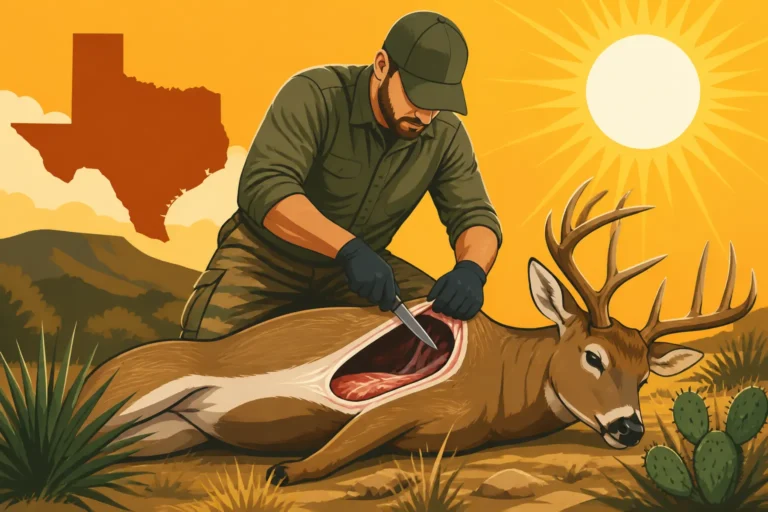
Field dressing a deer in hot weather requires rapid evisceration, proper cooling techniques, and breathable game bags to prevent dangerous meat spoilage.
Wildlife food plot management in Texas requires regional climate awareness, soil testing, and drought-tolerant plant selection.
Coyote hunting in Texas requires understanding predator behavior, seasonal influences, and specific calling techniques for effective population management.
Rio Grande turkey behavior in Texas, seasonal breeding patterns, and effective calling techniques help hunters lure gobblers into range successfully.
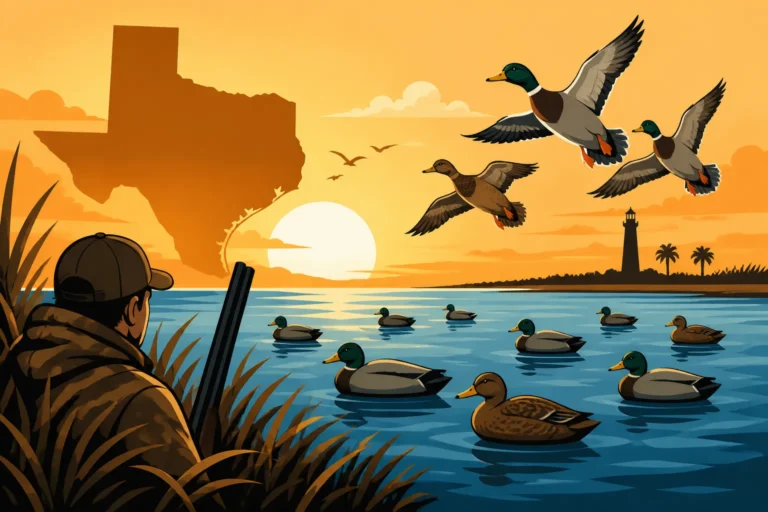
Texas coast duck decoy strategies explain habitat zones, species behavior, visibility, landing zones, movement, and formations like the J-hook spread.
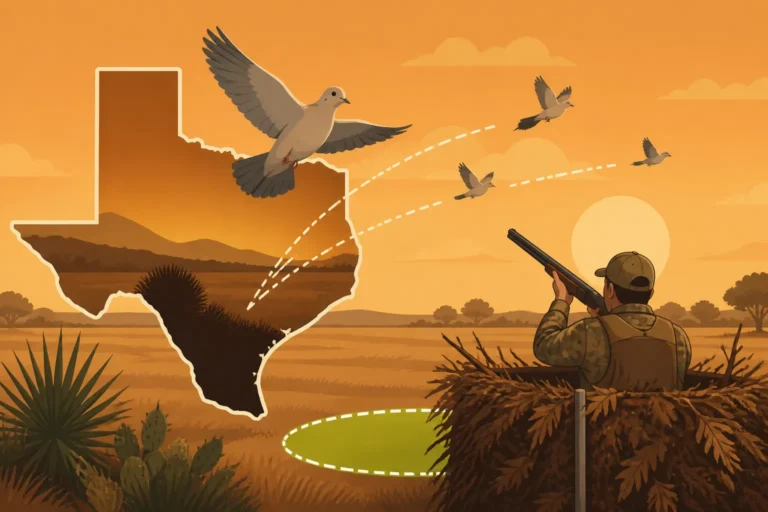
Strategic field setup requires analyzing flight paths, weather conditions, and natural funnels to place hunting stands and concealment effectively.
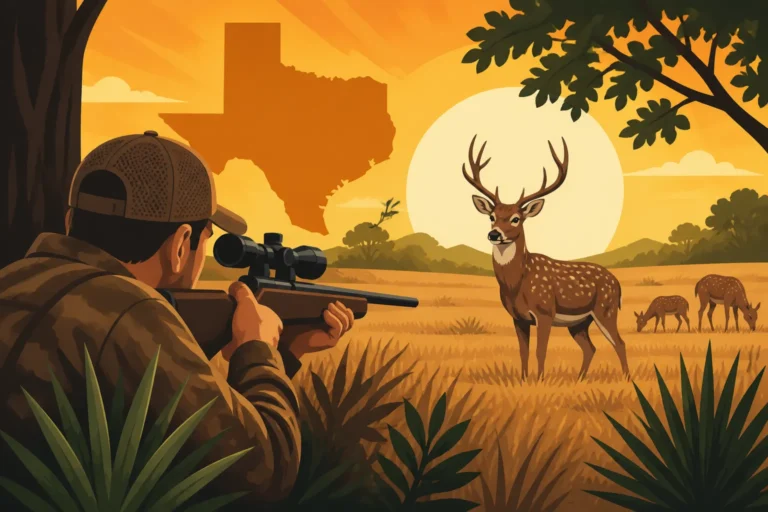
Free-range Axis deer hunting in Texas requires specific open country tactics, behavioral patterns, and effective spot-and-stalk methods.
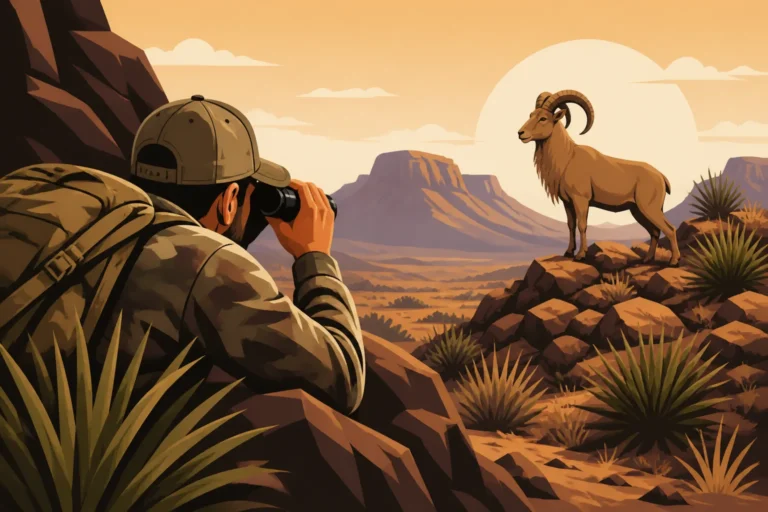
West Texas Aoudad hunting demands high-power optics, rugged backcountry gear, and proven spot-and-stalk tactics for mountainous desert terrain.
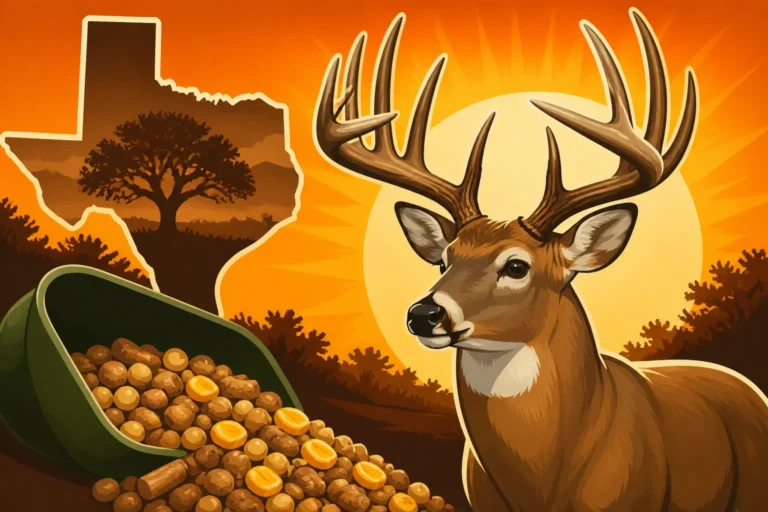
Supplemental protein feeding provides Texas deer herds with vital nutrients to maximize antler growth and overcome unpredictable natural forage challenges.
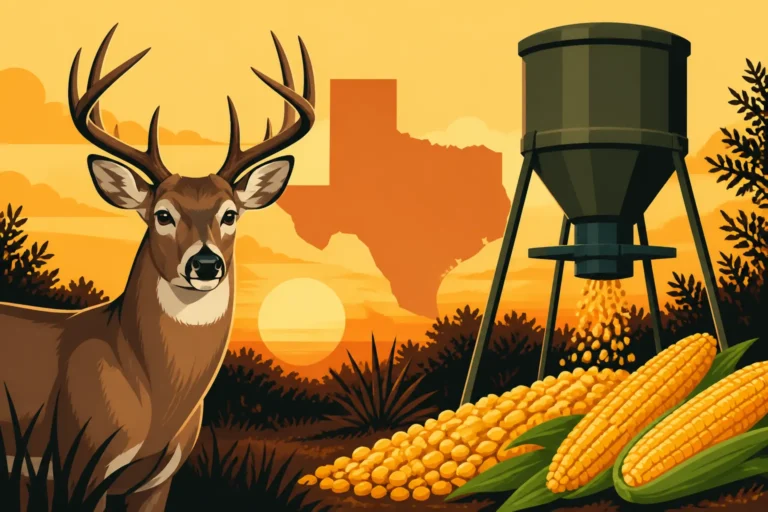
Whole kernel corn remains the most cost-effective and moisture-resistant option for feeding Texas whitetail deer compared to cracked or flavored varieties.