How to Call Rio Grande Turkeys in Texas
Oh, the sheer thrill, and sometimes the absolute frustration, of trying to sweet-talk a Rio Grande gobbler into range in the vast expanse of Texas! Many of us have spent countless early mornings freezing in a blind, listening to distant gobbles, only to have the bird hang up just out of sight, or worse, gobble once and then go completely silent. It's a dance, a delicate negotiation between hunter and bird, where your voice (or rather, your calls) is your primary tool. This guide is all about giving you the inside scoop, the tried-and-true techniques, and the little nuances that can make all the difference in luring that strutting tom right into your lap here in the Lone Star State.
Understanding the Rio Grande Turkey in Texas
Before you can effectively call a Rio Grande turkey, you really need to understand what makes these birds tick, especially in the unique Texas landscape. They're a different breed, both literally and figuratively, from their Eastern and Osceola cousins, and what works in the dense woods of the East might not cut it in the scrub brush or rolling hills of Texas.
Habitat and Behavior
Rio Grande turkeys, true to their name, are most commonly found along the river systems and in the brush country of central and western Texas, although their range extends quite a bit further, even into parts of the Panhandle and Cross Timbers regions. They thrive in areas with a mix of open grasslands for feeding and roosting, along with denser cover like mesquite, oak motts, or river bottom hardwoods for loafing and protection. Unlike some other turkey subspecies that prefer heavy timber, Rios are often found in more open, sometimes arid, environments. This open habitat impacts everything from how far their gobble travels to how they respond to calls and decoys.
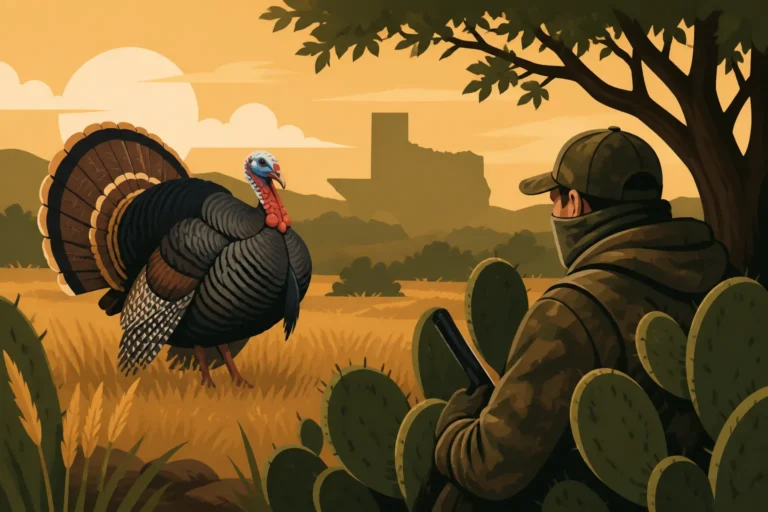
Picture a typical spring morning in South Texas: you might be set up on the edge of a senderos (a cleared lane) or a prickly pear flat, surrounded by dense mesquite and huisache. The gobbler you're after might be roosted in a tall hackberry tree along a creek bed, a quarter-mile away. Because of the often-sparse undergrowth, these birds can see for great distances, making your approach and setup critical. They are incredibly wary, and their vision is legendary. They move in small flocks, often with a dominant gobbler accompanied by several hens, especially early in the breeding season. Knowing where they prefer to roost, feed, and water will be your first big step, even before you make a single sound with a call.
Breeding Season and Gobbling Peculiarities
The breeding season for Rio Grande turkeys in Texas typically kicks off in late March and runs through May, though this can vary slightly by region. Early in the season, particularly during the first few weeks, gobblers are hot and eager to breed. They'll be actively seeking out hens, often gobbling on the roost and continuing to vocalize throughout the morning. This is often the best time to be aggressive with your calling. They're simply more vulnerable to the sound of a lone hen looking for love.
However, a unique challenge with Texas Rios, particularly as the season progresses, is what we affectionately call being "henned-up." This means the gobbler has a harem of real hens surrounding him, and he has little incentive to leave them for your calls. He might gobble his head off, letting you know exactly where he is, but he won't move an inch because he's already got what he wants. In these situations, your calling strategy needs to shift. Instead of trying to pull him away, you might need to mimic the sounds of an intrusive hen, or even challenge him, hoping he gets annoyed enough to come investigate or drive off the "intruder." Later in the season, after hens have begun nesting, gobblers can become lonely and start actively searching again, making them more responsive to calls once more. Understanding these phases of the season, and how they impact a gobbler's motivation, is absolutely key to your success.
Essential Turkey Calls for Texas
Just like a cowboy needs his lariat, a Texas turkey hunter needs a trusty set of calls. You wouldn't bring a butter knife to a steak fight, right? The same goes for turkey calls. Each type has its place, its unique voice, and its learning curve. Mastering a few different kinds will significantly increase your odds of success.
Box Calls and Pot Calls
These are often the first calls many hunters learn, and for good reason—they're relatively easy to use and produce excellent, realistic turkey sounds.
- Box Calls: A good box call can replicate a wide range of turkey vocalizations, from soft tree yelps to loud, aggressive cutting. They are simple to operate: you hold the box in one hand and draw the lid across the soundboard with the other. The magic lies in the varied pressure and speed you apply. For Rio Grandes, a box call can be fantastic for projecting sound across the more open Texas terrain. They're loud enough to get a distant gobbler's attention but can be softened for close-in work. The downfall? They're not always weatherproof, and trying to use one with cold, wet hands or in a downpour can be a real headache. They can also be a bit bulky, making quick transitions or silent movements tricky in tight situations.
- Pot (or Slate) Calls: Pot calls consist of a circular pot, usually made of slate, glass, aluminum, or copper, and a striker (or peg) made of wood, carbon, or a composite material. You hold the pot in one hand and draw the striker across the surface to produce sound. Different surfaces and strikers create different pitches and tones. A slate surface with a wooden striker often produces softer, more subtle clucks and purrs, perfect for when a gobbler is close and you need to be very convincing. Glass or aluminum surfaces with a carbon striker can be much louder, offering sharp yelps and cuts that can carry further. Pot calls offer incredible versatility in sound and can be very realistic. Many experienced hunters carry a few different pot calls with various surfaces and strikers to match the mood of the bird or the conditions. They are also relatively quiet to set down and pick up, which is a bonus when a tom is almost in range.
Diaphragm Calls (Mouth Calls)
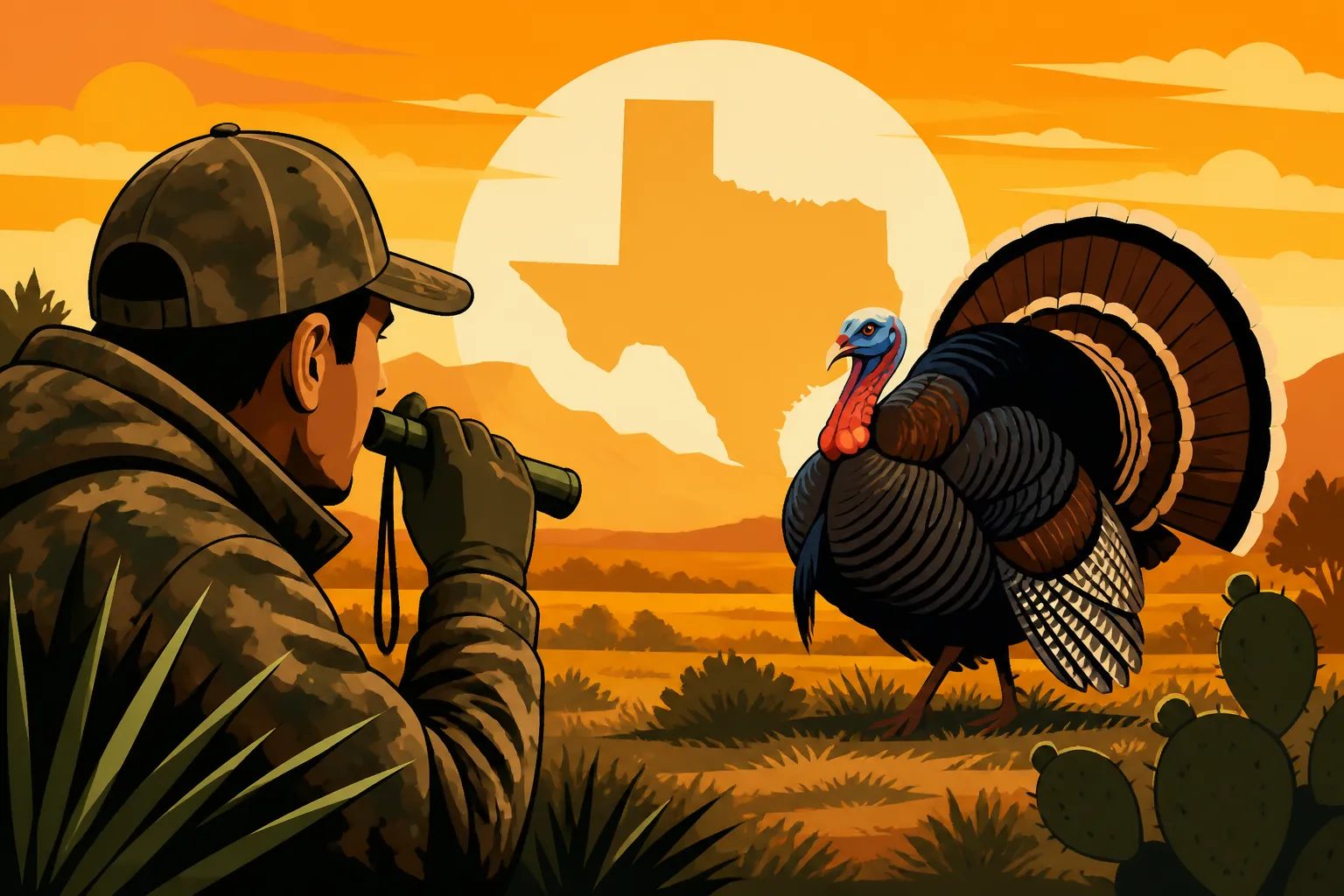
Ah, the diaphragm call – often seen as the Everest of turkey calling for beginners, but once mastered, it’s an absolute game-changer. These calls are small, horseshoe-shaped frames with one or more latex reeds stretched across them, which you place in the roof of your mouth. By forcing air across the reeds with your tongue and diaphragm, you can produce a myriad of turkey sounds.
The beauty of a diaphragm call, especially in the Texas brush, is its hands-free operation. This means you can keep your gun mounted and ready, adjust your position, or scan for incoming birds without having to put down or pick up a call. This is crucial when a wary Rio gobbles just over the rise and you know he's looking. The learning curve can be steep, involving a fair bit of spitting and sputtering at first, but the payoff is immense. You can produce soft purrs and clucks, sharp yelps, aggressive cutting, and even gobbler sounds. Different reed cuts and latex thicknesses offer different tones and pitches. For a comprehensive dive into this, you might find our guide on Turkey Calling & Tactics for Texas Rios quite helpful.
Locator Calls
Locator calls aren't meant to sound like turkeys, but rather to provoke a shock gobble from a tom. The idea is that a loud, sudden sound will make a gobbler instinctively sound off, revealing his location. This is especially useful in the mornings when birds are still on the roost or when you're trying to pinpoint a bird in a new area.
Common locator calls include owl hoots, crow calls, and coyote howls. A crisp "Who cooks for you, who cooks for you-all?" owl hoot just before dawn can often elicit a series of gobbles, giving you a heading before the birds even hit the ground. Crow calls are effective throughout the day, as a gobbler might respond to any loud, sudden noise in his territory. Coyote howls can also be highly effective, especially in areas where coyotes are prevalent, as turkeys often gobble in response to perceived threats or disturbances. These calls are fantastic for covering ground, especially if you're hunting public land in Texas or a large private lease where birds might be spread out. Just remember, these are for locating, not luring. Once you get a response, it’s time to switch to your hen calls and start the real conversation.
Mastering Basic Turkey Sounds
Now that you've got your calls, it's time to learn the language. Turkeys communicate with a surprisingly diverse range of vocalizations, each with its own meaning and context. Learning to replicate these accurately will make your calling much more effective.
Yelp, Cluck, and Purr
These are the bread and butter of turkey calling; you simply cannot hunt turkeys without them.
- Yelp: The yelp is the most common turkey sound and signifies a general location call. It's how hens tell other turkeys, "Here I am!" A series of clear, consistent yelps is often enough to pique a gobbler's interest. For a locator call or initial contact, you'll want a slightly louder, more drawn-out yelp sequence (5-7 yelps). As a gobbler gets closer, or if he's being shy, you'll want to soften those yelps, perhaps shortening them or reducing the number in a sequence. The key is to make it sound natural—like a hen casually looking for company, not frantically screaming for attention.
- Cluck: Clucks are short, sharp, staccato notes, often signaling contentment or a soft inquiry. They’re like a subtle "hey" or "what's up?" in turkey language. A single cluck or a series of soft clucks can be incredibly effective when a gobbler is close, perhaps within 100 yards, and you don’t want to overdo it. It's a reassuring sound that tells him everything is chill. Often, a gobbler will respond to a soft cluck with a soft gobble or even just a step or two closer, trying to pinpoint the source of the sound. You can also use a sharp, excited cluck to get a hanging gobbler to commit those last few yards.
- Purr: The purr is the softest, most intimate of turkey sounds, indicative of a relaxed, content bird, often feeding. It's a low, rolling sound, almost like a feline purr. This call is your secret weapon for the final few yards. When a gobbler is in sight, strutting and drumming but not quite stepping into range, a soft, seductive purr can often be the tipping point. It makes him think there's a hen happily feeding right in front of him, and his natural instinct is to join her. It's incredibly effective when paired with a decoy, as it provides an auditory cue to match the visual. Many hunters underutilize the purr, but it’s invaluable for closing the deal.
Cutting and Cackle
These are more aggressive, attention-grabbing sounds that convey excitement or challenge.
- Cutting: Cutting is a series of short, sharp, rapid, excited yelps, broken up by distinct pauses. It sounds like "Kit! Kit! Kit-kit-kit! Kit!" It conveys urgency and excitement, as if a hen is frantically searching for a gobbler or is agitated. This call is fantastic for getting a gobbler to gobble back when he's been silent or for re-engaging a bird that seems to have lost interest. It's also a great way to challenge a henned-up gobbler, making him think another hen is trying to steal his ladies. Be careful not to overdo it, as too much aggressive cutting can sometimes spook a bird if not used appropriately. Think of it as a burst of energy to get things moving.
- Cackle: A cackle is typically a series of fast, broken yelps and cuts, often used when a hen is flying down from the roost or is agitated. It's a wild, uncontrolled sound that signifies a lot of excitement. The "fly-down cackle" is a classic: as birds leave the roost in the morning, hens will often cackle, signaling their arrival on the ground and their readiness to mingle. Replicating this sound effectively while you’re still in your setup can be very convincing, especially if you also slap your hat against your leg or the ground to mimic the sound of wings hitting the air and then landing. It tells the gobbler, "I just landed, and I'm ready to find you!" This can be an excellent way to get an early morning gobbler to commit to your location right off the roost.
Gobble and Fly-Down Cackle
While the yelp, cluck, and purr are about attracting, the gobble is about challenging.
- Gobble: Yes, you can gobble back! While primarily a gobbler's call, a hen will sometimes gobble, particularly during intense interaction with a tom, or perhaps to mock a distant gobbler. As a hunter, using a gobble call can be very risky but highly effective in specific situations. It's primarily used to challenge a dominant gobbler, making him think another male is encroaching on his territory. This can sometimes make him march straight to you, ready for a fight. However, it can also send shy gobblers running for the hills, or alert any nearby hens to your position, making them lead their gobbler away. It's a high-risk, high-reward strategy best used with caution and experience, especially on public lands where other hunters might mistake you for a real bird. Never use a gobble call if you suspect another hunter is in the area.
- Fly-Down Cackle: As mentioned earlier, the fly-down cackle is a series of rapid, excited yelps and cuts, mimicking a hen coming off the roost. It’s usually accompanied by wing beats. This is a crucial early morning call. As the first light begins to break, and you hear distant gobbles, timing your fly-down cackle with some simulated wing beats can make a gobbler believe a hen has just landed right in front of him. This often makes him gobble harder and potentially fly down directly to your setup. Be ready, because if done convincingly, he could be on the ground and heading your way fast! For more general information on how to prepare for your hunts, check out our guide on Rio Grande Turkey Hunting Tactics for Texas.
Advanced Calling Strategies and Scenarios
Once you've got the basic sounds down, it's time to put them into practice with a little more finesse. Rio Grande turkeys, especially those that have been hunted for a while, can be incredibly cagey. You need to be adaptable and strategic.
Roosting and Fly-Down Calls
The evening before your hunt, or at the very least, just before dawn, is prime time for locating birds on the roost. Using a locator call like an owl hoot or a crow call as dusk settles or before first light can help you pinpoint exactly where gobblers are spending the night. This knowledge is invaluable for setting up in the dark, ensuring you're in a prime position for the morning.
Once you know where a gobbler is roosted, your morning strategy begins. Before it's even light enough to shoot, you'll want to get as close as possible without spooking the bird. Then, as the sky lightens, start with soft, contented tree yelps and soft clucks. These are sleepy, morning calls, not frantic ones. As the bird starts to stir and maybe gobble a bit, transition into a fly-down cackle, perhaps slapping your hat against your leg to mimic wings. The goal is to make that gobbler think a hen just flew down right where you are. This can be one of the most exciting and effective tactics for getting a quick response right at daylight. It often compels the gobbler to fly down directly to your position, ready to strut and impress.
Mid-Morning Lulls and Decoy Talk
Not every gobbler is going to charge in at first light. Sometimes, they're henned-up, or they just plain ignore your initial overtures. Mid-morning, between 9 AM and 11 AM, can often be a slow period. This is when patience and strategic calling really pay off. If a gobbler is with hens, he might not respond much. This is where subtle calling, mimicking a single hen feeding or casually moving, can be effective. Try softer clucks, purrs, and short yelp sequences. You’re trying to sound like a hen that's just doing her thing, perhaps enticing the real hens to come investigate, which might drag the gobbler along.
This is also a fantastic time to use decoy talk. If you have decoys out, don't just call blindly. Imagine your decoys are making the sounds. If you have a hen decoy feeding, make soft purrs and clucks. If you have a jake decoy set up, consider a few aggressive cuts or even a soft gobble (again, with extreme caution regarding other hunters). The visual and auditory combination can be incredibly powerful. Many hunters make the mistake of packing up too early during the mid-morning lull. Gobblers that were with hens might get lonely as the hens go off to nest, becoming much more responsive later in the morning. Stay put, keep calling periodically and subtly, and be ready for a mid-morning surprise.
The Art of the Henned-Up Gobbler
This is arguably the most challenging scenario in Texas Rio Grande hunting. You hear him gobbling consistently, perhaps even see him strutting in the distance, but he's surrounded by real hens. He has no reason to come to you. Your goal here isn't to call him to you, but to call his hens to you. If you can convince his hens that there's a more attractive gathering of turkeys over where you are, they might lead the gobbler right into your setup.
Start by being aggressive and somewhat competitive. Use louder, more excited yelps and cuts. Mimic a hen that's calling to her gobbler, trying to steal the attention. Sometimes, you can even try to "get in front" of the gobbler. If you know he's moving a certain direction with his hens, try to get ahead of him and set up, then call subtly, as if you're a hen already there. Another tactic is to simply wait. If the hens eventually go off to nest, that gobbler will become lonely and often start actively searching. This might mean sitting tight for hours, but patience is a turkey hunter's best friend. When the hens leave, that lonely gobbler will often become very responsive to even moderate calling. The game changes completely the moment those hens peel off.
Common Calling Mistakes to Avoid
Even seasoned hunters make mistakes, and when it comes to turkey calling, a tiny error can ruin your entire hunt. Being aware of these common pitfalls can help you avoid them and increase your success rate.
Overcalling and Undercalling
This is a delicate balance, and it’s probably the most frequent mistake hunters make.
- Overcalling: Many beginners, in their excitement, tend to call too much and too loudly. Imagine a persistent telemarketer; eventually, you just tune them out. The same goes for turkeys. If you're constantly yelping and cutting, you can make the gobbler suspicious, or simply numb him to your calls. It doesn't sound natural. Think of calling as a conversation. You call, he gobbles, you wait for his response, then you respond. It's a back-and-forth, not a monologue. Overcalling can also alert any nearby birds to your exact position, making them pinpoint you and approach with extreme caution, often hanging up just out of range.
- Undercalling: On the flip side, some hunters are too timid. Especially in the open country of Texas, your calls need to carry. If you're calling too softly or too infrequently, a distant gobbler might never hear you, or he might lose interest. If a gobbler is gobbling consistently, he's telling you he's interested. You need to keep that interest alive with regular, but not excessive, calling. The key is to gauge the bird's response. Is he gobbling harder? Moving closer? If so, keep the conversation going. If he quiets down, try a different call or a different sequence to reignite his interest.
A good rule of thumb is to let the bird dictate the cadence. If he's hot, you can be a bit more aggressive. If he's shy, tone it down. And always vary your calls, just like real hens do. You don't want to sound like a broken record.
Incorrect Volume and Tone
Imagine trying to talk to someone across a football field versus someone sitting next to you. The volume and tone of your voice would be vastly different, right? Turkey calling is no different.
- Volume: When you're trying to locate a bird far off, or get the attention of a gobbler in thick brush, you need volume. This is where a box call or a loud pot call excels. But as that bird gets closer, you need to decrease your volume dramatically. There's nothing more likely to send a gobbler spooking than a loud, piercing yelp when he's just around the corner. Once he's within 100 yards, your calls should be softer, more subtle, almost whispers. Switch to soft clucks, purrs, and quiet yelps on a diaphragm or slate call.
- Tone: The tone of your calls is also critical. Turkeys have an incredible ability to discern subtle differences. Your yelps should have a good, clean break, not a drawn-out, nasal whine. Clucks should be sharp and distinct. Purrs should be soft and rolling. Practice listening to real turkeys, perhaps through videos or audio recordings, to get a sense of the natural cadence and pitch. Different calls will produce different tones, and you'll find that some calls simply sound more "turkey-like" to your ear. Don't be afraid to experiment with different calls and strikers until you find what sounds most realistic to you.
Ignoring the Turkey's Cues
This might be the biggest mistake a hunter can make. Turkeys are constantly communicating, even when they're not gobbling. You need to be a good listener and observer, not just a good caller.
- Listen to his gobble: Is his gobble getting louder? Closer? Is he gobbling every time you call, or is he becoming sporadic? Is he cutting you off? All these are cues. If he's cutting you off, he's eager. If he's gobbling consistently but not moving, he's likely henned-up, and you need a different strategy. If he's moving away, stop calling aggressively, and try softer, more enticing calls or even a "decoy" strategy where you move silently ahead of him.
- Watch for body language: If you have decoys out, watch how the real bird reacts to them. Is he strutting towards them? Is he circling warily? Is he ignoring them? His body language will tell you more than his gobble sometimes. A strutting gobbler with his fan spread is trying to impress; a gobbler with his head up, looking around nervously, is on high alert.
- Silence is golden: Sometimes, the best call is no call at all. If a gobbler is really close, actively looking for you, making another sound can give away your exact location. Let him search, let him get frustrated, and he might just step into your shooting lane. Many gobblers have been sealed just by holding still and letting them come the final few yards. Never assume a gobbler is gone just because he went silent. He might be sneaking in. Remain vigilant. For further insights on how to stay patient and read the land, consider our article on Scouting for Deer Before Season in Texas, as many of those principles apply to other game, including turkeys.
Pairing Calls with Other Tactics
Calling is a powerful tool, but it's rarely effective in isolation. The most successful turkey hunters integrate their calling with other smart tactics, creating a complete package that convinces even the wariest Rio Grande gobbler.
Decoy Setups
Decoys are an absolute game-changer, especially for Rio Grandes in more open terrain where visual cues are vital. A good decoy setup can give the gobbler that visual confirmation he needs to commit. Without a decoy, he's often going to "hang up" just out of sight, searching for the hen he hears.
- Types of Decoys: You'll generally choose between hen decoys, jake decoys, or full-strut gobbler decoys. A single hen decoy or a pair of hen decoys (one standing, one feeding) is a classic and highly effective setup. This portrays a sense of safety and contentment. A jake decoy, especially when paired with a hen, can be irresistible to a dominant gobbler, as he'll want to run off the intruder. A full-strut gobbler decoy is the most aggressive setup, used to challenge dominant gobblers directly.
- Placement is Key: Place your decoys where the gobbler has to come into your shooting lane to investigate. Typically, this means 20-30 yards from your blind or hiding spot, facing your approach. If you’re using a jake or gobbler decoy, orient it so the approaching gobbler sees its backside first; this often makes him more aggressive as he approaches what he thinks is a subordinate bird. Never place decoys between you and the direction you expect the turkey to approach from, as this might block your shot. Also, consider the terrain. In brushy areas, you might need to place them in a small opening so they are visible.
- Motion Decoys: Some decoys now come with slight motion, like a head subtly turning or a tail fanning in the breeze. This added realism can be highly convincing to a gobbler, especially on a calm day when stationary decoys might look too static.
- Safety First: Always be mindful of other hunters when using decoys, especially full-strut gobbler decoys, which can be mistaken for a real bird. Position them carefully and use orange safety flagging when moving them in and out of your hunting area.
Scouting and Location
You can be the world's best turkey caller, but if you're calling in an area with no turkeys, you're just making noise. Thorough scouting is the foundation of successful turkey hunting.
- Pre-Season Scouting: Before the season even opens, spend time in your hunting area. Look for turkey sign: tracks, droppings, scratch marks in the dirt, and shed feathers. Identify potential roosting areas (tall trees near water or open fields), feeding grounds, and travel corridors. Use locator calls during dawn and dusk to find out where birds are roosting and to get an idea of their general location. Understanding the lay of the land, including terrain features and vegetation, will help you predict where gobblers will likely travel and how they'll respond to your calls.
- In-Season Adjustments: Turkeys are constantly on the move, and their patterns can change due to weather, hunting pressure, or the availability of food. Don't be afraid to move if your initial setup isn't producing. If you hear a gobbler off in the distance, silently try to cut the distance. Sometimes, running and gunning, especially in areas with scattered birds, can be very effective. This involves moving, calling frequently with locator and hen calls, and quickly setting up when you get a response. For detailed information on identifying key areas, you might find our article on Where to Place a Deer Feeder for Best Results surprisingly relevant, as deer and turkey often share food sources and travel patterns.
Patience and Persistence
Turkey hunting, especially for Rio Grandes in Texas, is rarely a quick affair. It demands patience, persistence, and the ability to adapt.
- Sit Still and Wait: Once you've made your setup and started calling, resist the urge to fidget or move around. Turkeys have incredible eyesight, and even a slight movement can send them scurrying. If a gobbler is answering, but not coming in, stay put. He might be taking his sweet time, or he might be circling you to get a better look. Many successful hunts end with the hunter simply waiting out a wary gobbler.
- Don't Give Up on Silent Birds: Just because a gobbler isn't gobbling doesn't mean he's not there or not interested. Sometimes, older, wiser gobblers become "gobble-shy" due to hunting pressure. They'll sneak in silently, trying to find the source of your calls. Always be vigilant, even when things are quiet.
- Change Tactics: If your initial calling strategy isn't working, don't be afraid to change it up. Try different calls, different volumes, or different sequences. If a gobbler is hung up, try the "walk-away" tactic: make a few soft calls, then slowly and quietly move a short distance away (as if the hen is losing interest). This can sometimes trigger the gobbler to come investigate, fearing the hen is leaving. Every hunting scenario is unique, and being able to adapt on the fly is a hallmark of a successful turkey hunter.
By combining realistic calling with smart decoy placement, thorough scouting, and an unwavering commitment to patience, you'll dramatically improve your chances of bagging a Texas Rio Grande gobbler. It's a challenging but incredibly rewarding pursuit, and every gobble you hear makes all the effort worth it.
| Call Type | Primary Sounds | Best Use Cases for Rio Grandes | Pros | Cons |
|---|---|---|---|---|
| Box Call | Yelps, Cuts, Clucks | Long-distance locating, aggressive calling, early season gobblers | Easy to learn, loud, versatile | Can be bulky, not weatherproof, requires hands |
| Pot/Slate Call | Yelps, Clucks, Purrs, Cuts | Mid-range to close-in work, subtle calling, versatile hen sounds | Realistic, wide range of tones, relatively quiet | Can be sensitive to moisture, requires hands |
| Diaphragm Call | Yelps, Clucks, Purrs, Cuts, Gobbles | Close-in work, hands-free operation, versatile | Extremely realistic, hands-free, small | Steep learning curve, can be uncomfortable |
| Locator Calls | Owl Hoot, Crow, Coyote Howl | Pinpointing roosted birds, covering ground | Effective for shock gobbling, covers large areas | Not for luring, can be mistaken by other hunters |
Disclaimer
Hunting involves inherent risks, and it is the responsibility of each individual to hunt safely, ethically, and in accordance with all local, state, and federal laws and regulations. Always prioritize safety, including identifying your target and knowing what lies beyond it. The information provided in this guide is for informational purposes only and should not replace proper hunter education and experience. Ensure you have all required licenses and permits, and adhere to all hunting seasons and bag limits in Texas.