How to Set Up a Box Blind Over a Feeder
Setting up a box blind over a feeder in Texas might seem straightforward, but if you've ever spent a long, uncomfortable morning shivering in a flimsy pop-up, or had a mature buck suddenly stiffen and blow at the slightest movement, you know how crucial a well-planned setup is. This guide is here to walk you through every detail, ensuring your box blind over a feeder becomes a comfortable, stealthy, and ultimately successful hunting oasis, optimizing your chances for that hard-earned harvest in the unpredictable Texas environment.
Why a Box Blind Over a Feeder is a Game Changer in Texas
Let's be real, hunting in Texas can be an absolute grind. From sweltering September mornings to bone-chilling northers in December, Mother Nature often feels like she's actively working against you. That's where a properly installed box blind over a feeder truly earns its keep, transforming a potentially miserable experience into something genuinely enjoyable and productive.
Comfort in the Texas Elements
Imagine this: you've woken up at 4 AM, driven an hour to the lease, and hiked another quarter-mile in the dark. You climb into your stand, and a cold front unexpectedly blows in, bringing a drizzle and a stiff 20 mph wind. In an open stand, you're toast, shivering and miserable, your focus shot. In a quality box blind, you're sheltered, relatively warm, and dry.
This isn't just about luxury; it's about endurance and focus. When you're comfortable, you can sit longer, remain more vigilant, and react more calmly when that trophy steps out. The ability to shed layers, make a cup of coffee, or simply stretch without broadcasting your presence is invaluable. It helps you stick it out through those long hours when the deer aren't moving, increasing your odds dramatically once they finally decide to show up at your feeder.
Enhanced Stealth and Scent Control
Deer, especially mature Texas whitetails or even wary axis deer, are incredibly sensitive to movement and scent. They didn't get old by being oblivious. The frustration of watching a big buck approach your feeder only to spook at a twitch of your head or a gust of wind carrying your scent is a universal hunting heartache. A box blind acts as a fantastic buffer.
Its solid walls and roof drastically cut down on the visual signature of your movements inside. You can shift, adjust your rifle, or even discreetly check your phone without the entire deer herd instantly recognizing you as a threat. More importantly, a well-sealed box blind helps contain human scent. While no blind is 100% airtight, it significantly reduces the amount of your odor dispersed into the surrounding air, especially if you position it correctly with the prevailing winds. This can be the difference between a deer confidently walking into your shooting lane and a deer hanging up nervously, stomping its foot and eventually bolting.
Improved Shooting Stability and Consistency
Taking a shot from an unsteady position is a recipe for disaster. Whether you're dealing with buck fever, a strong crosswind, or simply fatigue from hours in a less-than-ideal setup, a wobbly rest can lead to a missed shot or, worse, a wounded animal. This is where the inherent stability of a box blind shines.
Most box blinds come equipped with wide, sturdy shooting rests along their windows, offering a rock-solid platform for your rifle or crossbow. You can settle in, get comfortable, and take your time to ensure perfect shot placement. For bowhunters, the enclosed space provides a controlled environment, free from wind interference, allowing for a cleaner draw and release. This consistent stability builds confidence, reduces anxiety, and ultimately leads to more ethical and successful harvests, which is what we all strive for in the field.
Essential Considerations Before Setting Up Your Box Blind
Before you even start thinking about hauling that shiny new box blind out to your hunting spot, there are some critical factors you absolutely need to nail down. Rushing this stage is a surefire way to end up with a setup that looks good but performs poorly. Trust me, I've seen it happen more times than I can count.
Location, Location, Location: Reading the Terrain
Picking the right spot for your blind isn't just about being near the feeder; it's about understanding the entire ecosystem around it. You need to become a detective, observing deer movement patterns, prevailing winds, and the existing landscape. Consider where deer are naturally traveling to and from, such as bedding areas, water sources, or other food plots. Placing your blind along an established travel corridor that leads to your feeder will increase your encounters. You can learn more about how deer utilize various food sources by reading about Hunting Over Feeders & Corn in Texas (Legal Guide).
Elevation is another key factor. A slightly elevated position, even if it's just a small knoll, can offer better visibility over brush and low terrain, and also help your scent dissipate higher into the air, making it harder for deer to pinpoint your location. Look for natural cover, like a cluster of mesquite or prickly pear, that you can use to break up the blind's outline and make it less conspicuous. A blind stuck out in the open like a sore thumb will often be avoided by wary game.
Legalities and Lease Agreements
This is a step you absolutely cannot skip. Ignoring regulations or your lease's specific rules can lead to fines, losing your hunting privileges, or worse. First, familiarize yourself with the Texas Parks and Wildlife Department's regulations regarding feeders and blinds. While generally legal for most species on private land, there can be specific rules, especially in certain CWD zones or regarding migratory bird hunting.
If you're on a hunting lease, which many of us in Texas are, your lease agreement is gospel. It will often dictate where feeders can be placed, what types of blinds are allowed, how permanent they can be, and even if you need to consult with the lease manager or landowner before making major installations. Some leases might have rules about maintaining a certain distance from property lines, or how close a blind can be to another hunter's setup. Always clarify these points to avoid any awkward conflicts with your fellow hunters or the landowner.
Feeder Type and Blind Compatibility
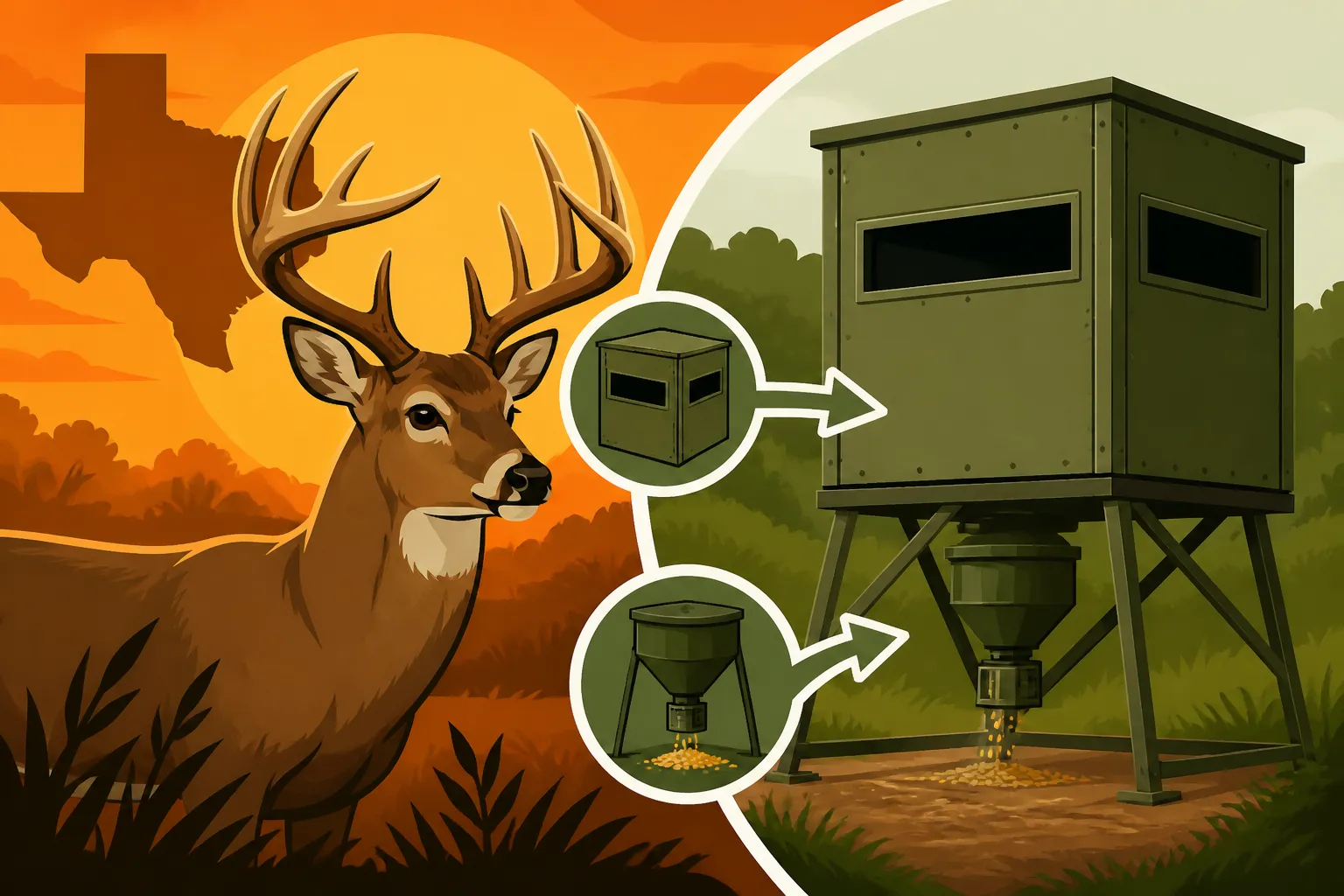
Not all feeders are created equal, and the type of feeder you're using will directly influence your blind placement and height. A standard spin-cast feeder that slings corn for a wide radius will require a different approach than a gravity feeder or a protein feeder.
For a spin feeder, you'll want to ensure your blind's shooting lanes encompass the primary feeding area where the corn lands, not just the feeder itself. If you're using a protein feeder, which deer typically browse directly from, your blind might need to be positioned closer, and potentially higher, to get good sightlines to the actual feeding ports. Consider the height of your feeder, too. If you have a tall feeder, like those often used for protein or to deter hogs, you might need an elevated blind to shoot safely over it without your bullet impacting the feeder itself. Thinking through these details helps you plan a comprehensive setup, from your Best Deer Feeder Setup for Texas to the perfect blind.
Step-by-Step Guide to Optimal Box Blind Placement
Alright, you've done your homework, scouted your spot, and checked the rules. Now it's time to get that box blind situated. This isn't just about dropping it off; it's about strategic placement that works with nature, not against it.
Orienting for Wind and Sun
The cardinal rule of blind placement, especially in Texas, revolves around wind direction. The prevailing winds in much of Texas tend to be from the south or southeast. You want your blind positioned so that this prevailing wind blows your scent away from the primary approach and feeding area of the deer. This means setting your blind downwind of where you expect deer to come from and where the feeder is. For instance, if the wind generally blows from the south, you'd want your blind to be north of the feeder, shooting south. This ensures your scent is carried behind you, away from the animals.
However, wind is rarely perfectly consistent. You'll also encounter thermals, especially in the mornings as the air warms and rises, and in the evenings as it cools and falls. Observe how these micro-currents affect scent dispersal in your chosen spot. On top of scent, consider the sun. Early morning and late afternoon sun can blind you, making it impossible to see or aim effectively. Avoid placing your primary shooting windows directly facing east or west. North or south-facing windows are generally preferable to minimize direct glare, allowing you to stay focused and keep those windows open without the sun beating directly into your eyes.
Distance and Angle to the Feeder
This is a critical balance between effective range and clear visibility. For rifle hunters, a distance of 75 to 150 yards from the feeder is often ideal. This range is comfortable for most calibers, allows for good target acquisition, and isn't so close that every rustle of your clothing will spook an animal. For bowhunters, the distance is much more personal and depends on your comfort and proficiency, but typically 20 to 40 yards is the sweet spot. You need to ensure you have clear shooting lanes at your chosen distance, free of brush or limbs that could deflect an arrow or bullet.
Think about the angle, too. You don't want to be directly behind the feeder, as the feeder itself can obscure parts of the deer, especially vital areas. Position your blind slightly to the side, allowing you to shoot at a broadside or quartering-away angle, which offers the most ethical shot placement. Visualize the animal at the feeder and ensure your shooting windows provide unobstructed views of its vitals from your planned shooting position within the blind. It's often helpful to walk the distance and visualize from inside the blind.
Camouflage and Concealment
Once the blind is in place, it needs to disappear. A brightly colored or new-looking blind will stick out like a sore thumb. Even if it's painted camo, a rigid, blocky structure can alert wary deer. The goal is to break up its outline and integrate it into the natural surroundings.
Use local vegetation: cut branches, brush, and small trees to place around the blind. Think about layering – heavier brush at the bottom to hide the base, and lighter, leafy branches around the middle and top to soften the edges. Even better, if you can tuck the blind into an existing clump of mesquite or prickly pear, you're ahead of the game. For blinds with reflective surfaces, you might consider painting them with a matte, non-reflective camo paint that blends with the local Texas flora. Remember, deer are used to seeing trees and bushes, not perfect squares. The more you can make your blind look like a natural part of the landscape, the more comfortable deer will be approaching your feeder.
Elevating Your Box Blind: Pros, Cons, and Methods
There's a reason you see so many elevated box blinds across the Texas landscape. While they certainly offer distinct advantages, they also come with their own set of challenges. Deciding whether to elevate your blind is a crucial decision that impacts your hunting experience, safety, and budget.
Advantages and Disadvantages of Elevated Blinds
Let's start with the good stuff. The biggest advantage of an elevated blind is often superior visibility. Lifting you above the low-lying brush and undulating terrain of places like the Hill Country or South Texas allows you to see further and spot deer approaching your feeder from a greater distance. This extra time can be crucial for identifying the animal, preparing your shot, and managing your excitement. Another huge plus is scent control. The higher you are, the better your chances of your scent dispersing into the air currents above the deer's primary detection zone, reducing the likelihood of them catching your odor. Elevated blinds also tend to be safer from curious livestock or feral hogs that might investigate a ground blind.
However, it's not all sunshine and roses. The most obvious disadvantage is cost and complexity. Building or buying an elevated platform adds significantly to the expense and requires more effort to set up. Safety is another concern; climbing into an elevated blind, especially in the dark or inclement weather, requires more caution. You'll need a stable ladder or stairs. Furthermore, an elevated blind can be more susceptible to strong Texas winds, demanding a more robust anchoring system to prevent it from tipping over. Also, it can be harder to shoot at very close range or directly underneath if your feeder is very close to the blind base.
Platform Construction and Stability
If you've decided to go elevated, don't skimp on the platform. This is literally the foundation of your hunting success and, more importantly, your safety. Many hunters opt for sturdy wooden platforms built with treated lumber, often 4x4s for legs and 2x6s or 2x8s for the frame. Steel platforms, while more expensive, offer superior durability and resistance to rot and pests. The height should be chosen based on your visibility needs, typical feeder height, and comfort level. A common height is 5-10 feet, but some can go much higher.
Regardless of material, stability is paramount. The legs must be securely anchored to the ground, especially in areas prone to high winds or soft soil. Concrete footings, earth anchors, or even guy wires can provide the necessary stability. Diagonal bracing on the legs is absolutely essential to prevent lateral sway. Imagine a strong gust of wind hitting your blind; without proper bracing, it could become a dangerous rocking chair. Ensure the platform is level, as an unlevel blind can be incredibly uncomfortable and affect your shooting accuracy. Always overbuild rather than underbuild; a little extra investment in materials now can prevent a catastrophic failure later.
Access and Safety Features
Getting into and out of an elevated blind safely, especially with your hunting gear, is a crucial design consideration. The most common access method is a ladder, but not just any ladder will do. It needs to be sturdy, securely attached to the platform, and ideally have handrails. Steep, flimsy ladders are a fall waiting to happen. Consider the angle – a less vertical ladder with wider steps or rungs is much safer and easier to navigate, especially for older hunters or those with limited mobility.
For even better access and stability, some hunters opt for a small set of stairs with a handrail. This is particularly useful if you're hunting with kids or if you anticipate needing to carry more gear up and down. Inside the blind, consider a small landing or porch area at the top of the ladder/stairs, providing a safe transition space. Ensuring that all access points are solid, free of loose parts, and regularly inspected for wear and tear will keep you hunting safely for years to come. Remember, a broken leg isn't worth a trophy buck.
Maximizing Your Box Blind Over a Feeder for Success
Once your box blind is erected and strategically placed, the real fun of customizing it begins. This is where you transform a simple structure into a functional, comfortable, and deadly effective hunting station tailored to your personal style and the specific challenges of Texas hunting.
Interior Setup and Comfort Enhancements
Comfort isn't just about feeling good; it's about staying focused for hours on end. Inside your box blind, thoughtful planning can make a world of difference. Start with seating: a comfortable, swiveling chair is a game-changer. Look for one that allows you to quietly adjust your position and access all shooting windows without major movement. Chairs with armrests can provide extra support when aiming. Add a simple carpet or foam mat to the floor to dampen sound, keep your feet warmer, and add cushioning.
Shelving and hooks are incredibly useful for organizing your gear. A small shelf under a window for your rangefinder, binoculars, or a thermos keeps essentials within easy reach. Hooks for your backpack, calls, or extra layers reduce clutter. Consider a small, portable heater for those frigid December mornings; just ensure it's safe for enclosed spaces and properly ventilated. Finally, silent window mechanisms are a must. Nothing ruins a quiet morning faster than a squeaky blind window opening. Many quality blinds, like those from Ranch King or Atascosa, come with silent sliding or hinged windows, but you can also add weather stripping or felt to dampen sound on existing windows.
Scent Management Strategies
Even with a box blind, scent control is an ongoing battle, especially against the keen noses of deer like the South Texas Trophy Whitetail. Your blind helps, but it's not a magic bullet. Start by practicing good hygiene; shower with scent-eliminating soap before heading to the blind, and store your hunting clothes in scent-free bags or containers. Dress in layers that can be removed as temperatures rise, minimizing sweat.
Before entering the blind, spray down your boots with a scent eliminator, and avoid walking through areas where you've previously left heavy scent trails. Inside the blind, minimize human food smells, and consider using a small, quiet ozone generator, like those from Ozonics, to further neutralize odors. Be mindful of how you handle gear; petroleum products, bug sprays, and even some sunscreens can carry strong human odors. The goal is to leave as little of your own biological signature behind as possible, making it harder for deer to know you're there.
Trail Cameras and Monitoring
A strategically placed trail camera near your feeder, combined with your box blind, forms a powerful scouting and hunting system. Cameras provide invaluable intelligence on what animals are visiting, when they're visiting, and what their patterns are. Setting up a trail camera allows you to How to Pattern Bucks With Trail Cameras without constantly disturbing the area around your feeder.
Position your camera to capture the main feeding area, but also consider placing one on an approach trail to see what's coming and going. Cellular trail cameras, like those from Tactacam or Moultrie, are particularly useful as they send images directly to your phone, allowing you to monitor activity in real-time without having to visit the feeder and leave your scent. Check your camera regularly (or remotely if it's cellular) to identify target animals, learn their routines, and adjust your hunting times accordingly. This intelligence helps you maximize your time in the blind, ensuring you're there when the mature bucks are most likely to show up.
Common Mistakes to Avoid and Troubleshooting Tips
Even with the best intentions and meticulous planning, things can go sideways. Texas hunting throws a lot of curveballs, and anticipating common pitfalls can save you a lot of grief and frustration. Learning from others' mistakes, and developing a troubleshooting mindset, is key to long-term success.
Overlooking Wind Shifts and Thermal Currents
One of the biggest blunders hunters make is assuming the wind will always blow from the same direction. In Texas, especially during seasonal transitions, wind patterns can be incredibly fickle. A morning south wind can easily shift to the north or west by afternoon, completely compromising your scent control if your blind isn't strategically placed for all possibilities.
Always check a reliable wind forecast before heading out, but be prepared for changes. Have backup plans or understand how a wind shift might affect your approach. Sometimes, moving to a different stand or even a ground setup for a particular sit might be necessary. Pay close attention to thermal currents, too. In the morning, as the sun rises, air flows downhill into valleys, carrying scent. In the evening, as the air cools, it flows uphill. If your blind is in a low-lying area, these thermals can easily betray your presence. Learning to read and anticipate these subtle air movements around your specific blind location will significantly improve your stealth.
Neglecting Maintenance and Security
You've invested time and money in your box blind and feeder, so protecting that investment is crucial. Neglecting routine maintenance can lead to unexpected failures or rapid deterioration. Regularly inspect your blind for leaks, especially around windows and the roof. Seal any cracks or gaps with caulk to keep out rain, insects, and rodents. Check the stability of your platform and anchoring points, particularly after strong winds or heavy rains. A wobbly blind is not only unsafe but also noisy.
Pest control is also vital. Wasps love to build nests inside blinds, and mice or rats can chew through wiring or cushions. Consider placing mothballs or rodenticides (safely out of reach of children or non-target animals) to deter pests. Critter-proof your feeder to prevent squirrels, raccoons, and especially feral hogs from emptying it prematurely. You can find useful tips on How to Keep Hogs Out of Your Deer Feeder to protect your investment. Finally, security is a real concern in many areas. Consider adding locks to your blind door and securing your feeder with chains or cables to prevent theft or tampering. A small trail camera pointed at your blind itself can also deter unwanted visitors.
Patience and Adaptation
This is perhaps the most important tip of all. You can have the most perfectly placed, comfortable, and camouflaged box blind over the best feeder, but if you lack patience, you'll likely come home empty-handed. Deer, especially mature ones, don't operate on our schedule. There will be slow days, days when the wind swirls, and days when they just don't show up. Your setup provides the optimal conditions, but it doesn't guarantee instant success.
Be willing to adapt. If your trail camera intel suggests deer are shifting their patterns, don't be afraid to adjust your feeder times or even consider moving your blind if a more advantageous spot becomes apparent. Sometimes, deer will simply avoid a new structure for a while, even a well-camouflaged one. Give them time to get accustomed to its presence. Learn from every sit – what worked, what didn't, how the wind truly behaved, where deer preferred to approach. Every observation adds to your knowledge and refines your strategy, making you a more effective hunter in the long run.
| Feature | Elevated Box Blind | Ground Box Blind |
|---|---|---|
| Visibility | Excellent; often above brush, longer sightlines | Good; limited by immediate terrain and brush |
| Scent Control | Very good; scent disperses higher in air | Fair to good; more susceptible to ground-level scenting |
| Stealth | Good; minimal movement detection, but can be visually obvious | Very good; blends easily with natural cover, low profile |
| Comfort | Excellent; protected from elements, stable shooting | Excellent; protected from elements, stable shooting |
| Cost | Higher (blind + platform materials & labor) | Lower (blind only, or minimal platform if desired) |
| Setup Difficulty | High; requires construction, heavy lifting, safety checks | Low to moderate; easier to position and secure |
| Stability | Requires robust anchoring and bracing for wind | Inherently more stable due to ground contact |
| Access/Safety | Requires ladders/stairs; potential for falls | Easy walk-in access; generally safer entry/exit |
| Target Acquisition | Excellent for mid-range shots, shooting over brush | Excellent for closer shots, can be limited by brush |
| Maintenance | Platform inspection crucial, pest control | Blind integrity, pest control |
Disclaimer
Hunting involves inherent risks, including but not limited to those associated with firearms, wildlife, and outdoor conditions. Always prioritize safety, follow all local and state regulations, and obtain proper landowner permission. The information provided in this guide is for informational purposes only and should not be considered a substitute for professional instruction or direct consultation with wildlife authorities.