Best Hunting Method for Rabbit in Texas
Most hunters in the Lone Star State are so laser-focused on big game that they overlook one of the most exciting, fast-paced, and rewarding traditions we have: rabbit hunting. Whether you're dealing with overgrown brush on a lease or public land thickets, finding and hitting these speedsters is harder than it looks. This guide breaks down the most effective methods to fill your bag and enjoy the Texas outdoors.
Understanding the Texas Rabbit Landscape
Texas is home to several species that provide year-round action, but if you want to be successful, you have to know who you’re chasing and where they hide. We primarily deal with two types of cottontails—the Eastern Cottontail and the Desert Cottontail—along with the ubiquitous Black-tailed Jackrabbit. The Eastern variety loves the thick, tangled briars of the Pineywoods and the Post Oak Savannah. If you’ve ever tried to walk through a blackberry thicket in East Texas, you’ve probably walked right past a dozen of them without even knowing it.
The Desert Cottontail and the Jackrabbit are more common as you head west into the Hill Country and out toward the Trans-Pecos. These guys are masters of using cactus and greasewood for cover. A common frustration for new hunters is "rabbit eyes." You’ll scan a patch of brush and see nothing but shadows, only to have a rabbit bolt from under your feet. This is because their camouflage is perfectly evolved for the Texas dirt. Learning to look for the "shine" of an eye or the horizontal line of a back rather than a whole rabbit is the first step toward a full game bag. Since these animals are often hunted alongside other small game, you might find my guide on the Best Hunting Method for Squirrel in Texas useful for those days when the woods are full of activity.
The Jump Shooting Method with a Shotgun
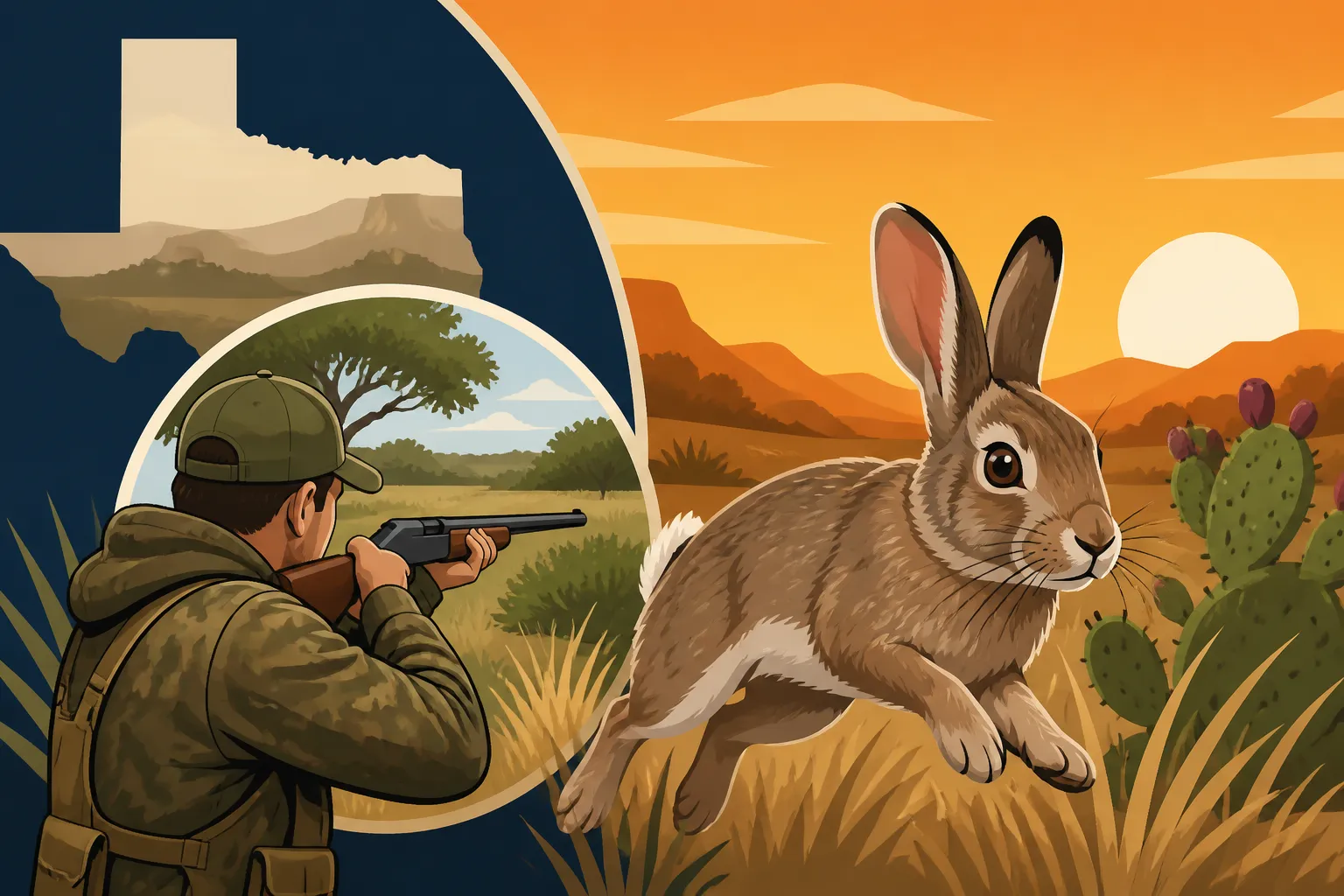
If you ask any old-timer in Texas what the best hunting method for rabbit is, they’ll likely describe jump shooting. This is the most active and arguably the most fun way to hunt. It involves walking through likely cover—brush piles, fallen logs, or thick grassy fence rows—and literally "jumping" the rabbit from its seat. In Texas, especially on a Texas Lease, rabbits love to tuck into those messy corners where the tractor can’t reach.
To do this effectively, you need a shotgun. A 20-gauge is the "Goldilocks" gun for this—not too heavy to carry all day, but with enough punch to clear some brush. When a rabbit flushes, you usually have about two seconds to mount your gun and fire before it vanishes into the next thicket. It’s high-adrenaline and requires quick reflexes. Many hunters prefer to hunt in pairs, walking about twenty yards apart to cover more ground. Just make sure everyone is wearing plenty of hunter orange. You can find a wide variety of affordable orange vests and Best Gear for Rabbit on a Texas Lease essentials like brush pants on Amazon to protect your legs from the thorns.
Why the "Pause" is Your Best Friend
One of the best-kept secrets of jump shooting is the "forced flush." When you walk through the brush, a rabbit’s instinct is to stay perfectly still and let you pass. If you walk at a steady pace, they’ll often let you walk right by them. The trick is to walk five or ten steps and then stop for five seconds. That silence unnerves them. They think you’ve spotted them and are about to pounce, which causes them to panic and bolt. This tactic works incredibly well in the thick cedar breaks of the Hill Country where visibility is low.
Choosing the Right Shot Size
For Texas cottontails, #6 or #7.5 shot is standard. You want enough pellets to ensure a clean kill through some light grass, but you don't want to destroy the meat. If you're out in the Panhandle chasing those big Jackrabbits, you might want to move up to #4 or #5 shot, as they are significantly tougher and can take a hit that would stop a cottontail in its tracks. Always remember to check the Texas Rabbit Season Dates 2026 and local regulations, though in most of Texas, rabbits are a year-round affair on private land.
Precision Rimfire Hunting and Still Hunting
If you prefer a quieter, more methodical approach, still hunting with a .22 LR or a .17 HMR is the way to go. This is the "thinking man's" rabbit hunt. Instead of crashing through the brush, you’re moving at a snail's pace along the edges of food plots, old ranch roads, or senderos. This is particularly effective during the first hour of light or the last hour before sunset when rabbits come out to feed on the tender greens.
Using a rimfire rifle allows you to take headshots, which preserves 100% of the delicious meat. However, this method requires a lot of patience. You aren't looking for a running rabbit; you're looking for a rabbit that thinks it's hidden. Look for the twitch of an ear or the curve of a haunch tucked under a prickly pear pad. This is a great way to introduce kids to hunting because it teaches them how to use binoculars and how to move quietly. If you're looking for more ways to get the family involved, checking out Texas Game Animals: What You Can Hunt is a great starting point for a season-long plan.
Using the Terrain to Your Advantage
In the Rolling Plains or the South Texas brush, rabbits will often sit in the mouth of their burrows or under a low-hanging mesquite limb to stay out of the sun. If you can find a high spot or a small ridge overlooking a wash, you can spend an afternoon glassing the opposite bank. A quality pair of binoculars, which you can easily find on Amazon for any budget, will help you pick out the subtle differences in texture that betray a rabbit's position.
The Best Time for Rimfire Tactics
The "golden hour" is real for rabbit hunters. On a typical Texas afternoon, when the heat starts to break, rabbits will start hopping out from the heavy cover to the edges of the grass. If you can position yourself with the sun at your back, you’ll have a clear view of the edges while remaining relatively hidden in the shadows. This is also a good time to keep an eye out for other species, and you should always be aware of the Annual Public Hunting Permit: What It Covers if you're hunting on state-managed lands rather than a private ranch.
Comparison of Rabbit Hunting Methods
| Feature | Jump Shooting | Still Hunting (Rimfire) |
|---|---|---|
| Primary Firearm | 12 or 20 Gauge Shotgun | .22 LR or .17 HMR Rifle |
| Pace of Hunt | Fast / Active | Slow / Methodical |
| Ideal Terrain | Thick Briars, Brush Piles | Edges, Roads, Open Woods |
| Meat Preservation | Moderate (Pellets) | Excellent (Headshots) |
| Best Time of Day | Mid-morning to Mid-afternoon | Dawn and Dusk |
| Skill Required | Reflexes and Instinct | Patience and Marksmanship |
Tactical Gear for the Texas Rabbit Hunter
Texas is not a kind environment for the ill-prepared. If you're going to be diving into brush piles, you need the right gear. First and foremost: snake protection. Even in the winter, a warm Texas day can bring out a rattlesnake. I never go into the brush without my Best Snake Boots for Texas Hunting or at least a pair of heavy-duty snake gaiters.
Your clothing needs to be "briar-proof." Standard denim will get shredded by South Texas thorns or East Texas dewberry vines. Look for upland hunting pants that have a reinforced nylon facing. These can be found on Amazon and are worth every penny when you're crawling through a thicket. Additionally, carrying a small, sharp knife is essential for field dressing. You can find many options for the Best Hunting Knife for Field Dressing that are compact enough to fit in a pocket but sturdy enough for small game.
Staying Hydrated and Cool
Never underestimate the Texas heat, even in the "off-season." When you're walking miles of fence line, you're going to sweat. A small hydration bladder or a couple of water bottles in your game vest are mandatory. If you are successful, you need to manage your harvest quickly. Because of our temperatures, meat can spoil fast. Knowing How to Cool a Deer Fast in Texas Heat involves many of the same principles you'll use for rabbits—get the hide off and the internal temperature down as quickly as possible. A small portable cooler in your truck, stocked with ice, is the best way to ensure your rabbit stew is top-quality.
Game Bags and Vests
A dedicated game vest is much better than a backpack for rabbit hunting. The blood-proof liners in the back allow you to carry your harvest hands-free while you keep hunting. Many of these vests also have front pockets designed specifically for shells, making it easy to reload on the fly. You can find basic, reliable game vests on Amazon that will last you a decade of seasons.
Safety and Ethics in the Field
Rabbit hunting is a blast, but it comes with responsibilities. Because you are often hunting in thick cover, target identification is paramount. Never fire at a "movement" in the brush. It could be another hunter, a farm dog, or a non-target species. In Texas, we have a lot of "non-game" animals that look similar from a distance.
Furthermore, always be aware of your backdrop. Because rabbits are low to the ground, your shots are often angled downward, which is generally safe, but if you're hunting near property lines or ranch buildings, you need to be extremely careful about where that shot is going. This is especially true if you are using a rimfire rifle, as a .22 bullet can travel a surprising distance if it ricochets off a rock or hard Texas clay.
Disease Awareness: Tularemia
While rare, it’s important to be aware of Tularemia, also known as "rabbit fever." As a rule of thumb, only hunt rabbits after the first hard freeze of the year. The cold weather helps kill off the parasites that carry the disease. When you are cleaning your rabbits, look for white spots on the liver. If you see them, discard the carcass and wash your hands thoroughly. Most hunters wear latex or nitrile gloves while cleaning game to be extra safe. You can pick up a box of these gloves on Amazon for a few dollars, and they make the whole process a lot cleaner.
Processing and Cooking Your Texas Catch
Once you've mastered the best hunting method for rabbit in Texas and filled your bag, the real reward begins in the kitchen. Rabbit is a lean, high-protein meat that tastes a bit like a more flavorful version of chicken. In Texas, we love to fry it up like chicken, but it's also incredible in a long, slow braise or a "Hasenpfeffer" style stew.
Cleaning a rabbit is actually quite simple. You can "skin" a rabbit in about sixty seconds once you know the technique. Make a small incision across the back, put your fingers in, and pull in opposite directions. The hide will slide off like a pair of socks. From there, it's just a matter of removing the entrails and breaking the carcass down into its five main pieces: two hind legs, two front legs, and the backstrap (saddle).
A Classic Texas Recipe
One of my favorite ways to prepare Texas cottontail is to soak the pieces in buttermilk and hot sauce overnight, then dredge them in seasoned flour and fry them in a cast-iron skillet. Serve it with some cream gravy and biscuits, and you’ll understand why so many of us spend our weekends in the briars. If you have a larger haul, rabbit also makes an excellent addition to a gumbo, especially if you've been out in East Texas.
Texas Hunting Regulations Disclaimer
This guide is intended for informational and educational purposes only. Hunting regulations in Texas, including seasons, bag limits, and legal means and methods, are subject to change annually by the Texas Parks and Wildlife Department (TPWD). Always consult the current version of the Texas Outdoor Annual and ensure you have a valid Texas hunting license with the appropriate endorsements before heading into the field. Private land hunting may have different rules regarding non-game species, but you must always adhere to state law and safety requirements. Participation in hunting involves inherent risks; always prioritize safety and hunt ethically.