High-Fence vs Low-Fence Hunting in Texas
The debate between high-fence and low-fence hunting in Texas often stirs up strong opinions, leaving many hunters feeling confused about which experience is truly right for them. It’s a common frustration to hear conflicting viewpoints, making it hard to decide where to invest your time, money, and passion. This comprehensive guide will meticulously break down the realities of both high-fence and low-fence hunting in Texas, helping you understand the nuances, benefits, and challenges of each so you can make an informed choice that aligns with your hunting philosophy.
Understanding the Basics: What Defines High-Fence and Low-Fence Hunting?
Before we dive into the nitty-gritty of the hunting experience, it’s crucial to understand the fundamental distinctions between high-fence and low-fence operations in Texas. The fence itself is more than just a barrier; it represents a philosophy of land and wildlife management that profoundly impacts the hunt.
The High-Fence Reality: Controlled Environments
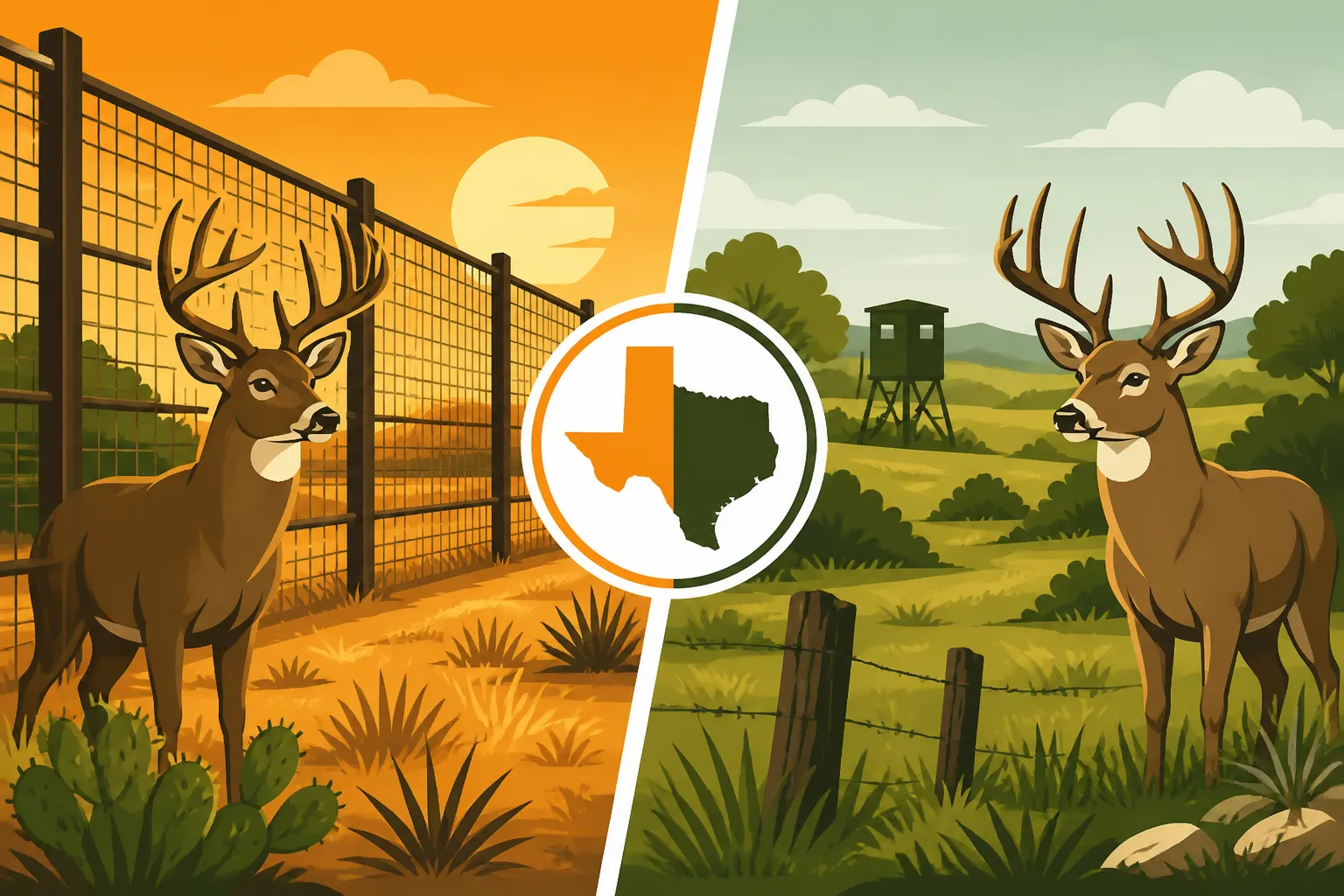
When we talk about high-fence hunting, we’re referring to properties enclosed by a perimeter fence that is typically 8 feet or taller, designed to prevent large game animals, particularly deer and exotic species, from entering or exiting. These aren't just a few strands of barbed wire; these are substantial, often professionally constructed fences. The primary purpose of such a fence is to create a controlled environment where landowners can intensively manage their wildlife populations. This management often involves introducing specific genetics, implementing rigorous protein feeding programs, maintaining optimal buck-to-doe ratios, and even providing veterinary care.
For example, on a high-fence ranch in the Texas Hill Country, a landowner might invest heavily in superior genetics from proven trophy deer, bringing in fawns or even adult deer from other operations to introduce new bloodlines. They might use specialized protein feeders, like those from Boss Buck or Outback Wildlife Feeders, to ensure the deer receive a year-round nutritional boost far beyond what natural forage alone could provide. The result is often a higher density of deer, particularly bucks, that grow to impressive antler sizes due to optimized nutrition and age structure. This setup allows for very precise management goals, whether that’s growing Boone & Crockett class whitetail or managing specific exotic herds like axis deer or aoudad.
The Low-Fence Ideal: Free-Range Pursuits
In contrast, low-fence hunting, often referred to as "free-range" hunting, takes place on properties where game animals can move freely across vast landscapes, encountering natural challenges and migrating as instinct dictates. These properties might have traditional low cattle fences, but these are no barrier for deer, hogs, or other wildlife. This means the deer you're pursuing have traversed miles, encountered countless other animals, and survived purely on the merits of their natural instincts and the local habitat.
Consider a sprawling low-fence ranch in South Texas, perhaps in the famed Brush Country of Webb County. Here, a trophy buck has grown up entirely on native browse, navigating dense mesquite and prickly pear. His genetics are purely local, and his survival has depended on evading coyotes, enduring droughts, and outsmarting other hunters. When you hunt such a property, you’re engaging with nature on its own terms. You’re not just hunting a deer; you’re hunting a product of the wild, untamed Texas landscape. The thrill comes from the inherent uncertainty and the deep connection to the land and its truly wild inhabitants. The success of a hunt here is often a testament to your scouting prowess, understanding of deer movement, and ability to adapt to changing conditions.
The Experience of the Hunt: What to Expect in the Field
The type of fence on a property doesn't just dictate management; it fundamentally shapes the hunting experience itself. From the level of challenge to the strategies employed, high-fence and low-fence hunts offer distinct adventures.
Challenge and Strategy in Low-Fence Hunting
Low-fence hunting embodies the traditional "fair chase" ethic for many Texas hunters. The challenge is paramount, rooted in the uncertainty of where and when a particular animal might appear. Success often hinges on extensive pre-season scouting, understanding game trails, water sources, and bedding areas. You might spend countless hours poring over satellite imagery on apps like onX Hunt, trying to pinpoint ideal stand locations or potential travel corridors. Setting up trail cameras well in advance is critical to patterning bucks and identifying their movements. You can learn more about how to pattern bucks with trail cameras to maximize your chances.
Imagine a hunt in the vast, rolling plains of West Texas for a mature mule deer buck. You might spend days glassing canyon rims, spot-and-stalk hunting across rugged terrain, relying on your optics and tracking skills to locate an animal that could be miles away at any given moment. The strategy involves not just finding a deer, but outsmarting an animal that has survived purely on its wits. It requires patience, adaptability, and a deep understanding of the local ecosystem. The satisfaction of harvesting a deer on a low-fence property, particularly a mature buck, is incredibly profound because you know that animal has truly earned its stripes in the wild.
Guaranteed Opportunity and Management in High-Fence Hunting
High-fence hunting often shifts the focus from the uncertainty of finding an animal to the precision of selecting a specific animal within a managed population. While some might dismiss it as a "canned hunt," the reality is that many high-fence operations in Texas are run with meticulous management plans, focusing on genetic improvement, herd health, and sustainable harvesting. The "challenge" aspect becomes more about ethical shot placement, field judging, and executing the hunt effectively, often with the assistance of a seasoned guide.
Consider a guided whitetail hunt on a high-fence ranch in Central Texas. You'll likely be shown photos or videos of specific bucks, allowing you to choose the type of trophy you're looking for. Guides will have a deep knowledge of the property and the animals' habits, often putting you in blinds or stands over protein feeders where specific target bucks are known to frequent. The hunt might involve early morning and late afternoon sits, with the expectation of multiple sightings. The high success rates and the ability to target a specific class of animal are significant draws. While the "thrill of the chase" in the traditional sense might be diminished, the experience of observing and harvesting a magnificent, well-managed animal can be incredibly rewarding, especially for those seeking a specific trophy or a family-friendly hunting experience where success is highly probable.
Costs and Investment: Financial Considerations for Texas Hunters
Hunting in Texas, regardless of the fence type, requires an investment, but the financial structure and the overall cost can differ significantly between high-fence and low-fence opportunities. Understanding these differences is key to budgeting your hunting adventures.
Budgeting for a Low-Fence Lease or Day Hunt
Low-fence hunting often involves either securing a season-long lease or booking day hunts with private landowners or outfitters. The cost of a hunting lease in Texas can vary wildly depending on the region, acreage, amenities, and game quality, but it generally offers a more extended period of access. For a year-long deer lease in the Hill Country, you might pay anywhere from a few hundred to several thousand dollars per gun, giving you the freedom to scout, set up feeders, and hunt throughout the designated deer season. You can explore the details of finding a good hunting lease in Texas: complete guide (Cost & How to Find).
Day hunts on low-fence properties might be more affordable upfront, typically ranging from a few hundred to over a thousand dollars per hunter per day, depending on the species and services included. These often require less commitment but also provide less flexibility. Beyond the lease or day hunt fee, you'll need to factor in your personal gear (firearms, optics, camo), travel expenses, licenses, and potentially corn or protein for feeders. While the per-animal cost isn't fixed, a successful low-fence hunt represents the culmination of all these investments, often spread out over many weeks or months of effort. For example, if you're chasing the impressive South Texas Trophy Whitetail: Brush Country Bucks, the value isn't just in the antler size, but in the entire journey and the raw, unmanaged experience.
Understanding the Price Tag of High-Fence Operations
High-fence hunts typically operate on a "per-animal" or "package" basis, meaning the cost is directly tied to the type and size of the animal you harvest, or it’s an all-inclusive price for a specific experience. These hunts are generally more expensive than low-fence day hunts, reflecting the significant investment in land, genetics, feed, and professional guiding services.
For a trophy whitetail buck on a premier high-fence ranch, you could expect to pay several thousand to tens of thousands of dollars, depending on the buck's estimated score. Exotic hunts for species like axis deer or blackbuck antelope also fall into this category, with prices varying based on horn length and rarity. These packages often include lodging, meals, guide services, and initial game processing. For a hunter seeking a guaranteed opportunity at a specific class of animal within a shorter timeframe, the higher price tag can be justified by the increased probability of success and the quality of the overall experience. While it's a larger upfront cost, it often consolidates many expenses into one package, simplifying the budgeting process for a specific trophy.
Here's a quick comparison of potential costs and experiences:
| Feature | Low-Fence Hunting | High-Fence Hunting |
|---|---|---|
| Cost Structure | Per season lease or per day hunt | Per animal/package hunt |
| Typical Range | Lease: $500 – $10,000+ per gun/year Day: $300 – $1500 per day |
$3,000 – $30,000+ per trophy animal |
| Primary Goal | Fair chase, extended season, wild experience | Trophy management, high success rate, specific animal |
| Time Commitment | Often requires multiple trips, scouting, maintenance | Usually 2-4 day structured hunt |
| Game Quality | Varies widely by region and natural factors | Consistent, often superior genetics/antlers |
| Management | Natural selection, habitat improvement | Intensive feed, genetics, herd health, age structure |
| Success Rate | Highly variable, dependent on skill and luck | Generally very high for target animals |
Ethical Debates and Hunter Perception
The discussion of high-fence versus low-fence hunting often quickly veers into ethical territory, sparking passionate debates among hunters and non-hunters alike. It's important to approach this topic with an understanding of the different perspectives that shape these opinions.
Fair Chase and the Spirit of Hunting
For many traditionalists, the concept of "fair chase" is the cornerstone of ethical hunting. Fair chase implies that the hunter and the hunted should have a reasonable chance of success, and that the animal should have a fair opportunity to evade the hunter. In this view, low-fence hunting, where animals can roam freely and escape beyond property lines, best embodies this ideal. The natural obstacles, the extensive scouting, and the sheer effort required to locate and harvest an animal in a truly wild setting are seen as integral to the "spirit of hunting."
Critics of high-fence hunting sometimes argue that enclosing animals within a fence removes the element of fair chase, reducing the hunt to little more than shooting fish in a barrel. They might use terms like "canned hunt" to describe experiences where success is virtually guaranteed due to the confined space and intensive management. This perspective often stems from a deep respect for the animal's wild nature and the desire for a challenge that tests a hunter's skills against those instincts. For these hunters, the satisfaction comes not just from the kill, but from the process of pursuing a truly wild animal in its natural habitat. Many believe that the true essence of White-Tailed Deer Hunting in Texas: Complete Guide lies in this unfenced, unpredictable pursuit.
Conservation and Management: Different Approaches
Conversely, proponents of high-fence hunting often argue that their operations contribute significantly to conservation efforts through intensive wildlife management. By controlling genetics, providing year-round nutrition (such as the protein feeding deer for bigger antlers), and carefully managing age structures and herd health, high-fence ranches can produce exceptionally healthy animals with impressive antler growth. This level of management can lead to a greater understanding of deer biology and often generates substantial revenue that can be reinvested into habitat improvement, predator control, and disease monitoring.
Many high-fence operators see their work as a form of advanced wildlife husbandry, allowing them to manage populations to a degree not possible in a free-range setting. They argue that this intensive management leads to healthier, more robust herds and provides economic incentives for landowners to maintain wildlife habitat, rather than converting it to other uses. They might point out that in many areas, even low-fence hunting occurs over feeders or within relatively small, fragmented tracts of land, blurring the lines of what constitutes "truly wild." Furthermore, high-fence operations are often crucial for the management and breeding of various exotic species in Texas, such as axis deer or aoudad sheep, many of which thrive in the Texas climate and provide year-round hunting opportunities. This approach, they contend, is a modern and effective way to ensure the future of hunting and the health of specific animal populations.
Game Quality and Management Practices
The quality and characteristics of the game animals you encounter are perhaps the most tangible difference between high-fence and low-fence properties, directly influenced by the distinct management practices each employs.
Natural Selection and Genetics in Low-Fence Herds
On low-fence properties, deer populations are largely shaped by natural selection, regional genetics, and environmental factors. The bucks that grow into impressive trophies do so because they possess superior native genetics and have successfully navigated the challenges of their wild environment – finding food, evading predators, surviving harsh weather, and escaping other hunters. The deer density and antler quality can vary significantly from one year to the next, depending on rainfall, forage availability, and hunting pressure.
For instance, a low-fence lease in the Brush Country of South Texas might consistently produce larger-bodied, heavier-antlered deer due to the naturally rich browse and strong regional genetics. However, even here, a severe drought could impact antler growth for a season or two. Conversely, a property in the more arid Trans-Pecos region might have fewer, but often tougher, mule deer that have adapted to their sparse environment. Hunting these areas means you're pursuing an animal that is a pure product of its surroundings. The beauty of a low-fence buck often lies in its ruggedness and the story of its survival. Understanding the best time of day to hunt whitetail in Texas, combined with effective scouting, becomes paramount to finding these naturally magnificent animals.
Intensive Management and Trophy Potential in High-Fence Ranches
High-fence operations, by virtue of their controlled environments, can implement intensive management strategies that directly influence game quality and trophy potential. The cornerstone of this approach is often genetic manipulation, where desirable traits (like large antlers) are amplified through selective breeding programs. Many ranches will introduce bucks or does with known genetics, or utilize artificial insemination, to enhance the trophy potential of their herd.
Beyond genetics, nutrition plays a massive role. Deer on high-fence properties often have access to high-quality protein feed year-round, supplementing natural forage and ensuring optimal growth. This, combined with careful age structure management (allowing bucks to reach full maturity before harvesting) and predator control, leads to a high density of healthy deer with impressive antlers. It’s not uncommon to see multiple bucks scoring well into the 150-200 inch range on a well-managed high-fence ranch. This level of control allows for predictable results and the consistent production of large trophy animals, which is a major draw for hunters seeking a specific type of experience. For those interested in this aspect, exploring topics like Protein Feeding Deer for Bigger Antlers can shed more light on these practices.
Making Your Decision: Which Type of Hunt is Right for You?
Ultimately, the choice between high-fence and low-fence hunting in Texas boils down to your personal preferences, ethical considerations, budget, and what you seek from a hunting experience. There's no single "right" answer, only the one that aligns best with your individual hunting philosophy.
Evaluating Your Priorities and Preferences
Before booking any hunt, take a moment to honestly assess what you prioritize. Are you driven by the pure challenge of fair chase, the unpredictability of the wild, and the satisfaction of earning a hard-won animal that has thrived solely on its natural instincts? If so, low-fence hunting is likely your calling. This might mean investing in a long-term lease, dedicating significant time to scouting, and being prepared for varying success rates. The experience of being out in the vast Texas wilderness, immersed in nature, might be as important as the harvest itself. You might enjoy the communal aspect of a lease or the solitary pursuit across thousands of acres.
On the other hand, if your priority is a high probability of success, the opportunity to target a specific class of trophy animal, or a more structured, comfortable hunting experience with amenities, then a high-fence operation might be a better fit. Perhaps you have limited time and want to maximize your chances, or you're introducing a new hunter to the sport and want to ensure a positive outcome. The focus here shifts to the quality of the animal and the guided experience, rather than the raw unpredictability of the chase. Many hunters appreciate the professional guidance and the knowledge that a particular trophy is within reach.
Researching and Finding Reputable Operations
No matter which path you choose, thorough research is paramount to a successful and ethical hunting experience. For low-fence options, scour reputable hunting lease websites, ask for references, and ideally, visit a property before committing. Look for landowners or lease managers who are committed to good habitat management, even without high fences. Apps like onX Hunt are invaluable for studying property boundaries, topo maps, and potential access points, whether it's a new lease or public land you're scouting. You can also research specific regions like the Edwards Plateau Hunting: Highest Deer Density for potential opportunities.
For high-fence hunts, seek out well-established outfitters with transparent pricing and clear descriptions of their management practices. Websites like GoHunt often feature reviews and detailed information on various hunting operations, including those in Texas. Ask about their breeding programs, feeding regimens, and what happens to the meat and capes after the harvest. Reputable high-fence operations will be proud to share their management philosophy and show you the quality of their animals and facilities. Always ensure you are dealing with professionals who prioritize ethical practices and the health of their herds, regardless of the fence line. Many hunting outfitters in Texas by region can provide insights into both types of experiences.
Disclaimer
The information provided in this guide is for general informational purposes only and does not constitute professional advice. Hunting regulations and conditions in Texas can change frequently. Always consult the latest Texas Parks and Wildlife Department (TPWD) Outdoor Annual and relevant local authorities before engaging in any hunting activities. Adherence to all applicable laws and regulations is the responsibility of the hunter.