How to Field Dress a Deer in Hot Weather
Man, there's nothing quite like the thrill of taking down a beautiful Texas whitetail or a monster hog, but that elation can quickly turn to dread when you look at the thermometer. Field dressing a deer in the brutal Texas heat isn't just an unpleasant chore; it's a race against the clock to save your hard-earned venison from spoiling. This guide is all about giving you the battle plan, the tools, and the know-how to beat the heat and ensure that delicious meat makes it to your dinner table, even when the mercury is trying to set new records.
The Unforgiving Texas Heat: Why Field Dressing Matters Now More Than Ever
Let's be real, Texas summers stretch long, and sometimes even our "cooler" fall and winter hunting seasons can throw us a curveball with unseasonably warm days. When you drop an animal, especially a large one like a deer, that clock starts ticking immediately. The internal body temperature of a deer is roughly 100-102 degrees Fahrenheit, and that heat, combined with the external ambient temperature, creates a perfect breeding ground for bacteria. Your main mission? Get that internal temperature down as fast as humanly possible.
The Urgency of Quick Action: Beating the Clock
Every minute counts when a deer hits the ground in warm weather. The animal's body acts like an insulated oven, holding in that core heat and accelerating bacterial growth. Imagine leaving a steak on the counter on a 90-degree day – you wouldn't do it, right? The same principle applies here, but on a much larger scale. The sooner you can get the hide off (though not always immediately practical in the field) and the guts out, the faster the carcass can begin to cool. This immediate action is the single most critical step in ensuring your venison is palatable and safe to eat. Delaying even a short while can mean the difference between prime cuts and a trip to the rendering plant. For instance, if the ambient temperature is in the 80s or 90s, you might only have a couple of hours before significant spoilage begins, especially in the hindquarters and along the spine, where heat tends to linger.
Identifying Spoilage Risks: Don't Let Your Harvest Go to Waste
Knowing what you're up against is half the battle. The primary culprits for spoilage are bacteria, which thrive in warm, moist environments. As these bacteria multiply, they produce toxins and enzymes that break down muscle tissue, leading to that tell-tale "gamey" smell and taste that no one wants. You'll start to notice a greenish discoloration, particularly around the body cavity and organs, as well as a sour smell. Bone souring, where bacteria penetrate deep into the meat near the bone, is also a serious concern that's hard to detect until processing. Additionally, flies and other insects are drawn to fresh carcasses like magnets, laying eggs that can quickly hatch into maggots, further contaminating the meat. This is why getting your deer gutted, cleaned, and into game bags is so vital, offering a layer of protection from external threats while the internal cooling process begins.
Assembling Your Hot Weather Field Dressing Toolkit
You wouldn't go into a gunfight with a water pistol, and you shouldn't head out for a hot weather hunt without the right field dressing gear. Being prepared is half the battle, and having the right tools at hand will make this sweaty, urgent task much more efficient and effective.
Essential Blades and Cutting Instruments
A good, sharp knife is paramount. Don't skimp here. You'll want at least one reliable skinning knife with a sturdy, ergonomic handle and a blade that holds an edge. Many hunters also carry a gut hook knife, which can make opening the abdominal cavity cleaner and safer by reducing the risk of puncturing intestines. A replaceable blade knife, like those offered by Havalon or Outdoor Edge, is also a fantastic option, ensuring you always have a razor-sharp edge without needing to constantly stop and sharpen.
Beyond knives, consider a small, compact bone saw. This can be invaluable for splitting the pelvis or cutting through the breastbone, further opening the cavity for maximum airflow, especially on larger deer. Don't forget a sharpener or extra blades! Nothing is more frustrating than a dull knife when you're racing against the heat. You'll also want heavy-duty rubber gloves – not just for hygiene, but to protect your hands from potential diseases and from getting covered in blood and gut contents, which is even more unpleasant in the heat.
Strategic Cooling and Transport Aids
This is where you really start fighting the heat. Game bags are an absolute non-negotiable for hot weather. Look for breathable, synthetic game bags that allow air circulation while protecting the meat from flies, dirt, and debris. Brands like TAG Bags or Koola Buck offer excellent options that can make a huge difference.
Next, you need a plan for cooling. Large coolers packed with ice are your best friends. If you're fortunate enough to have a game cart, it's worth its weight in gold for getting your deer quickly from the kill site to your truck or processing area, minimizing time spent dragging through the brush. For those longer hauls or unexpected warm spells, consider bringing a few frozen gallon jugs of water to place in the body cavity once field dressed, offering an initial blast of cold. Remember, every little bit helps in the battle against the heat. We discuss more about keeping your harvest cool in our guide on How to Cool a Deer Fast in Texas Heat.
Step-by-Step: Field Dressing a Deer in the Scorching Texas Sun
Okay, you've made the shot, the deer is down, and the sweat is already beading on your brow. Deep breath. Let's get to work quickly and efficiently.
The Critical First Cuts: Opening Up for Air
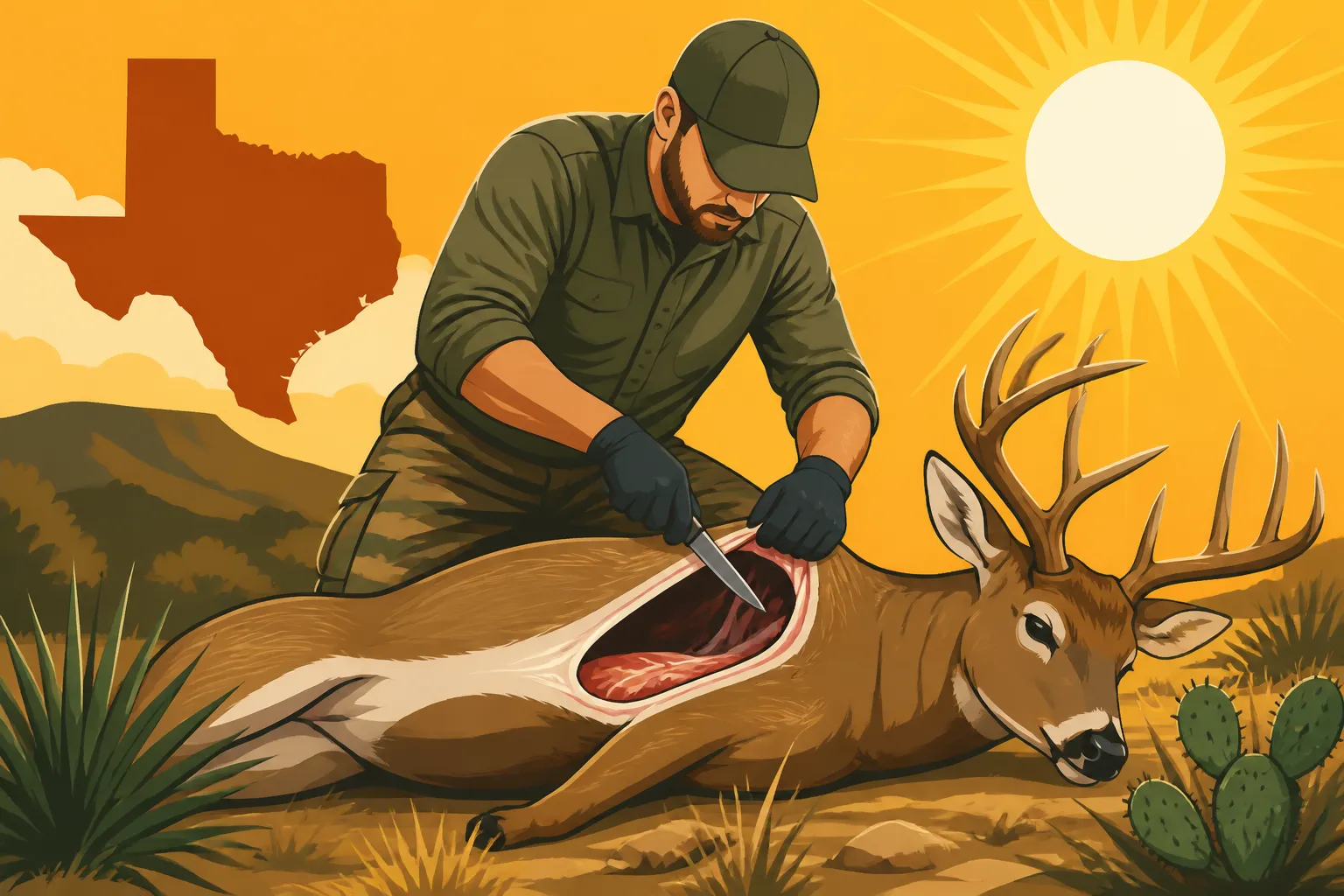
The very first thing you need to do is get the internal cavity open to release that trapped body heat. Start by laying the deer on its back. Using your sharp gut hook knife, or carefully with a regular knife, make an incision through the hide and abdominal wall, starting from the breastbone (sternum) and extending all the way down to the pelvic bone. Be shallow with your cut initially to avoid nicking the intestines. Many hunters will lift the skin and muscle with their fingers, pushing the knife upwards with the blade facing out, which creates a protective barrier for the internal organs. Once open, you'll immediately notice steam rising, which is a good sign that heat is escaping.
Next, you'll want to carefully cut around the anus and rectum. This can be a tricky part. Some hunters will tie off the rectum with a zip tie or string to prevent fecal contamination as the intestines are pulled out. With your knife, carefully cut in a circular motion around the rectum, separating it from the surrounding tissue until you can free it. If you have a bone saw, now is also a good time to split the breastbone and, if possible, the pelvis. Splitting the breastbone provides even greater access to the chest cavity and helps release more heat, while splitting the pelvis further opens up the hindquarters for cooling.
Efficient Evisceration: Getting the Guts Out Cleanly
Now for the main event: getting those internal organs out. Start by reaching into the chest cavity, locating the diaphragm (the thin membrane separating the chest from the abdomen), and cutting it free all the way around. Next, reach as far forward as you can, grasping the trachea (windpipe) and esophagus (gullet), and cut them free. With these severed, you can begin to pull the entire mass of organs downwards and backwards.
Work methodically, using your knife to sever any connective tissue holding the organs in place. Gravitate towards the pelvis, making sure the rectum, which you freed in the previous step, comes out with the rest of the package. It's often helpful to roll the deer slightly to one side, allowing gravity to assist in pulling the heavy organs out. The goal is to remove everything as a single unit if possible, minimizing the chance of leaving behind any significant pieces that will hinder cooling. If you hear a thud as the internal organs hit the ground, you know you've done it right!
The All-Important Clean-Up: Wiping and Airing the Cavity
Once the guts are out, your deer will look much different, and more importantly, it will start to cool. But you're not done yet. The body cavity will likely have some blood and possibly some stomach or intestinal contents if a gut shot occurred. Use clean paper towels, a clean cloth, or even some dry leaves or grass to wipe out any visible debris. Avoid using water inside the cavity unless you have a way to thoroughly dry it afterwards, as moisture combined with heat can accelerate bacterial growth. If you absolutely must rinse with water, ensure it's a quick rinse with cold water, and then immediately dry the cavity as best you can.
After wiping, it's crucial to prop the cavity open. Use sticks, small branches, or even a piece of PVC pipe to keep the chest cavity spread wide, allowing maximum airflow to all surfaces. This air circulation is vital for dissipating heat. In our guide on Field Dressing & Processing Game in Texas Heat, we delve deeper into how crucial this step is for preventing spoilage.
Post-Field Dressing: Rapid Cooling Techniques for Texas Conditions
The field dressing is done, but the battle against the heat is far from over. Now you need to actively work to drop that core temperature even further, and fast.
Maximizing Airflow: Propping and Positioning
Once the deer is field dressed and wiped clean, airflow is your next biggest ally. If you can, hang the deer, even just by the head or hind legs, to allow air to circulate completely around the carcass. This keeps the deer off the hot ground and exposed to any breeze. If hanging isn't an option, prop the deer up on its side, using logs or rocks to keep its body off the ground. Crucially, keep that body cavity propped wide open. You want air moving through the cavity as much as possible.
Consider the location too. Move the deer into the deepest shade you can find immediately after field dressing. A dense mesquite thicket or under a large oak can drop the ambient temperature around the carcass by several degrees compared to direct sunlight. The goal is to remove as much residual heat as possible and prevent new heat from building up.
Ice is Your Ally: Cavity Packing and Immersion
This is the nuclear option, and in Texas heat, it's often the only option. Get ice into that body cavity as soon as you possibly can. If you have a large cooler and can fit the entire field-dressed deer (or at least the torso), consider immersing it in an ice bath. This is by far the fastest way to drop the internal temperature. Pack the cavity tightly with ice, both cubed and crushed. If you're going to transport it, place ice bags on top and inside the cavity.
If you don't have enough ice for a full immersion, pack gallon freezer bags filled with ice (or frozen water bottles) into the chest cavity. These provide cold contact points that absorb heat. Many hunters swear by chilling the entire carcass in a large stock tank or even a clean kiddie pool filled with ice water for several hours before transport. This brings the temperature down quickly and thoroughly. Just remember, if immersing, dry the carcass well before hanging or bagging if you plan on aging the meat.
Getting Your Game Home Safely: Transporting in the Texas Heat
The journey from the field to your processing station can be just as critical as the field dressing itself, especially when the sun is blazing. Don't let all your hard work go to waste in the back of a hot truck.
Protecting Your Meat from the Elements
Once your deer is field dressed and cooled as much as possible, it needs protection for the ride home. This is where those breathable game bags come into play. They shield the meat from dirt, dust, and insects while still allowing some air circulation. If you can't hang the deer in the bed of your truck (which is ideal for airflow), lay it on top of a tarp or heavy-duty plastic sheeting.
Crucially, avoid throwing the deer directly into the bed of a truck and covering it with a blanket or tarp. This traps heat, negating all your cooling efforts. If you must cover it for discretion or to keep it from the sun, ensure there's still airflow underneath and around the carcass. Better yet, once bagged, get it into a cooler or shaded area as quickly as possible. For longer drives, keep replacing ice in the cavity or draping it over the outside of the bagged carcass. Remember, the goal is to prevent any heat from building back up. You can find excellent options for keeping game cool in our guide to the Best Coolers for Texas Hunting (Yeti & Alternatives).
When to Seek Professional Help (and Where to Find It)
Sometimes, despite your best efforts, getting a deer perfectly cooled on a sweltering day is a challenge, especially if you're on a multi-day hunt or don't have immediate access to adequate refrigeration. This is where a good game processor becomes your best friend. Many processors in Texas, particularly in popular hunting regions like the Hill Country or South Texas, are set up to receive fresh kills and get them into a cooler immediately.
Before your hunt, scout out local processors. Call ahead and ask about their receiving hours, their capacity, and what services they offer. A reputable processor will quickly skin, quarter, and chill your deer, taking the burden of rapid cooling off your shoulders. Some, like the numerous processors around places like Fredericksburg or Uvalde, can often be a lifesaver. This is especially important for the novice hunter, or if you're hunting in particularly remote areas. Our comprehensive guide on Where to Take a Deer for Processing in Texas can help you locate a good facility near your hunting area. They know the challenges of the Texas heat and are equipped to handle it.
Common Challenges and Smart Solutions in Hot Weather
Texas hunting can throw some curveballs, and hot weather only amplifies them. Being prepared for common challenges can save your hunt and your meat.
Handling a Gut Shot: Damage Control
A gut shot is every hunter's nightmare, even more so in hot weather. If you accidentally hit the stomach or intestines, act quickly. After field dressing, meticulously clean the body cavity. This means carefully removing any stomach contents, feces, or bile with a clean rag or paper towels. If possible, rinse the cavity very quickly with a small amount of clean, cold water, then immediately dry it thoroughly. The goal is to remove as much contaminant as possible, as these can quickly taint the meat.
Some hunters will trim away any meat that has come into direct contact with the stomach contents, particularly if it's visible. While a gut shot in extreme heat presents a high risk for spoilage, immediate, thorough cleaning and aggressive cooling can sometimes salvage a significant portion of the meat. Just be realistic; some sections might be too far gone. Our piece on Best Shot Placement for Whitetail Deer might help reduce the chances of this happening in the first place!
Alone and Far: Strategies for Remote Hunts
Hunting public lands or vast private leases can mean you're a long way from the truck. If you're alone and facing a long drag or carry, consider quartering the deer in the field. This involves skinning the deer and breaking it down into manageable sections (two hindquarters, two front shoulders, and the backstraps/tenderloins). Each piece is much lighter and easier to carry. You can then place these sections into individual game bags. This process allows each section to cool much more efficiently than a whole carcass.
If quartering, remember to bring a sharp knife, a small bone saw, and plenty of game bags. You'll still need to get the meat cooled as quickly as possible once you reach your vehicle. For longer pack-outs, some hunters use a heavy-duty frame backpack to carry out the quarters, allowing the meat to breathe while distributing the weight effectively. It's a lot of work, but it's often the only way to save the meat from a remote kill in scorching temperatures. This is often covered in detail when discussing Spot-and-Stalk Hunting in Texas (Exotics & Mule Deer) where long hauls are common.
Here's a quick comparison of field cooling methods:
| Cooling Method | Speed of Cooling | Effectiveness in High Heat | Best Use Case | Pros | Cons |
|---|---|---|---|---|---|
| Air Drying/Hanging | Moderate | Low (alone) | Mild weather, quick initial heat dissipation | Minimal gear, allows natural aging | Ineffective in high humidity/heat, exposed to insects |
| Ice Packing Cavity | Fast | High | All hot weather conditions, post-field dress | Direct cooling, portable with coolers | Requires significant ice, can be messy, moisture management needed |
| Ice Water Immersion | Very Fast | Very High | Extreme heat, immediate deep chilling, short-term | Most rapid temperature drop, consistent cooling | Requires large container/cooler, heavy, messy, immediate drying crucial to prevent bacterial growth if not processed quickly |
| Quartering & Bagging | Fast | High | Remote kills, long pack-outs, rapid cooling for pieces | Faster cooling of smaller sections, easier transport | More butchering in the field, higher chance of contamination if not careful, requires good game bags |
Disclaimer
Please note that hunting regulations, seasons, and licensing requirements can change. Always consult the official Texas Parks and Wildlife Department (TPWD) Outdoor Annual or website for the most current and accurate information before heading out into the field. This guide is for informational purposes only and does not supersede official regulations.