White-Tailed Deer Hunting Tactics for Texas
Trying to bag a mature buck in Texas often feels like a high-stakes game of chess where the board is covered in mesquite thorns and the opponent has a much better nose than you do. Whether you are battling the sweltering October heat or trying to stay awake during a slow January morning, this guide breaks down the specific tactics needed to find success across the Lone Star State.
Navigating the Diverse Texas Deer Woods
Texas is a massive state, and a tactic that works in the pineywoods of East Texas might leave you staring at empty cactus flats in the Trans-Pecos. The first step to a successful season is recognizing that Texas whitetails are not a monolith. Their behavior is dictated by the specific habitat they call home. In the Hill Country, you might see dozens of deer in a single sitting, but finding a buck with the age and antler mass you want requires extreme patience and a strict management mindset. Conversely, in the Brush Country of South Texas, you might go three days without seeing a shooter, only for a giant to step out of the tall scrub at high noon.
Understanding the Texas Whitetail Population & Density by Region is critical because it dictates how you should approach your hunting pressure. If you are on a small acreage in Central Texas, over-hunting a single stand can burn out your property in two weekends. On a larger South Texas Trophy Whitetail: Brush Country Bucks lease, you have more room to rotate stands, but the deer are often more wary of human scent because they aren't as accustomed to the sounds of suburban life.
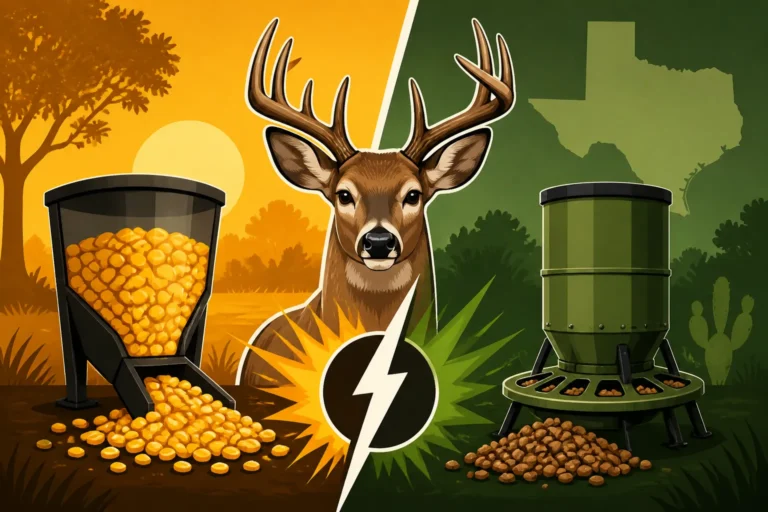
The concept of "feeder culture" is also uniquely Texan. While some purists in other states look down on it, in the thick brush of the Rio Grande Valley or the rocky hills of the Edwards Plateau, feeders are often the only way to effectively survey your herd. However, the mistake most hunters make is relying solely on the feeder. As the season progresses and pressure mounts, mature bucks often "skirt" feeders, hanging back 50 to 100 yards in the shadows to watch the younger deer and does eat before they ever consider stepping into the open.
Mastering Seasonal Phases and Temperature Swings
Timing is everything in Texas. We don't really have a traditional "fall" like the northern states; we have a "slightly less hot summer" that eventually gives way to erratic cold fronts. Your tactics must shift as the calendar turns. In the early season, which usually kicks off in October, your biggest enemy isn't just the deer's nose—it's the heat. A buck’s movement in 90-degree weather is almost entirely restricted to the first and last fifteen minutes of daylight.
During these early weeks, many hunters focus on water sources and high-protein food. If you haven't already, checking your Best Early-Season Camo for Texas Heat is a good move, as staying comfortable prevents the fidgeting that gives away your position in the blind. Many veterans also swear by keeping their gear organized by ordering scent-free storage bins and field wipes from Amazon to ensure they aren't bringing the smell of the city into the woods.
When the calendar flips to November, everything changes. The Texas Rut: When Do Bucks Rut by Region? is the most important piece of information you can have. In the Pineywoods, the rut might peak in mid-November, whereas in South Texas, you might not see significant chasing until late December or even early January. During the rut, throw the "feeder rules" out the window. Bucks are looking for does, not corn. Tactic-wise, this is when you want to be in a transition zone between bedding areas and food sources.
| Season Phase | Primary Goal | Recommended Tactic | Key Gear Item |
|---|---|---|---|
| Early Season | Observation & Food | Hunt water and evening protein | High-quality Binoculars |
| Pre-Rut | Establishing Dominance | Light rattling and scrape hunting | Grunt Call |
| Peak Rut | Location of Does | Mid-day sits in travel corridors | Scent covers |
| Late Season | Caloric Recovery | Hunt the coldest days over corn | Thermal layers |
Setup Strategy and Blind Placement
In Texas, the box blind is king, but where you put it makes the difference between a filled tag and a frustrated drive home. Many hunters make the mistake of plopping a blind 100 yards upwind of a feeder and calling it a day. If the wind is blowing from your blind toward the feeder, you are essentially broadcasting your presence to every deer in the county.
When considering Box Blind vs Tripod vs Ground Blind in Texas, think about your visibility versus your concealment. A tripod blind is excellent for the thick cedar brakes of the Hill Country because it gets you just high enough to see over the canopy, but you are also highly exposed. A box blind offers better scent control and allows you to move slightly—perhaps to grab a snack or check your phone—without being spotted.
If you are How to Set Up a Box Blind Over a Feeder, try to position the blind so it faces North or South. Since our prevailing winds in Texas are typically from the South/Southeast in the early season and shift to the North during cold fronts, a North-South orientation gives you the best chance of having a "crosswind" that doesn't blow directly toward the deer. Many hunters find that picking up basic blind accessories like silent window hinges or weather stripping from Amazon can significantly dampen the noise that usually scares off a wary old buck.
Don't forget the importance of the approach. If you have to walk through a food plot or right past a feeder to get to your stand, you've already lost. Use the terrain—creek beds, thick brush, or even the blind side of a hill—to mask your movement. If you can't get to your stand without spooking deer, consider moving the stand or creating a brushed-in trail that provides more cover.
Advanced Calling and Social Tactics
While baiting is the most common method in Texas, calling and rattling can be incredibly effective when the conditions are right. Rattling is a South Texas tradition that has spread across the state, but it requires a specific set of circumstances to work. You need a high buck-to-doe ratio. If there are ten does for every buck, a buck doesn't have to fight for a mate, so the sound of two bucks fighting won't interest him.
When you are Rut Hunting Tactics: Rattling & Grunting in Texas, timing is vital. The "pre-rut" is often the best time for rattling because bucks are full of testosterone and looking to establish a pecking order, but the does aren't quite ready to breed yet. This makes them frustrated and aggressive. If you are How to Grunt and Rattle Whitetail in the Hill Country, start softly. You don't want to sound like two giants fighting to the death immediately; sometimes just a few light clicks of the antlers are enough to bring in a curious young buck.
If you are hunting in a region with Texas Antler Restrictions: 13-Inch Rule & Counties, calling becomes even more useful because it brings deer closer for a better look. You cannot afford to make a mistake on a buck that is only 12 inches wide. Bringing him in with a grunt call allows you to judge his age and antler spread more accurately. For those who aren't comfortable using traditional antlers, many electronic calls or high-end rattling bags are available on Amazon and can be a great way to practice the rhythm without the risk of pinching your fingers.
Another often overlooked tactic is the use of decoys. In the wide-open spaces of West Texas or the Panhandle, a 2D or 3D doe decoy can be the "visual confirmation" a buck needs to commit to coming across a field. If he hears a grunt and sees a doe standing near the brush, he is much more likely to leave the safety of the treeline.
Managing Your Property and Pressure
Even the best tactics won't work if the deer feel like they are being hunted every single day. One of the biggest mistakes Texas lease members make is "over-checking" their cameras. If you are constantly walking to your feeders to swap SD cards, you are leaving human scent that lingers for days. This is why many people are switching to cellular cameras. You can find several reliable models on Amazon that allow you to see what’s happening in real-time without ever leaving your house.
Learning How to Pattern Bucks With Trail Cameras is a year-round job. A buck might be a regular at your feeder in July and August while his antlers are growing, but once he rubs his velvet, his home range might shift half a mile. By monitoring these shifts remotely, you can identify exactly when a buck becomes "daylight active."
If you are a beginner, it's helpful to review a How to Hunt Whitetail Deer in Texas (Step by Step) guide to make sure you have your legal bases covered, from licensing to tagging. Texas is a private-land state, and the rules can vary significantly from one county to the next. Always keep a copy of the Outdoor Annual on your phone or in your pack.
Finally, keep an eye on the moon and the barometer. While many people only hunt weekends, the Best Time to Hunt White-Tailed Deer in Texas is often right before a major pressure change. If a blue norther is screaming down from the Panhandle, the deer know they need to feed heavily before the temperature drops. If you see the barometer dropping, call in sick to work and get to the stand. Those are the days when the "big ones" move during the day.
Summary of Tactical Success
To truly find success in the Texas deer woods, you have to be a student of the game. You must understand the soil, the wind, and the social hierarchy of the deer on your specific piece of land. Whether you are hunting over a meticulously maintained food plot or a simple corn feeder tucked away in the brush, the keys remain the same: scent control, patience, and the ability to adapt to the ever-changing Texas weather.
Be sure to check your equipment before every trip. Simple things like fresh batteries for your optics or a new set of scent-wicking socks from Amazon can make a long sit much more bearable. When you finally see that buck you've been tracking all summer step out into the light, you'll be glad you took the extra time to plan your approach and understand his behavior.
Texas Hunting Tactics Disclaimer
The information provided in this guide is for educational and informational purposes only. Hunting regulations in Texas, including bag limits, season dates, and legal hunting methods, are subject to change annually by the Texas Parks and Wildlife Department (TPWD). Always consult the current Texas Outdoor Annual and local county regulations before heading into the field. Ensure you have the proper licenses, endorsements, and landowner permission before attempting to hunt any species in Texas. Safe firearm handling and ethical harvest practices are the responsibility of the individual hunter.