How High Should a Deer Feeder Be?
You’ve just spent good money on a deer feeder, hauled it out to your lease, and now you’re staring at it, wrench in hand, wondering: how high should this thing actually be off the ground? It’s a common dilemma, and one that trips up a lot of hunters, whether you’re a seasoned veteran or just starting your journey in the vast hunting lands of Texas. Setting your deer feeder at the wrong height can lead to a host of frustrations, from wasted corn and unwanted visitors to deer struggling to access the feed, undermining all your hard work. This guide will walk you through everything you need to know to get your feeder height just right, ensuring you attract and nourish your target deer populations effectively.
The Frustration of Wasted Feed and Unwanted Visitors
It’s a classic scenario: you fill your feeder to the brim, anticipating a visit from a big Texas whitetail, only to return a few days later to a depleted pile of corn and the distinct paw prints of raccoons, skunks, or even feral hogs. These opportunists are notorious for cleaning out feeders set too low, often before your target deer even get a chance to eat. Imagine the frustration of checking your trail camera footage only to see a parade of non-target animals gorging themselves, leaving little or nothing for the deer you’re trying to attract. It’s not just about the cost of the feed; it’s about the wasted time, effort, and the disheartening feeling that your setup isn’t working as intended. A poorly positioned feeder turns into an all-you-can-eat buffet for every critter with a nose for corn, and that’s precisely what we want to avoid.
Maximizing Deer Access and Usage
On the flip side, a feeder that’s too high can be just as problematic. While it might deter smaller critters, it can make it difficult, if not impossible, for smaller deer, younger bucks, or even does to comfortably reach the feed. You want your feeder to be an inviting, easily accessible food source for deer, not a challenge course. When deer have to stretch awkwardly or even jump to get feed, they’ll often give up and move on, especially if other natural food sources are abundant. The goal is to create a seamless, stress-free feeding experience for your target deer, encouraging consistent visits and healthy consumption, which ultimately benefits your hunting strategy and the overall health of the herd on your property.
General Guidelines for Deer Feeder Height in Texas
When it comes to the “sweet spot” for deer feeder height in Texas, there’s a widely accepted range that tends to work well for most situations. However, remember that these are guidelines, not rigid rules, and local conditions might always call for slight adjustments.
The Standard Recommended Height Range
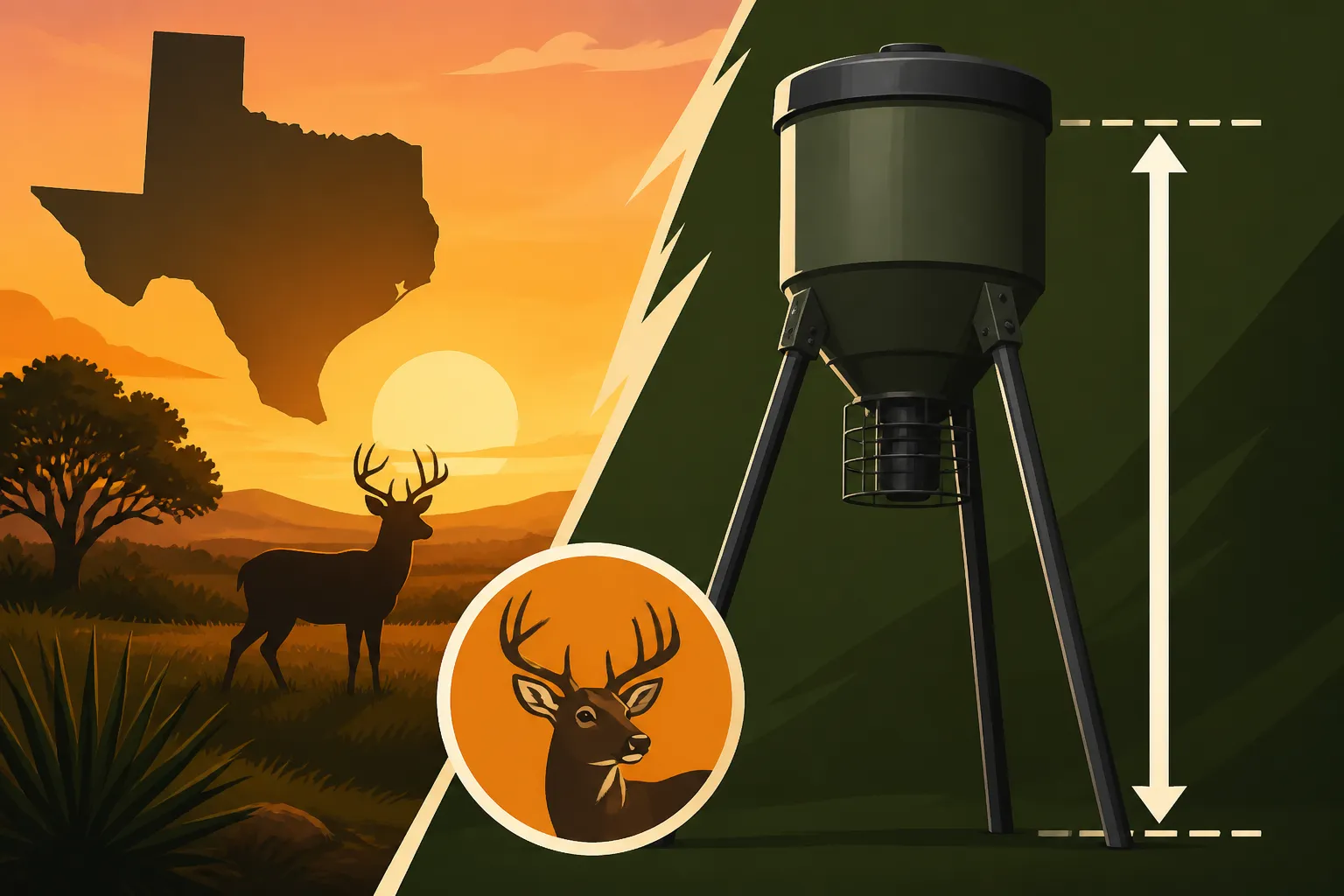
For most spin-cast deer feeders in Texas, the general recommendation is to set the bottom of the feeder — specifically, where the corn or feed dispenses — between **6 and 7 feet off the ground**. This height is often considered the best compromise for several key reasons. Firstly, it allows the feed to spread out over a decent radius, typically creating a feeding pattern that deer can easily access without having to congregate too tightly, which can be beneficial for herd health and observation. Secondly, this height usually puts the spinner mechanism out of reach for most common non-target animals like raccoons, possums, and even some smaller feral hogs. While persistent hogs can sometimes learn to shake a feeder, this height makes it significantly harder for them to simply stand there and eat the dispensed feed directly from the spinner.
A height in this range also means that the feed typically broadcasts in a wider pattern, reducing the concentration of corn right under the feeder, which can sometimes lead to excessive moisture and spoilage. It allows the deer to feed naturally and spread out, making them feel more comfortable and less crowded.
Why Texas Whitetails Prefer This Range
Texas whitetail deer are incredibly adaptable, but they’re also creatures of habit and comfort. A feeder set within the 6 to 7-foot range caters to their natural feeding posture. They don’t have to stretch excessively or get into an uncomfortable position, making the feeding experience positive and reinforcing their visits. Think about it: a deer grazing in a field isn’t reaching high for leaves; it’s typically browsing at a comfortable head-height. A feeder mimics this natural behavior, making it an attractive food source.
Additionally, this height helps keep the feed itself cleaner. When corn is dispensed from a higher point, it scatters more broadly, reducing the chances of it piling up and becoming trampled or contaminated with deer droppings as quickly. This cleanliness can be a subtle but important factor in encouraging consistent deer visitation and consumption, especially when you consider a typical South Texas deer hunting lease where deer might be accustomed to regular feeder activity.
Factors Influencing Your Feeder’s Ideal Height
While the 6-7 foot range is a great starting point, a few critical factors can and should influence your final decision on how high your deer feeder should be. Ignoring these can lead to suboptimal results, regardless of how perfectly you aim for the “average” height.
Target Species and Their Size
The most obvious factor is the animal you’re actually trying to feed. If your primary goal is to attract and nourish the massive trophy whitetail bucks in South Texas, your feeder height might lean towards the higher end of the spectrum to deter smaller, less desirable critters. However, if your lease is frequented by a healthy population of does and fawns, and you’re aiming for general herd health and observation, you might opt for a slightly lower height within the recommended range to ensure ease of access for all deer.
- For mature Whitetail Deer: A height closer to 7 feet is often ideal. These deer are taller and can easily reach feed dispensed from this height. It effectively deters most raccoons and even smaller feral hogs from directly accessing the spinner.
- For General Herd Health (including does and fawns): A height closer to 6 feet or even 5.5 feet might be more appropriate. This ensures that younger and smaller deer can comfortably reach the scattered feed. You still get good broadcast, but it's a bit more accessible to all members of the herd.
- For Exotics (like Axis Deer or Aoudad): If you're hunting exotics in Texas, their size and behavior might warrant different considerations. Axis deer, for instance, are generally similar in height to whitetail, so the 6-7 foot range still works. However, Aoudad sheep, which are often found in the more rugged Trans-Pecos region, might present a different challenge due to their climbing abilities if a feeder is placed on uneven terrain. However, typically for feeders, the primary concern remains deer, and the height that deters smaller nuisance animals while allowing deer access remains fairly consistent.
Terrain and Ground Conditions
Texas is a huge state with incredibly diverse terrain, and what works in the flat, sandy loam of the Post Oak Savannah might not be ideal in the rocky, uneven landscape of the Edwards Plateau. The ground directly beneath and around your feeder can drastically alter the effective height.
- Uneven Ground: If you place your feeder on a slope or uneven terrain, the effective height can change dramatically depending on where an animal is standing. Always measure from the lowest point a deer would typically approach the feeder. You might need to adjust the feeder legs or even level the ground slightly to ensure consistent height. Imagine a deer standing downhill from your feeder; if it's already on the higher side, it might be out of reach. Conversely, if it's standing on a small rise, a lower feeder might become too accessible to non-target animals.
- Rocky or Obstruction-Filled Areas: Rocks, stumps, or thick brush near the feeder can create natural "steps" for smaller animals, effectively reducing the height advantage you've tried to establish. Clear the area around your feeder thoroughly to remove any such aids. This also allows for a wider, cleaner spread of feed.
- Soft or Sandy Soil: In areas with soft or sandy soil, especially after a good rain, the feeder legs might sink over time, gradually lowering the dispensing height. Regularly check and adjust your feeder if it's in such an area. Consider using larger footpads or even concrete blocks under the legs for added stability and to prevent sinking.
Type of Feeder (Spin Cast vs. Gravity)
The mechanics of your feeder also play a significant role in determining the ideal height.
- Spin-Cast Feeders: These are the most common type in Texas. The motor and spinner plate broadcast feed in a circular pattern. For these, the 6-7 foot height is largely driven by the need for a good spread radius and to keep the spinner mechanism out of reach of raccoons and hogs. The goal is for the corn to hit the ground in a broad, accessible area. If the spin feeder is too low, the corn tends to concentrate in a smaller, denser pile directly beneath the feeder, which can lead to quick consumption by a few animals and increased spoilage. If it's too high, the spread might be too wide and sparse, or susceptible to wind drift, making it less efficient. When considering a Best Deer Feeder Setup for Texas, remember height is a key component.
- Gravity Feeders: These feeders rely on gravity to drop feed into a trough or directly onto the ground. The height considerations are slightly different. For gravity feeders designed for deer, the feed opening usually needs to be at a height that deer can comfortably access, typically around 36-48 inches (3-4 feet) for adult deer. This is a much lower height than spin-cast feeders, but the design typically prevents smaller animals from climbing into the feed reservoir. However, they are generally less effective at deterring feral hogs, which can often reach into the troughs or knock them over if not secured. If you're using a gravity feeder, ensuring it's robust and anchored well is often more critical than the exact height of the feed port. If you are debating between Corn vs Protein Feeder for Texas Deer, both can be gravity or spin cast, and the height principles apply accordingly.
Here's a quick comparison table to help visualize:
| Feeder Type | Target Height (Bottom of Dispenser) | Primary Goal | Common Issues if Too Low | Common Issues if Too High |
|---|---|---|---|---|
| Spin-Cast | 6-7 feet | Optimal spread, deter nuisance animals | Raccoons/hogs access spinner, concentrated feed | Too wide/sparse spread, wind drift |
| Gravity | 3-4 feet (feed port) | Easy deer access, consistent feed availability | Hogs/raccoons access trough, less deterrence | Uncomfortable for deer, can restrict access |
Setting Up and Maintaining Your Deer Feeder Height
Once you’ve determined the ideal height based on your specific situation, the next step is the actual setup and ongoing maintenance. Getting it right the first time can save you a lot of headaches, but vigilance is key.
Tips for Initial Setup and Adjustment
Setting up a deer feeder can be a bit of a workout, especially if you’re working with taller tripod feeders or heavy barrel feeders. Here are some pointers to make it easier and more effective:
- Measure Before You Dig/Assemble: Don't just eyeball it! Use a tape measure to ensure the bottom of your feeder, or specifically the spinner plate on a spin-cast model, is at your desired height off the ground. Account for any uneven terrain right from the start.
- Start with the Lowest Spot: If your ground isn't perfectly level, always measure the height from the lowest point where a deer is likely to stand. This prevents the feeder from becoming too high on one side.
- Use Adjustable Legs: Many quality feeders, especially tripod models, come with adjustable legs. This feature is a game-changer for dialing in the perfect height and compensating for uneven ground. Even with barrel feeders, you can often buy or fabricate extensions.
- Anchor Securely: Regardless of height, secure your feeder. Texas winds can be brutal, and a top-heavy feeder can easily be toppled, especially if you're using a taller setup. Use stakes, T-posts, or even guy wires to anchor your feeder firmly. This is particularly important for tripod feeders.
- Clear the Area: Before setting up, clear a radius of at least 10-15 feet around where your feed will scatter. Remove tall weeds, brush, and any small rocks or stumps that could impede feed spread or provide a boost for unwanted animals.
- Consider a Cage or Protector: If you're consistently battling raccoons trying to climb the feeder legs or reach the spinner, consider adding a varmint cage around the spinner mechanism. These cages, like those from [Moultrie] or Boss Buck, can be a lifesaver for protecting your feed. They add a physical barrier without hindering the spin or feed dispersal.
Monitoring and Seasonal Adjustments
Your feeder isn’t a “set it and forget it” piece of equipment, especially when it comes to height. Factors change, and so should your approach.
- Trail Camera Feedback: This is your best friend for monitoring feeder activity. Set up a Best Trail Camera for Lease Monitoring nearby, pointed at the feeder area, to observe how deer and other animals are interacting with your feeder. Are deer feeding comfortably? Are smaller deer struggling? Are hogs still getting too much access? The footage will provide invaluable insights for making adjustments. You can learn a lot about animal behavior and how they're reacting to your feeder height.
- Observe Physical Evidence: Look for tracks and droppings around the feeder. Are there signs of raccoons or other small animals directly under the spinner? Are the deer tracks spread out, indicating comfortable feeding, or are they concentrated, suggesting difficulty reaching certain areas?
- Seasonal Changes: Heavy rains can wash away soil, causing feeder legs to sink. Droughts can harden the ground, making it less likely for legs to sink but might also affect how far feed scatters. The surrounding vegetation also changes throughout the year. What was clear in winter might be overgrown in summer, creating new "stepping stones" for varmints.
- Youth Hunters and Accessibility: If you're introducing a new generation to hunting, like through special Texas Youth Hunting Weekend Dates, consider temporarily lowering a feeder or creating a small, stable platform nearby to make it easier for them to observe and understand the feeding patterns. Accessibility is important, not just for the deer, but for the hunters too!
Remember, the goal is to create an efficient, deer-friendly feeding station that minimizes waste and maximizes your chances for a successful hunt. Whether you're in the dense brush of South Texas or the rolling hills of the Edwards Plateau, paying attention to how high your deer feeder is will make a world of difference in your overall hunting experience. A well-placed feeder is not just about convenience; it’s a crucial part of your overall Deer Hunting in Texas: Feeders, Blinds & Tactics strategy.
Disclaimer
Please note that hunting regulations and best practices can change. Always consult the latest Texas Parks and Wildlife Department (TPWD) Outdoor Annual for the most current and accurate information regarding hunting laws, seasons, and licensing requirements in Texas. The information provided here is for general guidance and educational purposes only.