Best Solar Panel for Deer Feeders
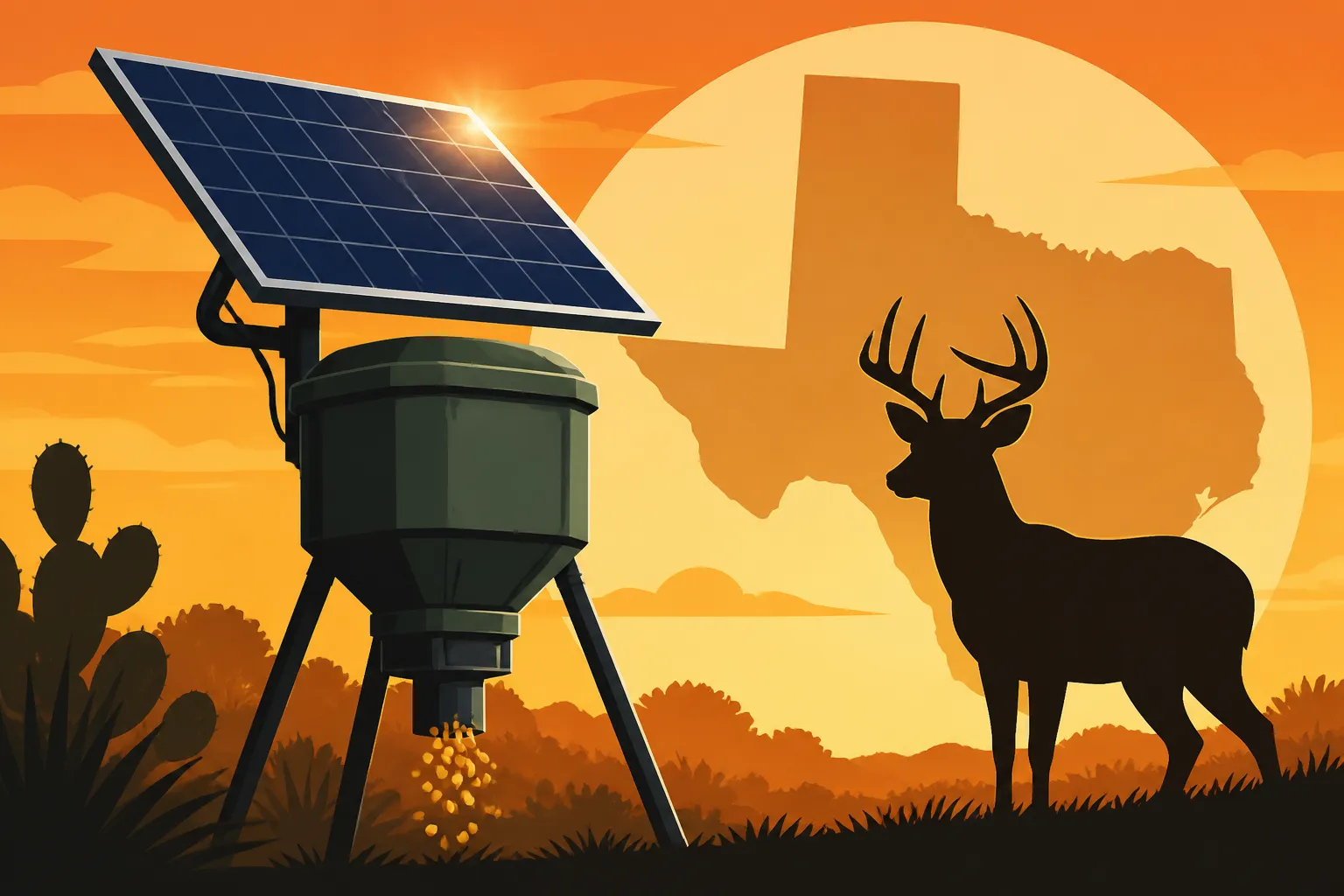
There's nothing quite as frustrating for a Texas hunter as driving out to your deer lease, full of anticipation, only to find your feeder battery dead. The corn isn't slinging, your carefully planned schedule is disrupted, and the deer patterns you've worked so hard to establish are now a question mark. Dealing with unreliable power in remote locations, especially with our brutal Texas heat, can feel like a constant battle. This guide is dedicated to helping you overcome these common power woes by exploring the best solar panels for your deer feeders, ensuring consistent operation and making your time in the field more productive.
Why Solar Panels are a Game-Changer for Texas Deer Feeders
If you've spent any time managing a deer lease in Texas, you know the constant struggle of keeping your feeders powered. Batteries seem to have a knack for dying at the most inconvenient times, usually right before a big hunt or during a critical phase of deer management. Solar panels aren't just a convenience; they're a fundamental shift in how we maintain consistency and reliability in our feeding programs, especially in a state like ours where conditions can be extreme and distances are vast.
Battling Battery Blues in the Heat
Texas heat isn't just uncomfortable for us; it's brutal on electronics, especially lead-acid batteries commonly used in deer feeders. High temperatures accelerate battery discharge and can shorten their overall lifespan considerably. You might put in a fresh battery in August, only to find it limping by October, or worse, completely dead. This isn't just an annoyance; it's a significant disruption to your efforts, especially if you're trying to establish a consistent feeding pattern for a specific buck.
Frequent trips to remote feeder locations just to swap out or charge batteries can eat up valuable time and fuel. Imagine driving an hour or two to your lease, only to spend half the morning troubleshooting a dead feeder. It pulls you away from scouting, blind setup, or simply enjoying the outdoors. A reliable solar panel eliminates much of this guesswork and unnecessary travel, ensuring your feeder remains operational day in and day out, regardless of how far off the beaten path it is. This consistent power is crucial for maintaining a steady food source, which is often a cornerstone of successful Deer Hunting in Texas: Feeders, Blinds & Tactics.
Furthermore, battery issues can throw a wrench into your carefully crafted deer management plans. If you're running a protein feeder during the off-season to promote antler growth, a dead battery means a halt in protein distribution, directly impacting the deer's nutritional intake. Similarly, if you're using corn feeders to pattern deer for the upcoming season, any inconsistency due to power failure can scatter deer and make them harder to predict. Solar panels provide that steady, trickle charge needed to keep your batteries topped off, ensuring that your feeders are always ready to dispense feed precisely when you need them to.
The Uninterrupted Feeding Schedule Advantage
The primary benefit of a well-installed solar panel is the uninterrupted power supply it provides. Instead of constantly monitoring battery levels and planning arduous trips for replacements, your feeder battery receives a continuous charge whenever the sun is out. This means your feeder is always ready to go, slinging feed at precisely the times you've programmed, whether it's two throws a day or five. This consistency is absolutely critical for effective deer management and patterning.
Deer are creatures of habit, and they quickly learn feeding schedules. If your feeder is constantly dying and then coming back online sporadically, you're sending mixed signals. A reliable, uninterrupted feeding schedule, powered by a solar panel, reinforces those patterns, making deer more predictable and comfortable visiting your feeder locations. This predictability is golden when you're trying to maximize your hunting opportunities, especially when considering Best Feeder Timer Settings for Daylight Deer.
Beyond just attracting deer, uninterrupted feeding is vital for year-round management, particularly if you're utilizing protein feeders to improve herd health and antler quality. Protein pellets are an investment, and you want to ensure they're being dispensed regularly and reliably. A solar panel safeguards this investment by keeping the feeder operational, ensuring deer get the nutrition they need without interruption. Brands like American Hunter often design their feeders with solar panel compatibility in mind, understanding this critical need for consistent power.
Key Features to Look for in a Deer Feeder Solar Panel
Choosing the right solar panel for your deer feeder isn't as simple as grabbing the first one you see. Texas weather can be brutal, and our hunting needs are specific. You want a panel that can withstand the elements, reliably charge your battery, and integrate seamlessly with your existing setup. Paying attention to a few key features will save you headaches down the road and ensure your investment pays off.
Power Output and Charging Efficiency
The power output of a solar panel, measured in watts (W), is crucial. For most standard 6V or 12V deer feeder batteries, a 5-watt panel is often sufficient, but considering a 10-watt or even 15-watt panel can provide a more robust charge, especially in areas with limited direct sunlight or during shorter winter days. A higher wattage panel will charge your battery faster and more completely, which is a huge advantage if you have a feeder motor that draws a lot of power or you're running additional accessories like Best Cellular Trail Cameras for Texas (2027) directly from the battery.
When we talk about charging efficiency, we're looking at how well the panel converts sunlight into usable electricity. While you don't need to get bogged down in technical jargon, knowing the difference between monocrystalline and polycrystalline panels can be helpful. Monocrystalline panels are generally more efficient and perform better in low-light conditions, though they might be a bit pricier. For the scorching Texas sun, either will work, but a more efficient panel ensures a quicker and more consistent charge. Many experienced hunters, including those who rely on detailed data from services like GoHunt for planning, understand that reliable power from an efficient panel is fundamental to consistent data collection from their remote camera setups.
It’s also important to ensure the panel's voltage matches your feeder's battery system. Most feeders run on 6V or 12V batteries. Using a 12V panel with a 6V battery can overcharge and damage it, and vice-versa. Always double-check the specifications. While many feeders come with their own branded panels, like those from Moultrie or Wildgame Innovations, many generic options are available. Just make sure the output matches, and consider what kind of drain your specific Best Deer Feeder Setup for Texas might put on the battery.
Durability and Weather Resistance for Texas Conditions
Texas weather is no joke. From blistering summer heat and intense UV radiation to sudden torrential downpours, hail, and strong winds, your solar panel needs to be built tough. Look for panels with sturdy aluminum frames and tempered glass. These materials offer superior protection against physical impacts and environmental degradation. A cheap plastic panel might work for a season or two, but it won't hold up to the long-term abuse our climate dishes out.
UV radiation is a silent killer for many plastics and inferior components, leading to cracking, yellowing, and reduced efficiency over time. Tempered glass not only protects the solar cells but also resists scratching and hazing, ensuring maximum light penetration for years. Consider also how well the panel is sealed against dust and moisture. An IP (Ingress Protection) rating of IP65 or higher is a good indicator of excellent dust and water resistance, critical for surviving an East Texas humidity spike or a West Texas dust storm.
Critter-proofing is another often-overlooked aspect. Squirrels, raccoons, and even deer can chew on exposed wires or try to get behind panels. Look for designs that minimize exposed wiring or offer robust cable protection. A quality panel should feel substantial and well-constructed, not flimsy. It's an investment that sits exposed to everything nature throws at it, so durability is paramount for reliable, long-term operation. You don't want your efforts to Keep Hogs Out of Your Deer Feeder undermined by a power outage.
Mounting Options and Cable Length
The flexibility of a solar panel's mounting options can significantly impact its performance. You need to be able to position the panel optimally for sun exposure, even if the feeder itself is in a somewhat shaded spot. Look for panels that come with adjustable mounting brackets that can attach securely to a feeder leg, a separate pole, or even a nearby tree. The ability to tilt and rotate the panel is key to catching the sun's rays throughout the day and adjusting for seasonal changes in the sun's arc.
Cable length is another critical, yet often underestimated, feature. Imagine having a feeder under a large oak tree for shade, but you need to mount the solar panel 10 or 15 feet away to get clear sunlight. A short, three-foot cable simply won't cut it. Opt for panels with generous cable lengths – ideally 10 to 15 feet or more – to give you the freedom to find the best sun exposure, regardless of the feeder's immediate surroundings. This also helps keep the panel away from animals that might mess with the feeder itself.
Finally, consider the type of connector. Many feeders use a standard barrel plug, while others might use alligator clips or proprietary connectors. Make sure the solar panel you choose has a compatible connector for your feeder's battery or controller. Some panels come with multiple adapter tips, which can be incredibly convenient if you have different feeder brands or plan to upgrade in the future. Wildgame Innovations and Moultrie panels often use standard connectors, making them fairly interchangeable within their voltage class.
Installing Your Solar Panel for Maximum Efficiency
You've got your shiny new solar panel, ready to put an end to those dreaded dead battery calls. But simply screwing it onto your feeder leg isn't enough to guarantee peak performance. Proper installation is key to harnessing the sun's power effectively and ensuring your feeder runs consistently. Just like a perfectly set Best Feeder Timer Settings for Daylight Deer can make or break a hunt, optimal solar panel placement and connection determine its success.
Optimal Placement for Sun Exposure
The absolute most critical factor for solar panel efficiency is its placement. In the Northern Hemisphere, like here in Texas, your solar panel needs to face generally south to capture the maximum amount of sunlight throughout the day. Think about how the sun moves across the sky from east to west; a south-facing panel will receive direct sunlight for the longest duration, especially during the middle of the day when the sun is highest and strongest. Don't just slap it on the north side of your feeder; that's a surefire way to get minimal charge.
Beyond orientation, you absolutely must ensure the panel has an unobstructed view of the sky. Even a small shadow from a tree branch, a blind, or even the feeder itself can drastically reduce charging efficiency. Periodically check your chosen spot throughout the day to confirm it remains free of shadows. While you might want your feeder under the shade of a mesquite tree to keep corn dry and the deer comfortable, your solar panel needs to be out in the open, even if it means mounting it on a separate pole a few feet away.
Considering the angle or tilt of the panel is also beneficial. While many hunters simply mount them vertically, a slight tilt can optimize charging. During summer, when the sun is high, a flatter angle (closer to horizontal) might be ideal. In winter, when the sun is lower in the sky, a steeper angle will catch more direct rays. Many mounting brackets allow for easy adjustment, making this a simple tweak that can significantly improve performance, especially if you're trying to keep up with the demands of a Corn vs Protein Feeder for Texas Deer setup during colder months.
Connecting to Your Feeder Battery
Once your solar panel is perfectly positioned, connecting it to your feeder battery is usually straightforward, but critical to get right. First and foremost, always ensure you're connecting a panel of the correct voltage (6V to 6V, 12V to 12V). Most panels come with a simple two-wire connection – a positive (+) lead, usually red, and a negative (-) lead, usually black. These should connect directly to the corresponding terminals on your feeder battery. If your feeder has a control unit with a dedicated solar input, follow the manufacturer's instructions for that specific connection.
When making the connection, double-check that the polarities are correct: red to positive, black to negative. Reversing polarity can damage the battery, the feeder motor, or the solar panel itself. Most modern solar chargers have built-in diode protection to prevent reverse current flow, which means the battery won't drain back into the panel at night, but it's still good practice to ensure the initial connection is correct. Secure all connections tightly to prevent corrosion and accidental dislodging, especially with the vibrations that come from a feeder throwing corn.
After connecting, many feeders or solar panel kits have an indicator light that shows when the panel is charging. Look for this light to confirm everything is working as it should. If it's not lighting up, re-check your connections, ensure the panel is getting direct sunlight, and verify the battery isn't completely depleted (some panels won't "kick on" if the battery is too low). A little troubleshooting initially can prevent a lot of headaches later. For those meticulously planning every aspect of their hunt, even considering detailed maps on services like GoHunt, having this essential piece of gear functioning flawlessly is paramount.
Top Solar Panel Recommendations and Considerations
Navigating the market for deer feeder solar panels can be a bit overwhelming with all the options out there. The good news is that many reputable brands offer solid products that can withstand the rigors of Texas hunting. When making your choice, think about whether you need a completely new integrated system or a standalone panel to upgrade an existing feeder. Both have their advantages, and understanding them will help you pick the best fit for your specific needs and budget.
Standalone Panels vs. Integrated Systems
Standalone solar panels offer incredible flexibility. If you already have a functional deer feeder but are tired of constantly replacing or recharging batteries, a standalone panel is often the most cost-effective solution. These panels usually come with universal mounting brackets and various connector types, making them compatible with a wide range of feeder brands like Moultrie, Wildgame Innovations, or even custom-built setups. The main advantage here is the ability to upgrade your power source without replacing your entire feeder, which can save you a significant amount of money.
On the other hand, an integrated system means the solar panel is either built directly into the feeder's design or comes as a seamlessly compatible accessory from the same manufacturer. Brands like Moultrie and American Hunter often offer feeder kits that include a matching solar panel, ensuring perfect compatibility and often a cleaner aesthetic. The benefit of an integrated system is the peace of mind that comes with knowing everything is designed to work together, minimizing installation fuss and potential compatibility issues. However, if one component fails, you might be looking at a more complex replacement or repair.
Ultimately, the choice often comes down to your current setup and budget. If you're starting fresh or replacing an old feeder, an integrated system might be the simpler route. If your current feeder is working great but needs a power boost, a standalone panel is likely your best bet. Many hunters find that a combination approach, where they use reliable standalone panels to upgrade older feeders, and opt for integrated solutions on newer purchases, provides the most versatile and cost-effective strategy for their entire lease. This kind of practical approach is often highlighted by resources like GoHunt, which focuses on efficient and effective hunting management.
GoHunt's Perspective on Feeder Tech
In the world of modern hunting, reliable feeder technology is paramount, and companies like GoHunt emphasize the importance of seamless and dependable gear. They understand that a consistent food source, backed by unfailing power, isn't just about feeding deer; it's about creating predictable patterns, gathering crucial data through trail cameras, and maximizing your time in the field. From their perspective, a high-quality solar panel is a non-negotiable component for any serious deer hunter in Texas.
GoHunt often highlights how consistent power allows for better data collection from trail cameras placed near feeders. If your feeder is constantly dying due to battery issues, your trail camera images will be sporadic and unreliable. A solar-powered feeder ensures your cameras, especially cellular models, are capturing continuous activity, giving you invaluable insights into buck movement, herd health, and overall patterns. This kind of detailed information is vital for making informed decisions about your hunting strategy, whether you're trying to figure out When to Rattle for Bucks in South Texas or simply monitoring population dynamics.
Moreover, GoHunt promotes gear that stands up to the demands of the environment. They'd point out that investing in a durable, efficient solar panel means fewer trips to the lease for maintenance, more time scouting or hunting, and ultimately, a more productive and enjoyable season. Their philosophy aligns perfectly with the idea that the right technology—including a reliable solar power source—is a key element of effective How to Scout for Deer Before Season in Texas and overall game management, allowing you to focus on the hunt itself rather than wrestling with equipment.
Here's a quick reference table to help you compare what to look for:
| Feature | Ideal for Texas | Why It Matters |
|---|---|---|
| Wattage | 5W – 15W, matched to battery | Provides sufficient charge for 6V/12V batteries, handles varying feeder motor demands and accessories. |
| Construction | Aluminum frame, tempered glass, IP65+ rated | Withstands extreme Texas heat, UV, dust, rain, hail, and impacts; ensures long-term durability. |
| Cable Length | 10-15+ feet | Allows flexible placement for optimal sun exposure, even if the feeder is in a shaded area. |
| Connector Type | Universal barrel plug or specific to your feeder brand | Ensures direct compatibility with common feeder batteries (e.g., American Hunter, Wildgame Innovations). |
| Mounting | Adjustable bracket for pole/leg/tree | Enables precise orientation and tilt for maximum sunlight capture throughout the day and across seasons. |
| Efficiency | Monocrystalline preferred | Better performance in lower light conditions and generally more efficient at converting sunlight to power. |
Disclaimer
Always consult the latest Texas Parks and Wildlife Department regulations before hunting. Hunting laws and regulations can change, and it is your responsibility to stay informed and compliant. The information provided here is for educational and informational purposes only and does not constitute legal advice.