Best Feeder Timer Settings for Daylight Deer
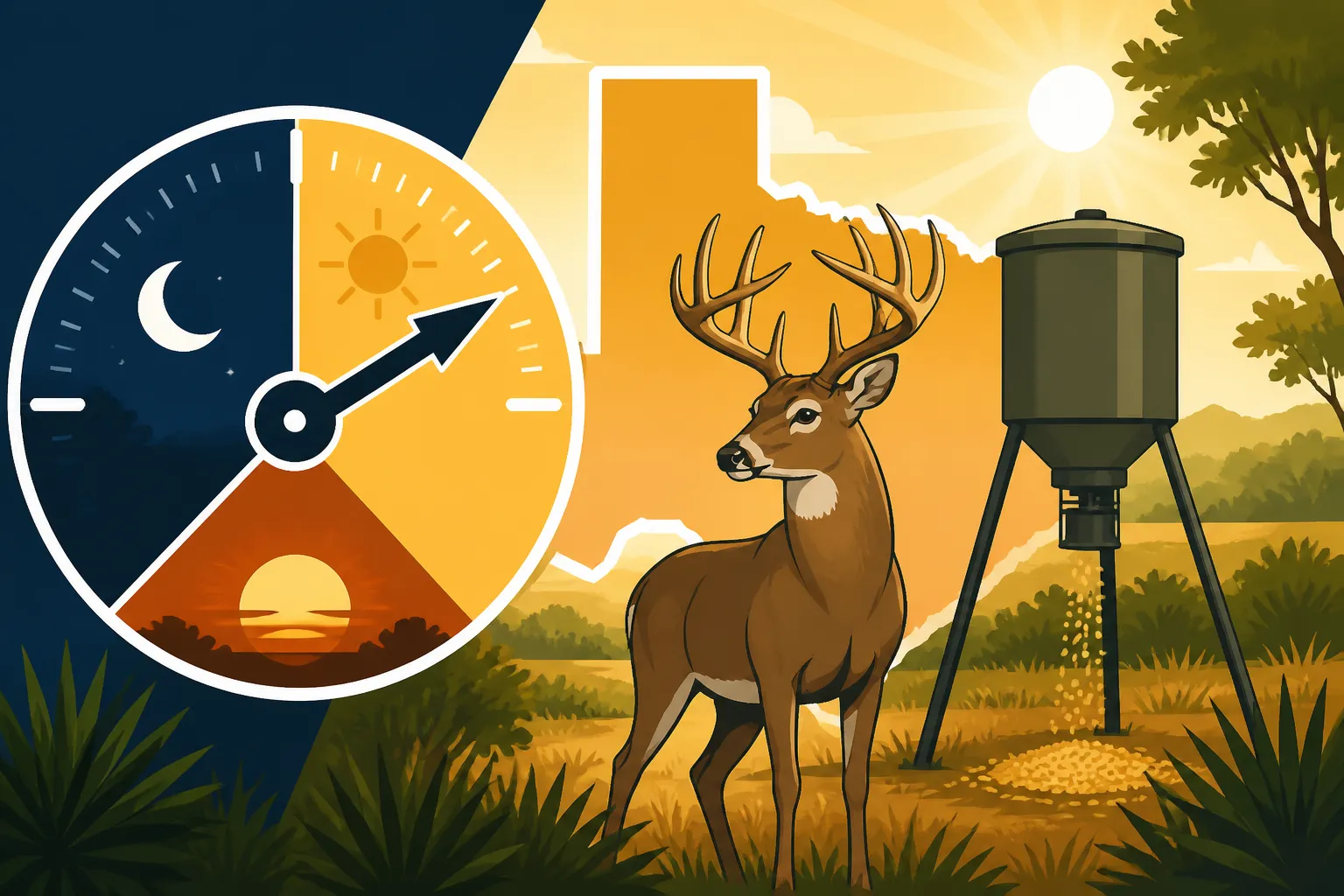
It's incredibly frustrating, isn't it? You spend good money on a feeder, load it up with corn, and faithfully check your trail camera footage, only to see pictures of deer munching away under the cloak of darkness. You're out there trying to hunt in daylight, but the deer seem to have gotten the memo that the buffet opens after sunset. This guide is all about turning those nocturnal habits around, giving you actionable strategies and the best feeder timer settings to bring those whitetails out when you can actually hunt them.
Understanding Deer Movement and Feeding Patterns
Deer aren't just random wanderers; their lives are governed by a complex interplay of natural rhythms, survival instincts, and external pressures. If you want to influence their behavior, you first have to understand what makes them tick, especially here in the diverse landscapes of Texas.
The Rhythmic Life of a Whitetail Deer: Dawn, Dusk, and In-Between
Whitetail deer, by their very nature, are crepuscular animals, meaning they are most active during the twilight hours of dawn and dusk. This isn't just a preference; it's a survival mechanism ingrained over millennia. These times offer reduced visibility for predators, cooler temperatures, and often, less human activity. They move between bedding areas and feeding grounds during these periods, which is precisely why these times are often called the "golden hours" for hunters.
However, deer activity isn't exclusively confined to dawn and dusk. They do move and feed throughout the day, especially if conditions are right. Think about a cool, overcast day in late fall, or a period during the rut when bucks are actively seeking does. These are prime examples of when you might see increased daylight activity. Food sources also play a massive role. If a natural food source, like a freshly grown food plot in Texas, is abundant and easily accessible, deer will spend more time there. Similarly, supplemental feeding stations, like corn feeders, can become significant draw cards. The challenge, then, is to make your feeder the preferred daylight destination, rather than just another stop on their nightly rounds.
Why Deer Go Nocturnal: Pressure, Predators, and Heat
So, if deer are naturally active at dawn and dusk, why do we often find them becoming almost exclusively nocturnal, especially around feeders? The answer usually boils down to three main culprits: hunting pressure, predators, and the relentless Texas heat.
Hunting pressure is perhaps the most significant factor. When hunters are constantly in the woods, especially during peak season, deer quickly learn that daylight movement near human activity can be dangerous. They adapt by shifting their patterns to night, when they perceive less threat. This is a learned behavior, and once established, it can be incredibly hard to break. Imagine being a deer; if every time you stepped out during the day, you smelled humans, heard vehicle doors, or saw blinds, you'd quickly learn to wait until dark. For a deeper dive into general tactics, consider reading up on Deer Hunting in Texas: Feeders, Blinds & Tactics.
Predators also play a role, though perhaps less directly than human pressure at specific feeder sites. Coyotes, bobcats, and especially feral hogs can make deer nervous. While hogs might not directly prey on adult deer, their constant rooting, aggressive behavior, and sheer numbers can push deer out of an area during the day. Deer prefer calm, secure environments to feed, and a feeder constantly swarmed by hogs isn't one of them.
Finally, the Texas heat, particularly during the early archery and general seasons, can be brutal. Deer, like us, prefer to avoid the scorching midday sun. They'll often bed down in thick cover, seeking shade and cooler temperatures, and delay their most intensive feeding until the mercury drops after dark. This is why understanding Best Time of Day to Hunt Whitetail in Texas involves more than just checking your watch.
The Science Behind Feeder Timer Settings for Daylight Activity
Simply dumping corn on the ground or setting your feeder to throw randomly won't cut it if your goal is daylight deer. There's a method to the madness, a strategic approach to using your feeder's timer to encourage daytime visits.
Timing is Everything: When to Throw Corn
The most crucial aspect of getting deer to your feeder in daylight is when you activate it. You want to create a predictable feeding opportunity that aligns with their natural crepuscular tendencies but also subtly extends into huntable daylight hours.
The Golden Rule: Two Throws Per Day. For most situations, especially if you're battling nocturnal tendencies, two feeding times are optimal:
- Morning Throw (Pre-Dawn/Sunrise): Set your feeder to go off about 30 minutes before official sunrise. This accomplishes several things. First, it coincides with their natural morning movement. Second, it gets the corn on the ground before legal shooting light, allowing deer to arrive and start feeding as the sun comes up. They'll often continue to feed for a good hour or two after sunrise, especially if the area feels secure. This can provide excellent hunting opportunities.
- Afternoon Throw (Late Afternoon/Pre-Sunset): This throw should occur roughly 2 to 2.5 hours before official sunset. Similar to the morning, it capitalizes on their natural evening movement. By throwing the corn well before sunset, you give deer ample time to arrive and feed while there's still plenty of legal shooting light. They might linger until dark, but you'll have a solid window for a shot.
Avoid feeding in the middle of the day. A midday throw rarely attracts deer during peak heat or human activity, and often just becomes a free meal for hogs or other non-target species. Similarly, avoid throwing corn after sunset if your primary goal is daylight hunting. This only reinforces nocturnal behavior.
Remember, deer are creatures of habit. Consistency is key. Once you establish a schedule, stick with it. Any sudden changes can make them wary and disrupt the pattern you're trying to establish. If you're wondering about the legality of using feeders, our guide on Hunting Over Feeders & Corn in Texas (Legal Guide) provides essential information.
Duration and Quantity: How Much is Just Right?
It’s not just about when you throw, but also how much and for how long. Too much corn, and you're essentially providing an all-you-can-eat buffet that might last through the night, diminishing the incentive to visit during specific daylight windows. Too little, and it might not be enough to hold their attention or justify the trip.
Optimal Throw Duration: For most standard spin-cast feeders, a throw duration of 3 to 5 seconds per cycle is a good starting point. This typically dispenses anywhere from 1 to 3 pounds of corn, depending on your feeder's motor and spinner plate design. You want enough corn to satisfy a small group of deer for a short period, encouraging them to return at the next scheduled feeding, rather than gorging themselves and leaving. If you’re using larger, heavier corn like some of the specialized deer corn, you might adjust the duration slightly. Our guide on Best Corn for Deer Feeders in Texas delves into different corn types.
Adjusting Quantity:
- Start Lean: Begin with shorter throw times (e.g., 3 seconds). Observe your trail camera footage. Are deer cleaning up all the corn quickly? Are other animals dominating the feed?
- Increase Gradually: If the corn is gone too fast, and deer seem to be moving on quickly after feeding, you might slightly increase the duration to 4 or 5 seconds. The goal is to provide enough for a satisfying, but not excessive, meal.
- Monitor Waste and Critters: If you see corn remaining on the ground for extended periods, or if hogs are consistently cleaning it up before deer get a chance, you're throwing too much. Reduce the duration. This also ties into how to keep hogs out of your feeder, a common challenge many Texas hunters face.
Advanced Strategies and Troubleshooting for Daylight Deer
Even with the perfect timer settings, getting deer to consistently show up in daylight can sometimes feel like a puzzle. Factors like season, weather, and competition from other animals require a flexible and proactive approach.
Adjusting for Season and Weather: Summer Heat, Winter Chill, and the Rut
Texas weather is anything but consistent, and deer behavior shifts dramatically with the seasons. Your feeder timer settings need to adapt to these changes.
- Early Season/Summer Heat: During the scorching Texas summer and early archery season, deer primarily move in the coolest parts of the day. This means pushing your morning throw as close to sunrise as legally possible (e.g., 15-20 minutes before) and your evening throw further out from sunset (e.g., 3 hours before). This provides feed when temperatures are most comfortable for them. They'll hit it hard in the pre-dawn cool and again as the afternoon heat starts to break. Consider focusing on Protein Feeding Deer for Bigger Antlers during these hot months to support herd health, as protein consumption can increase in summer.
- Fall/The Rut: As temperatures cool and the rut approaches, deer activity increases across the board. Bucks are constantly on the move, chasing does, and burning massive amounts of energy. During the peak of the rut, their feeding patterns can become erratic, but they'll still gravitate towards reliable food sources. Maintaining your consistent morning and evening throws is still vital. Bucks might cruise through a feeder area at any time of day, especially if does are present. For a comprehensive look at this critical period, check out The Texas Rut: When Do Bucks Rut by Region?. You might even consider adding a very short, midday throw (1-2 seconds) during the absolute peak of the rut in your specific region, just to catch those cruising bucks.
- Late Season/Winter Chill: In the colder late season, deer need more calories to maintain body heat. They might also be more inclined to feed during the warmer parts of the day if natural forage is scarce. Keep your morning throw strong, and consider slightly extending your afternoon throw duration if you notice consistent consumption. Their bedding-to-feeding patterns might be more direct and less circuitous, making your feeder an even more important draw.
Dealing with Unwanted Visitors: Hogs and Other Critters
One of the biggest headaches for Texas hunters is undoubtedly feral hogs. These intelligent and voracious eaters can quickly deplete a feeder, leaving nothing for your target deer. Raccoons, skunks, and even turkeys can also be nuisances, though less destructive than hogs.
- Hog-Proofing Your Feeder: This is paramount. Start by using a feeder cage or hog panel around the feeder legs. Ensure the cage is sturdy, at least 34-36 inches high, and anchored securely. The cage allows deer to feed comfortably but makes it difficult for hogs to get directly under the spinner.
- Elevate Your Feeder: Raising your feeder higher off the ground (e.g., 8-10 feet) can also deter hogs to some extent, as it makes it harder for them to reach the spinner. However, it doesn't prevent them from eating corn off the ground once it's dispersed.
- Adjusting Throw Pattern: Some advanced feeders allow you to adjust the throw pattern – for example, a narrow 30-degree arc instead of a full 360-degree spread. If you have a specific opening or lane where you want deer to feed, and hogs tend to come from a different direction, this can help concentrate the corn where you want it.
- Hunting the Hogs: Sometimes, the most direct solution is to thin out the hog population. Regular hog hunting around your feeders, especially at night using thermal optics (where legal), can significantly reduce their pressure on your deer herd. For more detailed strategies, our guide on How to Keep Hogs Out of Your Deer Feeder offers excellent advice.
- Trail Camera Surveillance: Utilizing cellular trail cameras is indispensable here. They allow you to monitor activity 24/7 without disturbing the area. You can identify exactly when and which unwanted critters are visiting, allowing you to fine-tune your timer settings or deploy specific deterrents. Learning How to Pattern Bucks With Trail Cameras isn't just for deer; it's for all wildlife activity around your feed sites.
Putting It All Together: A Sample Feeder Timer Schedule
Let's lay out a hypothetical feeder timer schedule for a lease in Central Texas, assuming standard deer season conditions (moderate temperatures, no extreme rut activity). Remember, this is a starting point; you'll need to fine-tune it based on your specific location, deer behavior, and trail camera intel.
| Time of Day | Feeder Setting (Seconds) | Rationale | Key Considerations |
|---|---|---|---|
| 30 Minutes Before Sunrise | 3-4 seconds | Caters to natural morning movement; corn is available at first legal light for feeding. | Allows deer to arrive and settle before shooting hours, encouraging prolonged daylight feeding. |
| 2 Hours Before Sunset | 3-4 seconds | Captures natural evening movement; provides ample time for deer to feed during legal shooting hours. | Encourages deer to arrive while it's still bright, extending your hunting window. |
Example Scenario: Early Season (Hot Weather)
Let's say it's opening weekend of archery season in September, and temperatures are still in the high 80s to low 90s.
- Sunrise: 7:15 AM
- Sunset: 7:40 PM
Your adjusted schedule might look like this:
- Morning Throw: 6:45 AM (30 minutes before sunrise) – 3 seconds
- Evening Throw: 5:00 PM (2 hours 40 minutes before sunset) – 3 seconds
Notice how the evening throw is pushed earlier to capitalize on the breaking heat of the late afternoon, encouraging deer to arrive before the sun dips too low.
Example Scenario: Peak Rut (Cooler Weather)
Now imagine it's mid-November, cooler temperatures, and bucks are actively chasing.
- Sunrise: 6:50 AM
- Sunset: 5:30 PM
Your schedule could be:
- Morning Throw: 6:20 AM (30 minutes before sunrise) – 4 seconds (increased quantity for energy demands)
- Midday "Stimulus" Throw (Optional): 12:00 PM – 1 second (very short, just to potentially catch cruising bucks)
- Evening Throw: 3:30 PM (2 hours before sunset) – 4 seconds
The midday throw is a calculated risk during the rut; it might only attract a lone buck on the move, but it won't deplete your feed or reinforce nocturnal habits significantly if kept very short. Generally, it's best to stick to just two throws, but the rut offers unique conditions.
Remember, this is a continuous learning process. Regularly review your trail camera photos and videos to see how deer (and other animals) are reacting to your settings. Are they arriving right at the throw? Are they sticking around? Are hogs still a major problem? Your feeder setup, including where you place your deer feeder for best results, is a dynamic system that needs constant attention and adjustment to yield the best daylight results.
Disclaimer
Hunting regulations and best practices can change. Always consult the latest Texas Parks and Wildlife Department (TPWD) Outdoor Annual for the most up-to-date rules, seasons, and licensing requirements before engaging in any hunting activities. This guide is for informational purposes only and should not replace official regulations or professional guidance.