Best Gear for Mule Deer on a Texas Lease
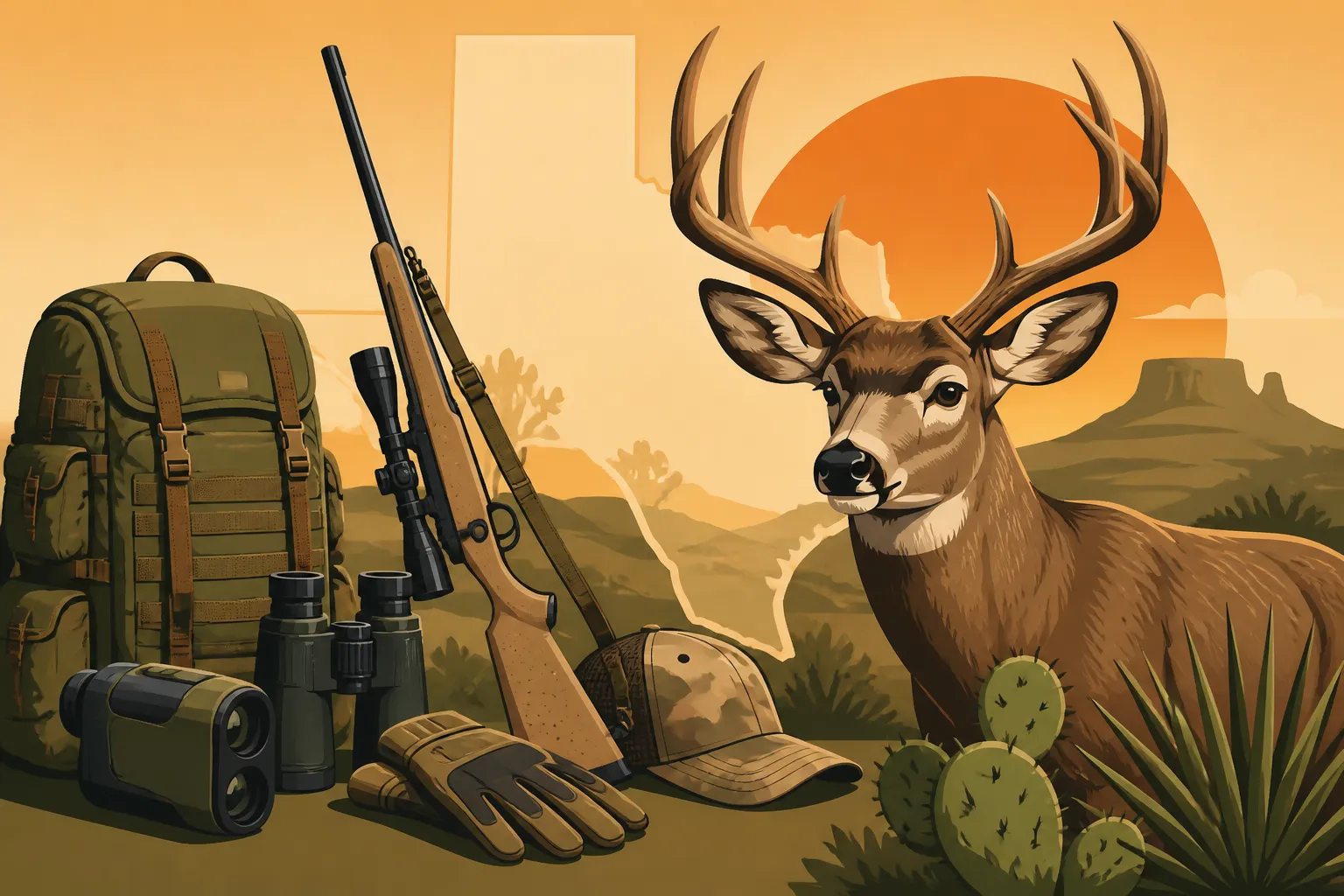
Hunting mule deer in West Texas is an experience unlike almost any other, but let's be honest, it comes with its own unique set of challenges. You're often dealing with vast, unforgiving terrain, extreme temperature swings, and animals that can disappear in a blink. Showing up unprepared can quickly turn a dream hunt on a good Texas lease into a frustrating struggle against the elements and elusive game. This guide is all about equipping you with the right gear, so you can confidently face the demands of a mule deer hunt and maximize your success out there.
Understanding the Texas Mule Deer Habitat and Challenges
Before we even dive into specific items, it's crucial to understand why certain gear is indispensable for mule deer hunting on a Texas lease. Unlike the dense brush of South Texas or the rolling hills of the Edwards Plateau, the mule deer country, primarily in the Trans-Pecos and Panhandle, presents an entirely different environment and therefore, different demands on your equipment.
Hunting the Trans-Pecos Region
The Trans-Pecos region, stretching across West Texas, is characterized by its wide-open spaces, rugged mountains, deep canyons, and sparse vegetation. Think Guadalupe Mountains National Park, Big Bend, or the vast ranchlands around Marfa and Van Horn. This isn't a place where you'll be sitting in a blind over a feeder hoping a deer walks by. This is big country, often requiring significant hiking, climbing, and glassing from high vantage points. The distances can be deceiving, and the terrain can be brutal on both you and your gear. Understanding the specific challenges of this region is the first step in assembling your ideal kit. For a deeper dive into the specific areas and how to approach them, you might want to read our guide on Mule Deer Hunting in Texas: Panhandle & Trans-Pecos.
Spotting and Stalking Demands
Mule deer hunting in Texas is predominantly a spot-and-stalk affair. You're spending hours, sometimes days, with your binoculars and spotting scope, scanning distant hillsides and canyon rims for any sign of movement. Once you spot a buck, the real work begins: planning and executing a stalk across potentially miles of broken ground, all while trying to stay hidden from an animal with incredible eyesight and hearing. This style of hunting means your optics need to be top-tier, your footwear needs to be robust, and your physical conditioning has to be up to par. It's a game of patience, precision, and endurance.
Essential Optics for Mule Deer Success
When you're chasing mule deer in the wide-open spaces of West Texas, your eyes are your most important tool, and your optics are an extension of those eyes. Skimping here is a surefire way to severely limit your success. You'll spend 90% of your hunt looking through glass, so invest wisely.
High-Quality Binoculars
Your binoculars will be glued to your face for much of the day, making them perhaps the single most critical piece of gear. You need clarity, brightness, and a comfortable ergonomic design. Opt for binoculars in the 10x or 12x magnification range. While 10x is a great all-around choice, 12x can give you that extra reach in wide-open country to pick apart distant hillsides. Look for objective lenses in the 42mm to 50mm range for good light gathering, especially during those crucial dawn and dusk hours. Brands like Zeiss, Swarovski, Leica, and Vortex are often considered leaders in this space, offering superb optical quality and durability that can withstand the rigors of a Texas mule deer hunt. Consider features like waterproof and fog-proof capabilities, which are essential when facing sudden weather changes or temperature swings.
Rangefinders for Long Shots
In the vast, undulating landscape where mule deer live, judging distance accurately without a rangefinder is nearly impossible, especially when a shot could easily be 300 yards or more. A good laser rangefinder is non-negotiable. Look for models with a maximum range well beyond your intended shooting distance (e.g., if you plan to shoot up to 400 yards, get one that ranges to 800-1000+). Angle compensation features are also invaluable when shooting up or down steep canyon walls, as they provide the true horizontal distance to the target, which is what your bullet cares about. Many hunters also appreciate a rangefinder with a "scan" mode to get continuous readings on moving animals. For recommendations on picking the right model, check out our guide on the Best Rangefinder for Texas Hunting.
Reliable Rifle Scopes
Once you've spotted your buck and ranged him, your rifle scope is what brings that distant animal into sharp focus for a precise shot. A variable power scope, typically in the 3-9x, 4-12x, or even 4-16x range, offers versatility for both closer encounters and those longer reach-out-and-touch-him shots. Key features to prioritize include excellent light transmission, crisp edge-to-edge clarity, and reliable, repeatable adjustments for windage and elevation. Many mule deer hunters swear by scopes with custom turrets or ballistic reticles that allow for quick holdover adjustments at extended ranges, taking the guesswork out of longer shots. Don't forget durable construction—a scope that can hold zero despite bumps and jostles is essential. To narrow down your options, read our article on the Best Rifle Scope for Texas Deer Hunting.
Rifles, Ammo, and Shooting Accessories
You've done the hard work of spotting and stalking; now it's time to make the shot count. The right rifle, ammunition, and accessories are what bridge the gap between effort and success, especially when a mule deer might present a longer shot opportunity than typical whitetail hunting.
Choosing the Right Caliber
For mule deer, you'll want a cartridge that can deliver sufficient energy and maintain accuracy at extended ranges, often in windy conditions. Popular choices among Texas mule deer hunters include the .270 Winchester, .30-06 Springfield, .308 Winchester, 7mm Remington Magnum, .300 Winchester Magnum, and even the newer 6.5 Creedmoor. These calibers offer a good balance of flat trajectory, manageable recoil, and terminal performance on larger deer. The key is to choose a rifle and caliber you are comfortable and proficient with, as shot placement trumps raw power any day. Practice shooting from various field positions, not just a bench.
Ammunition Selection
Once you've chosen your caliber, selecting the right ammunition is equally important. For mule deer, you need a bullet designed for controlled expansion and deep penetration to ensure a clean, ethical kill, even on a tough, quartering shot. Premium hunting bullets like Nosler AccuBond, Barnes TTSX, Hornady ELD-X, or Federal Terminal Ascent are excellent choices. They are engineered to perform consistently at a wide range of velocities, which is critical for those long shots where bullet speed has dropped off. Always test several different ammunition types in your rifle to see which one provides the best accuracy before you head to the lease.
Shooting Aids and Stability
The expansive terrain of West Texas often means shooting from improvised positions, not always a flat bench. To achieve consistent accuracy, a solid rest is crucial. A bipod attached to your rifle is a popular choice, offering stable support when prone or shooting from a sitting position. For more versatility, especially when glassing and needing to quickly transition to a shooting rest, a good shooting tripod or trekking poles that convert into a shooting rest can be invaluable. Some hunters even bring a small, lightweight shooting bag to support the forend of their rifle when shooting from a pack or rock. Every bit of stability helps in making that critical shot.
Clothing, Footwear, and Essential Field Gear
Mule deer country is tough on gear and even tougher on the hunter. Proper clothing, comfortable footwear, and a well-stocked pack aren't luxuries; they're necessities for safety, comfort, and ultimately, success in the field.
Layering for Variable Weather
Texas weather, especially in the western parts of the state, can be notoriously unpredictable. You might start your day in near-freezing temperatures before the sun rises, only to be shedding layers by mid-morning as it heats up into the 70s or 80s. The key here is a versatile layering system. Start with a moisture-wicking base layer to manage sweat, add an insulating mid-layer (fleece or synthetic puffy), and top it off with a durable, windproof, and water-resistant outer shell. Brands like Sitka Gear and Kuiu are popular for their technical hunting apparel designed for extreme conditions, but even good quality hiking apparel can work. Choose quiet fabrics that won't spook game, and consider camo patterns suitable for arid, rocky environments.
Durable, Comfortable Footwear
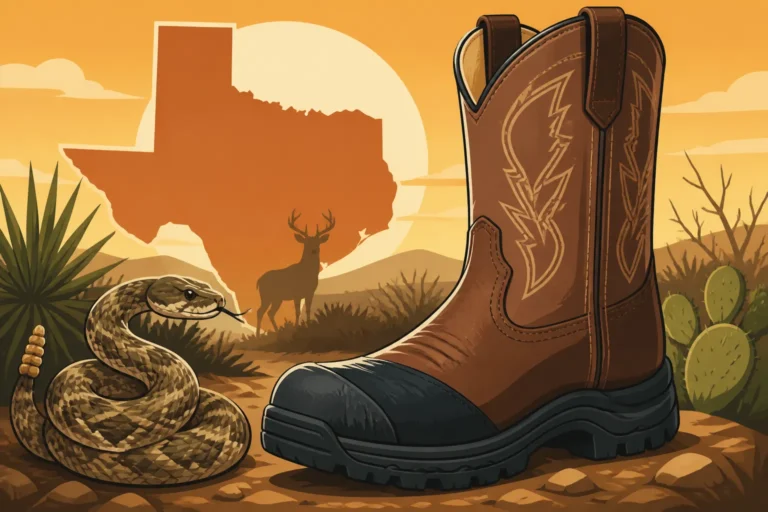
You're going to be covering serious ground on a mule deer hunt, often over rocky, uneven terrain. Your boots are your foundation, and they need to be up to the task. Look for sturdy, ankle-supporting boots with stiff soles for good traction and protection against sharp rocks. Waterproofing is a must, as you never know when you might encounter unexpected rain or cross a small creek. Break your boots in thoroughly before the hunt to prevent blisters, which can quickly ruin a trip. Many hunters prefer a medium-stiffness boot, offering a balance of support for packing out a heavy load and flexibility for comfortable hiking. Our article on Best Hunting Boots for the Texas Hill Country offers some good general insights into footwear for varied Texas terrains.
Backpacks and Hydration
A reliable backpack is essential for carrying all your gear, including optics, extra layers, food, water, and first-aid supplies. For mule deer hunting, a pack in the 2500-4000 cubic inch range is often ideal for day hunts, with larger packs (4000-6000+ cubic inches) needed if you anticipate packing out meat over long distances. Look for a pack with a comfortable, adjustable suspension system, good compression straps, and external pockets for quick access to essentials. Hydration is non-negotiable in the arid Trans-Pecos. Carry plenty of water—more than you think you'll need—either in a hydration reservoir or multiple water bottles. Electrolytes are also a good idea to prevent cramping and fatigue. Many hunters find resources like GoHunt's gear reviews helpful for finding packs that stand up to rigorous field use. A well-chosen pack can make or break your comfort and endurance in the field. For more specific advice, see our recommendations for the Best Hunting Backpack for Texas.
Navigation and Communication Tools
Even on a well-managed lease, getting lost or disoriented in vast mule deer country is a real possibility, especially when you're focused on a distant animal. A reliable GPS device or a hunting app like onX Hunt on your smartphone (with downloaded offline maps) is crucial for knowing your location, property boundaries, and for navigating back to camp or your vehicle. Always carry a physical compass and map as a backup. Two-way radios are also excellent for communicating with hunting partners, especially when spread out across a large area. Remember that cell service can be spotty to non-existent in many parts of West Texas, so don't rely solely on your phone. Planning your route and knowing the terrain can be significantly aided by using scouting tools, such as the detailed mapping features offered by GoHunt, which can help you understand the contours and access points of your lease before you even set foot on it.
General Field Essentials
Beyond the big-ticket items, there are a host of smaller, but no less important, items that can significantly improve your hunt and ensure your safety and comfort. Don't underestimate the power of these often-overlooked essentials.
First-Aid and Emergency Supplies
Accidents happen, even to the most careful hunters. A comprehensive first-aid kit, tailored to the remote nature of mule deer hunting, is a must. Include bandages, antiseptic wipes, pain relievers, blister treatment, any personal medications, and a tourniquet. Beyond that, consider an emergency shelter (like a lightweight tarp or bivvy sack), a fire-starting kit, a headlamp with extra batteries, and a signaling device (whistle, signal mirror). A multi-tool or a good hunting knife, like those mentioned in our guide on the Best Hunting Knife for Field Dressing, will also come in handy for countless tasks, from field dressing to gear repairs.
Food and Water Planning
Even if you're on a day hunt, pack enough food and water for longer than you anticipate being out. Dehydrated meals, energy bars, jerky, and trail mix are excellent lightweight, calorie-dense options. As mentioned before, hydration is critical; plan for at least a gallon of water per person per day, potentially more if the weather is hot and you're doing heavy hiking. Consider adding electrolyte tablets or mixes to your water to replenish essential minerals lost through sweat. Always err on the side of carrying too much water rather than too little.
Game Retrieval and Processing Tools
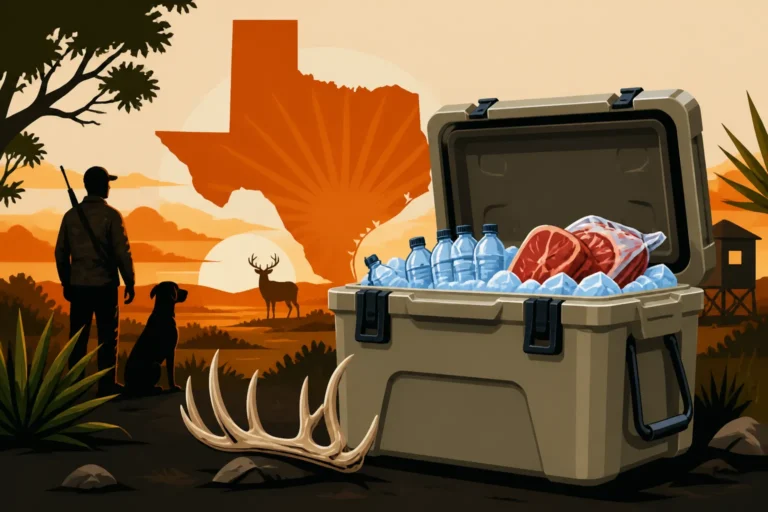
Hopefully, your hunt will be successful, and then the real work of game retrieval begins. This often means breaking down an animal far from any road or camp. A sharp, durable hunting knife or two, game bags to protect the meat from dirt and insects, and a bone saw or hatchet are essential. If you anticipate a long pack-out, a game cart can be a lifesaver, though its utility in truly rugged, steep terrain might be limited. For those hot Texas days, knowing How to Cool a Deer Fast in Texas Heat is crucial for meat preservation. Additionally, having strong rope or cord can help you drag an animal or hoist quarters if necessary.
Mule Deer Gear Checklist for a Texas Lease
Here's a quick rundown of the essential gear you'll want to consider for your Texas mule deer hunt:
| Category | Essential Items | Considerations |
|---|---|---|
| Optics | High-quality Binoculars (10x-12x) | Spend the most here; waterproof, fog-proof, comfortable. |
| Laser Rangefinder (800yd+ range, angle compensation) | Critical for accurate distance judgments in open country. | |
| Rifle Scope (3-9x, 4-12x, or 4-16x) | Clear, bright, reliable adjustments; consider ballistic reticles/turrets. | |
| Spotting Scope (optional but highly recommended for extensive glassing) | 15-45x or 20-60x, with a stable tripod. | |
| Firearms & Ammo | Reliable Hunting Rifle (.270, .30-06, .308, 6.5 CM, 7mm Mag, .300 Mag) | Practice extensively; ensure comfortable, accurate shooting. |
| Premium Hunting Ammunition | Test for accuracy; controlled expansion, deep penetration. | |
| Shooting Bipod/Tripod | Essential for stability and accuracy on long shots from various field positions. | |
| Apparel | Layering System (moisture-wicking base, insulating mid, wind/waterproof shell) | Adaptable to extreme temperature swings, quiet fabrics, appropriate camo for arid environments. |
| Durable, Waterproof Hunting Boots | Broken in, ankle support, stiff sole, good traction for rocky terrain. | |
| Quality Hunting Socks (wool or synthetic) | Prevent blisters, wick moisture. | |
| Wide-brimmed Hat/Cap & Gloves | Sun protection, warmth in cold mornings. | |
| Field Essentials | Hunting Backpack (2500-4000 cu. in. for day hunts, larger for pack-outs) | Comfortable suspension, good compression, hydration compatible. |
| Hydration System (reservoir & bottles) | Carry ample water; consider electrolyte mixes. | |
| Navigation Tools (GPS, mapping app like GoHunt, compass & map) | Redundancy is key; downloaded offline maps. | |
| Headlamp with spare batteries | For early morning hikes and late-night pack-outs. | |
| First-Aid Kit | Comprehensive for remote areas, personal medications. | |
| Field Dressing Kit (knives, game bags, bone saw) | Sharp, durable tools for processing game in the field. | |
| Fire Starter, Emergency Shelter | For unexpected overnight stays. | |
| Snacks & Energy Food | High-calorie, lightweight. | |
| Sunscreen & Lip Balm | Protection from intense Texas sun. |
Preparing for a mule deer hunt on a Texas lease is about more than just having a valid Texas Hunting License: Cost, Types & How to Buy (2026) and knowing the Mule Deer Season & Bag Limit in Texas. It's about equipping yourself to thrive in a challenging environment and maximizing your chances of success. By investing in high-quality, purpose-built gear, you’ll be ready to tackle the vastness of the Trans-Pecos, spot that elusive buck, and make that once-in-a-lifetime shot. Good luck out there, and hunt safe!
Disclaimer
Please remember that hunting regulations, seasons, and requirements can change. Always consult the most current Texas Parks and Wildlife Department (TPWD) Outdoor Annual or their official website before any hunting trip to ensure you are fully compliant with all state laws and regulations. The information provided here is for general guidance only.