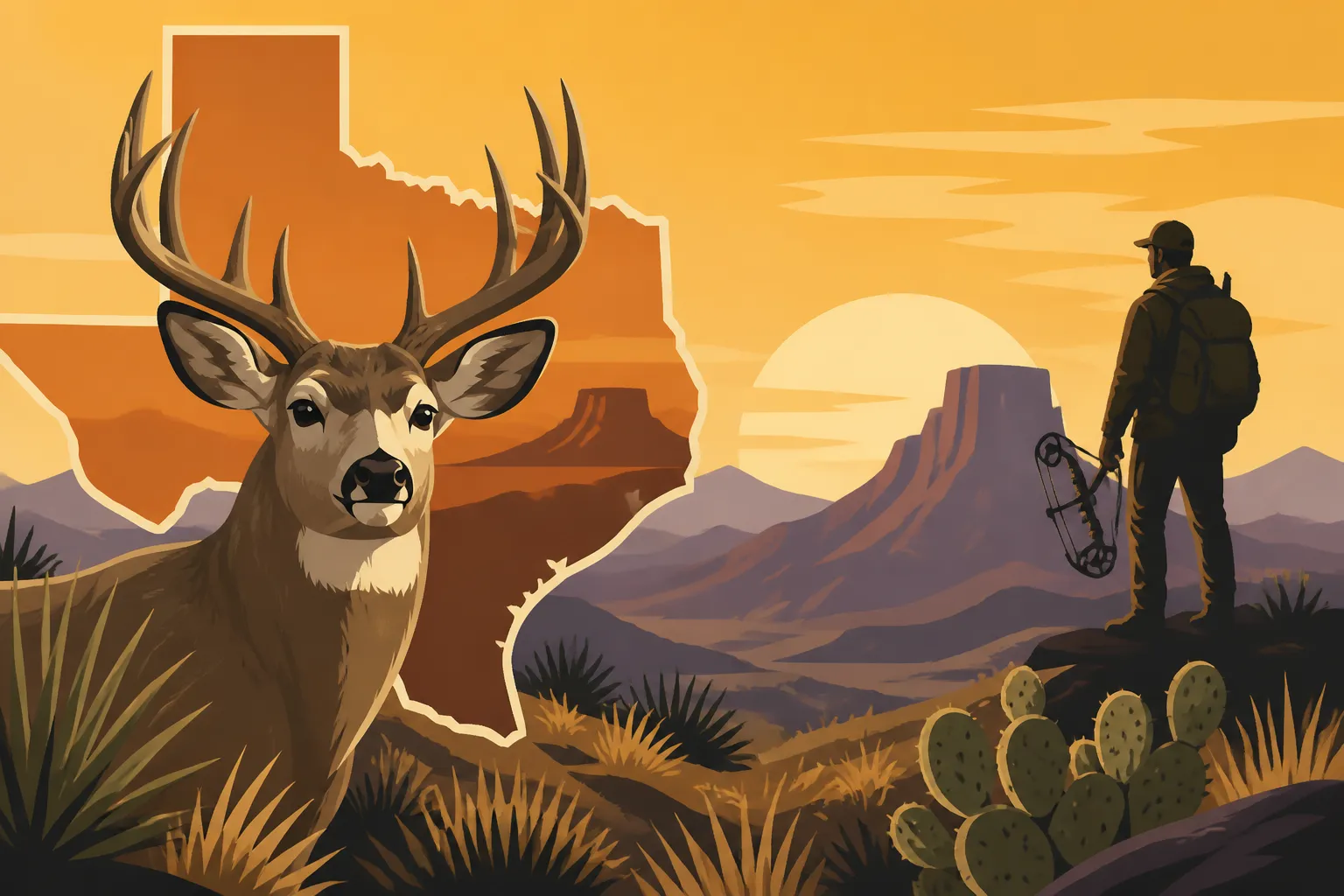
Mule Deer Hunting in Texas: Panhandle & Trans-Pecos
Mule deer hunting in Texas can feel like chasing a ghost in an unforgiving landscape, especially when you consider the vast, rugged expanses of the Panhandle and Trans-Pecos regions. These aren't your typical whitetail woods; the terrain, the deer behavior, and the necessary tactics are entirely different. This guide is dedicated to helping you unravel the mysteries of hunting mule deer in Texas, offering deep insights into where to find them, what gear you'll need, and the strategies that genuinely work in these unique parts of our state.
Understanding Texas Mule Deer
Hunting mule deer in Texas is a distinctly different experience from pursuing our ubiquitous whitetails. These animals, named for their large, mule-like ears, are truly creatures of the wide-open, arid spaces. They demand a different approach, a different skillset, and a deep appreciation for the vast, often brutal landscapes they call home. Understanding their biology and behavior is the first crucial step to success.
Mule Deer Characteristics and Behavior
Mule deer, or "mulies" as many call them, are generally larger than white-tailed deer, boasting a more robust body and distinct antlers that typically fork rather than growing off a main beam. Their tails are also a dead giveaway: a narrow, rope-like tail with a black tip, rather than the broad, white flag of a whitetail. But it's their behavior that really sets them apart, especially their gait. When alarmed, mulies often execute a stiff-legged bounding motion known as "stotting" or "pronking," which allows them to cover broken ground quickly while maintaining a view of their surroundings. This makes them appear to bounce away, rather than run like a whitetail.
Unlike the cover-loving whitetail, mule deer are more accustomed to open country. They rely heavily on their eyesight and hearing, often bedding on open slopes or high points where they can observe approaching threats from a distance. This means a hunter often needs to spot them from afar, making high-quality optics indispensable. They aren't as secretive or brush-bound as whitetails, but they use the expansive terrain, elevation changes, and sparse cover to their advantage, often disappearing into a fold of the land or behind a distant mesquite flat with surprising swiftness. Hunting them successfully requires understanding this preference for space and elevation.
Habitat and Diet in Arid Texas
The mule deer in Texas are primarily found in two distinct ecoregions: the Trans-Pecos and the Panhandle. Both are characterized by their arid to semi-arid climates, vast stretches of land, and challenging topography, yet they offer slightly different habitats. In the rugged Trans-Pecos, which includes the Davis Mountains and the Chihuahuan Desert, mulies thrive in broken country, among rocky outcrops, canyons, and sparse vegetation like juniper, mountain mahogany, and various desert shrubs. Their diet here consists of a mix of forbs, browse, and succulents like prickly pear, which provides both food and essential moisture in this parched land. They are experts at finding isolated springs or ephemeral water sources, often traveling considerable distances to get a drink.
The Panhandle, while also arid, features deep canyons and breaks that cut through the flat plains, providing essential cover and diverse vegetation. Here, mule deer utilize the steep, eroded canyons and river bottomlands for bedding and feeding, often venturing out onto agricultural fields at night. Their diet in this region might include agricultural crops like wheat or corn, alongside native grasses, forbs, and woody browse found in the canyons. The sheer scale of these landscapes means that mule deer populations can be spread out, and finding concentrations often comes down to locating prime bedding areas near reliable food and water, which can be few and far between.
The Texas Mule Deer Rut
Just like whitetails, mule deer have a rut, but its timing and intensity can vary slightly by region and environmental conditions. Generally, the mule deer rut in Texas kicks off a bit later than the whitetail rut, typically peaking in mid to late December and extending into January. This timing often aligns with the general rifle season, making it a highly anticipated period for hunters. During the rut, bucks become much more active, shedding their cautious nature as they pursue does. This increased activity makes them more visible and vulnerable, creating excellent hunting opportunities.
The rut often brings bucks out of their secluded bedding areas, moving more freely across the landscape. They can be seen trailing does, sparring with rival bucks, and actively scent-checking for receptive females. Understanding this heightened activity period is crucial for planning your hunt. Bucks that were once virtually invisible can suddenly appear on open hillsides or in canyon bottoms, making glassing even more productive. Knowing when to rattle for bucks in South Texas for whitetails is different than mule deer. Hunters targeting the rut should focus on areas where does congregate, such as prime feeding grounds or reliable water sources, as these will naturally attract the bucks. Keep an eye on the weather, too; cold snaps can often kick the rut into high gear, prompting more intense activity.
Prime Mule Deer Hunting Regions
Texas, a state renowned for its diverse wildlife, offers exciting opportunities for mule deer hunting, predominantly in two distinct and equally challenging regions: the Trans-Pecos and the Panhandle. Each area presents its own unique landscape, hunting strategies, and a truly unforgettable experience.
The Rugged Trans-Pecos: Mountains, Desert, and Glassing Opportunities
The Trans-Pecos region of West Texas is a land of dramatic beauty and formidable terrain. Characterized by towering mountain ranges like the Davis Mountains, Glass Mountains, and Guadalupe Mountains, interspersed with vast Chihuahuan Desert lowlands, this area is the quintessential mule deer habitat. Here, mulies thrive in the rough, broken country, utilizing the steep canyon systems, rocky slopes, and sparse vegetation for cover and sustenance. The sheer scale of the landscape is breathtaking, with views that stretch for miles, often revealing distant mountain ranges or the vast expanse of the desert floor.
Hunting in the Trans-Pecos is primarily a game of long-range glassing and strategic spot-and-stalk. Hunters will spend hours, if not days, behind binoculars and spotting scopes, systematically picking apart distant hillsides, canyon rims, and draws, searching for the tell-tale shape or movement of a bedded or feeding mule deer. The light changes dramatically throughout the day, often requiring careful observation in shifting shadows. Once a deer is spotted, the real challenge begins: planning an approach across unforgiving terrain, often involving significant elevation changes, loose rock, and thorny brush, all while staying undetected by an animal with keen senses. Patience, physical stamina, and precision shooting at extended ranges are paramount here. Public hunting opportunities like the Black Gap WMA: Trans-Pecos Mule Deer offer a taste of this challenging landscape, but private leases dominate.
The Vast Panhandle: Canyons, Breaks, and Agricultural Influences
Moving north, the Texas Panhandle presents a different, yet equally challenging, mule deer hunting environment. While the high plains are predominantly flat, they are dramatically dissected by deep, winding river and creek systems, creating extensive networks of canyons and breaks. These natural formations, like the famous Palo Duro Canyon, provide crucial cover, water, and diverse vegetation, creating perfect pockets of mule deer habitat amidst the agricultural fields of the surrounding plains. The geology here is often layered, revealing vibrant red and orange rock formations that create a striking backdrop for a hunt.
Panhandle mule deer often move between the security of these canyons during the day and the adjacent agricultural fields at night, where they can feed on wheat, corn, or other crops. This makes hunting here a blend of glassing canyon walls and draws, much like the Trans-Pecos, but also understanding deer movement patterns between these natural refuges and the cultivated lands. Hunters might set up on a high point overlooking a canyon system at dawn and dusk, watching for deer moving to or from feeding areas. Access is predominantly through private land leases, and understanding local land use, including cattle grazing and farming practices, can be key to patterning deer. The deer here are often accustomed to human activity in a different way than their Trans-Pecos cousins, but they remain incredibly wary.
Specific Counties and Their Characteristics
Within these broad regions, certain counties stand out for their mule deer populations and hunting opportunities. In the Trans-Pecos, counties like Culberson, Hudspeth, and Jeff Davis are well-known for their rugged, mountainous terrain and healthy mulie populations. The sheer acreage of some ranches means deer have vast areas to roam, growing to impressive sizes. The hunting pressure can be lower in truly remote areas, but access is often limited to large leases or guided hunts. Hunters might focus on finding hidden springs or natural funnels created by the topography.
In the Panhandle, counties such as Briscoe, Floyd, Childress, and Hall are often cited for their strong mule deer numbers, particularly those with significant canyon systems. The Canadian River breaks, for instance, provide excellent habitat. Here, the hunting can sometimes involve more active tracking or still-hunting through the brushy bottoms of the canyons, combined with glassing from the rim. The deer might be more nocturnal, especially near heavy agricultural operations, so early morning and late evening hunts near transitions zones are critical. Regardless of the specific county, thorough scouting and adapting to the local terrain and deer behavior are the ultimate keys to success. For more on specific dates, check the Texas Mule Deer Season Dates 2026.
Essential Gear for Texas Mule Deer
Mule deer hunting in Texas, whether you're climbing the rocky slopes of the Trans-Pecos or navigating the intricate canyons of the Panhandle, demands a specific array of gear. This isn't a "set it and forget it" kind of hunting; the expansive, often unforgiving terrain, coupled with the elusive nature of mulies, means your equipment can be the difference between a successful hunt and a frustrating one. Forget what you think you know about whitetail gear; mule deer hunting is a whole different ballgame.
Optics: The Hunter's Lifeline in Open Country
When you're hunting mule deer in Texas, your eyes are your most important tool, and high-quality optics are their essential extension. You'll spend an incredible amount of time behind glass, systematically picking apart distant hillsides, canyon rims, and brush-filled draws that can stretch for miles. This isn't just about seeing deer; it's about identifying their sex, assessing antler size, and understanding their movement patterns long before they ever know you're there. This meticulous scanning saves you countless miles of walking and significantly increases your odds of success.
Your primary optic will be a good pair of binoculars, ideally 10×42 or 12×50. Brands like Vortex, Leupold, and Zeiss offer excellent clarity and light gathering capabilities that are vital in the low light of dawn and dusk. Don't skimp here; fuzzy edges or poor color rendition will quickly lead to eye fatigue and missed opportunities. A solid spotting scope (20-60x or 25-75x) is equally crucial for making those long-distance calls on antler quality and ensuring you're targeting a legal buck under Texas Antler Restrictions: The 13-Inch Rule Explained (though for mule deer, the general rule is different, often requiring a wider spread). Finally, a reliable rangefinder is non-negotiable. With shots potentially stretching beyond 300 yards, knowing the exact distance to your target is paramount for accurate bullet placement. Consider a rangefinder with angle compensation if you'll be shooting up or down steep slopes. To learn more about selecting the right visual aids for your trip, delve into Best Hunting Optics for Texas: Scopes, Binos & Rangefinders.
Rifles and Ammunition for Long-Range Shots
The wide-open spaces of Texas mule deer country often dictate longer shot opportunities than you might encounter in a typical whitetail woods. Therefore, your rifle and ammunition selection needs to be up to the task of delivering precision at extended ranges. While there's no single "best" caliber, popular choices for mule deer often include cartridges known for their flat trajectory and knockdown power, such as .270 Win, .30-06, 7mm Rem Mag, .300 Win Mag, or the increasingly popular 6.5 Creedmoor. These calibers offer a good balance of energy retention and manageable recoil, allowing for confident shooting out to 300-400 yards, or even further with practice and the right setup.
Accuracy is paramount. Your rifle should be reliably capable of sub-MOA (minute of angle) groups with your chosen hunting ammunition. Practice shooting from various field positions – prone, kneeling, and using a bipod or shooting sticks – as stable shooting benches are rarely available in the field. Don't forget a quality scope with good light transmission, clear glass, and reliable turrets for making elevation adjustments if you plan on dialing for distance. Load your rifle with high-quality hunting bullets designed for controlled expansion and deep penetration, such as Nosler AccuBond, Hornady ELD-X, or Barnes TTSX. These bullets are engineered to perform reliably on large game, even at varying velocities from long-range shots.
Clothing and Footwear for Diverse Terrain
The Texas mule deer hunter faces a diverse set of environmental challenges. Temperatures can swing wildly from frigid mornings to warm afternoons, and the terrain is often unforgiving. Layering is absolutely critical. Start with a moisture-wicking base layer to manage sweat, add an insulating mid-layer for warmth (fleece or synthetic down), and top it with a durable, windproof, and water-resistant outer shell. Camouflage patterns that blend with the rocky desert and sparse brush are ideal, such as those with lighter tones and open patterns that break up your silhouette. Lightweight, breathable fabrics are your friend for hiking long distances under the Texas sun, but ensure they are tough enough to withstand thorns and abrasive rock.
Your footwear might be the most important clothing choice. You'll be covering miles over uneven, rocky ground, steep inclines, and through thorny brush. A pair of well-broken-in, sturdy hunting boots with good ankle support, stiff soles, and excellent traction is non-negotiable. Look for waterproof boots with a comfortable fit that can handle sustained abuse. Many hunters also opt for Best Snake Boots for Texas Hunting or snake gaiters, particularly in the Trans-Pecos, where rattlesnakes are common. While the temperatures can be cool during the peak mule deer season, the Texas sun can still beat down, so a wide-brimmed hat, sunglasses, and sunscreen are also important for comfort and protection during those long hours of glassing.
Effective Mule Deer Hunting Tactics
Mule deer hunting in Texas is a far cry from the ambush tactics often employed for whitetails. These are animals of vast, open country, demanding a blend of patience, keen observation, and strategic movement. Success hinges on understanding how to effectively use the terrain to your advantage and adapt to the mulie's natural cautiousness.
The Art of Spot-and-Stalk
The spot-and-stalk method is king when hunting mule deer in the Panhandle and Trans-Pecos. This isn't just a tactic; it's a philosophy built on patience and meticulous planning. It begins with finding a high vantage point that offers expansive views of the surrounding landscape. You'll then systematically glass the terrain, often for hours, searching for any sign of deer. This could be a horizontal line on a hillside that's too straight to be natural, the flicker of an ear, or the glint of an antler. Once you spot a deer, especially a buck, the real work begins.
The "stalk" portion is where many hunts are won or lost. First, you need to determine if the animal is indeed a legal buck and worth pursuing. Then, you'll analyze the terrain, wind direction, and potential hiding spots to plan your approach. This often involves long detours, crawling on hands and knees through rock and brush, and moving only when the deer's head is down or obscured. You're aiming to get within comfortable shooting range, ideally 200-300 yards, without being detected. Patience is paramount; a hasty move or an unfavorable wind shift can send your target bounding away. It's a challenging, rewarding dance that truly tests a hunter's skill and resolve. If you're looking for more advanced techniques, check out Spot-and-Stalk Hunting in Texas (Exotics & Mule Deer) which shares similar principles.
Glassing for Distant Deer
Glassing is arguably the most crucial skill for a Texas mule deer hunter. In a landscape where deer can be spotted from miles away, but also disappear into terrain folds just as quickly, your binoculars and spotting scope become extensions of your eyes. This isn't just casually looking around; it's a methodical process. Start by dividing the landscape into grids and meticulously scanning each section, slowly and thoroughly. Pay close attention to areas with prime bedding cover, shaded slopes, or transition zones between feeding and bedding areas.
Focus on subtle details: the lighter patches of a mule deer's rump, the dark outline of an ear against a rock, or the distinctive curve of an antler. Often, you'll spot only a small part of the animal, so learn to recognize these tell-tale signs. Early morning and late evening are prime glassing times, as deer are often most active, but also consider midday. Mule deer frequently bed on open slopes during the day, using the sun to warm them and maintaining a clear line of sight for security. If you learn to pick apart the shadows and the texture of the terrain, you can find a bedded buck that might otherwise be overlooked. A steady tripod for your binoculars or spotting scope is essential to minimize fatigue and maximize clarity during these long glassing sessions.
Understanding Mule Deer Movement Patterns
Knowing when and where mule deer move is just as important as knowing how to stalk them. Mule deer, particularly in the arid conditions of Texas, are largely influenced by three factors: food, water, and cover. Their daily patterns often involve moving from secure bedding areas (usually high points or deep canyons with good visibility) to feeding grounds at dawn and dusk. In the Panhandle, this might mean moving from the canyons to agricultural fields, while in the Trans-Pecos, it could be from a mountain slope to a low-lying area with more palatable browse.
Water sources, though sometimes scarce, are critical focal points. If you can locate reliable water, especially during dry periods, you'll often find deer sign and possibly the deer themselves. Mule deer also exhibit seasonal movements. As the Texas Mule Deer Season Dates 2026 often align with the cooler months and the rut, bucks will be more actively moving in search of does. During the rut, they can be much more unpredictable, covering greater distances and venturing into areas they might normally avoid. Paying attention to prevailing winds is also vital. Deer almost always bed and travel with the wind to their advantage, relying on their keen sense of smell to detect predators. Utilizing mapping apps like onX or HuntStand (see onX Hunt vs HuntStand: Best App for Texas?) can help you analyze terrain, identify potential travel corridors, and mark water sources or bedding areas, giving you a critical edge in understanding and predicting their movements.
Texas Mule Deer Season and Regulations
Navigating hunting regulations in Texas can sometimes feel like a maze, and mule deer are no exception. While they don't have the statewide presence of white-tailed deer, the rules for hunting them in their designated regions are specific and important to understand to ensure a legal and ethical hunt.
Key Season Dates and Zones
Mule deer hunting in Texas is primarily concentrated in the Trans-Pecos and Panhandle regions, and the season dates reflect this limited distribution. The general open season for mule deer typically runs for a limited period, usually in late November and early December, which often coincides with the onset of the rut. There are also specific archery-only seasons that precede the general season, usually in October, and sometimes a short muzzleloader-only season after the general season, though this varies by county and year. It's absolutely crucial to consult the official Texas Parks and Wildlife Department (TPWD) Outdoor Annual each year, as dates can shift. For comprehensive dates across various species, hunters should always check the Texas Hunting Seasons: Complete Calendar by Species.
For example, in the Panhandle, counties like Armstrong, Briscoe, Childress, and Hall might have a general season that runs for a couple of weeks in late November. In the Trans-Pecos, counties like Brewster, Culberson, Hudspeth, and Jeff Davis typically follow a similar pattern. These seasons are intentionally short to manage the population and ensure sustainable hunting opportunities. Always double-check the specific county you plan to hunt, as regulations can vary even within the same region.
Antler Restrictions and Bag Limits
Unlike the Texas Antler Restrictions: The 13-Inch Rule Explained for whitetail deer, which is based on inside spread or main beam length, mule deer antler restrictions in Texas are typically simpler: one buck mule deer per season, usually requiring an outside antler spread of at least 20 inches. This "20-inch rule" is designed to protect younger bucks and allow them to reach maturity, contributing to a healthier age structure and higher quality genetics within the herd. It's a significant difference from whitetail rules, and hunters need to be proficient at field judging a buck's spread from a distance, which can be challenging in the vast open country.
The bag limit for mule deer in Texas is very conservative, typically one buck per hunter per season. Some counties may also have specific antlerless (doe) seasons or permits, but these are rare for mule deer and usually managed under special permits. This conservative approach highlights the importance of mule deer to the state and the need to manage their populations carefully. Understanding and adhering to these rules is not just about avoiding legal trouble; it's about being a responsible hunter and contributing to the long-term health of the mule deer population in Texas.
Licenses and Permits
To legally hunt mule deer in Texas, every hunter (unless exempt) must possess a valid Texas hunting license. The basic Texas Hunting License: Cost, Types & How to Buy (2026) is the first step, but for mule deer, you'll also need an Archery Endorsement if hunting during the archery-only season, and potentially a Muzzleloader Endorsement for that specific season. Additionally, all mule deer harvest must be tagged and reported. When you purchase your general hunting license, it will come with several tags, including those for white-tailed deer and mule deer. Ensure you have the correct tag for mule deer before heading afield.
In Texas, all harvested mule deer must be immediately tagged with a valid hunting tag from your license. This tag must be filled out completely and correctly and attached to the deer. Within 24 hours of harvest, or before taking the deer to a processor or taxidermist, the harvest must be reported to the TPWD. This can typically be done through the My Texas Hunt Harvest app or website. Some public land hunts or specific management units might require additional permits obtained through the Texas Drawn Hunts & Public Hunt Draw 2027 system. Always carry your license and endorsements with you while hunting, and be prepared to present them to a game warden.
Scouting and Pre-Hunt Preparation
Mule deer hunting in Texas is not a last-minute affair. The sheer scale of the landscape, coupled with the elusive nature of the animals, demands thorough scouting and physical preparation. Rushing into a hunt without proper groundwork significantly reduces your chances of success and can lead to frustration in the field.
Digital Scouting and Mapping Tools
Before you ever set foot in the field, you should spend considerable time "e-scouting" your potential hunting areas. Modern hunting apps have revolutionized this aspect of preparation. Platforms like onX Hunt and HuntStand (see onX Hunt vs HuntStand: Best App for Texas?) provide invaluable satellite imagery, topo maps, land ownership data, and private/public land boundaries. You can use these tools to identify key features such as elevation changes, drainages, isolated water sources, potential bedding areas, and travel corridors. Look for natural funnels, saddles, and benches that mule deer might use to navigate the terrain.
Mark waypoints for potential lookout spots, access roads, and areas that look like good cover. By studying the maps, you can gain a significant understanding of the terrain without burning fuel or physically disturbing the area. It allows you to develop a preliminary hunt plan, identify potential ingress and egress routes, and understand the property boundaries if hunting on private land. Many hunters also use historical weather data and sun/moon phase information available in these apps to predict deer movement, though real-time conditions always trump predictions.
Physical Scouting and Sign Reading
While digital scouting is powerful, nothing replaces boots-on-the-ground reconnaissance. If possible, visit your hunting area a few weeks or months before the season opens. Physical scouting allows you to verify what you saw on the maps and find fresh sign. Look for mule deer tracks (which are generally larger and more rounded than whitetail tracks), scat, and rubs on larger brush or trees. Mule deer rubs tend to be higher off the ground than whitetail rubs, reflecting their larger size. Pay attention to bedding areas – often elevated spots with good visibility or dense brush in canyons – and analyze wind direction and thermal currents in these locations.
Water sources are critical, especially in arid regions. Look for game trails leading to tanks, springs, or ephemeral puddles after rain. Even old, dried-up waterholes can sometimes indicate historical use. Set up a few Best Cellular Trail Cameras for Texas (2027) in promising areas, particularly near water, pinch points, or major trails, to pattern deer movement, identify specific bucks, and understand their activity times. Remember to check regulations regarding trail camera use on public lands. By combining digital mapping with physical scouting, you'll build a comprehensive understanding of the deer's habits and the terrain.
Physical Conditioning for Rugged Terrain
Mule deer hunting in Texas is physically demanding. Whether you're navigating the steep, rocky inclines of the Trans-Pecos or hiking the countless draws and breaks of the Panhandle, you will cover significant distances over challenging terrain. It's not uncommon to hike 5-10 miles in a day, often with considerable elevation changes, and potentially pack out a deer over several miles. Being in good physical condition is not just about comfort; it's a safety factor and directly impacts your ability to execute a successful hunt.
Start a fitness regimen well before your hunt. Focus on cardiovascular endurance through activities like hiking, running, or cycling. Incorporate strength training, especially for your legs and core, to handle the climbs and carrying heavy packs. Most importantly, spend time hiking with your hunting boots and a weighted backpack over uneven terrain. This simulates real hunting conditions and helps break in your gear, preventing blisters and muscle soreness when it matters most. Don't underestimate the impact of altitude in some Trans-Pecos areas, where even moderate elevations can test those accustomed to sea-level living. Proper hydration and nutrition during your hunt are also crucial to maintain stamina and mental focus.
Hunting Leases and Public Land Opportunities
Securing a place to hunt mule deer in Texas can be one of the biggest challenges, given the vast majority of land is privately owned. However, opportunities exist on both private leases and public hunting grounds, each with its own advantages and disadvantages.
Securing a Private Land Lease or Day Hunt
For many Texas hunters, private land access through a lease is the most common route for mule deer hunting. These leases can range from expensive, long-term annual arrangements to more accessible day hunts or guided trips. Annual Hunting Leases in Texas: Complete Guide (Cost & How to Find) often provide exclusive access to significant acreage, allowing hunters to implement long-term management strategies and build deep knowledge of the land and its deer. However, these can be costly, especially for prime mule deer country, and require a significant commitment.
Day hunts or short-term guided hunts, on the other hand, offer a more flexible and often more affordable option for individual hunters. Many ranches in the Panhandle and Trans-Pecos offer these opportunities, either directly or through outfitters. While they might not provide the same level of freedom as a full lease, they come with the benefit of the landowner or guide having intimate knowledge of the property and current deer activity, significantly increasing your chances of success. When looking for a private lease or day hunt, start your search early, network with other hunters, and be prepared to inquire about specific game management practices and success rates.
Navigating Texas Public Hunting Lands
While Texas is predominantly private land, public hunting opportunities for mule deer do exist, primarily through the Texas Parks and Wildlife Department's (TPWD) Public Hunting Program, often involving Texas Drawn Hunts & Public Hunt Draw 2027 on Wildlife Management Areas (WMAs). These drawn hunts are highly sought after and offer a chance to hunt some of the state's best public lands, including prime mule deer habitat. The odds can be low due to high demand, but the experience is often unparalleled, and the cost is significantly lower than private land access.
Notable WMAs in mule deer country include the Black Gap WMA: Trans-Pecos Mule Deer, which offers rugged, vast terrain and a true wilderness hunting experience. Other WMAs in the Panhandle, while perhaps not specifically renowned for mule deer, might still hold pockets of animals. To participate, you'll typically need to purchase an Annual Public Hunting Permit (APH) and apply for specific drawn hunts through the TPWD website. It's a system that requires planning and a bit of luck, but for those willing to put in the effort, it's a fantastic way to access quality hunting. For a broader look at available opportunities, explore Public Hunting in Texas: WMAs & Annual Public Hunting Permit.
Hiring a Reputable Outfitter
For many hunters, especially those new to Texas mule deer or those with limited time for scouting, hiring a reputable outfitter is an excellent option. Outfitters specialize in guiding hunters on private ranches, often with exclusive access to large tracts of prime mule deer habitat. They provide not just the hunting land, but also experienced guides who know the terrain, the deer, and the most effective tactics. This often includes food, lodging, and assistance with field dressing and trophy care.
When choosing an outfitter, do your homework. Ask for references, inquire about their success rates (and what "success" means to them – opportunities vs. harvests), and clarify what's included in the price. Ensure they operate ethically and legally, adhering to all Texas hunting regulations. A good outfitter can dramatically increase your chances of a successful and enjoyable hunt, especially in a challenging environment like Texas mule deer country, by handling the logistics and providing expert guidance.
| Feature / Region | Trans-Pecos | Panhandle |
|---|---|---|
| Terrain | Mountainous, rocky, steep canyons, Chihuahuan Desert | Flat plains broken by deep canyons/breaks (e.g., Palo Duro) |
| Primary Vegetation | Juniper, mountain mahogany, agave, prickly pear, sparse desert shrubs | Mixed grasses, mesquite, cottonwood, agricultural fields |
| Hunting Style | Extensive long-range glassing, difficult spot-and-stalk | Glassing canyons, patterning movement to/from ag fields |
| Shot Opportunities | Often long-range, steep angles, technical shots | Potentially long-range across plains, or closer in canyon bottoms |
| Physical Demands | Very High (elevation changes, rough footing) | High (long walks, navigating canyons) |
| Water Sources | Sparse, isolated springs, ephemeral tanks | River/creek systems, stock tanks, agricultural runoff |
| Access | Primarily private leases, some large public WMAs | Primarily private leases |
| Challenges | Extreme remoteness, weather extremes, difficult retrieval | Wind, vastness, blending into agricultural landscapes |
Field Care and Processing for Mule Deer
Harvesting a mule deer in the remote and often warm environments of Texas's Panhandle and Trans-Pecos presents a unique set of challenges for field care and processing. The goal is always to preserve the meat and, if desired, the trophy quality, which means acting quickly and efficiently, especially when temperatures are high.
Field Dressing in Remote, Warm Climates
Texas, even in late November and December, can throw warm weather at you. High temperatures are the enemy of wild game meat. The moment your mule deer hits the ground, the clock starts ticking. Rapid field dressing is absolutely crucial to allow the carcass to cool down as quickly as possible. This means immediately gutting the animal to remove the internal organs, which retain significant heat. Don't waste time admiring your trophy; get to work.
Once field dressed, prop the cavity open with sticks or small branches to allow maximum airflow. If water is available, you can quickly rinse out the cavity, but ensure it's dry before transporting to prevent bacterial growth. If you're in a very remote area, consider quartering the animal in the field. This breaks down the carcass into manageable pieces, making it easier to transport and allowing for even faster cooling. Hang the quarters if possible, off the ground and in the shade, to facilitate air circulation. For a more detailed walkthrough, refer to Field Dressing & Processing Game in Texas Heat.
Transporting Your Harvest
Getting a mule deer out of the rugged Trans-Pecos mountains or deep Panhandle canyons can be a Herculean effort. These areas are rarely accessible by vehicle, meaning you'll likely need to pack your deer out. If you've quartered the animal, a sturdy hunting backpack designed for carrying heavy loads is invaluable. Ensure you have strong game bags to protect the meat from dirt, flies, and debris. Game carts can be useful on flatter, less rocky terrain or where you have a clear path to a vehicle, but they are often impractical in true wilderness settings.
Plan your extraction route carefully. Consider the easiest path, even if it's not the shortest, especially when carrying a heavy load. If hunting with a group, sharing the load is always a good idea. Once back at your vehicle, immediately get the quarters into coolers filled with ice. Drain the melted water regularly and replenish ice as needed. This "slush ice" method is highly effective for rapidly bringing down the core temperature of the meat and keeping it cool during the journey to a processor or your home.
Processing and Meat Care
Upon reaching a processor or your home, prompt and proper processing of the mule deer meat is essential. If taking it to a professional processor, communicate your preferences clearly regarding cuts, packaging, and any special requests like sausage or jerky. For those who butcher their own game, work quickly in a clean, cool environment. Separate the muscle groups, trim away any silver skin, fat, or damaged tissue, and vacuum seal or freezer wrap the cuts to prevent freezer burn.
Remember that mule deer, like all wild game, benefit from proper aging. If you have access to a cool, controlled environment (ideally 34-40°F), aging the quarters for 3-7 days can significantly improve the tenderness and flavor of the meat. However, this must be done with strict temperature control to avoid spoilage. Whether you process it yourself or use a professional, the effort put into field care and prompt processing ensures that your hard-earned mule deer provides delicious, high-quality venison for your table.
Disclaimer
Hunting is an inherently dangerous activity. This guide provides general information and recommendations. Always consult the most current Texas Parks and Wildlife Department regulations before hunting. It is your responsibility to understand and abide by all local, state, and federal hunting laws. Ensure you have proper training, equipment, and respect for wildlife and the environment. The author and publisher are not responsible for any accidents, injuries, or legal infractions incurred while hunting.