Best Setup for Hunting Hogs Over a Feeder
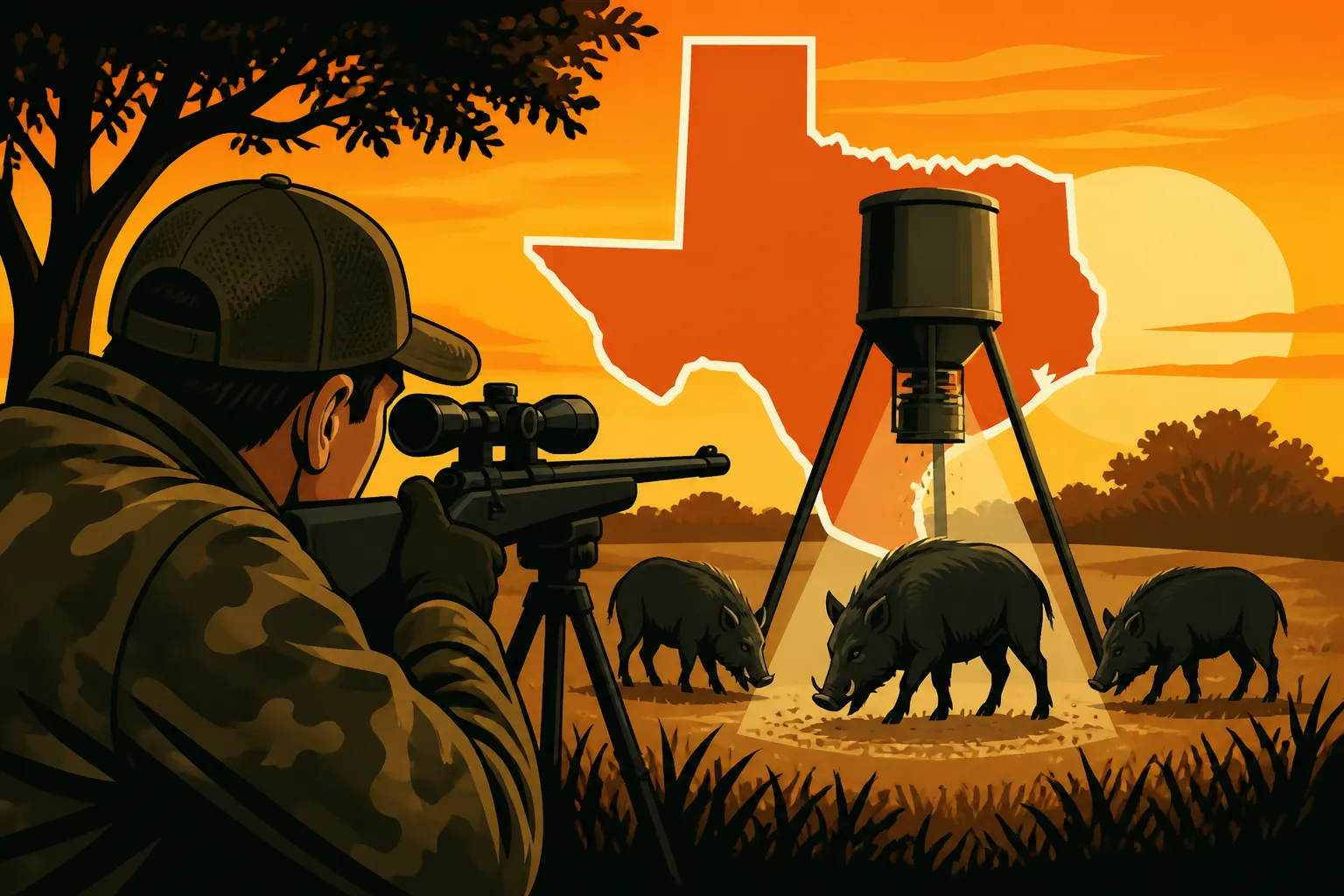
Hunting feral hogs over a feeder in Texas can be incredibly rewarding, but it’s a whole different ballgame than sitting over a deer feeder. These intelligent, often nocturnal animals present unique challenges, and just throwing out some corn won't guarantee success. This guide will walk you through setting up your feeder, blind, and other essential gear to maximize your chances of a successful hog hunt, turning those frustrations of missed opportunities into a cooler full of wild pork.
Why Hogs are Drawn to Feeders
Feral hogs are opportunistic omnivores, and simply put, they’re always looking for an easy meal. While they’ll root for tubers, forage for acorns, and even prey on small animals, a consistent, readily available food source like corn from a feeder is an undeniable draw. In a state like Texas, where natural food sources can fluctuate wildly with drought or heavy rains, a feeder represents a reliable caloric jackpot. They learn quickly, and once they associate the sound of a feeder motor with food, they’ll be back for more. It’s not just about the corn, either; the disturbed earth around a feeder from their rooting also provides easy access to grubs and insects, making it a double attraction.
Typical Feeding Patterns and Times
Unlike deer, which often follow somewhat predictable dawn and dusk patterns, hog activity can be a bit more erratic, heavily influenced by weather, hunting pressure, and moon phase. In the scorching Texas heat, hogs are predominantly nocturnal, preferring the cooler temperatures of night to feed. However, during milder weather or periods of low pressure, they might venture out during daylight hours. Early morning and late evening are still prime times, but don’t discount the middle of the night, especially if you’re hunting with thermal or night vision. Observing your specific property with trail cameras set to video mode can provide invaluable insight into the local hogs’ routines. You might find a sounder that consistently hits the feeder between 1 AM and 3 AM, or a lone boar that prefers to show up just before sunrise.
Identifying Hog Sign and Traffic
Before you even think about setting up a feeder, you need to know where the hogs are. Hogs leave unmistakable signs. Look for extensive rooting, which are areas of disturbed soil where they’ve dug for food, often resembling a rototilled garden. They’ll also create wallows, muddy depressions where they cool off and coat themselves in mud to deter parasites. Trees or fence posts rubbed raw by hogs are also clear indicators of their presence, often covered in dried mud.
When you're trying to figure out the best spot to place your feeder for hunting feral hog on a Texas lease, pay close attention to the trails. Hogs, being creatures of habit, will create well-worn paths, especially leading to water sources, bedding areas in thick brush, and natural travel corridors. These trails are often wider and more heavily impacted than deer trails. If you find a crossroads of multiple strong hog trails, you’ve likely found a prime location for your feeder setup, as you’ll be intercepting their natural movement patterns.
Choosing the Right Feeder and Placement
Selecting the right feeder and placing it strategically are foundational steps to a successful hog hunting setup. It’s not just about dumping corn; it’s about making it irresistible and accessible for the hogs while giving you the best hunting advantage.
Feeder Types and Their Pros & Cons for Hogs
When it comes to feeders for hogs, you generally have a few main options, each with its own quirks that make it more or less suitable for these destructive animals.
Spinner Feeders: These are the most common and are often designed primarily for deer. They use a motor and spinner plate to broadcast corn at timed intervals.
- Pros: Readily available, relatively inexpensive, can cover a wide area, and the sound of the spinner can attract hogs. You can adjust the Deer Feeder Timer Settings in Texas to control when and how much corn is dispersed.
- Cons: Hogs are incredibly destructive. They will often knock over tripods, root under the feeder, and even try to chew through metal barrels to get to the corn. The spinner mechanism itself is vulnerable to hog damage, leading to frequent repairs or replacements. They can also attract other animals you might not want to target, like raccoons or deer, making it harder to exclusively bait for hogs.
Gravity Feeders: These feeders rely on gravity to dispense feed as animals consume it from a trough or chute.
- Pros: No moving parts to break, less prone to mechanical failure, and can offer a more continuous food source. They can be more hog-resistant if built robustly from heavy-gauge metal.
- Cons: Hogs can quickly empty a gravity feeder if it's not designed with some restriction. Some designs allow them to stand on their hind legs and effectively "pig out," emptying the feeder in a single night. This can get expensive quickly and doesn't always allow for precise timing or control over feeding.
Hog-Specific Feeders/Traps: These are often sturdier, built with heavy-gauge steel or panels that are designed to withstand hog abuse. Some even integrate a trap mechanism directly.
- Pros: Built to last against hogs, can be more efficient in terms of corn usage if hogs can't empty them completely. Integrated trap features can allow for both feeding and removal.
- Cons: Typically more expensive and less readily available than standard deer feeders. They can also be heavier and more difficult to move.
For most setups, a well-built tripod spinner feeder with a strong, metal barrel and perhaps a cage around the spinner mechanism, or a sturdy, elevated gravity feeder that hogs can’t easily access from below, will be your go-to.
Strategic Feeder Location for Success
Location, location, location! Just like real estate, where you place your feeder for hunting hogs is critical.
* **Near Cover:** Hogs feel safest when they can quickly retreat into dense brush. Look for edges of thickets, creek bottoms with heavy undergrowth, or areas where dense mesquite or huisache offers protection. Placing the feeder too far out in the open will make them wary, especially if there’s hunting pressure.
* **Access for You:** While you want it near cover for the hogs, you also need clear, quiet access to your blind. Consider prevailing wind directions so your scent doesn’t blow directly into the feeding area.
* **Water Sources:** Hogs need water, especially in the Texas heat. A feeder placed between a bedding area and a water source like a pond, creek, or even a low-lying wet area, can be a magnet for consistent activity.
* **Avoid Roads/High Traffic Areas:** Hogs are smart and will avoid areas with frequent human activity. Choose a secluded spot where they feel comfortable lingering.
When thinking about your setup, imagine the path a hog would take from their bedding area to the feeder and back. You want to place the feeder somewhere along that path where you can intercept them.
Keeping Hogs from Dominating the Feeder
Hogs can quickly become the kings of your feeder, pushing out deer and other game. If you’re managing for deer and trying to figure out How to Keep Hogs Out of Your Deer Feeder, it can be a constant battle. However, if your primary goal *is* to hunt hogs, you might actually want them to dominate it! The challenge then becomes managing the feed to keep them coming back without breaking the bank or letting them empty it in one go.
Here are a few tactics:
- Feed Times and Amounts: Set your feeder to throw corn for shorter durations, perhaps two or three seconds, multiple times a day instead of one long throw. This disperses the corn over a wider area, encouraging hogs to spend more time rooting around and giving you a longer window to spot them. For a more detailed guide on timing, check out Best Feeder Timer Settings for Daylight Deer, as many principles can be adapted for hogs.
- Feeder Pens: If you're worried about other animals, or want to create a contained feeding area, a small feeder pen constructed from hog panels can be effective. Hogs can get through smaller openings than deer, so you can build a pen that allows hogs in but excludes deer (if desired), or vice-versa. For specific hog hunting, you might make the pen large enough to allow multiple hogs to feed comfortably, preventing them from scattering too quickly.
- Robust Feeders: Invest in heavy-duty feeders that can withstand hog abuse. A sturdy, low-profile barrel feeder with a strong cage around the spinner can reduce damage.
Here's a quick comparison of popular feeder types and their hog-friendliness:
| Feeder Type | Pros for Hog Hunting | Cons for Hog Hunting |
|---|---|---|
| Tripod Spinner | Wide corn spread, sound attracts, widely available | Easily damaged, knocked over, hogs eat quickly |
| Gravity Feeder | No moving parts, continuous feed, durable designs | Hogs can quickly empty, less control over timing |
| Hog Panel Feeder | Extremely durable, hog-specific access, customizable | Higher initial cost, more labor to set up |
| Trough Feeder | Easy for hogs to access, can monitor feed levels | Requires frequent refilling, less durable |
Optimizing Your Blind Setup for Hogs
Once your feeder is in place, your blind setup is the next critical piece of the puzzle. Hogs have an incredible sense of smell and hearing, so your blind needs to be well-placed and properly prepared.
Selecting the Best Blind Type
For hunting hogs over a feeder, your choice of blind will largely depend on your budget, how permanent you want the setup to be, and your hunting style.
* **Box Blinds:** These offer excellent concealment from sight and often help contain human scent. They provide protection from the elements, making long sits more comfortable, which is great for waiting out nocturnal hogs. A well-constructed box blind, like those discussed in Best Box Blind for Hot Texas Weather, can even offer some sound dampening.
* **Ground Blinds:** Portable and versatile, pop-up ground blinds are great for moving quickly to adapt to new hog patterns. They offer good concealment but don’t stop scent as effectively as a sealed box blind. For bowhunting hogs in Texas, a ground blind offers a great close-range advantage.
* **Tripod/Ladder Stands:** These elevate you, which can help with scent dispersal and provide a better vantage point, especially in areas with taller brush. However, they offer less concealment from sight and no protection from weather. You’ll need to be extra vigilant with scent control when using an elevated stand. If you want to compare different options, check out Box Blind vs Tripod vs Ground Blind in Texas for a more detailed breakdown.
Blind Placement and Concealment Tactics
Your blind placement is almost as important as your feeder placement.
* **Downwind:** Always, *always* set your blind up so the prevailing wind carries your scent away from the feeder. Hogs will bust you every time if they smell you. This might mean having multiple blind locations for different wind directions, or at least being prepared to only hunt when the wind is favorable.
* **Optimal Shooting Lanes:** Ensure you have clear, unobstructed shooting lanes to the feeder and any natural travel corridors leading to it. Trim branches and clear brush before the season, but do it subtly so as not to alarm the hogs.
* **Natural Blending:** Position your blind against a natural backdrop like a tree line or a clump of thick brush. Break up its outline with natural foliage. Even a well-camouflaged blind will stick out if it’s placed in a wide-open field.
* **Distance:** For rifle hunting, 75-150 yards is a good starting point, offering a comfortable shot while keeping you far enough away that small noises are less likely to spook them. For archery, obviously, you’ll need to be much closer, typically 15-30 yards, requiring even more meticulous concealment.
Scent Control and Noise Reduction
Hogs have noses that rival any other game animal, and their hearing is excellent too.
* **Scent Control:** This is paramount. Shower with scent-free soap, use scent-eliminating sprays on your clothes and gear, and store your hunting clothes in airtight containers. Avoid filling your feeder or checking trail cameras right before a hunt, as your fresh scent will linger. Wear rubber boots to minimize ground scent.
* **Noise Reduction:** Hogs are often vocal when feeding, which can mask some sounds, but sudden, unnatural noises will send them running. Pad your blind floor, keep your gear organized to prevent clanking, and move slowly and deliberately. When using a box blind, ensure the door doesn’t squeak and windows open quietly. For instance, when setting up a Box Blind vs Tripod vs Ground Blind in Texas, the enclosed nature of a box blind often helps contain sound better than an open tripod.
Lighting and Night Hunting Considerations
Since hogs are often most active after dark, especially in warmer months, night hunting over feeders is a highly effective strategy in Texas. However, it comes with its own set of rules and equipment.
Legalities of Night Hunting in Texas
Good news for hog hunters in Texas: you can hunt feral hogs at night, year-round, on private property. This makes them a prime target for after-hours hunts when deer are bedded down. You don’t need a special license or permit beyond your standard Texas hunting license, and there are no bag limits. You can use artificial light, night vision, and thermal imaging devices. For a deeper dive into the legal aspects, consider reading Is Thermal Hunting Legal in Texas? and Is It Legal to Hunt Hogs at Night With Thermal. Just remember, these regulations apply to *feral hogs* on *private land*. Always double-check the latest regulations in the Texas Outdoor Annual, as rules can occasionally change.
Different Lighting Options for Hogs
When hunting hogs at night over a feeder, you have several choices for illuminating your target:
* **Feeder Lights:** These are lights specifically designed to attach to or near your feeder, often with a remote control. Many emit a subtle red or green light that hogs are less likely to spook from. Some models are motion-activated, while others you can turn on when you’re ready to shoot. A consistent, low-intensity light can habituate hogs to its presence.
* **Gun-Mounted Lights:** Powerful flashlights that attach directly to your rifle provide excellent illumination exactly where you’re aiming. Green or red filters are often preferred as they are less harsh on your night vision and less alarming to hogs.
* **Headlamps/Handheld Spotlights:** While useful for navigating to and from your blind, using these directly on hogs can be too jarring and might spook them. They are better for scanning or blood trailing *after* the shot.
The key with any lighting is consistency and subtlety. Hogs are smart; if a bright white light suddenly blasts them, they'll be gone. A constant, dim colored light that they become accustomed to is often more effective.
Thermal and Night Vision Integration
For the ultimate advantage in night hunting, thermal scopes and night vision devices are game-changers.
* **Thermal Scopes:** These detect heat signatures, allowing you to “see” hogs even in complete darkness, thick brush, or fog. Hogs glow brightly through a thermal imager, making them incredibly easy to spot and identify. This is especially useful for identifying sounders approaching the feeder long before they step into the light. For options, check out Best Thermal Scopes for Hog Hunting in Texas.
* **Night Vision:** Night vision amplifies ambient light (starlight, moonlight) to create a green-tinted image. It works well on clear, moonlit nights but struggles in heavy cloud cover or no moon. While effective, thermal generally provides a clearer advantage in truly dark conditions.
* **Combined Approach:** Many hunters use a thermal monocular for scanning and spotting, then switch to a night vision or thermal scope mounted on their rifle for the shot. This allows for quick, wide-area detection before focusing on the target. Understanding how to use these tools effectively is crucial for How to Hunt Hogs at Night With Thermal.
Here's a comparison of common night hunting illumination methods:
| Method | Pros | Cons | Best Use Case |
|---|---|---|---|
| Feeder Light (Red/Green) | Subtle, hogs habituate, remote control | Limited range, can wash out scope image | Fixed position, long waits, minimal disturbance |
| Gun-Mounted Light | Direct illumination on target, portable | Can spook wary hogs, requires quick activation | Active stalking or quick target acquisition |
| Thermal Scope | Sees through darkness/fog/brush, identifies heat | High cost, learning curve, no color vision | All-weather, long-range detection and targeting |
| Night Vision Scope | Amplifies ambient light, good clarity (moonlight) | Requires some ambient light, can be grainy | Clear nights, identifying specific features |
Ethical Harvesting and Post-Hunt Actions
A successful hunt doesn’t end with a shot; it extends to ensuring an ethical harvest and proper care of the animal.
Shot Placement for Hogs
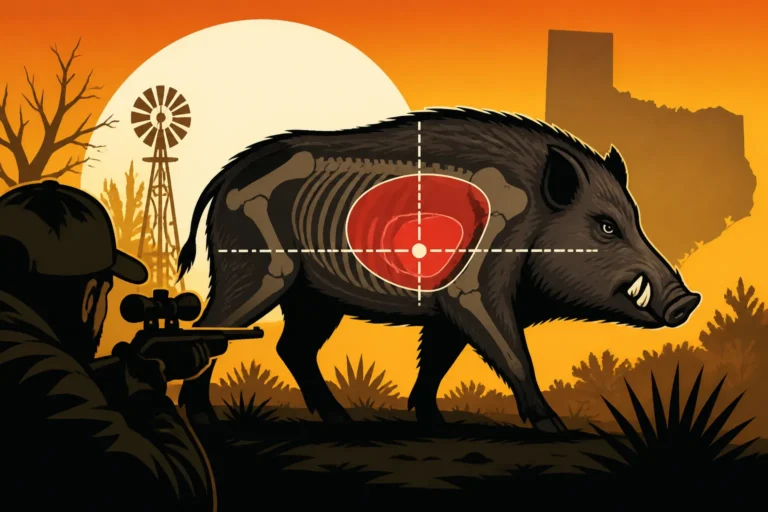
Feral hogs are incredibly tough animals, and their anatomy can be deceiving. Unlike deer, their vitals are positioned a bit more forward. The common “shoulder shot” or “heart-lung shot” for a deer needs to be adjusted. For the Best Shot Placement for Hogs, aim for an area just behind the ear for a brain shot (if close and confident), or for the crease right behind and slightly above the shoulder for a heart-lung shot. This target area is about a third of the way up the body from the bottom, directly in line with the front leg. A well-placed shot is crucial for a quick, humane kill and to prevent a wounded hog from escaping into dense cover. Avoid shots directly in the shoulder plate, as it’s very thick and can stop many bullets.
Field Dressing Hogs in Texas Heat
Texas heat is no joke, and it can quickly spoil game meat if not handled correctly. Just like learning How to Field Dress a Deer in Hot Weather, proper field dressing of a hog is essential. As soon as you recover your hog, get to work.
* **Ventilation is Key:** Open up the body cavity completely to allow heat to escape.
* **Remove Organs Promptly:** Gutting the hog immediately removes the primary source of internal heat.
* **Cool the Carcass:** If possible, get ice into the body cavity. If you’re on a multi-day hunt, bringing a large cooler specifically for the carcass (or at least the quarters) is a must.
* **Skin or Quarter:** Skinning the hog helps with cooling and often makes it easier to transport. If you’re planning to butcher it yourself, quartering the animal and getting the meat on ice quickly is the best strategy. Remember, hog fat can go rancid quickly in the heat.
Carcass Disposal and Meat Utilization
After a successful hog hunt, you have a few options for the carcass. If you plan to consume the meat, which is often delicious, especially from younger hogs, proper processing is key. Many hunters love the taste of wild hog, often describing it as richer than domestic pork. If you’re not keeping the meat, you are responsible for proper disposal. Check with your landowner or lease manager for their preferred method, which might involve leaving it for scavengers in a designated area or burying it. Never dump carcasses near public roads or waterways. Most importantly, do not waste the resource; utilizing the meat is part of the ethical hunting tradition. If you’re looking to process your game locally, you might want to consider Where to Take a Deer for Processing in Texas, as many deer processors also handle hogs.
Disclaimer
Hunting regulations and best practices can change. Always consult the current Texas Parks and Wildlife Department Outdoor Annual for the most up-to-date information on seasons, bag limits, and specific county regulations before heading into the field. This guide provides general advice and should not replace official legal documentation.