Texas Aoudad Sheep Hunting Regulations 2026
Trying to make sense of all the different hunting regulations in Texas can feel like navigating a maze, especially when you step outside the well-defined rules for our native whitetail deer or Rio Grande turkeys. A common point of confusion often revolves around exotic species like Aoudad sheep. This guide will cut through the fog, laying out the specific regulations for hunting Aoudad in Texas for the season and beyond, so you can hunt with confidence and clarity.
Understanding Aoudad as an Exotic Species in Texas
When we talk about hunting in Texas, most folks immediately think of deer, hogs, or dove. These animals have strict seasons, bag limits, and often antler restrictions, all designed to manage their populations and ensure sustainable hunting. But Aoudad sheep, those magnificent, shaggy-necked creatures that roam parts of West Texas and the Hill Country, operate under a completely different set of rules because they're not native to our great state. This distinction is absolutely crucial for understanding how and when you can hunt them.
Why Aoudad Regulations Differ from Native Game
The core reason Aoudad sheep are regulated differently stems from their classification as an exotic, non-native species. Texas Parks and Wildlife Department (TPWD) primarily focuses its game management efforts on native wildlife populations. These populations are subject to ecological pressures and are part of the natural Texas ecosystem, requiring careful oversight to prevent overharvesting or significant population decline.
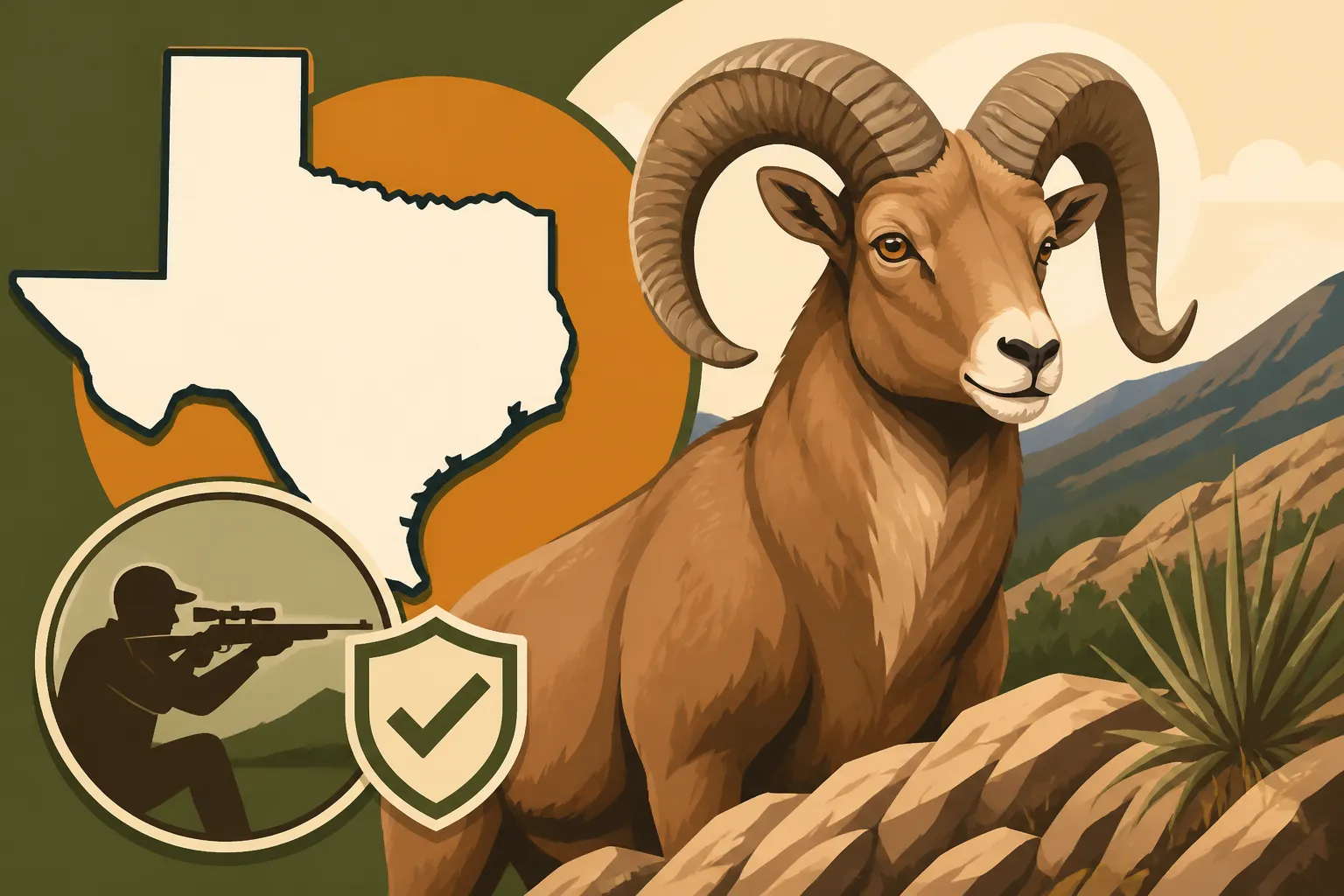
Aoudad, also known as Barbary sheep, were introduced to Texas in the 1950s and have since established free-ranging populations, particularly in the Trans-Pecos mountains and the rugged canyons of the Hill Country. Because they aren't native, their presence is not always viewed as beneficial to the native ecosystem by wildlife managers, and they generally aren't managed in the same conservation-focused way as, say, a whitetail deer. This means the state's traditional hunting seasons, bag limits, and reporting requirements simply don't apply to them in the same manner. This can be a relief for hunters looking for more flexibility but also a source of confusion if you're not used to hunting exotics.
The "No Closed Season, No Bag Limit" Reality
One of the most appealing aspects of hunting Aoudad in Texas, and indeed most exotic species, is the "no closed season, no bag limit" rule. For many hunters accustomed to meticulously checking the Texas deer season 2026-2027 dates or the tight windows for Rio Grande turkey season, this can sound almost too good to be true. But it's absolutely true for Aoudad on private land.
What this means in practical terms is that you can hunt Aoudad year-round, any day of the week, including Sundays. There's no limit to the number of Aoudad you can harvest, whether you're after a trophy ram or simply looking to fill the freezer. This flexibility is a huge draw for hunters who have limited time off or want to experience a different kind of hunt outside the traditional fall and winter seasons. Imagine being able to chase a challenging ram in the spring or summer when other big game seasons are closed! However, this rule typically applies only to private land. On public lands, if Aoudad are present and huntable (which is rare), they would fall under specific public hunting regulations, often tied to drawn hunts, which would have specific seasons and bag limits.
Essential Licensing Requirements for Aoudad Hunting
Even though Aoudad sheep are exotics and don't have traditional seasons or bag limits, you absolutely still need a valid Texas hunting license to pursue them. This is a common misunderstanding that can get a hunter into hot water. The state requires a license for any hunting activity, regardless of the species' native or exotic status.
The Basic Texas Hunting License You'll Need
For most residents and non-residents, the Texas Super Combo License is the go-to choice, as it covers everything you need for various hunting and fishing activities, including exotic species. If you're not planning on fishing or hunting other game, a general hunting license, such as the Resident or Non-Resident General Hunting License, will suffice.
For the 2026 season, you'll want to ensure you've purchased the appropriate license before heading out into the field. You can easily buy your license online through the TPWD website, at most sporting goods stores like Academy or Bass Pro Shops, or even at many small-town bait and tackle shops. Just remember, having it on you, whether a physical copy or through the My Texas Hunt Harvest app, is non-negotiable. Don't forget, if you're a non-resident, the Texas non-resident hunting license cost is significantly higher than for residents, so plan accordingly.
Special Endorsements or Permits for Aoudad?
Here's another point where Aoudad hunting simplifies things: generally, no special endorsements or additional permits are required specifically for Aoudad sheep. Unlike migratory birds that require a Migratory Bird Endorsement and HIP certification, or deer in certain counties that might have specific antlerless permits, Aoudad don't typically fall under such stringent add-ons.
Your basic valid hunting license covers your right to hunt Aoudad on private land where you have permission. This really streamlines the preparation process and means less paperwork to worry about. Just focus on getting your general hunting license, and you're good to go.
Legal Hunting Methods and Considerations for Aoudad
While the "no season, no bag limit" rule offers immense freedom, it doesn't mean it's a free-for-all out there. All general state hunting laws still apply, such as those concerning landowner permission, safe firearm handling, and the prevention of wanton waste. For Aoudad, specifically, there's quite a bit of flexibility in how you can hunt them, which is part of their allure.
Fair Chase and Ethical Hunting Practices
Even without strict state-mandated fair chase rules for exotics (as there are for some native game), ethical hunting practices remain paramount. Most hunters pride themselves on conducting a fair chase, respecting the animal, and making a clean, humane kill. While high-fence operations are common for many exotics, including Aoudad, the rugged terrain where free-ranging Aoudad live often presents a challenging spot-and-stalk opportunity that truly embodies fair chase. If you're pursuing Aoudad in the expansive, free-range environments of the Trans-Pecos or certain parts of the Hill Country, you'll find it's a physically demanding and rewarding hunt, often involving significant elevation changes and long-range shooting. For those looking for an even greater challenge, bowhunting Aoudad in Texas offers an incredible experience.
Always remember that even for exotics, it's illegal to waste game meat that is suitable for human consumption. Field dressing and processing game in Texas heat can be critical, so plan how you'll handle your harvest to preserve the meat.
Weapon Choices and Restrictions
One of the great things about hunting Aoudad is the wide array of legal weapon choices. You can pretty much use any legal hunting firearm or archery equipment you choose.
- Rifles: High-powered rifles are the most common choice for Aoudad, especially given their tough hide and the often long-range shots required in open, mountainous terrain. Calibers like .270, .30-06, 7mm Rem Mag, and .300 Win Mag are popular, offering the necessary energy and flat trajectory. Be sure your rifle is sighted in properly for extended ranges.
- Bowhunting: Archery is a perfectly legal and incredibly challenging way to hunt Aoudad. Whether you prefer a compound bow, traditional bow, or even crossbow hunting in Texas, the rules are the same as for other game. You'll need to get much closer to an Aoudad ram with a bow, making for a truly intense experience.
- Muzzleloaders: If you enjoy the challenge and tradition of black powder hunting, muzzleloaders are also legal. Just like with rifles, ensure you have sufficient power and practice your long-range accuracy.
- Shotguns: While less common for Aoudad due to range limitations, shotguns loaded with slugs are technically legal.
Generally, any weapon legal for hunting white-tailed deer in Texas is also legal for Aoudad. There aren't specific caliber or projectile weight restrictions for exotics. This flexibility allows hunters to use their preferred equipment.
Night Hunting and Thermal Considerations for Aoudad
Here's where Aoudad hunting gets particularly interesting for many: night hunting with thermal or night vision is generally legal for exotic species on private land in Texas. This is a significant departure from native game animals like deer, where night hunting is strictly prohibited except in very specific circumstances (like depredation permits).
For Aoudad, just like for feral hogs, if you have landowner permission on private land, you can often pursue them after dark. This opens up entirely new tactical possibilities, especially in warmer months when Aoudad might be more active during cooler nighttime hours. Thermal scopes for hog hunting in Texas are often dual-purpose, serving equally well for Aoudad or other exotics. Using a thermal monocular for scanning combined with a thermal or night vision scope on your rifle can be incredibly effective. Just make sure you confirm with the landowner or outfitter that they permit night hunting on their property.
Navigating Private Land and Outfitters for Aoudad
Given the vast majority of Aoudad hunting in Texas takes place on private land, understanding how to access these properties is crucial. Public hunting opportunities for Aoudad are extremely limited and typically involve competitive drawn hunts.
The Role of Private Land in Aoudad Hunting
Texas is over 95% private land, and this reality shapes hunting opportunities for nearly all species, especially exotics. Free-ranging Aoudad populations thrive in areas where large ranches allow them to roam. To hunt Aoudad, you'll almost certainly need direct permission from a landowner or, more commonly, book a hunt with a licensed outfitter who has access to prime Aoudad habitat.
Securing permission on private land often means joining a hunting lease, which can vary widely in cost and amenities, or arranging a day hunt directly with a landowner. For Aoudad, especially trophy rams, outfitter services are the most popular route, as these professionals specialize in locating and guiding hunters to these elusive animals in challenging terrain.
Working with Outfitters and Guides for a Successful Hunt
If you're serious about hunting Aoudad, especially for a trophy animal, working with a reputable outfitter or guide is often your best bet. These experienced professionals know the land, the Aoudad's habits, and the best tactics for success. They typically handle all the logistics, from scouting to transportation in the field, and even often field dressing.
When researching outfits, look for those with extensive experience specifically with Aoudad. Many excellent operations in the Trans-Pecos region, such as those near Marfa or Van Horn, or in the rugged Hill Country, specialize in these hunts. They often provide packages that include lodging, meals, guide services, and even initial field processing of your animal. Be sure to ask about the hunt style (e.g., spot-and-stalk, safari style), success rates, trophy care, and what's included in the price. Reputable outfitters will be transparent about their operations and help you understand what to expect.
Carcass Movement and Chronic Wasting Disease (CWD) Considerations
Even though Aoudad are not cervids (deer, elk, etc.), it's vital for every hunter to be aware of Texas's Chronic Wasting Disease (CWD) regulations, as they can impact how game animals are transported and handled, and the general principles apply to all responsible hunters.
CWD Protocols and Aoudad
Thankfully, Aoudad sheep are not susceptible to CWD. This means the specific carcass movement restrictions that apply to deer, elk, and other cervid species in Texas CWD zones do not apply to Aoudad. For example, if you harvest a deer in a CWD Containment Zone, you are highly restricted on what parts of the animal you can take out of the zone. You can learn more about CWD in Texas: Zones, Rules & Carcass Transport for native game.
However, even though Aoudad aren't affected by CWD, it's always wise to exercise caution and responsible game handling. Always practice good hygiene when field dressing any animal, and if you plan to transport your Aoudad across state lines, check the regulations of your destination state, as some states may have restrictions on exotic game importation. For in-state travel, once your Aoudad is field dressed, you are generally free to transport the carcass without specific CWD-related concerns.
Processing Your Aoudad
Once you've harvested your Aoudad, you'll want to ensure proper processing. Aoudad meat is generally lean and delicious, often compared to venison but with its own unique flavor profile. Given the size and musculature of these animals, especially a large ram, having a plan for processing is key. You can opt to butcher it yourself or take it to a local game processor. Many towns in areas known for Aoudad hunting, like Sonora, Ozona, or Fort Stockton, will have facilities equipped to handle large game.
Reporting Your Aoudad Harvest (Or Lack Thereof)
When it comes to game reporting, Aoudad sheep present another stark contrast to native game animals in Texas. This is a significant difference that often catches new exotic hunters off guard.
No Mandatory Reporting for Exotic Species
For most native game animals, like white-tailed deer or turkeys, there are mandatory harvest reporting requirements. You might have to use the My Texas Hunt Harvest app or fill out a physical log on your license. This data is critical for TPWD wildlife biologists to monitor populations, assess harvest rates, and make informed management decisions.
However, because Aoudad are exotics and not managed by the state for population control or conservation, there is no mandatory harvest reporting requirement for them. You do not need to punch a tag (because there aren't specific Aoudad tags) or report your kill to TPWD. This means you can simply enjoy your successful hunt without the added administrative step.
Why You Might Still Want to Record Your Hunt
While not required by law, many experienced Aoudad hunters still choose to keep personal records of their hunts. This isn't just for sentimental reasons; it can be incredibly useful for future planning and improving your hunting skills.
Consider jotting down details like:
- Date and time of harvest
- Location (general area or pasture)
- Weapon used
- Estimated age and horn length of the ram
- Weather conditions
- Any notable behaviors observed
This information can help you identify patterns, track your personal success, and provide valuable insights for future Aoudad hunts. It's also a fantastic way to relive the memories of what is often a very challenging and memorable hunt.
| Feature | Texas Native Game (e.g., Whitetail) | Texas Exotic Game (e.g., Aoudad) |
|---|---|---|
| Hunting License | Required | Required |
| Closed Season | Yes, specific dates by zone | No, year-round on private land |
| Bag Limit | Yes, specific limits by species & county | No, typically unlimited on private land |
| Antler Restrictions | Yes, for certain deer species/counties | No, generally no such restrictions |
| Night Hunting | Generally illegal (except specific cases) | Generally legal on private land with permission |
| Thermal/Night Vision | Generally illegal for game animals | Generally legal for exotics on private land |
| Mandatory Reporting | Yes, via My Texas Hunt Harvest or tags | No |
| CWD Restrictions | Apply to cervid carcasses in CWD zones | Do NOT apply as Aoudad are not cervids |
| Habitat Focus | State manages populations & habitat | Primarily landowner/outfitter managed |
Hunting Aoudad in Texas offers a unique and exhilarating experience. By understanding these specific regulations and guidelines, you can ensure a legal, ethical, and successful hunt for one of Texas's most magnificent exotic game animals.
Disclaimer
Please remember that hunting regulations can change. While this guide provides the most current information available for 2026 based on Texas Parks and Wildlife Department (TPWD) rules regarding exotic species, it is always your responsibility to consult the official TPWD Outdoor Annual or their website for the most up-to-date and complete regulations before you head afield. Local county ordinances or specific ranch rules may also apply.