Is There a Season for Coyote in Texas?
Navigating hunting regulations in Texas can feel like trying to untangle a ball of fishing line after a long day on the water – especially when you're dealing with species that don't fit the typical "season" mold. Many folks wonder about the rules for hunting coyotes, expecting a specific opening and closing date like deer or dove season. The good news is, for the adaptable and often misunderstood coyote, things are a bit different, and this guide is here to clear up exactly when, where, and how you can pursue them across our vast state.
The Truth About Coyote Hunting Seasons in Texas
It's a common misconception that all game animals in Texas have a defined hunting season, but coyotes stand as a notable exception. Unlike white-tailed deer, turkeys, or waterfowl, which have strict seasonal windows, coyotes are classified differently by the Texas Parks and Wildlife Department (TPWD). This distinction is crucial for understanding why your hunting calendar for coyotes looks a lot more open-ended.
Why Coyotes Are Different: Understanding Their Status as Nuisance Animals
Coyotes in Texas are not designated as game animals. Instead, they fall into a category often referred to as "predatory animals" or "nuisance animals." This classification stems from their significant impact on livestock and domestic animals, as well as their predatory role on various game species, particularly fawns and turkey poults. Ranchers and landowners across Texas often face substantial losses due to coyote depredation, which is why the state has adopted a more flexible approach to their management. The sheer number of coyotes and their rapid reproductive rate also means that traditional seasonal hunting limits wouldn't be effective in managing their populations or mitigating their impacts.
Because of this classification, the state gives landowners and hunters more leeway to manage coyote populations year-round. This isn't just about sport; it's a vital part of wildlife management and agricultural protection in many areas. While some might view coyotes solely as wild predators, in a state as agriculturally rich as Texas, their status as a potential threat to livelihoods and other wildlife populations means a different set of rules applies.
Year-Round Opportunity: No Closed Season for Coyotes
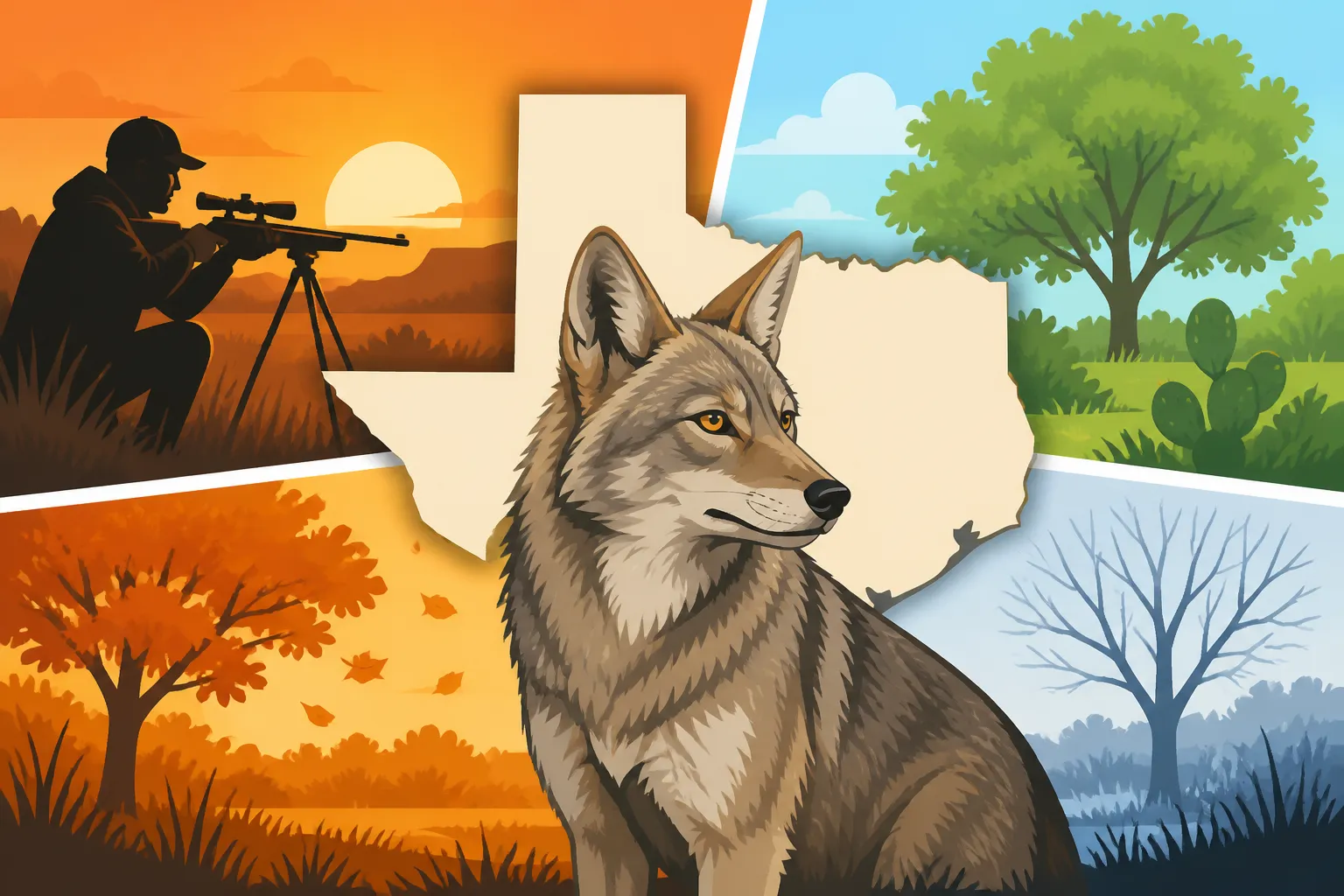
So, to cut right to the chase: there is no closed season for hunting coyotes in Texas. You can legally hunt coyotes 365 days a year, day or night, across the entire state, provided you have the proper licenses and permissions. This continuous open season is a direct reflection of their status as a nuisance animal, allowing for consistent control efforts whenever and wherever they are needed.
This year-round opportunity offers incredible flexibility for hunters. Whether you're dealing with a specific problem on your property, looking to gain experience calling predators, or just want to spend more time outdoors when other seasons are closed, coyotes provide a continuous hunting option. It also means you don't have to worry about specific zone dates or drawing permits for coyote hunting, simplifying the planning process considerably. However, while the season is open, other regulations regarding licensing, methods, and landowner permission are still very much in play.
Licensing and Regulations for Coyote Hunting
Just because there's no closed season doesn't mean it's a free-for-all. Texas has specific rules regarding who can hunt coyotes and how they can be hunted. Understanding these regulations is paramount to ensuring you're hunting legally and responsibly.
What License Do You Need?
For most individuals, a valid Texas hunting license is required to hunt coyotes. This is standard for nearly all hunting activities in the state, even for non-game animals. If you're a resident, a simple General Hunting License will cover you. Many experienced hunters opt for the all-encompassing What Is the Texas Super Combo License?, which bundles various licenses and endorsements, making it a convenient choice for those who hunt multiple species throughout the year.
However, there's a key exception: if you're a resident landowner or a landowner's agent (such as a family member or employee), and you're hunting coyotes on your own property (or the property you manage) for depredation control, you generally do not need a hunting license. This exception is specifically for nuisance control and prevents unnecessary bureaucratic hurdles for those actively protecting their property. For everyone else, including non-residents, a license is a must. Non-residents will need to purchase a Texas Non-Resident Hunting License Cost or the equivalent combo license. Always make sure your license is current before heading out. You can purchase them online through the TPWD website, at most sporting goods stores like Academy Sports + Outdoors or Bass Pro Shops, or at local TPWD license retailers. For a full breakdown of options, check out the guide on Texas Hunting License: Cost, Types & How to Buy (2026).
Legal Hunting Methods for Coyotes
Texas is quite liberal when it comes to the methods allowed for coyote hunting, offering hunters a wide array of options. This flexibility is another reflection of their nuisance animal status, allowing for efficient population control.
- Firearms: Rifles, shotguns, and handguns are all legal for coyote hunting. There are no caliber restrictions, but responsible hunters choose appropriate calibers for humane dispatch.
- Archery: Bows and crossbows are also legal. Bowhunting in Texas: Archery Season Guide can offer insights if you're looking to challenge yourself with traditional archery equipment.
- Trapping: Trapping coyotes is also legal year-round, but specific regulations apply to trap types, setting locations, and checking intervals. Always consult the Texas Outdoor Annual for the most up-to-date trapping laws.
- Night Hunting: This is where coyote hunting really stands out! Unlike many game animals, hunting coyotes at night is completely legal in Texas. This opens up a whole new world of tactics, especially since coyotes are often most active after dark. This is also where specialized gear like thermal imaging and night vision optics come into play. For more details on this, you might find Is Thermal Hunting Legal in Texas? and How to Hunt Hogs at Night With Thermal particularly helpful, as the regulations often align for predatory/nuisance animals.
The use of artificial lights, electronic calls, and even dogs (if certain conditions are met) are also generally permissible for coyote hunting. However, it’s critical to remember that while these methods are legal for coyotes, they might be prohibited for other species or in certain areas. Always double-check the current regulations in the Texas Outdoor Annual, as rules can change.
Here’s a quick overview of common legal methods:
| Method | Legality for Coyotes in Texas | Notes |
|---|---|---|
| Rifles/Shotguns | Legal year-round | No caliber restrictions; always use an ethical caliber for humane kills. |
| Archery | Legal year-round | Includes traditional bows and crossbows. |
| Trapping | Legal year-round | Subject to specific trap type and check interval regulations. |
| Night Hunting | Legal year-round | Includes artificial lights, thermal, and night vision. |
| Electronic Calls | Legal year-round | Very effective for drawing coyotes in. |
| Hunting with Dogs | Legal year-round | Specific rules apply; generally requires dogs to "take" (catch) the animal. |
Best Times and Tactics for Coyote Hunting in Texas
While you can hunt coyotes any day of the year, certain times and tactical approaches tend to yield better results. Understanding coyote behavior and adapting your strategy accordingly can significantly increase your success rate.
Prime Times to Target Coyotes
Coyotes are incredibly adaptable creatures, but their activity levels fluctuate based on several factors, including time of day, season, and breeding cycles.
- Crepuscular and Nocturnal Activity: Coyotes are primarily crepuscular, meaning they are most active during dawn and dusk. However, in areas with high human activity or hunting pressure, they often become primarily nocturnal to avoid detection. This makes early morning, late evening, and night hunting particularly productive. If you're trying to hunt them during the day, focus on periods of cooler weather or immediately after a front has passed through, which might stimulate them to move.
- Seasonal Influences:
- Winter: Many hunters consider late fall and winter to be the best time to hunt coyotes. Cooler temperatures mean coyotes are more active during daylight hours, and the lack of dense foliage provides better visibility. Their coats are also at their thickest and most attractive during these months if you're interested in pelts. The breeding season typically runs from January to March, making them more vocal and potentially more aggressive to calls.
- Spring: As spring arrives and fawns and turkey poults are born, coyotes become extremely active as they seek out easy prey. This can be a very productive time for calling, especially distress calls mimicking young animals.
- Summer: Texas summers are brutal, and coyotes often become more nocturnal to avoid the oppressive heat. Hunting at night with thermal or night vision is often the most effective approach during these months.
- Fall: As temperatures drop and deer season begins, coyotes are on the move, scavenging gut piles and targeting vulnerable deer. This transition period can offer excellent hunting opportunities.
Understanding these patterns will help you plan your hunts more strategically.
Effective Coyote Hunting Strategies
Successfully hunting coyotes often involves a combination of patience, understanding their behavior, and employing the right tactics and gear.
- Calling: This is arguably the most popular and effective method.
- Distress Calls: Mimicking a wounded rabbit, fawn, or bird can bring coyotes in rapidly, especially during spring and fall. Electronic calls are highly versatile and offer a wide range of sounds. Popular brands like FoxPro and ICOtec offer excellent electronic callers.
- Challenge Howls: Coyote howls can be effective, particularly during the breeding season or when trying to draw out dominant coyotes. A lone howl or a pack howl can often elicit a response. For deep dives into calling, check out Predator Calling for Coyotes in Texas and How to Call Coyotes at Night in Texas.
- Stand Hunting: Once you set up your calling sequence, finding a good vantage point is key.
- Blinds: Ground blinds or box blinds can conceal you effectively, breaking up your outline and masking movement. This is especially useful in open country.
- Elevated Positions: Hunting from a tripod stand or an elevated position can give you a better view over brush and allow you to spot incoming coyotes from a distance. Always be mindful of your scent and the wind direction.
- Thermal and Night Vision Hunting: Since night hunting is legal and often most effective, thermal scopes and monoculars have revolutionized coyote hunting.
- Scanning: A thermal monocular is invaluable for quickly scanning large areas at night, picking up the heat signatures of coyotes that would otherwise be invisible.
- Engagement: Once a coyote is spotted, a thermal rifle scope allows for precise shot placement in low-light conditions. Companies like Pulsar, AGM, and ATN offer a range of thermal devices suitable for Texas conditions. This is a game-changer for Coyote Hunting in Texas: Night & Thermal.
- Scent Control: Coyotes have an incredible sense of smell. Always play the wind, and consider using scent-eliminating sprays or wearing scent-proof clothing, especially if you're hunting during the day or in thick cover.
- Scouting: Before you even set up, scouting for coyote sign – tracks, scat, and active dens – can inform your setup locations and increase your odds of success. Look for areas where prey animals are abundant, or where coyotes might be using travel corridors.
Where to Hunt Coyotes in Texas
Texas is a massive state, and coyotes can be found in virtually every corner, from the dense brush country of South Texas to the open plains of the Panhandle and the pine forests of East Texas. Knowing where to focus your efforts can make a big difference.
Private Land Opportunities
The vast majority of hunting in Texas occurs on private land, and this holds especially true for coyote hunting. Landowners are often eager to have hunters help control coyote populations to protect their livestock, poultry, and game animals like deer and quail.
- Leases: If you're on a hunting lease for deer, hogs, or other game, you likely have the right to hunt coyotes as well, but always confirm this with the landowner or lease manager. Often, coyote hunting is encouraged to improve the habitat for other species.
- Gaining Permission: Even if you don't have a lease, asking for permission from landowners can open up many opportunities. Farmers and ranchers, especially those with sheep, goats, or calves, are often battling coyote issues and welcome responsible hunters. Being polite, respectful, and offering your services for free (or even for a small fee to cover expenses) can go a long way. The article How to Get Permission to Hunt Private Land in Texas offers excellent tips on this.
- Diversity of Habitat: Coyotes thrive in diverse habitats. Look for properties with a mix of dense cover (for bedding and denning), open areas (for hunting small prey), and water sources. Areas bordering agricultural fields, ranchland, and even suburban fringes can be hot spots.
Public Land Considerations
While private land offers the most consistent opportunities, there are options for public land coyote hunting in Texas, though they come with more rules and often more hunting pressure.
- Annual Public Hunting (APH) Permit: The TPWD's APH Permit is your ticket to numerous public hunting opportunities across the state, including many Wildlife Management Areas (WMAs). Many WMAs allow coyote hunting, often year-round or during specific seasons. It's crucial to check the specific regulations for each WMA, as rules can vary greatly. For more information on this, explore Public Hunting in Texas: WMAs & Annual Public Hunting Permit.
- National Grasslands and Forests: Texas has several National Grasslands and Forests, such as the Sam Houston National Forest or the Lyndon B. Johnson National Grasslands, where coyote hunting is generally permitted. Again, always consult the specific regulations for these areas before you go.
- State Parks: Generally, hunting is not allowed in Texas State Parks, with the exception of specific drawn hunts. Do not assume you can hunt coyotes in a State Park without explicit, written permission for a specific event.
When hunting public land, always be mindful of other users, including hikers, birdwatchers, and other hunters. Safety is paramount, and being aware of your surroundings is critical.
Ethical Considerations and Management
Hunting coyotes, like any other wildlife, comes with a responsibility to act ethically, humanely, and with an understanding of their role in the ecosystem.
Responsible Coyote Hunting Practices
Ethical hunting practices are the cornerstone of our outdoor heritage, and they apply just as much to coyotes as they do to trophy deer.
- Shot Placement and Humane Dispatch: Always strive for a clean, humane kill. Use appropriate calibers and practice your shooting skills regularly to ensure you can make an accurate shot. A wounded animal suffering unnecessarily is never the goal. If you're unsure about shot placement, research and practice are key.
- Respect for Property and Landowners: Whether on private or public land, always leave the area cleaner than you found it. Respect fences, gates, and any signage. If you're on private land, adhere strictly to the landowner's wishes and property boundaries. Always know where you're shooting and what's beyond your target.
- Adherence to Regulations: Even though there's no season, all other laws apply. This includes possessing a valid hunting license, obeying game laws for other species (e.g., not calling in a deer by accident during closed deer season), and using legal hunting methods. Your reputation as a hunter relies on your adherence to these rules.
- Understanding Coyote Behavior: Learning about coyote vocalizations, denning habits, and travel patterns can make you a more effective and ethical hunter. The more you understand the animal, the better equipped you are to hunt it responsibly.
Coyote Population Control and Impact
Coyotes play a complex role in Texas ecosystems. They are opportunistic predators and scavengers, helping to control populations of rodents, rabbits, and other small prey. However, their adaptability and high reproductive rates mean their numbers can sometimes surge, leading to increased predation on livestock and preferred game species.
- Predator Management: For many landowners and wildlife managers, coyote hunting is a form of predator management. By reducing coyote numbers, especially during critical periods like fawning or nesting season, it can potentially boost survival rates for deer fawns, turkey poults, and quail chicks. This can be a contentious topic, but for those managing a property for specific game animals, it's a very real concern.
- Ecological Balance: While some debate the long-term effectiveness of hunting as a primary means of population control, localized efforts can certainly help mitigate immediate issues. It's about finding a balance within the ecosystem, often prioritizing game species or livestock that have economic or recreational value. The continuous ability to hunt coyotes reflects this adaptive management strategy, allowing for flexible responses to local population dynamics and impacts.
In Texas, the ability to hunt coyotes year-round is a unique aspect of our hunting landscape. It offers both challenges and rewards for those willing to learn their habits and implement effective, ethical strategies. So grab your gear, check your license, and get ready to answer the call of the wild, Texas-style!
Disclaimer
Please remember that hunting regulations can change. While this guide aims to provide accurate and up-to-date information, it is always your responsibility to consult the latest Texas Parks and Wildlife Department Outdoor Annual or website for current rules and regulations before any hunting activity. Safety and legality are paramount.