How Do Texas Deer Tags Work?
Staring down at a freshly printed Texas hunting license with its long strip of paper tags can leave even seasoned hunters second-guessing themselves. One simple mistake while tagging your buck or doe in the brush can turn a celebration into a stressed-out interaction with a state game warden. This guide breaks down exactly how Texas deer tags work, showing you how to properly notch, attach, and log your harvest without unnecessary headache.
Understanding Your Texas Hunting License Tag Log and Types
When you buy a standard Texas resident or non-resident hunting license, it comes printed on durable thermal paper with a designated section containing your deer tags and a harvest log. It looks straightforward until you are standing over a deer in the dark, trying to figure out which tag matches the animal on the ground. Understanding the structure of your license before you head out into the field is the best way to prevent accidental legal violations.
Every standard license provides a specific allocation of tags for white-tailed deer and mule deer, depending on the type of license purchased. If you need to refresh your understanding of total limits across the state, checking How Many Deer Tags Do You Get in Texas? is a great starting point. The physical tags are arranged sequentially along the bottom or side of the license, each marked with specific language detailing whether it can be used for an antlered buck, an antlerless deer, or either sex in specific counties.
The Anatomy of a Texas Deer Tag
Each tag on your paper license contains vital information printed directly on it. You will see fields for the date of kill, the month, the county of harvest, and the name of the ranch or property. Beside these fields are specific numbered boxes representing the days of the month and abbreviations for each month of the year.
The tag itself is designed to be detached completely from the main body of your license when you harvest an animal. However, simply ripping it off is only the first step. The tag features specific cut lines and prompt areas where you must physically indicate when and where the animal was taken. Understanding this physical layout prevents you from cutting into the wrong section or destroying the tag’s legible details, which must remain intact while the carcass is in transit.
White Tailed Deer Tags vs Mule Deer Tags
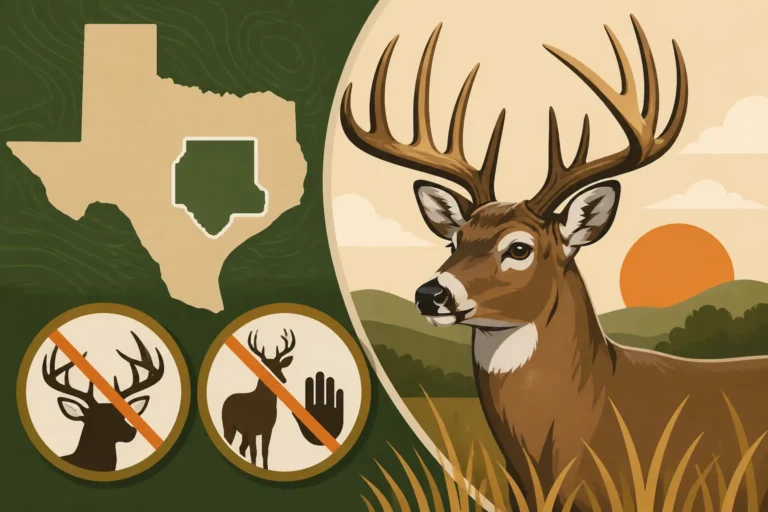
Texas regulations strictly distinguish between white-tailed deer and mule deer, and your license reflects this separation clearly. On a standard license, the majority of the tags are dedicated to white-tailed deer, while a select few are designated specifically for mule deer. You cannot use a white-tailed deer tag on a mule deer, nor can you use a mule deer tag on a whitetail, regardless of where in the state you are hunting.
White-tailed deer tags are further subdivided into buck-only tags, antlerless-only tags, and unbranched antlered deer tags. In contrast, mule deer tags are generally restricted by specific regional seasons in the Panhandle and Trans-Pecos regions. Using a white-tailed buck tag on a mule deer buck in West Texas is one of the most common tagging errors hunters make, and it carries stiff civil restitution fines alongside potential misdemeanor charges.
Special Tags MLDP Bonus Tags and Youth Allowances
If you hunt on property managed under the Managed Lands Deer Program (MLDP), the standard paper tags on your personal hunting license usually stay right in your pocket. MLDP properties receive customized, property-specific tags issued directly by the state. These tags allow landowners to manage deer populations under flexible, science-based harvest quotas. When hunting on an MLDP ranch, you will attach an MLDP tag provided by the ranch manager rather than cutting a tag off your personal license. To learn more about how these specialized property tags operate, take a look at MLDP Tags in Texas: How They Work.
Youth hunters also enjoy unique tagging rules in Texas. Young hunters under sixteen years of age who hold a valid youth hunting license receive a full set of deer tags. During special youth-only seasons, these tags often allow young hunters to harvest antlerless deer in counties where adult hunters would otherwise need special permits or be restricted to specific “doe days.”
Step by Step Field Tagging and Harvest Log Procedures
The moment an animal is down and you have confirmed it is dead, the legal clock starts ticking. Texas law requires that you notch and attach the tag immediately upon kill, before the carcass is moved, loaded onto an ATV, or hauled back to camp. Delaying this process—even if you are just dragging the deer fifty yards out of a thick brush pile to get better lighting—is a regulatory violation.
Many hunters feel pressured or rushed during this stage, especially when working in low-light conditions or bad weather. Taking a deep breath and following a disciplined, step-by-step routine ensures that your tag is secured legally and safely before you begin Field Dressing & Processing Game in Texas Heat.
FIELD TAGGING CHECKLIST
1. Complete Harvest Log on Main License Immediately
2. Cut/Notch Exact Day and Month on the Tag
3. Fill Out County & Ranch Name Legibly in Ink
4. Detach Tag Entirely from Main License
5. Securely Fasten Tag to Animal (Antler/Leg)
- Keep Main License with You (Not Attached to Deer)
The Cut Notch and Attach Method in the Field
To properly execute the field tagging process, follow these exact steps as soon as you reach your harvested deer:
- Select the Correct Tag: Read the wording on the tag carefully to ensure it matches the species, sex, and antler configuration of the animal.
- Notch the Date: Use a pocket knife, heavy-duty shears, or a paper punch to cleanly cut out or notch the exact date and month of the harvest on the tag edges. Simply circling the date with a pen is not sufficient under state guidelines; the paper must be physically notched or cut.
- Fill Out Property Details: Write the county of harvest and the specific ranch name clearly on the tag using a waterproof pen or fine-tip permanent marker.
- Detach the Tag: Carefully tear or cut the completed tag away from your license along the perforated lines.
- Attach to the Carcass: Fasten the tag securely to the animal. For bucks, wrapping the tag tightly around the base of the antler with clear packing tape or zip-tying it through a slit in the ear works best. For antlerless deer, attach the tag securely through the hock on the hind leg.
It is vital to protect the paper tag from blood, mud, and moisture. Wrapping the entire tag in clear packing tape or placing it inside a small sealable plastic bag before zip-tying it to the leg or antler keeps the writing legible throughout transport.
Completing the Paper Harvest Log Immediately
Notching and attaching the tag to the carcass is only half the legal requirement. Back on the main body of your hunting license—the portion that stays in your wallet or pack—there is a dedicated section titled “Harvest Log.”
Before you move the carcass or drive away from the site of the kill, you must write the date, the county of harvest, and the name of the ranch directly onto this log. Game wardens check both the tag on the animal and the harvest log on your license. If you have a tagged deer in the back of your truck but your license harvest log is blank, you can still be cited for an incomplete harvest record. If you prefer modern record-keeping, you can learn more about state digital tracking by reading Texas Hunting Tags & Harvest Reporting (My Texas Hunt Harvest).
Digital Tagging and Digital License System Rules
Texas offers hunters the option to purchase a fully digital license option. If you opt for a digital license instead of a traditional printed paper license, you do not receive physical paper tags in the mail. Instead, you manage your harvest reporting electronically through a state-approved mobile app.
When using digital tags, the tagging process changes slightly:
- You must execute a digital harvest report in the app immediately upon taking the animal, even if you do not have cellular service. The app stores the record locally and uploads it once service is restored.
- After completing the digital report, you must physically write the generated confirmation number, your name, and date on a piece of durable material (such as duct tape, paper in a plastic bag, or a plastic tag) and attach it securely to the animal.
- The physical confirmation tag must remain attached to the deer just as a paper tag would until the carcass reaches its final destination or a commercial processing facility.
Navigating Bag Limits Antler Restrictions and CWD Rules
Understanding how deer tags work requires a clear knowledge of regional restrictions. A tag does not grant blanket permission to shoot any deer anywhere in the state. Every county in Texas has specific bag limits and antler parameters that dictate which tag can be applied to a specific animal.
Failing to verify local county rules before pulling the trigger can result in tagging an illegal buck. For comprehensive local details, reviewing the Texas Deer Bag Limit by County helps keep your harvest strictly legal.
Understanding Antler Restrictions Across Texas Counties
Over 100 Texas counties enforce strict antler restrictions designed to protect younger bucks and improve the overall age structure of the herd. In these designated counties, a legal buck must meet specific antler criteria to be tagged with a standard buck tag.
Generally, an antler-restricted county allows a hunter to take a buck only if it meets one of two conditions:
1. It has at least one unbranched antler (a spike).
2. It has an inside antler spread measuring 13 inches or wider.
To judge a buck’s spread accurately in the field, look at the ear tips. On a relaxed Texas whitetail buck, the distance from ear tip to ear tip when fully alert is typically around 13 inches. If the main beams extend beyond the tips of the ears, the buck is generally legal. For a deeper breakdown of these field-judging techniques, see How to Field Judge a 13-Inch Buck and read up on regional regulations in Texas Antler Restrictions: 13-Inch Rule & Counties.
Managing County Bag Limits and Tag Transfer Rules
Your personal license contains tags that cover your total legal take across the entire state for the full season. However, hitting a individual county limit prevents you from using remaining tags in that specific county. For example, if a county has a total bag limit of four deer with no more than two bucks, once you tag two bucks in that county, you cannot shoot a third buck there—even if you still have unused buck tags remaining on your license. You would have to travel to a different county with open buck limits to use your remaining tag.
Additionally, deer tags are strictly non-transferable. You cannot lend your license to a family member, nor can you tag a deer shot by your hunting buddy, child, or spouse. The person who pulled the trigger must be the person who notches and attaches the tag from their own personal license.
Chronic Wasting Disease Zones and Carcass Movement
Managing your deer tags also intersects directly with Chronic Wasting Disease (CWD) management zones across Texas. In designated CWD containment and surveillance zones, special regulations govern how tagged carcasses are checked and transported out of the area.
If you harvest a deer within a designated CWD zone, state law requires you to bring the tagged animal to a mandatory check station for biological sampling before leaving the zone. Furthermore, strict carcass movement restrictions prohibit transporting whole deer skeletons outside the zone. You must quarter the animal or remove the head and spine at camp, leaving high-risk brain and spinal tissues behind. For detailed map boundaries and carcass processing protocols, consult CWD in Texas: Zones, Rules & Carcass Transport.
CWD ZONE CARCASS PROTOCOL
PERMITTED TRANSPORT OUT OF ZONE:
• Deboned meat / Quartered meat with no spine/head
• Cleaned skull plates with no tissue attached
• Finished taxidermy mounts & tanned hides
PROHIBITED TRANSPORT OUT OF ZONE:
• Intact spinal columns & intact brain tissue
• Whole untagged/unprocessed carcasses
Summary Comparison of Texas Deer Tag Requirements
Navigating the various rules, tag types, and requirements can seem overwhelming when you are planning your season. The reference table below provides a quick breakdown of common tagging scenarios, how tags should be applied, and key requirements for each situation.
| Deer Tag Type / Scenario | Applicable Animal | Attachment Location | Mandatory Harvest Log Entry? | Key Restrictions to Keep in Mind |
|---|---|---|---|---|
| Standard Buck Tag | Antlered Whitetail Buck | Antler base or ear | Yes (Paper License) | Subject to 13-inch antler restrictions in applicable counties. |
| Unbranched Antler Tag | Whitetail Spike / Single Beam | Antler base or ear | Yes (Paper License) | Buck must have at least one unbranched main beam. |
| Antlerless Tag | Whitetail Doe or Button Buck | Hind leg hock | Yes (Paper License) | Check county doe days or permit requirements; see Texas Antlerless Deer Permits & Doe Days. |
| Digital License Confirmation | Any legal Deer | Physical tag with written code | Yes (Logged in Mobile App) | Must write confirmation number on durable material and attach to animal. |
| MLDP Ranch Tag | Whitetail / Mule Deer on MLDP Land | Ear or hind leg hock | No (Logged on MLDP system) | Uses property-issued tag instead of personal license tags. |
| Mule Deer Tag | Mule Deer (Either Sex) | Antler base or leg hock | Yes (Paper License) | Valid only in specific Panhandle and Trans-Pecos open counties. |
Common Tagging Mistakes to Avoid at Camp
Even seasoned hunters fall victim to simple oversights when tag management gets rushed. One frequent mistake is detaching a tag before cutting out the date. If you cut your finger or drop the tag in tall grass after detaching it, you risk losing an unnotched tag, which renders it invalid. Always notch the month and date while the tag is still attached to the main sheet, then tear it away.
Another common error is failing to carry a pen into the stand. If you shoot a deer at dusk, drag it to your vehicle, drive back to camp, and then write down the details with a pen left on the camp kitchen table, you have technically transported an untagged deer on public roads. Keep a fine-point permanent marker in your hunting pack alongside a zip tie and clear packing tape at all times.
What to Do If You Lose or Damage a Tag
Paper tags exposed to rain, mud, or heavy brush during a long drag can occasionally tear off or become destroyed. If a tag tears while attached to a deer in transport, keep all remaining pieces together with the carcass and preserve your matching harvest log entry intact.
If you lose your entire hunting license with its attached paper tags before harvesting an animal, you must visit a license retailer to purchase a replacement license. Never attempt to hunt or tag a harvested deer with a handwritten note or homemade tag unless you are actively using the state’s digital confirmation tagging system. Keeping your original paper license inside a ziplock bag inside a secure zippered pocket is the best defense against losing your tags in the field.
Disclaimer
This article is for general informational purposes only and does not constitute professional advice. Laws, prices and regulations vary by location and change over time. Consult a qualified professional for guidance on your specific situation.