How to Hunt Javelina in Texas
Finding and successfully hunting javelina in Texas can feel like chasing a ghost for many hunters. They're incredibly elusive, often mistaken for small feral hogs, and their habitat in the brush country can be tough to navigate, leading to frustrating days in the field with little to show for it. But don't despair! This comprehensive guide will walk you through everything you need to know, from understanding their unique habits to employing effective hunting strategies and having the right gear, ensuring your next javelina hunt is a success and a truly rewarding Texas experience.
Understanding Javelina: More Than Just a "Mini Pig"
Let's clear up one of the biggest misconceptions right away: javelina are not pigs. Despite their common nickname, "collared peccaries," these fascinating creatures are members of the peccary family, which is distinct from the pig family. This isn't just a biological factoid; it’s crucial for understanding their behavior, diet, and how to hunt them effectively. Many hunters approach javelina hunting like they would feral hog hunting, only to be left scratching their heads when their usual tactics don't pan out. Their smaller size, unique scent glands, and social structures set them apart, making them a distinct and challenging quarry.
Identifying Javelina vs. Feral Hogs
The initial hurdle for many hunters, especially those new to South Texas, is telling a javelina apart from a small feral hog. At a quick glance, in the low light of dawn or dusk, or amidst thick brush, it's easy to confuse the two. However, misidentification can lead to hunting violations, as javelina have specific bag limits and seasons, unlike the year-round, often unrestricted hunting of feral hogs. Knowing the differences is absolutely paramount before you even pull the trigger.
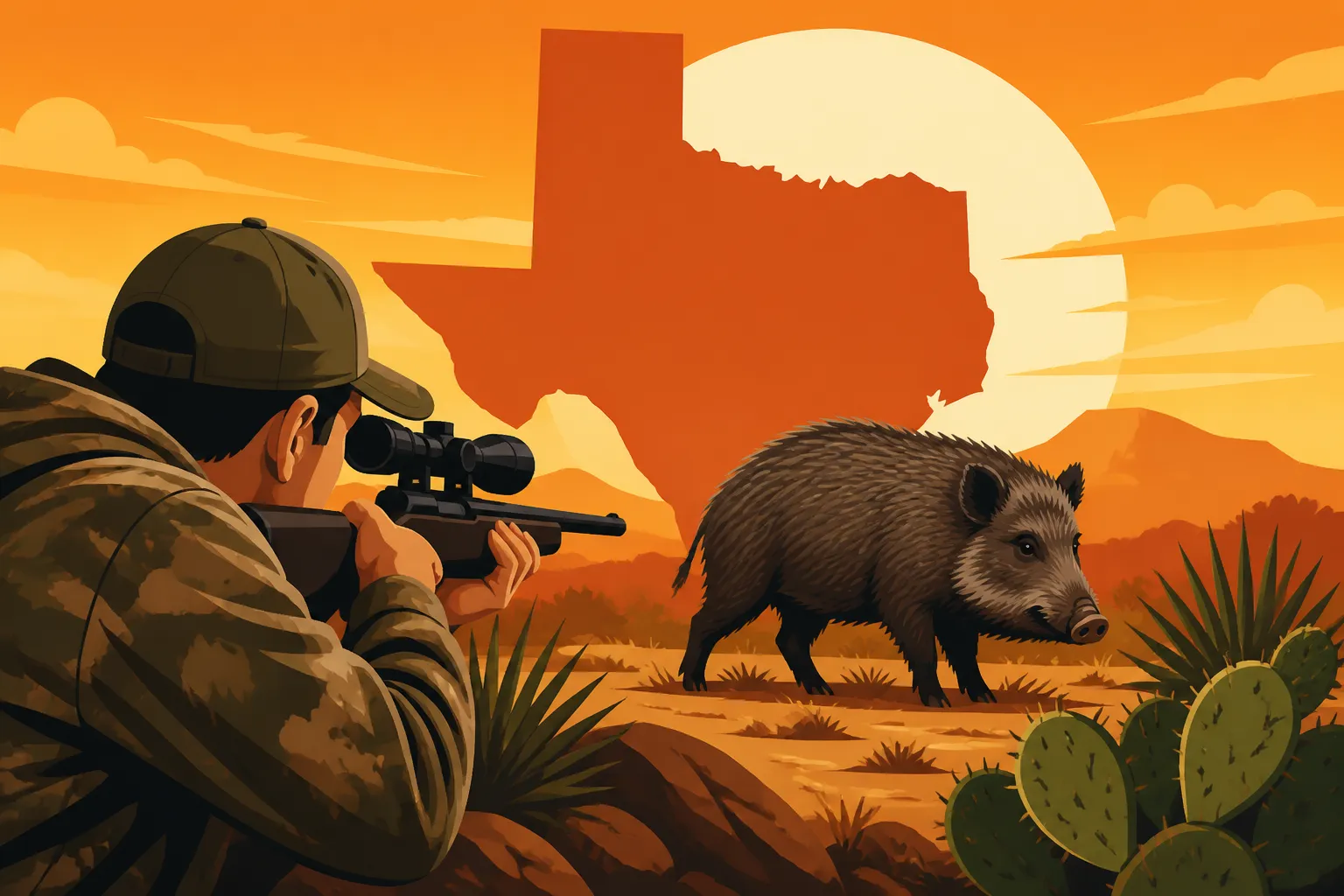
Javelina are generally much smaller, typically weighing between 30-60 pounds, with a stockier, more compact build. Their coat is coarse and grizzled, usually a mix of black, gray, and brown, with a distinctive lighter band of hair around their neck, giving them the "collared peccary" moniker. They have short, straight tusks that point downwards, small, rounded ears, and a nearly imperceptible tail. Their snout is pig-like but proportionally shorter. When you see a group moving, they often stick very close together, almost like a compact unit, and emit a strong, musky odor that's quite different from a hog. Imagine a miniature, fuzzy tank with a strong personality. If you're still not sure, take a look at our detailed guide on Javelina vs Feral Hog: What's the Difference? to truly nail down those identification skills.
Feral hogs, on the other hand, even small ones, tend to be lankier and can vary wildly in color from black to red, spotted, or even striped. Their tails are more prominent, often curled or straight but definitely visible. Their tusks are usually longer and curve upwards or outwards. While they also group up, especially sows with piglets, their social structure isn't quite as tightly knit as a javelina herd (called a "sounder"). The most telling sign, besides size and color, is often the head shape and tusks. A small hog might look similar, but a javelina's unique collar and downward-pointing tusks are dead giveaways once you know what to look for.
Javelina Behavior and Habitat
Javelina are highly social animals, living in herds or "sounders" that typically range from 5 to 15 individuals, though larger groups aren't uncommon. This social structure means that where there's one javelina, there are almost certainly more nearby. They communicate through a variety of grunts, woofs, and chirps, and use scent glands on their backs to mark territory and each other, which explains that unique, musky smell. This scent marking is crucial for their social cohesion and for you as a hunter to potentially identify their presence.
Their preferred habitat in Texas is the dense, thorny brush country of the south, extending up into parts of the Edwards Plateau and Trans-Pecos regions. They thrive in areas with thick cover for protection from predators and the harsh Texas sun, often interspersed with prickly pear cactus, mesquite, and other arid-region vegetation. This vegetation provides both food and shelter. You’ll often find them near rocky outcrops, dry creek beds, and dense thickets, which offer natural hiding spots and escape routes. They're surprisingly adaptable to their environment, especially when it comes to finding food and water.
Javelina are primarily diurnal, meaning they are most active during the day, particularly early morning and late afternoon, often mirroring prime deer activity times. However, during hot summer months, they might shift their activity to cooler parts of the day, seeking shade or becoming more nocturnal to avoid extreme temperatures. Their diet is largely herbivorous, consisting mainly of prickly pear cactus (which they can eat spines and all!), roots, tubers, fruits, berries, and insects. They are not as opportunistic as feral hogs, which will eat almost anything. Understanding this diet helps you identify potential feeding areas. They are also highly dependent on water sources, especially during dry periods, making waterholes a prime scouting location.
Where and When to Hunt Javelina in Texas
Texas offers fantastic opportunities for javelina hunting, but success hinges on knowing where to go and when to be there. This isn't a critter you'll find just anywhere across the state. They have specific geographical strongholds, and understanding their seasonal patterns can significantly boost your odds.
Key Javelina Habitats and Regions
The vast majority of Texas's javelina population resides in the southern and western parts of the state. When we talk about prime javelina country, we're talking about the famous South Texas Brush Country. This region, characterized by its dense, thorny vegetation like mesquite, prickly pear, granjeno, and huisache, provides ideal cover and forage for javelina. Counties like Webb, Dimmit, La Salle, Maverick, and McMullen are legendary for their abundant wildlife, including javelina. The thick senderos and vast ranches make it a truly immersive experience.
Beyond the brush country, javelina can also be found in good numbers in the western portions of the Edwards Plateau, especially where the landscape transitions into more arid, scrubby terrain. Counties in this area like Val Verde, Edwards, and Real can offer solid opportunities. Furthermore, the Trans-Pecos region of West Texas, with its mountains, desert scrub, and canyons, also holds pockets of javelina. While perhaps not as densely populated as South Texas, the wide-open spaces and unique topography offer a completely different hunting experience. When considering your hunting destination, checking out resources like "Where to Hunt Javelina in Texas" can give you specific county-level insights.
For public land hunters, the options are more limited but still exist. The Texas Parks and Wildlife Department (TPWD) manages several Wildlife Management Areas (WMAs) and offers drawn hunts for javelina. Places like Chaparral WMA in South Texas or Black Gap WMA in the Trans-Pecos are known to have javelina populations. These public hunting opportunities are highly sought after, so applying early for drawn hunts is key. Even on private land, scouting for the specific habitat types—dense brush, prickly pear patches, and reliable water sources—will put you in the right areas.
Best Seasons and Times for Javelina Hunting
Javelina hunting in Texas generally aligns with deer season, which can vary by county but typically runs from early November through February for general season, with archery season starting earlier. The official Javelina Season & Bag Limit in Texas details specific dates and regulations. Historically, December and January often present excellent conditions. The weather is usually cooler, making for more comfortable hunting and encouraging javelina to be more active during daylight hours. Cooler temperatures also reduce the "funk" factor of processing your animal, which is a real consideration.
While javelina can be hunted year-round on private land with a valid hunting license if no closed season is specified by county, most hunters target them during the cooler fall and winter months. The intense heat of the Texas spring and summer can make javelina more nocturnal, seeking refuge in dense shade during the day, making them harder to spot and stalk. Plus, who really wants to hike through thick brush in 95-degree heat when you can do it in 60-degree weather?
During the early morning and late afternoon are typically the most productive times to hunt. This is when javelina are most actively foraging and moving between bedding areas and food sources. Like many other game animals, they tend to bed down during the midday hours, especially if it’s sunny. Plan your hunts around these peak activity periods, focusing your scouting efforts on identifying their travel corridors between dense cover and feeding grounds. You might also find them actively rooting for food under mesquite trees in the morning, which is a common feeding habit.
Effective Javelina Hunting Tactics
Hunting javelina can be a true test of stealth and patience. They have excellent senses of smell and hearing, and their keen eyesight, while not their strongest suit, is still good enough to pick up sudden movements. These aren't creatures you can often just walk up on. Successful tactics involve understanding their movements and using the terrain to your advantage.
Spot-and-Stalk Strategies
Spot-and-stalk is arguably the most exciting and effective way to hunt javelina, especially in the vast brush country. It demands careful observation, quiet movement, and an intimate knowledge of the wind. Your success begins with finding them, which can be the hardest part. Look for sounders moving through senderos, feeding in prickly pear patches, or heading to water sources. High vantage points, if available, can be invaluable for glassing large areas of brush. Utilizing a good pair of binoculars, perhaps from our list of Best Hunting Optics for Texas: Scopes, Binos & Rangefinders, is absolutely crucial for picking apart the dense cover.
Once a sounder is spotted, the real game begins. Pay extreme attention to wind direction; javelina will bust you instantly if they catch your scent. Use the dense brush and undulating terrain to mask your approach. Move slowly, deliberately, and quietly. Every step needs to be calculated. Think about how deer hunters approach their quarry; many of the same principles apply. This is where patience truly pays off. You might need to crawl or make wide detours to stay downwind and out of sight. Remember, where there's one, there are usually more, so be ready for multiple targets.
A critical aspect of the stalk is identifying the lead animals and understanding the group's general direction of travel. Javelina can cover ground surprisingly quickly, and a sounder can vanish into the brush in seconds. Take your time to get into a stable shooting position, paying attention to what's behind your target. These animals are tough, and a clean shot is essential. Don't rush it; a missed shot will send the whole sounder scattering, and you might not see them again that day.
Ambush Hunting (Waterholes/Feeders)
Ambush hunting, either from a blind or a concealed position, can be highly effective, particularly during dry periods or in areas where javelina patterns are predictable. Javelina need water, and during droughts, they will visit reliable water sources with regularity. Setting up near a well-used waterhole, especially one with good cover nearby, can lead to consistent opportunities. This is a common tactic, and scouting for tracks and droppings around water is a great way to confirm activity.
While javelina aren't typically "baited" like deer or hogs, they will visit supplemental feeders, especially those dispensing corn, though it's not their primary diet. If you're on a lease with active deer feeders, keep an eye out for javelina; they are opportunistic foragers and might grab a few kernels. Some hunters will put out prickly pear pads near a blind, as this is a natural and highly attractive food source for them. Always check your specific county and local regulations regarding baiting; while javelina aren't often included in baiting restrictions like deer, it's always best to be sure. A comfortable, well-concealed ground blind can make those long waits much more bearable.
The key to successful ambush hunting is patience and remaining absolutely still and quiet. Javelina are curious but wary. Any unnatural movement or sound will alert them. Early morning and late afternoon are prime times for them to visit water or feeding areas. Be prepared to sit for extended periods, and have your shooting lanes clear. If you're hunting in warmer weather, consider some lightweight, early-season camo to stay comfortable while remaining concealed.
Calling Javelina
Yes, you can call javelina! While not as widely practiced as deer or turkey calling, using specific distress calls or pup-in-distress calls can be surprisingly effective. Javelina are very protective of their young, and a squealing pup can draw in an entire sounder, often aggressively, to investigate or defend. The trick is to be ready and in a good position, as they can come in quickly and from unexpected directions.
There are specialized javelina calls on the market, but some hunters have success with general predator calls that mimic a small distressed animal. The key is to start with soft, short bursts of sound, listening for a response. If you hear grunts or woofs, you know they're interested. Be patient, as they might circle downwind to get a scent before committing. Because they come in as a group, this can present a chaotic, but exciting, shooting opportunity. Always be aware of your backdrop and what's beyond your target when calling them in.
This tactic works best when you suspect javelina are in the general area but haven't spotted them yet, or if a sounder has just spooked but hasn't completely cleared out. The calls can sometimes bring them back to investigate. Combining calling with a good spot-and-stalk can also be effective; if you've spooked them, quickly set up and try a call to see if you can bring them back within range.
Essential Gear for Javelina Hunting
Having the right gear won't guarantee a javelina, but it will certainly make your hunt more comfortable, safer, and increase your chances of success. Given the environments javelina inhabit, your equipment choices should reflect the challenges of dense brush, thorny terrain, and potentially warm weather.
Firearms and Ammunition
Javelina are tough little animals, and while not large, they require a well-placed shot to ensure a quick and humane harvest. You'll want a rifle with enough knockdown power but without excessive recoil, as shots are often taken at relatively close range in heavy cover.
Rifles:
- Caliber: Popular choices include .223 Remington, .22-250 Remington, .243 Winchester, .25-06 Remington, and larger deer calibers like .270 Winchester or .30-06 Springfield. A .223 or .243 with a good bullet is often considered ideal. The key is shot placement, often aiming for the shoulder or behind the ear.
- Action: Bolt-action rifles are common for their accuracy and reliability. Lever-action rifles in calibers like .30-30 Winchester are also excellent for brush hunting due to their fast follow-up shots and compact size. AR-style rifles chambered in .223/5.56mm or .300 Blackout are also popular, offering capacity and quick handling.
- Optics: A good variable power scope (e.g., 2-7x, 3-9x) is perfect. You'll mostly be taking shots at closer ranges, so a wide field of view is more beneficial than high magnification.
Ammunition:
- Bullet Type: Choose a bullet designed for controlled expansion, like a soft point or polymer-tipped bullet. Avoid pure varmint bullets (like hollow points designed for rapid fragmentation) as they might not penetrate enough to reach vital organs on a javelina, leading to wounded animals. For calibers like .223, a heavier bullet (60-70 grains) designed for deer or hogs would be a better choice than a lighter varmint bullet.
Archery:
- Bowhunting javelina is an incredible challenge, and many hunters pursue them with a bow. A minimum draw weight of 40 pounds is recommended, paired with sharp broadheads. Shot placement is even more critical with archery gear. You can find more specific guidance on Bowhunting in Texas: Archery Season Guide.
Optics and Other Must-Haves
Beyond your chosen weapon, several other pieces of gear are crucial for a successful javelina hunt. The thick Texas brush demands a certain approach to observation and movement.
Optics:
- Binoculars: A good pair of 8x or 10x binoculars are indispensable for glassing thick cover, spotting movement, and confirming identification. They allow you to survey large areas without constantly raising your rifle, reducing movement that could spook game. Consider robust, fog-proof models, as Texas weather can be unpredictable.
- Rangefinder: While shots are often close, a rangefinder helps confirm distances, especially important for archery hunters or those using less common calibers.
Clothing and Footwear:
- Brush Pants/Chaps: This is non-negotiable in javelina country. The mesquite, prickly pear, and various thorny bushes will shred regular pants in minutes. Sturdy brush pants or separate chaps will save your legs from countless scratches and punctures.
- Snake Boots: Rattlesnakes are prevalent in javelina habitat. A good pair of snake boots or gaiters offers vital protection and peace of mind. Check out our recommendations for the Best Snake Boots for Texas Hunting.
- Camouflage: Lighter camo patterns that blend with sparse trees and dusty greens/browns are effective. Focus on layers; even in winter, midday can warm up considerably, so you’ll want to shed layers as needed.
Other Essentials:
- Backpack: A comfortable daypack to carry water, snacks, a first-aid kit, a small game processing kit, and any extra layers.
- Water: Stay hydrated! Even in cooler months, walking through dense brush can be physically demanding.
- Knife: A sharp, reliable hunting knife for field dressing.
- GPS/Mapping App: Tools like onX Hunt or HuntStand are invaluable for navigating brush country, marking sightings, and identifying property lines. Given the confusing nature of thick cover, knowing exactly where you are and where you're going is critical.
- Game Cart: While javelina are smaller, a game cart can still be helpful for hauling out your harvest, especially if you're on a solo hunt or have a long drag out of the thick stuff.
- Cooler: After field dressing your javelina, you'll want to cool the meat quickly, especially if the weather is warm. Bringing a quality cooler filled with ice is always a good idea. Even for these smaller animals, proper game care matters. Consider our tips on How to Cool a Deer Fast in Texas Heat, as many of the principles apply to smaller game too.
Disclaimer
Hunting is an inherently risky activity. This guide is for informational purposes only and does not substitute for professional instruction, adherence to all applicable laws and regulations, or sound judgment. Always prioritize safety, respect wildlife, and obtain all necessary licenses and permits before hunting. Regulations can change; consult the latest Texas Parks and Wildlife Department Outdoor Annual for current rules.