When Is the Texas Whitetail Rut?
Hunting deer in Texas can feel like playing a different game depending on which part of our vast state you're in, and nowhere is that more true than when you're trying to nail down the elusive whitetail rut. It's a question that plagues every Texas deer hunter: "When exactly is the rut?" The truth is, there's no single answer, and that can be incredibly frustrating when you're trying to plan your precious hunting days. This guide is here to unravel the complexities of the Texas whitetail rut, helping you understand its regional variations and what factors really influence when those bucks start chasing.
Understanding the Whitetail Rut in Texas: A Hunter's Dilemma
The whitetail rut, that magical period when bucks are most active and vulnerable, driven by the urge to breed, is what every deer hunter dreams of. It's when those normally elusive mature bucks suddenly throw caution to the wind, making them a little easier to spot, and a lot more responsive to calls and rattling. But in a state as geographically diverse as Texas, this isn't a synchronized event. We're not talking about a neat, uniform two-week window like in some northern states. Oh no, here in Texas, the rut is a much more drawn-out, sometimes seemingly erratic, affair that can stretch across months depending on where your boots are on the ground.
Why Texas is Different: A Biological Overview
Texas's immense size and varied ecosystems play a massive role in why the whitetail rut is so staggered. From the dense Pineywoods of East Texas to the arid Trans-Pecos mountains, and down to the brush country of South Texas, deer populations have adapted to their local environments over millennia. These adaptations include their breeding cycles. Genetics play a huge part; deer in different regions have distinct lineages that have evolved to rut at times that historically offer the best chances of fawn survival based on local climate and forage availability. For instance, a fawn born in the heat of a South Texas summer needs to hit the ground when the forage is still good enough to support the doe's lactation and the fawn's early growth, which often means a different breeding time than deer in the Panhandle where harsh winters dictate an earlier birth. It's a biological dance with Mother Nature, perfected over countless seasons, and it makes our hunting opportunities incredibly unique.
The Phases of the Rut: More Than Just Chasing
When we talk about "the rut," it's easy to just picture bucks running does ragged. But in reality, the rut is a series of distinct phases, each offering different hunting challenges and opportunities. First, you have the pre-rut, typically starting with increasing buck activity as they shed velvet and begin making scrapes and rubs. This is when they establish dominance hierarchies, and the excitement really starts to build. Bucks are feeding heavily, getting ready for the energy drain of breeding. Next comes the seeking phase, where bucks are actively looking for does that are coming into estrus. This is often followed by the chase phase, which is what most hunters associate with the "peak rut." Bucks are hot on the heels of receptive does, sometimes running them for miles. Then, for brief periods, you get the breeding phase, where a buck will "lock down" with a doe for 24-48 hours. Finally, there's the post-rut, where bucks are exhausted, often losing a good chunk of their body weight, and may still seek out any late-cycling does. Understanding these phases, and how they unfold in your specific area, is key to success.
Regional Rut Timelines Across Texas
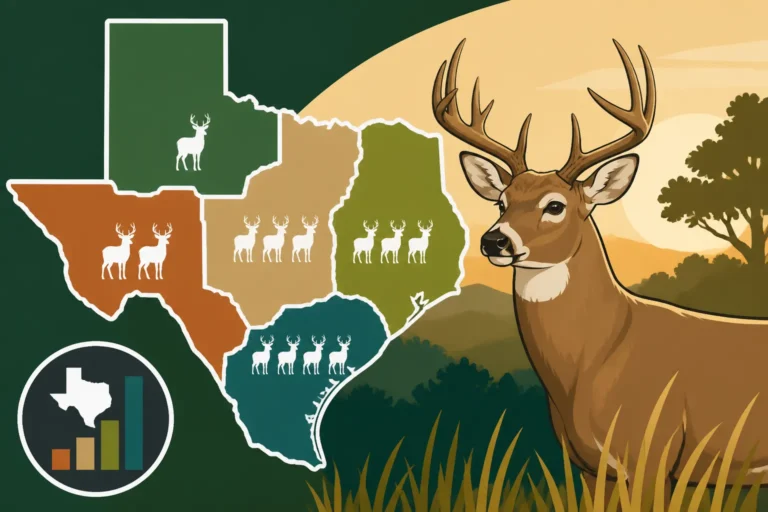
Trying to pin down the Texas rut date is like trying to catch smoke with your bare hands. It simply doesn't exist uniformly across the state. What you'll find, instead, is a fascinating patchwork of breeding cycles that vary significantly from region to region. Knowing these general timelines for your hunting grounds is the first step in formulating a successful strategy.
The Pineywoods and East Texas Rut
In the lush, timbered regions of East Texas, often referred to as the Pineywoods, the rut tends to kick off a bit earlier than some other parts of the state. You'll generally see significant pre-rut activity picking up in late October, with the peak rut typically falling in mid-November. This is when you'll observe bucks actively chasing does, and when your rattling and grunting calls might be most effective. Counties like Angelina, Nacogdoches, and Tyler often report this mid-November peak. However, it's not uncommon for some scattered breeding activity to continue into early December, especially with younger does or those that didn't conceive during the primary cycle. Hunters in these areas should be prepared for cooler, potentially damp conditions during this prime time, which can make tracking and scent control even more critical. If you're planning an East Texas hunt, aiming for that second and third week of November often puts you right in the thick of it.
Hill Country and Central Texas Rut
Ah, the iconic Texas Hill Country – home to some of the densest deer populations in the nation. The rut here is famously later than in East Texas, often leaving newcomers scratching their heads. In the rolling hills and live oak savannahs of Central Texas, including counties like Kerr, Gillespie, and Mason, the pre-rut often starts picking up in mid-November. The peak rut in the Hill Country typically occurs in mid-to-late December, frequently around Christmas or even into the first week of January. This later rut timing means that during the regular deer season, which usually runs through early January, you're hitting the rut at its absolute prime. This makes for some incredible late-season hunting opportunities. Imagine rattling in a big buck on a crisp December morning! It’s also crucial to remember that with such high deer numbers, competition among bucks is fierce, and they'll be working hard to find those receptive does. For more insights on this region, check out our guide on Hill Country Deer Hunting in Texas.
South Texas Brush Country Rut
South Texas, the legendary "Brush Country," is known for producing monster bucks, and its rut timing is another beast entirely. This region, encompassing counties like Webb, La Salle, and Maverick, is characterized by dense, thorny brush and hot, dry conditions. The rut here is often the latest in the state, with the peak breeding activity usually taking place from late December through mid-January. You might even see some bucks still chasing well into February in some localized areas. This extended and later rut is a survival adaptation; fawns born in late summer or early fall can take advantage of any late-season rains and subsequent forage growth. The later rut also coincides with cooler temperatures, making the demanding process of breeding slightly less taxing on the animals. Hunting the South Texas rut often means focusing on water sources and senderos where deer might feel more comfortable moving in the thick cover. Understanding the nuances of South Texas Trophy Whitetail: Brush Country Bucks is essential for success in this challenging but rewarding area.
North Texas and Panhandle Rut
Moving up to the northern stretches of Texas, including the Rolling Plains and the Panhandle, the rut timing shifts again. In areas like Childress, Cottle, and Wilbarger counties, the rut tends to be more aligned with what many might consider a "typical" schedule, though still with some Texas flair. Pre-rut activity usually begins in late October, and the peak rut generally falls in early to mid-November. This timing ensures fawns are born in late spring, allowing them to grow and thrive before the intense heat of summer and potential winter cold fronts. Hunters in these regions often experience classic rut behavior during the early weeks of the regular deer season, making it a fantastic time to be in a stand overlooking a food plot or a creek bottom. Weather patterns, especially significant cold fronts, can often kick the rut into high gear in these northern counties.
Here's a quick overview of general peak rut timelines by major Texas regions:
| Texas Region | General Peak Rut Timeline | Typical Conditions | Hunter Tactics Focus |
|---|---|---|---|
| East Texas (Pineywoods) | Mid-November | Cooler, potentially damp | Rattling, Grunting, Scrapes |
| Central Texas (Hill Country) | Mid-December – Early January | Cooler, often dry | Food plots, Water, Rattling |
| South Texas (Brush Country) | Late December – Mid-January | Warm, dry, dense brush | Senderos, Water, Spot-and-stalk |
| North Texas (Rolling Plains/Panhandle) | Early to Mid-November | Cool, variable | Food sources, Creek bottoms |
| Trans-Pecos (Mountains) | Mid-December – Early January | Cold, arid, mountainous | Glassing, Spot-and-stalk |
Trans-Pecos Region Rut
The rugged, expansive Trans-Pecos region, home to the state's mule deer but also a healthy population of whitetails, presents yet another unique rut scenario. In counties like Culberson and Hudspeth, where whitetail populations are often found in canyon bottoms and along mountain slopes, the rut tends to follow a similar pattern to the Hill Country. You'll typically see peak breeding activity occurring from mid-December into early January. This later rut is likely an adaptation to the harsh, arid conditions, allowing fawns to be born after the most extreme heat and before any severe winter weather. Hunters in this region might be combining their whitetail efforts with scouting for mule deer, whose rut also occurs during a similar timeframe. Spot-and-stalk hunting is a prevalent method here, and observing deer movement patterns in the vast landscape is key to identifying rutting behavior.
Factors Influencing the Rut Beyond the Calendar
While general regional timelines give us a good starting point, any seasoned Texas hunter knows that deer don't always read the calendar. There are several other crucial factors that can influence the intensity and exact timing of the rut in any given year, even within your specific hunting lease. Paying attention to these subtle cues can give you a significant edge.
The Impact of Weather and Moon Phases
Let's talk about those old wives' tales and genuine observations. Many hunters swear by the moon phase, and while scientific evidence linking the moon directly to the timing of the biological rut is pretty thin, it can absolutely influence deer movement patterns during the rut. A bright full moon might encourage more nocturnal activity, pushing the peak of daylight movement to mid-morning or late afternoon.
More directly impactful is the weather. A sudden, sharp cold front in Texas can act like a switch, especially in the pre-rut or early rut stages. When temperatures drop, and the air is crisp, bucks often become more active, moving more during daylight hours. This is particularly noticeable in regions where the rut falls during warmer periods, like South Texas. A good cold snap can make those bucks push through the brush, seeking out does with renewed vigor. Conversely, unseasonably warm weather can suppress daylight movement, making the rut feel "slow" even if the does are receptive. You'll often see deer activity concentrated around dawn and dusk, or even during the cooler hours of the night. Using a reliable app like GoHunt can help you track weather patterns and plan your sits accordingly, even cross-referencing with other hunter observations in your area.
Herd Health and Sex Ratios
The overall health of your local deer herd and the sex ratio (the number of bucks to does) can significantly impact how the rut manifests. In a healthy herd with a balanced sex ratio (closer to 1 buck for every 2-3 does), the rut tends to be more intense and compressed. Bucks don't have to search as far or as long for receptive does, leading to more aggressive behavior and more daylight activity. On the other hand, in areas with an unbalanced sex ratio, often skewed heavily towards does, the rut can feel more drawn out and less intense. Bucks have to cover more ground to find does, and their efforts might be spread out over a longer period, making it harder to pinpoint a "peak."
Programs like the Managed Lands Deer Program (MLDP) in Texas encourage landowners to manage their herds for better health and more balanced sex ratios, often resulting in more pronounced and exciting ruts. Understanding the dynamics of your specific lease's deer population, perhaps by reviewing past harvest data or conducting trail camera surveys, can give you a clearer picture of what to expect. This is where tools like GoHunt can be invaluable for analyzing historical data and comparing it with real-time conditions. It also helps you determine if antler restrictions like the Texas Antler Restrictions: The 13-Inch Rule Explained are impacting the age structure of your buck herd.
Genetics and Local Adaptations
While environmental factors play a big role, the underlying genetics of a specific deer population ultimately dictates its breeding cycle. As mentioned earlier, Texas whitetails have localized adaptations that have been passed down through generations. This means that even within a single county, you might observe slight variations in rut timing between different properties, especially if those populations have been relatively isolated or managed differently.
For instance, deer brought in from a different region with an earlier rut might introduce those genetics, slowly shifting the rut timing in a localized area. However, these changes are generally slow. For the most part, the genetic predisposition for when to rut is strong and is why we see such consistent regional patterns year after year. Hunters who understand this genetic component know that while a cold front might intensify rut activity, it won't fundamentally change a late-rutting South Texas deer into an early-rutting East Texas deer. Knowing your local deer's ancestral clock is as important as knowing the calendar.
How to Scout and Adapt Your Hunting Strategy
Knowing when the rut generally happens in your area is a fantastic starting point, but successful rut hunting in Texas requires more than just a date on the calendar. It demands active scouting, keen observation, and the flexibility to adapt your strategy to the real-time behavior of the deer on your lease.
Identifying Pre-Rut Activity: Scrapes and Rubs
The pre-rut is your early warning system. This is when bucks start getting serious, preparing for the breeding season. One of the most obvious signs is the appearance of rubs – where bucks scrape their antlers against small trees and saplings, marking their territory and leaving behind their scent. Look for fresh, shiny wood where bark has been removed. The size and height of the rub can tell you a lot about the buck that made it.
Even more significant are scrapes. These are patches of ground, often under an overhanging branch (the "licking branch"), that bucks clear with their hooves and then urinate into, mixing urine with scent from their tarsal glands. They also chew on the licking branch, depositing scent from their preorbital glands. Scrapes are communication hubs, attracting other deer, and are a clear indicator that bucks are becoming sexually active. Finding a series of fresh rubs and scrapes, particularly along travel corridors or near bedding areas, tells you that bucks are in the vicinity and the rut is approaching. Regularly checking your trail cameras over these spots can provide invaluable intel on deer movement and specific bucks. Learning How to Pattern Bucks With Trail Cameras before the season gets in full swing can be a game-changer.
Adapting Tactics for Each Rut Phase
Once you start seeing signs of the rut, it's time to adjust your hunting methods. During the pre-rut and seeking phases, bucks are on the move, but they're still cautious. This is a great time for stand hunting near food sources, bedding areas, or along travel corridors between the two. Bucks will be covering ground, checking scrapes, and looking for the first does to come into estrus. Light rattling and grunting can sometimes pique their curiosity.
As the rut progresses into the chase and breeding phases, bucks become much less wary. They're singularly focused on does. This is often the best time for aggressive calling and rattling. Learning How to Grunt and Rattle Whitetail in the Hill Country can really pay off. Set up where you have good visibility, as a buck might come charging in quickly. Focus on areas where you know does frequent, or where you've seen active chasing. Don't be afraid to sit all day during this period; a hot doe can pull a buck through at any time.
During the post-rut, bucks are often worn out and focused on recovering body mass. They might still be cruising for any late-cycling does, but their activity is generally lower. Focus on food sources that offer high nutrition, like protein feeders or prime food plots, as bucks will be trying to refuel. They will be moving less, so your sits might need to be longer and more patient.
Using Technology to Your Advantage
In today's hunting world, technology can give us an edge, especially when trying to understand the unpredictable Texas rut. Apps like GoHunt offer detailed mapping features, showing property lines, satellite imagery, and even historical weather data. You can mark scrapes, rubs, and deer sightings, creating a comprehensive picture of deer movement on your property. Some apps even integrate with public harvest data, allowing you to see general trends in your area. This digital scouting can complement your boots-on-the-ground efforts, helping you identify patterns and make more informed decisions about where and when to hunt.
Moreover, cellular trail cameras, like those from brands such as Tactacam Reveal or Moultrie Edge, have revolutionized rut scouting. You can get real-time pictures of bucks checking scrapes, chasing does, or simply moving through an area, without disturbing the property. This instant feedback is invaluable for pinpointing peak activity and knowing exactly when to be in your stand. Remember, staying flexible and constantly observing is your best bet for capitalizing on the Texas whitetail rut, no matter its regional flavor.
Disclaimer
Please note that hunting regulations, seasons, and bag limits are subject to change. Always consult the most current Texas Parks and Wildlife Department (TPWD) Outdoor Annual before any hunting activity to ensure compliance with all state laws. This guide is for informational purposes only and does not supersede official regulations.