Best Gear for Pronghorn on a Texas Lease
Hunting pronghorn on a Texas lease presents a unique set of challenges, often requiring precise planning and specialized equipment to cover vast, open landscapes and contend with the clear, often mirage-filled air. Trying to spot a pronghorn at a mile away or make an ethical shot across a wide-open plain without the right tools can be incredibly frustrating, leaving you feeling unprepared and missing opportunities. This comprehensive guide will walk you through the essential gear you need to maximize your success when pursuing these speedy plains inhabitants on your Texas hunting lease.
Understanding the Texas Pronghorn Hunt and Why Gear Matters
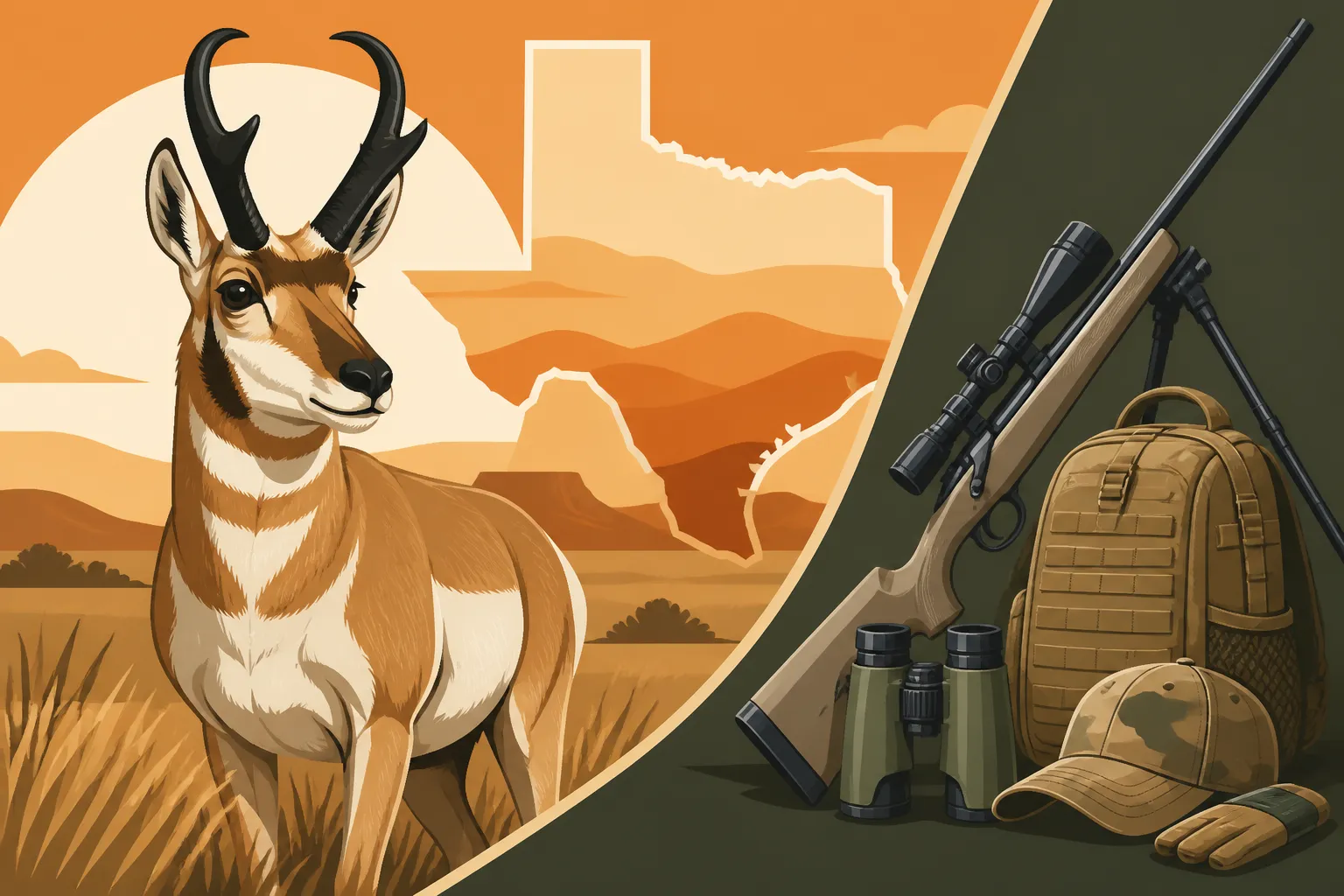
Pronghorn hunting in Texas isn't like chasing whitetail through dense brush or sitting in a blind over a feeder. It's largely a game of patience, long-range observation, and often, significant movement across expansive, sparsely vegetated terrain. Primarily found in the Panhandle and Trans-Pecos regions of Texas, these incredible animals demand specific gear choices to overcome the inherent difficulties of their habitat.
The Unique Environment of Pronghorn Habitat
Imagine endless stretches of grasslands, low-lying brush, and rolling hills under a vast Texas sky. That's the typical domain of the pronghorn. This environment, while breathtaking, presents several unique challenges. First, the sheer scale means you're often glassing for animals at incredibly long distances – sometimes miles away. Second, the lack of heavy cover makes close-range stalks difficult, often forcing shots at ranges that would be considered extreme in other hunting scenarios. Third, the weather can be a mixed bag of intense sun, biting winds, and sudden dust storms, all of which impact visibility and the hunter's comfort and effectiveness.
The terrain itself can be deceptively tough, ranging from flat, hard-packed dirt to rocky outcrops and sandy washes. You'll be doing a lot of walking, often quickly, to get into a position for a stalk once an animal is spotted. The open nature of the country also means you are highly visible to these keen-eyed animals, making proper concealment and silent movement paramount. It's a mental and physical game that demands more than just a rifle; it calls for a complete system of well-chosen equipment.
The Critical Role of Spot-and-Stalk Tactics
Given the open country and the pronghorn's incredible eyesight—they're often nicknamed "prairie ghosts" for a reason—the dominant hunting method is spot-and-stalk. This isn't just a suggestion; it's practically a requirement. You'll spend hours, sometimes entire days, glassing from vantage points, meticulously sweeping the horizon for the tell-tale white patch of a pronghorn's rump or the distinctive silhouette of a buck's horns. Once an animal is located and deemed worthy of pursuit, the real challenge begins: using the subtle contours of the land, sparse vegetation, and careful movement to close the distance without being detected.
This method directly dictates your gear choices. Heavy, cumbersome equipment is a liability. Every ounce matters when you're covering miles on foot. Your optics need to be top-tier to resolve details at extreme distances, and your rifle and ammunition must be capable of precision at ranges far exceeding those encountered in most whitetail hunts. Even your clothing and footwear play a critical role, affecting your ability to move silently and remain comfortable in varying conditions. The more precise and specialized your gear, the better your chances of executing a successful stalk and shot. If you're looking for broader strategies, check out our guide on Spot-and-Stalk Hunting in Texas Exotics & Mule Deer, which shares many similar principles applicable to pronghorn.
Essential Optics for Pronghorn Hunting
When it comes to pronghorn, the phrase "eyes are your most important tool" isn't just a cliché; it's a fundamental truth. You're trying to find an animal that blends seamlessly into the vast plains, often against heat shimmer, at ranges where a whitetail hunter would be packing up for the day. High-quality optics are non-negotiable for consistent success.
Spotting Scopes for Long-Range Observation
A good spotting scope is arguably the single most important piece of gear for a Texas pronghorn hunt. Forget about cheap models; this is where you invest. You need a scope that offers incredible light transmission, crisp edge-to-edge clarity, and high magnification (typically 20-60x or 25-75x). The ability to differentiate a pronghorn from a distant bush, or to judge antler size, depends entirely on the quality of your glass.
When you're perched on a hilltop in the Panhandle, systematically searching miles of open country, that spotting scope is your window to success. Look for models with large objective lenses (65mm or 80mm) to gather as much light as possible, which is crucial during dawn and dusk. Angled eyepieces are often preferred by seasoned hunters as they are more comfortable for extended glassing sessions, especially when mounted on a tripod. Speaking of tripods, a sturdy, lightweight carbon fiber tripod is a must. It needs to be stable enough to hold your scope steady in windy conditions but light enough to pack across the plains. Brands like Vortex, Kowa, and Swarovski are popular choices among serious long-range hunters for their exceptional optical performance. You'll also want to consider something like a Best Rangefinder for Texas Hunting to confirm those extreme distances.
Binoculars for General Glassing and Field Scouting
While a spotting scope is for detailed, long-range examination, a high-quality pair of binoculars is your workhorse for general glassing and quick scans. These are what you'll be using constantly as you move, checking potential areas, or following up on something glimpsed with your peripheral vision. A common misconception is that higher magnification is always better. For binoculars, balance is key. Magnifications of 10×42 or 12×50 are ideal. A 10x magnification provides a wide enough field of view to scan large areas efficiently while still offering sufficient detail. A 12x will give you a bit more reach, but it can be harder to hold steady freehand.
Focus on glass that offers excellent contrast and minimal chromatic aberration (color fringing). This will help you pick out animals against the often monotonous backdrop of the plains. Comfort is also a major factor; you'll have these strapped to your chest or around your neck for hours. Look for ergonomic designs and a robust, waterproof housing. Many hunters opt for binos with built-in rangefinders, which can be a game-changer for quick distance measurements on the fly, saving precious seconds when a pronghorn presents itself. The ability to quickly range an animal is critical in this type of fast-paced, open-country hunting. For more general advice on glass, check out Best Hunting Optics for Texas: Scopes, Binos & Rangefinders.
Rangefinders for Precision Shot Placement
If you're hunting pronghorn, you absolutely cannot guess distances. Their relatively small body size and the typically long shot opportunities demand precise rangefinding. A good rangefinder is non-negotiable. While some binoculars come with integrated rangefinders, a dedicated unit often offers superior performance and a greater maximum range, which is critical when you might be ranging an animal that's hundreds of yards away for an initial assessment before a stalk.
Look for a rangefinder that can reliably measure distances out to at least 1,000 yards, preferably more, with angle compensation features. Many modern rangefinders, like those from Leica, Zeiss, and Sig Sauer, offer incredibly fast and accurate readings, even on small targets like pronghorn. Consider models with a "scan" mode, which allows you to continuously range multiple targets or track a moving animal. This is particularly helpful when a pronghorn is on the move and you need to quickly acquire an updated distance. The ability to trust your rangefinder implicitly gives you the confidence needed to make those challenging long-range shots.
Rifle and Ammunition Considerations for Pronghorn
Pronghorn are not large animals, but they are incredibly tough and can cover ground at astonishing speeds even when wounded. An ethical harvest requires a rifle and ammunition combination that offers flat trajectories, minimal wind drift, and excellent terminal performance at extended ranges.
Caliber Selection for Pronghorn
When choosing a caliber for pronghorn, flatness of trajectory and resistance to wind are paramount. Unlike deer that might be taken at 100-200 yards in the thick stuff, pronghorn shots often stretch to 300, 400, or even beyond 500 yards. This means you need a cartridge that shoots relatively fast and maintains its energy over distance.
Popular choices include:
- .25-06 Remington: A classic choice, known for its flat trajectory and light recoil. It delivers plenty of energy for pronghorn.
- 6.5 Creedmoor: Hugely popular, and for good reason. It offers excellent ballistic coefficients, impressive accuracy, and is less affected by wind than many other cartridges.
- .270 Winchester: Another time-tested favorite, the .270 is a flat shooter with plenty of knockdown power.
- .308 Winchester: While a fantastic all-around cartridge, its flatter shooting counterparts might be preferred for truly extended ranges. However, with the right bullet, it's certainly capable.
- 7mm Remington Magnum / .300 Winchester Magnum: These magnum cartridges offer even flatter trajectories and greater resistance to wind, but come with increased recoil, which can make follow-up shots or extended practice sessions less comfortable.
The key is to pick a cartridge you can shoot accurately and consistently at extended ranges. Practice, practice, practice at varying distances, especially beyond 200 yards.
Rifle Construction and Features
Your rifle for pronghorn hunting needs to be accurate, reliable, and reasonably lightweight. A heavy magnum might absorb recoil well, but it becomes a burden when you're covering miles on foot. Look for a rifle that can consistently shoot sub-MOA groups (Minute of Angle) at 100 yards with your chosen hunting ammunition.
Key features to consider:
- Barrel: A quality barrel, often fluted or medium contour, can offer a good balance of accuracy and weight. Barrel length typically ranges from 20-24 inches for a good balance of velocity and maneuverability.
- Stock: A lightweight synthetic or carbon fiber stock will shave ounces off your setup and be more durable in the field than wood.
- Trigger: A crisp, light trigger pull is crucial for precision shooting at long ranges. Many aftermarket triggers are available if your factory trigger isn't up to snuff.
- Scope Mounts: Invest in high-quality, robust scope rings and bases. A loose scope or one that loses zero will ruin your hunt. Picatinny rails offer versatility for different optics.
Brands like Browning, Winchester, Ruger, and Tikka all offer excellent rifle platforms suitable for pronghorn hunting. Remember, a rifle that fits you well and that you've spent significant time practicing with will always outperform a more expensive rifle that you're not comfortable with.
High-Quality Scope and Ammunition for Long-Range Precision
Just as important as your rifle and chosen caliber is the riflescope mounted on top. This is where you'll be making the precise aiming adjustments needed for long shots. You need a scope with clear glass, a reliable tracking system for dialing in adjustments, and a reticle designed for long-range shooting.
- Riflescope: Look for scopes with magnifications typically ranging from 3-15x, 4-16x, or 5-25x. The lower end allows for quick target acquisition, while the higher end provides the magnification needed for precise aiming at extended distances. Turrets should be tactile and offer repeatable, precise adjustments. Many hunters prefer scopes with either MOA (Minute of Angle) or Mil-Dot reticles that match their turret adjustments, allowing for holdovers or precise dialing. First Focal Plane (FFP) reticles are often favored by long-range shooters as the reticle subtensions remain accurate at all magnification settings. Brands like Leupold, Vortex, Nightforce, and Athlon offer excellent options.
- Ammunition: This is not the place to cheap out. Choose premium hunting ammunition loaded with high-quality, high-ballistic coefficient (BC) bullets designed for controlled expansion. Bullets like the Hornady ELD-X, Berger VLD Hunting, or Nosler AccuBond are excellent choices. A high BC bullet will maintain its velocity better and be less affected by wind drift, both critical factors when shooting pronghorn across open plains. Always zero your rifle with the exact ammunition you plan to hunt with and verify its performance at various distances.
Field Gear and Clothing for the Plains
Pronghorn hunting often involves long days in potentially harsh environments. Your personal gear and clothing choices can significantly impact your comfort, stealth, and overall endurance in the field.
Backpacks for Carrying Essentials
You'll be covering a lot of ground, often far from your vehicle. A comfortable, well-fitting backpack is indispensable for carrying all your essentials. This isn't just for snacks and water; it's for your optics, extra layers, first-aid kit, and potentially a game bag.
Look for a pack in the 2,000-3,500 cubic inch range, depending on how minimalist or prepared you like to be. Key features include:
- Comfortable Suspension System: Padded shoulder straps, a hip belt, and a breathable back panel are crucial for carrying weight comfortably over long distances.
- External Pockets and Straps: These are useful for quick access to your rangefinder, water bottles, or securing your tripod.
- Durable, Quiet Material: Ripstop nylon or similar materials that won't snag or make noise as you move through sparse brush.
- Hydration Compatible: A sleeve for a hydration bladder is often more convenient than fumbling with water bottles.
Brands like Mystery Ranch, Eberlestock, and Sitka offer hunting-specific packs that are rugged, well-designed, and comfortable for all-day wear. Remember, a lighter pack is always better if it doesn't compromise critical gear.
Boots for Covering Rough Terrain
Your feet are your foundation, and a comfortable, supportive pair of boots can make or break your pronghorn hunt. You'll be walking on varied surfaces, from hard-baked earth to loose gravel and maybe even some rocky climbs. Blisters or sore feet will quickly end your day.
Consider boots that are:
- Lightweight but Supportive: You don't need heavy mountaineering boots, but good ankle support is critical on uneven terrain.
- Waterproof/Water-Resistant: While the plains are often dry, unexpected rain or dew can still make for soggy feet.
- Breathable: Texas heat can be intense, so boots that allow your feet to breathe will prevent overheating and excessive sweating.
- Good Traction: Soles with an aggressive tread pattern will help you maintain footing on loose or steep ground.
Many hunters prefer a mid-height boot (6-8 inches) for a balance of support and flexibility. Brands like Salomon, Kenetrek, and Crispi are highly regarded for their quality and comfort. Make sure to break in your boots well before the hunt to avoid any surprises. You might even consider pairing them with quality gaiters to keep out thorns and debris.
Clothing for Stealth and Protection from the Elements
The right clothing offers both concealment from keen-eyed pronghorn and protection from the elements. Layering is always key in Texas, where temperatures can swing dramatically between dawn and midday.
- Camo Pattern: A pattern that mimics grasslands, light sage, or open country will be most effective. Avoid dark, dense forest patterns. Brands like Sitka, KUIU, and Kryptek offer excellent options.
- Base Layers: Moisture-wicking base layers are crucial for managing sweat in the heat and providing insulation in cooler mornings. Merino wool or synthetic blends work well.
- Mid-Layers: A light fleece or puffy jacket can provide warmth during cooler parts of the day.
- Outer Layer: A quiet, breathable, wind-resistant outer shell is important. Pronghorn are easily spooked by noise and movement, so quiet fabrics are a must.
- Headwear: A wide-brimmed hat or a baseball cap with a neck gaiter will provide essential sun protection. A light beanie or ear band is good for chilly mornings.
- Gloves: Lightweight gloves can protect your hands from sun and thorns, and add a layer of warmth if needed.
Remember, pronghorn are excellent at picking out movement and anomalies. Your clothing should help you blend in and minimize glare.
Navigational Tools and Field Accessories
Beyond the core hunting gear, several other items will make your pronghorn hunt safer, more efficient, and more successful.
GPS and Mapping Applications
In the vast, often featureless terrain of the Panhandle and Trans-Pecos, getting disoriented is a real possibility. A reliable GPS unit or, more commonly these days, a robust mapping application on your smartphone, is essential. Apps like GoHunt, onX Hunt, and HuntStand provide invaluable satellite imagery, topo maps, and parcel data (showing property lines), which is critical when hunting a lease that might border other properties.
These apps allow you to:
- Mark Waypoints: Drop pins for your vehicle, glassing locations, observed animals, or boundary lines.
- Track Your Movement: See exactly where you've been and where you're going.
- Identify Land Ownership: Crucial for staying within your lease boundaries and understanding surrounding areas.
- Scout Remotely: Use the satellite imagery to identify potential vantage points, draws for stalking, and natural funnels before you even step foot in the field.
Always carry a portable power bank to keep your phone charged, as GPS usage can drain batteries quickly. And as a backup, a physical compass and map are never a bad idea. For more on mapping, check out onX Hunt vs HuntStand: Best App for Texas?.
Shooting Aids and Rests
Long-range shooting demands absolute stability. Freehand shooting at 300+ yards is incredibly difficult, even for seasoned marksmen. A quality shooting rest is a game-changer.
- Bipod: A lightweight bipod attached to your rifle's forend is an excellent option for prone shooting, which you'll often do when stalking pronghorn in open country. Look for models that are easy to deploy and adjust. Harris Bipods or Atlas Bipods are popular choices.
- Tripod with Rifle Clamp: Many hunters who use a spotting scope on a tripod also utilize a separate rifle clamp that can attach to the same tripod. This provides an incredibly stable shooting platform from various heights, which is invaluable if you need to shoot from a kneeling or sitting position due to terrain or vegetation.
- Shooting Sticks: These offer quick, adjustable support for standing, kneeling, or sitting shots. They are particularly useful during a stalk when you might need to take a shot quickly without having time to go prone. Primos Trigger Sticks are a common and effective choice.
- Sandbags or Pack Rest: Small, lightweight shooting bags or even your backpack can be used as an improvised rest when shooting from prone or a similar stable position.
Practice shooting from various field positions using your chosen shooting aid. Your ability to quickly and stably deploy your rest will directly impact your shot accuracy.
Game Processing and Safety Gear
Once you've successfully harvested a pronghorn, the work isn't over. Proper field dressing is essential, especially in the often-warm Texas climate. Safety should also always be a top priority.
- Field Dressing Kit: Include a sharp hunting knife, a gut hook (optional, but helpful), disposable gloves, and a few game bags. Game bags are crucial for protecting the meat from dirt and flies while allowing it to cool. Given the heat, cooling the animal down quickly is vital.
- First-Aid Kit: A compact but comprehensive first-aid kit should always be in your pack. Include essentials for cuts, blisters, snakebites (snake boots are also a smart investment, especially in the Trans-Pecos), and any personal medications.
- Communication Device: Beyond your cell phone (which may not have service in remote areas), consider a satellite communicator like a Garmin inReach or a Zoleo. These allow you to send emergency messages and check in with family, even without cell service.
- Water and Snacks: Carry more water than you think you'll need. Dehydration is a serious risk in the Texas plains. High-energy snacks are also a must.
- Headlamp: Even if you plan to be back before dark, a headlamp with fresh batteries is essential for navigating in low light or if your hunt extends past sunset.
Taking a pronghorn is a fantastic achievement, but ensuring the meat is cared for and you remain safe throughout the process is just as important as the shot itself.
Summary of Essential Pronghorn Hunting Gear
To help consolidate all this information, here's a quick overview of the essential gear categories and key considerations for your Texas pronghorn lease hunt:
| Category | Essential Items | Key Considerations |
|---|---|---|
| Optics | Spotting Scope (20-60x or 25-75x) | High magnification, clear glass, angled eyepiece, sturdy tripod |
| Binoculars (10×42 or 12×50) | Wide field of view, good light transmission, comfortable, durable | |
| Rangefinder (1,000+ yard range) | Fast, accurate, angle compensation, scan mode | |
| Firearm | Rifle (e.g., .25-06, 6.5 Creedmoor, .270) | Sub-MOA accuracy, lightweight, crisp trigger, reliable scope mounts |
| Riflescope (3-15x to 5-25x) | Clear glass, reliable turrets, FFP reticle, appropriate for long range | |
| Premium Ammunition | High BC bullets, controlled expansion, consistent velocity | |
| Field Gear | Backpack (2,000-3,500 cu in) | Comfortable, quiet, hydration compatible, external pockets |
| Boots (mid-height, waterproof, supportive) | Lightweight, good traction, breathable, broken-in | |
| Layered Camo Clothing | Blends with plains, quiet, moisture-wicking, wind-resistant, sun protection | |
| Accessories | GPS/Mapping App (e.g., GoHunt, onX Hunt) | Satellite imagery, topo maps, parcel data, offline capabilities, power bank |
| Shooting Aids (bipod, tripod/clamp, shooting sticks) | Stable, quick deployment, adaptable to various positions | |
| Field Dressing Kit (knife, gloves, game bags) | Sharp, hygienic, promotes rapid cooling of game | |
| First-Aid Kit | Comprehensive, personal medications | |
| Communication Device (satellite messenger) | Emergency contact, remote check-ins | |
| Water, Snacks, Headlamp | Hydration, energy, visibility |
This table serves as a handy checklist to ensure you're well-equipped for your next pronghorn adventure. Remember, every piece of gear serves a purpose in this demanding environment.
Hunting pronghorn in Texas is a truly rewarding experience, offering wide-open spaces and a demanding challenge. By equipping yourself with the right gear, from top-tier optics and a precise rifle to comfortable boots and essential navigation tools like those offered by GoHunt, you're not just buying equipment; you're investing in a higher chance of success and a more enjoyable, safer hunt. Take the time to research, prepare, and practice with your gear, and you'll be well on your way to earning that "ribeye of the plains." For more insights on specific hunting locations, you might find our guide on Panhandle & Trans-Pecos Hunting in Texas useful, as these are prime pronghorn regions.
Disclaimer
Please note that hunting regulations, seasons, and licensing requirements in Texas are subject to change. Always consult the most current Texas Parks and Wildlife Department (TPWD) Outdoor Annual or website for the latest official rules and information before planning any hunt. This guide is for informational purposes only and should not replace official sources.