Best Gear for Javelina on a Texas Lease
Hunting javelina on a Texas lease is a truly unique experience, a blend of traditional brush country hunting with the convenience of having your own dedicated space. However, many hunters, especially those new to pursuing these tough little "collared peccaries," often find themselves wondering if their existing deer or hog gear is truly up to the task. They're not deer, they're not hogs, and what works for one doesn't always translate perfectly to the other. This guide is all about cutting through that confusion, helping you understand the specific gear you’ll need to make your javelina hunt on a Texas lease both successful and enjoyable, from the right rifle to the boots that'll keep those thorns out.
Understanding the Javelina Hunt on a Texas Lease
Before we dive into the specific gear, it’s really helpful to grasp what makes javelina hunting distinct, especially when you're on a private lease in Texas. These aren't big, lumbering animals, and their habits can be quite different from the typical deer or feral hog you might be used to. Knowing this will inform every gear choice you make, ensuring you're not over-prepared in one area and under-prepared in another.
The Unique Challenge of Collared Peccaries
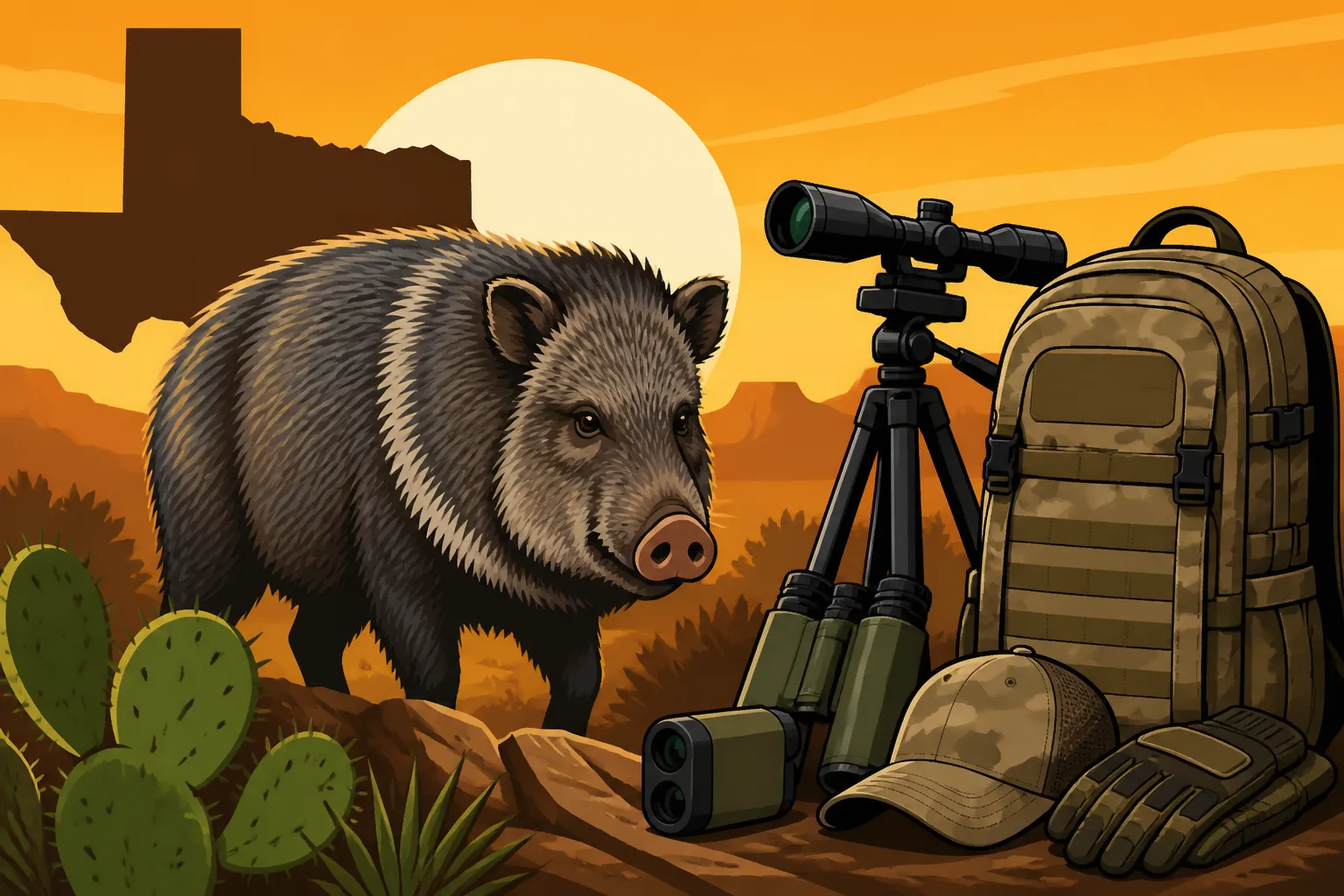
Javelina, or collared peccaries, are tough critters, despite their relatively small size. They typically weigh between 30-60 pounds, but don't let that fool you; they're muscular and incredibly tenacious. They're known for running in herds, often called "squadrons," and their senses are quite keen, particularly their sense of smell. You might be glassing an open area, only for a whole squadron to emerge from seemingly nowhere, moving quickly through the dense South Texas brush.
Hunting them often involves a mix of still-hunting, stalking, or sitting over a feeder or water source. On a lease, you have the advantage of familiarity with the terrain, but javelina habitats can be incredibly thick, thorny, and unforgiving. Think deep arroyos, mesquite thickets, prickly pear patches – places where a normal walk turns into a full-blown combat crawl. This means your gear needs to be robust, comfortable, and capable of handling the harsh Texas environment. They don't have a specific "season" in the same way deer do in most areas of Texas, often having year-round opportunities in many counties, but always check the regulations specific to your county and hunting lease. For specific dates and bag limits, consult the official guide on Javelina Season & Bag Limit in Texas.
Leveraging Your Lease for Success
Having a dedicated hunting lease in Texas for javelina provides a huge advantage. Unlike public land where you might be constantly scouting new areas and contending with other hunters, your lease allows for intimate knowledge of the land. You can set up feeders, strategically place blinds, and learn the javelina's travel patterns, bedding areas, and feeding grounds. This familiarity also means you can fine-tune your gear specific to your lease's terrain and conditions.
For example, if your lease has extensive prickly pear cactus, your footwear choice becomes even more critical. If you're planning on a lot of spot-and-stalk hunting across open senderos, good optics become paramount. You can also utilize trail cameras to scout their movements, just like you would for deer, helping you pattern them. Using a platform like GoHunt to research habitat, weather, and topography can further enhance your understanding of your specific lease's potential. This kind of advanced preparation helps tailor your gear list to maximum efficiency, ensuring every item serves a purpose unique to your hunting grounds.
Firearms and Ammunition: Precision for Small Game
Choosing the right firearm and ammunition for javelina is crucial. While they're not huge animals, their dense bone structure and tough hide mean you need something that delivers adequate energy and shot placement is key. Many hunters already own rifles suitable for deer, but it’s worth considering if that particular setup is ideal for javelina’s specific challenges.
Rifle Choices and Caliber Considerations
For most javelina hunting scenarios on a Texas lease, a rifle is the preferred choice, especially if you anticipate shots at varying distances. The key is finding a balance between power and minimizing meat damage, while ensuring you can make an ethical, clean kill.
Common calibers that shine for javelina include the .223 Remington, .243 Winchester, 6.5 Grendel, and even the venerable .30-30 Winchester. The .223 Remington is a fantastic choice, offering low recoil, readily available and affordable ammunition, and more than enough punch for javelina when paired with a good bullet. For a little more versatility, the .243 Winchester is also excellent, capable of taking down larger game if an opportunity arises, but still very manageable for peccaries. The 6.5 Grendel, with its flat trajectory and good terminal ballistics, has also become a popular option for many Texas hunters. A .30-30, especially out of a lever action, is a classic for brush country and perfect for the quick, close-range shots often associated with javelina breaking cover.
When it comes to bullet selection, focus on controlled expansion. While a full metal jacket might work, a soft point or polymer-tipped hunting bullet designed for rapid energy transfer within a small animal is generally a better choice. Avoid overly aggressive, rapidly fragmenting varmint bullets, which can cause excessive surface damage without reliably penetrating deep enough for a quick kill on a tough javelina.
Here's a quick look at some popular rifle calibers and their suitability:
| Caliber | Pros | Cons | Ideal Range (Yards) |
|---|---|---|---|
| .223 Remington | Low recoil, affordable ammo, effective. | Less ideal for larger deer if that's a secondary target. | 50-200 |
| .243 Winchester | Versatile, flat shooting, good for mixed bag. | Can be overkill, slightly more recoil/cost than .223. | 50-250 |
| 6.5 Grendel | Excellent ballistics, good energy transfer. | Ammo can be less common or more expensive. | 50-250 |
| .30-30 Winchester | Classic brush gun, effective at close range. | Limited range compared to modern cartridges. | 25-150 |
| 7mm-08 Rem | Versatile, great for larger animals too. | Potentially more recoil than needed for javelina. | 50-300+ |
Remember, accuracy is king, so choose a rifle and caliber you can shoot well and confidently. A shot poorly placed with a magnum caliber is far less effective than a well-placed shot with a smaller, milder round.
Shotgun Options for Close Encounters
While rifles are generally preferred, there are scenarios on a Texas lease where a shotgun can be a surprisingly effective tool for javelina, particularly in extremely dense brush or if you're also hunting hogs or predators. If you find yourself in areas where visibility is limited to 30 yards or less, and javelina tend to burst from cover, a shotgun loaded with slugs can be incredibly potent.
A 12-gauge or 20-gauge shotgun, especially one with rifled slugs, can deliver a tremendous amount of knockdown power at close range. The wider projectile creates a larger wound channel, and the heavier slug is less likely to be deflected by light brush compared to a smaller rifle bullet. This can be a huge advantage when you're jumping javelina in thick, thorny areas where precise rifle shots are difficult.
However, shotguns with slugs do have significant limitations. Their effective range is much shorter, typically maxing out around 75-100 yards for ethical shots, even with rifled barrels and sabot slugs. They also have more recoil than most javelina-appropriate rifles. If your lease involves more open country, a shotgun might not be the most versatile choice. But if you have specific, dense pockets on your property where you know javelina frequent, bringing a shotgun along for those particular stands or still-hunts could be a smart move.
Optics and Scouting Tools: Seeing the Unseen
Javelina are relatively small and often blend into the dry, grey-green landscape of South Texas. Their tendency to stick to thick cover also means that good optics aren't just a luxury; they're an absolute necessity for spotting them before they spot you, or for confirming a clear shot. On a hunting lease, consistent and reliable optics can significantly increase your success rates.
Binoculars and Rangefinders for Spotting
When you're out looking for javelina, especially in typical Texas terrain, a good pair of binoculars is your primary scouting tool. You're often scanning brush lines, prickly pear patches, and senderos for any sign of movement, or for that tell-tale dark, bristly hide. Opt for binoculars with a magnification of 8x or 10x, like 8×42 or 10×42, as these offer a good balance of field of view, light gathering, and steady viewing. Brands like Vortex, Leupold, or even quality Nikon or Bushnell models offer excellent performance without breaking the bank.
Pairing your binoculars with a reliable rangefinder is also crucial. While javelina aren't known for being long-range targets, knowing the exact distance is critical for precise shot placement, especially with smaller calibers. They might seem close, but a quick range check can reveal they're further than you thought, or that the brush between you and them is actually thicker than it appears. This accuracy is paramount for an ethical kill. A combination of good glass and precise distance measurement will give you the confidence to make those critical shots. This is also where a tool like GoHunt can come in handy for pre-scouting, giving you topographical insights and helping you understand typical distances on different parts of your lease.
Rifle Scopes for Accurate Shot Placement
Your rifle scope needs to complement your chosen firearm and the typical ranges you'll be shooting javelina on your lease. Since most javelina shots occur within 150-200 yards, you don't necessarily need a high-power, long-range scope. In fact, too much magnification can be a hindrance in the brush, making it harder to acquire your target quickly.
A variable power scope in the range of 2-7x, 3-9x, or even 1-8x is often ideal. This allows you to dial down to a lower magnification for quick, close-range shots when a squadron bursts from cover, and crank it up a bit for more precise aiming if a javelina presents itself at a further distance across a food plot or sendero. Look for scopes with good light transmission, a clear reticle that's easy to see against dark animals, and solid reliability. Durability is also a major factor; your scope will take a beating in the Texas brush, so ensure it can hold zero after being bumped around. Brands like Leupold, Trijicon, and even Sig Sauer offer durable, clear optics that are up to the task. For information on finding the right scope, you might want to check out articles like Best Hunting Optics for Texas: Scopes, Binos & Rangefinders.
Digital Scouting with Apps
In today's hunting world, digital scouting apps have become an indispensable tool, especially on a private lease. Apps like onX Hunt or HuntStand provide detailed satellite imagery, property boundaries (which are critical on a lease!), and topographical maps. You can mark feeders, water sources, blind locations, and even areas where you've seen javelina activity. This information is invaluable for planning your hunts, understanding animal movement patterns, and making informed decisions on where to set up or stalk.
Before you even step foot on your lease, you can use these apps to study the terrain, identify potential travel corridors, and mark points of interest. This saves precious hunting time and helps you create a strategic approach to your javelina hunt. Some apps even allow for offline map downloads, which is essential in many remote Texas areas where cell service can be spotty. When coupled with your physical scouting on the ground, these digital tools, including those offered by GoHunt, create a powerful combination for maximizing your lease's potential.
Field Apparel and Essentials: Comfort and Preparedness
The Texas environment is famously harsh, and javelina hunting often means navigating dense, thorny brush. Your clothing and essential field gear need to be chosen with durability, protection, and comfort in mind. Overlooking these details can quickly turn an enjoyable hunt into a miserable experience.
Protective Clothing and Footwear
Forget fancy, lightweight camo if it means sacrificing protection. For javelina hunting in Texas, especially on a lease where you'll be doing a lot of moving through thick cover, ruggedness is key.
- Pants: Heavy-duty brush pants or chaps are almost mandatory. Look for material like thick canvas, Cordura, or other thorn-resistant fabrics. The amount of mesquite, catclaw acacia, and prickly pear you'll encounter will tear through regular hunting pants in no time, leaving your legs scratched and miserable. Brands like Sitka Gear or Kuiu offer excellent durable options, but even rugged work pants can suffice.
- Jacket/Shirt: A durable, long-sleeved shirt and a tough jacket (if weather permits) will protect your upper body from thorns and scrapes. Layers are always a good idea, as Texas weather can change rapidly from chilly mornings to warm afternoons.
- Boots: This is arguably the most critical piece of apparel. Snake boots are highly recommended. Not only do they protect you from rattlesnakes (which are certainly present in javelina country), but their robust construction and stiff uppers provide excellent ankle support and thorn protection. Walking through a thicket only to have a prickly pear pad stick to your boot or a mesquite thorn penetrate your ankle is a quick way to end a hunt. Ensure they are comfortable for walking long distances. Brands like Lacrosse, Danner, or Rocky offer reliable snake boots. For a deeper dive into boot choices, consider reading about Best Snake Boots for Texas Hunting.
- Gloves: A good pair of durable work gloves or hunting gloves with reinforced palms can save your hands from countless punctures and scrapes when pushing through brush or handling a downed animal.
Carrying Gear and Recovery Tools
Once you’ve got your javelina on the ground, the work isn't over. These animals can be surprisingly heavy to drag out of dense cover, and proper field dressing is important, especially in warm Texas temperatures.
- Backpack: A comfortable daypack is essential for carrying water, snacks, extra layers, a first-aid kit, and your knife. Look for a pack with external pockets for quick access and enough capacity for a successful hunt. A hydration bladder system is a big plus for staying hydrated in the Texas heat.
- Knife: A sharp, reliable fixed-blade knife is indispensable for field dressing your javelina. Their hide is tough, so a strong blade that holds an edge is crucial. Many hunters prefer a gut hook for initial opening cuts, but a sturdy drop point or clip point blade is versatile for all tasks.
- Game Cart/Hauler: While a javelina is smaller than a deer, dragging one out of a deep draw or across a mile of thick brush can be a real workout. A compact, foldable game cart can be a lifesaver, especially if you're hunting solo or far from vehicle access. Even a small plastic sled can make dragging easier over rough terrain. If you're considering the work involved, you might also want to read up on Field Dressing & Processing Game in Texas Heat.
- Water: I cannot stress this enough – always carry more water than you think you’ll need. Texas gets hot, even in winter. Dehydration can sneak up on you, and it can ruin a hunt and even be dangerous.
- First-Aid Kit: Minor cuts and scrapes are almost guaranteed in the brush. A small personal first-aid kit with bandages, antiseptic wipes, pain relievers, and moleskin for blisters is a smart addition to your pack.
Having the right gear for javelina hunting on your Texas lease isn't just about making the hunt easier; it's about making it safer, more ethical, and ultimately, more enjoyable. Take the time to prepare your kit properly, and you’ll be well on your way to a successful hunt for these fascinating brush country creatures.
Disclaimer
Please note that hunting regulations, seasons, and licensing requirements can change. Always consult the most current Texas Parks and Wildlife Department (TPWD) Outdoor Annual or their official website before any hunting activity to ensure you are in full compliance with state and local laws. This guide is for informational purposes only and should not replace official regulatory information.