Spot-and-Stalk Hunting in Texas (Exotics & Mule Deer)
The vast, rugged landscapes of Texas can be an intimidating canvas for any hunter, and the challenge of spot-and-stalk hunting for elusive game like mule deer and various exotics often feels like trying to find a needle in a hay bale. Many hunters, myself included, have spent countless hours glassing, only to spook an animal at the last minute or lose it in the unforgiving terrain. This guide is here to unravel the complexities, frustrations, and ultimate rewards of spot-and-stalk hunting in Texas, equipping you with the strategies and insights to transform those challenging landscapes into successful hunting grounds.
Understanding the Essence of Spot-and-Stalk Hunting
There's a raw, primal satisfaction that comes with spot-and-stalk hunting. It's a game of wits, patience, and intimately understanding the land and the animals that call it home. Unlike sitting in a blind over a feeder, spot-and-stalk demands constant engagement, making every successful harvest feel like a true testament to your skill and dedication. It's not just about taking a shot; it's about the entire journey of finding, observing, and then strategically pursuing your quarry.
What Makes Spot-and-Stalk So Challenging in Texas?
Texas presents a unique set of challenges that can make spot-and-stalk hunting particularly daunting. First and foremost is the sheer scale of the land. We're talking about sprawling ranches, vast public lands, and mountain ranges that stretch for miles. It's easy to feel swallowed by the enormity, making it difficult to even begin your search. The diverse terrain, from the rocky, arid Trans-Pecos to the thick brush country of South Texas, each demands a different approach. The weather is another major factor; those scorching Texas days can test your endurance, while sudden cold fronts or high winds can quickly change animal behavior.
Furthermore, many of the prized species for spot-and-stalk, like mule deer and aoudad, inhabit areas with limited cover, forcing hunters to become masters of concealment and slow, deliberate movement. You're often hunting animals with incredible senses, on their home turf, where every twig snap or glint of sun off your optics can send them fleeing. It's a constant battle against their natural instincts and the environment itself.
The Mindset of a Successful Spot-and-Stalker
To truly excel at spot-and-stalk hunting, you need to adopt a specific mindset. Forget the fast-paced, instant-gratification approach of some other hunting methods. This is a slow game, a chess match where patience is your most powerful piece. You need to be methodical, detail-oriented, and resilient in the face of setbacks. There will be days when you walk miles, glass for hours, and see nothing but jackrabbits. That's part of the journey.
A successful spot-and-stalker is also a keen observer. You're not just looking for an animal; you're looking for signs of an animal. Tracks, scat, rubs, bedding areas, and even subtle changes in vegetation can all tell a story. You need to be a student of animal behavior, understanding their daily patterns, feeding habits, and reactions to pressure. Most importantly, you need to be adaptable. The plan you devise at dawn might need to be completely scrapped by midday if the wind shifts or the animals move to unexpected cover. Flexibility and a willingness to adjust are crucial for success in the dynamic world of spot-and-stalk hunting.
Essential Gear for Texas Spot-and-Stalk
When you're covering vast distances on foot, often in challenging conditions, the right gear isn't just a convenience; it's a necessity for comfort, safety, and success. Cutting corners here can lead to a miserable experience or, worse, a missed opportunity.
Optics: Your Eyes on the Horizon
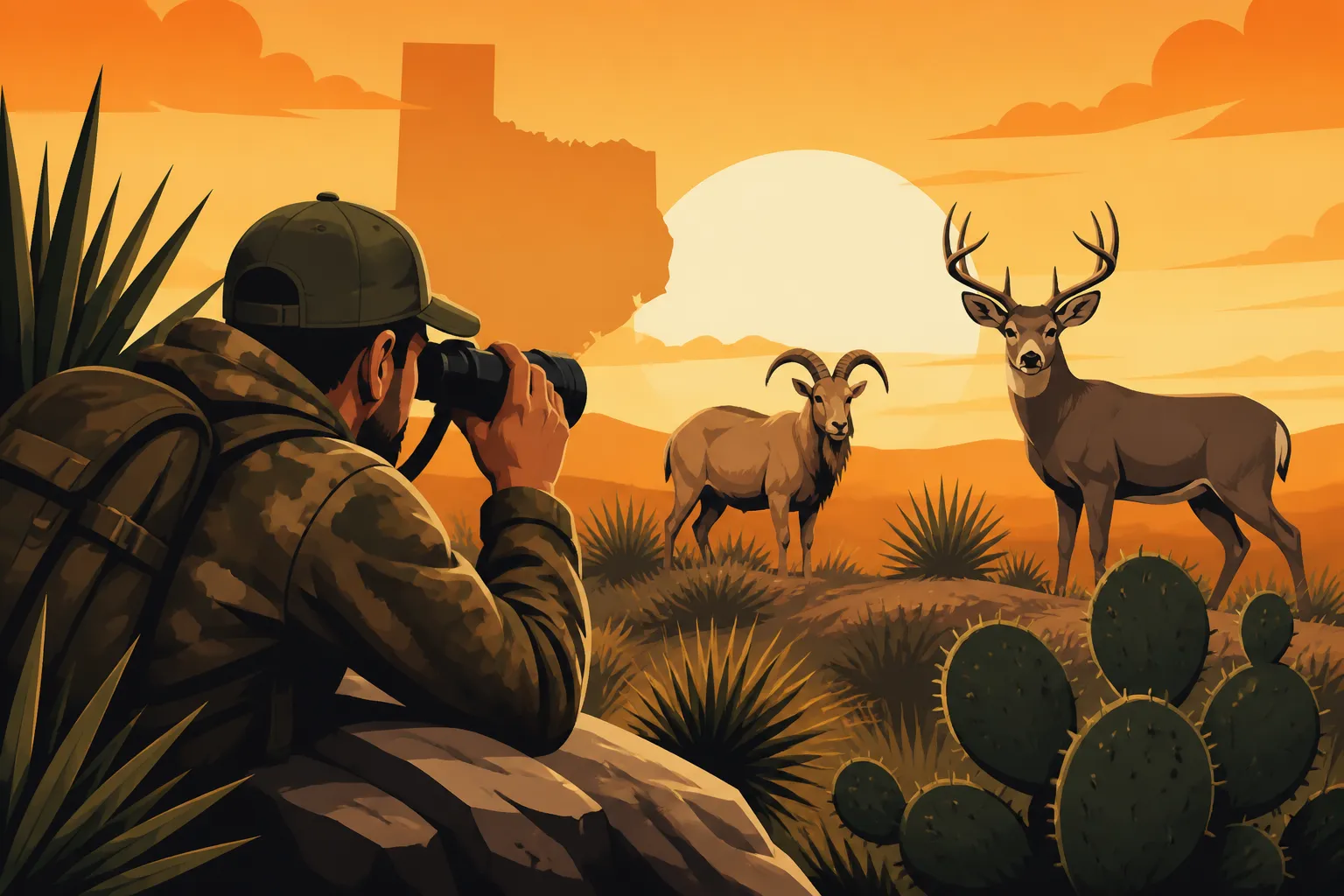
In spot-and-stalk hunting, your eyes are your most critical tool, and high-quality optics are an extension of those eyes. You'll spend more time glassing than walking, so invest wisely. For long-range spotting across Texas's expansive terrain, a good set of binoculars is non-negotiable. Look for something in the 10×42 to 12×50 range for a good balance of magnification and field of view. Brands like Vortex, Leupold, and Maven offer excellent options that can withstand the dust and heat of Texas. Don't forget a bino harness to keep them secure and readily accessible, reducing neck strain over hours of glassing.
For even more detailed long-distance scouting, especially for mule deer high up in the mountains or aoudad clinging to canyon walls, a spotting scope is invaluable. A 15-45x or 20-60x scope with a stable tripod will allow you to pick apart distant hillsides, identify key features, and accurately judge animals without disturbing them. Coupled with a reliable rangefinder, you'll be able to precisely measure distances, which is critical for making ethical shots on animals that often appear closer than they are in wide-open country. Having the right optics can literally make or break your hunt, allowing you to pick out a bedded buck miles away that you would otherwise never see. For more insights on choosing the right glass, check out our guide on the topic: Best Hunting Optics for Texas: Scopes, Binos & Rangefinders.
Footwear, Apparel, and Backpacks for Rugged Terrain
Your feet are your vehicle in spot-and-stalk hunting, so protecting them is paramount. Invest in comfortable, supportive hiking boots that are broken in well before your hunt. Look for boots with good ankle support to navigate rocky, uneven terrain and durable soles for grip. Waterproofing is often a good idea, not just for rain or dew, but also for crossing small creeks or wet vegetation. Given the prevalence of snakes in Texas, consider Best Snake Boots for Texas Hunting or gaiters, especially if you're venturing into dense brush.
Layering is key for apparel. Texas weather can be unpredictable, with cool mornings quickly giving way to hot afternoons. Start with a moisture-wicking base layer, add a light insulating layer, and top it off with a durable, breathable outer layer in appropriate camouflage. Look for materials that stand up to thorns and abrasive brush. A good quality hunting backpack, typically in the 30-50 liter range, is essential to carry your optics, water, snacks, first-aid kit, and any game you might take. Prioritize comfort, adjustability, and the ability to securely carry a rifle or bow, as well as the capacity to expand for meat if you're successful.
Rifles, Ammunition, and Shooting Aids
For mule deer and most exotics in Texas, shot distances can vary wildly, from a few hundred yards to significantly longer. A flat-shooting rifle caliber like a .270, .308, 6.5 Creedmoor, or .300 Win Mag is a solid choice, capable of handling those longer ethical shots. Practice extensively with your chosen rifle and ammunition at various distances, including odd angles, to build confidence in your setup.
Accuracy is paramount, so a high-quality rifle scope with clear glass and reliable turrets is a must. For those longer shots, a scope with a ballistic reticle or exposed turrets for dialing is incredibly helpful. Don't forget a bipod or shooting sticks. Even if you practice off-hand, the vast majority of ethical long-range shots in the field will be taken from a stable rest. Having a reliable shooting aid allows you to capitalize on opportunities when you finally close the distance.
Mastering the Art of Spotting
The "spot" in spot-and-stalk is arguably the most crucial phase. You can't stalk what you can't see, and in Texas's sprawling landscapes, animals can disappear into seemingly nowhere. This stage requires patience, keen observation, and a methodical approach.
Choosing Your Vantage Point
Your success often hinges on selecting the right vantage point. Think like the animals you're pursuing. Where would they feed? Where would they bed? Where would they travel between these areas? Look for high ground that offers expansive views of potential animal habitat. This could be a ridge line overlooking a canyon, a mesa providing a panorama of a basin, or even a tall hill in rolling plains. Consider the sun's position throughout the day to avoid looking directly into glare and to ensure optimal lighting on the areas you're glassing.
Once you find a suitable vantage point, settle in. Don't just stand there and scan quickly. This is where your patience is tested. Spend a significant amount of time, often an hour or more, meticulously dissecting the landscape. Remember, animals are often bedded or moving slowly, blending seamlessly into their surroundings. They're not always going to be standing broadside for you to spot easily.
Techniques for Effective Glassing
Effective glassing is an acquired skill. Instead of randomly scanning, break the landscape into smaller, manageable grids. Start at the closest part of the terrain you want to examine and slowly work your way out, section by section. Pay close attention to areas with changes in color, texture, or anything that just looks "out of place." A horizontal line in a vertical landscape, a patch of shade that looks a little too dark, or a subtle flicker of an ear can all reveal an animal.
Use your binoculars and spotting scope in tandem. Start with binoculars to cover larger areas and identify potential hot spots, then switch to your spotting scope to confirm details and evaluate animals more closely. Look for parts of an animal: an ear, a leg, the shine of an antler, not necessarily the whole animal. Mule deer, for example, often bed down in shadows, and you might only catch a glimpse of an antler or a dark patch of hide. Be diligent, be slow, and let your eyes adjust to the subtle nuances of the terrain.
Reading the Landscape for Animal Signs
Beyond just seeing the animals themselves, a critical part of spotting is learning to read the landscape for signs of their presence. Tracks are obvious, but also look for disturbed vegetation, fresh droppings, or even worn trails connecting bedding areas to feeding grounds. For instance, in the Trans-Pecos, mule deer might leave faint trails through the rocky terrain as they move between sparse water sources and bedding areas on north-facing slopes.
Water sources, even small ones, are magnets for animals, especially in arid regions. Likewise, consider prevailing winds. Animals often bed on leeward slopes, sheltered from the wind, with a good view of their surroundings. Pay attention to changes in elevation and vegetation type; different species will prefer different covers. For example, aoudad sheep love the steep, rocky cliffs and canyons, while axis deer might prefer more open, grassy areas with scattered brush. Understanding these preferences helps you focus your glassing efforts on the most promising areas.
The Stalk: Closing the Distance
Once you've spotted your quarry, the true test begins: the stalk. This is where all your planning, patience, and attention to detail come together. The goal is to get within an ethical shooting range without being detected.
Wind, Terrain, and Cover: Your Best Allies
These three elements are your most crucial allies in a successful stalk. Always, always pay attention to the wind. Animals have an incredible sense of smell, and even a slight breeze can carry your scent directly to them, ruining your hunt instantly. Use a wind checker (a small squeeze bottle with powder or milkweed down) constantly to confirm wind direction as you move. A slight shift in wind can force you to completely alter your approach, sometimes circling for an hour or more to stay downwind.
The terrain dictates your path. Use every dip, rise, rock, and clump of vegetation as cover. Move from cover to cover, keeping your silhouette broken. If you have to cross an open area, crawl, or move slowly and deliberately when the animal's head is down or obscured. Remember that animals often have multiple pairs of eyes, so be aware of any other deer or exotics in the vicinity. For mule deer in particular, they are masters of using broken ground and shadows to disappear, so be prepared to crawl.
Pacing and Patience: The Slow Game
Speed is the enemy of a good stalk. You will move slowly, often agonizingly so. Every step needs to be calculated, every foot placement deliberate to avoid snapping twigs or dislodging rocks. Imagine the ground is covered in eggshells. Stop frequently, reassess your position, and use your binoculars to confirm the animal's location and whether it has moved or become aware of you.
This slow pace is especially critical when dealing with wary species. An axis deer, known for its keen senses, will bolt at the slightest hint of danger. Similarly, mule deer in the Trans-Pecos are often exposed and rely on their eyesight. If you find yourself in a situation where you need to move quickly, wait until the animal's head is down feeding or it's momentarily looking away. The average successful stalk takes significantly longer than most beginners anticipate – often an hour or more for what might seem like a short distance.
Dealing with Obstacles and Avoiding Detection
No stalk is ever perfect. You'll encounter fences, thickets, rocky inclines, and open stretches. The key is to anticipate these obstacles and plan your route accordingly. Sometimes, the most direct path is the worst path. Be willing to make wide detours if it keeps you concealed and downwind. If you encounter a rise in the terrain, approach it slowly, peeking over with just your eyes before exposing your head or body.
Maintaining a low profile is essential. When moving through sparse cover, keep your body close to the ground. Wear clothing that blends in with the local vegetation. Avoid shiny objects that can reflect sunlight. Even subtle movements of your rifle barrel can catch an animal's eye. If an animal looks in your direction, freeze immediately, even if it feels awkward. Often, they are just scanning, and if you remain motionless, they will return to feeding or bedding. This phase is mentally draining but incredibly rewarding when it pays off.
Spot-and-Stalk for Texas Mule Deer
Hunting mule deer in Texas is a unique and challenging experience. Unlike their whitetail cousins, mule deer are creatures of open spaces and vast horizons, demanding a different set of spot-and-stalk skills.
Mule Deer Habitat and Behavior in the Trans-Pecos
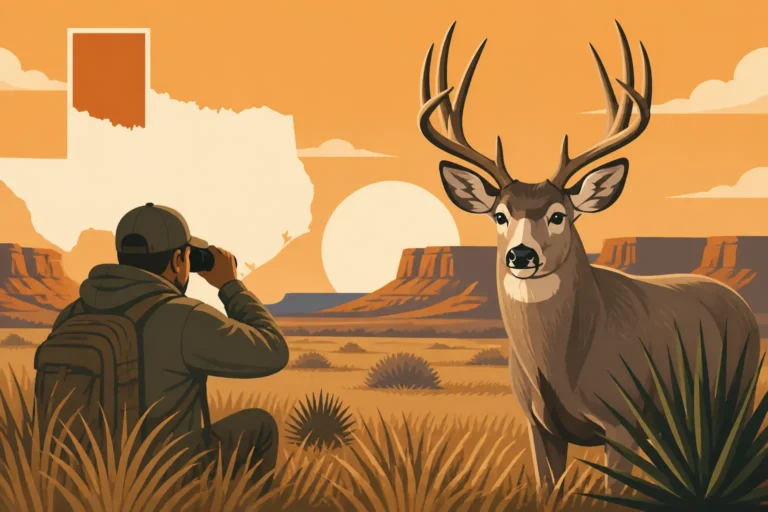
In Texas, mule deer are primarily found in the Trans-Pecos region – the rugged, mountainous desert landscape of West Texas. Think Big Bend country, the Davis Mountains, and the Glass Mountains. This is a land of wide-open spaces, deep canyons, mesas, and sparse vegetation like ocotillo, lechuguilla, and various desert grasses. Mule deer thrive in this environment, using the broken terrain for cover and escape.
Their behavior is distinctly different from whitetails. Mule deer tend to be less nocturnal and more apt to move and feed during daylight hours, especially in cooler conditions. They often travel in small herds or bachelor groups, particularly bucks outside the rut. When spooked, they typically perform a characteristic bounding gait, known as "muling," which allows them to cover rough ground quickly. They also have larger home ranges than whitetails, making them more challenging to pattern precisely. Understanding this unique behavior is crucial for effective spot-and-stalk tactics. For more detailed information, consider reading our guide on Mule Deer Hunting in Texas: Panhandle & Trans-Pecos.
Specific Tactics for High-Country Mule Deer
Spot-and-stalk for high-country mule deer relies heavily on your optics. You'll spend hours glassing vast mountainsides, picking apart every crevice and shadow. Once a buck is spotted, the real work begins. Your stalk will often involve navigating steep, rocky terrain, and sometimes covering significant elevation changes. Remember to always work the wind, as thermal currents in the mountains can be tricky and change throughout the day.
Use the contour of the land to your advantage. Mule deer often bed on shelves or ledges that offer a commanding view of their surroundings. Your approach needs to be below their line of sight, using draws, ravines, and sparse brush as concealment. Be prepared for longer shots than you might typically take for whitetails; a 300-400 yard shot can be common in this open country, making practice with your rifle and rangefinder absolutely essential. Don't be afraid to take your time; a patient, slow approach is almost always better than a rushed one that spooks the deer.
When and Where to Hunt Mule Deer
The mule deer season in Texas typically runs from late November through early December, though dates can vary by county and hunt type. The limited season windows mean you need to make the most of your time in the field. Public land opportunities for mule deer exist in areas like the Black Gap WMA, but these are often draw hunts, so applying well in advance is critical. Many hunters opt for guided hunts or leases on private ranches in the Trans-Pecos, where populations can be more consistent.
During the rut, which usually falls within the regular season, bucks become more active and less cautious, making them slightly easier to spot and stalk as they search for does. However, this also means increased competition from other hunters. Early season hunts might find bucks in smaller bachelor groups, still in their summer patterns, while late season can offer opportunities for post-rut feeding activity. To stay on top of the exact dates, always check the current Texas Parks and Wildlife Department (TPWD) Outdoor Annual or our specific guide: Texas Mule Deer Season Dates 2026.
Spot-and-Stalk for Texas Exotics
Texas is renowned for its diverse populations of exotic game, offering incredible year-round hunting opportunities, many of which are perfectly suited for spot-and-stalk methods. These animals often present unique challenges and rewards.
Common Exotic Species and Their Habits (Axis, Aoudad, Blackbuck)
Texas is home to a staggering array of free-ranging and high-fence exotic species, many of which can be successfully hunted via spot-and-stalk. Three of the most popular are Axis deer, Aoudad sheep, and Blackbuck antelope.
- Axis Deer: Native to India, Axis deer are stunning creatures with spotted coats and impressive antlers. They are found predominantly in the Hill Country and parts of South Texas. Unlike native deer, Axis have no set rut, meaning they can breed and fawn year-round. This makes them a fantastic year-round spot-and-stalk target. They prefer open grasslands mixed with brush and are incredibly wary with exceptional eyesight and hearing. For a deep dive into hunting these magnificent animals, check out our guide: Axis Deer Hunting in Texas (Free-Range vs High-Fence).
- Aoudad Sheep: These majestic North African sheep call the rugged, mountainous regions of the Trans-Pecos and parts of the Hill Country home. They are incredibly tough, agile, and possess keen eyesight, making them one of the most challenging spot-and-stalk animals in Texas. They favor steep, rocky canyons and cliff faces. Aoudad can be hunted year-round, and their pursuit offers an experience akin to mountain hunting in other states. For specific tactics, our guide on Spot-and-Stalk Aoudad in West Texas is a valuable resource.
- Blackbuck Antelope: Hailing from India and Nepal, Blackbuck are another captivating exotic, primarily found in the Hill Country. Males display striking black and white coats with spiraling horns. They are incredibly fast and live in open, grassy plains, making a close approach extremely difficult. Like Axis, they can be hunted year-round. Their open habitat demands exceptional concealment and long-range shooting skills.
Tailoring Your Stalk to Different Exotic Behaviors
Each exotic species has its own quirks and habits that demand a tailored approach.
- Axis Deer: When stalking Axis, you need to be acutely aware of their senses. They will pick up movement or sound at incredible distances. Focus on using dense cover and moving during times when they are less alert, such as during midday when they might be bedded. Their year-round breeding means you can target hard-horned bucks at any time, but they can be found in larger herds, so spotting one often means spotting several keen sets of eyes.
- Aoudad Sheep: Hunting Aoudad is often a test of physical endurance. You'll be climbing, scrambling, and enduring steep inclines. The wind in the mountains is notoriously unpredictable, so constant checking is a must. Aoudad are masters of disappearing into the rocky terrain, so once spotted, maintaining visual contact during your stalk is critical. They often escape upwards, using their agility on the cliffs. Be prepared for longer shots and use your optics to meticulously scan every rock and crevice for a bedded animal.
- Blackbuck Antelope: Stalking Blackbuck on open plains is perhaps the most challenging. Their speed and herd mentality mean that if one sees you, the whole herd is gone. Your best bet is to use any available terrain features – a slight dip, a dry creek bed, or even taller grasses – to get within range. This often means very long crawls. Sometimes, your only option is to wait for them to feed into a patch of cover, or for adverse weather (like a strong wind or light rain) to diminish their senses slightly.
Best Regions for Exotic Spot-and-Stalk Opportunities
While exotics can be found across many parts of Texas, certain regions stand out for specific species. The Texas Hill Country is a hotspot for Axis deer, Blackbuck, and even Aoudad on more rugged ranches. Its rolling hills, live oak mottes, and diverse vegetation provide excellent habitat. Many high-quality ranches in counties like Kerr, Gillespie, and Mason offer fantastic opportunities.
For Aoudad, the rugged Trans-Pecos region, particularly around the Davis Mountains and the canyons leading into Big Bend, is prime territory. This is where you'll find true free-range Aoudad hunting, a physically demanding but incredibly rewarding experience. Other exotics like Nilgai can be found on the vast ranches of the South Texas brush country, though they often prefer thicker cover, making pure spot-and-stalk a different game there. The beauty of exotic hunting in Texas is the sheer variety and the open seasons, allowing you to plan hunts throughout the year.
Post-Shot Procedures and Game Recovery
Congratulations! After all that hard work, patience, and strategic movement, you've successfully harvested an animal. But the hunt isn't over yet. Ethical post-shot procedures and efficient game recovery are just as important as the stalk itself, especially in the harsh Texas environment.
Ethical Shot Placement and Tracking
Regardless of the species, ethical shot placement is paramount. Aim for the vital organs – the lungs and heart – to ensure a quick, humane kill. For most deer and similar-sized exotics, a shot just behind the shoulder, slightly low, will hit both. For larger, tougher animals like Aoudad, a more deliberate broadside shot through the shoulder might be necessary to break bone and ensure penetration. Always know your effective range and do not take a shot if you are not 100% confident in your ability to make a clean kill.
After the shot, observe the animal's reaction. Did it drop immediately? Did it run? If it ran, note the direction and any landmarks. If you believe you made a good hit, resist the urge to immediately rush in. Give the animal some time (15-30 minutes for a lung shot, an hour or more for a questionable hit) to expire. This reduces the chance of bumping a wounded animal and making recovery much harder. Begin your track by carefully examining the area where the animal was standing or last seen for blood, hair, or bone fragments. Follow the blood trail slowly and methodically, marking your last known spot with flagging tape as you go.
Dealing with the Texas Heat: Rapid Field Dressing
Texas heat is no joke, and it can quickly spoil your hard-earned meat. As soon as you recover your animal, rapid field dressing is essential. The goal is to remove the entrails as quickly as possible to allow the carcass to cool down internally. Carry a sharp, clean hunting knife and gloves. For a detailed guide on how to perform this crucial step effectively, especially in warm climates, our article on How to Field Dress a Deer in Hot Weather is an excellent resource.
Once field dressed, try to get the animal into the shade. If you have time and resources, getting ice into the body cavity can further aid cooling. Even if you plan to quarter the animal later, opening it up and getting air to the meat is the first priority. For larger animals like a big mule deer or Aoudad, you might consider quartering the animal in the field to make it easier to pack out and cool down more quickly.
Packing Out Your Harvest
After field dressing, you need a plan to get your animal out of the field. For smaller deer or exotics, a game cart can be a lifesaver, especially on flatter terrain. However, in the steep, rocky country of the Trans-Pecos or deep in the brush, a game cart might be impractical. This is where a good hunting backpack with a strong frame comes into play. Quartering your animal into manageable pieces and packing them out in game bags is often the only realistic option in challenging terrain.
Make multiple trips if necessary; your safety and the quality of your meat are paramount. Always carry plenty of water for yourself, and if possible, bring a friend or two to help with the heavy lifting. The pack out can be as physically demanding as the stalk, so be prepared with the right gear and a solid plan.
Legality and Regulations for Texas Spot-and-Stalk
Hunting in Texas comes with a set of rules and regulations designed to manage wildlife populations and ensure ethical hunting practices. While the core concept of spot-and-stalk remains consistent, you must adhere to the specific legal framework.
General Hunting License Requirements
Before you even step foot in the field, you must possess a valid Texas hunting license. For residents, the Super Combo License is often the most cost-effective option, covering a wide range of species and endorsements. Non-residents will need to purchase a non-resident hunting license. Additionally, specific endorsements may be required depending on what you're hunting. For example, a migratory game bird endorsement is necessary for dove, and a federal duck stamp for waterfowl.
Always ensure your license is current for the season you are hunting. Licenses typically go on sale in mid-August and are valid through August 31st of the following year. For comprehensive information on license types, costs, and how to purchase, refer to our guide: Texas Hunting License: Cost, Types & How to Buy (2026). It's your responsibility as a hunter to understand and comply with all licensing requirements.
Special Regulations for Mule Deer and Exotics
While exotics generally have year-round open seasons and no bag limits on private land (unless specified by the landowner or outfitter), mule deer are subject to strict regulations. Texas mule deer hunting is restricted to specific seasons, typically a short general season, and sometimes an archery-only season or special drawn hunts. Bag limits are in place, often one buck per season, and antler restrictions may apply in certain counties, similar to whitetail deer. For example, some counties might have specific width or point requirements for a legal buck.
It's critical to check the current Texas Parks and Wildlife Department Outdoor Annual for the most up-to-date regulations for the specific county you plan to hunt mule deer in. These regulations can change annually, and ignorance is not a valid excuse for non-compliance. Exotic species, because they are not native game animals, fall under different regulations. On private property, they can often be hunted without specific tags or seasons beyond your general hunting license, but verify this with your landowner or outfitter.
Private vs. Public Land Considerations
The vast majority of hunting in Texas occurs on private land, which can include leases, day hunts, or guided trips on a ranch. On private land, landowners often have additional rules or management strategies that you must follow, such as antler score requirements or specific harvest quotas. Always clarify these rules with the landowner or outfitter before your hunt.
Public land hunting opportunities exist in Texas, particularly for mule deer in the Trans-Pecos region, and some exotics can occasionally be found on large WMAs. However, public land often requires an Annual Public Hunting (APH) Permit, and many prime areas are accessible only through drawn hunts. The pressure on public lands can also be significantly higher, demanding even more skill and patience for a successful spot-and-stalk hunt. If you're considering public land, research the specific WMA or public hunting area thoroughly, understand its rules, and be prepared for potentially more challenging conditions. For more on public hunting, see our guide on Public Hunting in Texas: WMAs & Annual Public Hunting Permit. Always respect property lines, whether on private or public land, using mapping apps like onX Hunt or HuntStand to stay compliant.
Table of Spot-and-Stalk Species Considerations in Texas
To give you a quick overview of some key considerations for popular spot-and-stalk species in Texas:
| Species | Primary Habitat (Texas) | Best Season (Spot-and-Stalk) | Key Challenge | Recommended Optics | Typical Shot Range |
|---|---|---|---|---|---|
| Mule Deer | Trans-Pecos (mountains, canyons) | Late Nov – Early Dec (Rut) | Open country visibility | Binos (10-12x), Spotting Scope (15-60x) | 200-500+ yards |
| Axis Deer | Hill Country, South Texas (brush/grass) | Year-round (Hard Horn Bucks) | Extreme wariness, keen senses | Binos (10x), Rangefinder | 150-300 yards |
| Aoudad | Trans-Pecos (cliffs, canyons), Hill Country | Year-round | Rugged terrain, endurance | Binos (12x), Spotting Scope (20-60x) | 250-600+ yards |
| Blackbuck | Hill Country (open plains) | Year-round | Speed, open habitat | Binos (10x), Rangefinder | 200-400 yards |
Disclaimer
Please remember that hunting regulations and season dates can change. Always consult the most current Texas Parks and Wildlife Department Outdoor Annual for the official and up-to-date rules and regulations before planning any hunt. This guide is for informational purposes only and does not supersede official legal requirements.