Best Gear for Sika Deer on a Texas Lease
Hunting Sika deer on a Texas lease is a truly unique and often challenging experience, quite different from chasing whitetails. These elusive Asian exotics are known for their incredible sense of hearing, keen eyesight, and often spooky nature, making them a formidable quarry. Getting your gear dialed in is paramount to success, as cutting corners can mean the difference between tagging out and going home empty-handed. This guide will walk you through the essential equipment you'll need to confidently pursue Sika deer in the diverse Texas landscape.
Understanding the Sika Deer Challenge on a Texas Lease
Before we dive into the nitty-gritty of gear, let's talk about what makes Sika deer such a distinct animal to hunt in Texas. Unlike the often-predictable patterns of native whitetail, Sika are incredibly wary and often prefer dense, thick cover, especially near water sources. They are smaller than a mature whitetail buck but incredibly tough, requiring precise shot placement. Their rut, which typically falls in September and October, involves distinctive "whistling" calls that can carry for long distances, but getting close requires stealth and patience. Hunting them on a lease means you'll need to understand the specific terrain, cover, and water sources available to these animals on your particular property, which can be greatly aided by tools like GoHunt for detailed mapping and satellite imagery.
Sika Deer Behavior and Habitat Preferences
Sika deer, especially the Japanese Sika often found in Texas, are known for being very cautious. They tend to bed down in the thickest brush they can find during the day and will often utilize riparian areas or dense creek bottoms for travel and cover. This behavior means that long-range glassing from open fields, while sometimes possible, is often less effective than stealthy movements through dense cover or setting up strategically in areas where they are forced to cross. Their small size but robust build means they can slip through vegetation that might hinder a larger deer, making them masters of concealment.
How Texas Terrain Influences Gear Choices
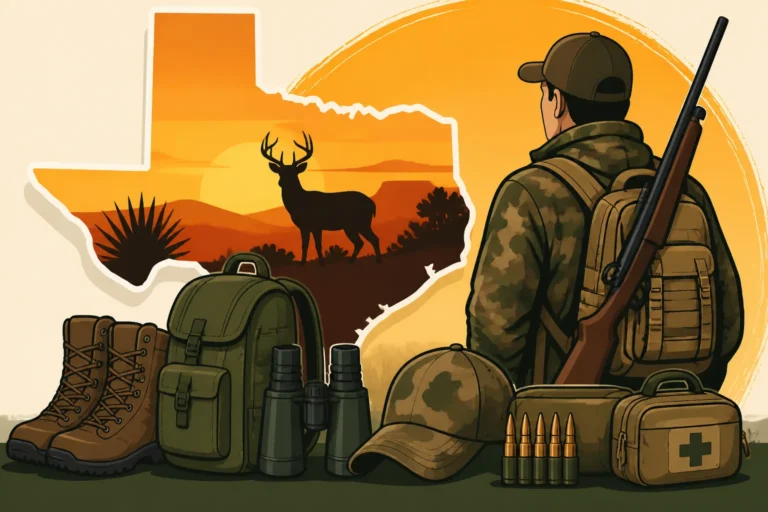
Texas offers a vast array of ecosystems, and the type of terrain on your lease will heavily influence your gear choices. Are you hunting in the dense river bottoms of the Coastal Plains, where humidity and thick undergrowth are the norms? Or perhaps a Hill Country lease with rocky terrain and juniper thickets? The ideal gear for a Sika hunt needs to be adaptable. For instance, durable, quiet clothing that can withstand thorns and briars is a must, and comfortable, supportive boots are non-negotiable for navigating varied terrain. Consider how you'll move through your specific lease – whether you'll be primarily still-hunting, ambushing from a blind, or tracking.
Essential Firearms and Ammunition for Sika Deer
When it comes to putting down a Sika deer ethically, your firearm and ammunition choice are critical. While they are not huge animals, their dense bone structure and tenacity mean they can absorb a hit and still travel a significant distance if the shot isn't placed perfectly. This is where a reliable, accurate rifle paired with appropriate bullets truly shines.
Recommended Rifle Calibers
For Sika deer, you're looking for a cartridge that delivers enough energy for a clean pass-through and creates a good wound channel, but without excessive recoil that might hinder follow-up shots in tight situations. Many popular deer hunting calibers work exceptionally well for Sika.
Here's a breakdown of common and effective choices:
- 6.5 Creedmoor: This has become a darling among hunters for its mild recoil, flat trajectory, and excellent terminal ballistics. With a good bullet, it's more than capable of taking Sika out to reasonable ranges.
- .270 Winchester: A classic, versatile cartridge that has anchored countless deer. It's flat-shooting and delivers plenty of punch for Sika.
- 7mm-08 Remington: Similar to the 6.5 Creedmoor in recoil, but with a slightly heavier bullet, offering a good balance of power and shootability.
- 308 Winchester: Another highly popular and effective round. It’s readily available, accurate, and powerful enough for Sika without being overkill.
- 30-06 Springfield: The venerable .30-06 remains a top choice for its power and versatility, suitable for larger game as well as Sika.
While larger calibers like the .300 Winchester Magnum would certainly work, they're often more than necessary and introduce more recoil, which can make accurate shooting more challenging, especially if you're not accustomed to them. The key is to pick a caliber you can shoot accurately and confidently.
Bullet Selection for Sika Deer
The type of bullet you choose is just as important, if not more so, than the caliber. For Sika, you want a controlled-expansion bullet that will penetrate deeply and reliably expand to create a substantial wound channel without fragmenting excessively.
Consider these bullet types:
- Bonded Bullets: These bullets have their lead core bonded to the copper jacket, ensuring high weight retention and deep penetration. Examples include Federal Fusion, Hornady InterBond, and Nosler AccuBond.
- Partitioned Bullets: Such as the Nosler Partition, these bullets feature a partition that separates the front and rear lead cores, allowing the front to expand rapidly while the rear retains weight for deep penetration.
- Monolithic Copper Bullets: Brands like Barnes TSX or Hornady CX are solid copper bullets that expand reliably and retain nearly 100% of their weight, offering superb penetration, especially useful if you hit a shoulder.
Avoid highly frangible varmint bullets. Your goal is a clean, ethical kill, and a bullet designed for deer-sized game will give you the best chance of achieving that, even if you encounter dense bone on a quartering shot.
Optics: Seeing Them Before They See You
Sika deer are experts at blending into their surroundings, and their small size can make them even harder to spot in dense cover. High-quality optics are not a luxury but an absolute necessity for successful Sika hunting, allowing you to identify your target and make an accurate shot.
Binoculars for Scouting and Spotting
A good pair of binoculars will be your best friend in the Sika woods. You need clarity, good light transmission, and a comfortable ergonomic design for extended glassing sessions.
- Magnification and Objective Lens: An 8×42 or 10×42 configuration is ideal for most Sika hunting scenarios. The 8x offers a wider field of view, which is excellent for scanning dense timber, while the 10x provides more detail for longer distances, though with a slightly narrower field of view and more susceptibility to hand shake.
- Low Light Performance: Sika are most active during dawn and dusk, so binoculars with excellent low-light gathering capabilities are crucial. Look for quality glass and lens coatings from reputable brands.
- Durability: Your binoculars will take a beating in the field. Choose a pair that is waterproof, fog-proof, and rugged. Brands like Leupold, Vortex, and Steiner offer excellent options for various budgets.
Using your binoculars to meticulously pick apart cover, especially shadowed areas or edges, is often how you'll first detect a Sika's ear twitch or the faint outline of its body.
Rifle Scopes for Precision Shooting
The dense cover that Sika often inhabit means that shots can sometimes be quick and at relatively close range, but they can also be across an open lane or pasture on a lease. A versatile, clear rifle scope is essential.
- Variable Magnification: A scope with a variable power range, such as 3-9×40, 3-10×42, or even 4-12×40, offers the flexibility needed. The lower power settings are great for quick target acquisition in thick woods, while higher magnifications allow for more precise shot placement at longer distances.
- Light Transmission: Just like binoculars, a scope that performs well in low light is critical for those golden hours of hunting. Look for scopes with large objective lenses (40mm or larger) and high-quality multi-coated glass.
- Reticle Choice: A simple duplex reticle is often sufficient, but some hunters prefer a ballistic reticle or one with holdover points for quick adjustments on different ranges.
- Durability and Reliability: Your scope needs to hold zero through bumps and jostles. Investing in a quality scope from brands like Leupold, Nikon, or Vortex is always a wise decision.
Rangefinders for Accuracy
Knowing the exact distance to your target is paramount for making ethical shots, especially with Sika deer that might be smaller than your typical whitetail. A laser rangefinder eliminates guesswork and increases your confidence.
- Speed and Accuracy: Look for a rangefinder that provides quick and consistent readings.
- Max Range: While you likely won't be shooting Sika at extreme distances, a rangefinder with a decent maximum range (e.g., 800-1000 yards for reflective targets) will ensure it works reliably on deer-sized animals at practical hunting distances.
- Angle Compensation: Many modern rangefinders include angle compensation features, which adjust the range for uphill or downhill shots, providing the true ballistic distance. This is particularly helpful if your lease has varied topography.
Even if you practice regularly, the adrenaline of a hunting situation can make range estimation difficult. A rangefinder is a small investment that can have a huge impact on your success and ethical hunting practices.
Scent Control and Camouflage
Sika deer have an incredible sense of smell and can detect human odor from a surprising distance. Their eyesight is also very sharp, especially for movement. Therefore, meticulous attention to scent control and appropriate camouflage is non-negotiable for getting close enough for a shot.
The Importance of Scent Management
You might feel like a walking science experiment with all the scent control steps, but trust me, it’s worth it. Sika deer will bust you on scent faster than almost any other game animal in Texas.
- Scent-Eliminating Washes and Sprays: Start by washing your hunting clothes in scent-free detergent. After washing, store them in airtight containers or bags. Before heading out, spray down your boots, backpack, and outer layers with a scent-eliminating spray.
- Ozone Generators and Carbon Clothing: For those who want to take it to the next level, ozone generators can effectively neutralize odors in a blind or storage tote. Activated carbon clothing, which absorbs scent, can also be a valuable tool, though it often comes at a higher price point.
- Playing the Wind: Ultimately, nothing beats playing the wind. Even with the best scent control, if a Sika gets downwind of you, it's likely game over. Use apps like GoHunt to analyze wind direction relative to your position and known Sika travel routes on your lease. This data-driven approach can significantly improve your setup strategy.
Don't forget the small things, like your breath, deodorant, and even what you ate for breakfast. Every little bit of odor can contribute to getting busted.
Camouflage Patterns for Texas Cover
While Sika can differentiate movement well, the right camo pattern helps break up your silhouette and allows you to blend into the diverse Texas environment.
- Versatile Patterns: For general Texas hunting, a versatile pattern that works in various environments is often best. Patterns with good contrast and depth, mimicking natural elements like branches, leaves, and shadows, are effective. Brands like Mossy Oak and Realtree offer patterns that blend well in different types of woodlands and brush.
- Matching Your Lease's Environment: If your lease is primarily thick South Texas brush, a darker, brush-oriented pattern might be more effective than a lighter, open-country pattern. Conversely, if you're in the Hill Country with rocky, juniper-covered hills, a pattern with more browns and grays might be better.
- Early Season vs. Late Season: In the early season, when foliage is lush, green-heavy patterns are useful. As the season progresses and vegetation browns, switch to more earth-toned patterns. Given that Sika can be hunted year-round on some leases, having options is beneficial.
Remember, camo helps you blend in, but stillness is paramount. Even the best camo won't hide jerky movements from a keen-eyed Sika.
Beyond the Basics: Crucial Accessories for a Sika Hunt
While the core gear is important, a few additional accessories can significantly enhance your Sika hunting experience, especially when dealing with the realities of a Texas lease and the potential for long hauls or unexpected challenges.
Game Carts and Hauling Solutions
Once you've harvested a Sika, getting it out of the field can be a challenge. Sika deer, while not as large as a mature whitetail buck, can still weigh between 100-150 pounds or more, and dragging them through dense Texas brush or rocky terrain is no easy feat.
- Heavy-Duty Game Cart: A sturdy game cart with large, all-terrain wheels is an invaluable tool. Look for one with a robust frame and good strapping points. This can save your back and make the extraction much quicker and easier, especially if you're hunting alone or on a large lease with limited vehicle access.
- Backpack Frame: For extremely rugged or remote areas, a quality internal or external frame backpack designed for packing out game can be a lifesaver. You might need to quarter the animal in the field, which leads us to the next essential.
Consider the layout of your lease and how far you might need to carry an animal. Having a plan for game retrieval before you even pull the trigger is crucial.
Field Dressing and Meat Care Tools
Texas heat can be brutal, even during hunting season. Rapid and proper field dressing is essential to preserve the quality of your Sika venison.
- Sharp Knife Set: A good, sharp fixed-blade hunting knife is non-negotiable for field dressing. Consider a set with a gut hook and a boning knife. Keep a sharpener handy. Brands like Outdoor Edge or Buck Knives offer reliable options.
- Game Bags: Especially in warmer weather, breathable game bags are critical for protecting the meat from flies, dirt, and debris while allowing it to cool.
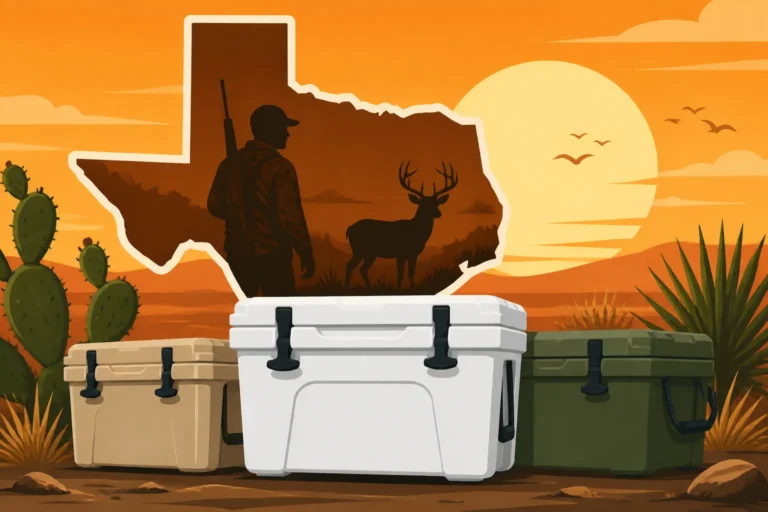
- Large Cooler: A high-quality cooler is a must for transporting your harvested Sika, whether whole or quartered, back home or to a processor. In the Texas heat, coolers from brands like YETI or RTIC are popular for their superior insulation. Don't forget plenty of ice! Proper How to Cool a Deer Fast in Texas Heat is vital.
- Gloves and Wipes: Disposable gloves protect you from blood and bacteria, and a roll of paper towels or wet wipes helps with cleanup.
Taking care of your game immediately after harvest is a sign of respect for the animal and ensures you get the best possible meat for your table. For more detailed information, check out our guide on Field Dressing & Processing Game in Texas Heat.
Other Handy Lease Hunting Gear
- First-Aid Kit: Accidents happen. A well-stocked first-aid kit, tailored for outdoor use, is essential. Include bandages, antiseptic wipes, pain relievers, and any personal medications.
- Headlamp or Flashlight: For early morning walks in or late-night walks out, a reliable headlamp with a red light option (to preserve night vision) is a must.
- GPS or Mapping App: While your lease might be familiar, a GPS device or a hunting app like GoHunt or onX Hunt on your phone is invaluable for marking stand locations, tracking game, and navigating in low light or unfamiliar areas. These apps can help you understand How to Scout a New Hunting Lease in Texas by providing detailed topo maps and satellite imagery.
- Water and Snacks: Hydration is key, especially in Texas. Carry plenty of water and some high-energy snacks to keep you fueled throughout your hunt.
- Quiet Clothing: Beyond just camo, choose clothing made from quiet fabrics that won't rustle and spook hyper-alert Sika when you move through brush.
Gear Summary Table
To give you a quick overview, here's a table summarizing the essential gear and why it's important for Sika deer hunting on a Texas lease:
| Gear Category | Specific Items | Why It's Crucial for Sika Hunting |
|---|---|---|
| Firearms & Ammo | .270, .308, 6.5 Creedmoor, 7mm-08 | Ethical, clean kills on tough, medium-sized deer; accurate for varying shot distances. |
| Bonded, Partitioned, or Monolithic Bullets | Deep penetration, reliable expansion, high weight retention for effective terminal performance. | |
| Optics | 8×42 or 10×42 Binoculars | Spotting elusive Sika in dense cover, especially at dawn/dusk; essential for identification. |
| Variable Rifle Scope (e.g., 3-9x, 3-10x) | Versatility for quick shots in thickets and precision at longer ranges; good low-light. | |
| Laser Rangefinder (with angle compensation) | Accurate distance measurement for ethical shots, reducing guesswork in varied terrain. | |
| Scent & Camo | Scent-free washes/sprays, Carbon Clothing/Ozone | Mitigating Sika's acute sense of smell, preventing them from detecting your presence. |
| Versatile Camouflage (e.g., Mossy Oak, Realtree) | Breaking up human silhouette, blending into varied Texas brush and woodlands. | |
| Accessories | Heavy-duty Game Cart / Backpack Frame | Efficient retrieval of harvested Sika from potentially remote or difficult terrain on your lease. |
| Sharp Knife Set, Game Bags, Large Cooler | Proper field dressing and meat preservation, especially in Texas heat. | |
| First-Aid Kit, Headlamp, GPS/Mapping App (GoHunt) | Safety, navigation, and enhanced scouting capabilities for your lease. |
Sika deer hunting on a Texas lease is an exciting endeavor that demands preparation and the right tools. By equipping yourself with reliable firearms, top-tier optics, and a comprehensive understanding of scent control and other accessories, you'll be well on your way to a successful and memorable hunt. Remember, practice with your gear, scout your lease thoroughly, and stay patient – those Sika are sneaky!
Disclaimer
Please ensure you are fully aware of and adhere to all current Texas Parks and Wildlife Department regulations regarding hunting Sika deer and all other game animals. Hunting laws and regulations can change, so always consult the latest Texas Outdoor Annual or TPWD website before your hunt. This guide is for informational purposes only and does not supersede official regulations.