Best Cooler to Hold Ice in Texas Heat
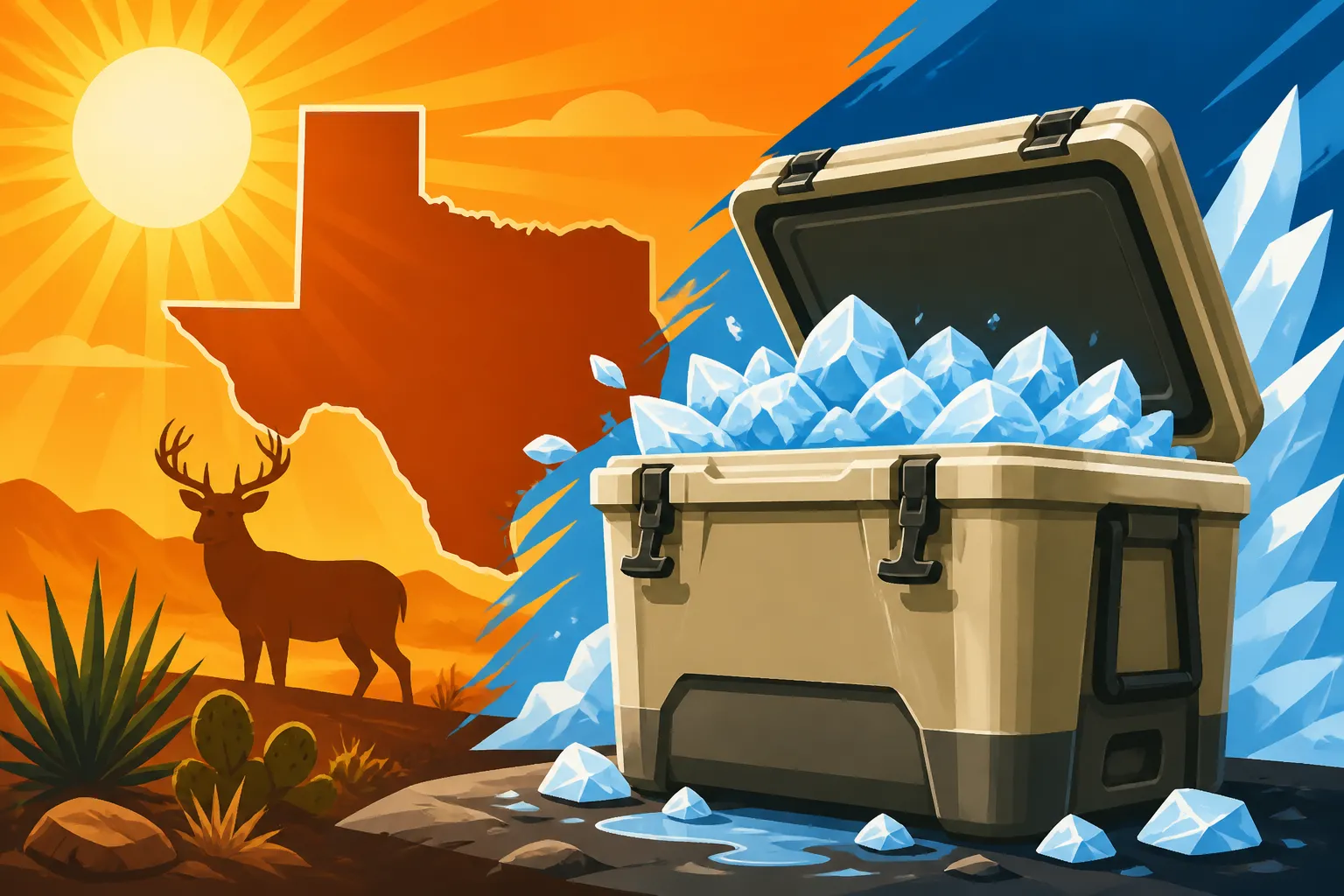
The scorching Texas sun can turn what should be a perfectly chilled drink or well-preserved game into a disappointing puddle in a matter of hours. Anyone who's spent a long day on a dove field near Abilene or stalked deer in the South Texas brush knows the frustration: you pack your cooler full, hopeful, only to find your ice has vanished by lunchtime. This guide is dedicated to helping you beat the heat, providing a deep dive into the best coolers designed to hold ice, keeping your provisions and valuable harvests cold, fresh, and ready for whatever the unpredictable Texas weather throws your way.
Understanding the Brutal Texas Heat Challenge
Hunting in Texas is an incredible experience, but it comes with a unique set of environmental challenges, primarily the relentless heat. From the Panhandle to the Gulf Coast, and especially in the vast expanse of the South Texas brush country, temperatures can soar and stay high for extended periods, making proper gear selection crucial.
The Reality of Scorching Summers and Mild Winters
Texas isn't just hot; it's persistently hot. While summers famously see triple-digit temperatures, even spring and fall, prime hunting seasons for many species, can bring unexpected heat waves. Imagine preparing for Texas Deer Season 2026-2027: Dates by Zone in October, expecting crisp fall air, only to be met with 90-degree days in the Hill Country. This constant battle against warmth means that a standard, flimsy cooler simply won't cut it. The sun beats down, radiating heat that quickly penetrates thin plastic walls, melting ice faster than you can say "barbecue." The humidity, particularly along the coast during Texas Duck & Waterfowl Season 2026: Zones, only exacerbates the issue, making every degree feel even hotter. This isn't just about comfort; it's about necessity when you're out in the elements.
Consequences for Game, Food, and Drinks
The impact of inadequate ice retention goes beyond lukewarm sodas. For hunters, keeping harvested game cool is absolutely critical to preserve the meat quality. Whether you've just taken down a trophy buck or a mess of hogs, getting that carcass cooled down quickly is paramount. Without a reliable cooler, especially when you're far from a walk-in freezer, you risk spoilage, which is heartbreaking after a successful hunt. This is particularly relevant when you're thinking about Field Dressing & Processing Game in Texas Heat – a process where time is truly of the essence. Beyond game, consider your food and drinks for multi-day trips. Nobody wants food poisoning from spoiled provisions on a hunting lease, nor do they want to spend extra money on ice runs that cut into valuable hunting time. A top-tier cooler is an investment in both your safety and the quality of your outdoor experience.
Essential Features of High-Performance Coolers
When you're looking for a cooler that can stand up to the Texas sun, you need to look past the bargain bin models. High-performance coolers are engineered with specific features designed for superior ice retention and durability.
Advanced Insulation Technologies
At the heart of any great cooler is its insulation. Forget the thin, injected foam of old. Modern high-performance coolers, especially those using rotomolded construction, utilize significantly thicker walls packed with advanced pressure-injected polyurethane foam. This dense insulation acts as a formidable barrier against external heat, minimizing thermal transfer into the cooler's interior. Some manufacturers even incorporate vacuum-sealed panels or reflective layers to further enhance insulation efficiency, bouncing heat away rather than absorbing it. The goal is to create a thermal fortress, keeping the cold in and the heat out, often for days on end. This level of insulation is what differentiates a cooler that lasts a few hours from one that can preserve ice through a weekend hunt.
Robust Construction and Air-Tight Seals
Beyond insulation, the overall construction of the cooler plays a huge role. Rotomolded coolers, for instance, are made from a single, seamless piece of plastic, eliminating weak points where heat might creep in. This process also results in incredible durability, capable of withstanding rough handling, drops, and the rigors of being hauled in and out of trucks and UTVs. Coupled with this robust shell are critical features like freezer-grade gaskets. These thick, rubber seals, similar to what you'd find on a freezer door, create an almost impenetrable barrier between the lid and the cooler body, preventing precious cold air from escaping and warm air from entering. Heavy-duty latches, often made from marine-grade rubber, pull the lid down tightly, compressing the gasket for a perfect seal. It's this combination of solid construction and meticulous sealing that locks in the cold.
User-Friendly Design and Durability
While ice retention is key, a great cooler also needs to be practical and user-friendly in the field. Think about reinforced, non-slip feet that keep the cooler stable on uneven terrain or in the bed of a pickup. Durable handles, often made from heavy-duty rope with comfortable grips, make it easier to transport even a fully loaded cooler. Drain plugs that are large and leak-proof are essential for quickly emptying melted water without having to tip the entire cooler. Integrated tie-down slots allow you to secure the cooler, preventing it from sliding around during transport. Look for hinges that are strong and resistant to breaking, as this is a common failure point on lesser coolers. These seemingly small details contribute significantly to the overall user experience and the cooler's longevity, especially when you're relying on it trip after trip.
Popular Cooler Types for Texas Hunters
The market for coolers has exploded, offering specialized designs for different needs. For Texas hunters, understanding the pros and cons of each type is crucial for making the right choice.
Rotomolded Coolers: The Indestructible Ice Chests
Rotomolded coolers are the undisputed kings of ice retention and durability. Their name comes from the rotational molding process, which creates a single, seamless piece of high-density polyethylene (HDPE) plastic. This manufacturing technique results in incredibly thick walls and corners, making them virtually indestructible and highly efficient at maintaining internal temperatures. Brands like YETI, RTIC, and Orca dominate this segment, setting the standard for what a premium cooler should be. They boast impressive ice retention capabilities, often keeping ice for 5-10 days under ideal conditions, which is a game-changer for extended hunts or if you're trying to figure out How to Cool a Deer Fast in Texas Heat when you're far from a processor.
The downsides? They tend to be heavy, especially when fully loaded with ice and game, and they come with a higher price tag. However, for serious Texas hunters who demand reliability and long-term performance, the investment in a quality rotomolded cooler is almost always worth it. They're perfect for your main camp cooler or for hauling significant game.
Soft-Sided Coolers: Lightweight and Convenient
For shorter trips, day hunts, or when portability is a top priority, soft-sided coolers offer an excellent alternative. While they won't match the multi-day ice retention of their rotomolded counterparts, modern soft-sided coolers have made significant advancements in insulation technology. Many feature closed-cell foam insulation, waterproof liners, and durable outer shells made from tough nylon or TPU-coated fabrics. Brands like YETI's Hopper series or RTIC's SoftPaks are popular choices. They are much lighter, easier to carry (often with shoulder straps or backpack designs), and more flexible, making them ideal for packing into tight spaces.
Think of these for a morning Dove Hunting in Texas: The Sept 1 Opener Guide trip, carrying drinks and snacks, or for quick trips to the blind. They are also great for supplementing your main cooler, keeping frequently accessed items separate and minimizing the opening of your larger, primary ice chest. While they might only hold ice for 1-3 days, their convenience for specific scenarios is unmatched.
Powered Coolers: When Electricity is an Option
Sometimes, you need constant refrigeration without the hassle of ice, and that's where powered coolers (also known as portable refrigerators or freezer/coolers) come in. These units typically run on 12V DC power (from your vehicle's auxiliary port) or 110V AC (from a wall outlet or generator). They don't use ice; instead, they actively cool their contents to a set temperature, much like a mini-fridge. Brands like Dometic and BougeRV are well-regarded in this category.
The advantages are clear: no more ice runs, no more soggy food, and the ability to truly freeze items if needed. This is fantastic for longer hunting trips, camping excursions, or if you're relying on prepared meals. The main drawbacks are their reliance on a power source, their typically higher cost, and they can be heavier and bulkier than traditional coolers. However, for those with access to reliable power in their vehicles or at their camp, a powered cooler can be an absolute game-changer, providing refrigeration independence and peace of mind for perishable goods over extended periods.
Leading Cooler Brands and Their Offerings
When it comes to coolers built to withstand the Texas heat, certain brands have earned their stripes. It's worth looking into what makes each popular and how they might fit your specific hunting needs.
Premium Market Leaders: YETI and RTIC
YETI is arguably the brand that popularized the high-performance rotomolded cooler market, becoming synonymous with premium outdoor gear. Founded in Austin, Texas, YETI built its reputation on bombproof construction and exceptional ice retention. Their Tundra series hard coolers are legendary, known for their thick PermaFrost™ Insulation, sturdy T-Rex™ Lid Latches, and ColdLock™ Gasket. They come in a wide range of sizes, from small Roadie models perfect for a day trip to massive Tundra 350s designed for commercial use or serious long-haul hunts. While YETI products are often the most expensive on the market, many hunters consider them a worthwhile investment due to their durability and superior performance in brutal conditions. YETI also offers a popular line of soft coolers, like the Hopper series, which provide excellent portability and impressive ice retention for a soft-sided option.
RTIC, another Texas-based company, emerged as a direct competitor to YETI, offering similar performance and durability at a more accessible price point. Their "Overbuilt. Not Overpriced." motto resonated with many hunters. RTIC hard coolers feature commercial-grade insulation, heavy-duty latches, and integrated hinges, often rivaling YETI in ice retention tests. They offer comparable sizes and features to YETI's lineup, making them a very strong contender if you're looking for top-tier performance without the absolute premium price tag. RTIC's soft coolers are also highly regarded for their robust construction and ability to keep contents cold for several days, making them an excellent choice for a dedicated secondary cooler or for times when you need to be nimble.
Strong Contenders and Value Brands: Orca, Igloo, Coleman
While YETI and RTIC often get the most buzz, other brands offer compelling options, whether you're seeking a slightly different feature set or a more budget-friendly choice.
Orca Coolers, based out of Tennessee, are another premium rotomolded option known for their impressive ice retention and a lifetime warranty. They feature thick insulation, whale tail latches, and an integrated cargo net for external storage, which is a nice touch for stashing gloves or a headlamp. Orca often holds its own against YETI and RTIC in performance tests and is frequently praised for its robust build quality. They are a solid alternative if you're looking for a top-tier cooler with a slightly different aesthetic or feature set.
For those on a tighter budget, traditional brands like Igloo and Coleman have stepped up their game. While their basic models might not compare to rotomolded coolers, both companies offer "premium" or "heavy-duty" lines that incorporate better insulation, stronger hinges, and improved gaskets. For example, Igloo's IMX series and Coleman's Xtreme coolers provide a significant upgrade over their entry-level offerings, delivering decent ice retention for a fraction of the cost of the premium rotomolded brands. These can be excellent choices for shorter trips, or if you need multiple coolers and want to save some cash without completely sacrificing performance. They might not hold ice for a week, but they'll certainly outperform a cheap styrofoam cooler by a mile.
Considering Specialty Options for Specific Hunts
Beyond the major players, there are many niche and specialty cooler brands, each with unique features or price points. It's worth researching these if you have very specific needs. For example, some brands focus on ultra-lightweight designs for backpacking or specialized shapes for fitting into kayaks. When you're planning your next adventure, whether it's hunting Feral Hog Hunting in Texas: Year-Round Guide or scouting new Hunting Leases in Texas: Complete Guide (Cost & How to Find), consider the overall logistics. Websites like GoHunt provide valuable resources for planning hunts, and their community often shares insights on gear, including cooler performance in various conditions. Thinking about how your cooler integrates with your entire hunt strategy, from transport to game care, is a crucial step. It's not just about the cooler itself, but how it fits into your broader Best Hunting Gear for Beginners in Texas (By Budget) and advanced strategies.
Selecting the Ideal Cooler Size and Capacity
Choosing the right cooler size is almost as important as choosing a high-performance brand. Too small, and you'll be making constant ice runs; too large, and it's unwieldy and inefficient.
Matching Capacity to Your Hunt Duration and Game
The duration of your hunt is a primary factor in determining cooler size. For a single-day trip, such as a quick How to Hunt White-Tailed Deer in Texas (Step by Step) excursion or a morning of Dove Hunting Tactics: Field Setup & Shooting, a 20-35 quart cooler is usually sufficient for drinks, snacks, and perhaps a few birds. If you're heading out for a weekend, say 2-3 days on a deer lease, you'll want to step up to a 45-75 quart cooler. This size typically holds enough ice, food, and drinks for multiple people, plus some smaller game or quartered meat from a medium-sized animal.
For longer expeditions, like a week-long mule deer hunt in the Trans-Pecos or an extended hog hunting trip, an 80-125 quart cooler or even larger might be necessary. These larger coolers are essential for keeping large quantities of quartered game chilled for several days, especially when you're far from a processing facility. Think about the type of game you typically pursue. A single white-tailed deer, quartered, will fit comfortably in a 65-75 quart cooler, but an Axis deer or Nilgai might require a 100+ quart model. Don't forget to factor in the volume taken up by ice; a good rule of thumb is a 2:1 ice-to-contents ratio for optimal retention.
Navigating the Practicalities of Size and Portability
While a massive cooler might seem ideal for maximum ice retention, the reality of portability often dictates a more modest choice. A 100-quart cooler filled with ice and quartered venison can easily weigh over 200 pounds, making it a two-person job to move, or even requiring a game cart or ATV. Consider how you will transport the cooler – in the bed of a truck, in a trailer, or inside your SUV. Measure your vehicle's cargo space before purchasing.
For day trips or times when you're moving your cooler frequently, a smaller, lighter model is much more practical. Many hunters opt for a combination: a large, high-capacity cooler for game and bulk ice, and a smaller soft-sided or rotomolded cooler for daily provisions, drinks, and easy access. This way, you minimize opening the main cooler, preserving ice, while still having convenient access to frequently used items. Websites like GoHunt often feature discussions among hunters about optimal gear setups, which can provide practical insights into balancing capacity with portability for various Texas hunting scenarios.
Here's a quick reference table for common cooler sizes and their typical uses:
| Cooler Size (Quarts) | Approximate Capacity (Cans w/ Ice) | Best Use Cases in Texas Hunting | Portability Considerations |
|---|---|---|---|
| 20-35 | 15-25 | Day hunts (dove, small game), personal drinks/snacks | Very portable, one person |
| 45-65 | 35-50 | Weekend trips (2-3 days), smaller quartered deer, hogs | Manageable for one, better with two |
| 75-95 | 60-80 | Longer weekend/short week hunts, average quartered deer/hogs | Two person lift, heavy |
| 100-125 | 80-100+ | Multi-day/week-long hunts, larger quartered game (Axis, Nilgai), multiple deer | Requires two people, possibly a cart/ATV |
| 150+ | 120+ | Extended expeditions, large group hunts, multiple large game animals | Heavy equipment, fixed camp use |
Maximizing Ice Retention: Tips and Tricks
Even the best cooler on the market won't perform optimally if you don't use it correctly. There are several tried-and-true methods to help your cooler hold ice for as long as possible in the sweltering Texas climate.
The Art of Pre-Chilling and Strategic Ice Packing
One of the most overlooked steps for maximum ice retention is pre-chilling your cooler. Imagine putting hot items into a cold refrigerator – it takes longer for everything to cool down. The same applies to a cooler. The night before your trip, or at least several hours beforehand, fill your cooler with sacrificial ice or frozen water bottles. This chills the insulation and interior walls, so when you load your actual ice and provisions, the cooler is already at an optimal temperature, reducing the initial thermal load on your fresh ice. Once pre-chilled, drain any melted water and then load your items.
When packing, use a mix of block ice and cubed ice. Block ice melts much slower, providing long-term cooling, while cubed ice fills voids and provides immediate, thorough cooling. Layer your ice strategically: a base layer of block ice, then your items, then more cubed ice to fill gaps, topping it off with another layer of block ice. Pack your cooler as full as possible, as air pockets can accelerate ice melt. If you have extra space, fill it with crumpled newspaper, towels, or even empty plastic bottles to minimize air circulation. Don't forget that using frozen water bottles or jugs not only acts as ice but also provides potable water as it melts, which can be invaluable on a remote Spot-and-Stalk Hunting in Texas (Exotics & Mule Deer) trip.
Smart Placement and Usage Habits in the Field
Where and how you use your cooler in the field dramatically impacts ice retention. Always keep your cooler in the shade if possible. Direct sunlight is the enemy of ice. If no natural shade is available, use a tarp, blanket, or even park your truck in a way that shades the cooler. Elevated surfaces are also better than direct contact with hot ground, which can transfer heat. Consider placing your cooler on a pallet, a piece of wood, or even in the shade of your hunting blind, whether it's a Box Blind vs Tripod vs Ground Blind in Texas setup.
Minimize how often you open the cooler lid. Every time you open it, warm air rushes in, and cold air escapes. If you need frequent access to drinks or snacks, consider using a separate, smaller cooler for those items, reserving your main cooler for more critical provisions or harvested game. When you do open the lid, do it quickly and close it firmly. Lastly, if your cooler has a drain plug, keep it closed unless you're actively draining water. While some argue that draining water helps, most experts agree that leaving the cold water in the cooler helps insulate the remaining ice, especially in high-performance rotomolded coolers. It’s all about creating the most efficient cold environment possible.
Disclaimer
The information provided in this article is for general guidance and informational purposes only. Always consult the most current Texas Parks and Wildlife Department regulations and guidelines before engaging in any hunting activities. Individual hunting conditions, gear performance, and outcomes may vary.