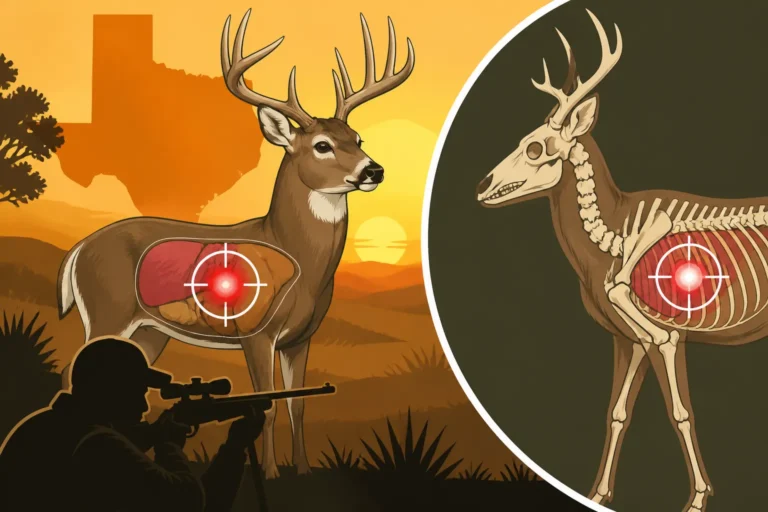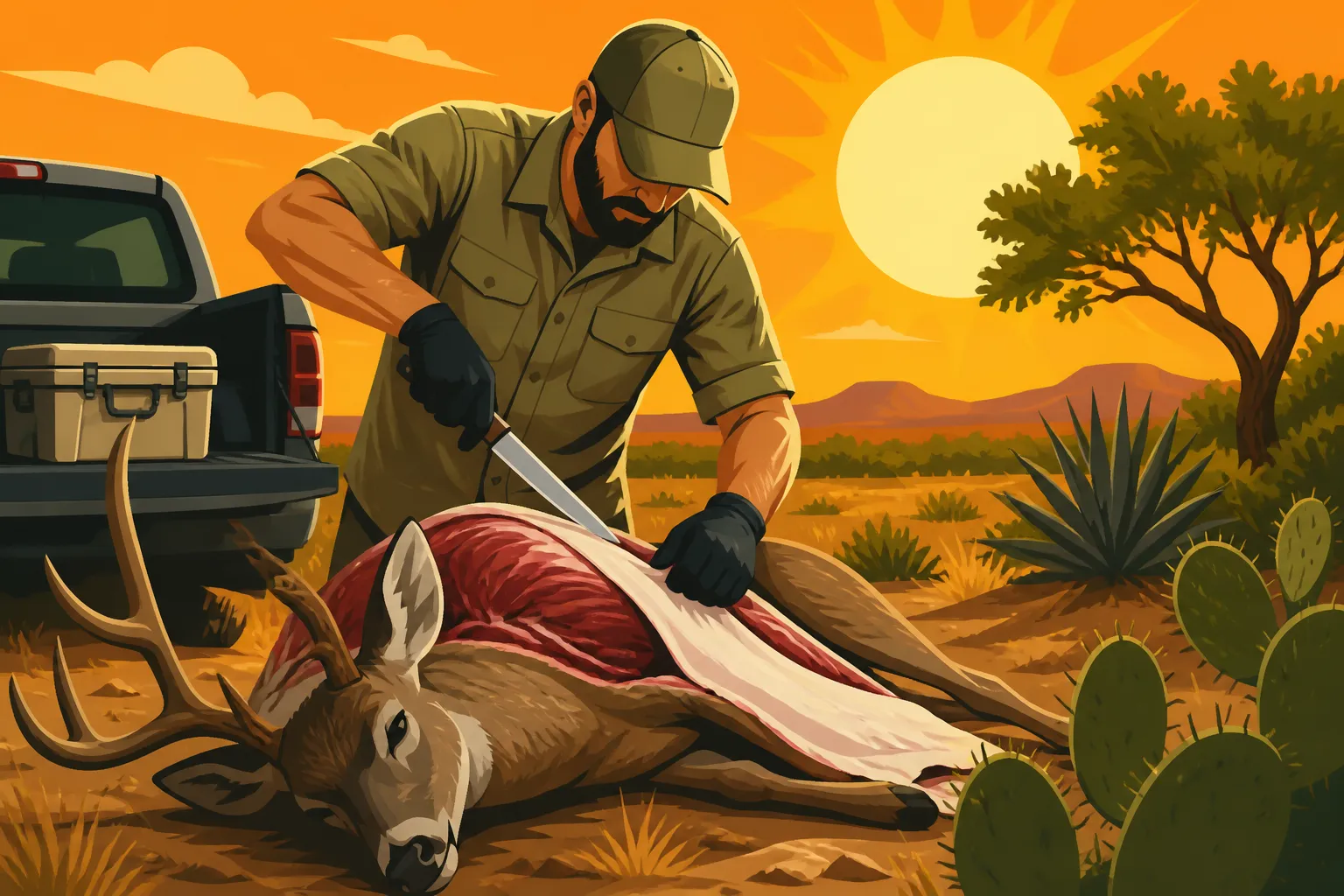
Field Dressing & Processing Game in Texas Heat
There is nothing quite like the crushing weight of triple-digit South Texas heat hitting you the second you step out of a blind. You just dropped a prime whitetail buck or a heavy feral hog, but instead of celebrating, a clock starts ticking loudly in your head. High temperatures, oppressive humidity, and swarming flies can turn a prized harvest into spoiled venison in a matter of hours. This guide walks you through every single step of field dressing, quartering, cooling, and processing wild game under the intense Texas sun so your hard-earned meat stays pristine from the field to the freezer.
The Reality of Texas Heat and Game Spoilage
Hunting in Texas presents an environmental challenge that hunters in northern states rarely have to consider: extreme ambient heat during early seasons and mid-day hunts. Whether you are hunting early-season bow in October, chasing exotic axis deer in July, or spot-and-stalking feral hogs during a scorching August afternoon, the atmosphere actively works against meat preservation. Understanding how heat impacts animal tissue is the first step toward master-level game care.
Why Temperature Matters Immediately
The moment an animal dies, its core body temperature remains extremely elevated. A wild deer’s internal body temperature hovers around 101 to 103 degrees Fahrenheit. When ambient air temperatures sit in the 80s, 90s, or even low 100s, the carcass has zero ability to dissipate heat naturally through radiation or air convection. Skin, thick fat layers, and heavy winter coats act as insulation, effectively trapping that boiling internal heat inside the deep muscle tissue around the hindquarters and shoulders.
If that internal core temperature is not brought down rapidly, muscle tissues begin a process known as bone souring. Bone sour occurs when deep tissues near the bone remain warm enough for natural enzymes and anaerobic bacteria to multiply at an alarming rate. The result is a foul-smelling, greenish-grey meat surrounding the hip joints and shoulders that no amount of trimming can save. Rapid heat reduction is not just a preference in Texas; it is a absolute necessity.
Recognizing Bacterial Proliferation and Off Flavors
Bacteria thrive in what food safety experts refer to as the danger zone, which spans between 40 degrees and 140 degrees Fahrenheit. Within this zone, bacteria populations can double in as little as twenty minutes. In Texas hunting scenarios, game meat often lands right in the sweet spot for bacterial explosion if left unattended in a truck bed or under a shady mesquite tree that really is not providing much shade at all.
When wild game develops a strong, gamey, or metallic flavor, hunters frequently blame the animal’s diet, age, or species. In reality, bad flavor is almost always caused by poor thermal management. Blood left trapped in hot muscle, combined with surface bacteria expanding across exposed tissues, creates sour off-flavors that ruin the taste of the meat. Keeping game clean, cool, and dry halts this bacterial expansion in its tracks and preserves the delicate, natural flavor profile of wild game.
Environmental Challenges in South Texas and Hill Country
Every region of Texas presents its own distinct brand of heat-related misery during game recovery. In the thick, thorny scrub of the Rio Grande Plains, detailed in our South Texas Deer Hunting: Brush Country Guide, hunting often means dragging an animal through dense prickly pear, catclaw acacia, and deep sand while temperatures soar before noon. The physical exertion slows down recovery time, making speed and efficiency paramount.
Meanwhile, hunting throughout the rocky terrain during Hill Country Hunting in Texas poses serious transportation obstacles. Dragging an animal up a steep limestone bluff or out of a dry creek bed takes time and effort, accelerating the thermal window you have to work with. Additionally, insect pressure in these regions is intense. Green blowflies can detect a fresh carcass within minutes, depositing egg clutches in open wounds, eyes, and exposed body cavities before you even have your knife out of its sheath.
Essential Gear for Heat Conscious Field Dressing
When you are facing hot weather, relying on basic hunting gear or a rusty pocket knife will quickly lead to frustration and spoiled meat. You need a dedicated, light-to-carry kit specifically configured to handle the thermal demands of a Texas hunt. Having the right tools organized and accessible in your pack ensures that you do not waste precious minutes searching for gear while meat sits baking in the sun.
Must Have Blades and Gutting Tools
Your knife setup is the foundation of efficient game processing. Hot conditions require quick, clean cuts that minimize flesh tearing and prevent puncturing internal organs. A fixed-blade knife with an ergonomic, non-slip rubberized grip is essential when your hands get slick with blood and sweat. A blade length between three and four inches with a drop-point profile offers the ideal balance of control and slicing surface.
Many seasoned Texas hunters prefer replaceable-blade knives because they guarantee razor-sharp performance without forcing you to stop and use a sharpening stone in the middle of a hot field dressing session. Furthermore, carrying a dedicated gut hook tool or utilizing a blade with a built-in gut hook helps lift the skin and pelvic membrane away from the intestines, significantly reducing the risk of puncturing the stomach cavity. A compact bone saw or heavy-duty game shears should also reside in your pack to easily split the pelvic bone or brisket when necessary.
Using a top-tier blade designed specifically for game care makes a massive difference, as outlined in our guide on the Best Hunting Knife for Field Dressing.
Hygiene Game Bags and Fly Protection
Cleanliness directly affects meat quality, particularly when heat creates a breeding ground for dirt and bacteria. Always pack several pairs of heavy-duty nitrile gloves. Wearable hygiene keeps human skin bacteria off the meat and protects your hands from tick infestations and zoonotic diseases that wild animals, particularly feral hogs, can carry.
Standard cheap cheesecloth game bags are completely inadequate for Texas conditions. Fly maggots can crawl right through the wide weave of cheap mesh. Instead, invest in high-density, synthetic, breathable game bags with tight weaves and drawstring closures. Synthetic game bags allow moisture and heat to escape rapidly while forming an impenetrable barrier against blowflies, dirt, and camp yellowjackets. Additionally, carrying a small spray bottle filled with a food-grade citric acid and water solution allows you to spray the exterior of the meat. Citric acid lowers the surface pH of the meat, creating a natural crust that deters flies and slows bacterial growth.
Mobile Cooling Systems and Ice Management
You cannot process meat in high heat without a plan for thermal reduction. This means carrying reliable cooling gear directly on your vehicle, UTV, or ice chest rack. High-performance, rotational-molded ice chests are vital equipment for southern hunters. You can read more about evaluating thermal insulation in our breakdown of the Best Coolers for Texas Hunting (Yeti & Alternatives).
Ice strategy requires careful planning before you hit the field. Block ice lasts significantly longer than crushed or cubed ice in high heat, making it ideal for lining the bottom of your cooler. Bring plenty of loose cubed ice packaged in sealed heavy-duty bags to fill in the gaps around quartered meat. Additionally, keeping several frozen gallon water jugs inside your main chest gives you a clean ice source that will not melt into standing water, keeping your meat elevated and dry during the drive home.
| Cooling Gear Type | Primary Function in High Heat | Heat Management Advantage |
|---|---|---|
| Block Ice | Base cooling layer in ice chest | Melts slowly, maintaining long-term chest base temp |
| Frozen Water Jugs | Dry internal cooling | Keeps meat cold without exposing flesh to standing water |
| Synthetic Game Bags | Exterior quarter protection | Tight weave prevents fly eggs while allowing heat escape |
| Citric Acid Spray | Meat surface treatment | Lowers pH to deter insects and create protective glaze |
| Rotomolded Cooler | Core cold storage unit | Holds sub-40 degree temps despite bed-of-truck heat |
Step by Step Field Dressing in Hot Weather
When a target animal goes down in warm conditions, your priority shifts instantly from hunting mode to food preservation mode. Every motion should be deliberate, clean, and fast. Following a standardized step-by-step process keeps you calm and efficient, preventing costly mistakes like stomach punctures or carcass contamination.
Securing the Animal and Immediate Cooling Steps
Once you confirm the animal has humanely expired, immediately move it out of direct sunlight if possible. Dragging the carcass into deep shade under a oak canopy or setting up a temporary shade tarp buys you vital temperature relief. Position the animal on an incline with the head elevated and the rump sloping downhill. This orientation uses gravity to pull internal organs down and away from your knife, giving you a cleaner working field.
Before you make a single cut, roll the animal onto its back and spread the rear legs wide. If you are hunting alone, tie the legs off to nearby trees or brush using short lengths of paracord. Elevating the legs opens up the pelvis, exposes the belly line, and allows body heat trapped along the inside of the hams to begin dissipating into the surrounding air.
The Standard Gutting Technique vs Gutless Method
Hunters generally choose between traditional gutting (opening the belly cavity to drop all internal organs) and the gutless method (removing quarters and backstraps without opening the stomach). Traditional gutting is best when you plan to bring the carcass whole to a walk-in cooler or local meat processor, or when you are learning How to Field Dress a Deer in Hot Weather.
To perform a traditional field dressing:
1. Make a small, careful incision in the lower belly skin right above the tail and groin area, taking extreme care not to cut into the abdominal wall beneath.
2. Insert your index and middle fingers into the incision, pointing your blade upward between your fingers to push the stomach tissue away from the blade edge.
3. Zip the skin open along the centerline, working your way up from the groin all the way to the base of the throat.
4. Cut through the diaphragm membrane separating the chest cavity from the stomach organs.
5. Reach up into the top of the chest throat, grip the windpipe firmly, cut it free, and pull downward with steady pressure.
6. Roll the animal onto its side to allow the lungs, heart, stomach, and intestines to roll smoothly out onto the ground in one intact mass.
Managing Viscera and Keeping the Meat Clean
During the gutting process, keeping stomach contents and bile away from exposed meat is essential. If an accidental gut puncture occurs, do not panic. Immediately tilt the carcass downhill and use clean bottled water to flush out any fluids. Never use stagnant water from a warm stock tank or creek, as farm water harbors dangerous microscopic pathogens that will contaminate raw meat instantly.
Once the cavity is emptied, use clean paper towels or clean shop rags to wipe away remaining blood pools trapped in the spine cavity. Blood breaks down rapidly in hot conditions, so removing standing fluid reduces spoilage risk. Next, prop the ribcage wide open using a sturdy stick wedged between the ribs. Propping the chest cavity open creates a chimney effect, encouraging ambient air movement to cool down the interior cavity walls quickly.
The Gutless Method for High Heat Scenarios
When ambient temperatures exceed 90 degrees, or when you are miles away from camp in rugged terrain, performing the traditional gutting process can take too much time and expose the inner cavity to heat and dust. The gutless method is widely considered the ultimate survival strategy for preserving meat quality in severe heat.
When to Choose the Gutless Technique
The gutless method is ideal for remote hunts across public lands or large leases where dragging an entire animal is impractical. It allows you to process the animal entirely from the outside in, leaving the warm, bacteria-filled digestive system completely sealed inside the abdomen. By skipping the step of opening the gut cavity, you eliminate the single largest source of meat contamination and save considerable time.
Additionally, the gutless method allows you to place individual muscle cuts directly into synthetic game bags as you harvest them. You can hang these light, individual game bags in the shade immediately, speeding up the cooling process exponentially compared to trying to lower the temperature of a heavy, fully intact carcass.
Quartering the Animal Step by Step
To execute the gutless method efficiently, lay the animal on its side on a clean ground tarp or a bed of fresh brush:
- Slice the Skin Along the Spine: Cut through the hide along the top spine line, running from the base of the skull straight down to the tail.
- Peel the Upper Hide: Skin the hide downward off the exposed side, folding it back over the dirt to create a clean, natural leather workspace for your meat cuts.
- Remove the Front Shoulder: Lift the front leg upward, slice underneath the shoulder blade through the connecting muscle, and lift the blade free. There is no bone connection attaching the front shoulder to the ribcage.
- Detach the Hindquarter: Locate the hip joint. Cut around the leg ham, follow the pelvic bone curve, and sever the ball-and-socket joint to release the entire hind leg cleanly.
- Bag and Hang: Place both exposed quarters into individual breathable game bags instantly and hang them in the shade.
- Flip and Repeat: Roll the animal over onto its unskinned side and repeat the process for the remaining front shoulder and hindquarter.
Extracting Tenderloins and Backstraps Cleanly
After removing the outer quarters, focus your knife work on the most valuable cuts of meat: the backstraps and tenderloins. The backstraps run along the outside of the spine, extending from the neck down to the hip bone. Run your knife right along the spine bone, then make a second long cut along the top edge of the ribcage. Peel the tender muscle strip back as you cut, freeing the entire backstrap in one long, pristine log.
The tenderloins sit inside the cavity along the lower spine. To extract them gutlessly without puncturing the stomach wall, locate the pocket behind the last rib. Make a small, delicate cut through the flank muscle tissue. Reach your hand inside the pocket, push the warm digestive stomach wall gently away from the spine, and feel for the soft muscle log resting against the bone. Use your fingers or short knife strokes to peel the inner tenderloin free, pulling it carefully out through the side slit.
Transporting and Aging Meat in High Temperatures
Once your animal is dressed, quartered, and safely bagged, the race shifts to transport and long-term temperature control. A common Texas mistake is tossing hot meat straight into an ice chest, closing the lid, and driving three hours home. Without proper internal packing techniques, this turns your cooler into a slow cooker that traps heat inside.
Ice Chest Layering and Slush Baths
Never throw warm, un-bagged meat directly onto a pile of loose ice where it sits in direct contact with melting water. Waterlogged meat turns soft, loses flavor, and absorbs external contaminants. Instead, build a thermal drainage layer at the bottom of your cooler. Place block ice or sealed ice bags on the bottom, cover them with a clean plastic cutting board, heavy rubber mat, or wooden rack, and stack your bagged game quarters on top.
Keep the cooler drain plug open slightly while angling the chest toward the drain. As ice melts during your drive, water drains out freely, keeping the meat perfectly dry while surrounded by frigid air. If you need to drop meat temperatures near-instantly in ultra-high heat, create a temporary initial slush bath using loose ice, clean cold water, and a cup of salt. Submerge sealed, waterproof-bagged meat quarters in this sub-zero slush bath for twenty minutes to strip heat fast, then remove the meat, dry it off, and place it on dry ice racks for the journey home.
You can learn more about managing high-heat thermal shock in our guide on How to Cool a Deer Fast in Texas Heat.
Hanging and Cold Storage Logistics on the Ranch
If your lease or ranch features a walk-in cold storage vault or hanging meat rack, you can safely age your harvest. However, hanging meat in Texas requires constant temperature monitoring. Meat aging should only occur in a temperature-controlled environment kept consistently between 34 and 38 degrees Fahrenheit with low relative humidity.
If ambient temperatures outside hover above 40 degrees, hanging meat in an open barn or skinning shed overnight is extremely dangerous. Heat will trap inside the hanging carcass, inviting flies and fostering bacteria growth. If walk-in refrigeration is unavailable, skip the hanging stage entirely. Quarter the animal immediately and transfer it directly into well-managed ice chests.
If you are looking for reliable commercial storage options after a successful hunt, explore our resources on Where to Take a Deer for Processing in Texas.
Navigating Chronic Wasting Disease Transport Rules
When moving wild game across Texas state highways, hunters must adhere strictly to Chronic Wasting Disease (CWD) management regulations established by state wildlife agencies. CWD regulations govern how carcasses can be moved out of designated containment and surveillance zones to prevent spreading disease-causing prions.
In designated CWD containment zones, hunters are legally prohibited from transporting whole intact deer carcasses out of the area. Animals must be quartered or fully de-boned on site, with the spinal column, brain material, and head staying behind at designated disposal stations unless being delivered directly to an authorized station for testing. Always consult the latest state wildlife guidelines regarding carcass movement, detailed thoroughly in CWD in Texas: Zones, Rules & Carcass Transport.
Species Specific Field Processing Tactics
Processing strategy shifts depending on the species you harvest. Different thick hides, fat distributions, and gland structures dictate how you approach skinning and gutting under the southern sun.
Whitetail and Mule Deer
Whitetail deer represent the standard baseline for game processing in Texas. Whitetails possess interdigital glands between their hooves and tarsal glands on the insides of their rear hocks. The tarsal gland secretes strong-smelling oily musk. Avoid touching tarsal glands with your hands or blades during skinning. If your skinning blade touches a tarsal gland, wipe it down thoroughly with alcohol wipes before making additional meat cuts to prevent transferring musk to pristine venison.
Mule deer harvested in the open country of the Panhandle or Trans-Pecos present transport challenges due to large body sizes and distant vehicle access. Skinning a heavy mule deer quickly on a sunny ridge requires focused work. Focus on pulling the hide completely clear of the quarters fast to prevent heavy winter coats from trapping heat against the muscle layers.
Feral Hogs and Exotic Game
Feral hogs are abundant across the state, as highlighted in our comprehensive guide on Feral Hog Hunting in Texas: Year-Round Guide. However, processing feral hogs in warm weather requires unique handling:
- Hogs possess extremely thick hides, thick subcutaneous fat layers, and tough mud-caked bristles that dull knife blades rapidly.
- Rinse dirt and dried mud off the hide with clean water before skinning to keep grit off the meat.
- Hog fat spoils and turns rancid much faster than deer fat under heat, so trim fat aggressively down to lean muscle during field dressing.
- Wear gloves continuously when skinning wild pigs to guard against swine brucellosis.
Exotics like axis deer and blackbuck require prompt skinning to save their prized hides for mounting, as detailed in How to Hunt Axis Deer (Free-Range Tactics). Axis meat is exceptionally lean and tender, making it prone to drying out if exposed to high wind or excessive sun exposure during field quartering. Place axis meat into sealed bags rapidly to preserve surface moisture.
Small Game Dove and Waterfowl
Field dressing isn’t limited to big game. Texas hunters spend hot September afternoons in dove fields and sticky mornings in coastal duck blinds. Small game requires rapid processing to prevent internal spoilage:
- Dove: In early September warmth, birds pile up in game vests, trapping body heat. Retrieve birds quickly, remove them from vest pockets, and store them in small coolers containing sealed ice packs. You can pluck and breast dove out in under a minute using thumb pressure to peel the breast skin back and sever the breastbone free.
- Waterfowl: Ducks and geese carry dense down feathers that hold heat like insulated coats. Gut or skin birds promptly after a hunt, wash out the body cavity with cold clean water, and chill them thoroughly.
- Rabbits and Small Game: Skin small game in the field by making a small cut across the back skin, inserting your fingers, and pulling the hide apart in two halves like pulling off socks. Remove the innards immediately and pack the meat into cold bags.
Butchering Packaging and Freezing at Home
Once you return home with fully chilled, dry quarters, the final stage of processing begins. Cutting, packaging, and freezing your own wild game gives you total quality control over every cut of meat served at your dinner table.
De boning Trimming Fat and Gland Removal
Set up a clean processing station indoors on a large table covered with food-grade plastic or cutting boards. Maintain a low room temperature with air conditioning to keep the meat chilled while you work. Work on one quarter at a time, keeping the remaining quarters safely stored inside cold coolers.
Begin de-boning by following natural muscle seams with a flexible boning knife:
- Separate individual muscle groups within the hindquarters into distinct roast cuts (top round, bottom round, eye of round, and sirloin tip).
- Trim away all silver skin, connective tissue, and heavy yellow fat carefully. Unlike beef fat, wild game fat does not taste pleasant and will turn rancid fast inside a freezer.
- Remove popliteal lymph nodes embedded inside fat pockets deep between the muscle seams of the hind legs. Removing these nodes prevents bitter flavors from leaching into surrounding meat during cooking or grinding.
Vacuum Sealing and Freezer Storage Best Practices
Air exposure is the enemy of frozen wild game, causing freezer burn that ruins meat texture. Investing in a high-quality vacuum sealer is the single best way to ensure your venison stays delicious for months or years.
When vacuum sealing wild game:
– Cut meat into uniform meal-sized roasts, steaks, or grind portions.
– Pat every piece completely dry using kitchen paper towels before inserting it into sealer bags; surface moisture prevents proper heat sealing along bag seams.
– If meat retains high moisture, flash-freeze the cuts on an open baking sheet for 45 minutes before vacuum sealing so juices do not get sucked into the sealer pump.
– Date and label every bag clearly with the animal species, cut type, and harvest date.
Stack sealed bags flat inside a deep chest freezer operating consistently at zero degrees Fahrenheit or lower. Keeping frozen meat flat ensures uniform freezing and optimizes storage space.
Processing Table and Temperature Timeline Comparison
Managing time and temperature throughout the harvesting pipeline is crucial. Use this reference timeline to manage wild game safety under high Texas temperatures:
| Harvest Ambient Temp | Maximum Field Dressing Window | Target Cooling Timeframe | Recommended Storage Method |
|---|---|---|---|
| Below 50° F | 2 to 3 Hours | Chill below 40° F within 8 hours | Hang in cool shed or place in ice chest |
| 50° F to 75° F | 1 to 2 Hours | Chill below 40° F within 4 hours | Gutless quartering into ice chest layer |
| 75° F to 90° F | 45 to 60 Minutes | Chill below 40° F within 2 hours | Immediate gutless quartering onto dry ice racks |
| Above 90° F | Under 30 Minutes | Chill below 40° F within 1 hour | Immediate shade setup, rapid quartering, ice bath |
Common Mistakes That Ruin Wild Game Meat
Even experienced Texas hunters occasionally make mistakes that lead to tainted meat or off flavors. Recognizing these common errors helps you avoid making them when working in high heat.
Delaying the Evisceration Process
The single biggest cause of meat spoilage is waiting too long to start field dressing after an animal drops. Hunters often pause to take extensive photos, call friends, or wait hours before tracking a hit animal during warm weather. In high heat, every minute of delay allows core body heat to cook internal tissues from the inside out.
If an animal requires tracking, begin the trailing process as soon as ethics permit based on shot placement. Once found, handle photography quickly in the shade, tag the animal properly, and immediately start field dressing or quartering. Treating meat preservation as an urgent priority guarantees incredible table fare every single time.
Improper Ice Management and Meat Soaking
Allowing quartered game meat to float aimlessly inside melted cooler ice water is a critical processing flaw. Waterlogged wild game turns grey, loses delicate structural proteins, and absorbs impurities resting in the cooler floor.
Always ensure your cooler’s drainage spout stays cracked open so water runs out freely, or wrap game bags tightly inside large food-grade plastic bags before placing them on ice. The goal is to keep meat surrounding zero degrees cold while keeping surface tissue bone-dry.
Cross Contamination from Glands and Hair
Failing to maintain clean knife discipline leads directly to bad-tasting meat. A blade used to cut through mud-caked outer hide, split tarsal glands, or slice through digestive intestines should never be used to slice directly into tender backstraps or clean round steaks.
Maintain a strict two-knife strategy or keep disinfectant wipes handy:
– Use one designated knife strictly for skinning, cutting hides, and opening outer tissue layers.
– Use a second clean knife for carving interior muscle cuts, backstraps, and tenderloins free.
– Keep a clean damp towel nearby to wipe loose hair off exposed meat surfaces before bagging.
If you are evaluating different species for quality wild game dining, explore our rankings of the Best Wild Game Meat in Texas (Ranked).
Taking wild game safely from the Texas field to your family dinner table in warm weather requires preparation, quick decision-making, and disciplined care. By equipping yourself with sharp tools, high-density breathable game bags, dynamic cooling setups, and efficient gutless quartering techniques, you can confidently turn any hot-weather hunt into a shelf full of delicious, healthy, prime wild game meat.
Disclaimer
This article is for general informational purposes only and does not constitute professional advice. Laws, prices and regulations vary by location and change over time. Consult a qualified professional for guidance on your specific situation.