Best Rangefinder Binoculars for Texas
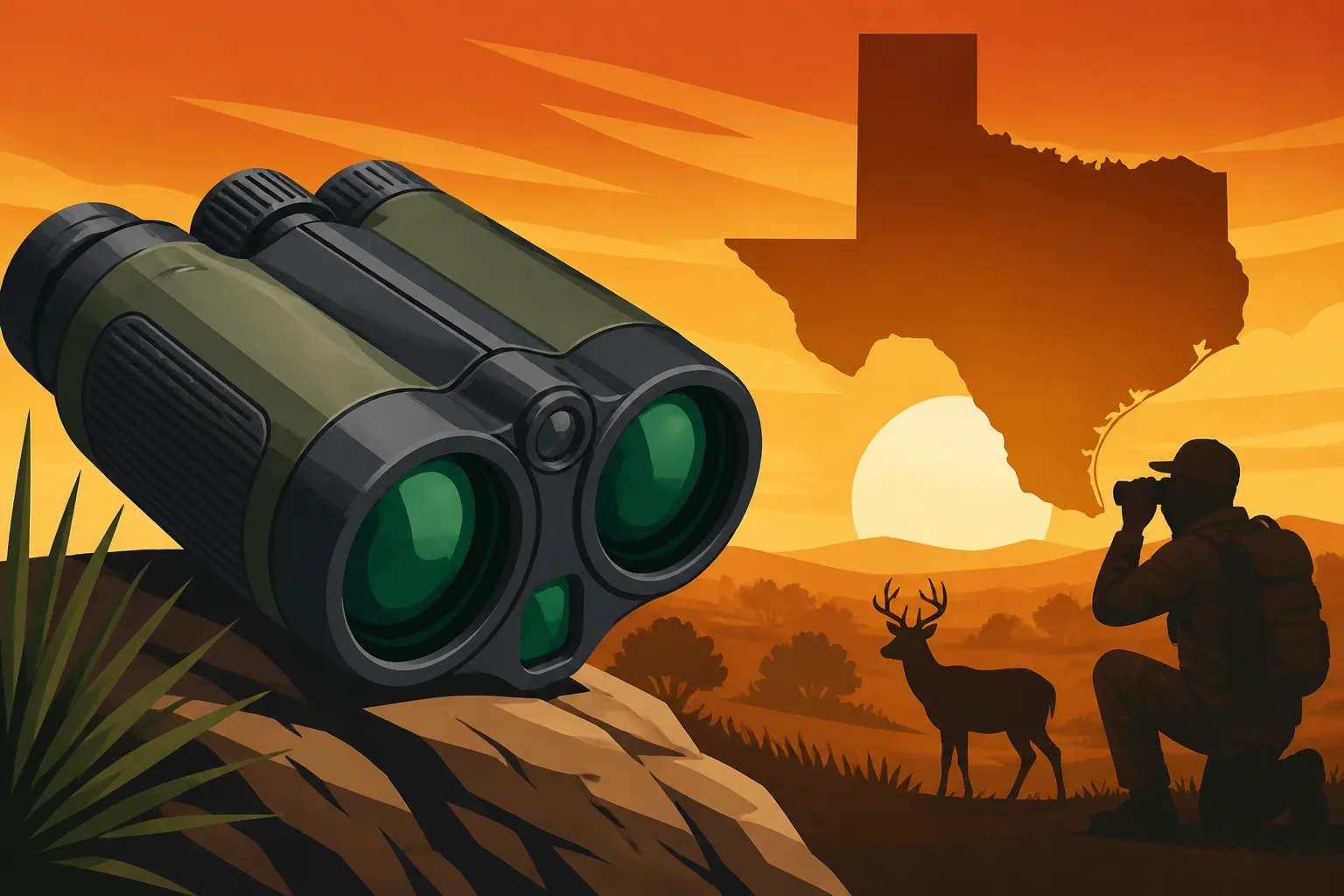
Hunting in Texas is an experience like no other, but if you've ever found yourself squinting through binos, guessing distances, and then fumbling for a separate rangefinder, you know the frustration. The vast, diverse landscapes and the quick-moving game demand not just good optics, but fast and accurate distance measurements. This comprehensive guide will walk you through everything you need to know about choosing the best rangefinder binoculars for hunting in Texas, ensuring you make ethical shots and maximize your time in the field.
Why Rangefinding Binoculars Are a Game Changer for Texas Hunters
Texas hunting presents a unique set of challenges and opportunities. From the wide-open plains of the Panhandle to the dense, unforgiving brush of South Texas, and the rolling hills of the Hill Country, a hunter needs versatile gear. Traditional binoculars provide excellent glassing capabilities, and a handheld rangefinder gives you distances, but combining them into one unit offers a distinct advantage that many Texas hunters are increasingly embracing.
The Texas Terrain Challenge
Imagine glassing a magnificent whitetail buck in the South Texas brush. He's partially obscured by mesquite, moving in and out of openings. You need to identify him, judge his size, and quickly get a range before he disappears. Fumbling between binoculars and a separate rangefinder can cost you precious seconds, or worse, cause you to lose sight of the animal entirely. This is where the integrated design shines.
In the vast expanses of West Texas or the Panhandle, where you might be glassing mule deer or pronghorn across huge distances, clarity and ranging capability are paramount. The ability to range accurately to hundreds, even thousands, of yards without breaking your glassing rhythm is invaluable. Similarly, in the rugged terrain of the Trans-Pecos, judging angles for uphill or downhill shots requires specific technology, which modern rangefinding binoculars often include.
Maximizing Ethical Shots
Making an ethical shot is the cornerstone of responsible hunting. This means knowing the precise distance to your target to ensure proper bullet or arrow placement, especially when considering factors like bullet drop, wind, and angle. Guessing distances, even if you’re highly experienced, can lead to wounded game and a heartbreaking search. Rangefinding binoculars eliminate this guesswork.
For rifle hunters pursuing white-tailed deer in Texas, understanding bullet trajectory at various ranges is crucial. A shot at 200 yards is vastly different from one at 350 yards. With rangefinding binoculars, you can get an instant, precise reading, often with built-in angle compensation, allowing you to hold for the correct spot. This is even more critical for bowhunting in Texas, where even a slight misjudgment in distance can result in a miss or a non-lethal hit. Having that immediate, accurate range ensures you're confident in your shot.
Efficiency and Speed in the Field
Every hunter knows that time is of the essence when game presents itself. The fewer movements you make, and the less gear you have to manipulate, the better your chances of success. A separate rangefinder might be quicker than guessing, but it still requires you to take your eyes off the target, grab another piece of equipment, and re-acquire.
Rangefinding binoculars streamline this process. You can glass a field for dove, spot a group, and instantly range them to confirm they are within shotgun range, all without lowering your optics. When pursuing aoudad in West Texas or axis deer that can be quite skittish, this rapid target acquisition and ranging can be the difference between filling your tag and going home empty-handed. The efficiency translates directly into more opportunities and a smoother hunting experience, which is why many experienced hunters consider them essential gear.
Key Features to Look for in Rangefinding Binoculars
When you're shelling out good money for a piece of hunting gear, you want to make sure it stands up to the demands of Texas hunting and offers genuine value. Rangefinding binoculars are an investment, and understanding their key features will help you pick the right pair for your adventures.
Ranging Capability and Accuracy
This is arguably the most critical feature. For Texas hunting, especially if you're targeting animals in open country like mule deer in the Panhandle, you'll want a maximum effective range of at least 1,500 yards, with some premium models pushing 2,000+ yards. While you might not shoot that far, the ability to range beyond your intended shooting distance ensures the unit performs reliably at closer, more practical ranges, even in less-than-ideal conditions like fog or heavy brush.
Look for models that offer angle compensation. This feature, often called "true horizontal distance" or "line of sight with angle compensation," adjusts the displayed range for uphill or downhill shots. If you’re hunting in the rugged Hill Country, where shots frequently involve significant elevation changes, this is absolutely vital for accurate bullet or arrow drop calculations. Without it, a steep shot that appears to be 300 yards might actually be a much shorter "effective" range, leading to an over-shoot.
Optics Quality and Magnification
No matter how good the rangefinder is, if the binoculars themselves are subpar, you're not getting your money's worth. Look for high-quality glass and coatings that provide bright, clear, and sharp images, especially in low-light conditions. Texas hunting often means being out at dawn and dusk, when game is most active, and premium optics truly shine during these critical periods.
Most rangefinding binoculars come in 8×42 or 10×42 configurations. An 8x magnification offers a wider field of view and is generally more stable to hold, making it excellent for dense cover or tracking moving animals, such as feral hogs in East Texas. A 10x magnification provides more detail and extends your effective glassing range, which is beneficial for open country or spotting distant game. Consider what type of hunting you do most often. If you spend a lot of time in the thick South Texas brush, a wider field of view might be more advantageous than higher magnification. Many hunters even keep a pair of dedicated Best Binoculars for South Texas Brush if they hunt there frequently.
Durability and Weather Resistance
Texas weather is notoriously unpredictable and often harsh. Your optics need to withstand everything from scorching summer heat to sudden torrential downpours, dusty winds, and even cold snaps. Look for binoculars that are fully waterproof and fog-proof, typically achieved through O-ring seals and nitrogen or argon purging. This prevents internal fogging due to temperature changes and protects sensitive electronics from moisture.
The housing material should be robust, often rubber-armored, to absorb impacts and provide a secure grip, even with wet hands. Pay attention to the lens coatings as well; they should be scratch-resistant to protect the valuable glass. Companies like Zeiss, Leica, and Swarovski are known for their exceptional build quality and robust designs that hold up season after season in demanding conditions.
Ergonomics and Weight
You’ll be carrying these binoculars all day, potentially for many days on end, so comfort and manageable weight are crucial. Test how they feel in your hands. Are the buttons easily accessible? Can you operate them smoothly with one hand? The balance should feel natural, not front-heavy.
While rangefinding binoculars are inherently a bit heavier and bulkier than standard binoculars due to the integrated technology, advancements in design are making them increasingly compact. A lighter pair will reduce fatigue during long stalks or extended glassing sessions. Consider a comfortable neck strap or harness system to distribute the weight evenly and keep the binoculars secure and readily accessible, especially when navigating dense terrain.
Top Considerations for Texas Hunting Environments
Texas is a land of incredible diversity, and what works perfectly for a hunt in the Trans-Pecos might not be ideal for the Pineywoods. Tailoring your rangefinding binoculars to your primary hunting environment will make a huge difference in their performance and your overall success.
Brush Country South Texas
South Texas, often called the Brush Country, is famous for its dense mesquite, prickly pear, and guajillo, making visibility challenging. Shots here are often up close and personal, rarely exceeding 200-300 yards. For this reason, a wide field of view is critical. An 8x magnification with clear, bright optics will help you quickly acquire and track game moving through the thick cover.
While extreme long-range capability isn't the priority here, reliable ranging through light brush and quick, precise readings are. Look for models with "scan mode" that can give continuous readings as you pan across an area, or as an animal moves. This helps confirm distances between you and patches of cover, aiding in your approach or shot setup. When pursuing South Texas Trophy Whitetail: Brush Country Bucks, every detail matters.
Open Plains and Mountains Panhandle, Trans-Pecos
When hunting mule deer in the Panhandle and Trans-Pecos, or chasing pronghorn on the high plains, distances stretch out. You’ll be glassing vast areas, often needing to identify game at over a mile away and range targets that could be 400-600+ yards distant. Here, higher magnification (10x or even 12x if you can hold it steady) and superior optical clarity are paramount.
Your rangefinding binoculars must have reliable long-distance ranging capability. Units capable of ranging out to 2,000 yards or more will ensure you get accurate readings on game animals at your practical shooting distances, even in bright, mirage-heavy conditions. Features like advanced ballistic compensation become much more valuable in these open, long-range environments. For serious long-range Western Texas hunts, some hunters even pair their rangefinding binoculars with a dedicated Best Rifle Scope for Texas Deer Hunting that can integrate with their ballistic data.
Hill Country and Pineywoods
The Texas Hill Country and the Pineywoods of East Texas offer a mixed bag of terrain. You might encounter open fields, dense timber, and rolling hills. This requires a versatile rangefinding binocular. A 10×42 model often strikes the best balance, providing enough magnification for longer shots across clearings while still offering a decent field of view for timbered areas.
Angle compensation is especially important in the undulating terrain of the Hill Country. You'll frequently find yourself taking shots from elevated positions down into draws or up hillsides. The ability to quickly get a compensated range prevents over or under-shooting. The durable, weather-resistant features discussed earlier are also critical here, as these regions can experience significant rainfall and humidity.
Choosing for Specific Game
The type of game you're after also influences your choice. For example, if your primary focus is White-Tailed Deer Hunting in Texas, a versatile 10×42 with good low-light performance and reliable ranging to 800-1000 yards will serve you well. For Hog Hunting Methods in Texas: Thermal, Night & Trapping, while thermal optics are often preferred at night, during the day, a durable, quick-ranging binocular is excellent for scouting and establishing shot distances in varied terrain.
For exotic hunting in Texas, like Axis Deer, Aoudad, or Blackbuck Antelope, which can be found in a variety of environments from dense brush to rugged mountains, a robust, all-around capable pair of rangefinding binoculars is ideal. Consider if you'll primarily be spot-and-stalk hunting, which favors lighter, more compact options, or blind hunting, where weight is less of a concern but optical quality remains paramount.
Understanding Advanced Features and Their Value
Modern rangefinding binoculars are more than just two tools combined; they often integrate sophisticated technology that can significantly enhance your hunting precision and success. These advanced features are where premium models truly distinguish themselves.
Ballistic Compensation
Some high-end rangefinding binoculars feature integrated ballistic calculators. Once you input your rifle, caliber, bullet weight, and muzzle velocity, the unit can provide not only the true horizontal distance but also a suggested holdover, or even a click adjustment for your scope. This takes the guesswork out of long-range shooting, especially crucial for hunting in the wide-open spaces of the Panhandle or Trans-Pecos where shots regularly exceed 300 yards.
This feature can be a real game-changer, especially if you hunt with different firearms or ammunition types. Instead of consulting a separate ballistic chart or app, the information is right there in your optics, saving critical time and ensuring maximum accuracy. Brands like Leica and Swarovski are renowned for their precise ballistic engines, giving hunters confidence in those extended-range shots on game like mule deer.
Scan Mode and Multiple Target Acquisition
While simple rangefinders give you a single reading, advanced rangefinding binoculars often include a "scan mode." This allows you to continuously hold down the range button and pan across an area, getting real-time, continuous distance updates. This is incredibly useful for ranging moving animals, such as a coyote slipping through a field, or quickly identifying the distance to various points of interest in a brushy environment.
Many units also offer multiple target acquisition modes, which help filter out obstructions. For instance, a "first target priority" mode is excellent for ranging through light brush, ensuring you get the distance to the animal, not a twig in front of it. A "last target priority" mode is better for ranging behind obstacles, useful if you're trying to get a range on a deer standing beyond a fence line, for example. These modes fine-tune your ranging for specific field conditions common in Texas.
Integration with Hunting Apps
The digital age has brought incredible tools to hunters, and some rangefinding binoculars can now communicate with popular hunting apps. Imagine ranging a distant target, and that distance, along with your GPS coordinates, automatically populating a waypoint on your GoHunt or onX Hunt map. This seamless integration can help you mark game sightings, plan stalks, and create a comprehensive record of your hunt.
This connectivity often works via Bluetooth, linking your rangefinding binoculars to your smartphone. The value here lies in the ecosystem it creates. For instance, if you use an app like GoHunt to scout and plan your hunts, having your rangefinder integrate directly can significantly enhance your situational awareness and decision-making in the field, making the entire process more efficient and data-rich.
Comparison of Rangefinding Binoculars (General Categories for Texas)
When considering rangefinding binoculars, the market offers a spectrum of options. To help you navigate, here’s a general comparison based on typical features and suitability for Texas hunting scenarios.
| Feature Category | Entry-Level | Mid-Range | High-End |
|---|---|---|---|
| Price Range | $500 – $1,000 | $1,000 – $2,500 | $2,500+ |
| Optics Quality | Decent, clear in good light | Good to very good, fair low-light | Excellent, superb low-light |
| Max Ranging | 800 – 1,200 yards | 1,500 – 2,000 yards | 2,500+ yards |
| Angle Comp. | Basic or absent | Standard inclusion | Advanced (with ballistic data) |
| Build/Durability | Good, some weather resistance | Very good, fully waterproof/fogproof | Exceptional, extreme weather rated |
| Ergonomics | Functional | Comfortable, balanced | Highly refined, customizable |
| Advanced Features | Scan mode (basic) | Scan, First/Last Target | Ballistic calc, app integration, advanced modes |
| Ideal Texas Use | Brush country, close/mid-range deer/hogs | Versatile for most TX hunting, Hill Country, mixed terrain | Open plains, mountains, long-range exotics, any serious TX hunter |
Note: This table is a generalization. Specific models within each category will vary.
Tips for Using Your Rangefinder Binoculars Effectively in Texas
Having the best gear is only half the battle; knowing how to use it proficiently is what truly counts. These practical tips will help you get the most out of your rangefinding binoculars in the diverse Texas hunting landscape.
Practice, Practice, Practice
Just like with your rifle or bow, consistent practice with your rangefinding binoculars is crucial before you ever step foot in the field. Don't wait until opening day to figure out how to use them. Take them out in various conditions – bright sun, overcast days, even low light at dawn and dusk. Range objects at different distances, through light obstructions, and at various angles.
Familiarize yourself with all the modes and settings. Learn how quickly you can acquire a range. The more intuitive their operation becomes, the less you'll have to think about it when a buck steps out, and the more focused you can remain on the shot. This practice also helps train your eye to quickly identify game while simultaneously ranging, turning two separate actions into one fluid movement.
Know Your Ballistics
Your rangefinding binoculars are only as good as the ballistic data you pair with them. Whether your unit has an integrated ballistic calculator or you're simply using the raw distance reading, you need to know how your specific ammunition performs at those distances. Spend time at the shooting range, confirm your bullet drop, and understand how wind drift affects your shots.
For bowhunters, this means knowing your pin gaps precisely. If your rangefinder binos offer angle compensation, practice with it to understand how it affects your hold. Some hunters even create small, laminated cheat sheets to tape to their rifle stock or binocular harness, outlining holdovers for their specific load at various ranges. This ensures that the precise distance provided by your optics translates into a precise shot.
Utilize Scan and Angle Modes
Modern rangefinding binoculars come with various modes designed to make your life easier. Don't just use them for a single, static range. The "scan mode" is incredibly useful for continually ranging a moving animal or when you're glassing an area where you expect game to appear, allowing you to instantly know the distance to any point. This is invaluable when hunting hogs at night without thermal, where quick ranges are critical.
Angle compensation mode is not a gimmick; it's a vital tool, especially in the Hill Country and other areas with varied topography. Always ensure this mode is active when hunting from elevated positions or across valleys. Failing to use it can lead to significant errors in bullet or arrow placement. Understand when and where each mode offers the most benefit for your hunting style and terrain.
Battery Management
Electronic devices in the field always bring battery concerns. Rangefinding binoculars are no exception. Always start your hunt with fresh batteries. Carry at least one, if not two, spare sets. Check the battery indicator regularly. Texas can experience extreme temperatures, which can affect battery life, so be mindful of leaving your binos in a hot truck or cold blind overnight.
For extended hunts, especially if you're using advanced features like Bluetooth connectivity with apps, battery life can diminish faster. Consider investing in high-quality lithium batteries, which generally perform better in extreme temperatures and offer longer life. You don't want your expensive optics to become a paperweight just when you need that crucial range reading.
Disclaimer
Please remember that hunting regulations and seasons in Texas can change. Always consult the most current Texas Parks and Wildlife Department (TPWD) Outdoor Annual before any hunting trip to ensure you are in compliance with all state laws and regulations. This guide is for informational purposes only and does not supersede official TPWD rules. Stay safe and hunt responsibly.