RIX Thermal Scope Review
The sweltering Texas nights often make traditional hunting approaches feel like an exercise in futility, especially when you're after those elusive feral hogs or nocturnal predators. The sheer vastness of the landscape and the animals' crepuscular habits mean that clear visibility after dark is not just a luxury, it's a necessity. This comprehensive guide will dive deep into RIX thermal scopes, offering a detailed review of their capabilities, features, and how they stand up to the unique challenges of hunting under the Lone Star State's moonlit skies.
Understanding RIX Thermal Scopes: Why They Matter for Texas Hunters
For many years, thermal imaging technology was either prohibitively expensive or simply not advanced enough for the average hunter. Thankfully, that's changed dramatically, and brands like RIX are making serious waves in the optics market, bringing advanced thermal capabilities within reach of more hunters. In Texas, where feral hogs cause millions in agricultural damage and coyotes are a constant threat to livestock, having the ability to see clearly in total darkness isn't just a tactical advantage; it's a crucial tool for wildlife management and ethical harvesting. A RIX thermal scope isn't just about seeing a heat signature; it's about identifying, ranging, and making an informed decision when every second counts, often in conditions where traditional night vision or even moonlight would fall short.
The Rise of Thermal Technology in Texas Hunting
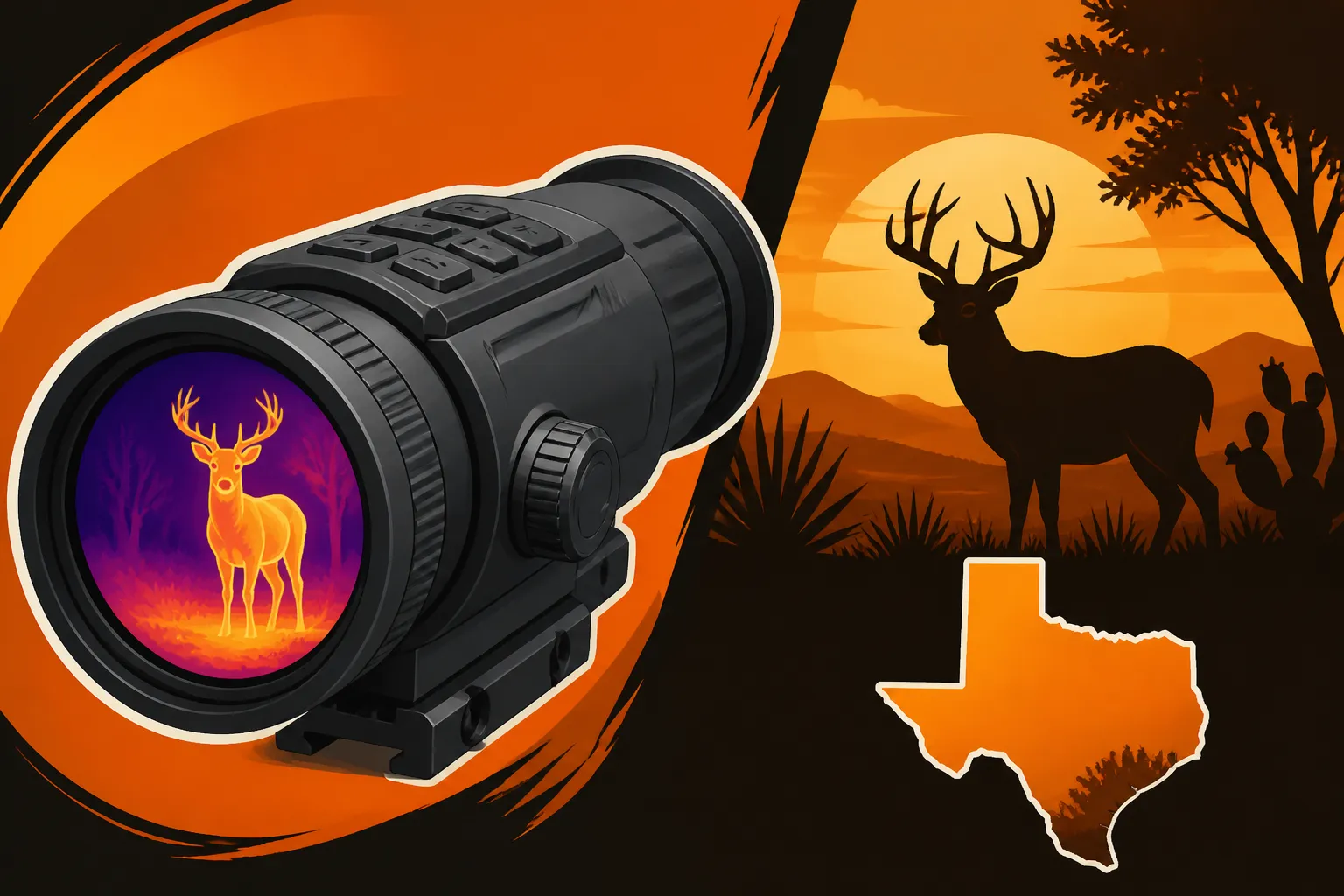
Think about a typical Central Texas hog hunt. You're set up near a feeder, the air is still and warm, and it's pitch black. You might hear them, smell them, but seeing them with the naked eye is nearly impossible. This is where thermal technology truly shines. It detects the infrared radiation emitted by objects, essentially painting a picture based on temperature differences. This means hogs hidden in thick brush or coyotes silhouetted against a distant treeline become visible as glowing targets, regardless of camouflage or ambient light. The capability to penetrate light fog, smoke, and even some light cover offers a revolutionary edge. This isn't just about seeing a heat blob; modern thermal scopes, like the RIX lineup, provide enough detail to discern animal shape, size, and even direction of travel, which is critical for making ethical shots. This rise in accessible and effective thermal technology has truly transformed how we approach nocturnal hunting in Texas, making hunts safer and more successful.
How RIX Fits into the Thermal Landscape
The thermal market can feel a bit like the Wild West sometimes, with many brands promising the moon. RIX has carved out its niche by offering a balance of performance, features, and often a more accessible price point compared to some of the ultra-premium brands. They aren't just selling a basic thermal imager; they're integrating user-friendly interfaces, robust construction, and features specifically designed for hunting. For a Texas hunter, this means a scope that can withstand the bumps and scrapes of a pickup truck bed, the heat of a South Texas summer night, and the occasional dust storm, all while delivering consistent performance. When you're considering a significant investment like a thermal scope, you want something that feels reliable and capable, not a delicate piece of electronics. RIX seems to understand this balance, aiming to provide a dependable tool that serious hunters can rely on. It’s a compelling alternative if you’ve been looking at options like the Pulsar vs AGM Thermal Scopes for Hogs but want to explore other strong contenders.
Key Features and Performance in the Texas Environment
When evaluating a thermal scope for the diverse hunting conditions across Texas, the devil is truly in the details. It's not just about the pixel count; it's about how those pixels translate into real-world performance, how durable the unit is, and how intuitively it operates when you're out in the field under pressure. RIX models, like the popular L3 and L6 lines, have specific features that make them suitable for everything from close-range hog eradication to scanning vast tracts of West Texas for coyotes.
Core Specifications and Image Quality
Let's talk specs. RIX scopes typically boast sensor resolutions that range from 384×288 to 640×512, which are excellent for detecting and identifying targets at various ranges. The higher the resolution, the more detailed your image will be, which becomes critical when you're trying to differentiate between a large hog and a smaller javelina, or assessing whether a coyote is within ethical shooting distance. Refresh rates, often at a smooth 50Hz, ensure that moving targets appear fluid and not choppy, a huge advantage when tracking a group of hogs on the run. The clarity isn't just in the numbers; it’s how the proprietary image processing algorithms render those heat signatures into a discernible picture.
In the thick, humid air of the Pineywoods or the expansive, heat-shimmering fields of the Texas Panhandle, a scope's NETD (Noise Equivalent Temperature Difference) rating also plays a significant role. A lower NETD value (e.g., <25mK or <35mK) indicates greater thermal sensitivity, meaning the scope can detect smaller temperature differences, resulting in a clearer image with better contrast, even when the ambient temperature is close to the target's temperature – a common scenario on mild Texas nights. This superior sensitivity means less "washout" in challenging conditions, giving you a distinct advantage.
Durability and User Experience in the Field
Texas hunting isn't exactly a gentle sport. Gear needs to be tough, and RIX seems to have designed their scopes with this in mind. They're built with robust housings that can withstand bumps, drops, and the general abuse that comes with traversing rugged terrain or operating from a truck bed. Water resistance ratings (often IP67) are crucial for those unexpected thunderstorms or heavy dews, ensuring the electronics are protected. No one wants their expensive optic to fog up internally after a sudden downpour, which is all too common here.
Beyond the physical toughness, the user interface and overall experience are paramount. RIX scopes are generally known for their intuitive controls, often featuring a simple button layout and a clear menu system that you can navigate even in the dark with gloves on. Quick access to essential functions like digital zoom, color palettes (black hot, white hot, red hot, etc.), and reticle adjustments means you spend less time fumbling with settings and more time focusing on the hunt. Battery life is another critical factor; many RIX models offer excellent run times, often exceeding 6 hours, and some even feature replaceable or external battery options to keep you going for extended periods, especially during those long night hunts. If you're wondering, "Is the RIX Worth It for Hog Hunting?" the answer largely depends on your need for these combined aspects of ruggedness and effective operation.
Real-World Application and Hunting Strategies
Having a state-of-the-art thermal scope like a RIX is only part of the equation; knowing how to effectively integrate it into your hunting strategies is where the real success lies. Texas offers such a diverse range of hunting environments and target species, from the dense brush of South Texas to the open plains, each demanding a slightly different approach.
Utilizing RIX for Hog and Predator Control
Feral hogs are often the primary driver for Texans investing in thermal optics, and for good reason. They're intelligent, prolific, and largely nocturnal. A RIX thermal scope gives you the upper hand when you're out there tackling these destructive critters. You can quickly scan large areas, pick up heat signatures even through light cover, and identify entire sounders that might otherwise remain hidden. For optimal results, you might combine your thermal scope with a feeder setup, ensuring you know exactly when and where the hogs are appearing. This is especially effective when combined with strategies outlined in our guide on Best Setup for Hunting Hogs Over a Feeder.
For coyotes and other predators, thermal becomes even more critical due to their incredible stealth and natural camouflage. Imagine calling in a coyote on a moonless night; without thermal, you'd likely just hear them. With a RIX, you can spot them approaching from hundreds of yards away, giving you ample time to prepare for the shot. The ability to distinguish an animal from its surroundings, even against a complex background, is invaluable for predator control, which is often done at night. Understanding how to use your thermal effectively is a key component of how to Hunt Hogs at Night With Thermal.
| Feature / Model Type | RIX L3 (Example) | RIX L6 (Example) | Relevance for Texas Hunters |
|---|---|---|---|
| Sensor Resolution | 384×288 | 640×512 | Higher resolution means better identification at longer ranges, crucial for ethical shots. |
| NETD Sensitivity | <35mK | <25mK | Lower values detect smaller temperature differences, improving clarity in varying Texas temperatures. |
| Refresh Rate | 50Hz | 50Hz | Smooth tracking of fast-moving targets like hogs or coyotes. |
| Detection Range | Up to ~1800 yards | Up to ~2600 yards | Important for scanning vast open areas or identifying distant game. |
| Magnification | Varied | Varied | Base magnification for wider field of view, digital zoom for precise shots. |
| Battery Life | 6+ hours | 6+ hours | Essential for long night hunts without needing frequent recharges. |
| Water Resistance | IP67 | IP67 | Protection against sudden Texas rain showers or heavy dew. |
| Price Point | Mid-range | Higher Mid-range | Performance for value, fitting various hunter budgets. |
Note: Specific RIX models and their exact specifications may vary. Always check current product listings.
Integrating with Other Hunting Gear and Technologies
A thermal scope is a powerful tool, but it's even better when integrated with your overall hunting system. For instance, pairing your RIX thermal scope with a reliable cellular trail camera like a Tactacam Reveal can help you pattern animal movements day and night, giving you precise intelligence on when and where to set up. You can use your thermal monocular for scanning and then quickly transition to your RIX thermal scope mounted on your rifle for targeting.
Navigation apps like GoHunt or onX Hunt are also excellent companions. While your RIX helps you see the game, these apps help you understand the terrain, property lines, and ideal ambush points, especially if you're exploring new areas. For example, if you're hunting public land, knowing your exact position in relation to boundaries is critical, and these apps provide that layer of detail. When you're making a significant investment in thermal, you'll want to ensure all your gear works cohesively to maximize your success and safety in the Texas outdoors. For a more comprehensive overview of gear, check out our guide on Best Gear for Feral Hog Hunting in Texas.
Making the Investment: Cost, Value, and Alternatives
Deciding to purchase a thermal scope, particularly a RIX, is a significant financial decision for many hunters. It’s natural to weigh the initial cost against the long-term value, the features you’re getting, and how it compares to other options on the market. In Texas, where thermal hunting is increasingly popular and often necessary for effective management of certain species, this investment often pays dividends in both success and enjoyment.
Assessing the Value Proposition of RIX Scopes
When you look at RIX thermal scopes, their value proposition often centers on delivering robust, reliable performance at a competitive price point. They might not always have the absolute highest-end features or the most cutting-edge sensor technology found in scopes twice their price, but what they do offer is a fantastic balance. For the average Texas hunter primarily focused on hogs, coyotes, and other predators, a RIX scope often provides all the resolution, detection range, and durability needed without breaking the bank.
Consider the practical benefits: more successful hunts, better wildlife management, and the sheer thrill of experiencing nocturnal hunting with unparalleled clarity. For someone who might only be able to get out a few times a year, the effectiveness gained from a RIX unit can easily justify the cost by turning frustrating, fruitless nights into memorable harvests. Plus, their user-friendly design minimizes the learning curve, allowing hunters to quickly get proficient with their new gear rather than struggling with complex settings. For those looking at a long-term piece of equipment, the build quality and general consensus on RIX's reliability also add to its overall value.
Comparing RIX to Other Thermal Options
The thermal market is a vibrant place, with several strong contenders offering a range of features and price points. Brands like Pulsar, AGM, and ATN all have their loyal followers, each with distinct advantages. For instance, you might compare RIX to the AGM Rattler V2 Thermal Scope, which is also popular for its solid performance and value, or to a higher-end Pulsar Thermion 2.
- Pulsar: Often seen as a benchmark for high-end features, advanced image processing, and a wide array of models. They tend to be on the pricier side but offer top-tier performance.
- AGM: Known for offering excellent value, particularly in their mid-range models. They provide good performance without an exorbitant price tag, similar to RIX in many ways, but with their own unique interface and features.
- ATN: Focuses heavily on smart features, built-in ballistics calculators, and extensive recording capabilities. They appeal to hunters who want a highly integrated digital experience, though some find their interfaces more complex.
RIX often fits neatly in the middle to upper-middle tier, providing solid thermal imaging performance, good ergonomics, and a rugged build without getting bogged down by overly complex digital features that some hunters may not need or want. It's a "get the job done" kind of scope that holds its own in terms of clarity and reliability. Ultimately, the "best" scope depends on your personal priorities – whether that's raw image quality, smart features, battery life, or overall budget. What's clear is that RIX has established itself as a serious contender that deserves consideration when you’re looking to invest in thermal optics for your Texas hunting adventures.
Disclaimer
Please remember that hunting regulations, license requirements, and product specifications can change. Always consult the most current Texas Parks and Wildlife Department (TPWD) Outdoor Annual and the manufacturer's official documentation before engaging in any hunting activities or purchasing equipment. This guide is for informational purposes only and should not replace official sources.