How to Hunt Hogs During the Day in Texas
Trying to hunt feral hogs during the day in Texas can feel like chasing ghosts in the scorching sun, especially when they seem to vanish the moment the sun gets high. You've probably spent hours glassing a field or stalking through brush only to find nothing but their destructive sign, leaving you frustrated and wondering if they only exist after dark. This guide is here to tackle that very challenge, breaking down the specific behaviors and proven tactics you can employ to successfully hunt these wily creatures even when the Texas sun is shining bright.
Understanding Daytime Hog Behavior
Feral hogs are incredibly intelligent and adaptable animals, which is precisely why they thrive across Texas and why hunting them during the day presents a unique set of challenges. It often feels like they know exactly when you're out there looking for them, slipping into the thickest cover or going completely nocturnal to avoid detection. But there's a method to their madness, and understanding why they do what they do in daylight hours is the first step to outsmarting them.
Why Daytime Hunting Is Challenging
The primary reason daytime hog hunting can be such a struggle boils down to a few key survival instincts: heat avoidance and pressure. Texas summers, in particular, are brutal, with temperatures often soaring into the triple digits. Hogs, lacking sweat glands, are highly susceptible to overheating. This physiological limitation means they naturally seek out cooler, shadier environments during the hottest parts of the day. You'll rarely find them out in an open pasture rooting around at high noon in July, simply because their bodies can't handle it.
Beyond the heat, intense hunting pressure also plays a massive role. In areas where hogs are regularly hunted, especially by spotlight or thermal at night, they quickly learn to associate human activity with danger. This leads them to become predominantly nocturnal, sticking to dense cover during the day and only venturing out into more open areas under the cloak of darkness. It's a classic evolutionary adaptation – those that avoid predators survive, and in many parts of Texas, we are their primary predator. So, if your lease sees a lot of night hunting, don't be surprised if your daytime success rates are low; those hogs are just being smart.
Key Factors Influencing Daytime Movement
Despite their general preference for nighttime activity, several factors can still nudge hogs into moving or feeding during the day. Understanding these influences is crucial for predicting their behavior and timing your hunts effectively. It's not just a random act; there's always a reason they're on the move.
First, food and water are eternal motivators. If a prime food source, like a freshly ripened acorn crop, a new food plot, or a well-maintained feeder, becomes available, hogs might risk daylight exposure to access it, especially if the pressure is low or conditions are favorable. Similarly, access to water is non-negotiable, particularly in arid regions or during dry spells. Hog wallows and muddy creek beds become magnets, and they'll visit them regardless of the time if thirst is driving them.
Second, weather conditions can significantly alter their daily routine. Cooler temperatures, overcast skies, light rain, or the immediate aftermath of a cold front can make hogs much more comfortable being active during the day. Instead of baking in the sun, a cloudy, mild afternoon might see them venture out of their bedding areas earlier or stay out later. Keep a close eye on the forecast, as a sudden dip in temperature or prolonged cloud cover could be your golden ticket. You can learn more about the best time to hunt feral hog in Texas by paying attention to these factors.
Finally, hunting pressure itself (or lack thereof) dictates much of their daytime visibility. On a lease or property where hogs are rarely disturbed during daylight hours, they may exhibit more natural behavior, moving and feeding more freely. Conversely, on a heavily hunted property, even subtle disturbances like vehicle traffic or human scent can send them scurrying back to cover for the entire day. Learning how to pattern hogs on your lease, not just deer, is an indispensable skill here.
Scouting and Locating Hogs in Daylight
Successful daytime hog hunting isn't about luck; it's about meticulous scouting and understanding the subtle clues these animals leave behind. Since hogs prefer dense cover during the day, you can't just expect to drive around and spot them in an open field. You've got to put in the legwork, boots on the ground, to uncover their hidden daytime sanctuaries.
Reading the Land: Identifying Prime Daytime Habitat
When you're out scouting for daytime hogs, you need to think like a hog. What are they looking for? Shelter from the sun, protection from predators, and proximity to food and water. This means focusing your efforts on specific types of terrain and vegetation.
Thick thermal cover is paramount. Look for areas with dense brush, thickets, mesquite patches, cedar breaks, or riparian zones along creeks and rivers. These areas provide the shade and concealment hogs desperately seek during daylight hours. Pay particular attention to the edges of these thickets, especially where they border food sources or open areas. These transition zones are often high-traffic areas at dawn and dusk, and sometimes even midday if conditions are right. Think of it as their bedroom and hallway – you might not catch them sleeping, but you can catch them moving to or from it.
Water sources are non-negotiable. Hogs need water to drink and to cool off in wallows. Identify any natural springs, stock tanks, creeks, rivers, or even low-lying areas that hold rainwater. The muddier the better, as they love to roll in mud to coat themselves, which helps regulate their body temperature and offers protection from insects. Look for heavily tracked trails leading directly to these water sources from dense cover. Even small, seemingly insignificant puddles can be hog magnets in dry conditions.
Bedding areas are the ultimate prize. These are typically the absolute thickest, nastiest, most impenetrable patches of cover on a property. Hogs will create "beds" by rooting out shallow depressions in the soil, often under dense thorny brush or fallen trees. Finding these active bedding sites indicates you're in the right neighborhood. While you're unlikely to walk up on a hog napping peacefully, knowing where they spend their downtime helps you identify adjacent travel routes and potential ambush points as they move to and from these spots.
Sign Tracking: What to Look For
Hogs are messy creatures, and they leave a lot of evidence of their presence. Learning to differentiate fresh sign from old, and understanding what each type of sign tells you, is critical for effective scouting.
Tracks are your most immediate indicator. Fresh hog tracks will have sharp edges, and if the ground is soft, you might even see dew or moisture in them. Pay attention to the size of the tracks – larger tracks indicate bigger hogs, and a variety of sizes suggests a sounder (a group of hogs). Trails that look like small cattle paths, with heavily compacted earth and broken vegetation, are often main hog thoroughfares. Look for tracks leading into and out of dense cover, especially near water sources or feeding areas.
Rubs are another excellent sign. Hogs love to rub themselves against trees, fence posts, or anything sturdy to scratch off mud, hair, and parasites. These rubs typically occur at hog-height (anywhere from a foot or two off the ground) and will often have dried mud or coarse hair stuck to them. Fresh rubs will still be moist or have fresh hair. These usually indicate well-traveled areas where hogs congregate or pass through regularly.
Wallows are unmistakable. These muddy depressions, often near water sources, are where hogs cool off and coat themselves in mud. Fresh wallows will be wet and soupy, with clear hog tracks in the mud. The presence of multiple wallows in an area, especially with fresh activity, suggests a significant hog population.
Scat (droppings) can also tell you about hog presence and their diet. Hog scat varies greatly depending on what they're eating, but it's generally cylindrical or clumpy. Fresh scat will be moist and dark, while older scat will be dry and lighter in color. Finding scat near a specific food source can confirm they are actively feeding there.
Rooting is perhaps the most obvious and destructive sign of hog activity. Hogs use their powerful snouts to dig up the ground in search of roots, tubers, insects, and grubs. Fresh rooting will expose moist, dark soil, and often the disturbed area will still be soft. The extent and freshness of rooting can tell you about the size of the sounder and how recently they've been in the area. Extensive, fresh rooting in a particular field might indicate a primary feeding area, drawing them in, possibly even during daylight if the conditions are right.
By combining "reading the land" with detailed sign tracking, you can pinpoint the most likely daytime haunts for hogs on your property. This detailed reconnaissance will greatly increase your chances compared to randomly walking through the woods.
Effective Daytime Hunting Methods
Once you've done your scouting and have a good idea of where hogs might be hiding during the day, it's time to choose your hunting method. Unlike night hunting with thermal, daytime hog hunting often requires more patience, stealth, and a different set of tactics tailored to their daylight behaviors.
Spot-and-Stalk in Dense Cover
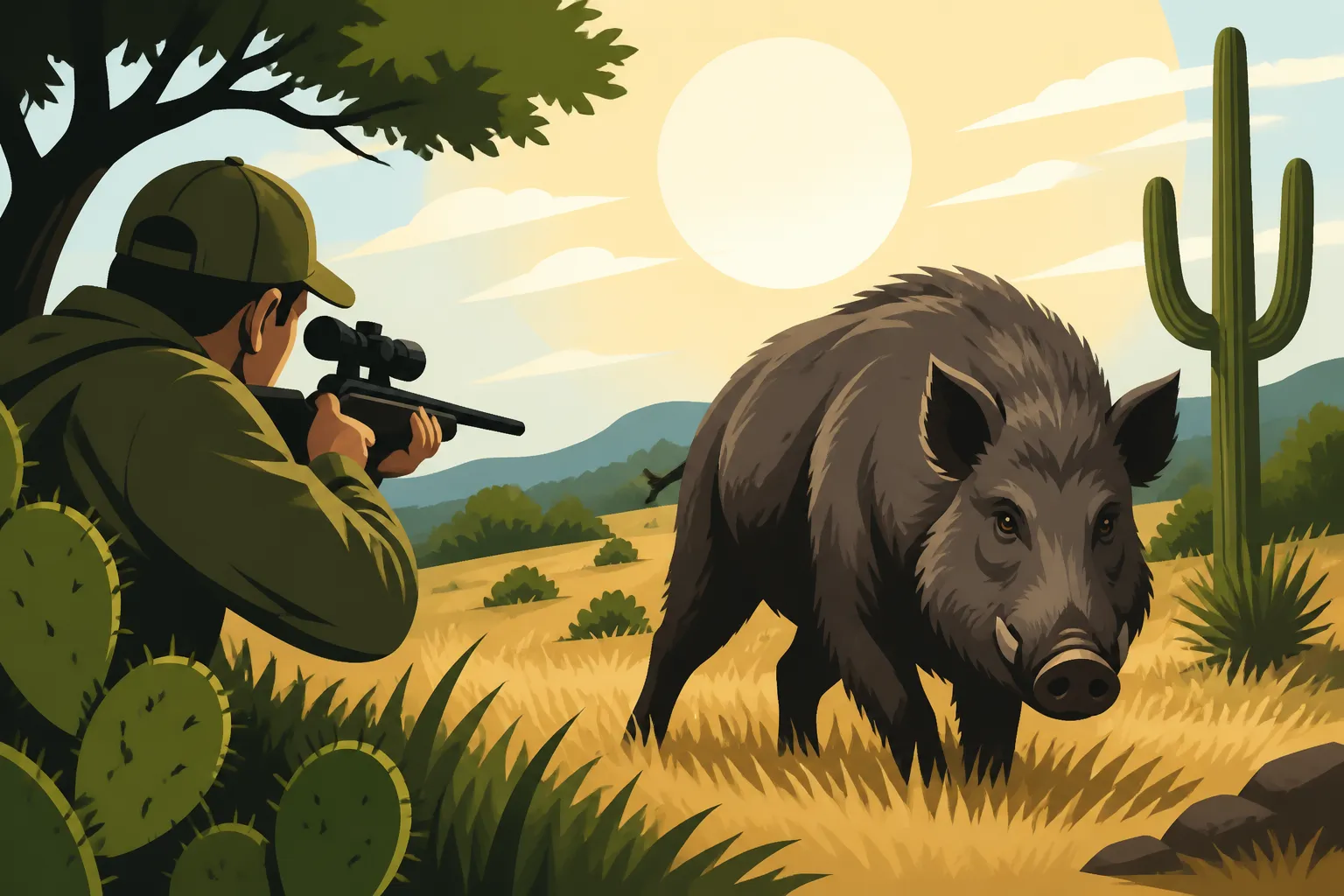
Spot-and-stalk is a highly effective, albeit challenging, method for daytime hogs, especially in areas with thick cover. This method relies heavily on your scouting efforts to identify those dense bedding and loafing areas. It's a game of stealth, wind management, and keen observation.
Patience is your absolute best friend here. Don't rush. Hogs have an incredible sense of smell and hearing, and they are masters of blending into their surroundings. You'll need to move incredibly slowly, pausing frequently to glass ahead and listen for any sounds of movement – a rustle in the leaves, a soft grunt, or the distinctive "pop" of a hog's jaw. Use high-quality binoculars or a spotting scope to scan every shadow and dense patch of brush. Sometimes, all you'll see is a flicker of an ear or a dark patch that doesn't quite look like a rock.
Wind direction is paramount. Always hunt into the wind or with a crosswind. If a hog catches your scent, your hunt is over before it even begins. Pay attention to shifting winds, especially in hilly or brushy terrain where thermals can play tricks. Consider carrying a small wind checker bottle or milkweed to constantly monitor air currents. Your movement needs to be deliberate and quiet. Avoid snapping twigs or rustling leaves. If you're hunting with a partner, communicate silently and move as one. This is a great method for those who truly enjoy the challenge of getting close to game.
Stand Hunting Near Key Resources
Setting up a stand, whether it's a ladder stand, a tripod, or a sturdy box blind, near a known hog travel corridor, water source, or feeding area can be incredibly productive for daytime hunting. This method leverages the hogs' predictable need for food and water, especially if you've identified consistent daytime patterns. You can choose to hunt from a traditional tree stand or a ground blind. If using a ground blind, ensure it's brushed in thoroughly and has been in place for a while to allow hogs to habituate to its presence. For more on setting up blinds, check out our guide on how to set up a box blind over a feeder.
A common strategy is to place a feeder in a strategic location. While some debate the ethics, baiting with corn or other attractants is legal for hogs in Texas and can significantly increase your chances. For details on legality, refer to our article, Is It Legal to Hunt Over Corn in Texas? If you do use a feeder, ensure its timer is set to go off during early morning or late afternoon hours to coincide with cooler temperatures and potential hog movement. For optimal feeder placement and settings, consult resources like Best Deer Feeder Setup for Texas and Best Setup for Hunting Hogs Over a Feeder.
Waterholes, particularly those with wallows, are fantastic places for a stand. Hogs will eventually need to drink, and during hot periods, they might visit multiple times a day. Look for trails leading directly to the water and set your stand upwind, allowing you a clear shot at their approach. Remember to factor in the sun's position throughout the day to ensure you have good visibility without being backlit.
Driven Hunts and Dog Hunting Considerations
While less common for individual hunters, driven hunts and hog hunting with dogs can be highly effective methods for dislodging hogs from dense daytime cover. These methods are often employed on larger properties or leases where hog populations are high and traditional still-hunting proves difficult.
Driven hunts involve a line of "beaters" or drivers pushing hogs out of a designated thicket towards hunters positioned at strategic escape routes. This requires careful planning, good communication, and a clear understanding of safety protocols to ensure everyone knows where other hunters are located. It's best done with a group and often on properties where hogs have a known escape path. The goal is not to shoot at running hogs through the drivers, but to intercept them as they try to flee the block.
Dog hunting for hogs is a long-standing tradition in many parts of Texas. Specially trained dogs are used to track, bay, and sometimes catch hogs, allowing hunters to move in for a dispatch. This method is incredibly efficient for clearing hogs from impenetrable brush where other methods are impossible. However, it requires a significant investment in trained dogs, specialized equipment (like GPS collars), and a deep understanding of dog handling and hog behavior. It's also physically demanding and can be dangerous for both dogs and hunters. If you're interested in this method, it's crucial to seek out experienced dog hunters and learn the ropes before attempting it yourself. Safety and ethical treatment of both animals and dogs are paramount.
Essential Gear and Tactics for Daytime Success
Having the right gear and knowing how to use it effectively can make all the difference in your daytime hog hunting endeavors. It's not just about having a gun; it's about optimizing your setup for stealth, visibility, and an ethical shot.
Optics and Visibility
For daytime hog hunting, especially when spot-and-stalking or glassing from a stand, quality binoculars and spotting scopes are indispensable. Hogs are masters of camouflage, and often the first thing you'll see is just a patch of dark hair against the brush. Good optics allow you to scrutinize dense cover, identify subtle movements, and confirm if that "dark blob" is indeed a hog or just a shadow. A pair of 10×42 binoculars is a great all-around choice, offering a good balance of magnification and field of view. If you're glassing wide-open areas or from elevated positions, a spotting scope can help identify hogs at extreme distances.
While thermal optics are typically associated with night hunting, a thermal monocular can be surprisingly useful during pre-dawn or late-dusk scouting, especially when hogs might still be moving to or from their daytime bedding areas. You can use it to scan distant thickets for heat signatures before the sun is fully up or as it's setting, helping you pinpoint where they've gone into cover or where they're about to emerge. This gives you a significant advantage in setting up for a daytime stalk or confirming their presence in a particular area before you commit to a long sit. However, for the actual shot in broad daylight, your traditional rifle scope will be your primary aiming tool.
Scent Control and Camouflage
Hogs have an absolutely phenomenal sense of smell – far superior to a deer's. This makes scent control arguably the most critical aspect of daytime hog hunting. If they smell you, they're gone. Period. Invest in scent-eliminating sprays, wash your hunting clothes in scent-free detergent, and store them separately. Avoid wearing clothes that have picked up household odors, gasoline, or smoke. Some hunters even go as far as showering with scent-free soap immediately before heading to the field.
Beyond personal scent, be mindful of any gear that might carry odors. Backpacks, boots, and even your gun can hold scent. Consider wearing rubber boots to minimize ground scent transfer. The goal is to be as invisible to their noses as possible.
Camouflage is also important, especially when spot-and-stalk hunting in close quarters. Choose camo patterns that match the local vegetation and season. For much of Texas, a pattern with greens, browns, and grays that mimics brush, mesquite, and cedar will be most effective. Break up your outline with a head net or face paint, and wear gloves. Hogs are often bedded in dense cover, and you might find yourself within spitting distance before you even see them. The better you blend in, the less likely they are to pick you out.
Weapon Selection and Shot Placement
When it comes to weapon selection, hogs are tough animals, and you need a firearm that delivers sufficient energy for an ethical harvest. While you can hunt feral hogs in Texas with almost any legal firearm, rifles chambered in calibers like .223/5.56 (with appropriate bullet choice), .243, .270, .30-06, .308, and even larger magnum calibers are popular and effective. For closer range encounters in dense brush or during driven hunts, a shotgun loaded with slugs or buckshot can be a viable option. Archery equipment, including crossbows, can also be used, but demands even greater stealth and shot placement precision.
Regardless of your chosen weapon, shot placement is absolutely critical for a quick, humane kill. The traditional "behind the shoulder" shot for deer is effective for hogs, aiming for the heart and lungs. However, many experienced hog hunters also favor a "head shot" or "ear hole shot" (aiming directly at the base of the ear) due to the hog's thick shoulder plate and dense bone structure. This shot immediately drops the animal if executed properly. The brain is a relatively small target, though, so it requires precision and confidence. For a detailed breakdown of effective shot placement, check out our guide on Best Shot Placement for Hogs. Always know your weapon's capabilities and your own limitations.
Maximizing Your Chances: Timing and Environmental Factors
Even with the best scouting and gear, successful daytime hog hunting often comes down to timing and understanding how environmental factors influence their activity. You're trying to catch them when they're most vulnerable, and nature provides specific windows of opportunity.
Best Times of Day and Year
The phrase "early bird gets the worm" absolutely applies to daytime hog hunting. Your best chances for encountering hogs during daylight hours are typically during the first few hours after sunrise and the last few hours before sunset. During these periods, temperatures are usually cooler, and light levels are lower, making hogs more comfortable venturing out of their dense bedding areas to feed or water. They might still be moving from their nighttime feeding grounds back to cover, or just starting to emerge for their evening activities. This "crepuscular" activity window is when you're most likely to catch them in transition.
As for the best time of year, cooler months generally offer better daytime hog hunting opportunities. During fall, winter, and early spring, when the scorching Texas heat isn't as intense, hogs are more likely to be active for longer periods during the day. Summer, conversely, will see them hunkered down in the thickest, shadiest spots, making them incredibly challenging to find and even harder to stalk. Plan your daytime hog hunts for those crisp mornings and cool afternoons outside of peak summer.
Weather's Impact on Hog Activity
Weather is a huge, often overlooked, factor in daytime hog behavior. Paying close attention to the forecast can dramatically improve your success rates.
Cooler temperatures are always a boon. A sharp drop in temperature, especially after a warm spell, can trigger increased daytime movement. Hogs, like many animals, respond to changes in barometric pressure, and the front of a cold snap often gets them up and moving, sometimes even feeding aggressively before the colder weather fully settles in.
Overcast skies and light rain are fantastic for daytime hog hunting. Cloudy days reduce direct sunlight and can lower ambient temperatures by several degrees, making hogs much more comfortable out in the open. A light, steady rain can also mask your sounds and wash away your scent, giving you a stealth advantage for stalking. However, heavy, torrential rain might push them into even deeper cover, so it's a balance.
Conversely, hot, clear, sunny days are your biggest enemy. On these days, hogs will seek the thickest, shadiest cover they can find and will move as little as possible. You'll need to focus your efforts almost exclusively on those dense bedding areas right next to water. The middle of a hot, sunny afternoon is often the least productive time to be actively hunting.
By combining these insights into a strategic plan, you can significantly enhance your odds of a successful daytime hog hunt. It's about patience, observation, and leveraging every advantage the environment provides. You've got this, Texas hunter!
| Method | Best Conditions | Key Considerations | Ideal Time of Day |
|---|---|---|---|
| Spot-and-Stalk | Cooler temps, overcast, light rain, dense cover | Wind direction, stealth, patience, good optics | Early morning, late afternoon |
| Stand Hunting | Consistent food/water source, low pressure | Feeder timing, upwind placement, concealment | Dawn, Dusk, Mid-morning (cooler days) |
| Driven Hunts | Large property, dense thickets, group of hunters | Safety communication, clear escape routes | Mid-morning, late afternoon |
| Dog Hunting | Impenetrable cover, high hog density, experienced handlers | Specialized dogs, safety for dogs/hunters | Anytime hogs are in cover |
Remember, no single method guarantees success, but adapting your approach based on the conditions and the hogs' behavior will always give you the upper hand. Happy hunting! For those looking for more general advice, our guide on Feral Hog Hunting in Texas: Year-Round Guide is a great starting point, and for a step-by-step approach, refer to How to Hunt Feral Hogs in Texas (Step by Step).
Disclaimer
Hunting is an activity with inherent risks. Always prioritize safety, follow all local and state regulations, and obtain proper licenses and permits before heading into the field. The information provided in this guide is for informational purposes only and should not replace professional guidance or personal judgment.