How to Build a Food Plot in Texas
Oh, the dream of a thriving food plot in Texas! Many of us envision lush green fields teeming with deer, but the reality of our diverse and often challenging Texas landscape can quickly turn that dream into a dusty, weed-choked nightmare. From the scorching summer heat to unpredictable rainfall and a myriad of soil types, building a successful food plot here requires more than just throwing some seeds on the ground. This comprehensive guide will walk you through every step, helping you navigate the unique Texas conditions to create a food plot that genuinely benefits your local deer herd.
Understanding Texas' Unique Landscape for Food Plots
Texas is an enormous state, and with its vastness comes an incredible diversity in climate, soil, and vegetation. What works for a food plot in the Pineywoods of East Texas might be a complete failure in the semi-arid Trans-Pecos or the sandy soils of South Texas. Understanding these fundamental environmental factors is your first, and arguably most crucial, step toward success.
The Diverse Challenges of Texas Soil and Climate
When you picture Texas, you might think of endless scrub brush, but our soils are far more complex than that. You'll find everything from deep, fertile blackland prairies to acidic sandy loams in East Texas, and gypsum-rich or saline soils out West. Each soil type presents its own set of challenges, impacting nutrient availability, water retention, and even the pH levels crucial for plant growth. For instance, East Texas often deals with more acidic soils, which can hinder the effectiveness of fertilizers and the growth of certain forage varieties, like some clovers. Conversely, many western areas might have alkaline soils or shallow, rocky conditions.
Beyond soil, the Texas climate itself is a wild card. We often swing from periods of extreme drought to torrential downpours, sometimes within the same season. These unpredictable weather patterns are a major limiting factor for food plot success, making consistent moisture a luxury rather than a guarantee. The intense summer heat can quickly stress and kill young plants, especially warm-season forages if not properly established or protected. It’s a constant battle against nature's extremes, but one that can be won with careful planning.
Regional Rainfall and Soil pH Considerations
Rainfall across Texas varies dramatically. The Pineywoods of East Texas typically receive the highest amounts, often exceeding 35 inches annually, and can even reach 50 inches near the Louisiana border. Moving west, the Edwards Plateau (our beloved Texas Hill Country) sees 15-30 inches, while the South Texas Brush Country averages 20-30 inches, decreasing further west. The High Plains in the Panhandle might only get 15-22 inches. This wide range directly influences what you can realistically grow and when. Areas with higher rainfall naturally offer more flexibility in forage choices and planting windows.
Soil pH, a measure of acidity or alkalinity, is another critical factor. Most food plot species thrive in a pH range of 6.0 to 7.0, meaning slightly acidic to neutral soil. If your soil is too acidic or too alkaline, even with ample fertilizer, the plants won't be able to properly absorb the nutrients they need. This is why a soil test is indispensable. Before you even think about buying seeds or fertilizer, send a sample of your soil to a lab. The Texas A&M AgriLife Extension Service Soil, Water, and Forage Testing Laboratory, or other labs like Stephen F. Austin University's Soil, Plant and Water Analysis Lab, can provide detailed analysis and recommendations specific to your plot's needs. This isn't an optional step; it's the foundation of a successful food plot, guiding your liming and fertilization efforts to correct any imbalances. For more on what to test for, consider checking out resources on Soil Testing Services in Texas.
Selecting the Right Forage for Texas Deer
Once you understand your local soil and climate, the next big decision is what to plant. Texas deer have varying nutritional needs throughout the year, and a good food plot strategy often involves a mix of warm-season and cool-season forages to provide consistent nutrition. Think of it as a year-round buffet, not just a seasonal snack.
Warm-Season Wonders for Summer Nutrition
Warm-season food plots are critical for providing high-protein forage during the nutritionally demanding summer months. This is when bucks are growing their antlers, and does are nursing and weaning fawns. In many parts of Texas, native forage can be stressed by heat and drought during this time, making supplemental plots invaluable.
Some excellent warm-season choices for Texas include:
- Legumes: This category is a powerhouse for deer nutrition.
- Cowpeas (Iron & Clay varieties): These are often called "ice cream for deer" and are incredibly versatile. They grow well in many soil conditions, tolerate drought, and can become competitive against weeds once established. They're an excellent choice for areas with moderate to high deer densities.
- Soybeans: Considered the "king of summer forages," soybeans offer both attractive forage and high-protein beans relished in the fall and winter. Roundup Ready varieties allow for effective weed control.
- Lablab: A viny legume that can withstand heavy browsing pressure once mature.
- Other legumes: Blackeyed peas, singletary peas, and even some dry-land alfalfa varieties can be viable options, especially when mixed.
- Grains:
- Millet, Milo, and Sorghum: These grain sorghums are easy to grow and can provide a good food source, especially if other grain crops struggle under high deer pressure. They need plenty of nitrogen to thrive.
- Native Forbs: Don't forget the power of native plants adapted to Texas's unique conditions. Illinois bundleflower, Maximillian sunflower, and bushsunflower are all eaten by white-tailed deer and are adapted to lower rainfall and various soil types.
Warm-season plots are typically planted after April 15th, often in May, when soil temperatures are warm and there's a good chance of rainfall. Remember that young warm-season annuals are susceptible to heavy grazing, so sometimes temporary fencing can be a smart move until plants are 4-5 weeks old.
Cool-Season Staples for Fall and Winter
As the summer heat gives way to cooler temperatures, your deer's nutritional needs shift, and cool-season plots become vital. These forages provide essential carbohydrates and proteins that help deer recover from the rut, put on winter fat, and offer attractive hunting opportunities. Fall food plots are usually planted from September through October, with North Texas leaning towards earlier planting and South Texas able to wait until late October or early November. The key is to plant after the first significant rain when soil moisture is high and cooler temperatures are setting in.
Top cool-season picks for Texas include:
- Cereal Grains:
- Oats: Deer often prefer oats over other small grains. Be sure to select winter-hardy varieties to ensure they last from the first frost until spring.
- Wheat and Rye: These are excellent choices, with wheat being particularly cold-tolerant. Planting both oats and wheat can be beneficial to extend forage availability as deer may shift preferences.
- Ryegrass: Can be a good addition to mixes.
- Legumes:
- Clovers: Arrowleaf clover (like 'Yuchi' variety), rose clover ('Overton R18'), yellow blossom clover, sweetclover, and crimson clover are all great options. Clovers emerge in spring and can last into early summer, providing extended nutrition. Remember, legumes need to be inoculated for proper nitrogen fixation. You can learn more about Protein Feeding Deer for Bigger Antlers and how legumes contribute to overall herd health.
- Vetches & Peas: Hairy vetch and Austrian winterpeas are also utilized by deer. However, Austrian winterpeas are so highly preferred that they can be grazed out quickly without protection.
- Brassicas:
- Purple Top Turnips and Daikon Radishes: These can provide highly palatable forage and tubers for deer, especially later in the season. However, brassicas may not perform as well in very sandy soils.
A common and highly effective cool-season combination for areas receiving 35 inches or more of rainfall includes winter-hardy oats, iron and clay cowpeas, and arrowleaf clover. The cowpeas attract deer early, the oats carry them through winter, and the clover provides spring forage. You can also find detailed information on Food Plots in Texas: What Works in the Heat.
Here's a quick comparison of some popular forage types:
| Forage Type | Season | Key Benefits | Best Planting Time (Texas) | Protein Content (approx.) | Soil Preference |
|---|---|---|---|---|---|
| Warm-Season | |||||
| Cowpeas | Warm Annual | Drought tolerant, high protein, quick growth | April 15 – May | 20-30% | Versatile |
| Soybeans | Warm Annual | Excellent forage & grain, high protein | April 15 – May | High | Wide variety |
| Sorghum/Milo | Warm Annual | Energy-rich grain, good for high deer densities | April 15 – May | Lower (but good energy) | Adaptable |
| Lablab | Warm Annual | Viny, tolerates heavy browsing (once established) | April 15 – May | High | Adaptable |
| Cool-Season | |||||
| Winter Oats | Cool Annual | Highly preferred by deer, winter hardy varieties | Sept – Oct | 15-20% | Adaptable |
| Winter Wheat/Rye | Cool Annual | Cold tolerant, good energy source | Sept – Oct | 15-20% | Adaptable |
| Arrowleaf Clover | Cool Annual | Nitrogen fixer, extended spring forage | Sept – Oct | High | Well-drained |
| Crimson Clover | Cool Annual | Nitrogen fixer, quick growth | Sept – Oct | High | Well-drained |
| Purple Top Turnips | Cool Annual | Forage and tubers, highly attractive | Sept – Oct | Moderate-High | Fertile, well-drained |
Step-by-Step Food Plot Establishment
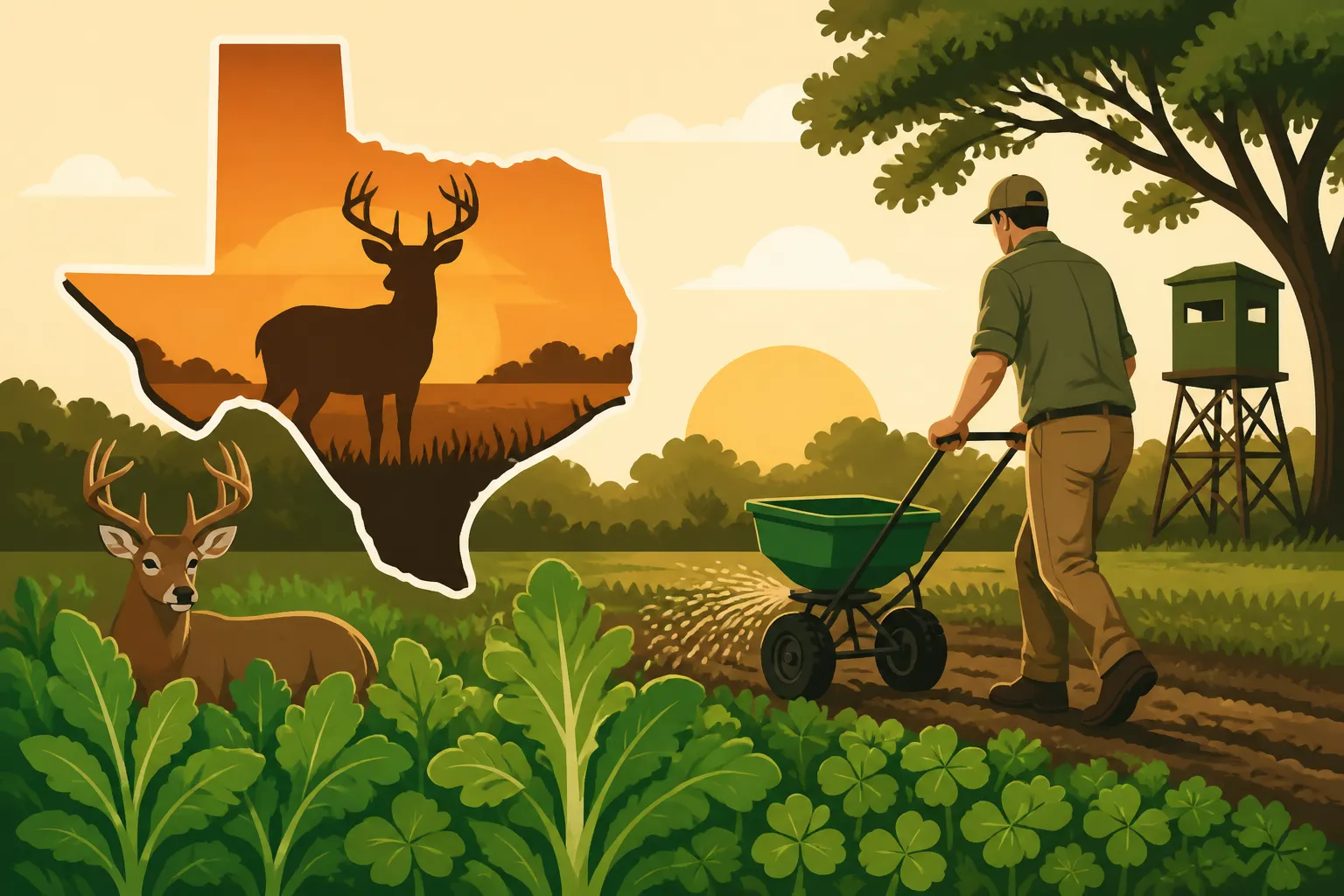
With your forage choices in mind, it's time to get your hands dirty. Proper establishment is crucial; a poorly prepared seedbed or incorrect planting can undo all your planning. Remember, a good seedbed is well-cultivated, weed-free, firm, moist, and fertilized.
Site Selection and Initial Soil Preparation
Choosing the right location for your food plot goes beyond just finding an open patch of ground. Deer need to feel secure, so position your plots near existing cover, such as wooded areas or thick brush. Transition zones between the woods and open plots can make deer feel more comfortable accessing the forage during daylight hours. Consider areas deer already frequent, perhaps along a travel corridor you've identified through scouting or trail camera photos. Also, make sure the site receives at least 5-6 hours of direct sunlight a day; anything less, and your plants will struggle. Avoid low-lying areas prone to routine flooding, as this can drown your seedlings.
Once you've picked your spot, initial soil preparation begins.
- Clear Existing Vegetation: This is non-negotiable. You need a clean slate. Heavy vegetation should be cleared by shredding and disking, and then herbicides can be applied a few weeks before planting to kill off any remaining weeds. Non-selective herbicides like glyphosate are excellent for clearing an entire plot. A clean seedbed drastically reduces competition for your new seedlings.
- Soil Testing (Again, if needed!): If you haven't done it yet, or it's been a few years, now's the time. A soil test will tell you precisely what nutrients your soil is lacking and what amendments, like lime, are needed to achieve that ideal pH of 6.0-7.0. It's far more effective and economical than guessing.
- Deep Plowing/Disking: For land that hasn't been cultivated recently, an initial deep plowing is recommended. This breaks up compacted soil and improves drainage. Follow this with several passes with a disk harrow to create a fine, loose seedbed.
- Lime Application: If your soil test indicates low pH (too acidic), apply agricultural lime according to the recommendations. Lime takes time to work its way into the soil, so it's best to apply it several weeks, or even months, before planting.
- Final Seedbed Preparation: Lightly disk the plot again 30-45 days before planting to reduce new weed growth and help accumulate soil moisture. Just before planting, a final light disking will ensure a smooth, firm surface for your seeds. You want a seedbed that's well-cultivated, firm, and moist.
Planting for Success: Timing, Depth, and Equipment
Timing is everything, especially in Texas. As mentioned, warm-season plots go in after April 15th, and cool-season plots typically from September through October. Always watch local weather patterns; a significant rain followed by consistent moisture during the first two weeks after seeding is crucial for germination. "Pray for rain" is a common mantra among Texas food plotters.
- Inoculate Legume Seeds: If you're planting legumes (clovers, cowpeas, soybeans), you must inoculate the seeds with the correct strain of Rhizobium bacteria. This bacteria forms nodules on the plant roots, allowing the plant to "fix" nitrogen from the air into the soil, essentially creating its own fertilizer. Without inoculation, you won't get this benefit.
- Fertilizer Application: Based on your soil test, spread the recommended fertilizer just before or at planting. Incorporate it into the soil with a light disking. This ensures nutrients are available to the developing roots.
- Planting Depth: This is a common mistake. Smaller seeds, like clovers and ryegrass, should be planted very shallow, no more than 1/4 to 1/2 inch deep. Larger seeds, such as wheat, oats, peas, and beans, require a depth of 1 to 1 1/2 inches. If you're broadcasting a mix of large and small seeds, you might need to make two passes: cover the larger seeds, then broadcast the smaller ones and lightly press them into the surface or barely cover.
- Equipment: While a tractor with a disk harrow and planter is ideal for larger plots, you can still establish smaller plots with ATVs and smaller implements. For some seed types, a no-till drill can be very effective, especially if you're overseeding into existing stands or dealing with minimal topsoil. For a more in-depth look at equipment, you might find our guide on the Best Deer Feeder Setup for Texas helpful for other aspects of property management.
Maintaining Your Texas Food Plot for Long-Term Success
Planting is just the beginning. A food plot, much like a garden, requires ongoing attention to flourish and provide consistent nutrition for your deer herd. This means staying on top of soil health, managing unwelcome vegetation, and understanding how deer are utilizing your plot.
Fertilization: Fueling Growth Based on Soil Needs
Regular fertilization is what keeps your food plot productive. The exact nutrients needed will always depend on your soil test results and the specific forages you've planted. Generally, commercial fertilizers are referred to by an N-P-K ratio (Nitrogen, Phosphorus, Potassium).
- Nitrogen (N): Essential for lush green growth. Grains like corn and sorghum are heavy nitrogen feeders.
- Phosphorus (P) & Potassium (K): Important for root development, flowering, and overall plant health. Legumes produce their own nitrogen but benefit greatly from adequate P and K.
While it's ideal to apply fertilizer before or at planting, a split application can be highly effective, especially for cool-season annuals that love nitrogen, like brassicas and cereal grains. Applying some at planting and the remainder 30-45 days after germination ensures the plants have a steady supply as they grow. In areas with high humidity or heavy rainfall, a split application can also help reduce nitrogen loss from volatilization or leaching. Always refer to your soil test recommendations for precise amounts, as too much of one nutrient can be just as detrimental as too little.
Battling Weeds and Monitoring Deer Pressure
Weeds are the arch-nemesis of any food plot. They compete fiercely with your desired forage for sunlight, water, and nutrients, quickly choking out young seedlings. Effective weed control is a year-round battle, not just a pre-planting chore.
- Pre-Emergent Herbicides: These are applied before planting and work in the soil to prevent weed seeds from germinating.
- Post-Emergent Herbicides: Applied directly to growing weeds, these chemicals kill plants on contact or are absorbed. Non-selective herbicides like glyphosate are great for clearing a plot or spot-spraying problem areas. However, if your food plot contains desirable broadleaf plants (like clovers) mixed with grasses, you'll need grass-selective herbicides (e.g., clethodim) to avoid killing everything. Common Texas weeds you'll encounter include crabgrass, henbit, pigweed, thistle, and Johnsongrass.
- Mechanical Control: Mowing can be an effective way to control weeds, especially broadleaf types, if done before they go to seed.
- Rotation: Rotating your food plot locations or the types of forages planted can also help manage persistent weed issues and improve soil health over time.
Finally, continuously monitor your food plot's usage by deer. Trail cameras are invaluable for this, helping you understand when and how deer are using the plot and if they are overgrazing it. If you see your young plants being decimated before they have a chance to establish, consider temporary fencing or increasing the plot size. Sometimes, if deer become too reliant on food plots, it indicates that the native habitat might be stressed, or your deer density is too high. This is where a holistic approach to Deer Hunting in Texas: Feeders, Blinds & Tactics comes into play. Your food plot is a tool to supplement, not replace, a healthy native habitat.
Building a successful food plot in Texas is certainly a labor of love, but the rewards—a healthier deer herd, increased wildlife activity, and better hunting opportunities—are well worth the effort. By respecting the unique challenges of our state's environment and applying sound management practices, you can create a vibrant, productive food plot that truly stands out.
Disclaimer
The information provided in this guide is for general informational purposes only and does not constitute professional advice. Hunting regulations, agricultural practices, and environmental conditions can change. Always consult with local wildlife authorities, agricultural extension services, and other relevant experts for the most accurate and up-to-date information pertaining to your specific location and situation. Adhere to all federal, state, and local laws and regulations.