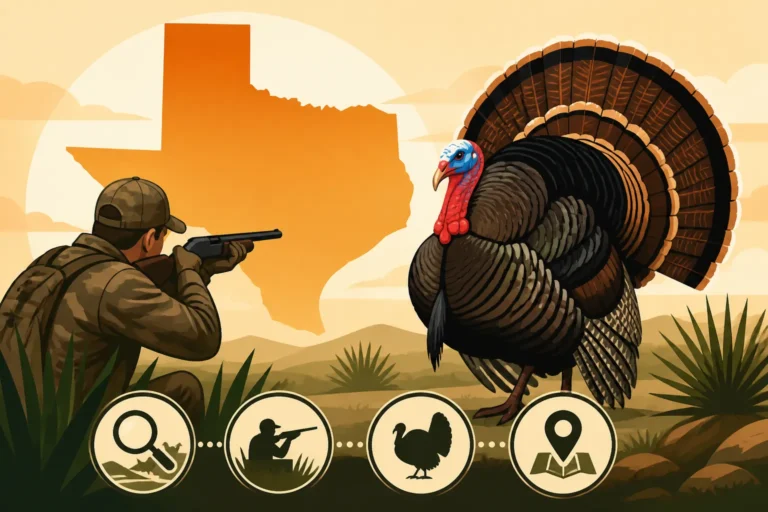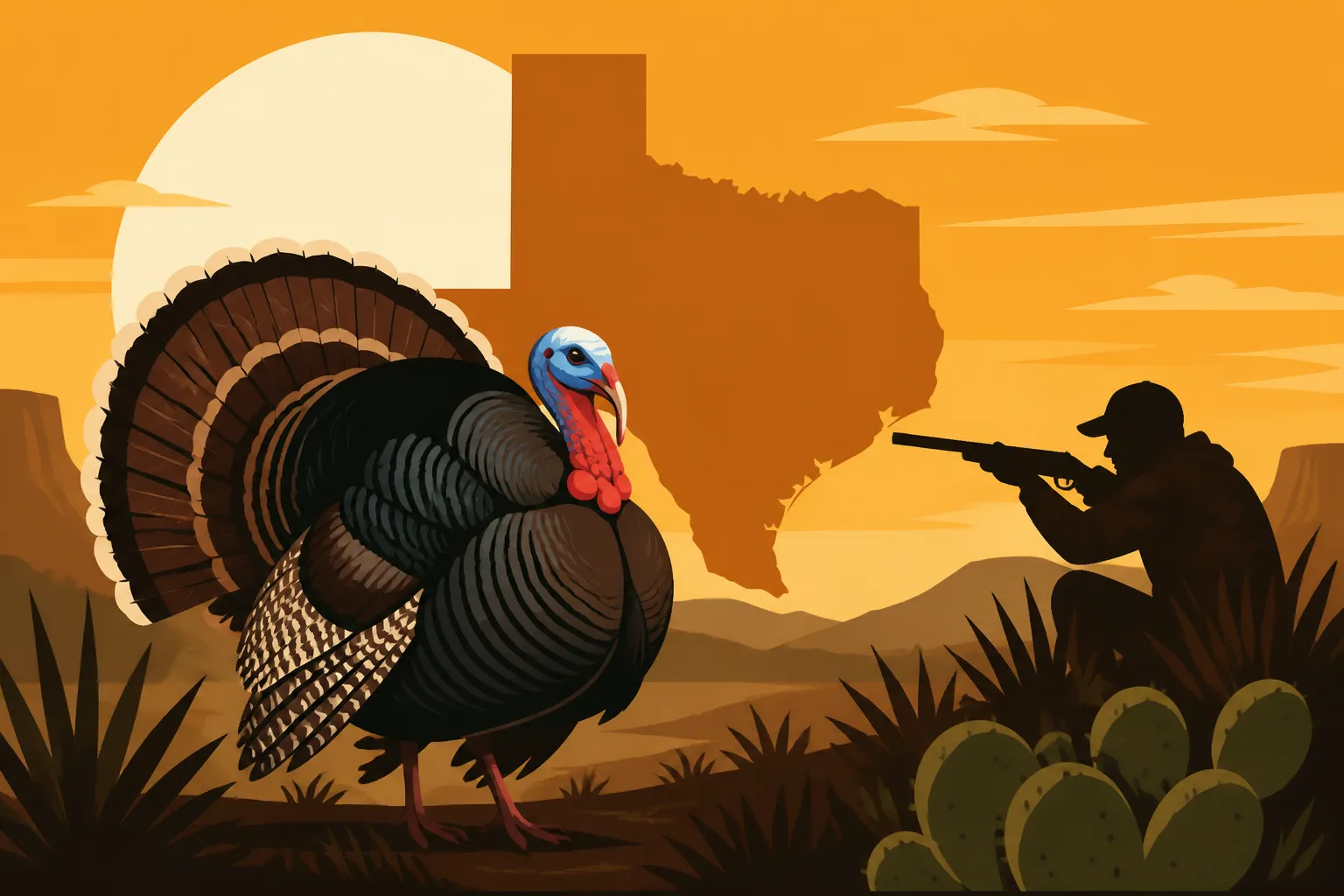
Rio Grande Turkey Hunting Tactics for Texas
There is nothing quite as humbling as a 4:00 AM wake-up call in the Texas brush, only to have a Rio Grande gobbler hang up at sixty yards because he spotted a single stray thread on your sleeve. This guide breaks down the specific strategies needed to outsmart these wary birds, ensuring you move from frustrated listener to successful harvester this spring.
Understanding Rio Grande Turkey Behavior in Texas
Rio Grande turkeys are a unique subspecies, and they certainly don't act like the Easterns you might find in the Pineywoods or the Deep South. In Texas, Rios are nomadic. While an Eastern turkey might live its whole life on a few hundred acres, a Rio Grande gobbler thinks nothing of trekking several miles in a single afternoon to find water or a better roost. This wandering nature is the primary reason why so many hunters struggle. You might have a dozen birds on your trail camera on Monday, and by your Saturday morning hunt, they have vanished into a neighbor's pasture three miles away.
In the Texas Hill Country, these birds love to roost in large Live Oaks or Sycamores along creek bottoms. However, in South Texas or the Rolling Plains, where big timber is scarce, they will frequently roost in power line pylons or even relatively short Mesquite trees if that is all that is available. Understanding where they sleep is the first step, but understanding where they go when their feet hit the dirt is what fills tags. Because the terrain in Texas is often wide open, these birds rely heavily on their eyesight. They can see movement from incredible distances, which makes the How to Hunt Rio Grande Turkey in Texas (Step by Step) process significantly different than hunting in a dense forest.
One of the most frustrating behaviors is the "henned up" gobbler. Early in the Texas Spring Turkey Season Zones & Dates, mature longbeards are often surrounded by a harem of hens. When you call, the gobbler might gobble his head off, but he isn't going to leave his sure thing to come find you. In this scenario, your goal isn't actually to call the gobbler; it is to annoy the lead hen. If you can make her angry enough to come challenge the "new girl" in her territory, she will bring the gobbler right to your lap.
Calling and Decoy Strategies for Texas Rios
If you are looking to master Turkey Calling & Tactics for Texas Rios, you need to realize that Rio Grandes are generally more social and vocal than other subspecies. They live in larger flocks, which means they are used to a lot of noise. Don't be afraid to be aggressive. While subtle purrs and clucks work in high-pressure areas, a loud, raspy yelp or a sequence of excited cutting can often cut through the Texas wind and grab a bird's attention from a quarter-mile away.
When it comes to decoys, the "Love Triangle" setup is a favorite for veteran Texas hunters. This involves placing a submissive jake decoy about 10 yards from your blind, with a realistic hen decoy positioned just a few feet away from him. Then, place another hen decoy about 20 yards out. When a dominant gobbler sees a young jake hovering near a hen, it triggers a territorial response that often overrides his natural caution. You can find a wide variety of high-definition decoys on Amazon that mimic the specific lighter-colored feathers of a Rio Grande hen.
The wind is perhaps the biggest tactical hurdle in the Lone Star State. A 20-mph breeze is just a Tuesday in West Texas, and it wreaks havoc on your ability to hear a bird and his ability to hear you. In high winds, you should switch to a loud crystal or glass pot call. These high-frequency calls carry much further than the mellow tones of a box call. Many hunters keep a backup diaphragm call in their vest, often ordered in bulk from Amazon, to keep their hands free for their shotgun when a bird finally breaks the timberline and starts his approach.
| Call Type | Best Use Case | Pros | Cons |
|---|---|---|---|
| Box Call | Long-distance locating | Very loud, easy to use | Requires two hands, can be affected by humidity |
| Pot Call (Slate) | Mid-range, soft talk | Very realistic, great purrs | Glass/Crystal surfaces are fragile |
| Diaphragm | Close-in finishing | Hands-free, great for cutting | Has a steep learning curve for beginners |
| Wing Bone | Traditional/Display | Unique sound, historical | Extremely difficult to master |
Essential Gear and Field Setup for the Texas Brush
The environment where Rios thrive is usually covered in things that want to poke, sting, or bite you. If you are venturing into the How to Hunt Turkeys in the Texas Hill Country, you need to be prepared for the terrain as much as the birds. Standard forest camo is often too dark for the grey-green hues of Mesquite and Juniper. Look for patterns that emphasize "dry" colors—tans, light greens, and greys.
Safety is another major factor. Since turkey season coincides with the warming of the Texas soil, snakes are out in full force. Investing in the Best Snake Boots for Texas Hunting is not a luxury; it is a necessity. I have seen hunters nearly step on a four-foot diamondback because they were so focused on a gobbling bird in the distance. Having that physical barrier between your leg and a pair of fangs allows you to focus on the hunt with much less anxiety.
For your shotgun setup, the trend has shifted toward smaller gauges like the 20-gauge or even the .410, thanks to Tungsten Super Shot (TSS). These heavy-density loads allow for incredibly tight patterns at 40 or even 50 yards. If you are sticking with a traditional 12-gauge, ensure you have an extra-full turkey choke. You can browse various choke tubes and recoil pads on Amazon to customize your turkey gun for the season. Remember that the Best Gear for Rio Grande Turkey Hunting in Texas is the gear that you have patterned and practiced with before you ever step foot on the lease.
Advanced Tactics: Locating and Closing the Gap
When the morning fly-down goes silent, many hunters give up and head for breakfast. This is a mistake. Between 10:00 AM and 2:00 PM, hens often leave the gobblers to go sit on their nests. This leaves a lonely, frustrated longbeard wandering the woods looking for company. This is the best time to use "run and gun" tactics. Move through the property, stopping every few hundred yards to use a locator call like a crow or owl hooter. If that doesn't work, give a few sharp yelps on a box call.
If you are hunting on a smaller tract of land, you have to be mindful of the Texas Turkey Bag Limit by Zone. You don't want to burn through your tags on the first day if you have a multi-day trip planned. If you find a bird that is "hung up"—meaning he is gobbling but refusing to move closer—it is often because he has reached a physical barrier like a fence or a dry creek bed. Even though a turkey can fly over a fence easily, they often prefer to walk. If he hits a net-wire fence, he may pace back and forth for an hour. In this case, you need to be mobile. Quietly back out, circle around the barrier, and set up on his side of the fence.
Lastly, always be aware of the Rio Grande Turkey Season & Bag Limit in Texas specific to the county you are in. Regulations can change as you cross county lines, especially regarding the "one-gobbler" counties versus the "four-gobbler" zones. Proper scouting using a high-quality mapping app can help you stay within property lines and identify these geographical boundaries. If you find yourself needing a new tripod stool or a better pair of binoculars for mid-day spotting, a quick search on Amazon can usually get those items to your door before your next weekend outing.
Frequently Asked Questions About Texas Rio Hunting
Many beginners ask if they should use a blind or just sit against a tree. In Texas, where the cover is often sparse, a pop-up ground blind can be a lifesaver. It masks the fidgeting that naturally happens during a long sit. However, if you are hunting the thick cedar breaks of the Hill Country, sitting against a large trunk while wearing a leaf-cut 3D camo suit can be just as effective and much more mobile.
Another common question involves the use of "reaping" or "fanning"—the practice of crawling toward a gobbler behind a large tail fan. While this is popular on television, it is extremely dangerous on public land and even on many private leases in Texas. Because of the high density of hunters in some areas, it is always safer to let the bird come to you. Patience is the ultimate tactic. A Rio Grande gobbler has nothing but time, and if you can prove you have more of it than he does, you will eventually find him in range.
Before you head out, make sure you understand the Texas Spring Turkey Season Zones & Dates as they apply to the North and South zones. The timing of the "green up" can vary by two or three weeks between the Rio Grande Valley and the Panhandle. If you arrive too early, the birds will still be in large winter flocks; if you arrive too late, the hens will already be nesting and the gobblers may have stopped vocalizing entirely. Timing your hunt to the peak of the "second cycle" of breeding is often the secret to a successful Texas turkey season.
Disclaimer
Hunting regulations in Texas are subject to annual changes by the Texas Parks and Wildlife Department (TPWD). Always consult the current version of the Texas Outdoor Annual before heading into the field. This guide is for informational purposes only and does not supersede state laws or local ordinances regarding firearm use and game harvest. Ensure you have a valid hunting license and the required upland game bird endorsement before attempting to hunt turkeys in Texas.