How to Hunt Aoudad on Public Land in Texas
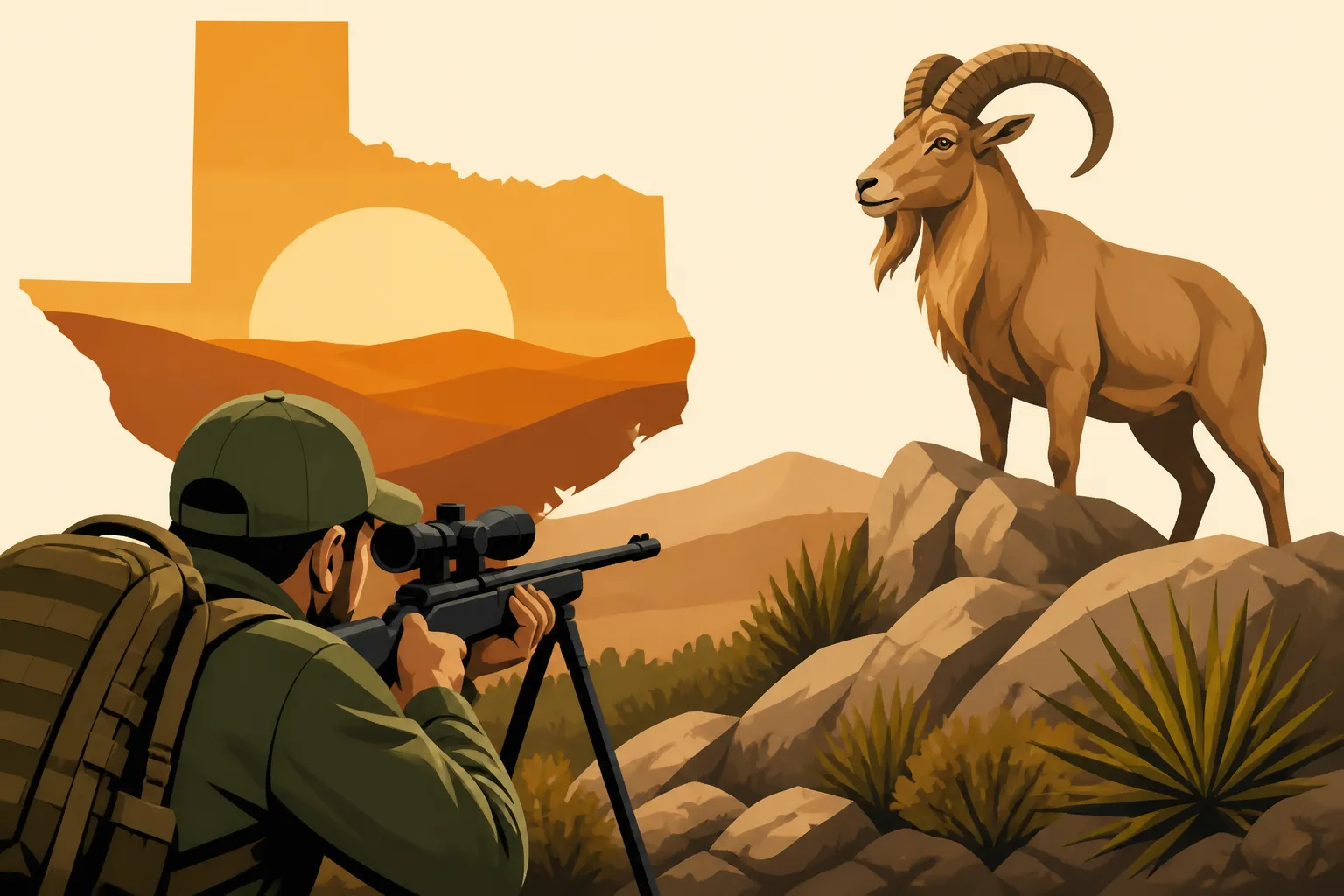
Hunting Aoudad on public land in Texas isn't for the faint of heart, I can tell you that much from personal experience. It's a grueling endeavor that pushes even the most seasoned hunters to their limits, both physically and mentally. This guide is going to walk you through the nitty-gritty of making a public land Aoudad hunt in the Lone Star State a reality, from understanding these tough animals to tackling the unforgiving terrain and navigating the regulations.
The Unique Challenge of Public Land Aoudad in Texas
Let's be real, public land hunting in Texas already presents its own set of hurdles—limited access, high pressure, and often less-than-ideal habitat. Throw Aoudad into the mix, and you've got a challenge that makes other hunts feel like a walk in the park. These non-native sheep, also known as Barbary sheep, thrive in some of the most remote and rugged landscapes Texas has to offer, making them incredibly difficult to pursue, especially where everyone else is trying to do the same.
Understanding Aoudad Behavior
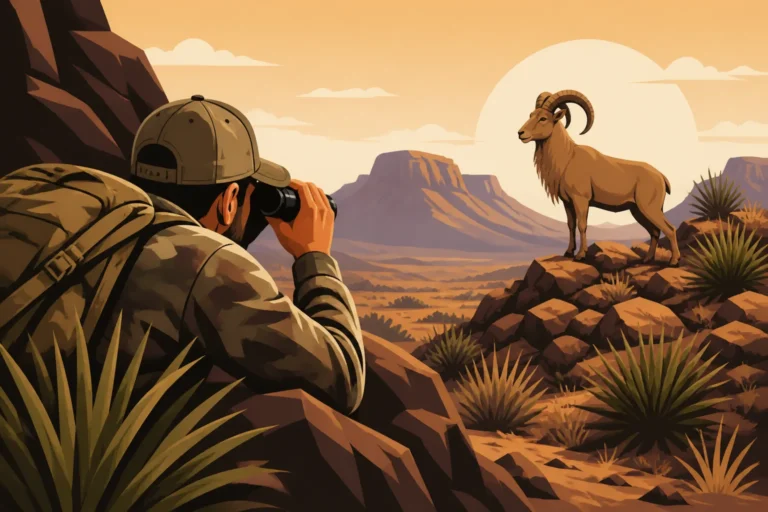
Aoudad are perfectly adapted to harsh, arid, mountainous environments. They are incredibly wary animals with keen eyesight, excellent hearing, and an uncanny ability to navigate steep, rocky terrain with ease. You'll often find them clinging to cliff faces or high ridgelines, where they can spot potential threats from miles away. They prefer rough, broken country, making the Trans-Pecos region of West Texas prime Aoudad habitat, especially on expanses like the Black Gap WMA. During the day, particularly when temperatures soar, Aoudad will seek shade in canyons, caves, or under overhangs, only to emerge to feed during cooler parts of the day—dawn, dusk, and even throughout the night. Their diet is quite broad, ranging from grasses and forbs to browse from shrubs and cacti, making them resilient in sparse environments. This adaptability means they don't necessarily congregate in obvious feeding areas like whitetail deer might around a feeder, requiring hunters to cover vast amounts of ground.
Navigating Texas Public Land Realities
Texas is overwhelmingly private land, meaning public hunting opportunities, especially for big game like Aoudad, are precious and hard-won. The vast majority of huntable public land for Aoudad falls within the Trans-Pecos region, particularly the rugged mountains and deserts of Brewster and Presidio counties. The Texas Parks and Wildlife Department (TPWD) manages specific Wildlife Management Areas (WMAs) where Aoudad can be hunted through drawn hunt programs. The Black Gap WMA is perhaps the most well-known of these, offering a true backcountry hunting experience.
The sheer scale of these public lands, combined with the low hunter density relative to the size of the areas, means you could be miles from the nearest road, making access incredibly difficult. Many areas require significant hiking, often over pathless, steep, and rocky terrain. This lack of easy access often translates into less hunting pressure in the deepest, most remote sections, which is exactly where these wary animals prefer to spend their time. However, getting to those remote spots is a serious undertaking that requires meticulous planning and physical preparation. You're not just hunting an animal; you're hunting an animal in a vast, wild, and unforgiving landscape.
Essential Scouting Strategies for Public Land Aoudad
You wouldn't show up to a job interview without preparing, right? Well, public land Aoudad hunting demands even more preparation. Effective scouting, both before you even leave your living room and once you hit the dirt, is absolutely crucial for success. Without it, you're essentially just going for a really long, frustrating hike.
Pre-Season Digital Scouting
Your scouting efforts should begin long before you set foot in the field. Digital tools are your best friends here. Start with online mapping platforms like onX Hunt or HuntStand. These apps allow you to pore over satellite imagery, topo maps, and land ownership data right from your couch. Look for steep, rocky areas, pronounced ridgelines, deep canyons, and potential water sources—Aoudad will often travel to water, especially in arid regions. Identify potential access points, whether that's a county road or a barely-there jeep trail. Mark areas that seem to offer good vantage points for glassing, as well as potential bedding areas (steep, sheltered slopes) and feeding zones (flatter benches or draws with vegetation).
Pay close attention to changes in elevation and terrain features that might funnel animals or provide cover for an approach. Use the measuring tools to get a sense of distances and elevation gains, which will help you plan your physical training. Also, don't forget to dive deep into the Texas Parks and Wildlife website for information on the specific WMA you plan to hunt. They often provide detailed maps, past hunt statistics, and regulations that can give you invaluable insights into Aoudad densities and areas with past success. For those interested in drawn hunts, understanding the application process and increasing your odds is covered in our guide on How to Apply for Texas Drawn Hunts Online.
Boots-on-the-Ground Reconnaissance
As helpful as digital scouting is, there's no substitute for getting your boots on the ground. If possible, visit the area during the off-season. This gives you a chance to verify your digital findings, identify actual game trails, and get a feel for the scale and ruggedness of the terrain without the pressure of a hunt. Look for fresh Aoudad sign: tracks (similar to deer, but often larger and more rounded), droppings (pellets, typically larger than deer), and rubs on rocks or small trees where they've marked their territory. Aoudad are creatures of habit, and while they might not use the same exact bed every day, they'll stick to specific types of terrain and travel routes.
When you're actually in the field, use your binoculars and spotting scope constantly. Glass from high vantage points, systematically scanning all the nooks, crannies, and shadows of the opposing hillsides. Aoudad blend in incredibly well with their surroundings, so look for anything that seems "out of place" – a horizontal line in a vertical world, a patch of different color, or the movement of an ear. Early mornings and late evenings are prime times for spotting them as they move between bedding and feeding areas. If you find fresh sign, proceed cautiously, as the animals are likely nearby. Understanding Spot-and-Stalk Hunting in Texas (Exotics & Mule Deer) can provide a solid foundation for this approach.
Proven Tactics for Hunting Aoudad in Public Land Environments
Once you've done your homework and understand the landscape, it's time to talk tactics. Hunting Aoudad on public land is fundamentally a spot-and-stalk game, demanding patience, precision, and a lot of physical effort.
Spot-and-Stalk Methodology
This is the bread and butter of Aoudad hunting. The strategy is simple in concept but incredibly challenging in execution: find the animals, plan an approach, and close the distance for a shot.
- Glassing is King: You can't stalk what you can't see. Dedicate significant time to glassing. Find a high point with a wide view, set up your spotting scope on a tripod, and systematically scan every inch of the visible terrain. Break the landscape into grids and examine each section. Use good quality binoculars (10x-15x) for initial scans and a powerful spotting scope (20-60x) for detailed identification. Look for glints of sunlight off horns, a patch of lighter fur, or even just a slight discoloration on a cliff face. Early morning and late afternoon are usually the best times to spot them as they move.
- The Approach: Once you've spotted Aoudad, the real work begins. Your approach must be meticulous. Consider the wind direction – Aoudad have an excellent sense of smell. Plan your route to stay out of sight, using terrain features like ridges, draws, and large rocks for cover. This might mean adding significant mileage to your stalk, sometimes hiking miles to get within shooting range. Walk slowly, deliberately, and quietly. Avoid silhouetting yourself on ridgelines. Sometimes, you'll need to crawl the last hundred yards. This is where physical fitness really pays off.
- Shot Placement: Aoudad are tough animals. Their vitals are similar to deer, but they have a very thick hide and robust bone structure. A well-placed shot is absolutely critical. Aim for the classic shoulder/lung area. Practice shooting from various positions, especially kneeling and prone, as you often won't have the luxury of a perfect bench rest in the mountains. Ensure your rifle and ammunition are capable of delivering enough energy for a clean kill at potentially longer ranges that rugged terrain often dictates. A good scope with accurate ballistic turrets or a BDC reticle is highly beneficial. For more on ensuring a humane harvest, our guide on Best Shot Placement for Whitetail Deer can offer transferable insights.
Gear Considerations for the Rugged Terrain
Your gear list for a public land Aoudad hunt needs to be robust and reliable. This isn't a place to cut corners.
| Gear Category | Essential Items | Why It's Crucial |
|---|---|---|
| Optics | High-quality binoculars (10x-15x), Spotting Scope (20-60x), Tripod, Rangefinder | For long-range glassing, identification, and accurate shot ranging in vast terrain. |
| Footwear | Sturdy, broken-in hiking boots with excellent ankle support; snake boots are a plus | Critical for navigating steep, rocky, and often cactus-strewn terrain. Protection from snake bites is key. |
| Clothing | Layered system for varying temperatures, durable pants, wide-brimmed hat | Texas weather can change dramatically; protection from sun, thorns, and cold is essential. |
| Navigation | GPS device (dedicated or phone app like onX Hunt), Physical map, Compass, Power bank for electronics | You will get lost without reliable navigation. |
| Hydration | Hydration pack (3L+ capacity), Water bottles, Water filter/purification tablets | The arid environment demands constant hydration. |
| Pack | Large capacity (50-70L) comfortable backpack with external frame for hauling meat, Day pack for stalks | You need to carry gear for multi-day trips and potentially pack out a heavy animal. |
| Shelter/Survival | Lightweight tent/tarp, Sleeping bag, Fire starting kit, First-aid kit, Emergency blanket, Headlamp | For overnight stays and unexpected emergencies in remote areas. |
| Weapon | Reliable rifle (e.g., .270, 7mm-08, .30-06, .300 Win Mag), Ammunition, Sling, Bipod | Capable of long-range, ethical kills. Bipod for stable shooting positions. |
| Misc. | Game bags, Field dressing kit, Knife, Paracord, Trekking poles, Sunscreen, Lip balm, Camera | For processing game, essential repairs, comfort, and documenting your hunt. |
Investing in quality snake boots or snake gaiters is a smart move, especially in the rocky, brushy areas where rattlesnakes like to hide. Our comparison of Snake Boots vs Snake Gaiters: Which for Texas? can help you decide.
Overcoming Common Public Land Aoudad Hunting Hurdles
Public land Aoudad hunting is inherently difficult. Knowing the challenges ahead of time can help you prepare mentally and strategically, turning potential failures into character-building experiences.
Dealing with Hunting Pressure
Public land, by its nature, is open to anyone with the right permits. This means you'll likely encounter other hunters, especially around more accessible areas. Aoudad are incredibly sensitive to pressure. If they feel threatened, they'll simply move to more remote, steeper, and thicker terrain.
To counter this, you need to:
- Go Deeper: Be willing to hike further than most other hunters. The deeper you go, the less pressure you'll likely find. This might mean starting your hike in the dark to get a head start.
- Hunt Mid-Week: If your schedule allows, hunting during weekdays can significantly reduce the number of other hunters you encounter.
- Hunt Non-Traditional Areas: Don't just focus on the most obvious, high-elevation points. Aoudad will also use steep canyons and thick draws for cover, especially during the middle of the day. Sometimes finding them in these less obvious spots, where others aren't looking, can pay off.
- Be Patient: If you see other hunters heading into your planned area, adapt. Either find an alternative route or be prepared to sit and glass for longer, waiting for animals to emerge after pressure subsides.
Physical Demands and Preparation
This cannot be stressed enough: Aoudad hunting in West Texas is physically brutal. You'll be climbing thousands of feet of elevation over uneven, rocky terrain, often in extreme heat or cold, carrying a heavy pack. If you're not in good shape, you're setting yourself up for failure, or worse, injury.
- Cardio is King: Start a rigorous cardio program months before your hunt. Hiking with a weighted pack (mimicking your hunting pack) up and down hills or stairs is ideal.
- Strength Training: Focus on leg strength, core strength, and back strength. These will be crucial for climbing, maintaining balance, and packing out an animal.
- Hydration and Nutrition: Practice proper hydration and nutrition during your training. Understand what your body needs to perform optimally in strenuous conditions.
- Mental Toughness: Beyond the physical, you need mental fortitude. There will be frustrating days, steep climbs, false sightings, and moments when you want to give up. Pushing through those moments is what separates successful Aoudad hunters from those who go home empty-handed. Be prepared for the unexpected, like having to How to Cool a Deer Fast in Texas Heat and process it miles from your vehicle.
A public land Aoudad hunt in Texas is a true adventure, demanding every ounce of your preparation, skill, and grit. It's a hunt that will test you, but the reward of harvesting one of these magnificent animals in such wild country is truly unforgettable.
Disclaimer
Hunting involves inherent risks, including but not limited to injury or death. Always prioritize safety, understand and follow all local, state, and federal hunting regulations, and respect private property. The information provided in this guide is for educational purposes only and should not replace professional advice or formal hunter education. Ensure you have the proper licenses and permits before heading afield.