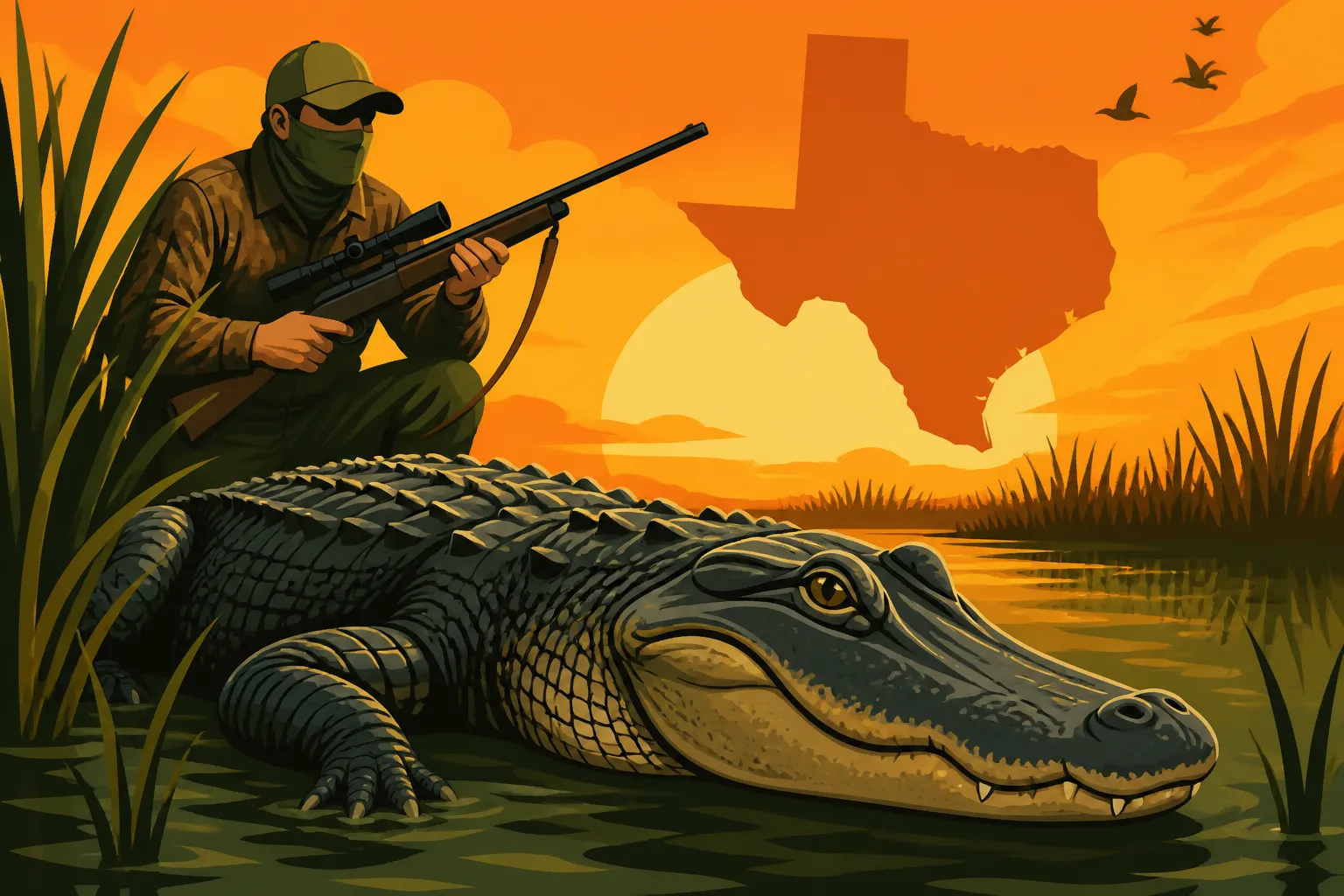
How to Hunt Alligator in Texas
Hunting alligators in Texas isn't for the faint of heart, and navigating the unique regulations, specialized methods, and prime hunting grounds can feel like trying to wrestle a gator barehanded – overwhelming and potentially dangerous if you don't know what you're doing. Many aspiring gator hunters struggle to find clear, actionable information beyond the official rulebook. This comprehensive guide will cut through the confusion, offering a realistic, in-depth look at everything you need to know to pursue these incredible reptiles safely and legally across the diverse landscapes of the Lone Star State.
Navigating Texas Alligator Hunting Regulations and Seasons
Texas alligator hunting is a unique beast, literally and figuratively, with regulations that are quite different from deer or hog hunting. It's not a free-for-all, and understanding the nuances is absolutely critical to avoid hefty fines or even losing your hunting privileges. The Texas Parks and Wildlife Department (TPWD) has specific rules in place to manage the alligator population and ensure sustainable hunting. Many hunters, especially those new to gators, get tripped up by the distinct seasons, methods, and permit requirements that vary by region.
Understanding Licenses and Permits
Before you even think about setting foot near gator territory, you need the right paperwork. First and foremost, you'll need a valid Texas hunting license. For residents, the Super Combo License often covers most bases, but always double-check. Non-residents will need a specific non-resident hunting license. Beyond the general license, alligator hunting has its own unique endorsement: the Alligator Hunting Endorsement, which is a separate purchase. This endorsement is mandatory for all alligator hunters, regardless of age or residency. It's a small fee, but skipping it will land you in hot water. Remember, ignorance of the law is no excuse, so make sure you have all your ducks—or rather, your gators—in a row. You can find more details on general hunting requirements in the Texas Hunting License: Cost, Types & How to Buy (2026) guide.
Then there's the CITES tag. This isn't just a Texas thing; it's an international requirement for species listed under the Convention on International Trade in Endangered Species of Wild Fauna and Flora. While American alligators aren't endangered, they are regulated, and a CITES tag ensures legal trade and transport of alligator hides and parts. Every alligator harvested in Texas must have a CITES tag affixed to its tail within 24 hours of harvest. These tags are issued by TPWD and often come with specific permits or are acquired through drawn hunts or landownership. The number of CITES tags available is limited, especially in public hunt scenarios, and they are county-specific.
Core vs. Non-Core Alligator Hunting Zones and Seasons
Texas is a massive state, and its alligator populations aren't evenly distributed. To manage them effectively, TPWD divides the state into "Core" and "Non-Core" counties, each with its own specific season dates and regulations. This distinction is probably the most confusing part for new gator hunters.
Core Alligator Counties are generally found in East Texas, where alligator populations are robust, particularly in the coastal marshes and major river systems like the Trinity River, Neches River, and Sabine River. These are counties where alligators are abundant and managed as a significant game species. For example, counties like Chambers, Jefferson, Orange, Brazoria, Galveston, and Harris (east of I-45) are considered core counties. In these areas, the season is typically restricted to a relatively short window, usually in September, to coincide with cooler weather and breeding patterns, minimizing stress on the population. The bag limit in core counties is often one alligator per person per season, and methods might be more restricted, often requiring a CITES tag obtained either through a landowner tag or a drawn hunt.
Non-Core Alligator Counties encompass the rest of the state, where alligator populations are generally lower, more scattered, or incidental. Think Central, West, and North Texas. Here, the season is much longer, often year-round, or at least from April 1st to June 30th and then again from September 1st to March 31st, for example. The bag limit in non-core counties is usually one alligator per person per year, and while a CITES tag is still required for legal possession and transport of the hide, the process of obtaining it might be different, sometimes requiring contacting TPWD after harvest for issuance. The intent in non-core counties is often more about nuisance control or opportunistic harvest, rather than a managed population hunt. Understanding these differences is paramount to staying legal. The Texas Alligator Season: Core & Non-Core Dates article can provide more detailed information specific to these zones.
Here's a quick comparison of the two zones:
| Feature | Core Alligator Counties | Non-Core Alligator Counties |
|---|---|---|
| Typical Season | Shorter, usually September | Longer, often April-June and Sept-March, or even year-round in some |
| Bag Limit | Generally one alligator per person per season | Generally one alligator per person per year |
| CITES Tag Access | Primarily landowner tags or drawn hunts | Often acquired post-harvest from TPWD, sometimes via landowner tags |
| Population Density | High, managed populations | Lower, scattered, or incidental populations |
| Primary Goal | Regulated game harvest | Nuisance control, opportunistic harvest |
| Examples | Chambers, Jefferson, Brazoria, Galveston, Orange, Harris (east of I-45) | Most other Texas counties |
The Importance of CITES Tags and Harvest Reporting
The CITES tag isn't just a fancy sticker; it's a vital tool for wildlife management and international conservation efforts. As mentioned, every alligator harvested in Texas, whether from a core or non-core county, must have a CITES tag affixed to its tail within 24 hours of harvest. This tag serves as proof that the alligator was legally harvested and allows for the lawful transport and sale of its hide and meat, both domestically and internationally. Without it, you're essentially in possession of an illegal animal, which can lead to severe penalties.
The process for obtaining a CITES tag varies. In core counties, they are often allocated to landowners or specific hunters participating in public drawn hunts, and you'll receive the tag before the hunt. For non-core counties, you might need to contact TPWD after your successful harvest to arrange for a CITES tag to be issued, often requiring you to bring the hide to a regional office. This is a critical step many new hunters overlook. The details on how to acquire and properly attach this tag are usually outlined in the current year's Outdoor Annual and any specific permits you receive.
Beyond the CITES tag, harvest reporting is crucial. Just like with deer and turkey, alligators taken in Texas need to be reported to TPWD. This is often done through the My Texas Hunt Harvest app or website. Reporting provides vital data for wildlife biologists to monitor alligator populations, track harvest rates, and adjust future regulations. Failing to report your harvest is a violation and can jeopardize the privilege of hunting in the future. Accurate reporting helps ensure healthy alligator populations for generations to come, and it's a small price to pay for the incredible experience of a gator hunt. You can read up on the general process in Texas Hunting Tags & Harvest Reporting (My Texas Hunt Harvest).
Where to Find Alligators: Prime Habitats Across Texas
Finding alligators isn't like spotting a deer in a food plot. They are masters of camouflage and can be incredibly elusive. Texas boasts a wide range of habitats that support alligator populations, but knowing where to focus your efforts is key. You'll need to think like a reptile – where's the water, where's the food, and where can they bask and hide?
Coastal Marshes and Estuaries: The Alligator Heartland
When most people think of Texas alligators, they picture the vast, nutrient-rich coastal marshes and estuaries along the Gulf Coast. This is truly the alligator heartland, particularly the upper coast. Areas like the Anahuac National Wildlife Refuge (though hunting is often restricted or via drawn hunt), McFaddin Beach, and the extensive marsh systems around Galveston Bay, Sabine Lake, and the Brazos River Delta are teeming with gators. These environments offer a perfect combination of brackish water, dense vegetation for cover, ample prey (fish, birds, small mammals), and plenty of sun-drenched banks for basking.
Hunting in these marshy areas often requires a specialized approach. You'll typically need an airboat or a shallow-draft boat, as many of these areas are inaccessible by foot or traditional boat. Navigating the labyrinthine network of bayous, canals, and ponds can be challenging, even for experienced captains. Pay attention to water levels, as they can fluctuate significantly with tides and rainfall, impacting alligator movement and access. The presence of other wildlife, from waterfowl to feral hogs, makes these areas incredibly rich, but also demands respect for the ecosystem. Many of these regions fall into the "Core Alligator Counties" category due to their high alligator density and managed hunting programs. Consider exploring opportunities in areas like the Gulf Coast Hunting in Texas: Waterfowl & Nilgai.
East Texas Rivers and Lakes: Inland Opportunities
While the coast gets a lot of attention, East Texas also offers fantastic alligator hunting opportunities, particularly in and around its major rivers and associated oxbow lakes and swamps. Rivers like the Trinity, Neches, Sabine, and Sulphur, along with large reservoirs such as Lake Livingston, Toledo Bend Reservoir, Sam Rayburn Reservoir, and Caddo Lake, all hold significant alligator populations. These inland waters provide extensive freshwater habitats, complete with cypress swamps, dense bottomland hardwood forests, and plenty of aquatic vegetation.
Hunting these areas can present different challenges than the coastal marshes. River systems can have strong currents, hidden stumps, and ever-changing sandbars. Lakes, especially large reservoirs, can be more exposed to wind and waves. Scouting is incredibly important here. Look for quiet coves, areas with dense lily pads or hyacinths, and muddy banks or sandy points where gators might bask. Often, you'll find gators congregating in sloughs, backwaters, and smaller tributaries off the main body of water. Early morning or late afternoon are prime times to spot them, as they tend to be more active or basking. Many of these East Texas regions also fall within the Core Alligator Counties, so be sure to check specific regulations for the county you plan to hunt. You can find more habitat information in our guide on Pineywoods & East Texas Hunting.
Identifying Alligator Sign and Behaviors
Spotting an alligator isn't always easy. They are incredibly wary animals. Look for several key signs:
- "Gator Trails": In muddy banks or shallow areas, you might see distinct slide marks or trails where alligators have dragged their bodies in and out of the water. These are excellent indicators of frequent use.
- Basking Spots: Alligators are cold-blooded and love to warm up in the sun. Look for them on sandy beaches, muddy banks, logs, or even floating vegetation. They often prefer spots where they can quickly slide back into the water if disturbed.
- "Eye Shine" at Night: This is a classic method for spotting alligators. Their eyes reflect light with a distinct red glow at night. A powerful spotlight can reveal numerous gators, giving you an idea of population density and size.
- Wallows and Nests: Larger gators, especially females, will create mud wallows or build substantial nests from vegetation in spring and early summer. Finding these can indicate a resident population.
- Feeding Activity: Keep an eye out for splashes or disturbances in the water, which could indicate a gator feeding. Sometimes you'll see fish jumping out of the water in a frenzy, trying to escape a lurking gator.
Understanding their behavior is also critical. Alligators are most active when temperatures are warm, generally above 70°F. During cooler periods, they become sluggish. They are primarily nocturnal predators but will bask during the day. In areas with heavy boat traffic or human presence, they tend to be more wary and will disappear quickly at the first sign of danger. Conversely, in remote areas, they might be more tolerant of an approaching boat. Approach slowly and quietly, using binoculars to scan the banks and water ahead.
Effective Alligator Hunting Methods: From Baited Lines to Bows
Alligator hunting in Texas isn't typically done by simply walking through the woods with a rifle. The methods are specialized, often requiring direct contact or close proximity to the animal, making it an adrenaline-pumping experience. Texas regulations permit several methods, but always double-check the current Outdoor Annual for any county-specific restrictions.
Setting Up Baited Lines and Snare Traps
One of the most common and effective methods, especially for larger gators, is hunting with baited lines. This involves setting out a strong line (typically 300 lb test or more, often braided nylon or polypropylene rope) with a large, strong hook (non-stainless steel is often preferred as it will rust away if lost) baited with fresh, stinky meat. Common baits include chicken quarters, beef scraps, or even whole rough fish like carp or shad. The bait should be suspended above the water, usually from an overhanging branch or a sturdy pole, allowing the gator to pull it down. The other end of the line is secured to something immovable on shore, like a large tree, or to a weighted jug or buoy that acts as a drag. The goal isn't to hook the gator in the mouth, but for them to swallow the bait, getting hooked internally.
You can set multiple lines, but regulations often limit the number per hunter. Lines must be checked at specific intervals (e.g., every 24 hours) and must have identifying information attached, like your customer ID. When you find a gator on your line, the real work begins. You'll need to use a boat to approach it carefully, bring it alongside, and dispatch it. This is where safety is paramount. A thrashing alligator is incredibly powerful and dangerous.
Snare traps are another method, often used in conjunction with baited lines. These are typically heavy-duty cable snares set in areas where alligators frequently travel, such as across narrow channels or along gator trails. The snare is designed to tighten around the gator's body or neck as it passes through. Similar to baited lines, snare traps require specific regulations for placement, marking, and checking. Both baited lines and snares are considered "capture devices," and you must be present to dispatch the gator once it's captured.
Archery and Harpoon Techniques
For those seeking an even more direct and challenging encounter, archery or harpoon hunting offers a truly primitive experience. This usually involves spotting a gator, often at night with a spotlight, and making a precise shot.
Archery hunting for alligators typically utilizes specialized bowfishing setups. This means a heavy-poundage bow, a fishing reel mounted to the bow, and stout arrows with barbed, often retractable, heads. The arrow is tied to a strong line, allowing you to retrieve the gator after the shot. The challenge here is not just hitting the gator in a vital area (often the head or neck for a quick dispatch), but also dealing with the immense power of the animal once it's struck. It will dive, roll, and fight fiercely. You'll need to play the gator like a giant fish, often from a boat, until you can bring it close enough for a dispatch shot. It’s an incredibly physical and thrilling way to hunt. Consider reading up on Bowhunting in Texas: Archery Season Guide for general archery tactics.
Harpooning is another ancient method that is still legal and effective. A harpoon consists of a detachable head (often a barbed spearhead) attached to a heavy line, which is then connected to a buoy or directly to the boat. The harpoon shaft itself is merely for propulsion. The idea is to thrust the harpoon into the gator's tough hide, detaching the head, and then use the line to wear the gator down and retrieve it. This is a close-quarters affair, requiring steady nerves and a powerful thrust. Harpooning is often used when a gator is spotted basking or slowly cruising on the surface.
Both archery and harpooning require patience, stealth, and excellent shot placement. They also require a secondary method of dispatch, as these initial shots are generally for securing the animal, not immediately killing it.
Firearm Use and Dispatching the Gator
Once an alligator has been secured—whether it's on a baited line, snared, or has been shot with an arrow or harpoon—the final step is dispatching it safely and humanely. Texas regulations allow for the use of firearms for dispatching an alligator. However, it's crucial to understand that you cannot simply shoot a free-swimming alligator with a rifle as your primary hunting method. The gator must first be restrained or brought into "immediate control."
For dispatch, smaller caliber rimfire rifles (like a .22LR) or handguns are commonly used. The goal is a precise shot to the brain. The alligator's brain is relatively small and located on the top of its head, slightly behind the eyes. A headshot ensures a quick and ethical kill. Trying to shoot it elsewhere can lead to a prolonged struggle, damage to the hide, and a dangerous situation for the hunter. Shot placement is critical.
Safety is paramount during the dispatch process. A gator, even when seemingly exhausted, can make a sudden lunge or thrash, and its jaws are incredibly powerful. Always use extreme caution. Have another person in the boat ready to assist or maintain control of the gator while you prepare for the shot. Eye protection and sturdy gloves are always a good idea. Once dispatched, the CITES tag must be immediately affixed to the tail, as mentioned earlier. After that, it's time to begin the process of Field Dressing & Processing Game in Texas Heat.
Essential Gear for a Successful Texas Alligator Hunt
Alligator hunting isn't like heading out for squirrels; it requires a specialized set of gear. Cutting corners here can lead to frustrating failures or, more importantly, dangerous situations. Investing in the right equipment makes the hunt safer, more efficient, and ultimately more enjoyable.
Boats, Safety Gear, and Transportation
A reliable boat is perhaps the single most important piece of gear for alligator hunting, especially in the vast coastal marshes or large river systems. For marsh hunting, a shallow-draft boat like an airboat or a flat-bottomed jon boat with an outboard jet motor is ideal for navigating shallow waters and dense vegetation. For larger lakes and rivers, a stable, well-maintained V-hull or bay boat might be more suitable, but still prioritize one that can handle some shallow water.
Beyond the vessel itself, safety gear is non-negotiable. This includes:
- Life jackets (PFDs) for everyone on board.
- Navigation equipment: GPS, charts of the area (like onX Hunt or HuntStand apps can be invaluable for pinpointing locations and property lines), and a compass.
- Communication devices: Marine radio, fully charged cell phones, and possibly a satellite messenger for remote areas where cell service is spotty.
- Emergency supplies: First-aid kit, whistle, flashlight, flares, and a kill switch lanyard for the boat motor.
- Powerful spotlight: Absolutely essential for night hunting or checking lines in low light, used for spotting eye shine.
- Secure ropes and cleats: You'll need strong ropes to tie off lines and handle a captured gator.
Transporting a large alligator can be a challenge. They are heavy, cumbersome, and can be quite long. A stout trailer with ample space is necessary for getting your trophy home. Make sure your vehicle can handle the weight.
Specialized Hunting Equipment
The specific hunting method you choose will dictate your specialized gear.
For baited line hunting:
- Heavy-duty lines: Braided nylon or polypropylene rope, at least 300-500 lb test, several hundred feet.
- Large, strong non-stainless steel hooks: Size 18/0 or larger, designed for gators.
- Buoys or jugs: Brightly colored, durable, and large enough to provide drag if a gator breaks free from its anchor.
- Bait: Fresh, bloody, and smelly meat is best – chicken quarters, beef heart, fish scraps.
- Sturdy poles or tree saws: To suspend bait lines.
For archery/harpoon hunting:
- Heavy-poundage bow: Compound or recurve, usually 60 lbs or more.
- Bowfishing reel: Spool-style or bottle-style, loaded with strong braided line.
- Alligator arrows: Heavy, solid fiberglass or carbon, with strong barbed heads that can penetrate tough hides. Often a line is tied to a float.
- Harpoon: Strong shaft with a detachable, barbed head and robust line.
For dispatching:
- Small caliber firearm: .22LR rifle or pistol, or a .22 Magnum.
- Ammunition: Solid point or specialized lead rounds for penetration.
- Strong, long-handled gaff: To secure the gator's head for a precise shot.
- Heavy-duty bolt cutters or snips: In case you need to quickly cut a line.
Having some general Best Hunting Gear for Beginners in Texas (By Budget) is a good idea, but the alligator-specific tools are critical.
Cooling and Field Dressing Supplies
Once you've harvested your alligator, the clock starts ticking, especially in the Texas heat. Proper field dressing and cooling are crucial to preserve the meat and hide.
- Large, insulated coolers: You'll need coolers big enough to hold large sections of meat. Best Coolers for Texas Hunting (Yeti & Alternatives) are designed for this kind of extreme heat. Consider a large marine cooler or multiple smaller ones.
- Plenty of ice: More than you think you'll need! Ice is essential for rapidly chilling the meat.
- Sharp knives: A sturdy skinning knife, a smaller boning knife, and a gut hook knife are all useful.
- Gloves: Cut-resistant and heavy-duty gloves are recommended when handling a large, potentially still active, animal and its sharp scales.
- Tarps: To keep your boat and vehicle clean during field dressing.
- Measuring tape: To measure your gator and ensure it meets any minimum size requirements.
- Water/cleaning supplies: For rinsing equipment and cleaning up.
- Brine/salt: If you plan to preserve the hide yourself, you'll need ample non-iodized salt for brining.
Field dressing an alligator involves making specific cuts to separate the hide from the meat and organs, as well as quartering the meat into manageable pieces for cooling. It's a messy job, but vital for quality.
Processing and Using Your Alligator
After the excitement of the hunt, the real work of processing your alligator begins. This isn't just about getting dinner on the table; it's about honoring the animal and ensuring every usable part is properly cared for. Many hunters find processing large game like an alligator challenging, especially under the Texas sun.
Field Dressing Your Alligator in the Wild
Field dressing an alligator typically involves bleeding it out, which is usually accomplished during the dispatch process or shortly after. The next step is often to begin skinning. Alligator skin is incredibly tough, especially on the back, and the scale patterns dictate specific cuts to preserve its value. Generally, a cut is made down the belly from the chin to the tail, and then cuts are made along the sides of the jaws and down the inside of the legs. The hide is carefully peeled back, working slowly to avoid cutting through the skin or leaving too much meat on the hide.
It’s a physically demanding process. You might need to use a sturdy hook or a winch to help pull the hide off. Once the hide is removed, the carcass can be gutted to remove organs, and the meat can be separated. The prime meat cuts are typically the tail, backstraps, and leg meat. The meat should then be immediately placed on ice in coolers to cool down rapidly. This is especially important in Texas's warm climate to prevent spoilage and ensure the best flavor. For a larger game animal, knowing How to Cool a Deer Fast in Texas Heat provides similar principles that apply to gators.
Preserving the Hide and Processing the Meat
The hide of an alligator is highly prized. If you plan to keep the hide, it needs immediate and proper care to prevent spoilage. After skinning, the hide should be thoroughly cleaned of any remaining meat or fat, then heavily salted with non-iodized salt. The salt draws out moisture, preventing bacterial growth. The hide should be rolled up, skin-side in, and kept cool, ideally on ice, before being transported to a professional tannery. Tanning is a specialized process that preserves the leather, making it suitable for boots, belts, bags, or other items. Attempting to tan a gator hide yourself without experience is likely to end in disappointment.
Alligator meat is a true delicacy—mild, firm, and versatile, often described as a cross between chicken and fish, but with a unique texture. The tail meat is particularly popular, often cut into steaks or nuggets for frying. The backstraps and leg meat are also excellent. After separating the meat from the bones and gristle, it should be thoroughly rinsed, trimmed of any remaining fat or connective tissue, and then packaged for freezing. Vacuum sealing is an excellent way to prevent freezer burn and extend its shelf life.
Consider making a variety of cuts – some for frying, some for stewing, and some for grilling. Don't waste the opportunity to enjoy this unique wild game. Many local processors in alligator country are experienced with gators and can handle the skinning, meat processing, and even arrange for tanning. Find one near where you hunted, like you might search for Where to Take a Deer for Processing in Texas, and call ahead to ensure they accept alligators and understand the CITES tag requirements.
Disclaimer
Please remember that hunting regulations in Texas can change. Always consult the current year's Texas Parks and Wildlife Department Outdoor Annual or their official website before planning any hunting trip to ensure you are compliant with the latest laws and regulations. This guide is for informational purposes only and does not supersede official TPWD rules.