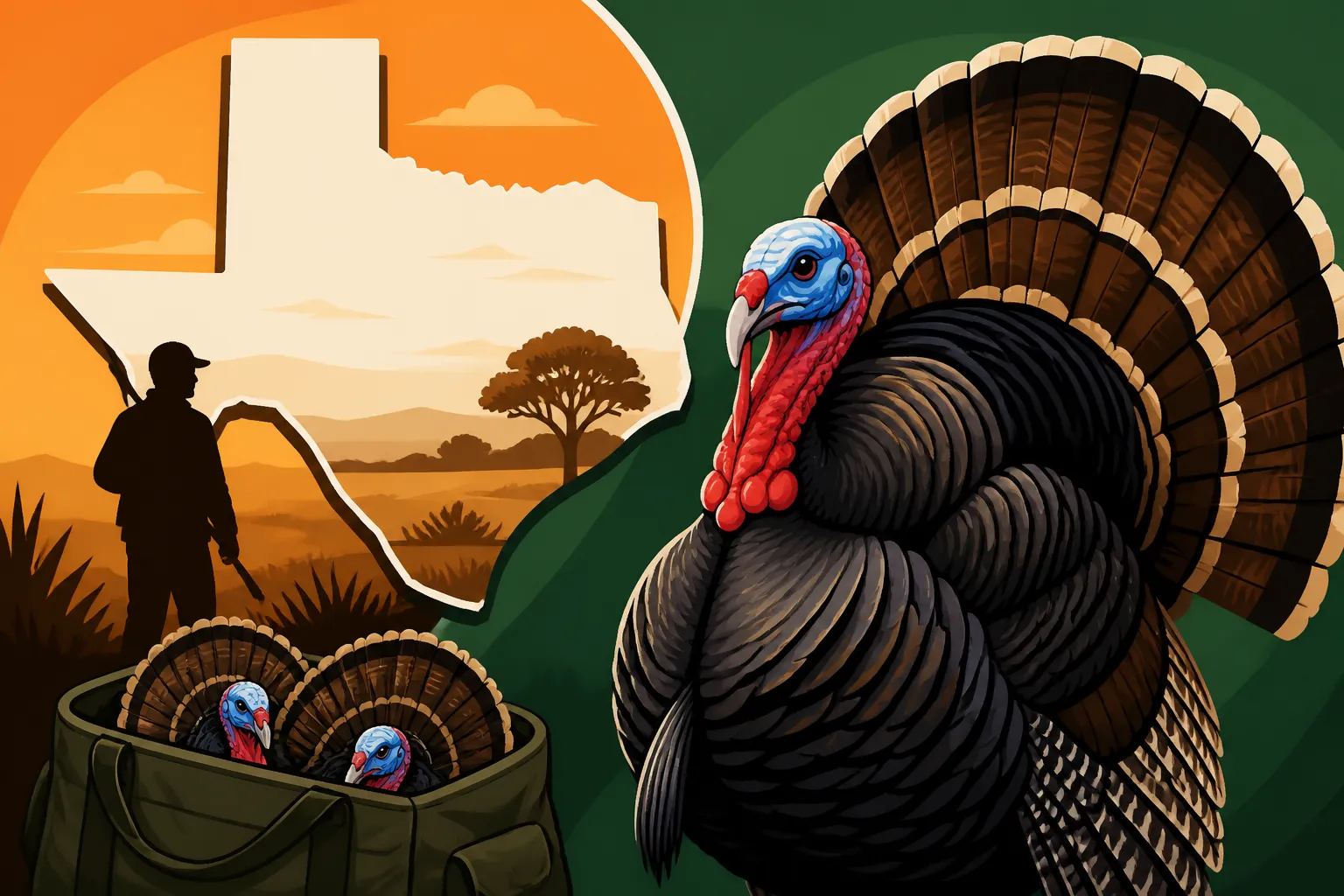
Eastern Turkey Season & Bag Limit in Texas
It can be incredibly frustrating trying to pin down the exact regulations for hunting Eastern turkeys in Texas. Unlike the more numerous and widespread Rio Grandes, these birds are a truly unique and challenging pursuit, found in a very specific part of our state. The rules are different, the stakes are higher, and making a mistake could mean ruining your hunt or worse. This guide is here to untangle all that confusion, giving you a clear understanding of the Eastern Turkey season and bag limit in Texas, so you can plan your hunt with confidence and respect for these magnificent birds.
The Elusive Eastern: Why Texas's Eastern Turkey Population is Unique
When most folks think about turkey hunting in Texas, their minds immediately drift to the vast expanses of the Hill Country or South Texas, teeming with Rio Grande turkeys. And for good reason – Rios are plentiful, vocal, and offer incredible hunting opportunities across a huge swath of the state. But for a select group of dedicated hunters, the true prize lies deep within the pineywoods of East Texas: the Eastern wild turkey.
These birds are a completely different creature, both in their appearance and their behavior. They're typically darker, with richer iridescent plumage, and often have more intricate patterns on their tail feathers compared to their Rio Grande cousins. More importantly, their population in Texas is much smaller, far more localized, and their habitat demands are very specific. You're not going to find Easterns just anywhere, and their distinct needs mean they've been subject to different management strategies and, consequently, different hunting regulations. This makes understanding the nuances of their season and bag limits crucial for any hunter hoping to pursue them ethically and legally.
East Texas: The Eastern Turkey's Last Stronghold
The Eastern wild turkey in Texas isn't found just anywhere; their range is primarily confined to the dense, often swampy, pine forests and hardwood bottoms of East Texas. Think areas around the Angelina and Sabine National Forests, and the private timberlands that dominate counties like Angelina, Nacogdoches, Jasper, Newton, and Tyler. These are mature forests with a diverse understory, providing the cover, food sources, and roosting trees these particular turkeys need to thrive. Unlike the open country Rios, Easterns prefer thick timber, making them inherently more challenging to locate and call in.
The history of Eastern turkeys in Texas is also a story of conservation and dedicated effort. Historically, their numbers dwindled significantly due to habitat loss and unregulated hunting in the early 20th century. Thanks to extensive restoration and translocation projects by the Texas Parks and Wildlife Department (TPWD) and organizations like the National Wild Turkey Federation (NWTF), their populations have slowly rebounded in these specific areas. These efforts have been instrumental in allowing us to have a limited hunting season today. It's a testament to how far we've come, and why preserving these birds through careful management is so important.
Distinguishing Easterns from Rio Grandes
It might seem obvious, but correctly identifying an Eastern turkey in the field is paramount, especially when you're dealing with very specific regulations. While the untrained eye might just see "a turkey," there are clear distinctions. Easterns typically have chestnut-brown tips on their tail feathers, a feature that immediately sets them apart from the buff-colored or tan-tipped tails of Rio Grandes. Their body feathers also tend to be a darker, more iridescent bronze and copper, often appearing almost black in certain light, whereas Rios often have a lighter, more coppery-bronze sheen.
Behaviorally, Easterns can be notoriously shyer and less responsive to calling than Rios, making them a significant challenge for even seasoned turkey hunters. They often inhabit denser cover, which translates to a more methodical, patient style of hunting. Knowing these differences isn't just about identifying your target; it's about understanding the unique hunting experience you're in for. If you're planning a trip to East Texas specifically for an Eastern, don't expect it to be like your typical Rio Grande hunt in the Texas Hill Country Deer Hunting in Texas or South Texas Trophy Whitetail: Brush Country Bucks. It's a different game entirely.
Decoding the Calendar: Texas Eastern Turkey Season Dates
Navigating the Texas hunting calendar can feel like a labyrinth, especially when you start looking at species with limited ranges and special regulations. The Eastern turkey season is a perfect example of this. It's not a statewide free-for-all; it's a precisely defined window in a very specific geographical area. Missing these dates or hunting in the wrong county is a quick way to land yourself in trouble, so paying close attention to the details in the Outdoor Annual is non-negotiable.
The season for Eastern turkeys is typically a spring-only affair, designed to coincide with the birds' breeding season when gobblers are most active and vocal. This timing allows hunters to target mature gobblers while minimizing impact on nesting hens, which is crucial for population management.
Spring Season Specifics for Eastern Turkeys
For the 2026-2027 hunting seasons, the Eastern turkey spring season generally runs from early April through early May. It's a relatively short window, usually about two to three weeks, compared to the much longer spring seasons for Rio Grande turkeys. This brevity reflects the more sensitive nature of the Eastern population and the need for stricter management. The exact dates can shift slightly year to year, so always confirm with the latest Texas Turkey Season 2026: Spring & Fall Zones information in the TPWD Outdoor Annual.
This season is strictly limited to certain East Texas counties. If you're outside of these designated counties, you are not permitted to hunt Eastern turkeys. This geographical restriction is key to protecting and managing these localized populations. Counties typically included are those within the traditional Pineywoods ecoregion, such as Angelina, Bowie, Cass, Cherokee, Delta, Fannin, Franklin, Harrison, Hopkins, Houston, Jasper, Lamar, Marion, Morris, Nacogdoches, Newton, Panola, Polk, Red River, Rusk, Sabine, San Augustine, Shelby, Smith, Titus, Trinity, Tyler, Upshur, Walker, and Wood. Some years, certain counties might be added or removed based on population surveys and habitat conditions, reinforcing the need to check the current regulations.
The Importance of Zone and County Boundaries
Understanding your zone and county boundaries is absolutely critical when pursuing Eastern turkeys. Unlike the broader zones for migratory birds or general deer seasons, Eastern turkey hunting is hyper-localized. If you're hunting private land or a national forest, it's essential to know exactly which county you're in. Many hunters use mapping apps, often found on platforms like GoHunt, to identify property lines and confirm their current location within designated hunting counties. This technology can be a lifesaver, especially in dense forest where landmarks are few and far between.
It's also worth noting that there is no fall hunting season for Eastern turkeys in Texas. The focus is entirely on the spring breeding season. This distinction is vital, as hunting during the fall could disproportionately impact the population, especially immature birds or hens. The absence of a fall season highlights the delicate balance of Eastern turkey management compared to the more robust Rio Grande populations that often have both spring and fall hunting opportunities. When you're planning your overall hunting year, remember to consult the Texas Hunting Seasons: Complete Calendar by Species to keep all these specific dates straight.
Understanding Your Limits: Eastern Turkey Bag Regulations
Just as the season dates are highly specific, so are the bag limits and other regulations for Eastern turkeys in Texas. These rules are designed to ensure sustainable hunting practices for a species that requires careful stewardship. Ignoring these limits not only carries legal penalties but also undermines the conservation efforts that have brought Eastern turkeys back to huntable numbers. This isn't just about following the law; it's about respecting the resource.
The core principle behind Eastern turkey bag limits is conservation. With a smaller, more localized population, overharvesting even a few birds can have a significant impact on local breeding success and overall population health. This is why the rules are often much stricter than what you might find for other game species.
The One-Gobbler Rule
For Eastern turkeys in Texas, the bag limit is typically one gobbler per season. This "one-gobbler rule" is a cornerstone of Eastern turkey management, emphasizing quality over quantity and aiming to protect the breeding potential of the flock. This means that once you successfully harvest an Eastern gobbler, your Eastern turkey season is over. It doesn't matter if it's the first day of the season; you're done for the year in terms of Easterns. This rule is absolute and applies whether you're hunting private land, participating in a public drawn hunt, or otherwise.
It's also important to remember that this one gobbler must be an Eastern gobbler. If you happen to be hunting in a county where both Rio Grandes and Easterns might overlap (though this is rare in prime Eastern habitat), you still only get one Eastern. Your Rio Grande turkey bag limit would be separate, typically up to four gobblers per season, depending on the zone and specific regulations. However, most serious Eastern hunters are targeting the specific sub-species, and overlap is not usually an issue in their preferred habitat.
License Requirements and Harvest Reporting
To hunt Eastern turkeys in Texas, you'll need a valid Texas hunting license, which typically means a Super Combo License or a relevant Resident/Non-Resident hunting license with the required endorsements. For specific details on what you need, check out the Texas Hunting License: Cost, Types & How to Buy (2026) guide. Additionally, like all other game animals, you are required to report your Eastern turkey harvest to the Texas Parks and Wildlife Department (TPWD). This is done through the My Texas Hunt Harvest app or online platform.
Harvest reporting is not merely a formality; it's a critical component of wildlife management. Every reported gobbler provides invaluable data to biologists who use it to assess population health, track harvest rates, and make informed decisions about future seasons and bag limits. Failing to report your harvest is a violation of state law and deprives wildlife managers of essential data needed to ensure the long-term sustainability of the Eastern turkey population. So, once you've taken your gobbler, make sure to fulfill your reporting obligations promptly through the Texas Hunting Tags & Harvest Reporting (My Texas Hunt Harvest) system.
Here’s a quick summary of the typical Eastern Turkey season and bag limits in Texas:
| Aspect | Eastern Turkey Regulations (Typical) |
|---|---|
| Hunting Season | Spring only (usually early April – early May) |
| Season Length | ~2-3 weeks |
| Geographical Area | Designated East Texas counties only (e.g., Angelina, Jasper, Nacogdoches, Newton, Sabine, San Augustine, Shelby, Tyler, etc.) |
| Bag Limit | One (1) gobbler per season |
| Fall Season | None |
| License Required | Valid Texas hunting license with applicable endorsements |
| Harvest Reporting | Mandatory via My Texas Hunt Harvest app/online |
| Legal Means/Methods | Standard turkey hunting methods (shotgun, archery, crossbow, rifle where legal), no baiting of specific turkeys, calling allowed. Check Texas Eastern Turkey Hunting Regulations 2026 for full details. |
Making the Most of Your Eastern Turkey Hunt
Hunting Eastern turkeys is a truly special experience, often considered the pinnacle of turkey hunting in Texas. Their elusive nature, coupled with the unique habitat they call home, presents a challenge that many hunters eagerly embrace. Since you're allowed only one bird, making that hunt count becomes even more significant.
Success in the field for these particular birds often comes down to meticulous scouting, understanding their specific behaviors, and employing tactics tailored to the dense East Texas woods. It's less about run-and-gun and more about patience, stealth, and precise calling. Many hunters find that a successful Eastern hunt is incredibly rewarding, a true testament to their skills and dedication.
Tactics for the Dense East Texas Woods
Unlike hunting Rio Grandes in open ranch country where you might spot birds from a distance, Eastern turkey hunting often requires getting into their world, deep in the timber. This means extensive pre-season scouting is crucial to locate roosting areas, feeding grounds, and travel corridors. Look for fresh tracks, droppings, and scratchings around oak flats (for acorns), pine stands, and near water sources. Using mapping applications, such as those found on the GoHunt platform, can help identify prime habitat features and potential pinch points.
Calling for Easterns also requires a slightly different approach. While aggressive calling can sometimes work, a more subtle and patient strategy often proves more effective. Soft yelps, clucks, and purrs, mimicking a contented hen, can often draw in a cautious gobbler. Don't be afraid to sit silently for extended periods, letting the woods work for you. These birds can be incredibly wary, and any sudden movement or overly aggressive calling can send them packing. Remember, the goal is to make them believe a hen is close by and willing, not to challenge them with aggressive gobbling. For more general turkey calling advice, you might find some crossover tips in guides like Turkey Calling & Tactics for Texas Rios or How to Call Rio Grande Turkeys in Texas, adjusting for the Eastern's more reserved nature.
Gear and Conservation Considerations
When it comes to gear, reliable camouflage that blends into the deep greens and browns of the pineywoods is essential. A comfortable, supportive vest for sitting against trees and carrying your calls, decoys, and harvest is also crucial. Shotgun choices often lean towards 12- or 20-gauge with appropriate turkey chokes and heavy loads, ensuring clean kills at responsible ranges. Many hunters also find that good quality binoculars are indispensable for spotting subtle movement in thick cover, even when hunting close. Consider researching Best Game Calls for Texas Hunting to find calls specifically designed for varying volumes and tones.
Beyond the hunt itself, remember the importance of ethical hunting and conservation. The Eastern turkey population in Texas is a success story, but it's one that requires ongoing vigilance and adherence to regulations. By following the one-gobbler rule, accurately reporting your harvest, and practicing responsible hunting, you contribute directly to the health and future of this magnificent species. Every hunter has a role to play in ensuring that future generations can also experience the thrill of chasing these elusive birds in the East Texas pineywoods.
Disclaimer
Please note that hunting regulations, season dates, and bag limits are subject to change by the Texas Parks and Wildlife Department (TPWD). While every effort has been made to provide accurate and up-to-date information, this guide is for informational purposes only and should not be considered legal advice. It is the hunter's sole responsibility to consult the official TPWD Outdoor Annual or website for the most current and comprehensive regulations before engaging in any hunting activities.