How to Make Your Own Dove Field
There's nothing quite like that early September morning, the air thick with humidity, the smell of dew on fresh-cut fields, and the anticipation of doves whistling past. But if you've spent any time chasing doves in Texas, you know the frustration: crowded public lands, trying to find a spot that hasn't been picked clean, or scrambling for a decent field at the last minute. This guide is all about taking control of your dove season by creating your very own, irresistible dove field right here in the Lone Star State.
Why Bother Making Your Own Dove Field in Texas?
Let's be honest, hunting in Texas can sometimes feel like a competition, especially for popular game like doves. The sheer number of hunters means prime spots get snatched up fast, and finding a truly undisturbed experience can be a real headache. That's where building your own dove field comes in – it’s a game-changer for control, quality, and consistency in your hunting experience.
The Frustration of Public Land Crowds
Texas offers some fantastic public hunting opportunities through programs like the Annual Public Hunting Permit, but dove fields on these lands, or even day-lease operations, can get absolutely hammered. Imagine waking up before dawn, driving an hour or two, only to find three other trucks already parked at your intended spot. You might end up squeezed into a corner, dodging stray pellets, or simply watching the doves fly high and wide, spooked by the sheer volume of hunters. It’s disheartening, to say the least. The birds quickly learn where the pressure is, making for a frustrating day that often yields more sweat than doves. Plus, there's always the safety aspect when you're in close quarters with other hunters you don't know, all trying to get a shot at fast-moving birds.
Tailoring Your Hunt to Your Preferences
Creating your own dove field changes everything. Suddenly, you're not just a hunter; you're a land manager, a strategist, and the master of your dove-hunting destiny. You decide where the birds will feed, where they'll water, and where they'll fly. This level of control allows you to design the perfect setup, placing blinds or setting up Dove Field Setup: Where to Stand strategically to maximize shooting opportunities. You can experiment with different crops, varying mow patterns, and even timing your field manipulation closer to the season opener to ensure maximum attraction. This isn't just about bagging more birds; it’s about crafting a more enjoyable, less stressful, and truly personalized hunting experience for you, your family, and your chosen hunting buddies.
Essential Steps to Creating a Dove Magnet
Building a productive dove field isn't rocket science, but it does require some planning and effort. Think of it as cultivating a relationship with the land and the birds; the more you put in, the more you'll get out of it.
Choosing the Right Location and Soil
Before you even think about planting, you need to assess your potential field. Doves are creatures of habit, and their habits are dictated by their needs: food, water, and grit.
First, consider the location. Is it easily accessible for you to work? Does it have good sun exposure? Importantly, is it near known dove flyways or roosting areas? If you’ve seen doves consistently in a particular area, that’s a huge clue. Doves often travel between roosting sites, feeding fields, and water sources, so being along one of those established flight paths can be incredibly beneficial.
Next, let's talk soil. Doves aren't picky about fancy soil, but your chosen crops might be. A good soil test is always a smart investment. You're looking for reasonably fertile, well-draining soil. Clay can work, but sandy loam is generally easier to manage and better for many dove-attracting crops. A field with some natural grit (small pebbles or coarse sand) is also a bonus, as doves need grit for digestion. Consider the history of the land; has it been farmed before? If it's virgin pasture, you might have more work ahead in terms of breaking ground and amending soil.
Selecting and Planting Dove-Friendly Crops
This is where the magic really happens – planting the buffet that doves can’t resist. The key is to choose crops that provide small, accessible seeds and can be managed (mowed, disked) to expose those seeds right before or during the Texas Dove Season 2026: Zones & Dates.
Here are some popular and effective options for Texas:
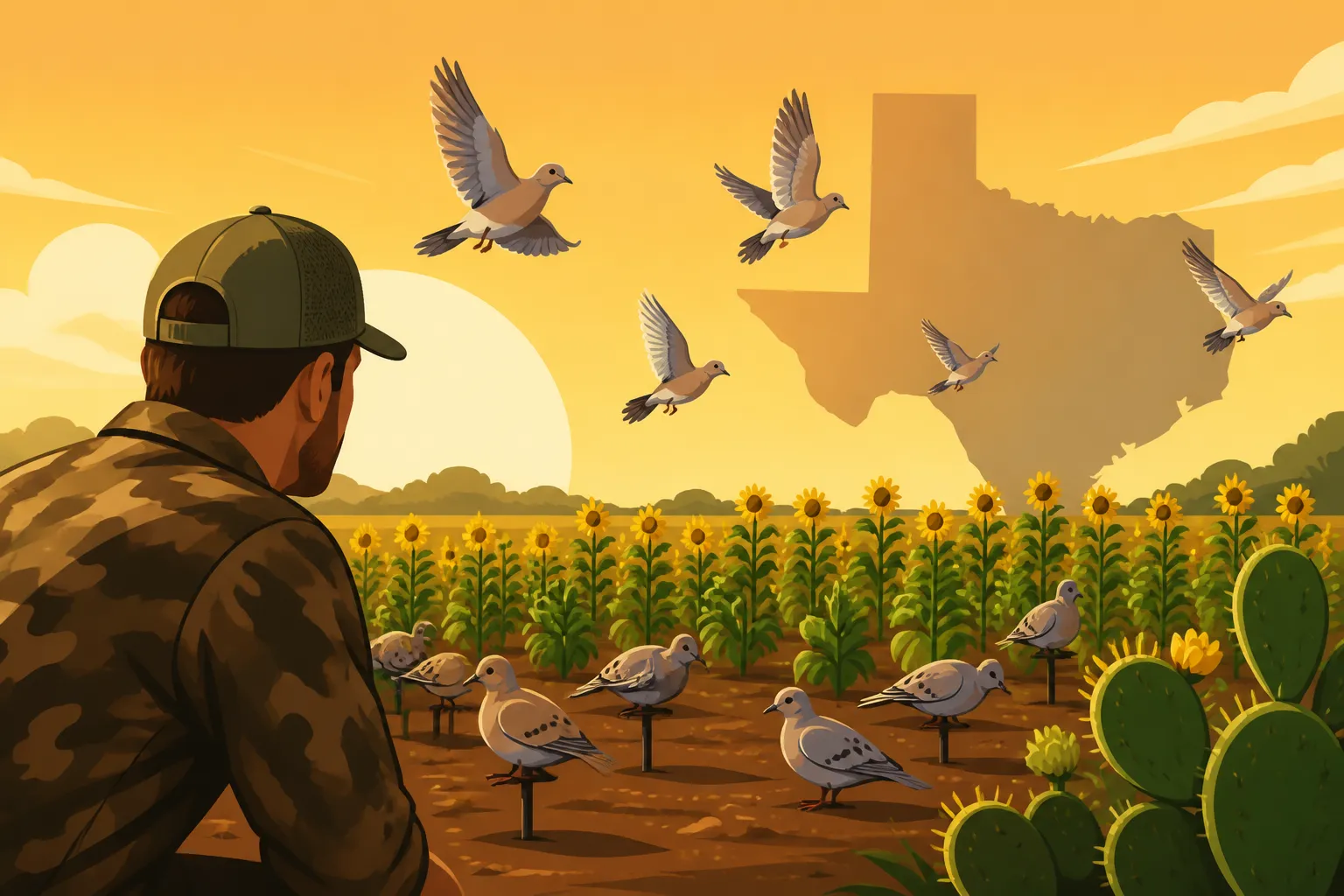
- Sunflowers: These are classic dove magnets. The seeds are highly attractive, and the tall stalks provide cover and perching spots. Black oil sunflower varieties are often preferred for their smaller seeds, which doves find easier to eat. Plant these in the spring (March-April) after the last frost.
- Milo (Grain Sorghum): A fantastic, hardy choice for many parts of Texas, especially where water is a concern. Milo produces abundant, small, round seeds that doves absolutely love. It’s relatively drought-tolerant and can be planted from April to early July, depending on your region and desired maturity date.
- Proso Millet: This fast-growing millet produces small, nutritious seeds. It's a great "emergency" crop if you're behind schedule, as it matures quickly. You can plant it later in the summer for a fall hunt.
- Wheat: Winter wheat can be planted in the fall and left standing or mowed down in spring/summer. The seeds are attractive, and the stubble provides excellent cover. It can also be disced in parts to create "clean" feeding areas.
- Dove Pro Blend: Many seed companies offer proprietary "dove blends" that combine several of these crops, often including things like sesame, buckwheat, and sunflowers, to provide a varied menu and extended food source. These can be a good option if you're unsure which single crop to focus on.
When to plant is crucial. You want the crops to be mature and drying down, but not completely shattered, by the time doves start looking for fall feeding grounds. For early September openers, this usually means planting spring crops (sunflowers, milo) in April or May, and potentially a second round of millet in late June or early July.
Here's a quick comparison of popular dove crops:
| Crop | Planting Time (Texas) | Seed Size | Drought Tolerance | Dove Attraction | Notes |
|---|---|---|---|---|---|
| Sunflowers | March – April | Medium | Moderate | Excellent | Classic choice, provides cover. |
| Milo (Sorghum) | April – Early July | Small | Good | Excellent | Hardy, good for drier areas. |
| Proso Millet | May – Early July | Very Small | Moderate | Very Good | Fast growing, good for late planting. |
| Wheat | Sept – Nov (winter) | Medium | Good | Good | Can be planted fall/winter, then mowed. |
| Sesame | April – June | Very Small | Good | Excellent | High oil content, highly preferred. |
| Buckwheat | April – August | Small | Moderate | Good | Quick maturity, good soil builder. |
Managing Your Field for Peak Attraction
Planting is just the beginning. Doves prefer to feed on bare ground, where they can easily spot and access seeds. This is why manipulating your field is so vital.
- Discing: Lightly discing strips of your field a few weeks before the season opens will expose seeds that have fallen or shatter from the plants. This creates those open, dusty feeding lanes that doves absolutely flock to. You don't want to disc the whole field at once, as that can make all the food disappear too quickly. Instead, work in strips or patches.
- Mowing: Mowing strips or sections of your crop is another highly effective method. This knocks down the mature plants, exposing the seeds. Again, timing is key. You might mow a quarter of your field a couple of weeks out, another quarter a week out, and leave some standing to manipulate during the season. This provides a continuous food source and keeps birds interested. For a fantastic resource on managing fields, check out guides like How to Make Your Own Dove Field.
- Burning: In some larger agricultural settings, controlled burns can be used to expose seeds and clear debris, mimicking natural wildfire benefits. However, this is a more advanced technique with significant safety and regulatory considerations, and generally not recommended for smaller, private dove fields unless you have extensive experience and proper permits.
- Timing: The ideal scenario is to have your crops mature and ready for manipulation a few weeks before the Dove Hunting in Texas: The Sept 1 Opener Guide. This allows you to start exposing seeds and attracting local birds, establishing a pattern before opening day. Then, you can continue to manipulate smaller sections throughout the season to keep the food fresh and accessible. Remember, doves will often move on if the food source dries up or becomes too difficult to access.
Legality, Logistics, and Long-Term Success
While building a dove field is rewarding, you can't just throw seeds on the ground and call it a day. There are important rules to follow and ongoing considerations to ensure your efforts pay off season after season.
Understanding Texas Dove Hunting Regulations
This is probably the most critical part: staying legal. In Texas, like anywhere else, dove hunting is heavily regulated, particularly concerning baiting.
The "Normal Agricultural Practice" Rule: This is paramount. You can legally hunt doves over fields that have been manipulated (disced, mowed, harvested) as part of a normal agricultural planting, harvesting, or post-harvest manipulation. This means your actions must be consistent with standard farming practices for the specific crop you're planting. You cannot, for example, scatter commercial bird seed onto a bare field and then hunt over it. That would be illegal baiting. If you're growing sunflowers, mowing them down and discing strips is a normal agricultural practice to prepare for a hunt or for subsequent planting.
Key Regulations to Remember:
- Migratory Bird Endorsement: You'll need a Texas Hunting License: Cost, Types & How to Buy (2026) and a valid Migratory Game Bird Endorsement, along with proof of HIP (Harvest Information Program) certification. This is non-negotiable for hunting migratory birds like doves.
- Bag and Possession Limits: Be intimately familiar with the daily bag and possession limits for White-Winged vs Mourning Dove in Texas, as these can vary by zone and species.
- Shot Size: There are restrictions on shot size for migratory birds. Generally, lead shot up to size T is permitted for doves, but always double-check the current Outdoor Annual.
- Shooting Hours: Hunting migratory birds is typically allowed from one-half hour before sunrise to sunset.
- Consequences: Violating baiting laws carries severe penalties, including hefty fines, loss of hunting privileges, and even federal charges. If you have any doubt about whether your field manipulation is legal, contact a local game warden for clarification before opening day.
Equipment and Ongoing Maintenance
Creating and maintaining a dove field is a commitment. While you can certainly do a lot with smaller equipment, a tractor, disc, and planter will make your life infinitely easier.
- Tractor: Even a small farm tractor will greatly expedite disking and planting.
- Disc: Essential for breaking ground, preparing seedbeds, and exposing seeds during manipulation.
- Planter/Spreader: For even distribution of seeds, crucial for good crop growth. Broadcast spreaders can work for smaller plots, but a drill or row planter is more efficient for larger areas.
- Mower: A brush hog or shredder is invaluable for knocking down mature crops and exposing seeds.
- Sprayer: Depending on your weed pressure, a small sprayer for herbicides might be necessary to give your desired crops a fighting chance.
Beyond the equipment, remember that a dove field isn't a "plant it and forget it" project. It's a year-round endeavor involving:
- Weed Control: Weeds compete with your desired crops for nutrients and water, reducing your dove-attracting yield.
- Pest Management: Deer, hogs, and other critters can wreak havoc on young crops, especially sunflowers. Fencing or other deterrents might be necessary. You can also consult guides like How to Keep Hogs Out of Your Deer Feeder for broader pest control ideas.
- Soil Health: Regular soil testing and amendments (fertilizer, lime) will keep your field productive year after year.
Beyond the Crops: Water and Roosting Areas
While food is the primary draw, doves also need water and places to rest. If your field isn't naturally close to these, you might consider enhancing your property.
- Water Sources: Doves drink multiple times a day. A small pond, a cattle trough, or even strategically placed large, shallow tubs filled with water can provide a crucial draw, especially during dry periods. Make sure the edges are shallow and clear for easy access.
- Roosting Areas: Doves prefer to roost in trees or dense brush nearby. If your field is in a wide-open area, consider planting some fast-growing native trees or shrubs on the perimeter to provide future roosting and loafing cover. Having a safe, undisturbed place to rest close to the food source makes your field even more appealing. These areas also provide cover for doves to escape predators, which is a major factor in their daily movements. For a holistic approach to land management, consider creating Food Plots in Texas: What Works in the Heat that incorporate diverse food and cover options.
Disclaimer
Hunting and land management regulations can change. Always consult the most current Texas Parks and Wildlife Department Outdoor Annual or contact a local game warden for the latest rules and regulations before engaging in any hunting activities or land manipulation. This guide is for informational purposes only and does not constitute legal advice.